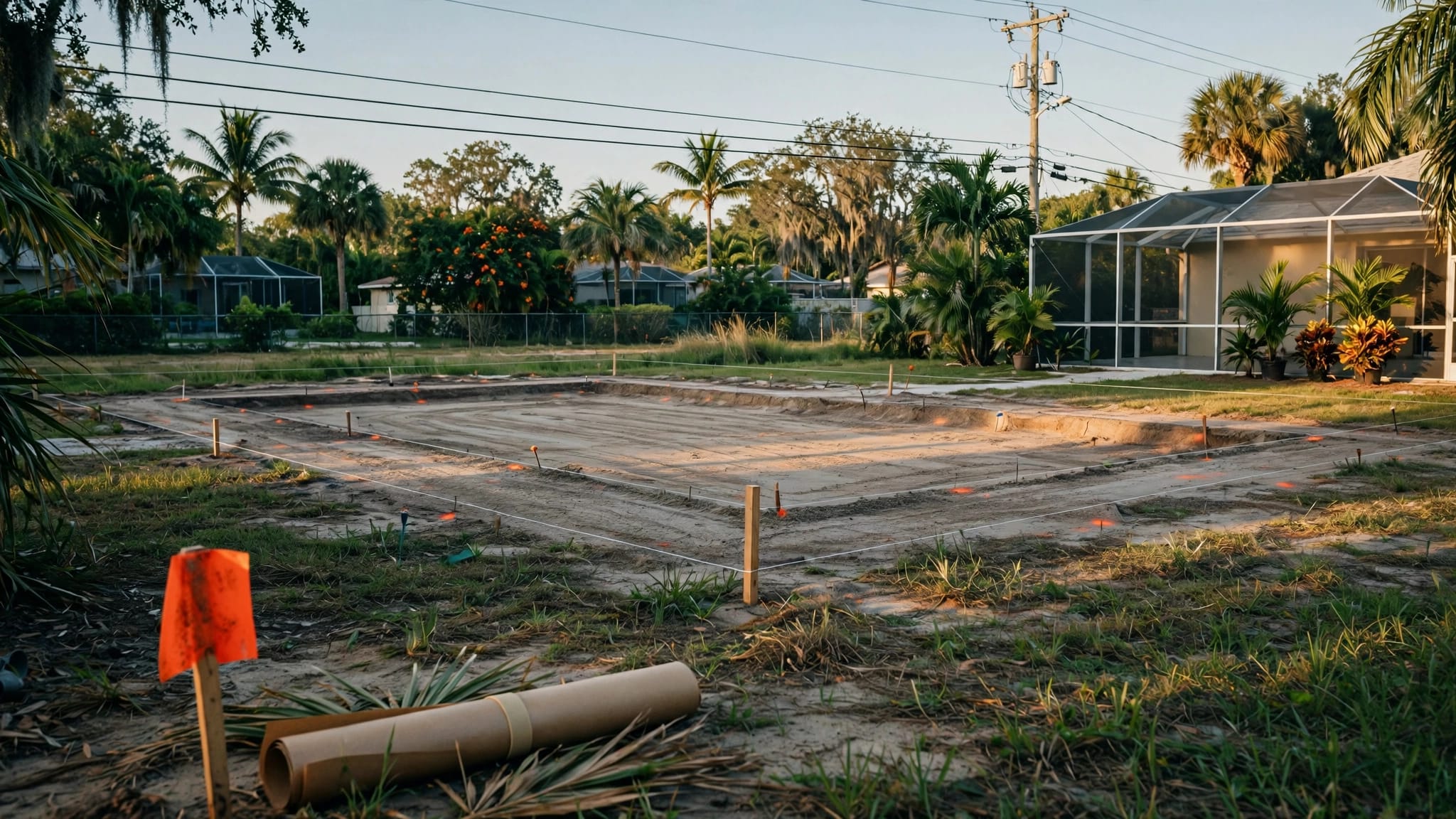
Picture this: you're sipping coffee in your Cape Coral backyard, dreaming of a pool that fits your lifestyle amid palm trees and canal views. But with sandy soil, high water tables, and hurricane season looming, which pool type makes sense? Gunite vs fiberglass pools comes down to your priorities like custom looks or easy upkeep.
Cape Coral homeowners face unique challenges. Constant sun demands low-maintenance surfaces. Frequent rains test stability. You want a pool that handles it all without breaking the bank long-term. Let's break it down so you pick the right one.
What Makes Gunite Pools Stand Out
Gunite pools use sprayed concrete over steel rebar. Builders shape them on-site for any design you imagine. In Cape Coral, this means lagoons with waterfalls or sleek lap pools that match your modern home.
They shine in durability. Thick walls resist Florida's shifts in sandy soil. You get endless options for tanning ledges or spas. Local pros often build them to handle high winds from storms.
Construction takes time, though. Expect four to six months total, including permits. Check how long it takes to build a gunite pool in Cape Coral for details on timelines here.
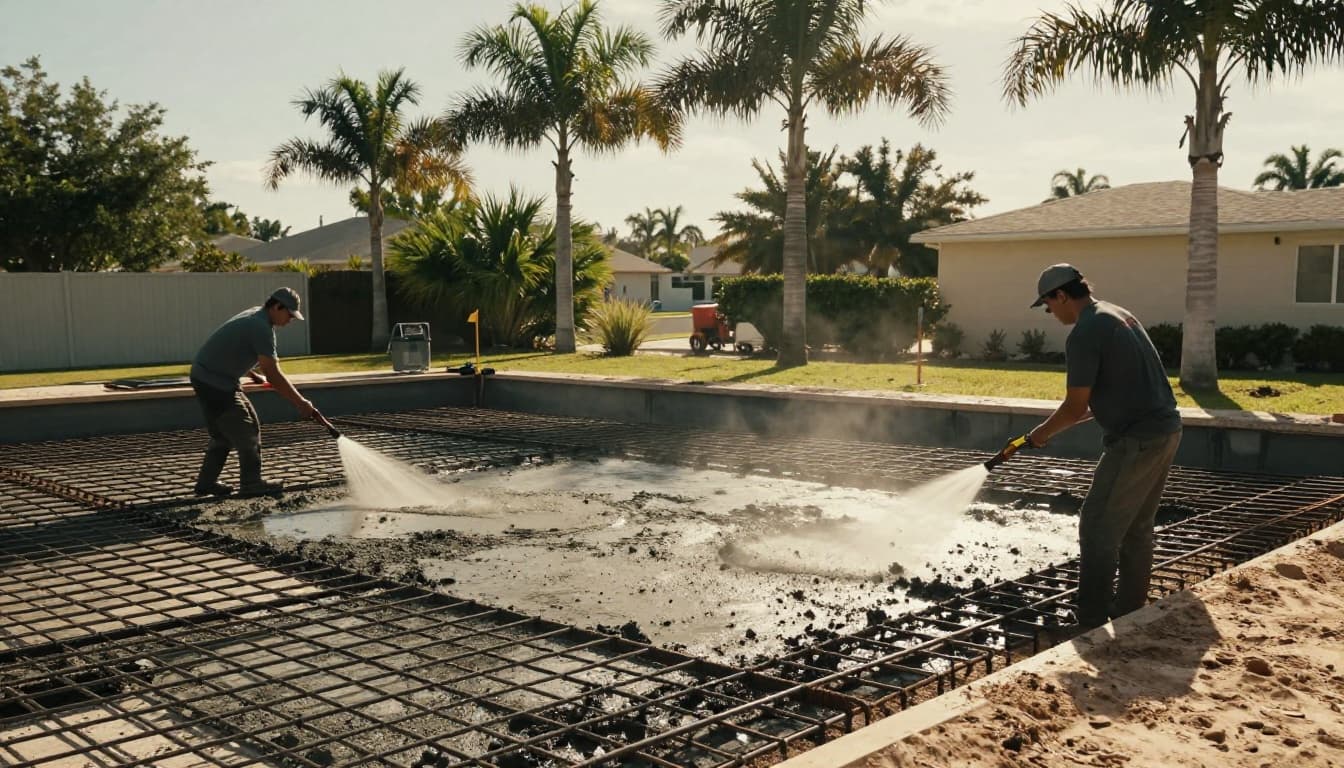
This process creates a shell that lasts decades. Resurfacing every 10-15 years keeps it fresh. For Cape Coral yards, gunite fits custom dreams but needs solid planning.
Why Choose Fiberglass Pools
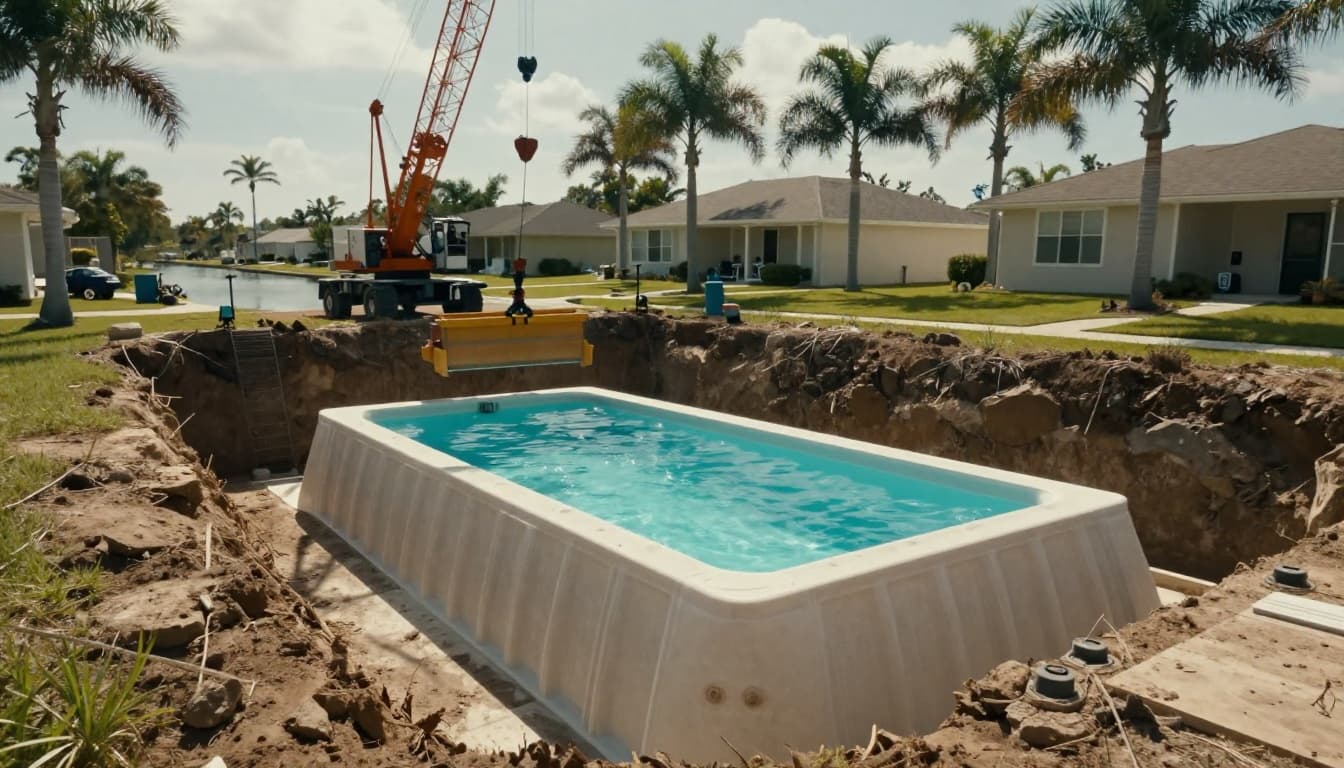
Fiberglass pools arrive as one-piece shells. A crane drops them into the excavated hole. Installation wraps up in weeks, not months. Perfect if you want to swim sooner.
The smooth gelcoat fights algae in our humid air. Less brushing means more relaxing. Shells flex slightly with soil movement, a plus in sandy lots.
High water tables challenge both types. Fiberglass needs pumps during digs, but its quick drop-in saves hassle. It suits standard sizes well, like 15x30-foot rectangles.
Owners love the low drama. No plaster cracks from sun exposure. In Southwest Florida, this cuts yearly chores.
Cape Coral Challenges: Soil, Water, and Storms
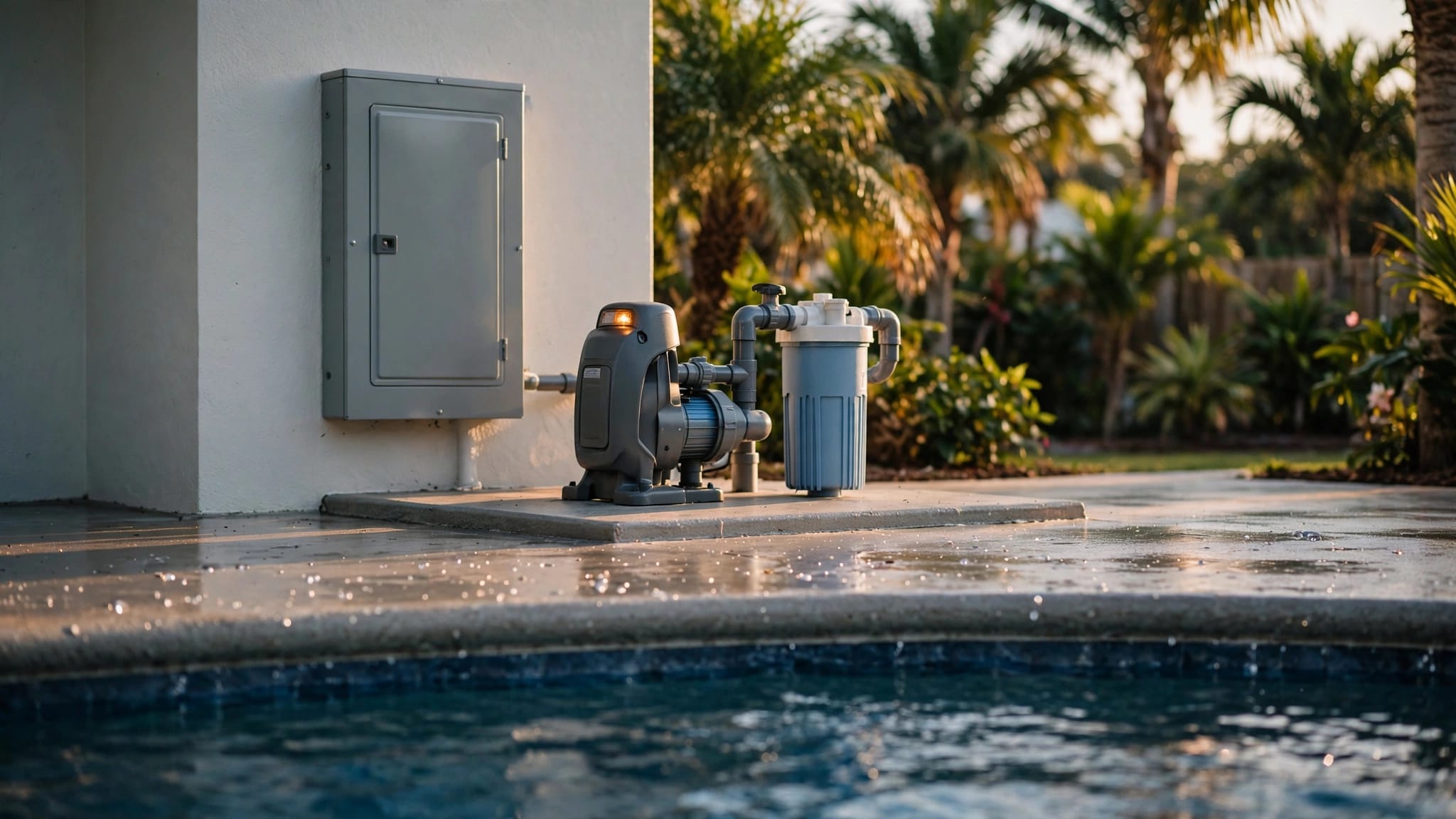
Sandy soil shifts easily here. High water tables flood digs fast. Both pool types need dewatering, adding $5,000 to $15,000.
Gunite handles it with custom grading and thick builds. Fiberglass flexes better but risks floating in floods without anchors.
Hurricanes test resilience. Gunite's rebar strength wins against winds and debris. Recent storms showed both survive if anchored right, yet gunite rarely cracks.
| Factor | Gunite | Fiberglass |
|---|---|---|
| Sandy Soil | Stable with rebar | Flexes well |
| High Water Table | Extra pumps needed | Quick install aids |
| Hurricanes | Superior strength | Good if secured |
Add screen enclosures to shield from debris. They boost storm safety for either pool.
These local realities shape your choice. Gunite offers toughness; fiberglass speeds things up.
Upfront and Lifetime Costs Compared
In April 2026, expect fiberglass at $45,000 to $70,000 for mid-sized pools. Gunite runs $50,000 to $120,000, higher for customs. Site prep in Cape Coral bumps both 10-15%.
Long-term, fiberglass saves. No resurfacing for 25 years. Gunite needs it every 7-20 years at $10,000 plus. Yearly upkeep: $500-$1,000 for fiberglass, double for gunite.
See a full gunite pool cost breakdown in Cape Coral. Factor utilities and repairs too.
| Cost Type | Gunite | Fiberglass |
|---|---|---|
| Install (2026) | $50K-$120K | $45K-$70K |
| Annual Maintenance | $1K-$2K | $500-$1K |
| Resurface | Every 10-15 yrs | Rarely |
Gunite pays off if you customize heavily. Otherwise, fiberglass keeps budgets tight.
Maintenance in Our Warm Climate
Year-round swimming means constant care. Sun fades finishes; humidity breeds algae.
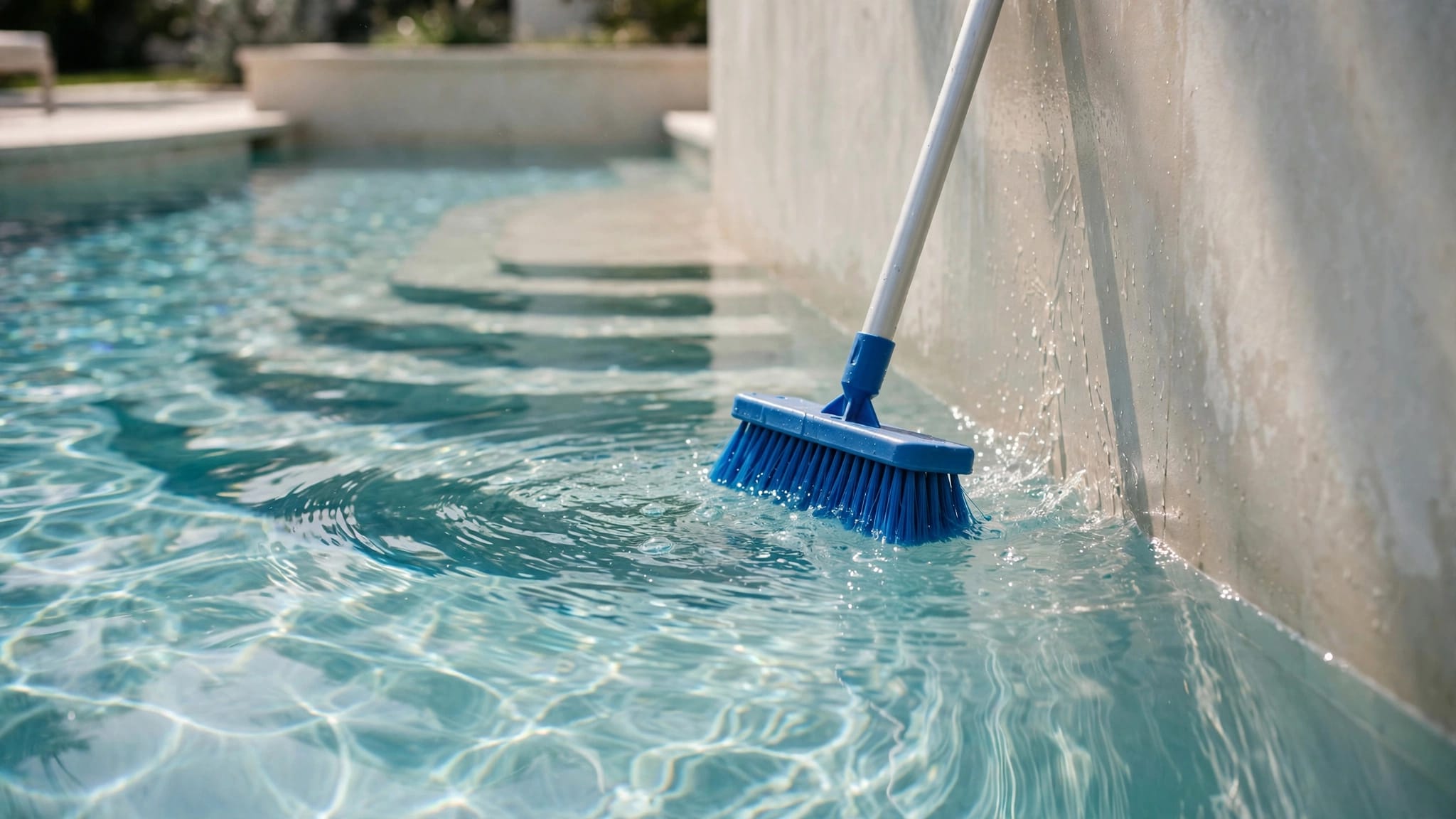
Fiberglass wins ease. Smooth walls rinse clean. Brush weekly, balance chemicals monthly.
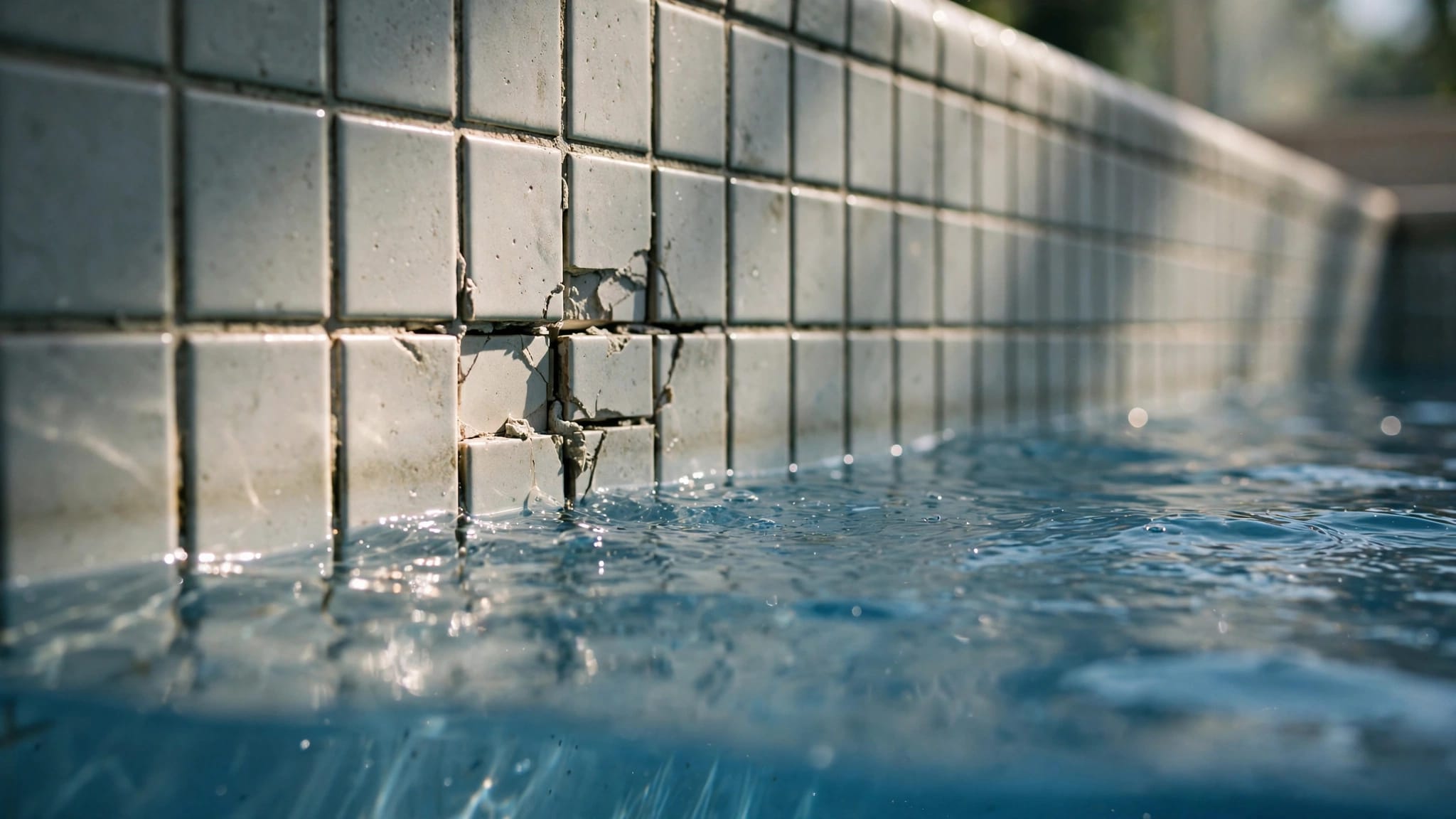
Gunite demands more. Porous plaster stains easier. Brush daily, resurface often. Yet upgrades like pebble finishes last longer here.
Both need screens against leaves and bugs. Pair with pool renovations for updates.
Customization, Timeline, and Use Cases
Gunite lets you dream big. Infinity edges, rock grottos, any size. View custom gunite pool designs for Cape Coral backyards.
Fiberglass sticks to molds. Great for families wanting quick, reliable fun.
Timelines differ sharply. Gunite: 3-6 months. Fiberglass: 1-3 weeks. Busy pros? Go fiberglass.
How to Decide for Your Cape Coral Home
Match your needs. Love unique shapes and have time? Pick gunite. Want low fuss, fast results? Fiberglass fits.
Budget under $70,000 with easy care? Fiberglass. Customization and storm-proofing? Gunite.
Get a Free Estimate today. Local experts assess your yard for the best fit. Your perfect pool waits. Which suits you?