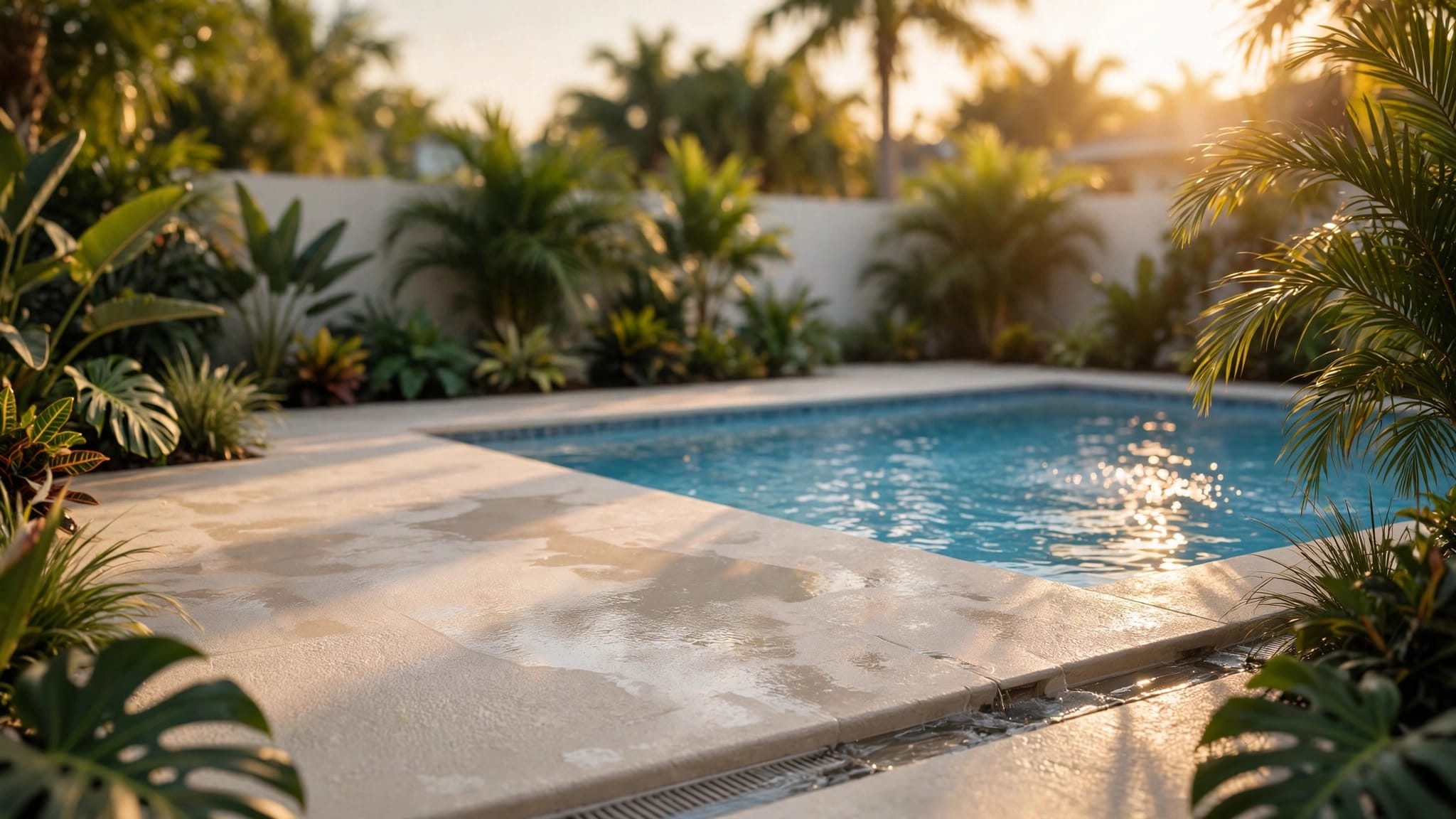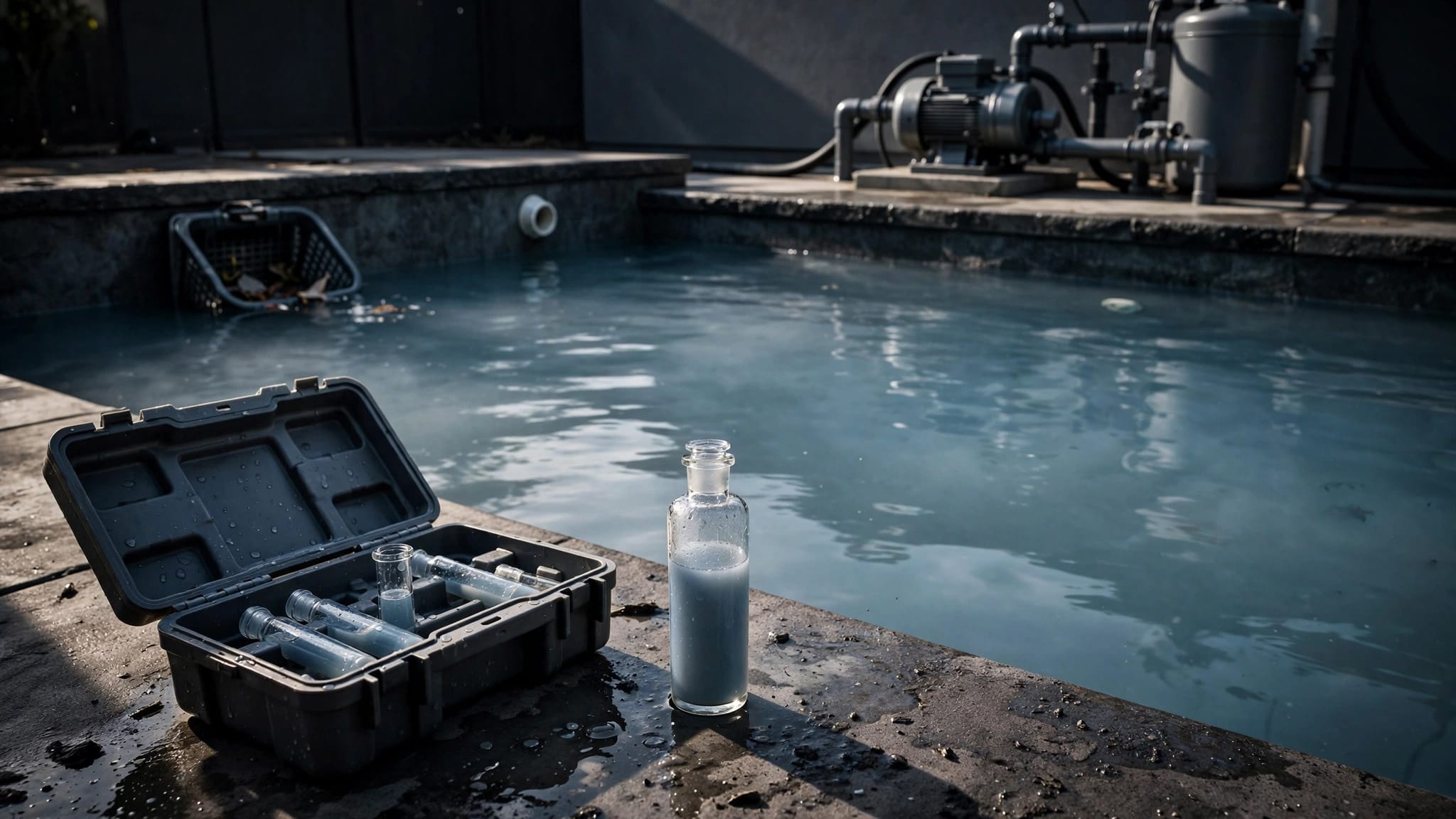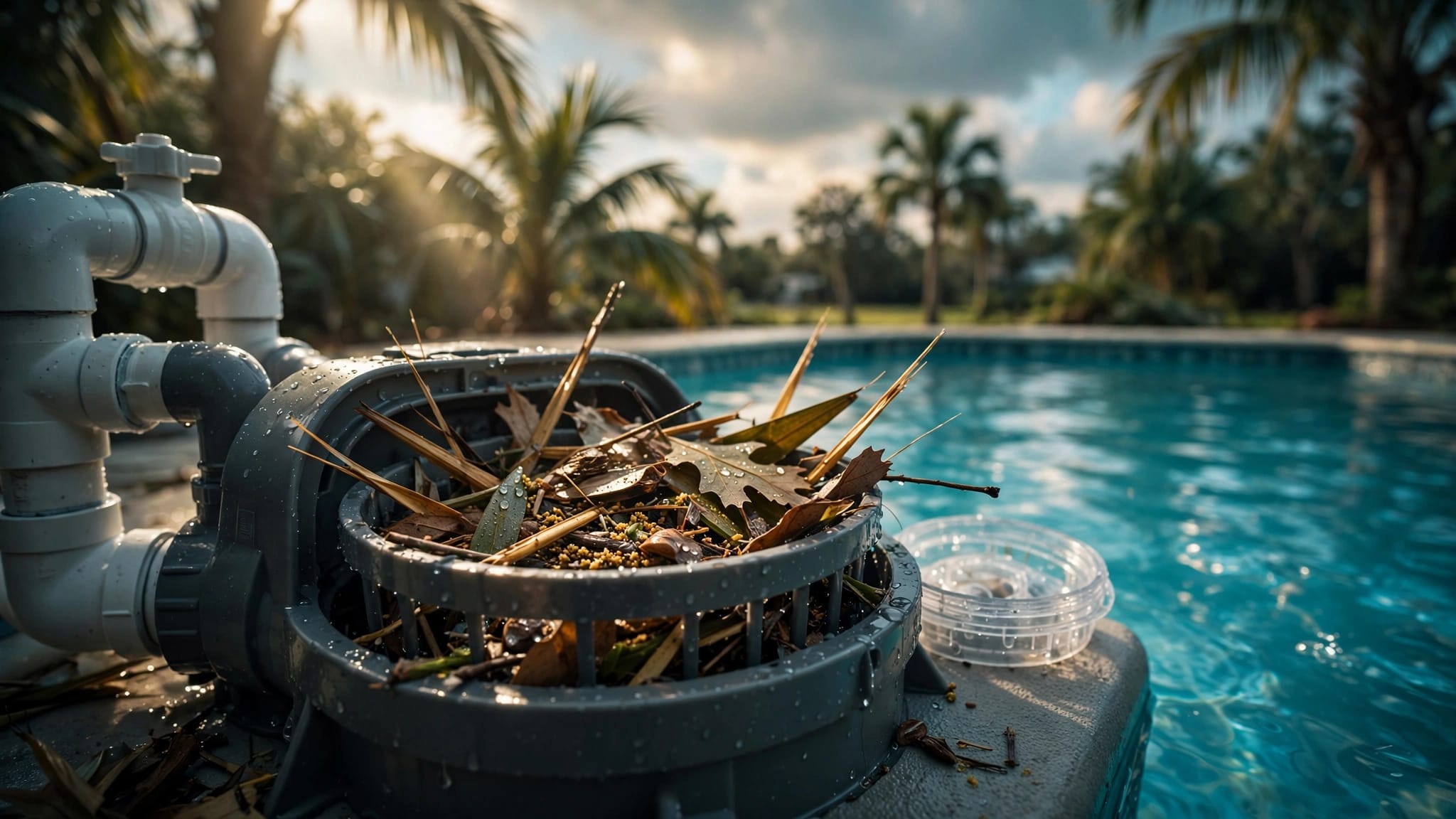
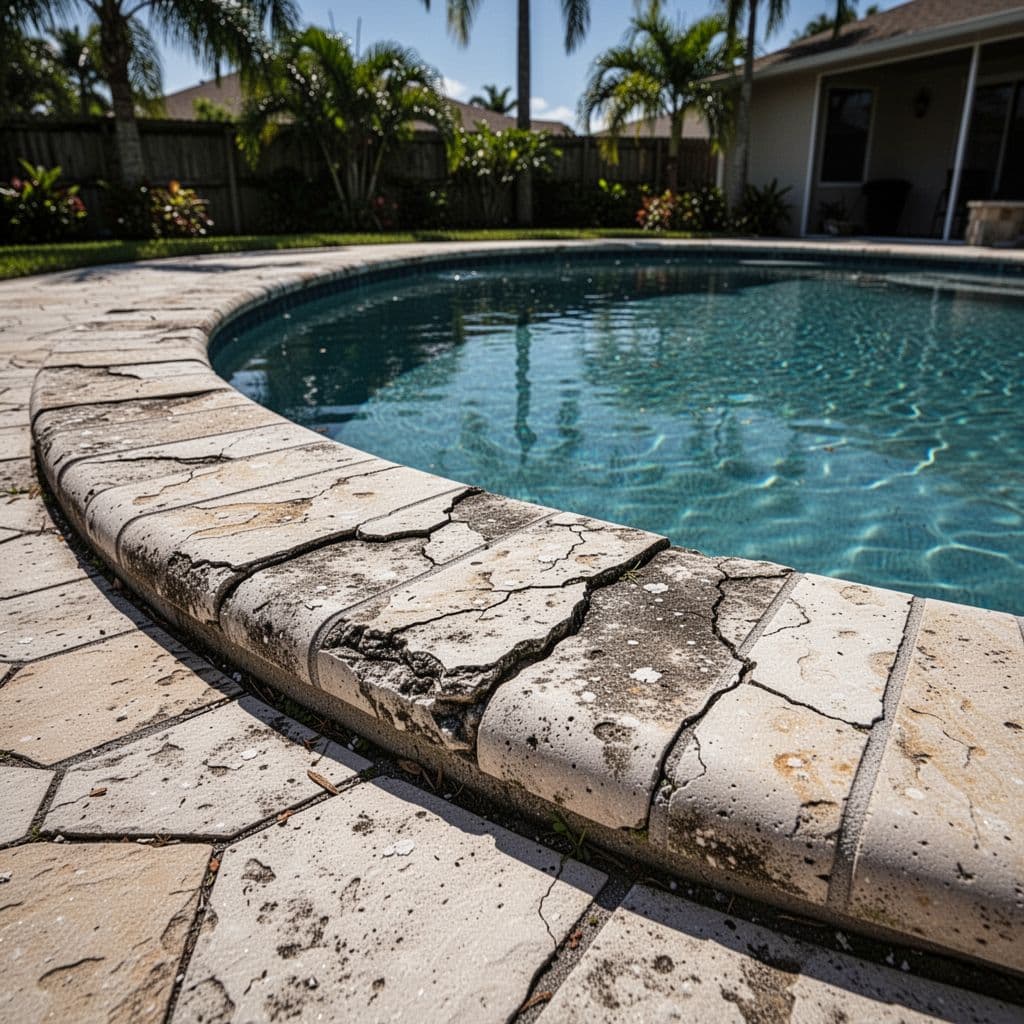
A cracked coping edge can look like a small cosmetic issue, but it often affects the pool shell and the deck around it. In Cape Coral, the pool coping replacement cost depends on far more than the price of stone.
Sun, salt air, heavy rain, and storm season all put extra stress on pool edges. That means a quote that looks high at first may include real work that protects the pool and helps the finish last longer.
Here is what homeowners in Southwest Florida should expect when they budget for coping work in 2026.
What Cape Coral homeowners should budget in 2026
For planning purposes, many coping projects fall into three broad buckets. The numbers below are a practical budgeting guide, not a fixed price list.
| Scope of work | Common budget range | What it usually covers |
|---|---|---|
| Small repair or reset | $1,500 to $3,500 | A few loose stones, minor re-grout, spot repairs |
| Partial replacement | $2,500 to $5,500 | One side, one section, or a damaged run |
| Full coping replacement | $4,500 to $8,500+ | Full perimeter removal, new install, more prep |
Those ranges make sense for Cape Coral because many jobs need more than a simple swap. Once the old coping comes off, crews may find cracked bond beam areas, soft mortar, or deck edge issues.
A useful shorthand is that the work often prices by scope and prep , not only by material. That is why a small pool can still be expensive if the old edge is badly damaged, while a larger pool may not be if the base is sound.
If a contractor quotes a price per linear foot, compare that number against the full scope. Demo, disposal, waterproofing, and deck tie-ins can shift the total fast. A low per-foot rate does not always mean a lower final bill.
What pushes the price up or down
Several things move the final quote. The biggest ones are easy to spot once you know what to ask about.
- Material choice affects both purchase price and labor. Straightforward concrete-style coping is usually easier on the budget than premium stone.
- Pool shape matters because curves, corners, and custom steps take more cutting and fitting.
- Hidden damage can add cost fast. If the bond beam, mortar bed, or deck edge has failed, the crew has to fix that first.
- Access and disposal also count. Tight side yards, screened enclosures, and demo haul-off can add labor time.
If the coping work is tied to a larger remodel, pool renovation services can sometimes make more sense than handling one piece at a time. That matters when the edge, finish, and deck all show wear at the same time.
A quote for coping alone may leave out the repairs under it. If the base is weak, the cheaper bid can cost more later.
The best pricing conversations are the ones that separate the visible finish from the hidden prep. Ask what is included, because the prep is where surprises usually live.
It also helps to ask whether the crew expects to match existing materials. Matching old stone or tile can take more labor than starting fresh with a new profile.
How material choice affects the bill
Material is one of the clearest cost drivers, and it also changes the look of the pool. In Cape Coral, that choice should factor in sun, moisture, and salt air.
Concrete or precast coping often sits at the lower end of the budget. It works well for simple layouts and is common when homeowners want a clean, practical upgrade.
Natural stone usually costs more, but it can also hold up well when it is sealed and installed properly. Travertine, limestone, and similar stone options often need more care in cutting and fitting, which raises labor time.
Tile-capped or specialty finishes can look sharp, yet they demand careful installation and matching. If the current pool has custom features, the price can climb because every cut has to fit the existing shape.
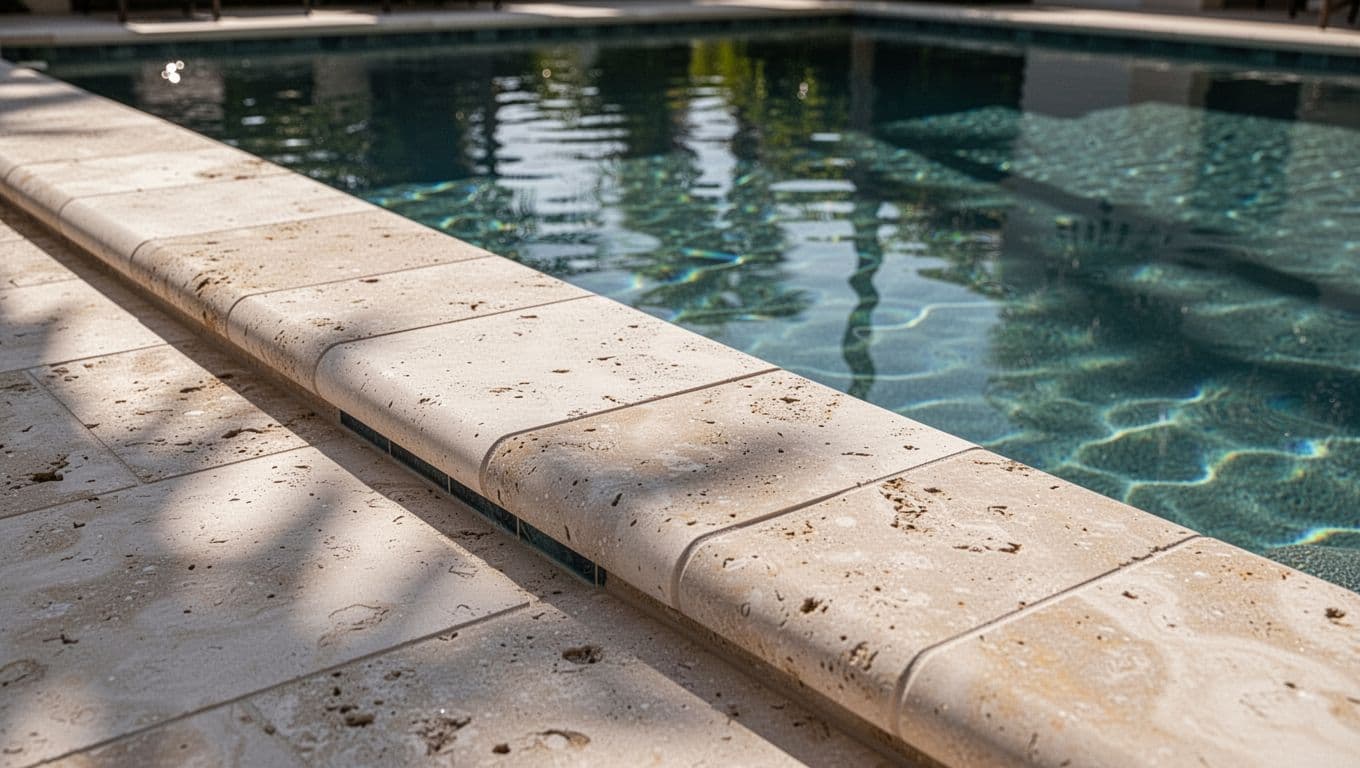
In Cape Coral, the cheapest material is not always the cheapest choice over time. A better finish can reduce callbacks, resist wear, and make the pool look newer for longer.
Sealing and joint care matter too, especially near the coast. Without them, water gets into tiny gaps and starts the cycle again. A well-sealed stone edge can stretch the time between major repairs.
Repair, partial replacement, or full replacement?
A few cracked pieces do not always mean a full rebuild. Still, the right choice depends on how much of the edge has failed and what lies beneath it.
A repair is usually the right move when a small section is loose, but the rest of the coping is stable. Crews can reset stones, patch joints, and stop the problem before it spreads.
A partial replacement makes sense when one side of the pool has taken the worst hit. That often happens when sun exposure, drainage, or a settling deck affects one area more than the others.
A full replacement is the better option when the whole perimeter is failing or the homeowner wants a new look. It is also the smarter choice when the old material no longer matches, or when the base damage is too widespread for a patch.
If water has gotten behind the coping, the visible crack is often only part of the problem.
That is why good estimates should explain both the cosmetic fix and the structural work. A patch can save money today, but a bad base can bring the same bill back next season.
A full replacement can also give you a cleaner finish line with the pool deck. That matters when old grout, chipped edges, or uneven heights are making the whole area look tired.
Why Cape Coral weather wears coping down faster
Cape Coral weather is rough on pool edges. The sun beats down for months, humidity stays high, and heavy rain can wash out joints and shift small gaps into bigger ones.
Salt air adds another layer of stress. It can speed up corrosion, dull finishes, and leave chalky spots on some materials. Over time, that can make even a nice pool edge look older than it is.
Storm season matters too. Wind-driven debris, flooding, and sudden water movement can push on already weak coping and make a small problem turn into a larger one.
Heat also plays a role. When materials expand and contract day after day, hairline cracks get a chance to grow. Add pool chemicals near the waterline, and some finishes fade faster than homeowners expect.
Watch for these warning signs:
- Loose or rocking stones near the edge
- Hairline cracks that keep growing
- Gaps between the coping and deck
- White or chalky residue on the surface
- Water seeping behind the edge after rain
When those signs show up, waiting usually costs more. Early repairs are simpler, and they can protect the pool shell, the deck, and the finish below the coping.
Getting a quote you can trust
The cleanest way to budget is to compare more than one local estimate. Cape Coral jobs can look similar from the street, but the hidden work is rarely the same.
Ask each contractor whether the quote includes demolition, disposal, substrate repair, sealing, and cleanup. If the estimate skips those items, the final bill may be higher than it first appears.
It also helps to ask how the new coping will tie into the rest of the pool. If the deck edge is failing or the interior finish is due for work, the whole project may be cheaper as one coordinated job.
A short checklist can keep the conversation clear:
- What is included in the removal price?
- Will the crew repair any damaged base material?
- Is sealing part of the bid?
- How will the new edge match the existing deck?
For a site visit and a clear project review, Get a Free Estimate. That gives you a local price based on the actual pool, not a guess from a photo.
A good estimate should tell you what is being replaced, what is being repaired, and what happens if hidden damage shows up. That level of detail makes it much easier to compare bids fairly.
Conclusion
Cape Coral homeowners should expect pool coping replacement cost to vary with material, pool size, and the condition under the edge. Small repairs can stay in a lower range, while full perimeter replacement often climbs much higher once demo and prep are included.
The smartest budget move is to spot damage early and compare detailed local quotes. In a coastal climate like Southwest Florida, the edge around your pool does more than frame the water, it helps protect everything beneath it.