Cape Coral sun can be rough on pool finishes. If you pick the wrong tile, colors fade fast, buildup shows at the waterline, and upkeep turns into a constant chore.
The right Cape Coral pool tile does more than look good. It handles salt air, heavy rain, heat, and daily splash without losing its shape or color.
This guide breaks down the best materials, the best places to use them, and the styles that fit Southwest Florida homes.
Why Cape Coral weather changes the tile choice
Cape Coral pools live outside in strong sun and humid air for most of the year. That matters more than many homeowners expect. UV rays can dull cheap finishes, while humidity and frequent rain can work grime into grout lines and edges.
Salt air is another factor, even if your pool is not on the water. It can leave a thin film on tile and make cleaning feel endless. Many local pools are also saltwater systems, so the tile needs to handle repeated exposure to salt and chemicals without losing color or loosening at the bond.
The waterline takes the hardest beating. Sunscreen, body oils, leaves, and calcium all collect there. For that reason, dense tile with a smooth finish usually performs better than porous material.
In Cape Coral, the best tile is the one that stays clean, holds its color, and still looks crisp after a long summer.
If the surface is chipped, hollow, or separating, the issue may be bigger than tile alone. The guide on signs it's time to resurface your pool can help you spot when the problem has moved beyond normal wear.
The tile materials that hold up best
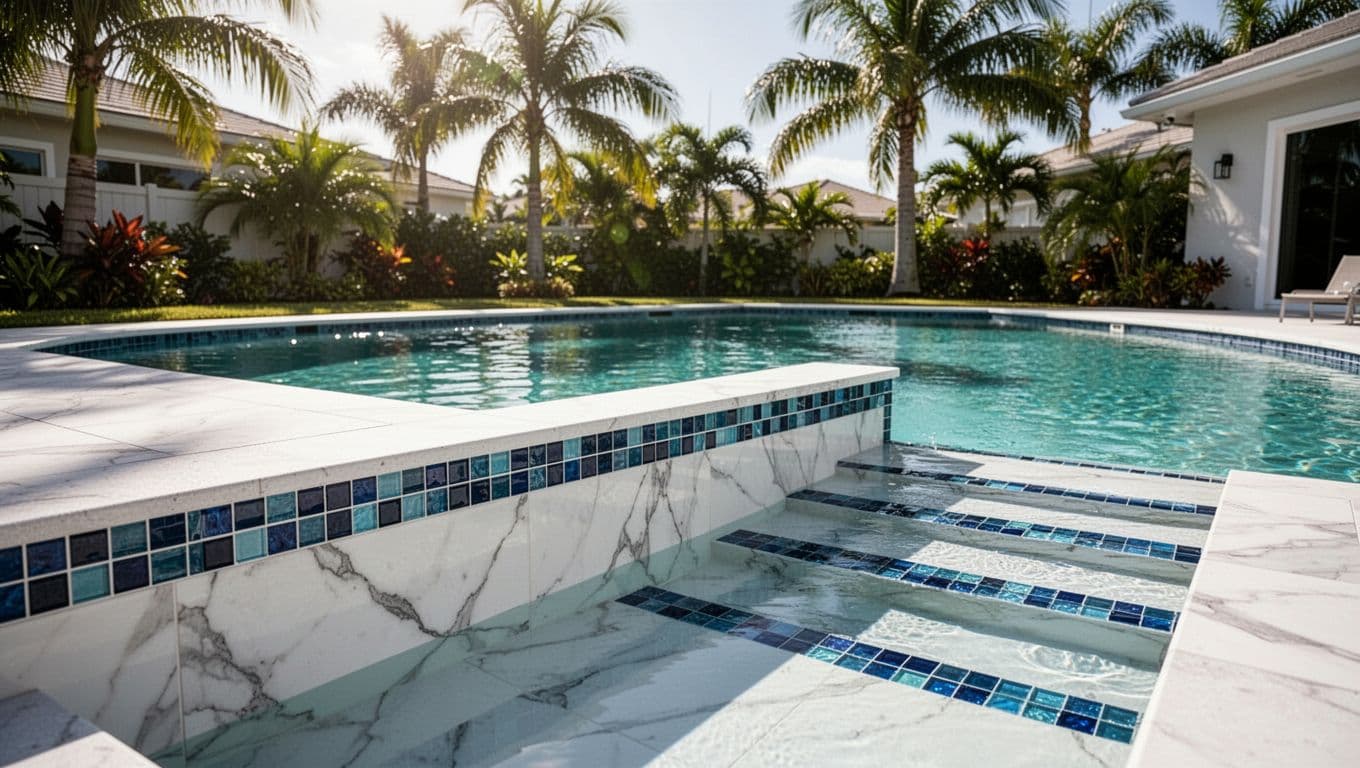
Most homeowners compare tile by color first. In Cape Coral, durability should come first.
| Material | Best use | Why it works in Cape Coral | Watch-outs |
|---|---|---|---|
| Porcelain | Waterlines, steps, full accents | Dense, low-absorption, and strong in sun and salt | Choose a quality glaze and proper installation |
| Glass | Waterlines, spas, decorative bands | Bright color, easy to customize, and resistant to fading | Can cost more and shows buildup sooner |
| Ceramic | Budget waterlines in lighter-use pools | Wide style range and familiar look | Less durable than porcelain in harsh conditions |
| Natural stone look tile | Accent areas and coastal-style designs | Soft, warm appearance | Real stone needs more care and sealing |
| Mosaic tile | Spas, spillways, and art features | Flexible for curves and small details | Installation needs patience and skill |
For most homes, porcelain is the safest all-around choice. It gives you strong performance without sacrificing style. Glass tile is the best pick when you want color depth and sparkle. Ceramic can still work, but it makes more sense in simpler, lower-stress spots.
If you're planning a larger update, pool renovations and resurfacing can help you match the tile with the rest of the pool finish, so the result feels unified instead of patched together.
Which tile works best for each pool feature
Some tile looks great in a showroom, then falls flat on a real pool. Placement matters almost as much as the material.
Waterlines and steps
The waterline is where tile does its hardest work. Porcelain or glass mosaic is usually the best fit here because both clean up well and hold their color. Small-format tile also follows the curve of a pool better than large pieces.
Steps need a finish that looks clear under moving water. A lighter tile with a smooth surface helps the edges stay visible, which is useful for safety and for a cleaner look.
Raised spas
Raised spas look best when the tile has texture or depth. Glass tile works well because it catches light and makes the spa feel separate from the main pool. Small porcelain tile also performs well, especially if the spa gets a lot of heat and splash.
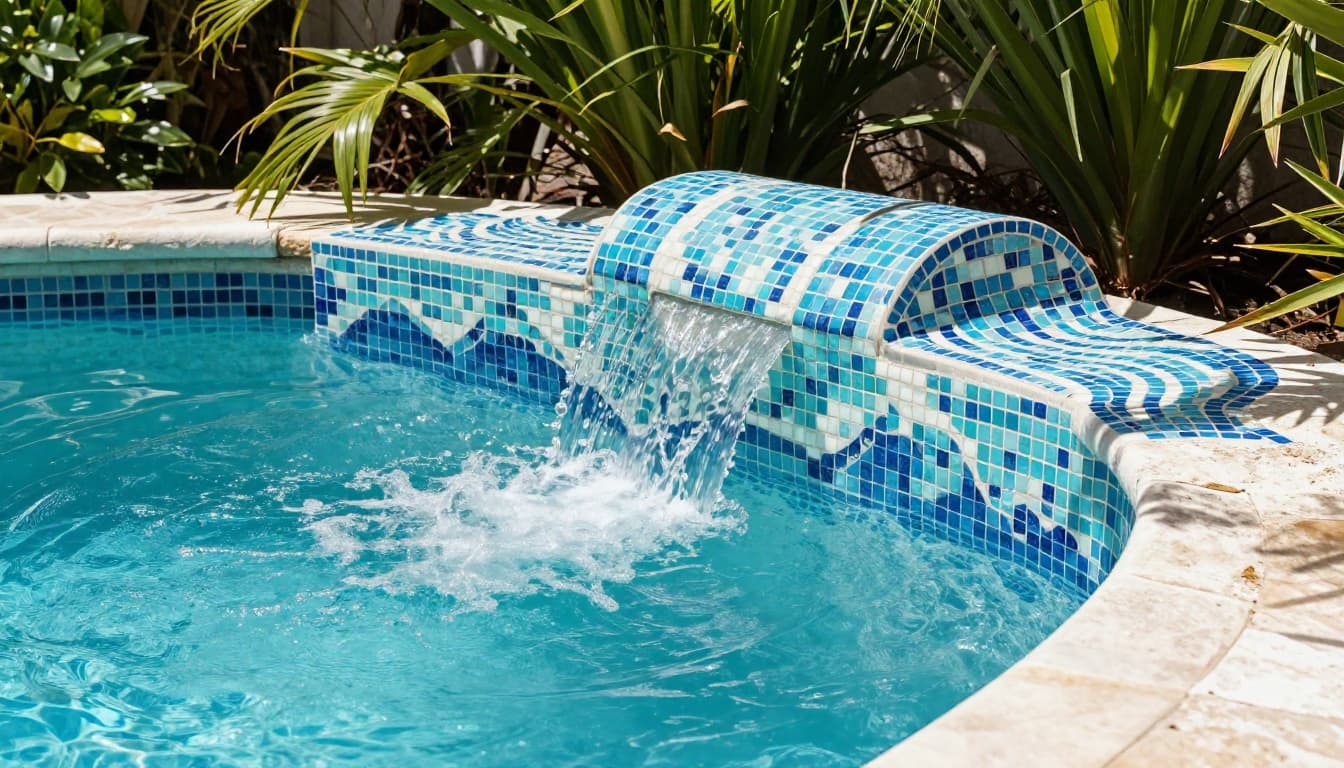
For curved spa walls, mosaic tile is easier to fit. It also lets you add a more detailed design without overwhelming the pool.
Spillways and water features
Spillways need tile that can handle constant water flow. Glass mosaics work well because they keep their color and bring out movement in the water. Porcelain is also a smart choice if you want a cleaner, less reflective finish.
The key is to keep the finish consistent with the rest of the pool. A spillway should feel like part of the design, not an afterthought.
Decorative accents
Accent bands, medallions, and small feature strips are where you can have more fun. This is the best place for stronger blues, sea-glass shades, or iridescent glass. A little accent goes a long way, especially in a coastal backyard.
Styles that fit coastal Florida homes
Cape Coral homes often look best with tile that feels calm and easy, not busy. Soft blue, white, sand, sea-glass green, and light gray all fit the local setting well. These shades work with tropical plants, screened lanais, and bright outdoor light.
A polished glass tile can give a pool more sparkle, while matte porcelain creates a softer, quieter look. If your home has a modern profile, straight lines and simple color blocks usually work best. Mediterranean-style homes often pair well with warm blue tile or a subtle stone look.
 Photo by Magda Ehlers
Busy patterns can look dated fast. Besides, they tend to show wear more clearly once the waterline starts collecting calcium or sunscreen residue. A simpler pattern often stays attractive longer and gives you more room to change the rest of the backyard later.
What to look for before you buy
A pretty sample can hide a lot of problems. Before you commit, check the details that matter in a Cape Coral pool.
- Low water absorption helps the tile resist staining and weakening over time.
- Saltwater compatibility matters if your pool uses a salt system.
- UV resistance keeps color from fading under strong Florida sun.
- Slip and heat performance matter for steps, benches, and spa edges.
- Easy-to-clean grout lines can save you time each month.
- A finish that matches the feature matters because a waterline, spa, and spillway do not all need the same tile.
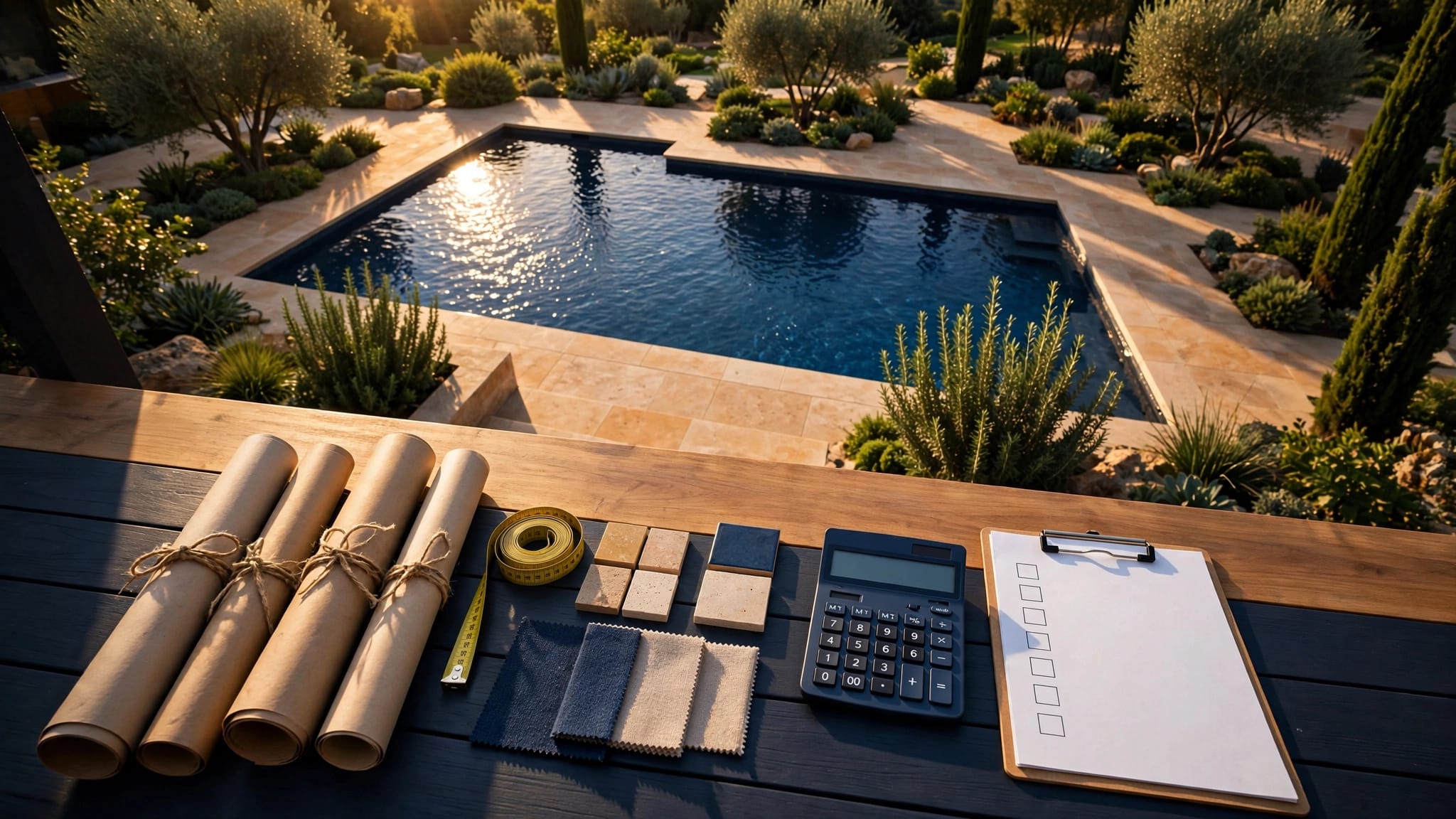
Budget matters too. Tile is only one part of the project, so labor, prep, and surface repairs can change the total. If you are comparing a few options, Cape Coral pool resurfacing prices can help you see how tile fits into the full renovation budget.
A good installer will also explain how the tile choice affects cleaning, grout care, and long-term maintenance. That conversation is worth having before you place an order.
Conclusion
The best pool tile for a Cape Coral home is the one that fits the weather, the pool feature, and your upkeep habits. For most waterlines, porcelain is the safest pick. For spas and decorative accents, glass brings color and life without feeling overdone.
Cape Coral sun, rain, humidity, and salt air are hard on weak finishes. When you choose tile with those conditions in mind, you get a pool that looks finished on day one and still feels fresh years later.
If you are planning a renovation and want help comparing tile options on-site, Get a Free Estimate.