Pool depth sounds simple until you start sketching the backyard. Go too shallow, and older kids may want more room to swim. Go too deep, and you pay for water and space you may barely use.
For most homeowners, the best answer is a pool built for daily recreation , not diving. In Cape Coral, that usually means a comfortable shallow end, a gentle slope, and only as much deep water as your family will enjoy.
Start with how you'll use the pool
Most modern residential pools are made for lounging, exercise, games, and family time. They are not built around diving. That point matters because depth changes cost, comfort, and how much of the pool feels useful.
If adults want to stand and talk, a huge deep end often gets in the way. If kids want to toss a ball, a flatter floor usually works better. Even strong swimmers spend a lot of time in water where they can rest, sit on a bench, or move around with ease.
For that reason, many homeowners planning new pool construction in Cape Coral choose less depth than they first imagined. A pool that looks exciting on paper can feel less practical once you realize half the floor is too deep to stand in.
The best starting point is simple: match the depth to real habits, not old pool stereotypes.
Depths that work for most Cape Coral pools
For most homes, a smart Cape Coral pool depth starts around 3 to 3.5 feet in the shallow end and tops out around 5.5 to 6 feet.
These ranges make it easier to compare common layouts:
| Pool layout | Common depth range | Good fit for |
|---|---|---|
| Play pool | 3 to 4.5 ft | Lounging, small kids, easy standing |
| Family recreation pool | 3.5 to 5.5 ft | Mixed ages, floats, games, casual swimming |
| Deeper recreational pool | 3.5 to 6 ft | Families who want a bit more swim depth |
| Pool with dive or jump feature | Varies, often much deeper | Only when engineered from day one |
A 3.5-foot to 5.5-foot design is the sweet spot for many families. It gives you a usable shallow end and enough depth for stronger swimmers without sacrificing too much standing space.
A flat-bottom pool can also work well. Many homeowners like a consistent 4 to 5 feet because it feels simple and social. On the other hand, once you push far past 6 feet, you usually lose more usable space than you gain.
When a deeper end makes sense
There are good reasons to go deeper. Some families want stronger swim space, older teens like more room to jump into the water from poolside, and taller adults may want a little more depth for comfort.
Still, deeper water should be a planned choice, not a default.
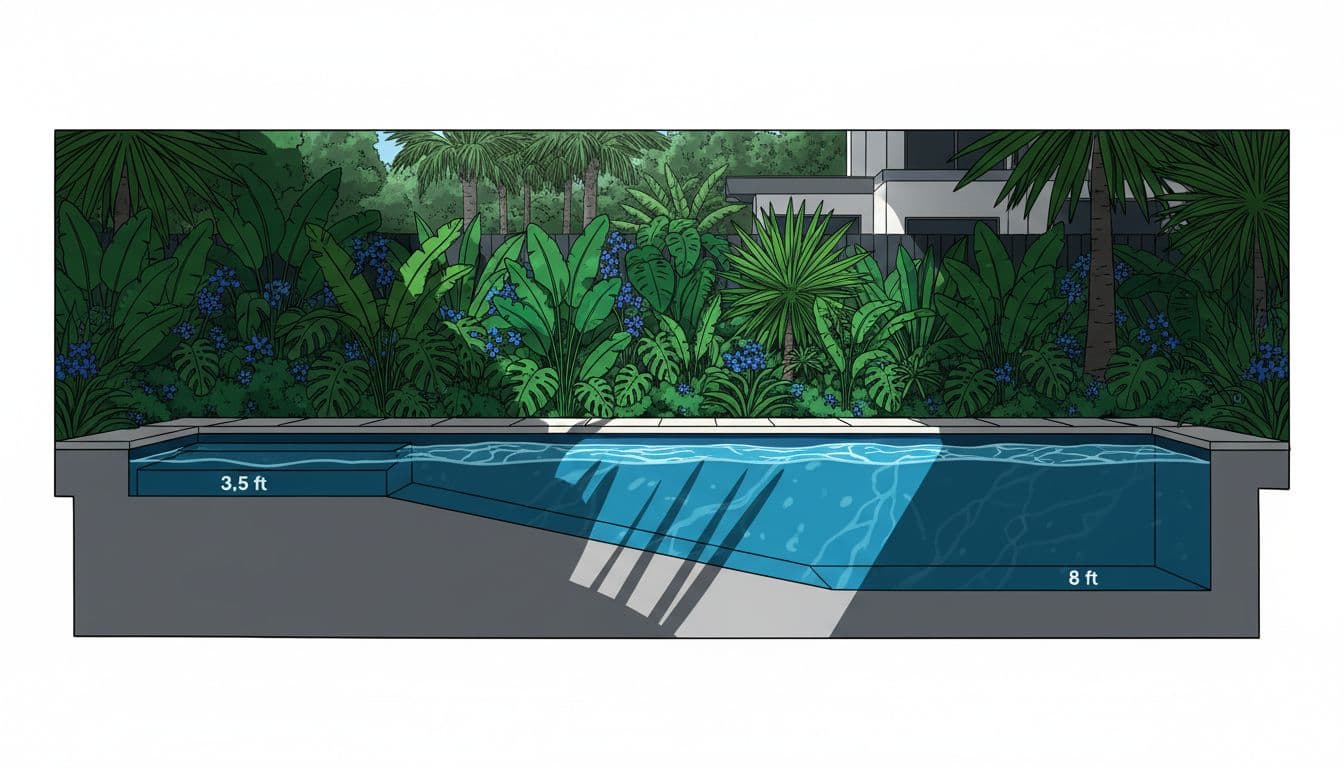
A diving board, jump rock, or raised jump feature changes the whole design. Depth alone is not enough. The slope, deep-water length, wall shape, and structure all matter. Many residential pools with true diving use need around 8 feet or more in the diving area, plus a longer deep-water envelope. The exact numbers depend on the board or feature, the pool shape, and local rules.
A diving board is part of the pool's engineering, not a feature to add later.
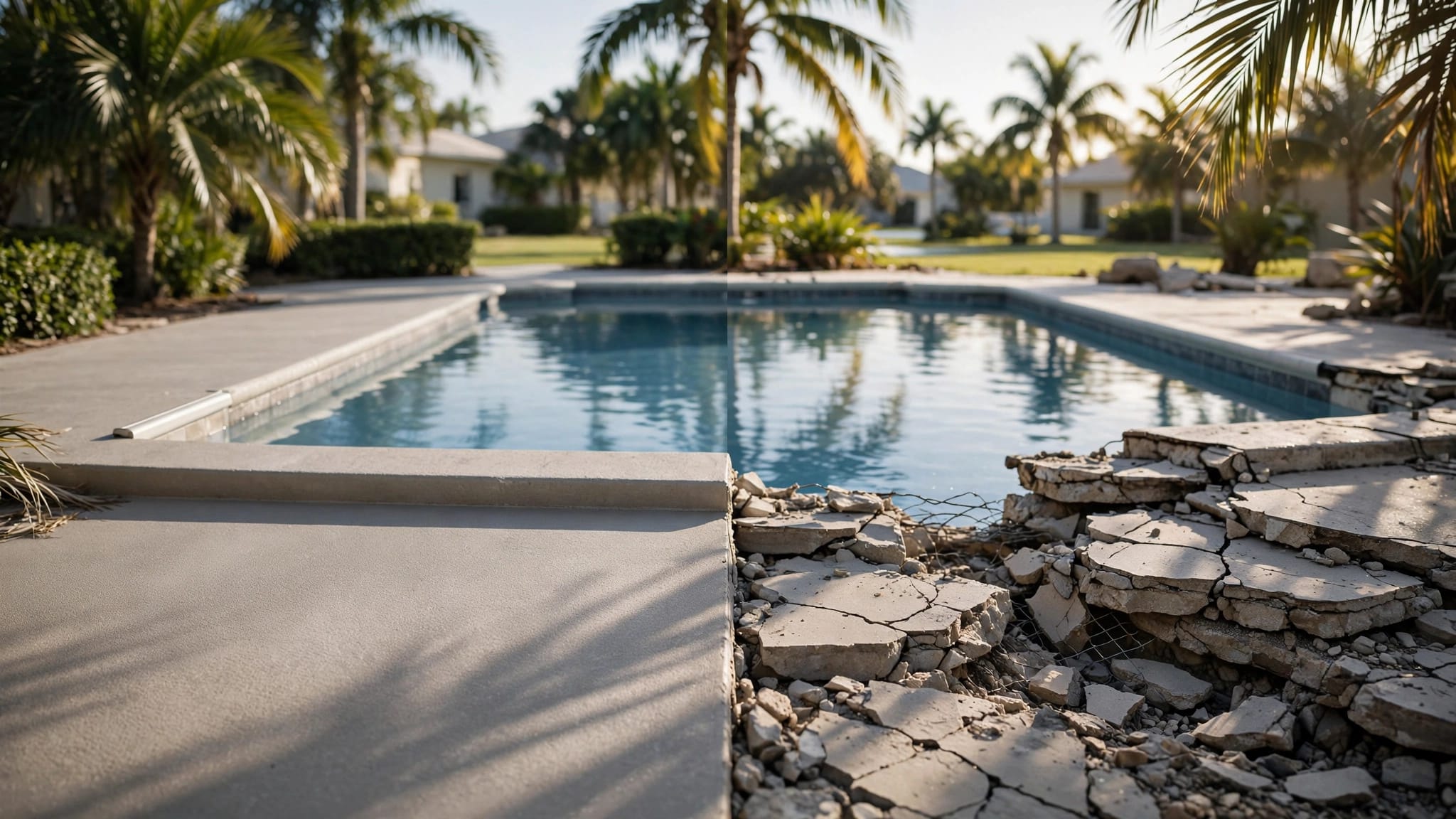
That is why final specs should always be checked with a licensed local pool builder and Cape Coral permitting officials. If you are updating an older deep pool, pool renovations and resurfacing can be a good time to rethink comfort and layout, although changing the actual depth is still a major structural job.
Popular layouts for Cape Coral backyards
A few layouts show up again and again because they fit how people live.
A classic family pool, often around 12x24 or 14x28, usually works well at 3.5 to 5.5 feet. It gives you room for steps, benches, games, and open swim.
A cocktail pool or pool-spa combo often stays around 4 to 5 feet throughout the main swim area. That works well for relaxing and social use.
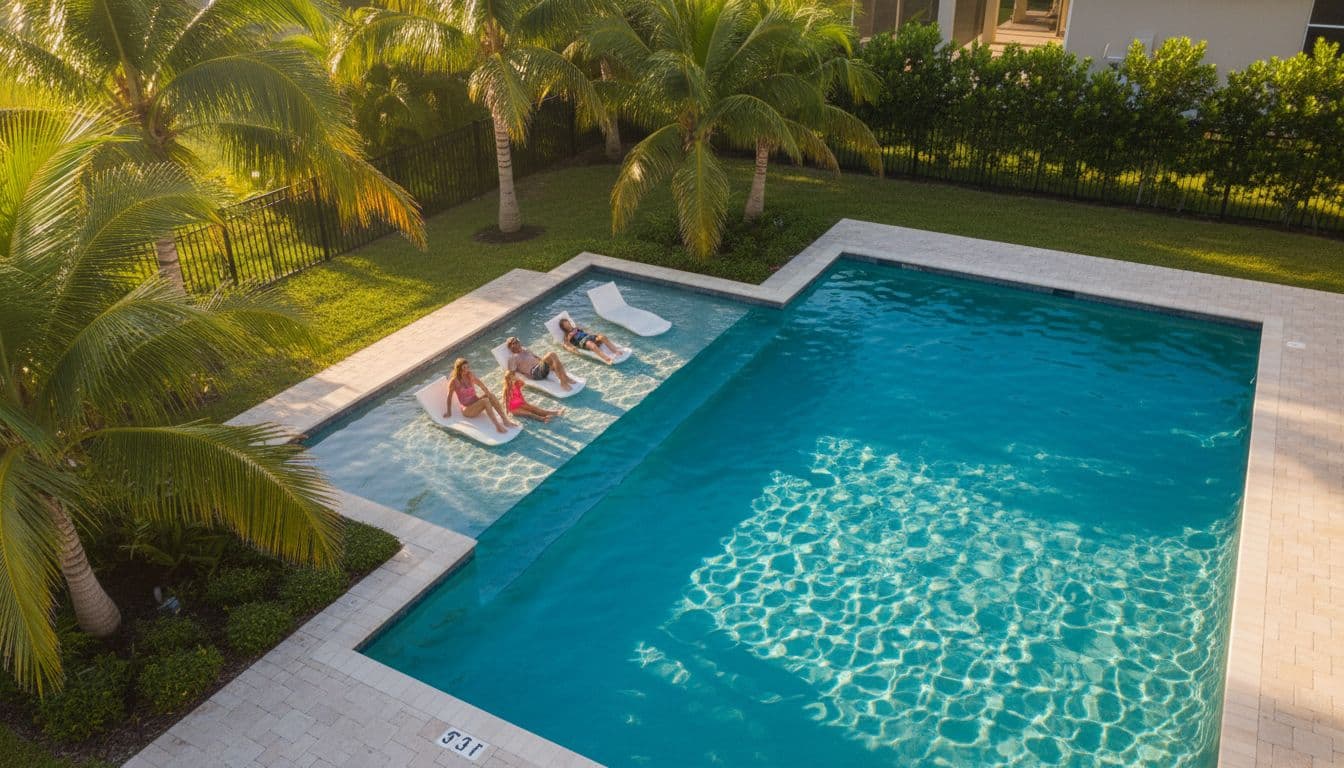
A beach-entry or tanning-ledge design starts at zero depth on the shelf, then moves into a main basin around 4 to 5.5 feet. That layout is popular with families, pet owners, and anyone who wants a resort-style feel.
If you're also planning pool screen enclosures in Cape Coral, depth and layout should be planned with the full backyard in mind. Deck space, furniture, door swings, and traffic paths all affect how the pool feels once the enclosure is up.
Final thoughts
For most homeowners, the best pool depth is not the deepest one. It's the one you'll use on a normal Tuesday, not only during a summer party. In many Cape Coral backyards, that means 3.5 to 5.5 feet , or up to 6 feet for a deeper recreational end.
If you want a diving board or other jump feature, plan for it from the start and confirm every detail with a licensed builder and local code officials.
When you're ready to compare layouts for your lot, family, and budget, Get a Free Estimate.