A pool feels different when it has a warm spa beside it. In Cape Coral, that upgrade makes sense because pools stay in use almost all year.
The short answer is yes, you often can add a spa to an existing pool. Still, the real answer depends on layout , deck space, plumbing, equipment capacity, elevation, and permits. A quick site review tells you more than any online estimate ever will.
When a spa addition works well
Many Cape Coral pools can take a spa addition, especially when the project is part of a remodel. Concrete pools usually give builders more freedom because the new spa can tie into the existing shell and deck more easily. Some older pools, however, need extra work before the new spa can look and perform right.
The first issue is layout. A spa needs room without making the pool deck feel cramped. It also has to fit the way you move through the yard, around furniture, doors, and screen openings. On a tight lot, the spa may work better in a raised corner instead of flush with the deck.
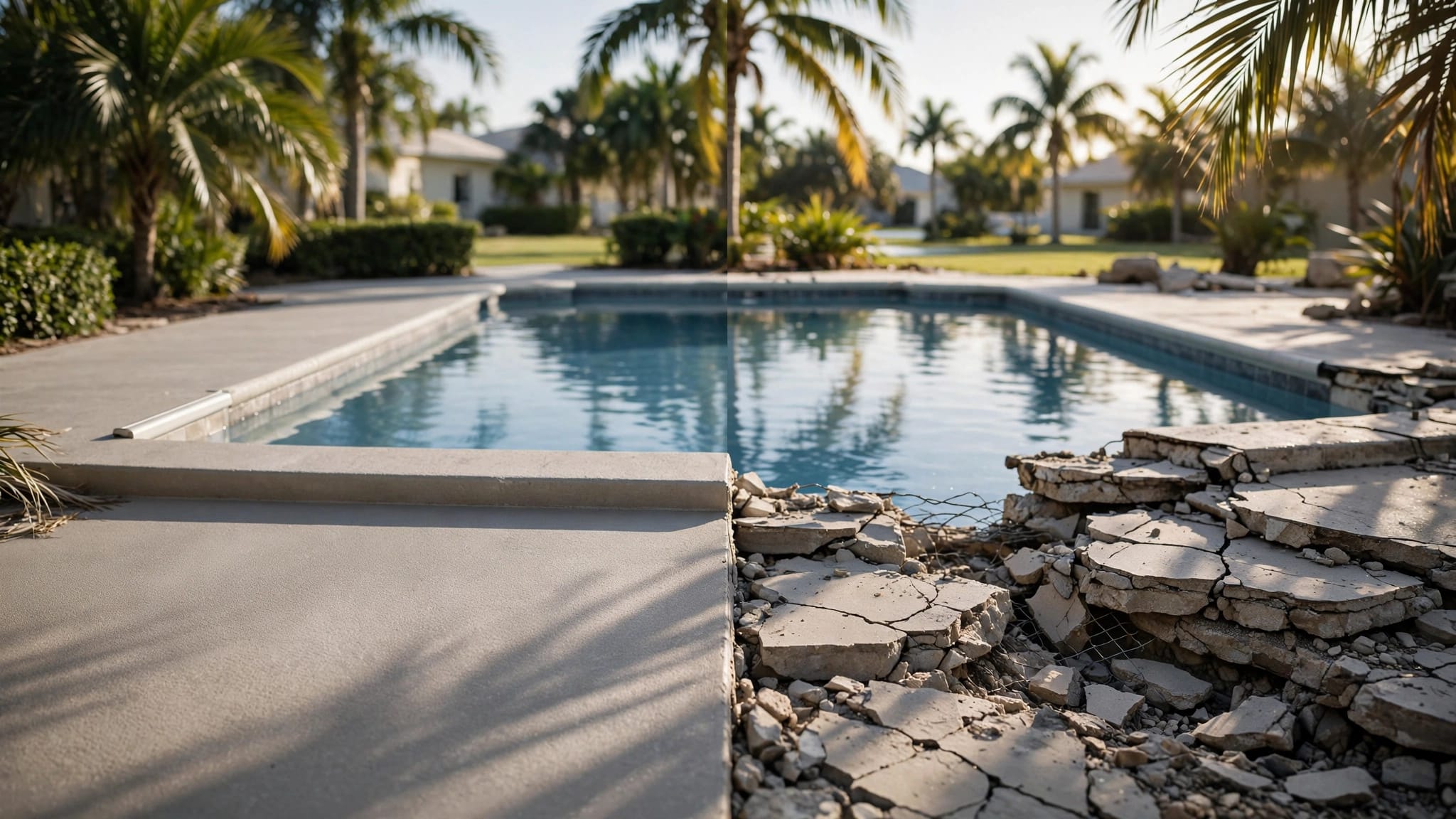
The next issue is deck space. Adding a spa often means cutting and rebuilding part of the deck. If the deck already has cracks, dated pavers, or poor drainage, it may make sense to handle those items at the same time. That is one reason many homeowners pair this project with pool renovations and resurfacing Cape Coral.

Plumbing matters just as much. A spa needs dedicated lines, strong jet action, and reliable heat. Therefore, the builder has to check equipment capacity, along with whether your current pump, filter, heater, and valves can handle the added load. If the equipment pad is already crowded or aging, a spa addition can trigger equipment upgrades too.
Then there is elevation. A raised spillover spa looks great, and it can become a focal point at night. Still, the height change affects plumbing runs, water flow, and finish details. A flush spa can look simpler, but it still needs careful planning. If you want to add a spa to an existing pool, the cleanest result comes from a design that fits the yard, not from forcing a standard layout.
Cape Coral factors that can change the plan
Cape Coral homeowners use pools longer than many other parts of the country. That makes a spa more appealing, especially on cooler winter nights or after a rainy summer day. At the same time, Florida weather is hard on pool finishes, decking, and equipment. Salt air, heat, storms, and constant sun all shape the best design.
If your pool sits under a cage, the screen enclosure can affect the spa location and height. A raised spa, new steps, or added features may need to line up with existing framing, doors, or clearances. When the enclosure needs work too, it helps to look at screen enclosures Cape Coral as part of the same plan.
Permits matter as well. As of April 2026, spa additions in Cape Coral generally require a pool or spa permit because the work changes the structure, equipment, or both. Current city notices also show a separate permit for pool safety barriers took effect on March 1, 2026. Depending on the job, final approval may also involve a structural pool final inspection and a final survey before closeout.
Permit steps can add time even when the spa design itself is simple.
Requirements can vary by property, scope, and barrier setup, so confirm the current process with the City of Cape Coral Building Division and a licensed local pool contractor before work starts. That is especially important if the spa changes fencing, gates, or your screened enclosure.
A few common problems can slow things down. Matching old tile and coping is not always easy. Limited access to the backyard can raise labor time. Older plumbing may need repairs once the deck opens up. None of that means the project is a bad idea, but it does mean the best plans come from a site visit, not a rough guess.
The real pros, cons, and cost drivers
A spa can change how often you use your backyard. It adds comfort, gives you a warm place to unwind, and makes the pool area feel more finished. For many families, it becomes the part of the yard they use most in the evening.

There are tradeoffs, though. A spa adds another body of water to heat, balance, and maintain. You may need a larger heater, better automation, or updated circulation equipment. Construction also brings short-term mess, noise, and deck disruption. If your pool is older, the spa can expose problems that were easy to ignore before.
Cost depends on the design more than the idea itself. A small attached spa with simple finishes is different from a raised spillover spa with new tile, lights, automation, and rebuilt decking. Plumbing distance matters. Equipment upgrades matter. Finish matching matters. If the pool interior already shows wear, combining the spa with resurfacing can make better financial sense than doing two separate projects.
That is why price ranges online often miss the mark. One home has open deck space and extra equipment capacity. Another needs demolition, rework, and code updates before the first jet goes in. The project can be worth it, but the cost picture gets clear only after someone sees the yard, the equipment pad, and the existing pool condition.
The bottom line for Cape Coral homeowners
Yes, you can often add a spa to an existing pool in Cape Coral, but the yard has to cooperate. The best candidates have usable deck space, solid plumbing access, equipment that can be upgraded if needed, and a layout that lets the spa feel built-in instead of squeezed in.
If you are already thinking about resurfacing, replacing equipment, or updating the deck, this is the right time to request a site evaluation . A contractor can check elevation options, review permit needs, and tell you whether the upgrade is practical for your lot. When you are ready to move from guesswork to a real plan, Get a Free Estimate.