In Cape Coral, the wrong pool heater can turn a pleasant pool into an expensive one. Because Southwest Florida stays mild for much of the year, most owners don't need raw power. They need the right heating style.
That makes a smart pool heater comparison worth doing. Heat pumps and gas heaters warm water in different ways. The better pick depends on how often you swim, your fuel options, and how fast you want the pool to recover after a cool night.
How heat pump pool heaters warm water
A heat pump doesn't create heat the way a furnace does. Instead, it pulls warmth from outdoor air and transfers it into the pool water.
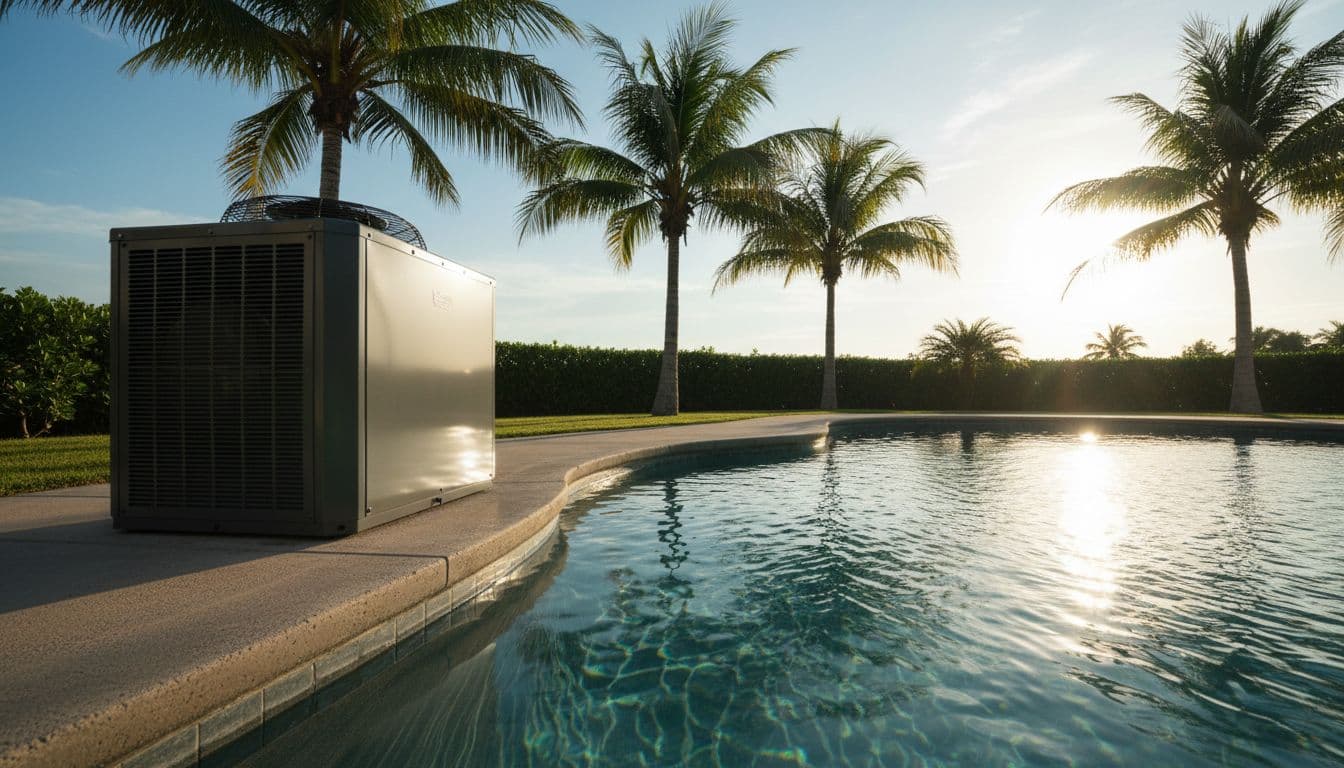
That works well in Cape Coral, because heat pumps like warm, humid air. Our long shoulder seasons and mild winters give them favorable conditions. They do best when you want to hold a steady water temperature for weeks or months.
As of April 2026, Cape Coral electricity averages about $0.14 per kWh. Because a heat pump moves heat instead of creating it from fuel, operating costs usually stay lower than gas for regular pool use. For many mid-size pools, monthly heating can land around $50 to $125. Pool size, wind, cover use, and set temperature all change the total.
Speed is the tradeoff. After a cool front, a heat pump may need time to catch up. Still, once the pool reaches your target, it tends to maintain that temperature efficiently.
Maintenance is fairly simple. Keep airflow open, clean the coil, and watch for salt buildup. Near the coast, salt air can wear on metal parts, so cabinet quality and routine service matter. Many heat pumps last about 10 to 15 years when they are sized well and maintained.
How gas pool heaters heat fast
A gas heater works in a more direct way. It burns natural gas or propane, then sends that heat through a heat exchanger to warm the pool water.
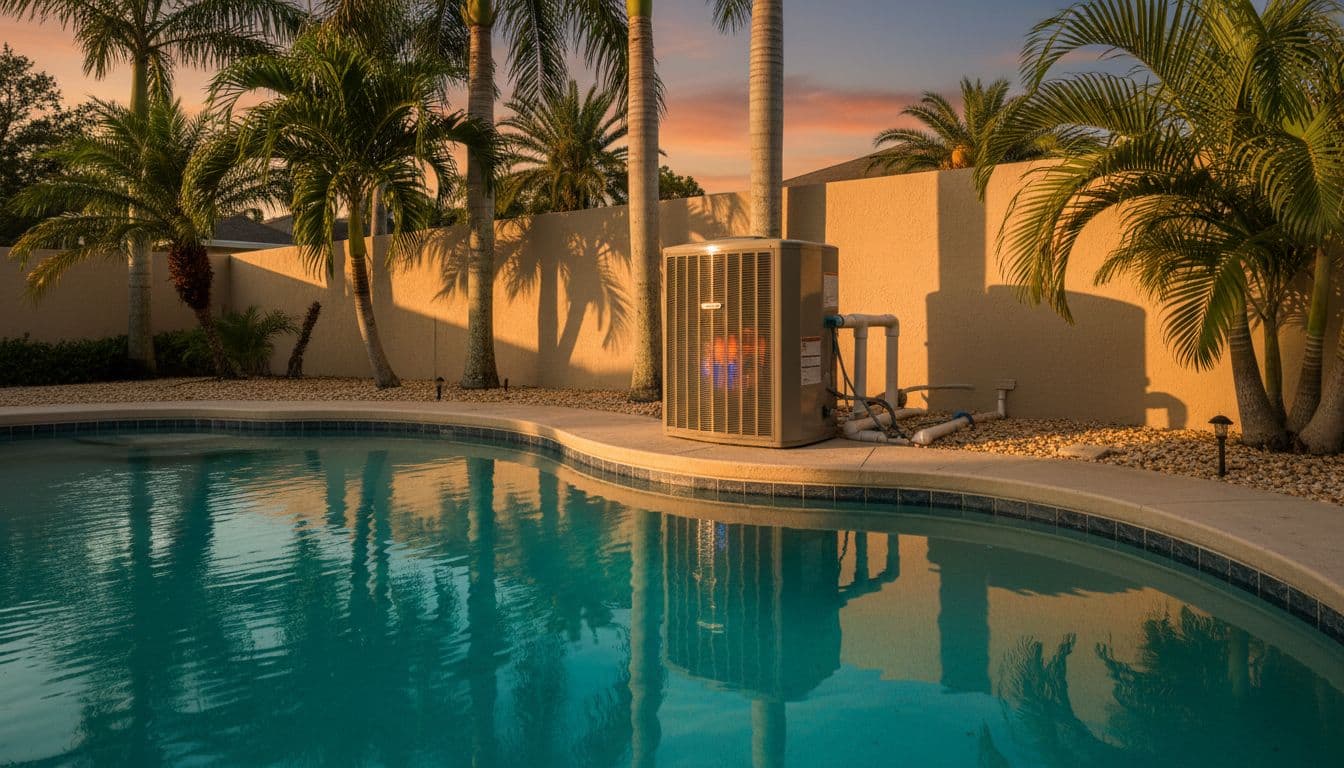
That direct heat gives gas a real advantage in recovery speed. If you keep the pool cooler during the week, gas can raise the temperature much faster before a weekend swim. It also makes sense for attached spas, which usually need quick heating.
Fuel access is the big detail. If your home already has natural gas, installation may be easier. If not, you may need propane, and that often means a tank, refills, and higher fuel cost.
Operating cost is usually the downside. Natural gas pricing varies by provider, and local data can be hard to pin down. Propane usually costs more than utility gas. In broad terms, a gas heater used often will usually cost more per month than a heat pump. A common-use range might be around $90 to $180 monthly on natural gas, while propane can climb higher.
Gas heaters also need more service. Burners, igniters, and heat exchangers need attention, and salt air can be rough on them. Service life is usually shorter too, around 5 to 10 years, though upkeep and exposure matter.
Pool heater comparison for Cape Coral conditions
Cape Coral shifts this choice more than many buyers expect. Mild winters, high humidity, and a long swim season all favor heat pumps for everyday pool heating.
At the same time, salt air near the coast pushes both systems harder. That means total cost of ownership matters more than sticker price. A cheaper unit can cost more later if it burns more fuel, needs more service, or wears out sooner.
This quick side-by-side view helps:
| Factor | Heat pump | Gas heater |
|---|---|---|
| Heating speed | Slower | Fast |
| Best use | Steady daily heating | Occasional quick heating |
| Florida climate fit | Strong | Good, but less efficient for routine use |
| Monthly operating cost | Usually lower | Usually higher |
| Upfront setup | Often higher equipment cost | Can be lower, unless gas line or propane is needed |
| Lifespan | Often longer | Often shorter |
| Salt-air concerns | Coil and cabinet corrosion | Burner and exchanger corrosion |
The Florida-specific point is simple. A heat pump makes the most sense when warm air is available, and Cape Coral has plenty of it. A gas heater makes more sense when speed matters more than efficiency.
Pool covers help either option more than a screen enclosure does, because evaporation steals heat fast. If you leave the pool open on breezy nights, both heaters work harder. Also, if you're in the middle of new pool construction in Cape Coral, that's the right time to sort out pad space, electrical load, and gas service.
Which heater fits the way you swim
For most Cape Coral pool owners, a heat pump is the better long-term fit. It matches our climate, supports a long swim season, and usually keeps monthly costs in a friendlier range.
A gas heater is the better fit when fast heat matters most. That could mean weekend use, holiday gatherings, or a spa that needs to warm up in a hurry. If your home lacks natural gas and would rely on propane, the case for gas gets weaker for regular pool heating.
A simple way to decide is to match the heater to your habits:
- Choose a heat pump if you swim often and want steady water temperature.
- Choose gas if you heat on demand or already have natural gas service.
- Recheck the numbers if propane is required, because the cost picture can change fast.
A trusted local pool contractor can help you weigh salt-air exposure, equipment pad layout, and pool size before you buy. If you're replacing equipment or planning a build, Get a Free Estimate and compare both options with real site conditions in mind.