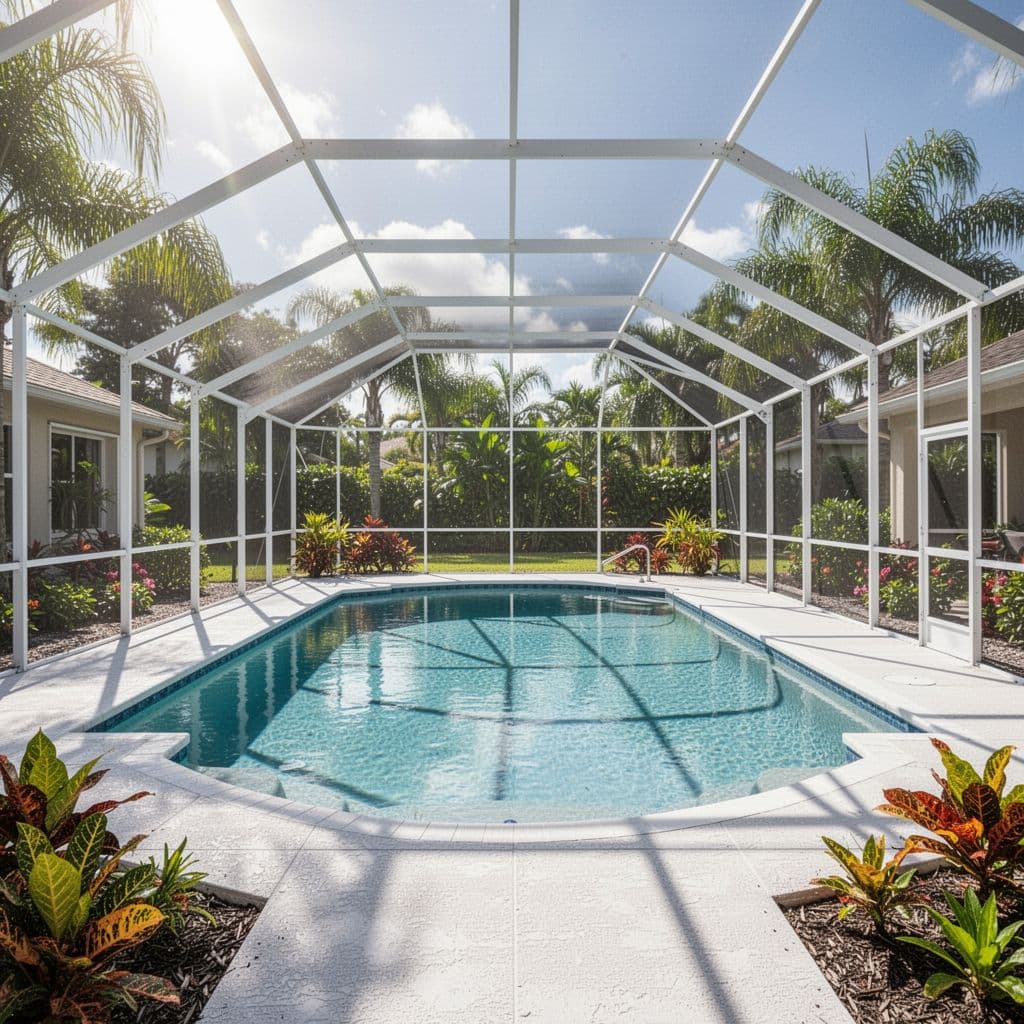
If your pool cage has torn mesh, loose seams, or panels that keep popping open, pricing matters fast. In Cape Coral, the pool rescreen cost changes with cage size, screen type, and how much weather damage the enclosure has already taken.
Most homeowners want a ballpark number before they book a visit. That number is useful, but the quote also needs to match the frame, the hardware, and the kind of screen you choose. A cheap estimate can miss the work that matters most.
What Cape Coral homeowners can expect to pay in 2026
In 2026, a typical full rescreen in Cape Coral often falls between $1,200 and $3,500. Smaller cages and partial jobs sit near the low end. Larger cages, taller enclosures, and premium mesh push the total up. Straightforward work often lands around $1.50 to $3.50 per square foot.
A quick comparison helps set expectations before you call for estimates.
| Project type | Typical 2026 range | What it usually includes |
|---|---|---|
| Small partial repair | $250 to $900 | A few torn panels, spline replacement, or a door screen fix |
| Small full rescreen | $1,200 to $2,000 | Simple cage, standard fiberglass mesh, light cleanup |
| Average full rescreen | $1,800 to $3,500 | Most Cape Coral pool cages, common mesh choices, normal labor |
| Large or upgraded job | $3,500 and up | Tall cages, pet screen, heavy storm wear, or added repairs |
Those ranges are only a planning guide. A cage with rusted screws, bent aluminum, or heavy debris buildup can move higher. A smaller enclosure with easy access can stay lower. The quote should reflect the actual condition of the cage, not just a rough square-foot number.
Screen material choices that change the quote
Standard fiberglass keeps the starting price lower. It works well for many homes, especially when the frame is in good shape and the goal is a clean reset.
Pet screen costs more because it is thicker and tougher. It can handle claw marks and a little more impact, which matters if pets push against the lower panels. No-see-um mesh also raises the quote because the weave is tighter and the material is denser.
Privacy or specialty mesh changes both the look and the price. Some homeowners want more shade. Others want less bug pressure or a different feel around the pool deck. Those upgrades make sense, but they should show up clearly on the estimate.
If you are comparing quotes, ask which mesh is included. A low number may only cover basic screen. A better fit for your home might cost more up front, but it can last longer and hold up better in local weather.
What drives your total project price

The final quote usually rises or falls for a handful of clear reasons.
- Enclosure size matters first. More panels need more material and more labor.
- Height and access affect the job too. Tall cages and tight side yards slow the work down.
- Mesh choice changes the price. Basic fiberglass costs less than pet-resistant or heavier-duty screen.
- Frame condition can add repairs. Bent rails, corroded fasteners, or damaged corners need attention before new mesh goes on.
- Hardware and cleanup may appear on the invoice. Door closers, latches, pressure washing, and haul-away can all add time.
Labor also changes with the shape of the cage. A simple rectangle is easier than a custom layout with odd angles and many seams. Storm wear can complicate the job as well, especially when the screen failed in more than one area.
A low quote looks nice on paper, but it can hide missing items. Ask what the price includes before you compare bids.
A quote that skips frame repairs can look cheaper now and cost more later.
Repair a few panels or rescreen the whole cage?

A partial repair makes sense when the damage is limited to one side, a single door, or a small section after a storm. It also works when the screen is still flexible and most panels look healthy.
A full rescreen makes more sense when the mesh feels brittle, several panels tear at once, or the color has faded across the cage. If the enclosure has age on it, patching one panel can start a cycle of repeat calls.
A quick look at pool cage repair signs can help you sort out the difference before you spend money twice. That matters most when the damage seems small from far away, but keeps spreading at the seams.
A simple test helps. If the problem is isolated, repair may be enough. If the screen is failing in more than one area, full rescreening is often the cleaner fix.
How Cape Coral weather shortens screen life
Cape Coral weather is hard on screen. Strong sun dries out mesh over time. Salt air works on fasteners and weak points. Afternoon storms push wind and debris against the panels. Even if a cage looks fine from the patio, small stress points build up fast.
Basic fiberglass screen often lasts several years, but it does not last forever in Southwest Florida. Better materials can stretch that timeline, especially when the frame stays solid and the owner keeps up with small repairs.
Storm season can speed up wear in ways homeowners miss. A panel may not tear during the first hit. Instead, it loosens, sags, and starts to fail later. That delay makes the damage harder to trace back to one event.
Tree trimming helps more than people expect. So does rinsing off salt and debris after rough weather. Those small habits do not stop aging, but they can slow it down.
Estimate planning tips that save time
A better estimate starts with better information. Before you schedule a visit, gather a few details so the quote reflects the real job.
- Measure the cage roughly, or count the panels that need work.
- Take photos of tears, sagging mesh, and rusted fasteners.
- Note whether doors, hinges, or latches are also giving you trouble.
- Ask whether the quote includes removal, cleanup, and any frame repair.
- Compare the mesh type by name, not just by price.
If the enclosure is older or the damage spreads across several sides, start with screen enclosure services instead of a single-panel fix. That gives you a clearer view of the real scope.
When you are ready to compare prices, Get a Free Estimate and ask for an onsite review. A local visit usually gives the cleanest answer because screen work rarely looks the same from every angle.
Common add-ons that change the final bill
Homeowners often hear about a few extra items during a rescreen estimate. Some are smart upgrades. Others are repairs that should happen before the new mesh goes on.
- Spline replacement is common when the old spline has hardened or shrunk.
- Door hardware may need new hinges, closers, or latches.
- Fastener upgrades help when rusted screws are holding the frame together.
- Pet screen or privacy mesh costs more, but it can make sense in the right spot.
- Kick plates or lower-panel repairs may be added if the bottom section has taken abuse from lawn tools or pets.
These items are not bad news. They just change the scope of the project. A solid estimate should spell them out before work starts.
Conclusion
The best pool rescreen cost in Cape Coral is the one that matches your cage, not the lowest number on the page. If the frame is sound and the damage is limited, a repair may be enough. If the mesh is brittle across several panels, a full rescreen usually makes more sense.
Cape Coral weather is rough on screen, so the right quote should reflect sun, wind, salt, and storm wear. A careful onsite estimate gives you a clearer price and a better repair plan.
FAQ
How much does a pool rescreen cost in Cape Coral in 2026?
Most homeowners can expect a full rescreen to land somewhere between $1,200 and $3,500. Smaller jobs may cost less, while tall cages, premium mesh, or added repairs can raise the total.
Can I replace only a few damaged panels?
Yes, if the rest of the screen is still in good shape. Partial repair works best when the damage is limited and the mesh is not brittle across the whole cage.
What screen material lasts the longest?
Heavier-duty and pet-resistant materials usually last longer than basic fiberglass. The best choice depends on your budget, the cage design, and how much wear the enclosure already has.
Should I get more than one estimate?
Yes. Two or three quotes help you spot missing items, like frame repairs, hardware, or cleanup. The cheapest estimate is not always the clearest one.