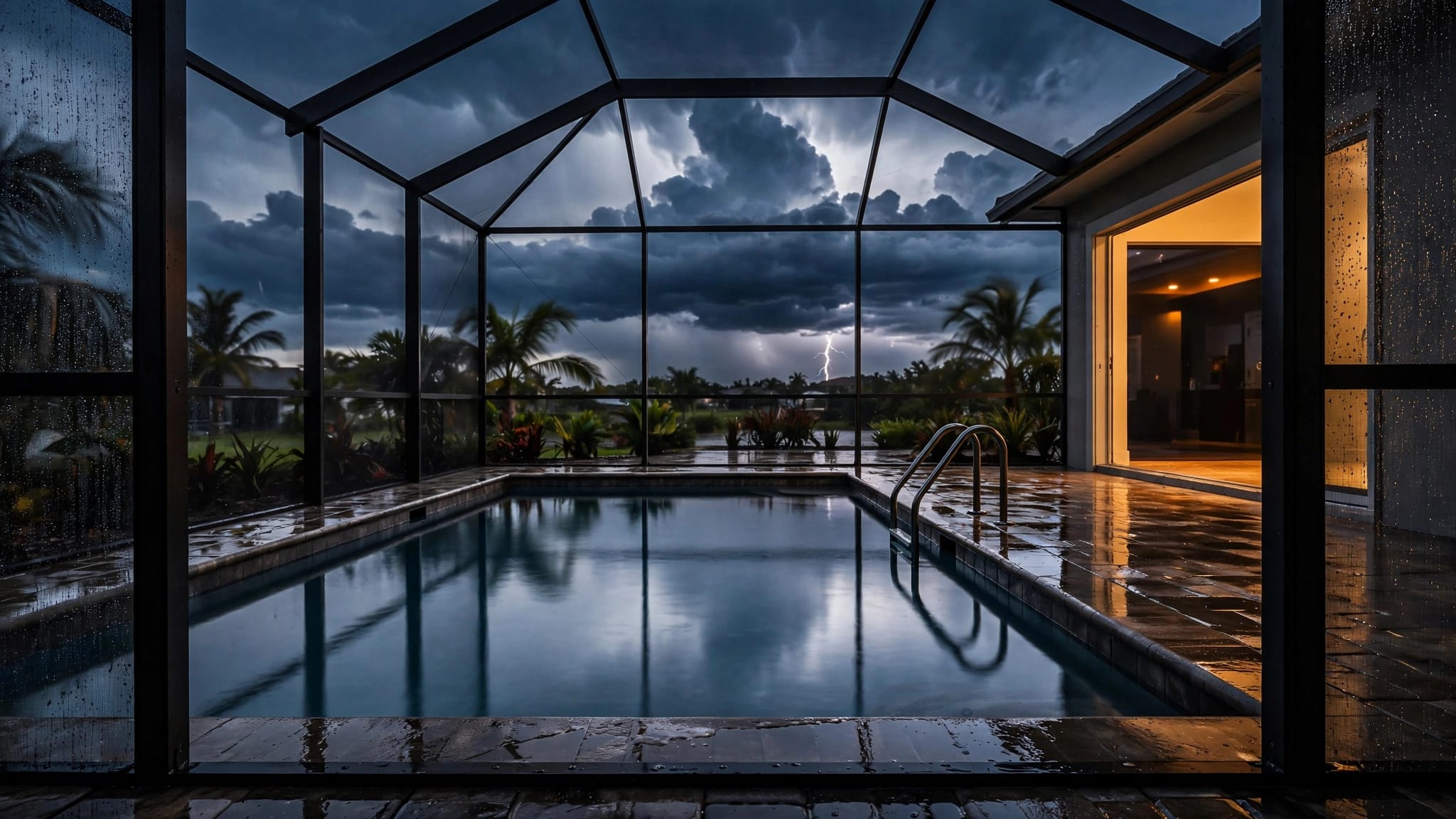
A pool cage can look fine from across the yard while small problems build in plain sight. One loose fastener, one brittle panel, or one bent corner can turn into a bigger repair after a windy week.
Cape Coral weather makes that wear happen faster. Strong sun, salt air, heavy rain, and hurricane-season gusts all put stress on the frame and screen. If you've started wondering whether it's time for pool cage repair in Cape Coral , the clues are usually easier to spot than people think.
The key is to catch damage before it spreads. A quick look now can save you from a larger fix later, especially after storms or a long stretch of summer heat.
Bent Frames, Loose Joints, and Shifting Posts
The frame is the backbone of the enclosure. If it bends, twists, or pulls away from its anchors, the whole cage starts to lose strength.
Look for corners that don't sit square, posts that seem slightly off, or joints with gaps where they used to sit tight. After a storm, you might also notice a panel that looks uneven or a beam that no longer lines up with the rest of the structure. That usually means the cage has taken a hit, even if the damage looks minor.
Loose hardware matters because a small movement can grow over time. High winds push on the enclosure again and again. Eventually, a weak joint can stress the surrounding frame, and then the repair gets bigger.
If you see new bending after a storm, don't wait for the next one to test it. The frame may still hold, but it is telling you something is wrong.
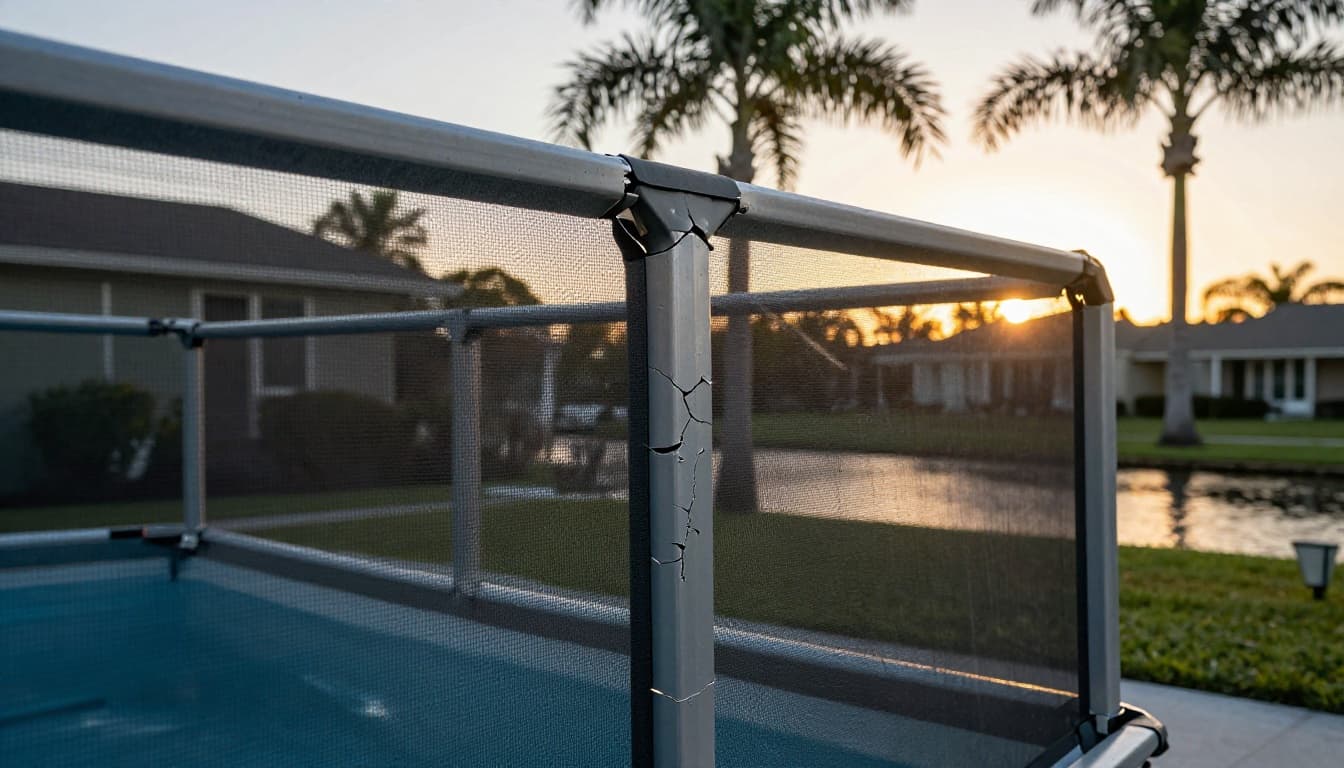
A frame issue like this often starts small, then spreads at the stress points. That is why a quick repair is usually easier than waiting for the damage to travel through the cage.
Tears, Holes, and Sagging Screen Mesh
A torn screen is easy to ignore at first. One small rip may not seem urgent, but it usually grows faster than expected.
Screen mesh should stay tight and smooth. If it sags between the rails, pulls away from the spline, or flaps in the wind, the material has likely worn out. UV exposure in Southwest Florida makes the mesh brittle over time, and frequent rain can speed up that wear. Once the screen loses tension, it is much more likely to tear again.
You may also notice more bugs, leaves, or small debris getting into the lanai. That is a clear sign the enclosure is no longer doing its job. If pets or kids brush against weak mesh, the tear can spread in one afternoon.
When the damage is spread across several panels, patching one hole at a time rarely makes sense. A full screen enclosure rescreen is often the better fix when the whole cage has aged at the same pace.
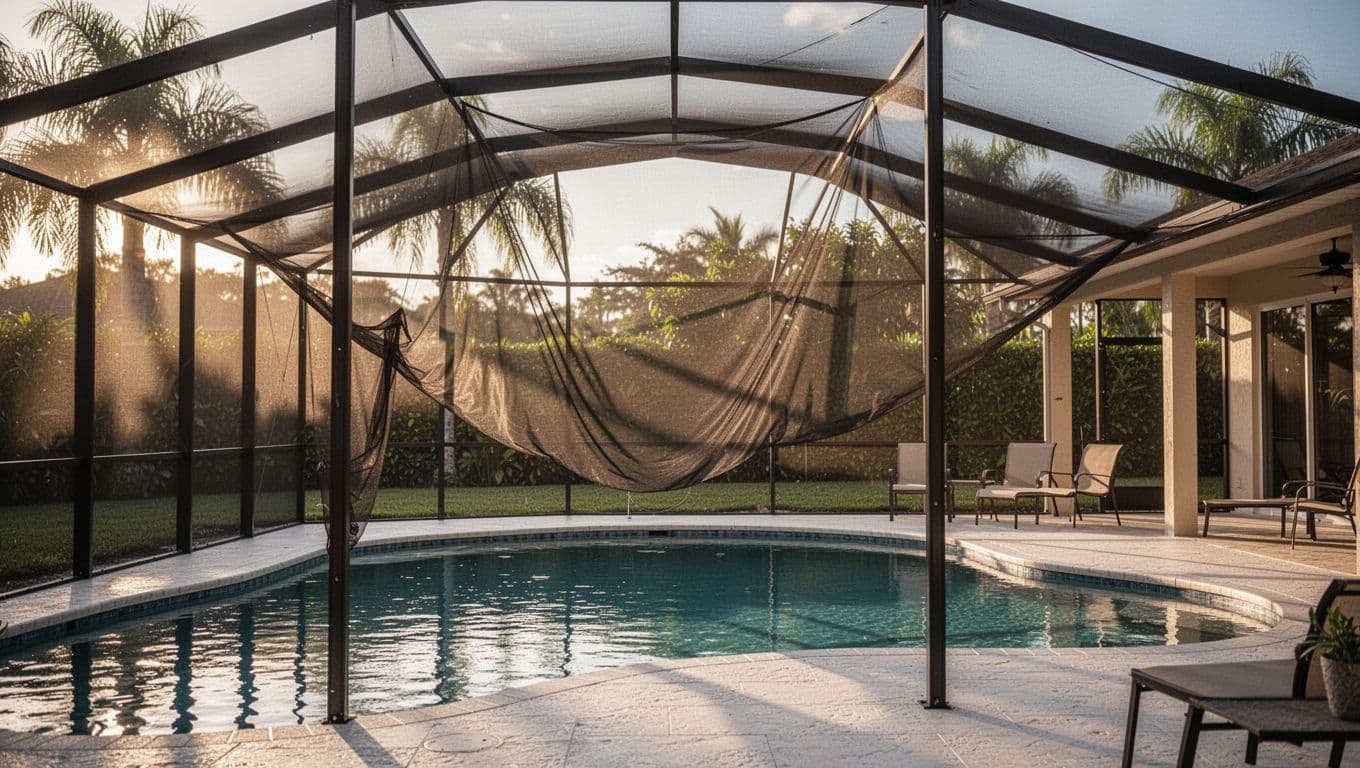
Small tears often become bigger tears after the next storm, because loose mesh catches more wind than tight mesh.
If your screen is sagging in several spots, that is more than a cosmetic issue. It is usually a sign the enclosure is aging as a whole.
Rust, Corrosion, and Hardware That Looks Worn Out
Cape Coral's salt air can be hard on metal parts, even when the frame itself still looks decent. Rust, pitting, and white powdery residue around joints or fasteners are warning signs you should not ignore.
Aluminum does not rust the same way steel does, but fittings, screws, hinges, and anchors can still corrode. Once that starts, the parts may weaken or seize up. You might notice a screw head that looks discolored, a hinge that sticks, or a connector that no longer sits flush.
Frequent rain can make the problem worse by keeping moisture in joints and around base plates. Over time, that moisture can work its way into hidden spots, where the damage is harder to see.
Delaying repairs here can lead to a cage that rattles, shifts, or loosens more with each storm. The enclosure may still stand, but its parts stop working together the way they should.
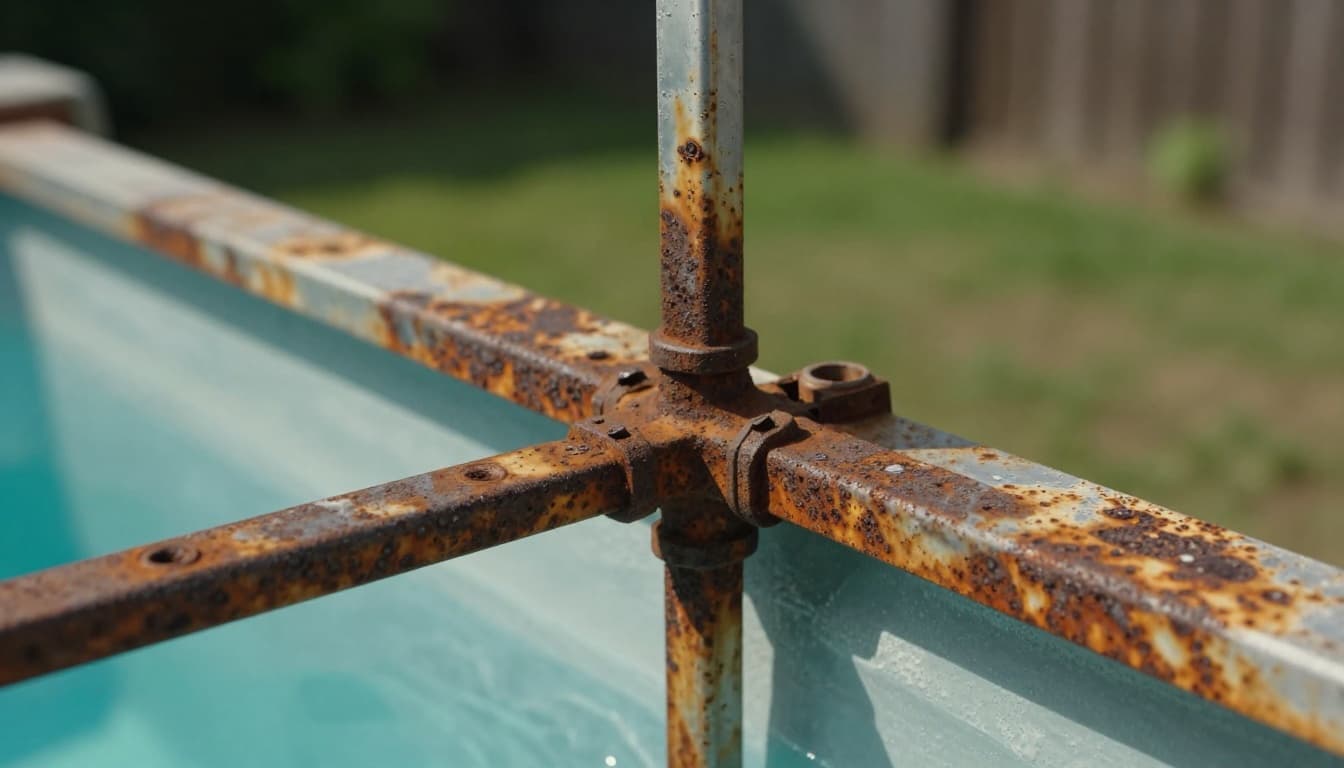
If you see corrosion at more than one joint, the problem may go beyond a single bad screw. That is a good time to have the cage checked before more parts fail.
Doors, Latches, and Gaps That Stop Working Right
A pool cage door should open cleanly, close fully, and latch without a fight. When it doesn't, the enclosure may be shifting or aging in ways that are easy to miss.
A door that rubs on the frame, won't stay closed, or needs a hard pull to latch can point to warped supports, loose hinges, or a frame that is no longer square. Gaps around the door edge matter too. They let in insects and debris, and they can make the enclosure feel unfinished even if the rest of the cage still looks fine.
After hurricane season or a long stretch of high wind, a door issue may show up first. That is because doors move a lot, so they reveal problems before the rest of the cage does. If the latch keeps failing, the stress may be coming from the frame, not just the hardware.
This is also the point where quick fixes can hide a bigger issue. A new latch helps only if the door opening is still true. If the opening has shifted, the repair should address the cause, not just the symptom.
Cape Coral homeowners who keep the enclosure in good shape also tend to notice comfort issues sooner. A cage with well-fitted doors, tight panels, and sound hardware keeps the pool area cleaner and easier to use.
Why a Prompt Inspection Matters After Storms and Long Heat
A professional inspection gives you a clear answer before the damage spreads. That matters in Cape Coral, where one season can bring wind, salt, sun, and heavy rain to the same enclosure.
A good inspector checks the frame, fasteners, anchors, screen tension, door hardware, and any signs of movement at the joints. That kind of review catches problems you may not spot from the patio. It also helps you decide whether you need a small repair, a larger rescreen, or a more focused restoration.
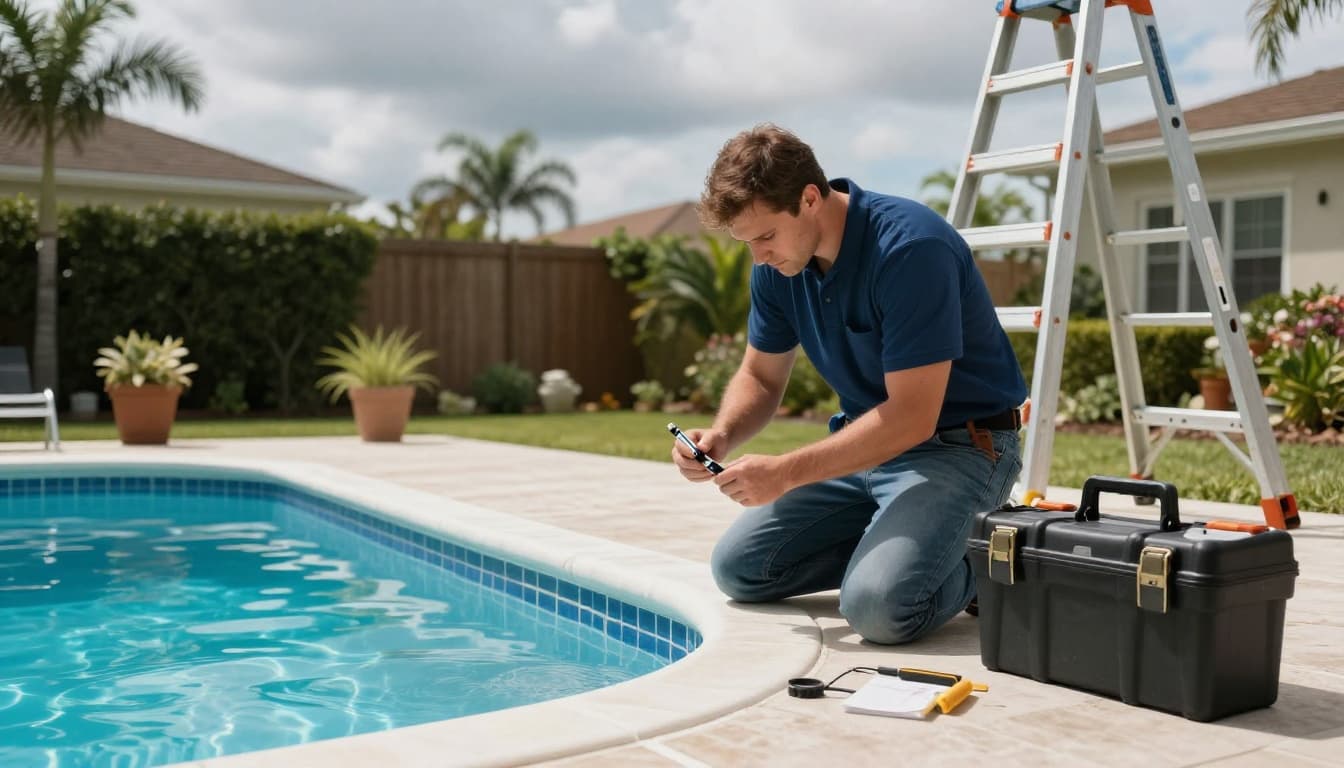
A prompt inspection is helpful because it keeps the problem from turning into guesswork. You get a better sense of what is urgent, what can wait, and what will only get more expensive if you delay.
A few warning signs that deserve fast attention include loose corners after a storm, repeated screen tears, sticky doors, visible corrosion, and any frame that looks out of line. Even one of those can point to a larger issue. Two or more usually mean it's time to act.
If you want a clear next step, Get a Free Estimate and schedule an onsite look before the next round of weather rolls through.
Conclusion
A pool cage usually gives warning before it fails. Bent frame members, sagging mesh, rusty fittings, and stubborn doors all tell the same story in different ways.
Cape Coral weather can speed up that wear, so small issues rarely stay small for long. If your enclosure has started showing any of these signs, a pool cage repair check now is a smarter move than waiting for the next storm to point it out for you.