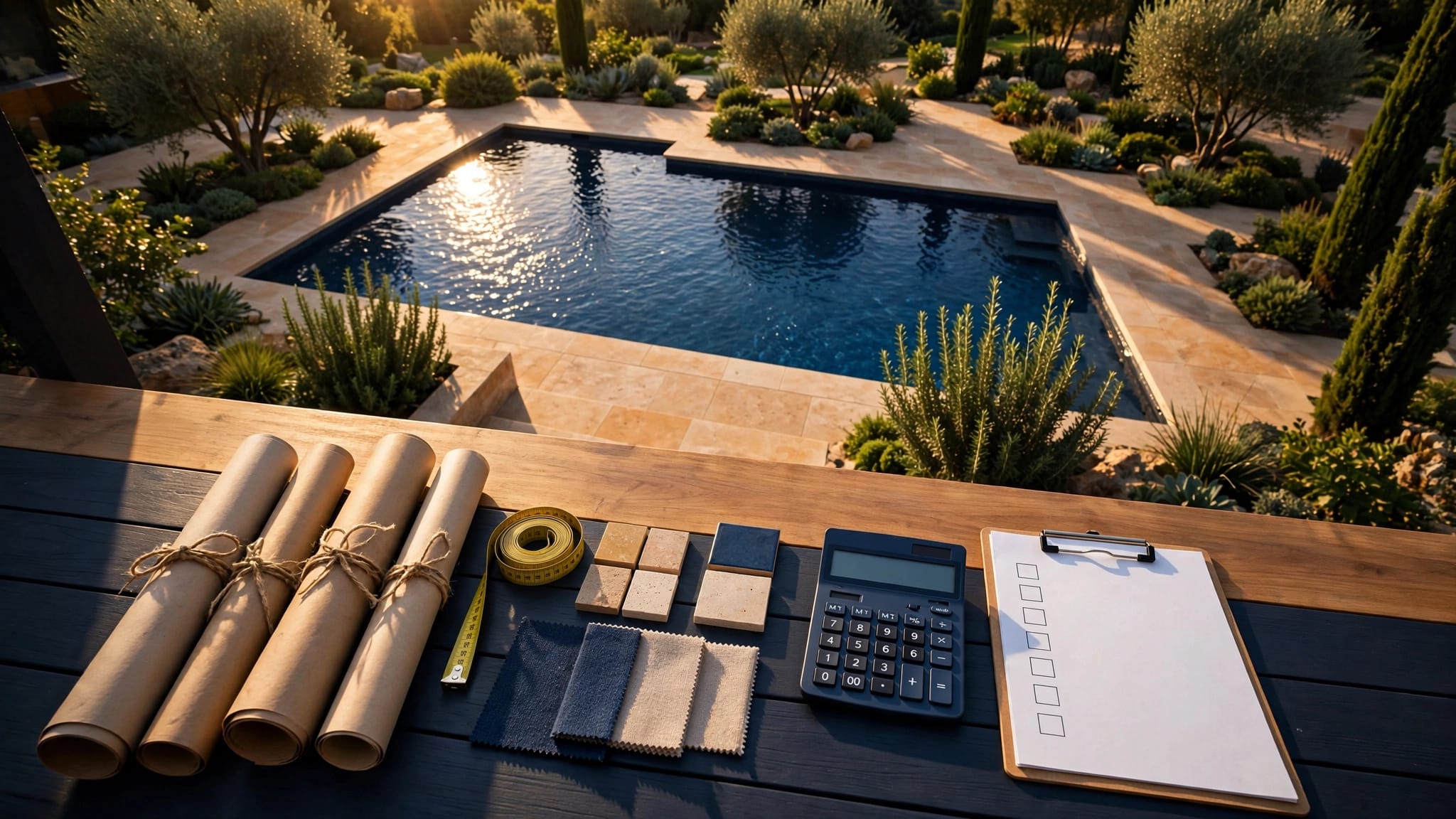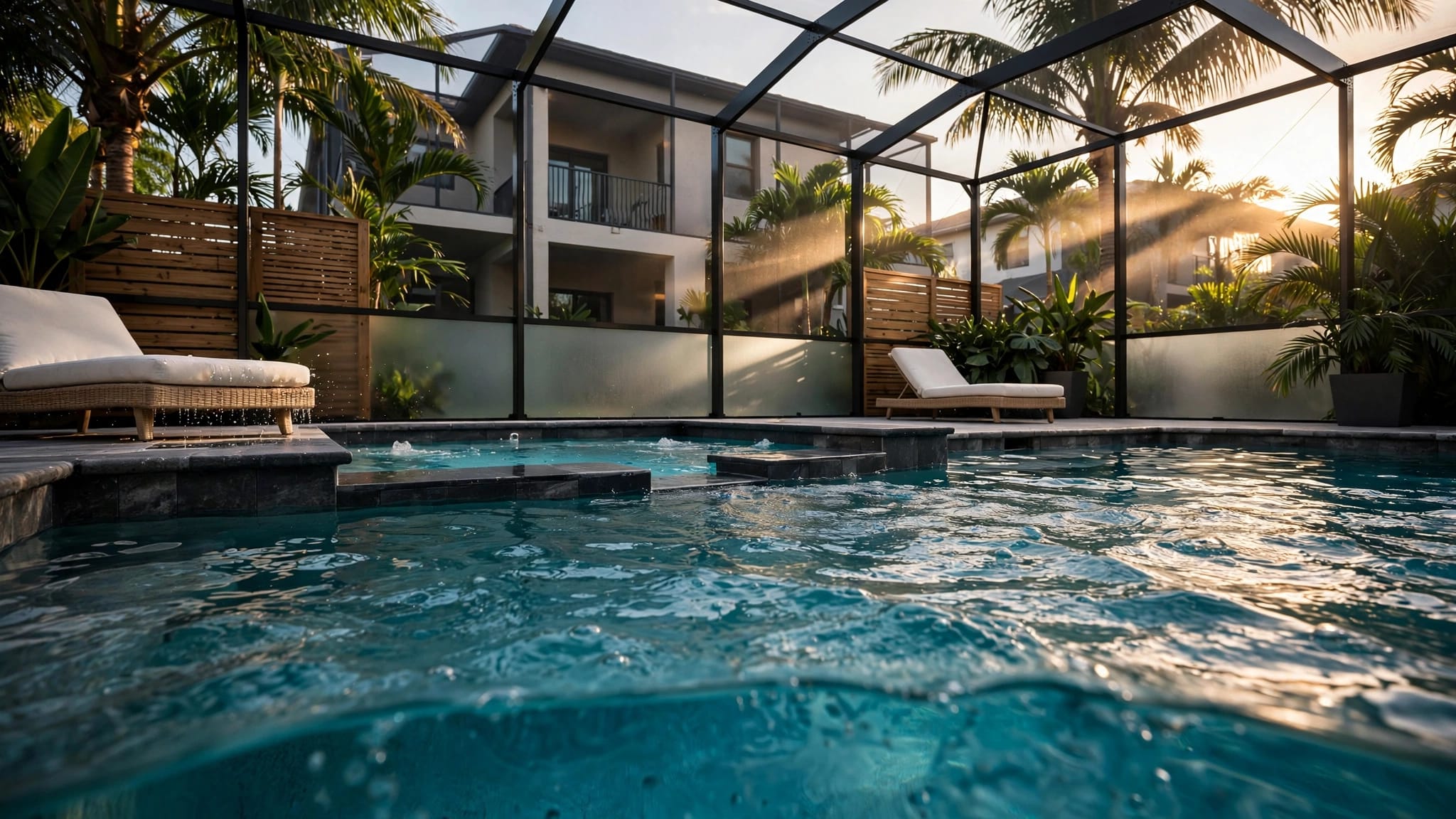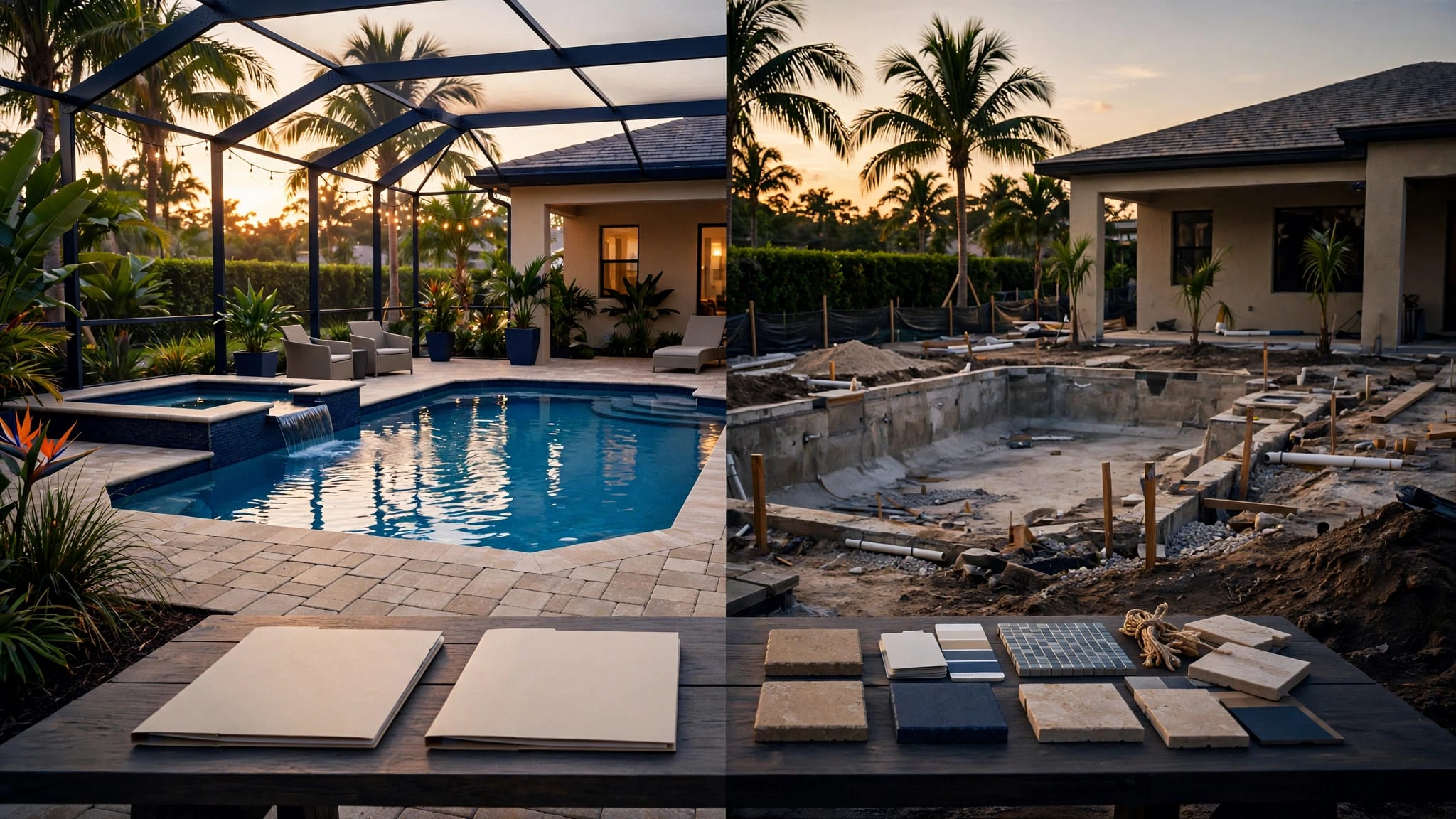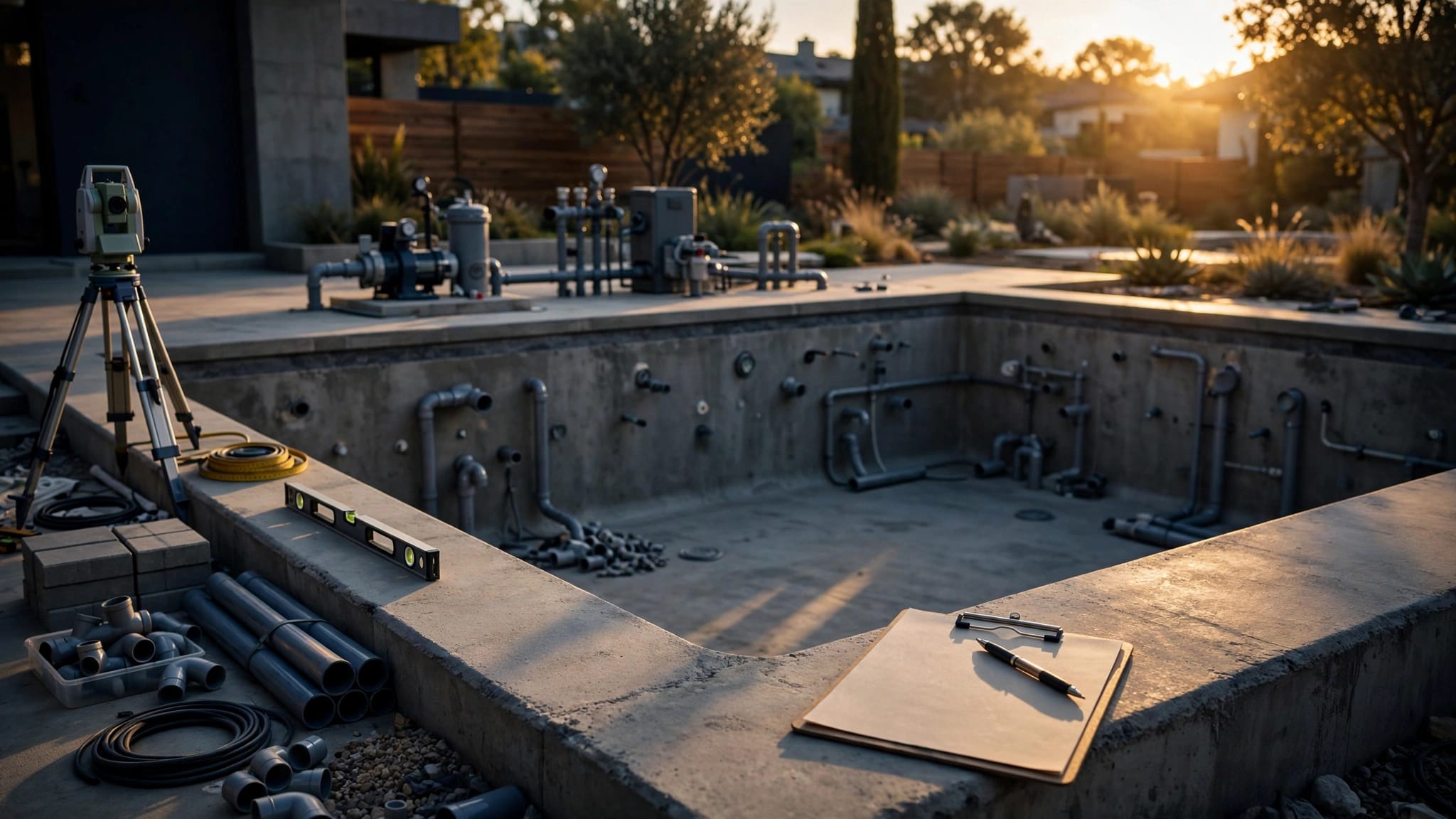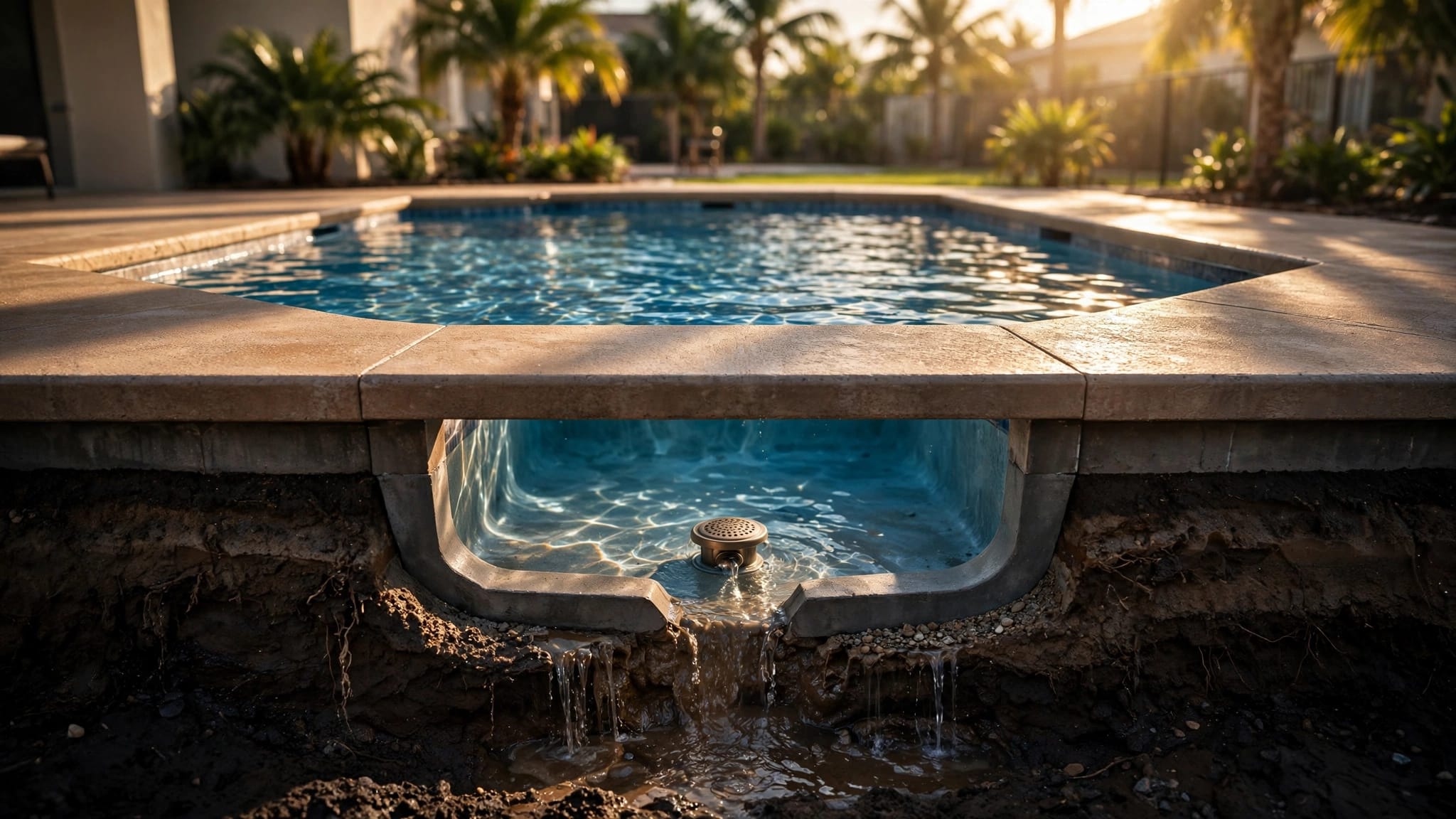
Cape Coral canal homes need more than a pretty pool. They need a layout that protects the view, works with the dock, and fits the way you use the yard.
A pool that looks great in a suburban lot can feel cramped on the water. The best Cape Coral pool layouts treat the canal, lanai, screen cage, and boat access as one design puzzle. When those pieces fit, the backyard feels open even with a pool in place.
Start with the view, the dock, and the lanai
Before you pick a shape, study the lot. Where does the canal sit? Where do you walk from the house to the pool? Where does the dock need clear access?
On canal-front properties, the pool should support the view, not block it. A raised spa in the wrong spot can cut across sightlines. A wide deck placed too close to the water can make the yard feel smaller than it is.
On a canal lot, the pool should frame the water, not compete with it.
Sun matters too. Southwest Florida heat can turn a dark deck and shallow seating area into a hot zone by midday. Good plans use shade, water movement, and smart orientation to make the space usable later in the day.
If you're planning a new build, start with a designer who understands local lots and setbacks, such as new pool construction in Cape Coral. The right plan usually comes from the site, not from a catalog.
Linear pools keep the water view wide open
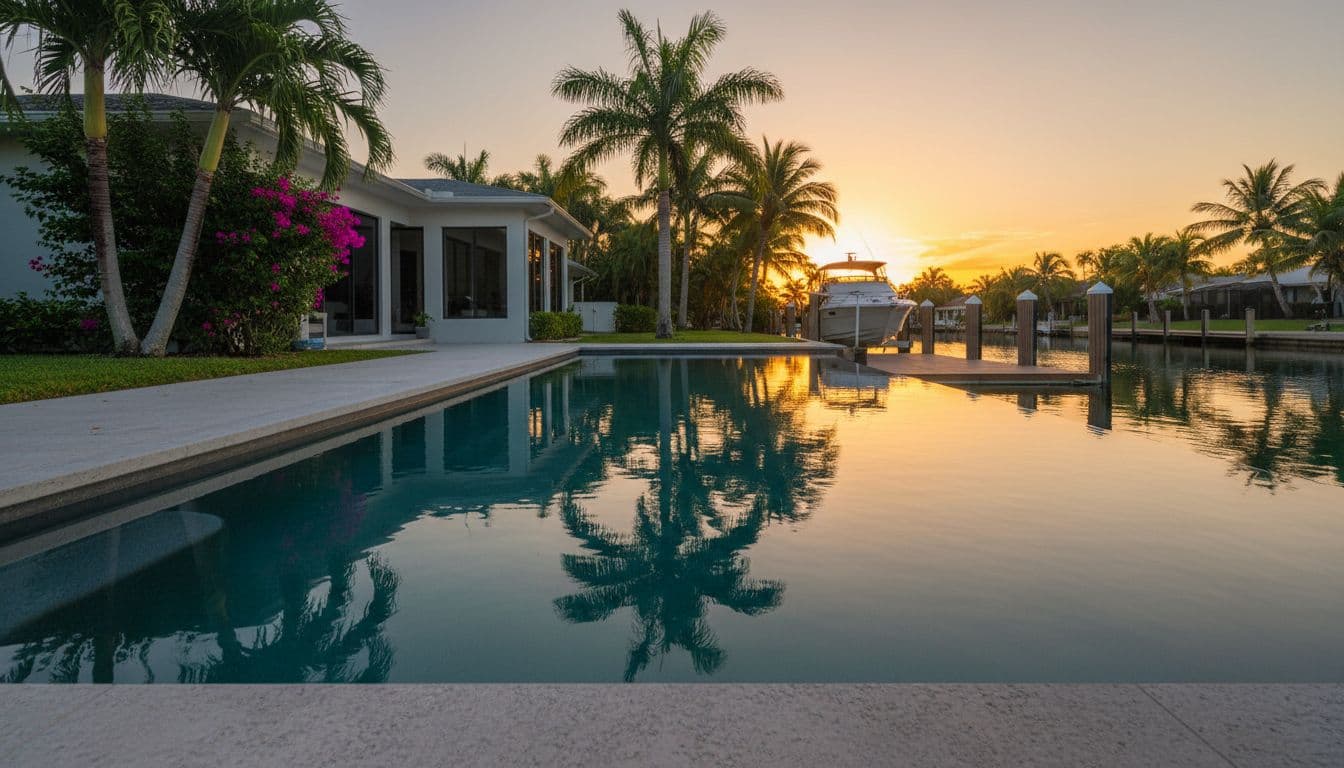
A long rectangular pool is often the cleanest choice for canal homes. It runs with the lot instead of against it, so the center of the yard stays open. That helps when you want the canal view to stay front and center.
This layout works well on narrow lots and homes with a long rear setback. It also pairs nicely with a dock, because the pool edge can stay organized and out of the way of boat traffic.
The big advantage is balance. You get a strong visual line, easy deck planning, and room for chairs without crowding the water. It can even feel more upscale when the pool is aligned with the canal.
The downside is flexibility. A straight layout leaves fewer spots for playful curves, tanning ledges, or separate zones. If the deck is too tight, the space can read as simple instead of polished.
When you want a crisp look, a linear pool is hard to beat. It also gives designers a strong base for custom gunite pool designs, which matters when the lot has unusual dimensions.
L-shaped pools give you room for people and furniture
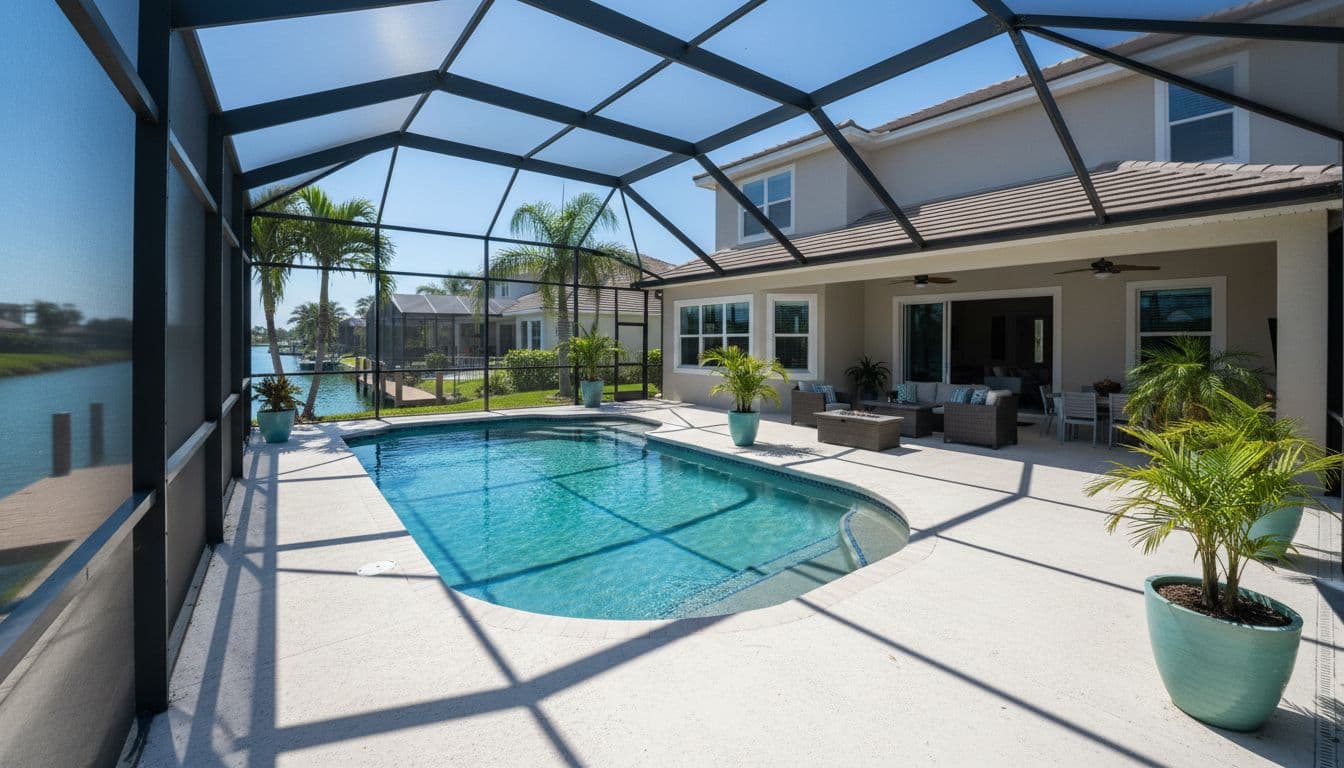
L-shaped pools work well when entertaining is part of the plan. One leg of the pool can sit near the lanai, while the other stretches toward the canal. That creates separate zones without splitting the yard into pieces.
This shape is useful when the home footprint eats into the backyard. It gives you a shallow side for lounging and a longer side for swimming. Families like it because one corner can become the social spot while the rest stays open.
It also works well with a screen enclosure. The geometry of the pool can follow the cage lines instead of fighting them. If your enclosure needs repair or a rescreen, the pool shape should still leave enough breathing room for the frame and door paths. screen enclosures and rescreens matter more than people think when the yard is tight.
The tradeoff is view control. An L-shape can block part of the canal sightline if the bend sits in the wrong place. Good placement keeps the turn low and out of the main view corridor.
For homeowners who host often, this layout feels practical and relaxed at the same time.
Infinity-edge designs make the canal feel bigger
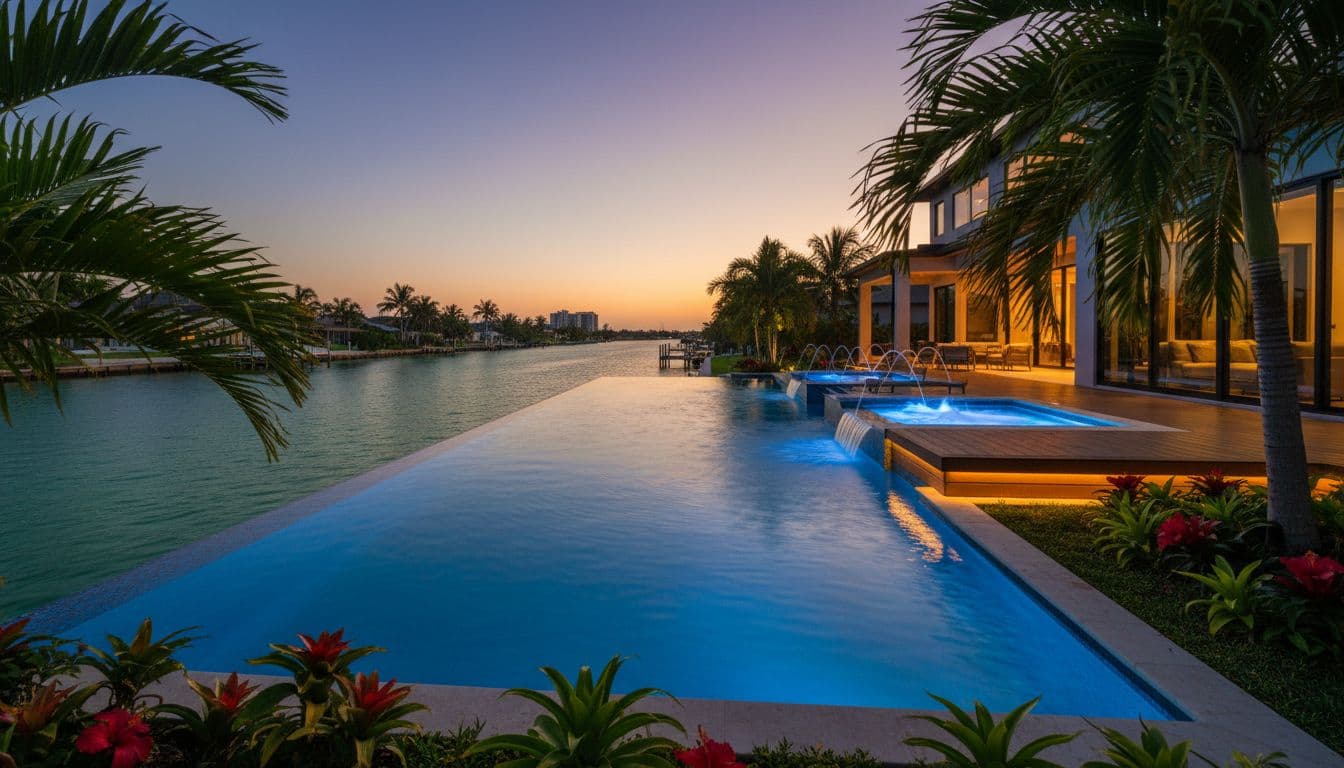
An infinity edge can be the best fit when the lot has a wide rear view and the home sits well above the water line. The pool edge appears to spill toward the canal, which gives the backyard a strong, finished look.
This style works best when the rest of the yard is quiet. Clean decking, simple planting, and a clear view line help the edge do its job. If too many features crowd the space, the effect gets lost.
It's also a smart option for homeowners who want a more resort-style feel. A raised spa or sun shelf can sit beside the edge, which gives the space more depth without adding clutter.
There are limits, though. Infinity edges need careful grading, good drainage, and precise construction. They usually cost more than a standard flat-edge design. For that reason, they fit best on larger or more custom lots.
If you're comparing premium options, it helps to review custom gunite pool designs early. The layout has to work with the site, not just with the style board.
Freeform pools fit tricky lots and older homes
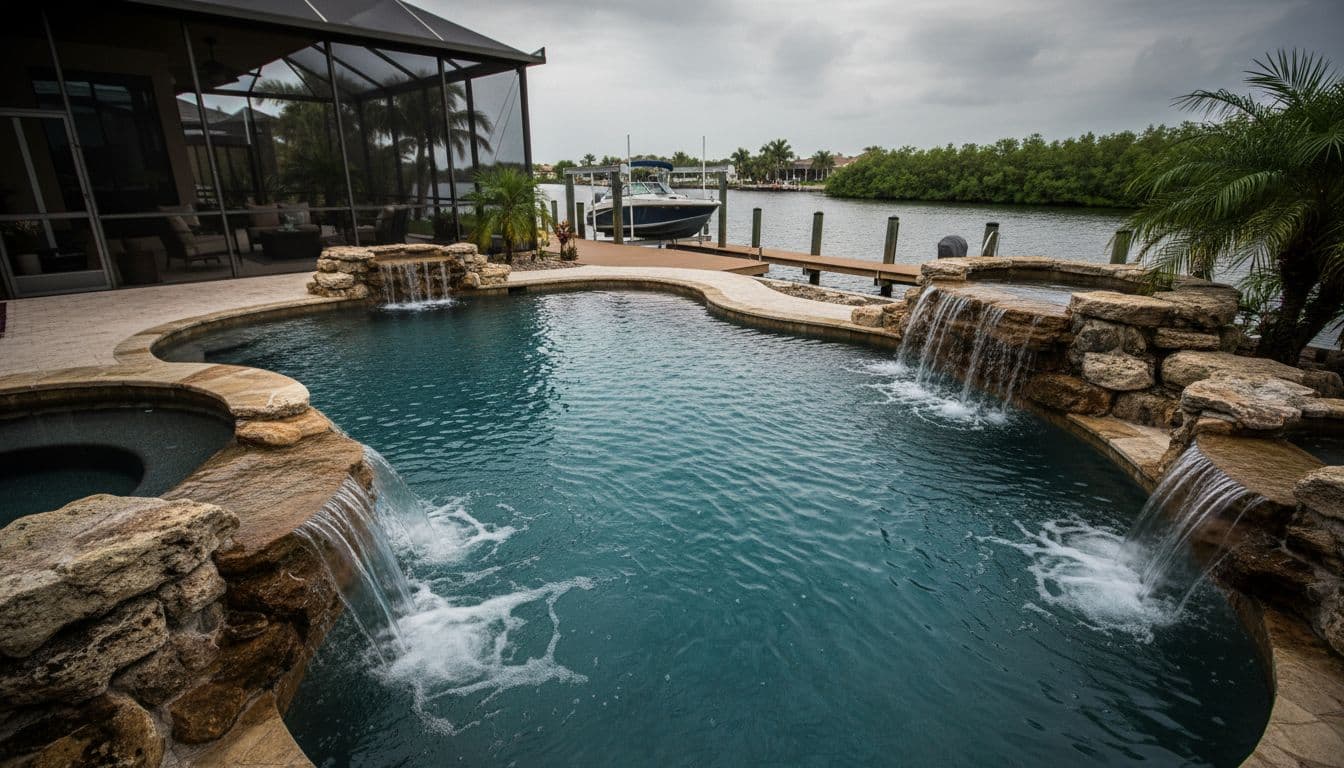
Freeform pools are useful when the lot has odd angles, a tight dock area, or an older home that needs a softer layout. The curves can wrap around obstacles instead of forcing a hard rectangle into the yard.
This style can feel relaxed and coastal, which suits waterfront living. It also helps if you want a pool that blends with landscaping and stone rather than with straight architectural lines.
The risk is overdoing it. Too many curves can shrink the view and make the yard feel busy. On a canal lot, the best freeform pool still leaves a clear path to the water and a clean look through the cage.
If your current pool is in rough shape, a layout update often goes hand in hand with pool resurfacing and renovations. That's especially true when the finish, coping, or deck no longer fits the way you use the space now.
A simple way to choose the right fit
Use the lot before you use the pool catalog. Long, narrow yards usually favor straight lines. Wider lots can handle more drama. Homes with big lanais often need an L-shape or a compact freeform plan. Homes with sweeping canal views can carry an infinity edge.
| Layout type | Best for | Main tradeoff |
|---|---|---|
| Linear | Narrow lots and open views | Less play with curves |
| L-shaped | Entertaining and separate zones | Can cut into sightlines |
| Infinity edge | Wide views and custom lots | Higher cost and complexity |
| Freeform | Odd-shaped lots and older homes | Can feel busy if overdone |
The best choice is the one that fits your home, your dock, and your daily routine. If you want help matching the layout to your lot, you can Get a Free Estimate.
Conclusion
The strongest canal-home pool designs do one thing well, they keep the water view alive while making the yard usable. That usually means choosing a shape that fits the lot, the lanai, and the dock instead of forcing a style that belongs somewhere else.
Whether you prefer a clean rectangle, a social L-shape, a dramatic infinity edge, or a flexible freeform layout, the right plan makes the backyard feel larger. On a Cape Coral canal lot, fit matters more than flash.