A pool finish can look solid for years, then seem to age all at once. In Cape Coral, that timeline is often shorter than homeowners expect because pools here work hard all year.
If you're watching stains spread, feeling rough spots underfoot, or wondering whether resurfacing can wait, the short answer is this: most pool finishes in Cape Coral last anywhere from about 7 to 20 years , depending on the material and how the pool has been cared for. The details matter, and that's where most resurfacing decisions get easier.
Typical lifespan for pool finishes in Cape Coral
The finish on a concrete pool is its protective skin. It gives the pool color and texture, but it also shields the shell underneath. Once that surface starts to wear thin, small cosmetic issues can turn into larger repair needs.
For Cape Coral homeowners, these are fair local lifespan ranges to keep in mind:
| Pool finish type | Typical lifespan in Cape Coral | What to expect |
|---|---|---|
| White plaster | 7 to 10 years | Smooth look, lower upfront cost, more prone to staining and etching |
| Quartz aggregate | 10 to 15 years | Better stain resistance, stronger surface, longer color hold |
| Pebble or exposed aggregate | 15 to 20 years | Most durable of the common finishes, textured feel, strong wear resistance |
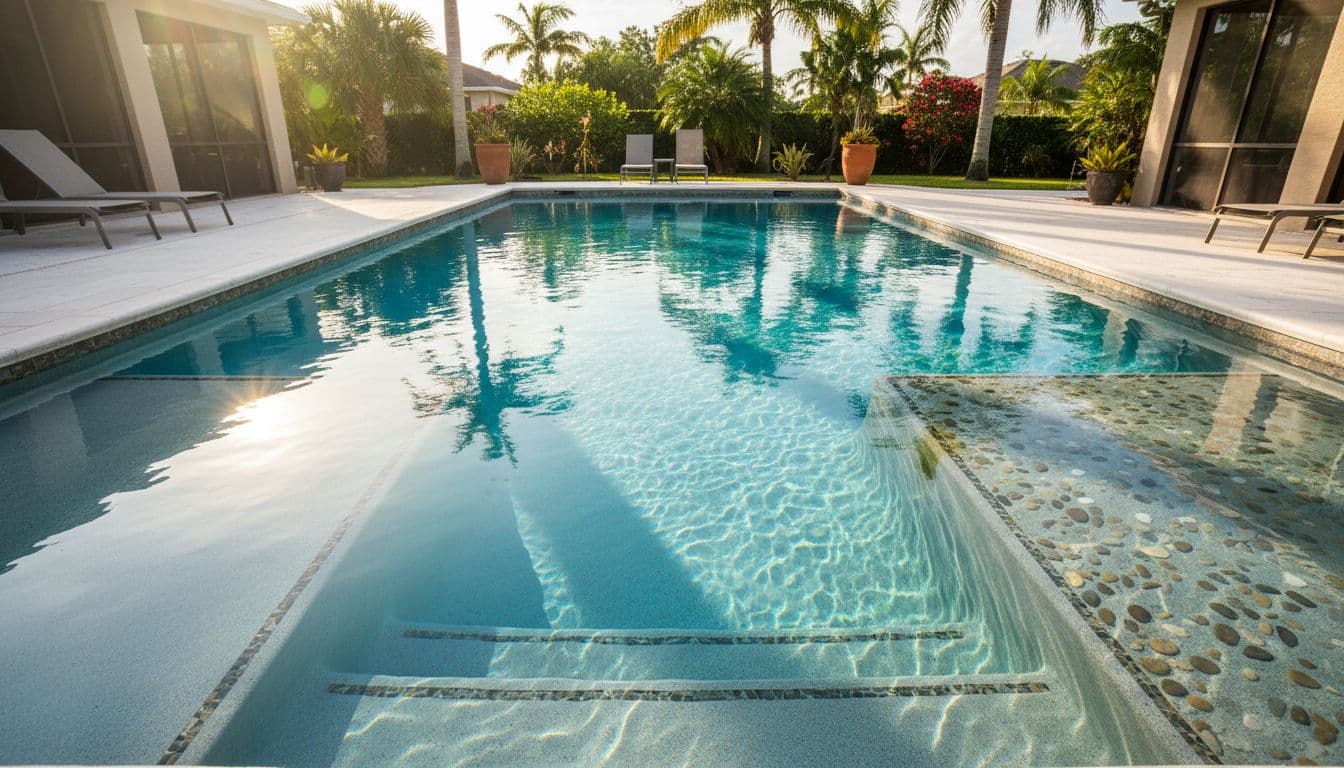
Those numbers are useful, but they aren't promises. A plaster finish might look tired at year seven in one backyard and still look decent at year eleven in another. Quartz usually buys you more time, while pebble tends to hold up the longest, especially when the water stays balanced and the finish was installed well.
That last point matters more than many homeowners realize. Installer quality affects how evenly the surface cures, how well it bonds, and how smooth it feels over time. Good material can still disappoint if the prep or application was poor.
If you're already comparing Cape Coral pool resurfacing options, it helps to think in terms of total value, not only first cost. A finish that lasts longer may cost more up front, but it can stretch the time between renovations.
Why Southwest Florida changes the lifespan
Cape Coral pools don't get much of an off-season. That constant use is great for backyard living, but it puts more wear on the finish. Sun, heat, rain, and water chemistry all press on the surface week after week.
In Southwest Florida, water balance often matters as much as the finish itself .
High heat and strong UV can fade color and speed up surface wear. At the same time, heavy summer rain can throw off chemistry fast. If pH rises, scale can build. If water turns aggressive, it can etch plaster and slowly strip away the surface. Either way, the finish pays the price.
Fill water also plays a role. Hard water can leave calcium scale and rough deposits, especially along the waterline. Salt systems can be gentle when chemistry is well managed, but they still need close testing. Add sunscreen, leaves, storms, and year-round swimmer traffic, and you can see why pool finishes in Cape Coral often age faster than they might in milder climates.
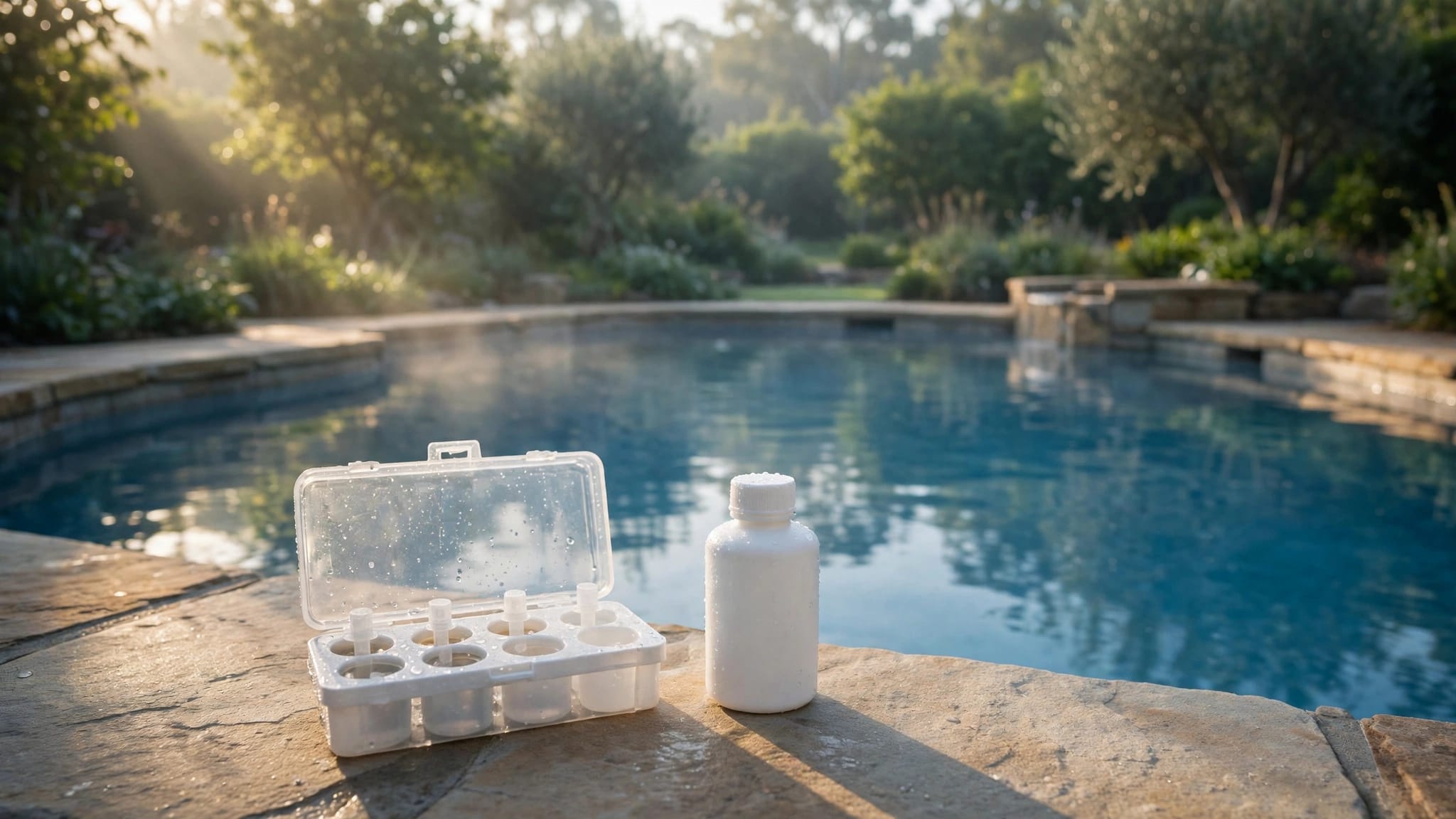
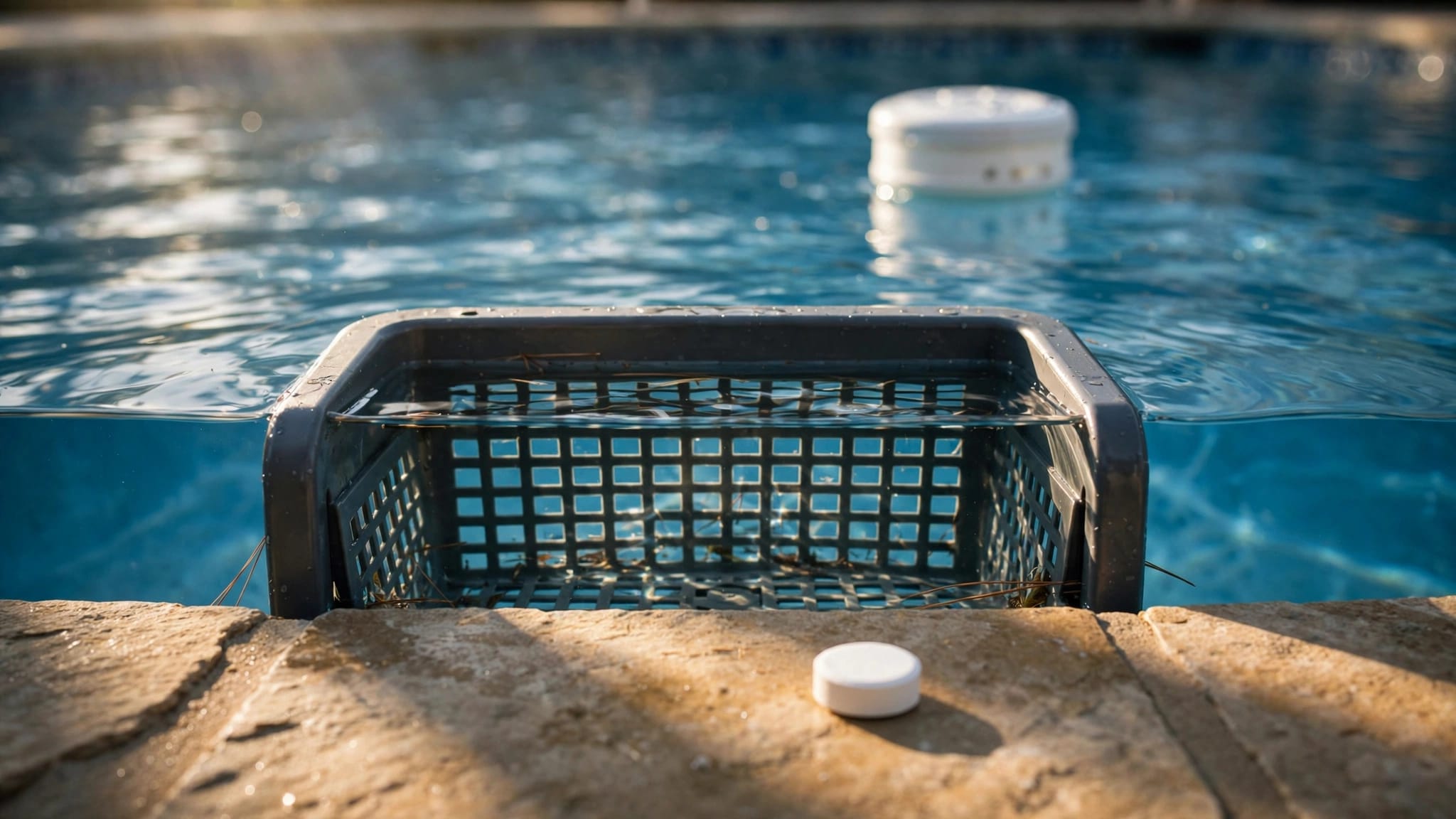
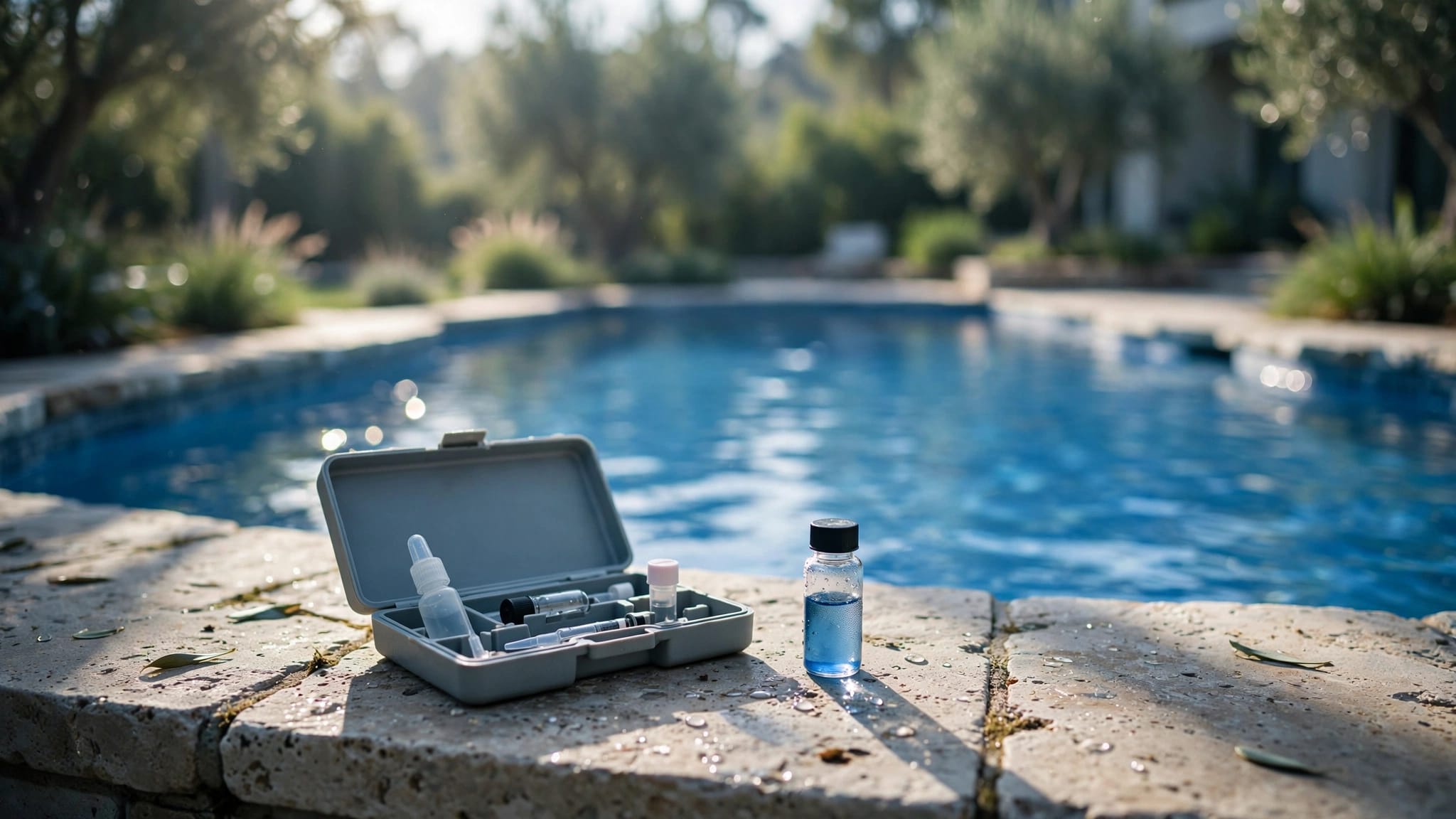
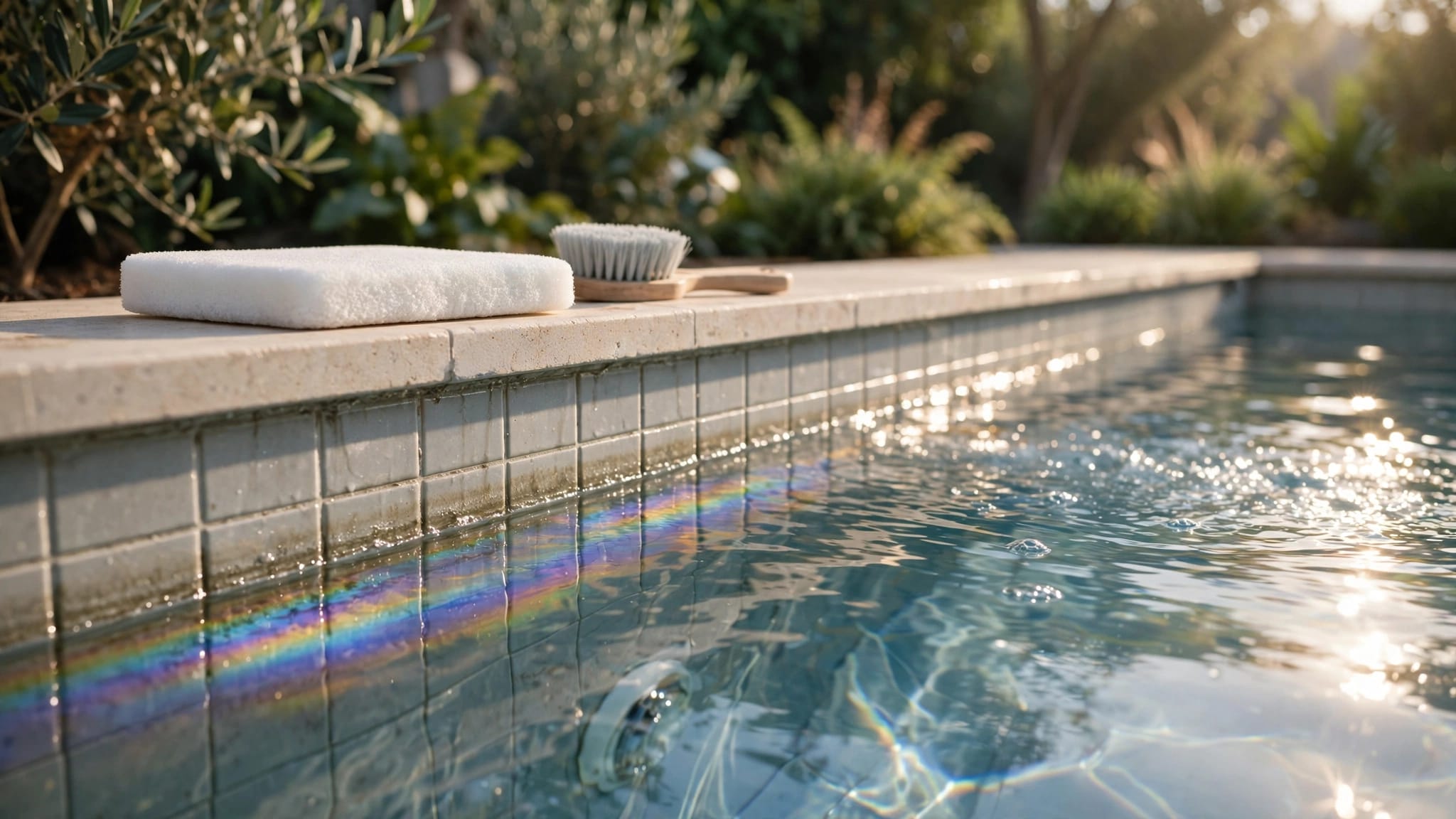
Routine care makes a real difference. Brushing helps prevent buildup. Consistent testing keeps pH, alkalinity, and calcium in range. Fast stain treatment can stop a small issue from becoming a permanent blotch. In contrast, long stretches of neglected water can shorten the life of any finish, even a premium one.
Usage patterns matter, too. A pool with frequent parties, pets, or lots of kids often sees more abrasion on steps, benches, and shallow areas. Those are usually the first spots to show wear.
Wear signs that mean resurfacing is getting close
Aging pool finishes rarely fail all at once. They usually give warnings first, and some are easy to miss until the surface feels wrong.
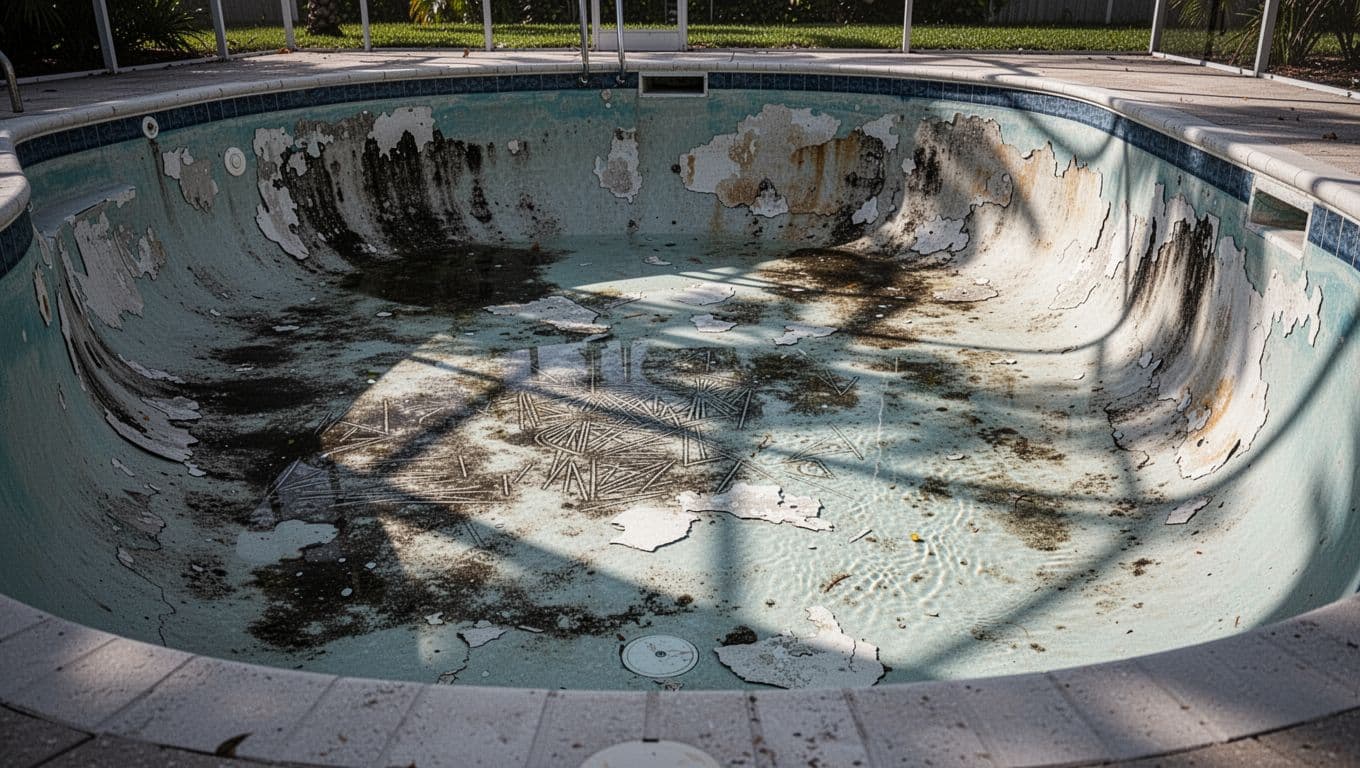
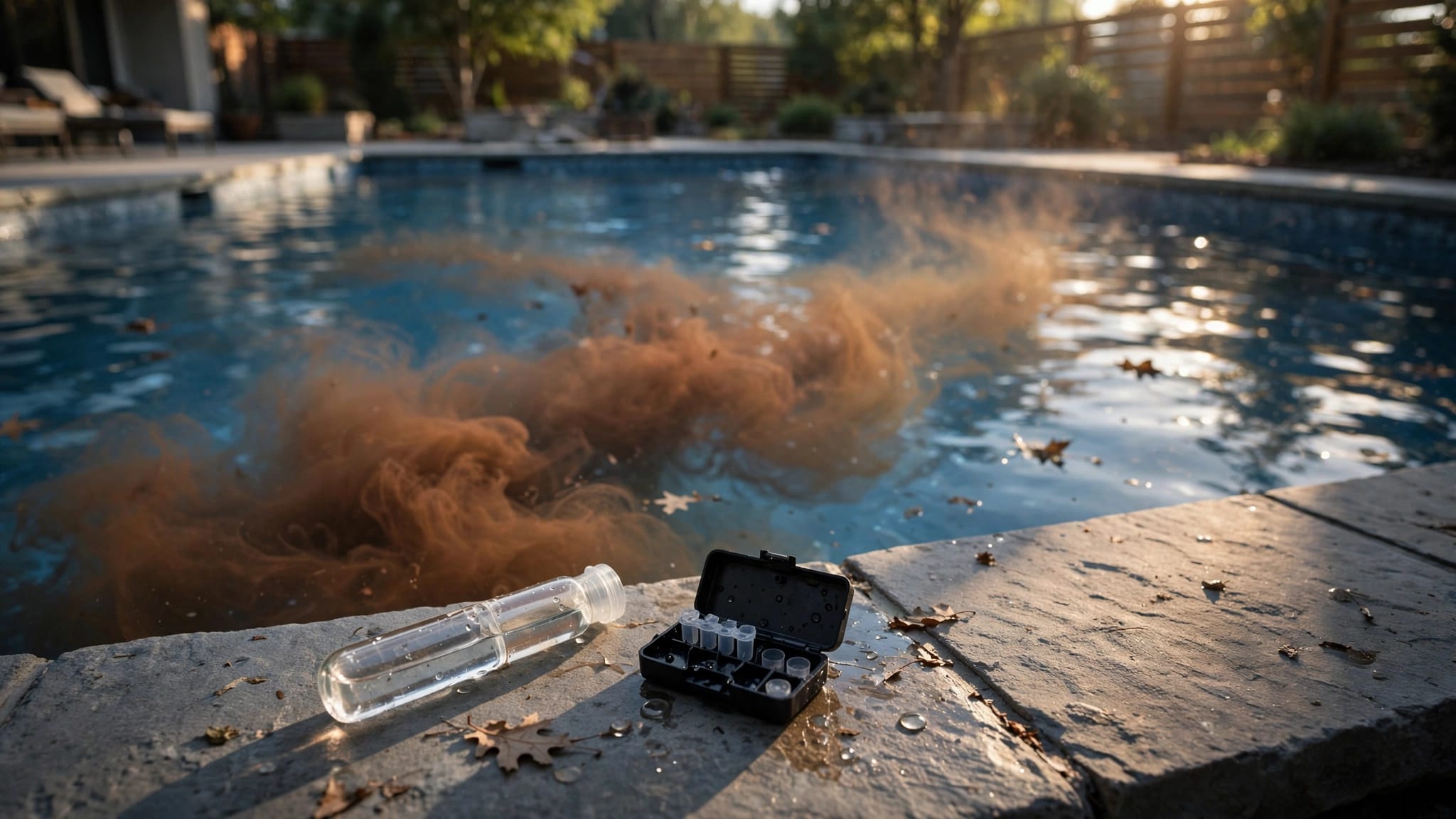
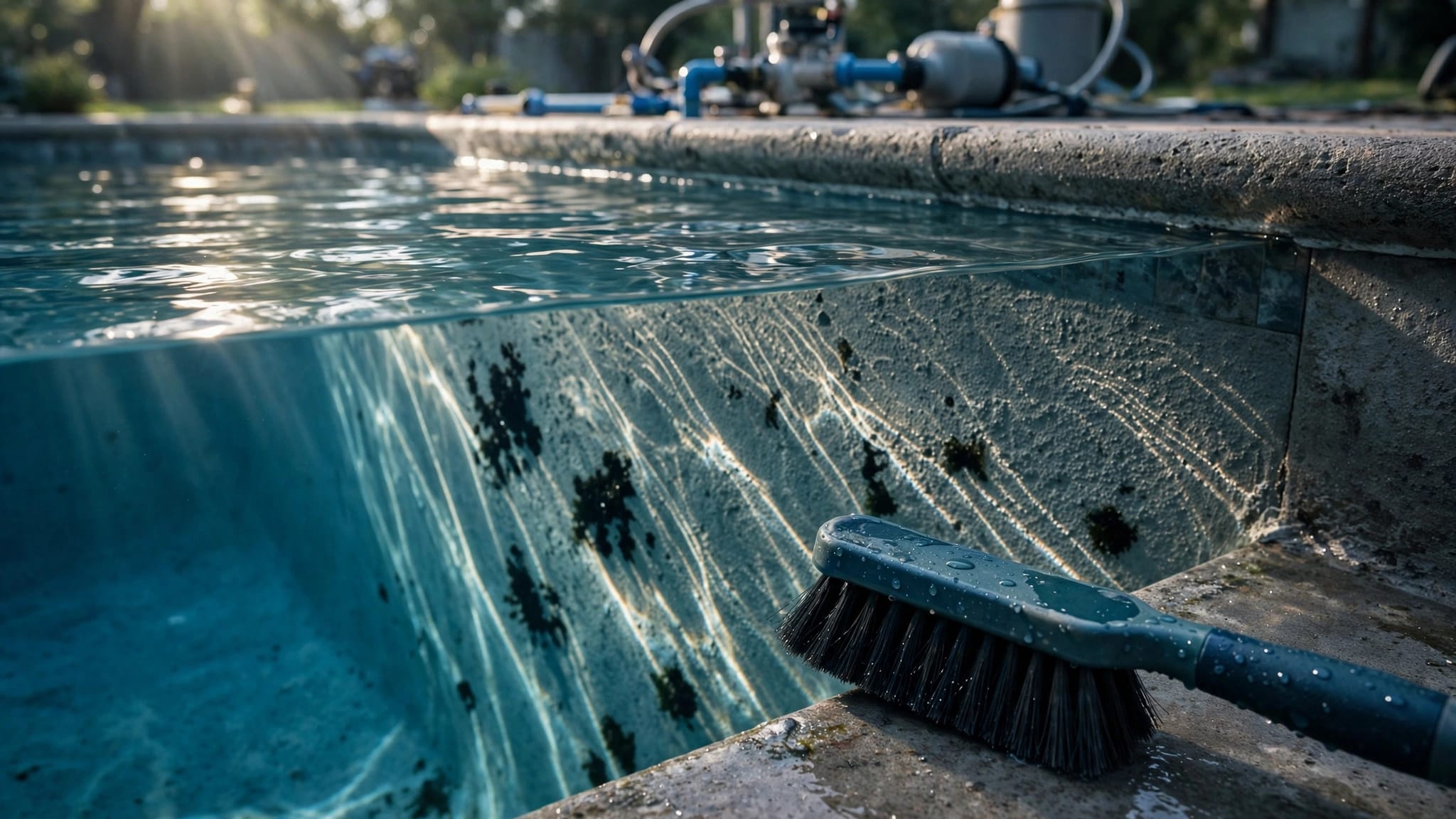
Staining is one of the most common signs. Brown, green, or rust-colored marks can come from metals, algae, leaves, or chemistry issues. Some stains lift with treatment. Others sink into an older, more porous finish and stop responding.
Etching is another red flag. The surface starts to look worn or pitted, almost like the top layer has been lightly eaten away. On plaster, that often comes with a chalky look or faded patches. On quartz or pebble, you may notice the cement matrix wearing back and exposing more texture.
Roughness matters, too. If steps and benches feel sharp or abrasive, the finish may be thinning. That's more than a comfort issue. Rough surfaces hold dirt and algae more easily, which can make the pool harder to clean.
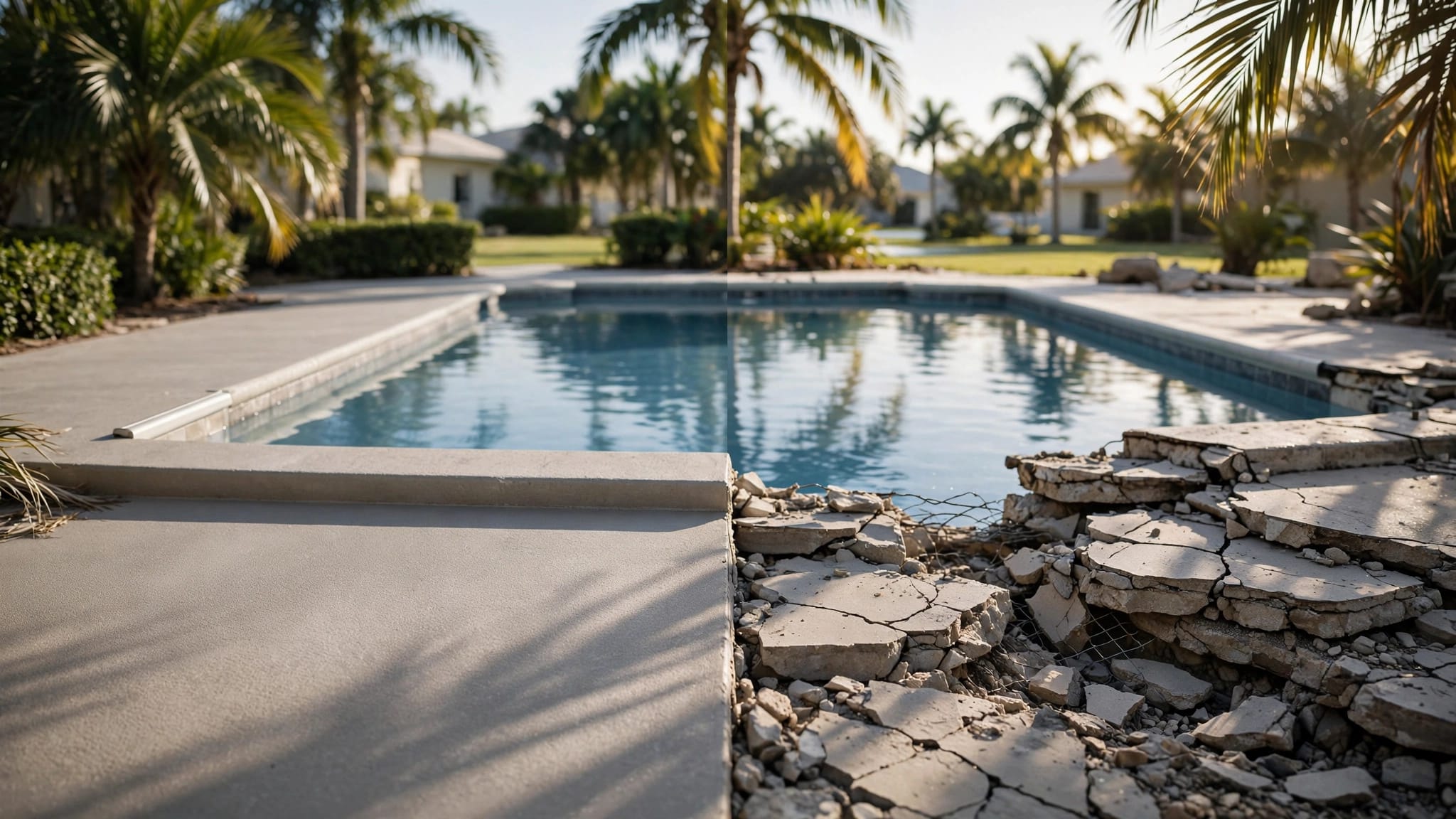
Then there's discoloration. Mottling, patchy shading, or areas that no longer match the rest of the pool can point to age, chemical damage, or uneven wear. Flaking and chipping are more serious. When pieces of finish start coming loose, the surface is usually past the point of simple spot treatment.
If those symptoms sound familiar, this guide to when to resurface a Cape Coral pool can help you judge the timing. Waiting too long can turn a finish problem into a larger repair.
A good rule is simple: if the pool is old for its finish type and you're seeing more than one symptom, it's smart to schedule an evaluation. If you want a professional opinion on timing, material choices, or condition, you can Get a Free Estimate.
Conclusion
A pool finish in Cape Coral can last a long time, but local conditions have a big say in the outcome. For most homeowners, plaster lands around 7 to 10 years, quartz around 10 to 15, and pebble around 15 to 20.
The strongest takeaway is that lifespan is only part material and part maintenance . When staining, rough texture, discoloration, etching, or flaking start to stack up, the calendar matters less than the condition of the surface in front of you.