In Cape Coral, the month you start can matter almost as much as the pool you build. Warm weather helps, but rain, permits, and contractor schedules still shape the whole job.
If you want your pool ready for your favorite swim season, start earlier than you think. The smoothest projects usually begin with planning in fall, then move into excavation during the dry months.
The best window starts earlier than most homeowners expect
For homeowners planning pool construction in Cape Coral, the calendar matters because Southwest Florida does not build the same way all year. As of spring 2026, the local pattern is still clear: drier weather runs from roughly November through May , heavier rain tends to hit from June through September, and hurricane season lasts from June 1 through November 30.
That does not mean summer builds are impossible. It means summer builds are more likely to face muddy yards, drainage issues, storm delays, and schedule changes.
This quick timing guide helps set expectations:
| If you want the pool ready for... | Start planning | Sign the contract | Aim for excavation |
|---|---|---|---|
| Spring break | September to October | October to November | December to January |
| Early summer | October to December | November to January | January to March |
| Fall holidays | February to April | April to May | May to June, with weather risk |
| Winter entertaining | May to July | July to August | September to October, with storm risk |
The takeaway is simple. If you want the best odds of a smooth build, do the paperwork and design work before the ground gets wet.
In Cape Coral, the easiest builds usually start on paper in fall and in the yard during winter or early spring.
That timing gives you room to finalize layout, decking, finish colors, and equipment before crews get swamped. It also helps if you are still comparing new pool construction services and deciding how custom you want the project to be.
Why fall planning gives you more control
Fall is often the smartest time to make decisions, even if construction will not begin right away. Permit review can take about 4 to 8 weeks , and sometimes longer if plans need revisions. If your home has an HOA, that can add another layer of approval.
So, a project that feels "months away" can move onto the clock fast.
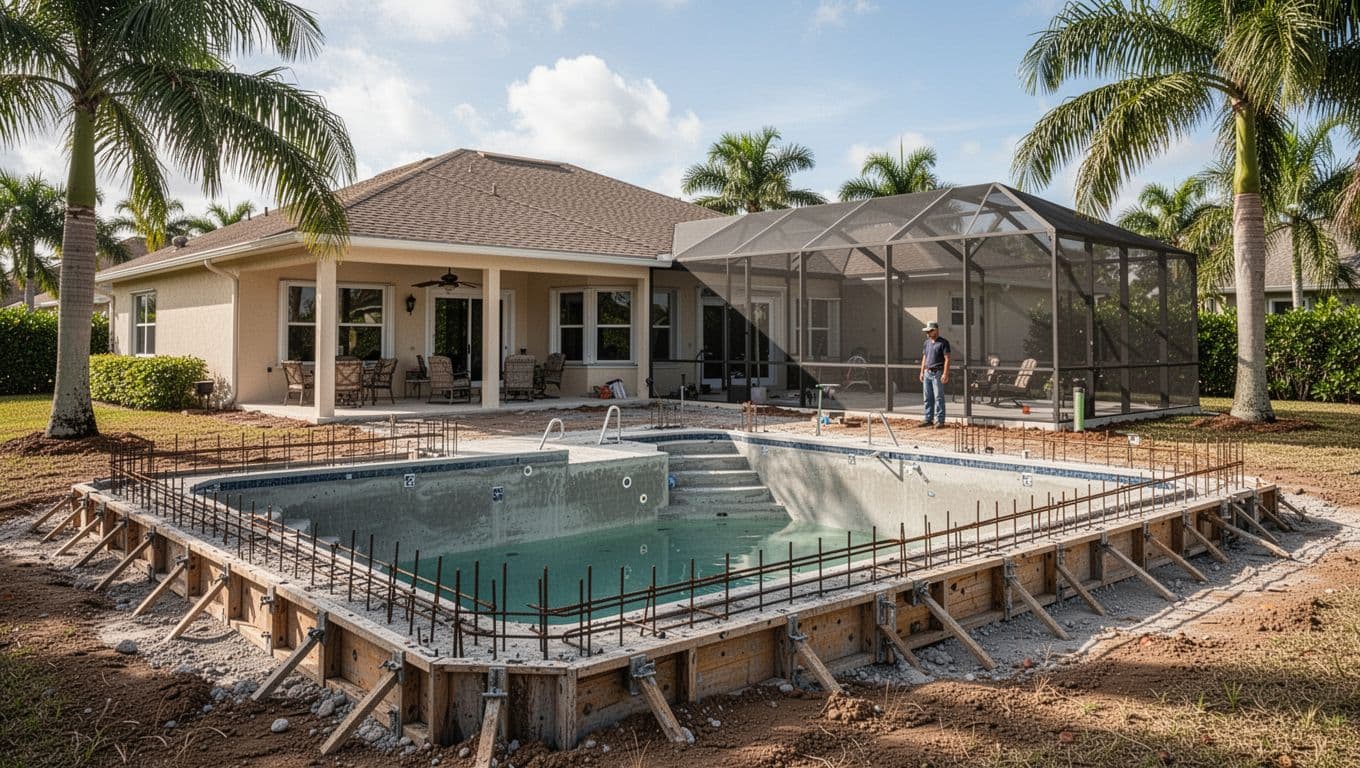
Planning in September, October, or November usually gives homeowners more breathing room. Crews can review the site, check drainage, and flag access issues before busy season fills the calendar. That matters in Cape Coral, where lot conditions vary widely. Canal-front homes, low spots, and yards with a high water table can change the build approach and the budget.
Cost questions come up here too. There is no single "cheap month" for a pool, because material prices, design choices, and site conditions matter more than the page on the calendar. Still, starting earlier can help you avoid some expensive problems. Last-minute redesigns, emergency dewatering, and long weather delays often cost more than careful planning.
If you are weighing options, it helps to review likely gunite pool cost in Cape Coral before you lock in your scope. A realistic budget is easier to protect when you are not rushing to hit a deadline.
Another reason to plan in fall is demand. Late winter and spring are busy months for builders in Southwest Florida. Homeowners who wait until February or March often find the best excavation slots are already taken.
When excavation should begin, and what causes delays
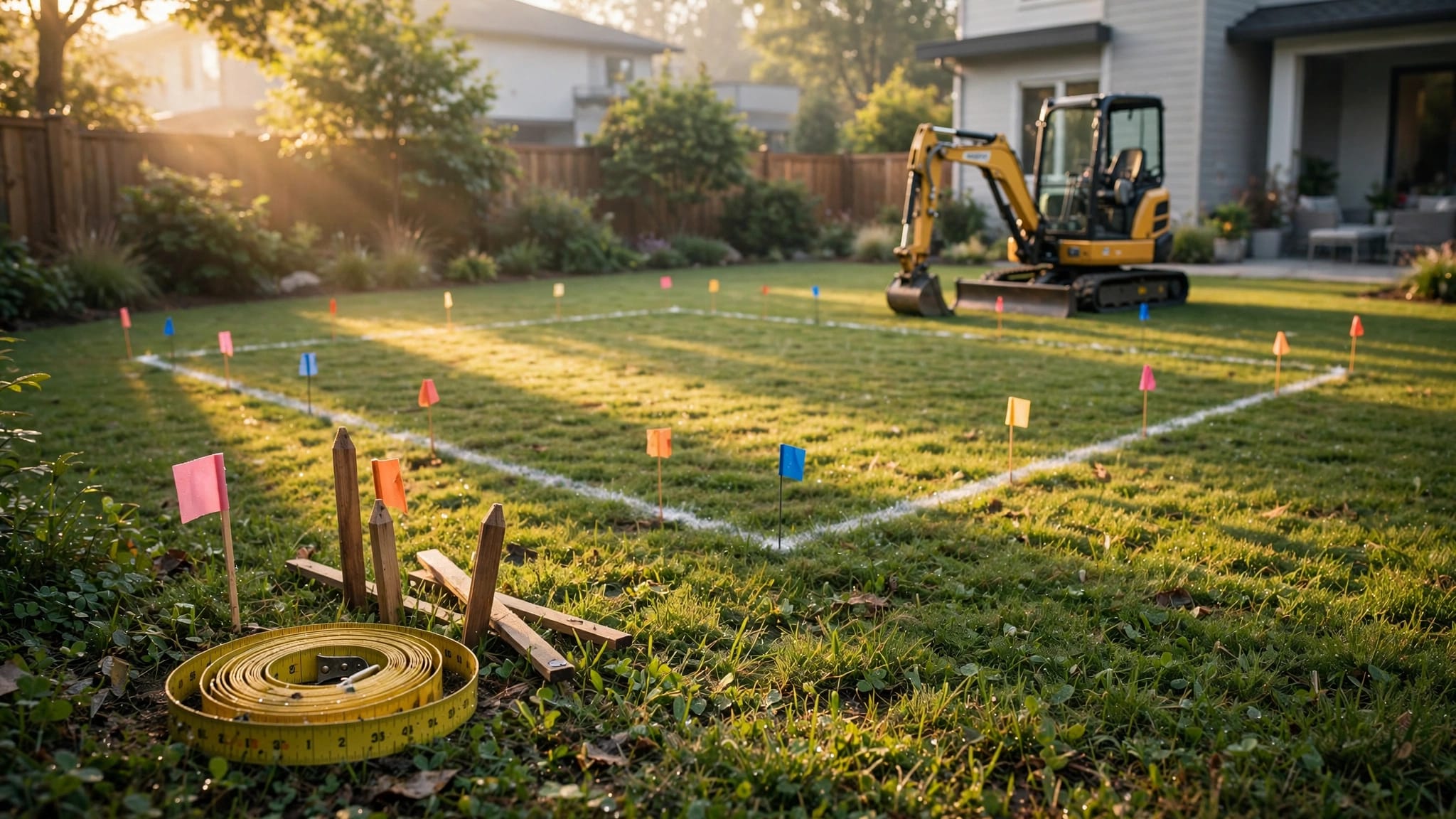
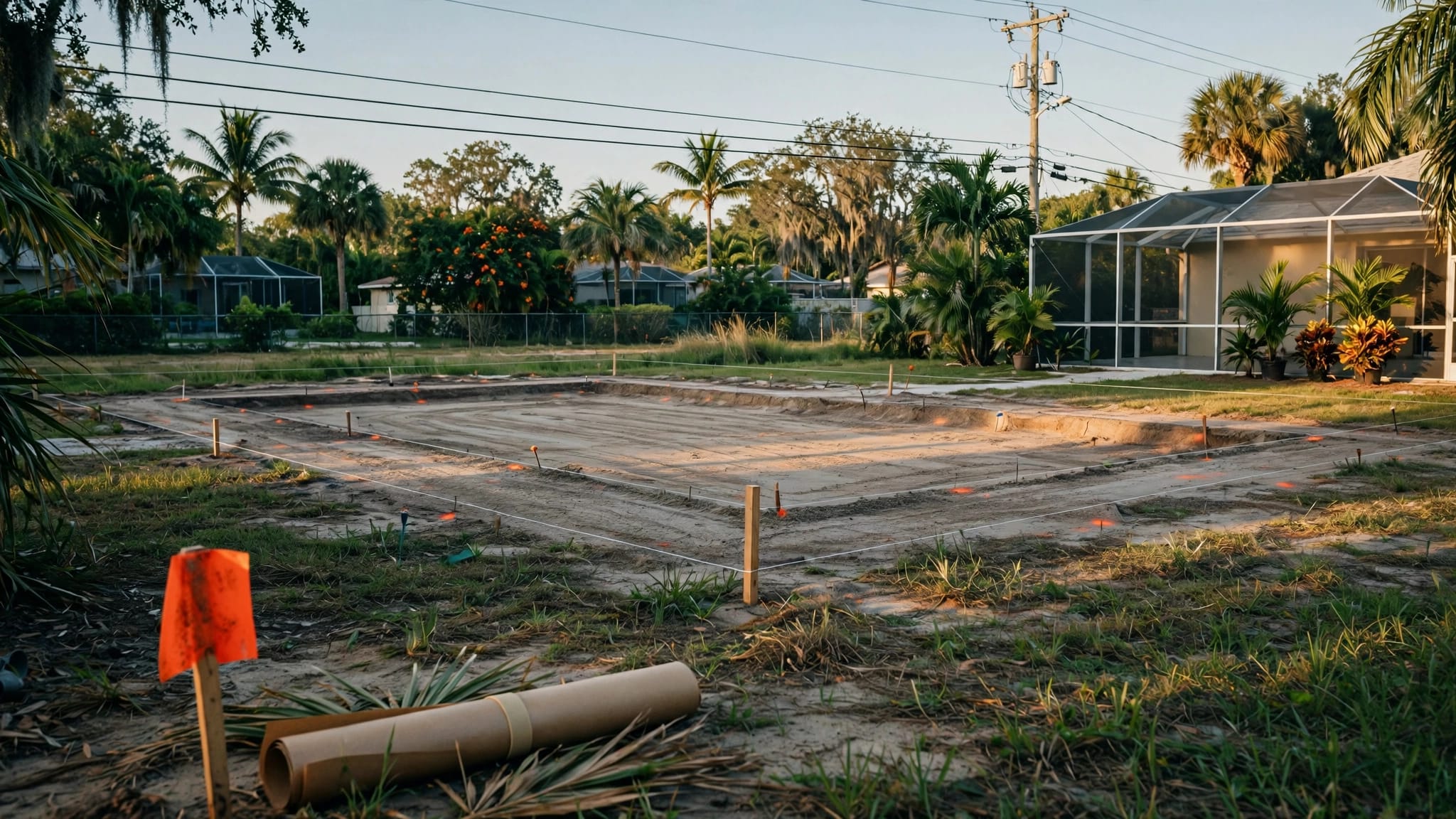
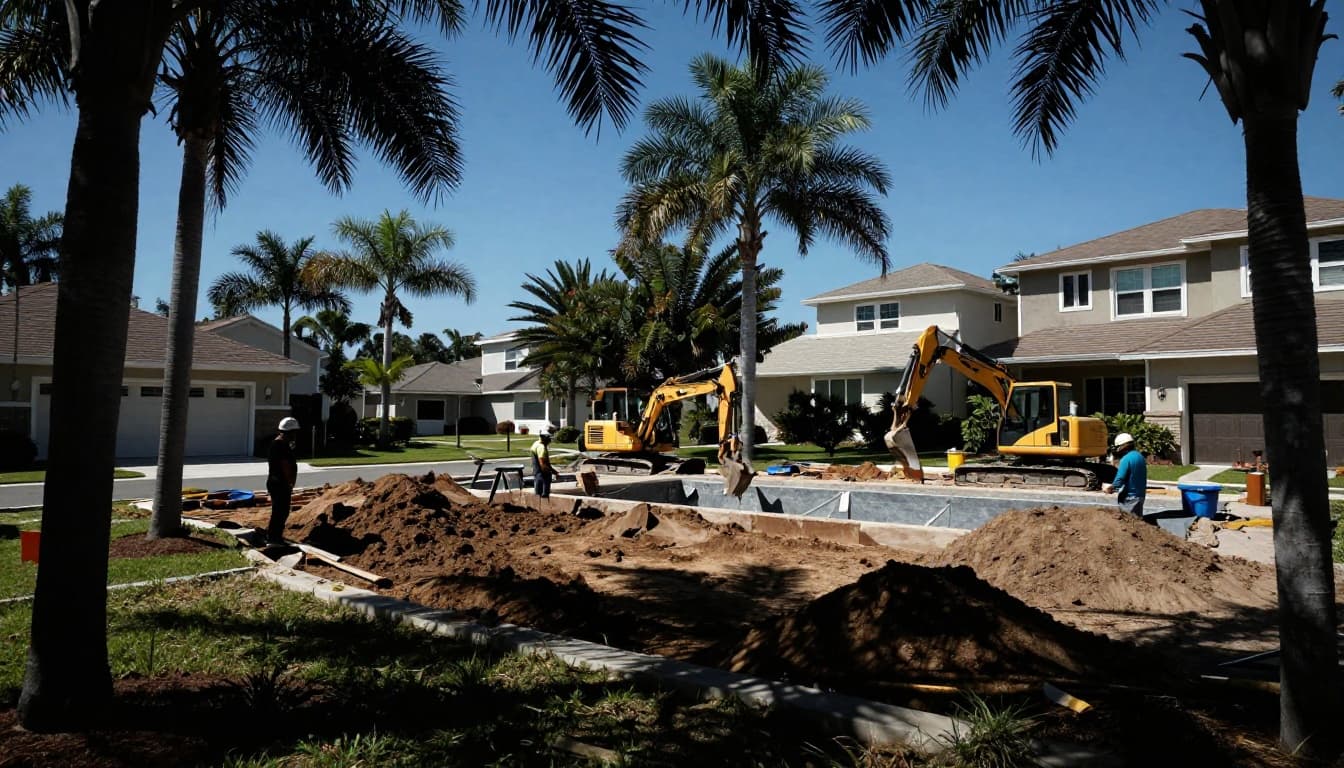
If planning happens in fall, the best time to break ground is usually December through April . Rain is lower, the soil is easier to manage, and crews lose fewer days to sudden storms. That makes excavation, steel work, plumbing, and inspections easier to sequence.
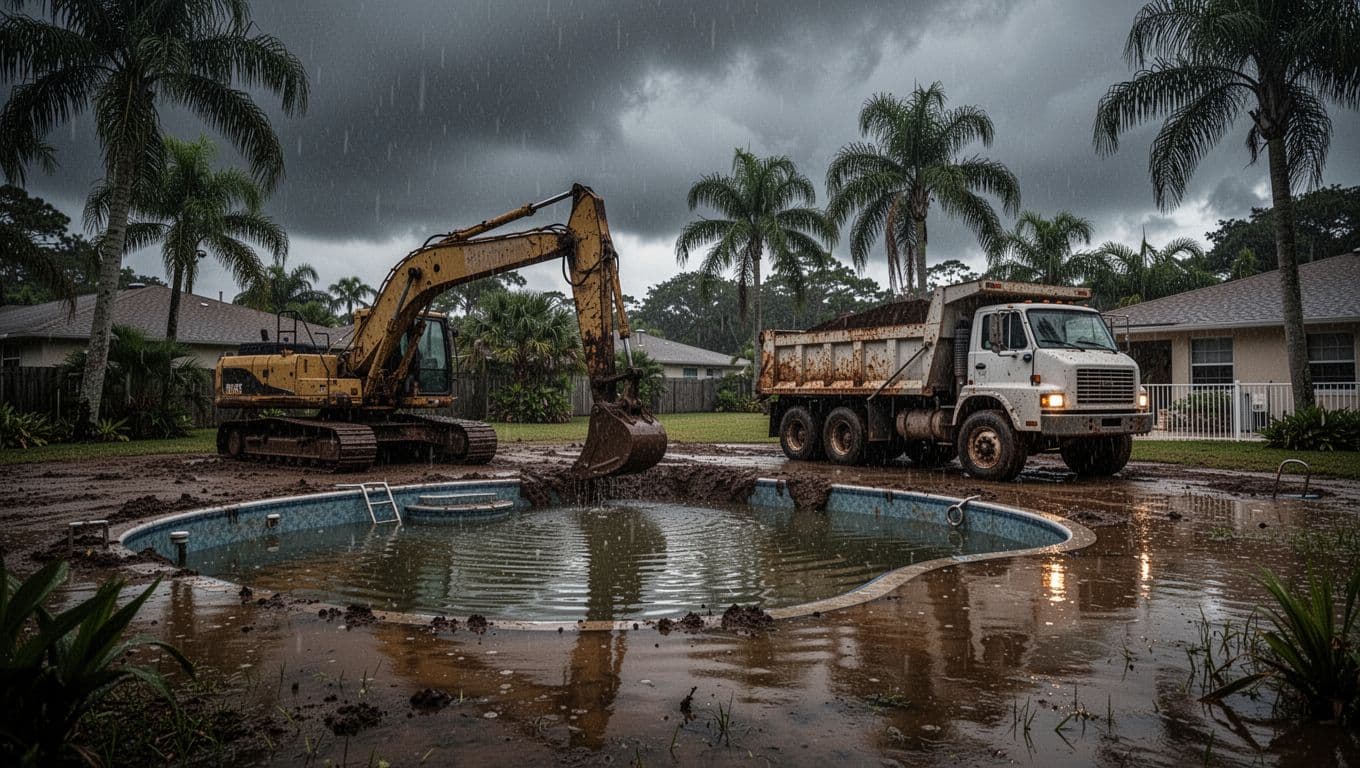
Cape Coral's groundwater is one of the biggest reasons timing matters. In the wet season, saturated soil can flood a dig site, slow shell work, and add pumping or drainage work. On some properties, that risk is manageable. On others, it turns a clean timeline into a stop-and-start project.
Rain is not the only issue. Summer heat can also affect working hours and scheduling, while hurricane season can pause jobs for safety, inspections, or material delivery. Even a storm that stays offshore can disrupt the week.
Most homeowners should expect the full process, from design through final touches, to take several months. The actual build phase varies by pool size, features, inspections, and weather. If you want a closer look at scheduling, this gunite pool construction timeline gives a helpful local benchmark.
A practical rule works well here. If you want to swim by early summer, start planning in fall and aim to excavate no later than late winter. If you wait until rainy season to begin, you may still get a great pool, but you should expect a less predictable schedule.
The best time to start is not when you first feel ready to swim. It is when you still have enough room for permits, design choices, and dry-weather excavation.
If next season is your goal, now is a smart time to Get a Free Estimate and reserve space before the calendar tightens.