A pool in Cape Coral should feel like a place to relax, not a project that keeps failing inspection. The catch is that Florida pool barrier requirements are simple in theory, but one small detail can change whether a fence, gate, or enclosure passes.
If you are building a new pool, resurfacing an older one, or replacing a screen enclosure, barrier rules matter early. Florida code can change, and the City of Cape Coral may have its own permit or inspection steps for your project, so always confirm the current rules before you build or modify anything.
What Florida pool barrier rules mean for Cape Coral homes
For most Cape Coral homes, the state rules set the baseline. The barrier needs to fully protect the pool area, and it has to do more than look sturdy from the street. It must block easy access from a child who could wander into the water without help.
The main idea is simple. The barrier should be at least 4 feet high , have no easy openings, and avoid features that make climbing or squeezing through possible. Gates must close on their own, latch on their own, and open away from the pool.
That sounds straightforward until a real yard enters the picture. A sloped patio, a raised planter, a decorative wall, or a low screen door can change the outcome. A fence can look fine and still miss the mark if the latch is too low or the gate swings the wrong way.
A pool barrier should work when no one is watching it. If a child can open it, climb it, or crawl through it, it is not doing its job.
Cape Coral homeowners should also keep one important detail in mind. A yard fence around part of the property does not automatically count as a pool barrier. The protection has to relate to the pool itself, not just the lot line.
The features inspectors usually check first
Inspectors and permit reviewers often look at the same handful of details first. Those details are where most problems show up.
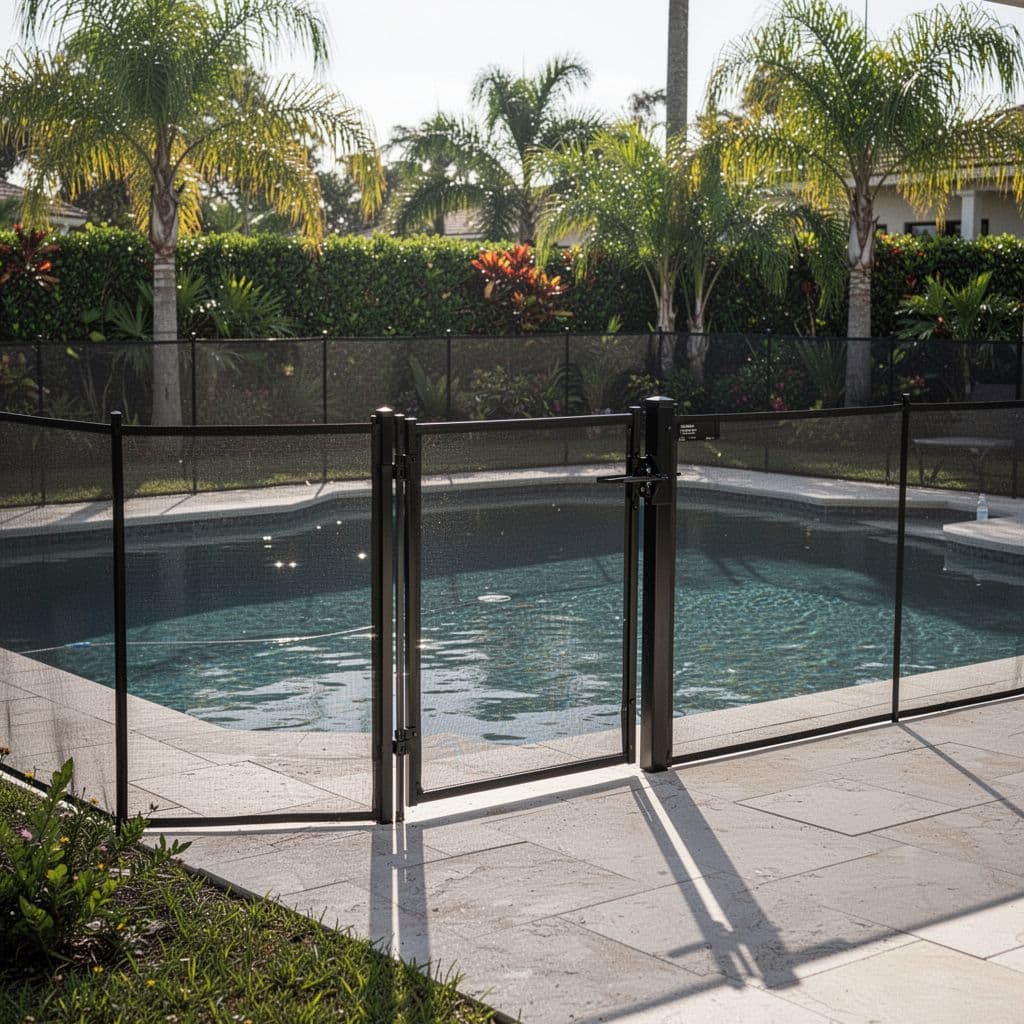
A compliant barrier usually needs these basics:
- Proper height : The barrier is at least 4 feet high on the outside.
- No climb points : No ledges, gaps, rails, or objects that help a child scale the barrier.
- Secure gate hardware : The gate closes by itself and latches by itself.
- Safe latch placement : The release is on the pool side and out of a child's reach.
- Correct gate swing : The gate opens away from the pool.
- Full pool coverage : The barrier surrounds the pool area, not just part of the yard.
Above-ground pools have their own wrinkle. In some cases, the pool wall can serve as the barrier, but the rest of the setup still has to follow the safety rules. That usually means ladders, steps, or other access points need to be lockable, removable, or blocked in a compliant way.
A house wall can also be part of the barrier, but only in limited situations. If a door or window gives easy access to the pool, that wall may not qualify on its own.
The safest way to think about it is this. The barrier should stop a child at every easy path, not just most of them.
Compliant and non-compliant pool setups in real life
Concrete examples make the rules easier to picture. The table below shows how common Cape Coral setups often stack up.
| Setup | Likely result | Why it passes or fails |
|---|---|---|
| 4-foot fence with a self-closing, self-latching gate | Often compliant | Meets the height and gate rules if there are no climb points |
| 3.5-foot fence around the pool | Not compliant | Too short for the standard residential barrier height |
| Gate that opens toward the pool | Not compliant | Gate swing does not match the rule |
| Screen enclosure with secure doors and no easy access gaps | Often compliant | Can work as a barrier if it meets all code details |
| Yard fence across the front of the property, with the pool open behind it | Usually not compliant | The barrier has to protect the pool area itself |
| House wall with a door leading directly to the pool deck | Usually not compliant | Direct access can break the barrier setup |
The biggest mistake is assuming that "fenced in" means "code compliant." Those are not the same thing. A low decorative fence may look polished, yet still fail because a child can step over it or get through it.
Pool owners also run into trouble when landscaping helps a child climb. A bench, a planter, a pool pump pad, or stacked equipment near the fence can create an easy ladder. That is why barrier planning should include the whole yard, not just the fence line.
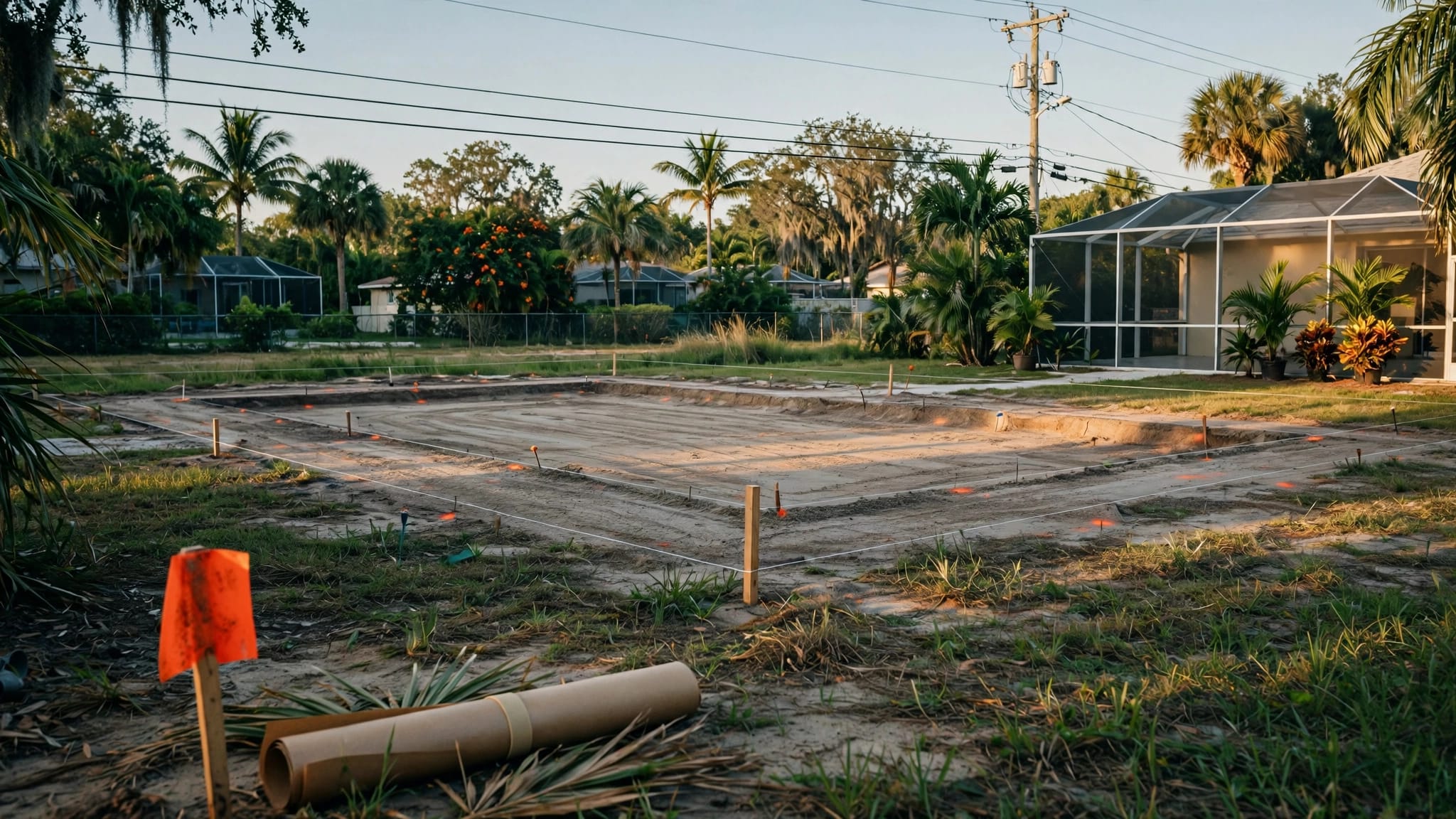
For families adding a pool to a smaller lot, the fit can be tight. In that case, the barrier design needs to be part of the build plan from the start, not an afterthought. If you are in that stage, it helps to review new pool construction plans before the layout gets locked in.
How new construction and renovations can change the review
A brand-new pool project and a modification to an existing pool do not always get treated the same way. That matters in Cape Coral, because the scope of work can affect what gets checked, when it gets checked, and how much of the backyard needs review.
New construction usually gives you more room to design the barrier around the pool from day one. That can make it easier to place gates, manage equipment access, and avoid awkward climb points. It also gives the builder more freedom to line up the barrier with screen enclosures, deck space, and doors.
Renovations can be more complicated. If you are resurfacing, changing a deck, replacing a gate, or redoing a screen enclosure, the barrier may need to be checked against the current rules, not the old setup. A fence that passed years ago may no longer fit a revised layout.
Screen enclosure projects need extra attention. A rescreen, a damaged door replacement, or a frame modification can affect latch placement, door swing, and access points. If the enclosure is part of the barrier, those details matter as much as the structure itself.
This is why homeowners should confirm the current Florida code and the City of Cape Coral permit rules before starting work. A small change can trigger a new inspection path. That is easier to handle early than after the patio is finished.
Planning a barrier that works with your pool project
The easiest barrier is the one designed with the pool, not added later in a rush. That approach saves time and avoids a lot of back-and-forth during inspection.
Start with the path a child could take to reach the water. Then close off each easy route. That usually means checking gate swing, latch height, barrier height, and any nearby objects that could help someone climb.
A few practical planning steps help a lot:
- Measure the barrier after the final deck, coping, or paver layout is set.
- Check that gates close fully without dragging or sticking.
- Keep furniture, grills, planters, and pool equipment away from climb points.
- Make sure screen doors and side doors do not create a direct path to the water.
- Ask how the barrier will be inspected before the final finish work starts.
If you are planning a new pool, renovation, or screen enclosure work, it helps to talk through the barrier before construction starts. That is especially true if you want the finished backyard to look clean and still meet the rules. You can also Get a Free Estimate and review your project details with a local team before work begins.
The goal is not to make the yard feel fenced off. The goal is to make access to the pool predictable, controlled, and easy to inspect.
Conclusion
Cape Coral pool owners get the best results when they treat barrier planning as part of the project, not a separate chore. The key points are simple, even if the details are not: the barrier has to fit the pool, the gate has to close and latch on its own, and the setup has to match current Florida and local rules.
That matters just as much for a brand-new build as it does for a renovation or screen enclosure update. When you confirm the rules early, the finished pool area works better, looks cleaner, and is easier to approve.