Screened pools stay cleaner than open ones, but they still collect fine dust, pollen, bugs, and grit. That makes the cleaner you choose matter more than many pool owners expect.
If your pool sits under a cage, the wrong cleaner can leave a dusty film behind or put more strain on your pump than it should. The right one saves time, keeps water clearer, and fits your budget without a lot of hassle.
Why screened pools change the cleaning job
A screen enclosure blocks big leaves and branches, but it does not block everything. Small particles still get through, especially in windy weather, during pollen season, or after a storm rolls dust across the yard.
That changes the kind of debris your cleaner has to handle. In many screened pools, the main problem is not giant leaves. It is the fine stuff that settles on steps, corners, benches, and the waterline.
That fine debris can be easy to miss at first. The water may look clear from the deck, yet the floor still feels slightly gritty. Bugs, roof dust, and pollen also build up faster than many owners expect, especially in Florida.
Because of that, screened pools need more than simple suction. They need a cleaner that can pick up small debris without forcing you to run the pump longer than necessary. If the screen enclosure is older or the mesh is loose, the job gets harder. So does a pool that sits near trees, sandy ground, or a busy roofline.
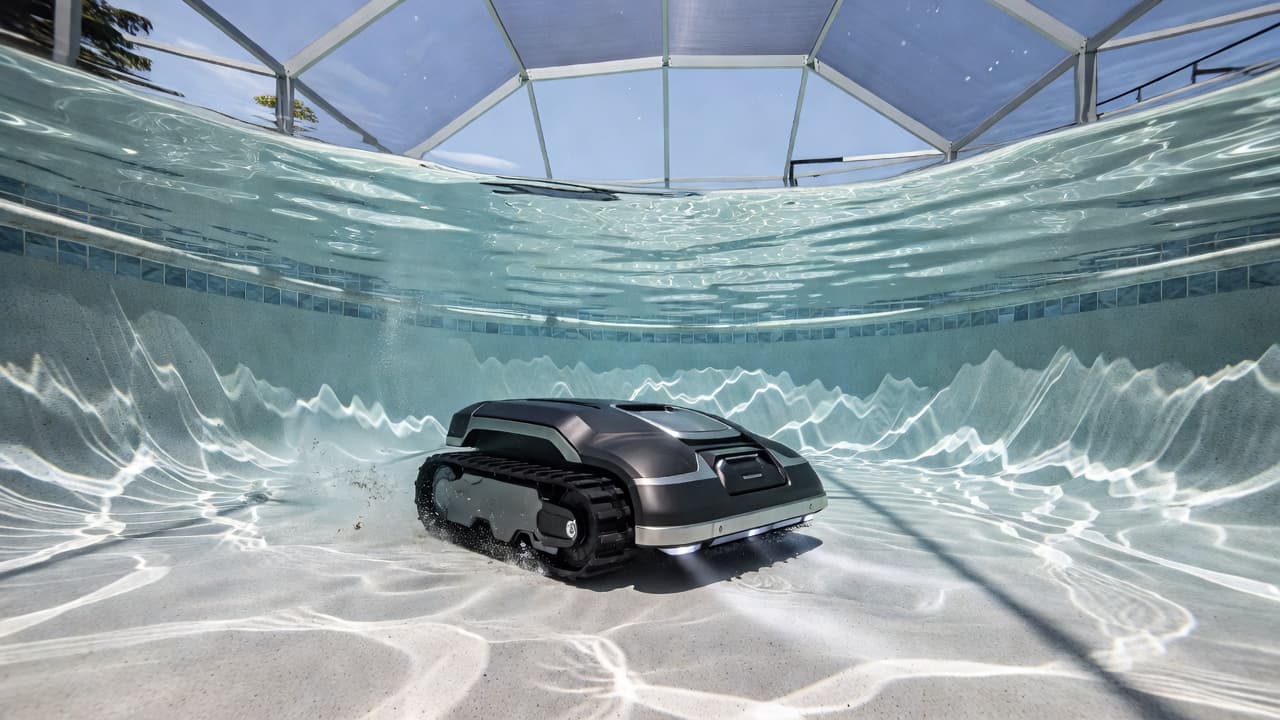
Robot pool cleaners vs suction cleaners at a glance
A side-by-side look makes the tradeoffs easier to see.
| Feature | Robot pool cleaners | Suction cleaners |
|---|---|---|
| Power source | Use their own power supply | Rely on pool pump suction |
| Debris handling | Trap dirt in their own basket or cartridge | Send debris into the pool filter system |
| Fine debris pickup | Usually strong | Can be less consistent with very fine material |
| Effect on the pool system | Little to no extra strain on the pump | Adds load to the pump and filter |
| Cleaning action | Often scrub the floor, walls, and waterline | Usually focus on floor and some lower walls |
| Upfront cost | Higher | Lower |
| Routine care | Empty and rinse the cleaner basket | Clean the pool filter, skimmer, and baskets more often |
| Best fit | Owners who want better cleaning and less pump use | Owners who want a lower-cost cleaner |
The biggest difference is where the dirt ends up. Robot pool cleaners hold debris inside the machine, while suction cleaners push it through the pool plumbing. In a screened pool, that matters because the debris is often fine enough to clog a filter faster.
Screened pools can look clean before they are fully clean. The dust on the floor is usually what gives the game away.
Where robot pool cleaners usually win
Robot pool cleaners tend to shine in screened pools because they work on their own. They do not depend on your pump to create suction, so they put less wear on the pool system. That is helpful when your filter is already handling pollen, silt, and other small particles.
They also clean more aggressively. Many robot models scrub the floor, climb walls, and reach the waterline. That matters in screened pools, where the problem often sits in the places your eyes miss first. A light film on the walls can make the whole pool feel less clean, even when the water looks clear.
Another advantage is control. You can run a robot after a windy day, after a pool party, or on a regular schedule without having to think about pump load. For owners who want a more hands-off routine, that is a real benefit.
What robot cleaners do well
- They pick up fine debris better than most basic suction cleaners.
- They reduce the work your pump and filter have to do.
- They can scrub walls and steps on many models.
- They are easier to schedule around heavy pollen or dust days.
What to keep in mind
- They cost more at the start.
- They need basket or cartridge cleaning.
- Corded models need sensible cord management near the enclosure.
- Cordless models are easier to move, but runtime and charging matter.
Suction cleaners still have a place, though. If you have a simple pool, a strong pump, and a tighter budget, one can do a decent job on routine debris. They are often the practical choice when you want the lowest price on day one and you do not mind depending on the pool system.
How to choose the right cleaner for your pool and budget
The best choice depends on how your pool gets dirty, how often you clean it, and what you want the equipment to do for you.
If your screened pool mainly picks up pollen, dust, and tiny insects, a robot cleaner is usually the smarter buy. It traps the mess inside the machine instead of sending it back through the pool filter. That means clearer water and less constant pressure on the system.
If your pool has a strong pump, simple shape, and modest debris, a suction cleaner can still be enough. It is easier on the wallet, and some owners are perfectly happy with that tradeoff. The key is knowing that you may spend more time cleaning baskets and filters.
A few practical details matter before you buy:
- Pool shape matters. Steps, benches, and deep ends are easier for better robot models.
- Debris type matters. Fine dust and pollen favor a robot, while simple floor debris can work with suction.
- Power access matters. Corded robots need a safe outlet and a clean cord path.
- Maintenance habits matter. If you want less day-to-day oversight, robot cleaners are easier to live with.
- Future work matters. If you are already planning a renovation, resurfacing, or rescreen, it makes sense to think about cleaner placement and storage at the same time.
If you want the cleaner to do more of the work, choose robot. If you want the lowest upfront price and can accept more pump dependence, suction can fit the job.
A practical recommendation for screened pools
For most screened or enclosed pools, robot pool cleaners offer the better balance of cleaning power and convenience. They handle fine debris better, they work without leaning on the pump, and they usually leave the pool looking cleaner for longer.
Choose a suction cleaner only if budget is the main concern and your pool already has a system that handles the workload well. That choice can make sense, but it is usually the simpler answer, not the stronger one.
If you are also planning a pool build, renovation, or rescreen, it helps to think about the cleaner as part of the whole setup. Get a Free Estimate if you want to talk through options for your pool and enclosure at the same time.
Conclusion
A screened pool changes the cleaning job. The big debris is often gone, but the fine dust, pollen, and grit stay behind.
That is why robot cleaners usually come out ahead for enclosed pools. They collect more of the small stuff, ask less of your pump, and give you more control over day-to-day maintenance. Suction cleaners still work when the budget is tight, but they are the less complete solution.
If your goal is cleaner water with less strain on the pool system, a robot is usually the better fit.