Rust-colored marks on a pool wall can appear after one refill or a stretch of heavy rain. In Southwest Florida, stains often come from metals, scale, organic debris, or algae, and each cause needs a different response.
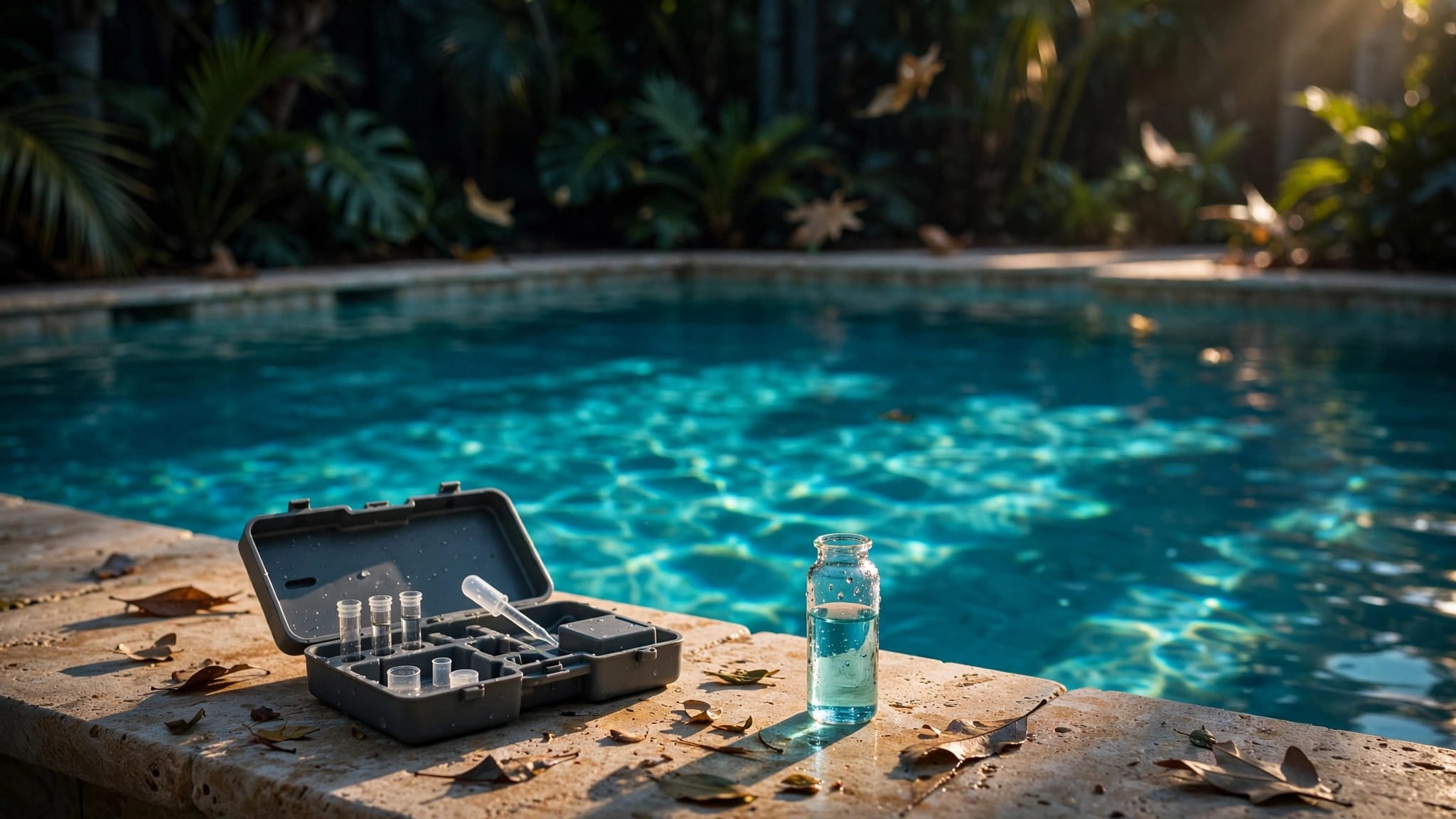
If you want to prevent pool stains, start with balanced water, steady circulation, clean filtration, and careful control of the water entering your pool. Local water chemistry can vary between neighborhoods and homes, so testing is more reliable than guessing.
Once you know what creates the mark, a simple routine can protect the finish and reduce unnecessary chemical use.
What Causes Pool Stains in Southwest Florida?
Pool stains form when a substance settles, reacts with the water, or stays against the finish long enough to leave color. Southwest Florida's heat, storms, landscaping, and varying water sources can speed up that process.
Not Every Stain Is Algae
Not every stain is algae. Green or yellow growth can point to inadequate sanitizer, poor circulation, or a dirty filter. Brown, orange, gray, or black marks may involve iron, copper, manganese, calcium scale, leaves, pollen, or other organic material.
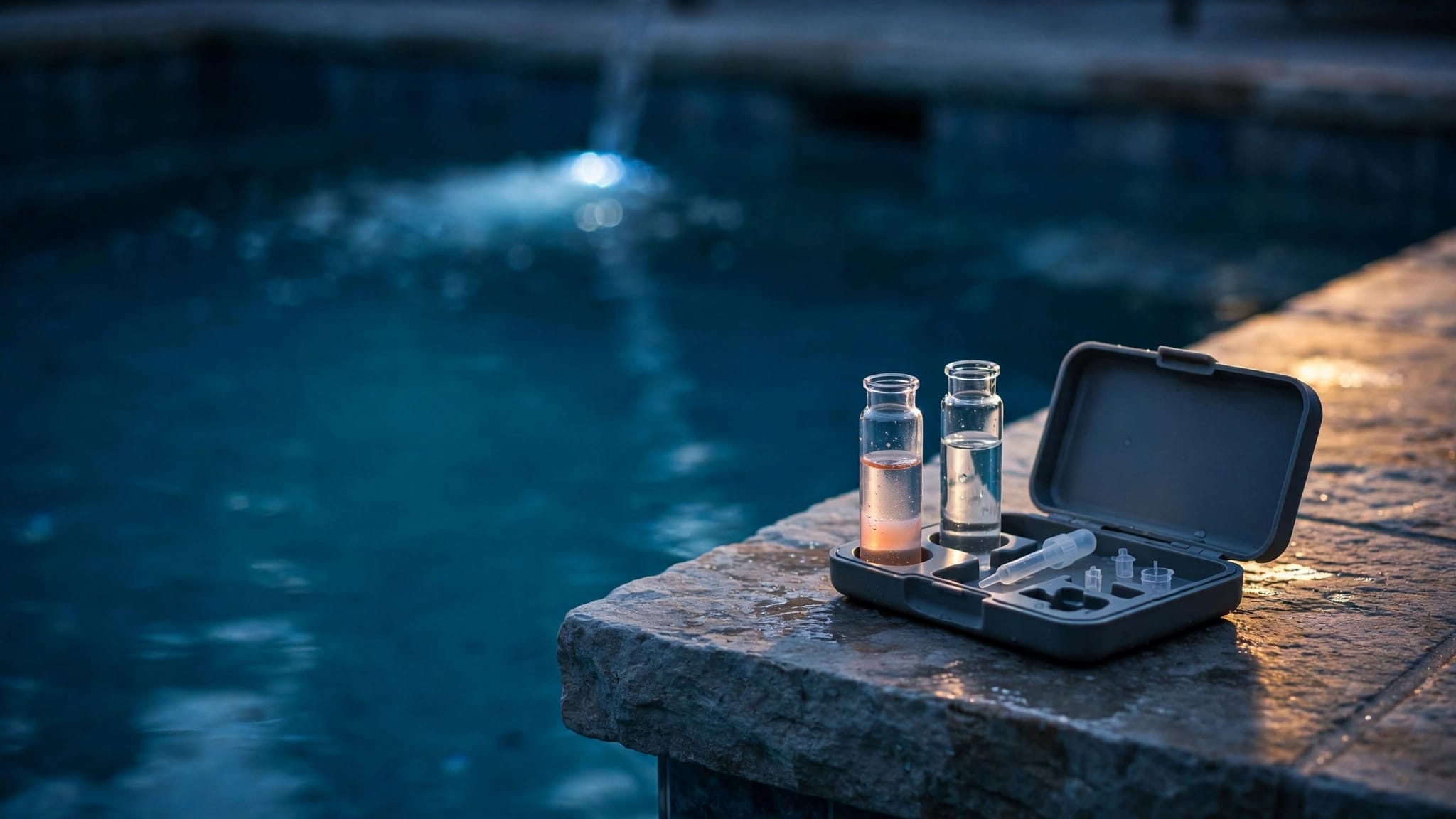
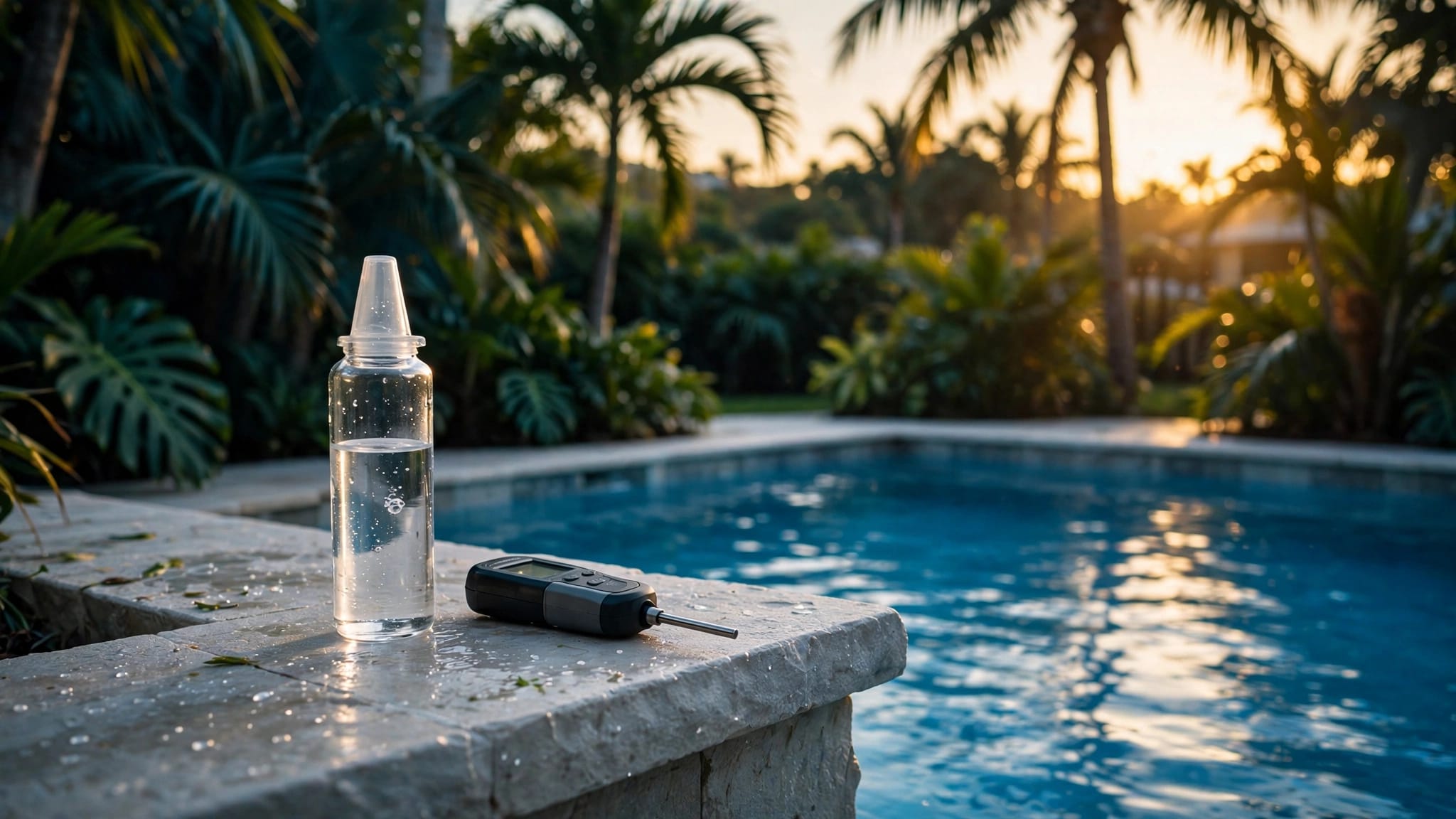
Color alone can't identify the cause. Notice where the stain appears, whether it feels rough, and whether it follows a recent refill, storm, equipment change, or chemical addition. A test kit and professional assessment are safer than treating every mark with algaecide.
Weather and Water Source Matter
Water chemistry can differ by source, neighborhood, and season. A municipal refill, well water, and delivered water may carry different levels of metals, hardness, alkalinity, or dissolved solids.
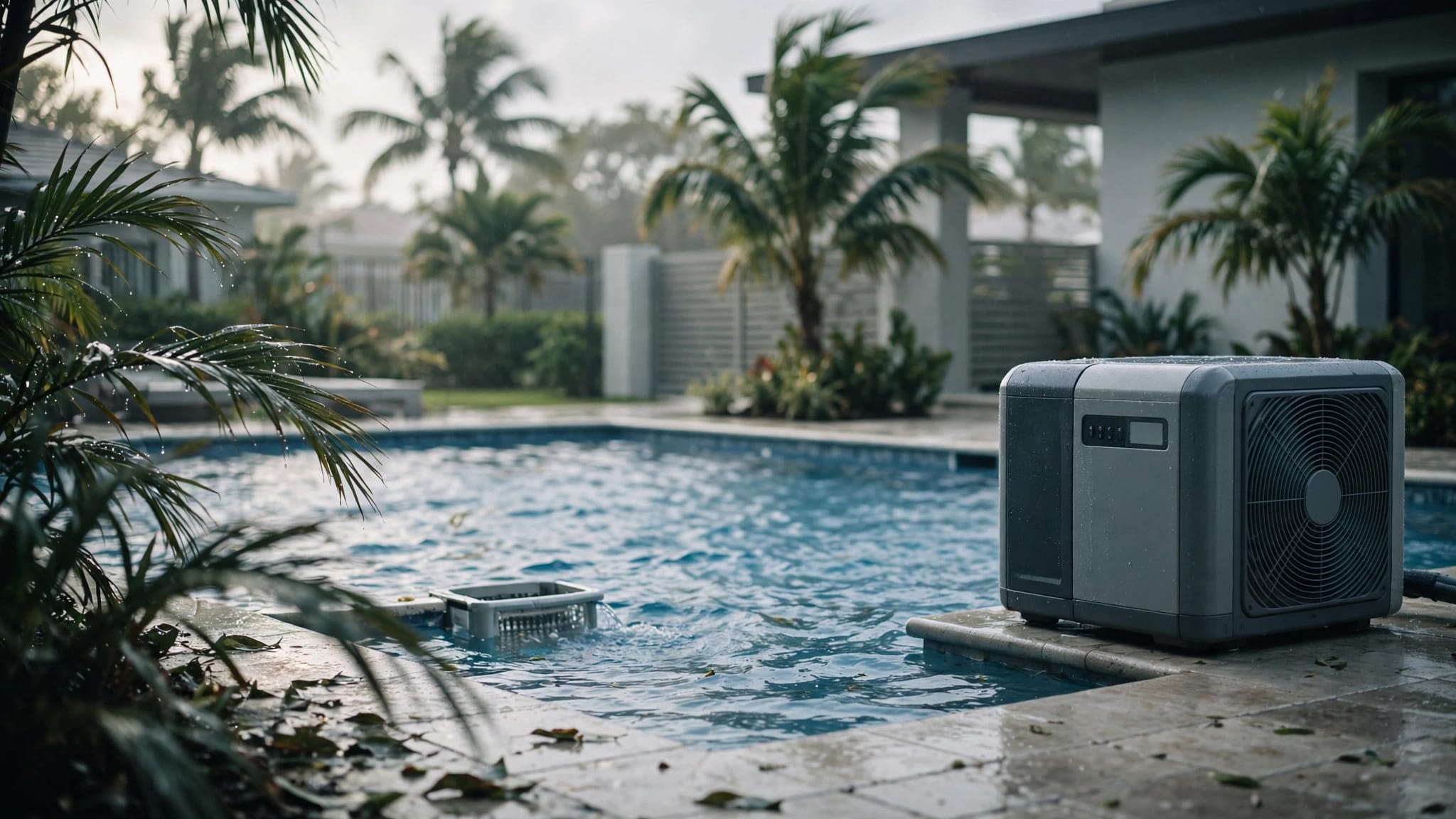
Heavy rain can dilute sanitizer and alter pH and alkalinity. Runoff may also bring soil and organic matter into the pool. A screened enclosure limits leaves and insects, but wind-driven rain and fine debris can still reach the water.
How to prevent pool stains with balanced water
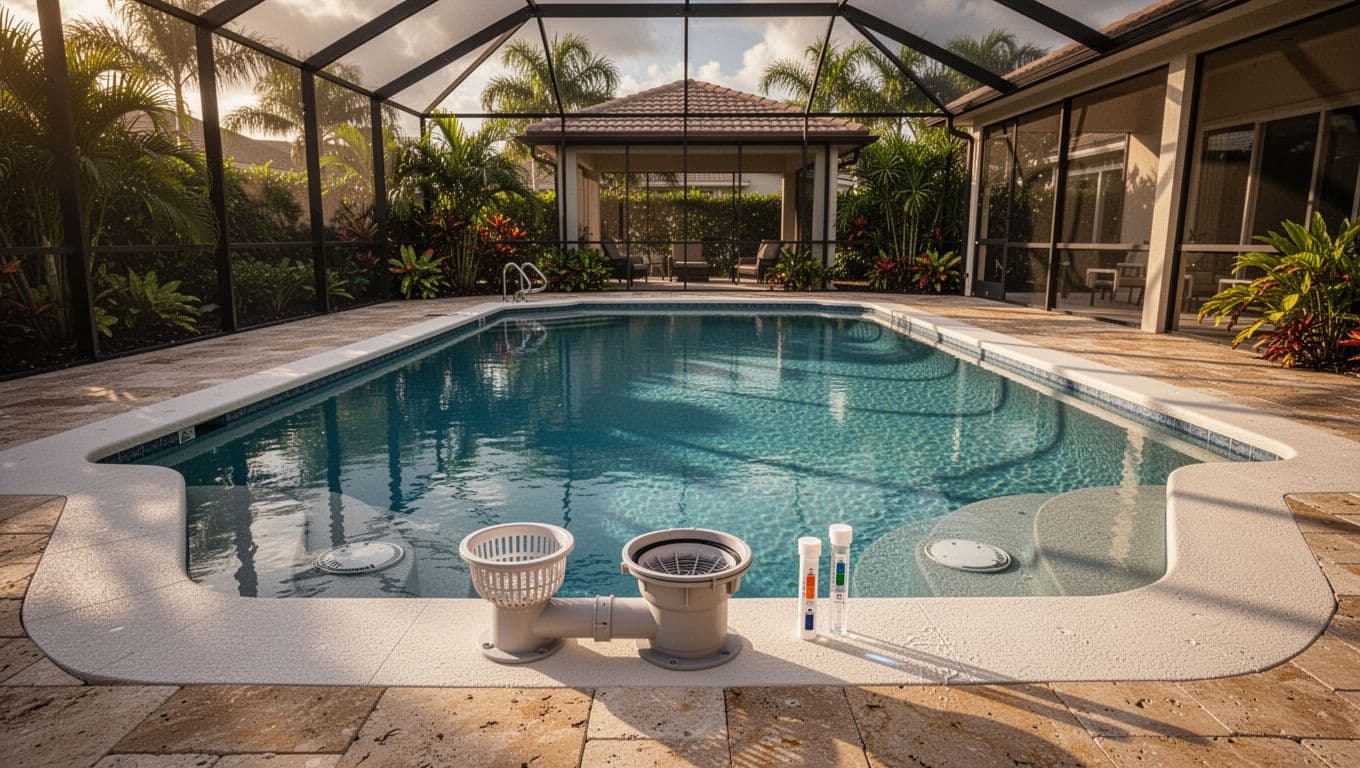
Balanced water is the first line of defense when you want to prevent pool stains. Each part of the water chemistry affects the pool finish, equipment, and the way dissolved minerals behave.
Keep pH and alkalinity steady
pH affects how water interacts with the pool finish, equipment, and dissolved metals. When pH rises too high, metals can come out of solution and calcium can form scale. Low pH can make water corrosive, which may damage surfaces and equipment over time.
Alkalinity helps buffer pH, so pH doesn't swing sharply after rain, a refill, or a chemical adjustment. Test both instead of correcting pH alone. Follow your test kit's instructions, make changes based on the results, and allow the water to circulate before testing again.
Watch calcium hardness and sanitizer
Calcium hardness affects whether water pulls minerals from the finish or deposits them on the surface. Low calcium hardness can contribute to aggressive water, while high levels can promote scale and cloudy deposits that resemble stains.
Sanitizer controls algae and helps break down organic contamination. It doesn't remove metals or calcium deposits. A pool can have clear water and still develop a metal stain, so sanitation and mineral control require separate attention.
Keep sanitizer at the level recommended for your pool system and test more often during heavy use, hot weather, or after storms.
Control Metals Before They Reach the Finish
Metals are a common reason for yellow, brown, orange, or blue-green discoloration. The best response is to limit the metal entering the pool and keep dissolved metals from depositing on the surface.
Prefilter replacement water
Replacement water can introduce iron, copper, manganese, or other minerals. This matters when you top off the pool often, fill a new pool, or use a source with unfamiliar chemistry.
A hose-end prefilter designed for pool refill water can reduce some contaminants before they enter the pool. Choose a product rated for the minerals you need to address, and replace or maintain the filter according to its instructions.
Test the source water when possible, especially if staining began after adding water. If you use well water or delivered water, don't assume it has the same chemistry as your regular supply.
Use metal sequestrants with a clear plan
A metal sequestrant binds dissolved metals and helps keep them suspended in the water. It doesn't remove those metals permanently. The filter may not catch dissolved metal, so the product's use and maintenance schedule must match the water condition.
Use a sequestrant only after considering your test results, pool surface, sanitizer system, and the product label. Don't add several stain treatments at once. Some products can interfere with one another or make the water harder to interpret.
Some algaecides and specialty treatments contain copper or other metals. Don't use a metal-containing product unless you understand its ingredients, purpose, and possible effect on staining.
Make Circulation, Filtration, and Brushing Work Together
Water chemistry can't protect every part of a pool if water sits in dead spots or debris remains on the finish. Mechanical care keeps the treatment system working across the entire pool.
Improve circulation and filtration
Circulation distributes sanitizer and moves water through the filter. Aim return jets so they create broad movement instead of leaving corners, steps, benches, or shallow areas stagnant.
The filter removes suspended particles, but it won't remove every dissolved metal. Clean or backwash the filter according to the equipment instructions and pay attention to pressure changes. A filter that needs attention can allow fine debris to remain in the water longer.
Check circulation after equipment repairs, air leaks, unusual pump noise, or changes in water level. Low water can reduce skimmer performance and allow the pump to draw air.
Brush surfaces and remove debris
Brush the walls, floor, steps, benches, and waterline with a brush that matches the pool finish. Regular brushing loosens dust, early algae growth, and organic residue before it can remain in one place.
Remove leaves, palm fragments, pollen, and insects promptly. Organic material can leave its own discoloration, especially when it sits in a warm, poorly circulated area.
A maintained screen enclosure can reduce the amount of debris entering the pool. If you're considering an upgrade, review these pool screen enclosure installation options in Cape Coral before choosing mesh, frame, and layout details.
A Practical Pool Stain-Prevention Checklist
Small, consistent tasks are easier to manage than emergency stain removal. Adjust the schedule for your pool's use, water source, equipment, and weather.
Weekly checks for Southwest Florida pools
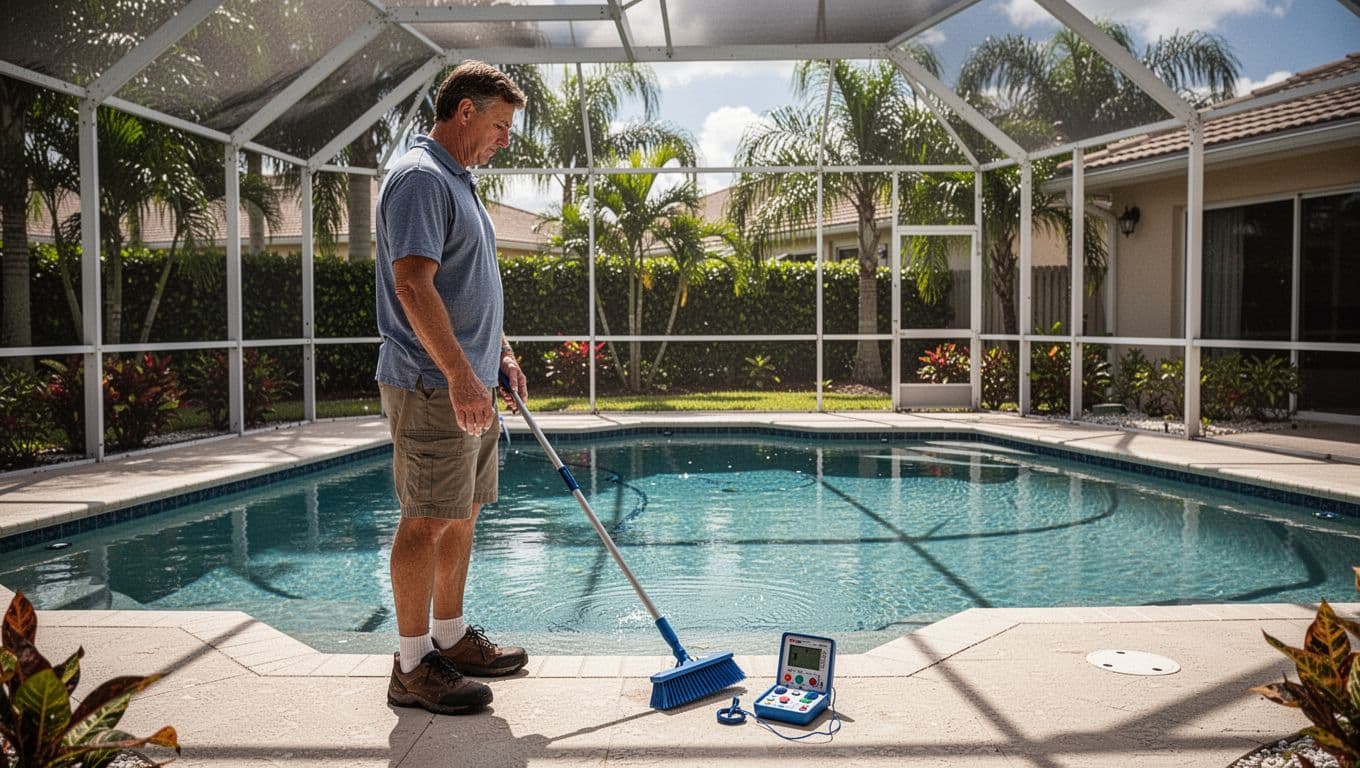
Use this routine during normal pool operation:
- Test pH, alkalinity, calcium hardness, and sanitizer on a regular schedule. Test more often after storms, heavy swimming, or a refill.
- Empty the skimmer and pump baskets so water can move freely.
- Brush pool surfaces, paying close attention to steps, corners, benches, and areas with weak circulation.
- Inspect the waterline and finish for new color changes, rough patches, or deposits.
- Check the filter pressure and clean the filter when it reaches the equipment manufacturer's recommended point.
- Confirm that return jets are moving water throughout the pool instead of leaving stagnant areas.
These steps help prevent pool stains while giving you an early warning when water chemistry or equipment performance changes.
What to check after heavy rain or adding water
After heavy rain, remove leaves and debris, check the water level, and let the circulation system mix the pool before testing. Then check pH, alkalinity, and sanitizer. Rain may dilute the water, while runoff can add organic material and fine sediment.
After adding water, test again once the pool has circulated. If the source water has a history of metal problems, prefilter it before it enters the pool. A sudden color change after a refill deserves attention before you add more products.
Never mix pool chemicals in a container or combine products unless the label clearly permits it. Add products separately according to their instructions, keep them in their original containers, and store them away from heat and moisture.
When Recurring Stains Point to a Surface Issue
A stain that returns after balanced water, proper filtration, brushing, and source-water control may involve the pool finish rather than a chemistry problem alone. Rough plaster, worn aggregate, cracks, damaged tile, or porous areas can hold discoloration more readily.
Avoid random acid treatments, metal products, or high-sanitizer corrections without test results. An incorrect treatment can worsen the finish or hide the original cause.
If the surface has widespread staining or visible wear, compare pool remodeling and resurfacing options in Cape Coral. Resurfacing can address a worn interior finish, while a remodel may include tile, coping, plumbing, deck, or layout changes. Either way, good water chemistry remains necessary after the work is complete.
When staining keeps returning or you're planning a renovation, an onsite evaluation can identify the likely source. Get a Free Estimate to discuss the pool's condition and possible next steps.
Keep Stains From Becoming a Bigger Pool Problem
The most reliable way to prevent pool stains is to manage several small factors together. Test pH, alkalinity, calcium hardness, and sanitizer, keep water moving, maintain the filter, brush surfaces, remove debris, and treat replacement water with care.
Southwest Florida pools also need attention after heavy rain and refilling. Since local water chemistry varies, use test results to guide decisions instead of assuming every discoloration is algae or adding chemicals at random. A steady routine protects the finish and keeps your pool ready for family time, exercise, and outdoor living.