Pool paver efflorescence is a white mineral deposit that can make a deck look dusty or faded. Gentle dry brushing and a rinse may remove a light deposit, while a stubborn white film calls for a closer look at the surface.
The distinction matters because not every white mark is efflorescence . Calcium scale, a cloudy coating, and surface wear can look similar but call for different care.
Start by examining where the white material appears and how it feels.
What White Efflorescence Looks Like
Efflorescence often appears as a powdery white film on concrete pavers. It can cover the face of several pavers or collect in irregular patches. The contrast may be especially noticeable on darker gray, brown, or red surfaces.
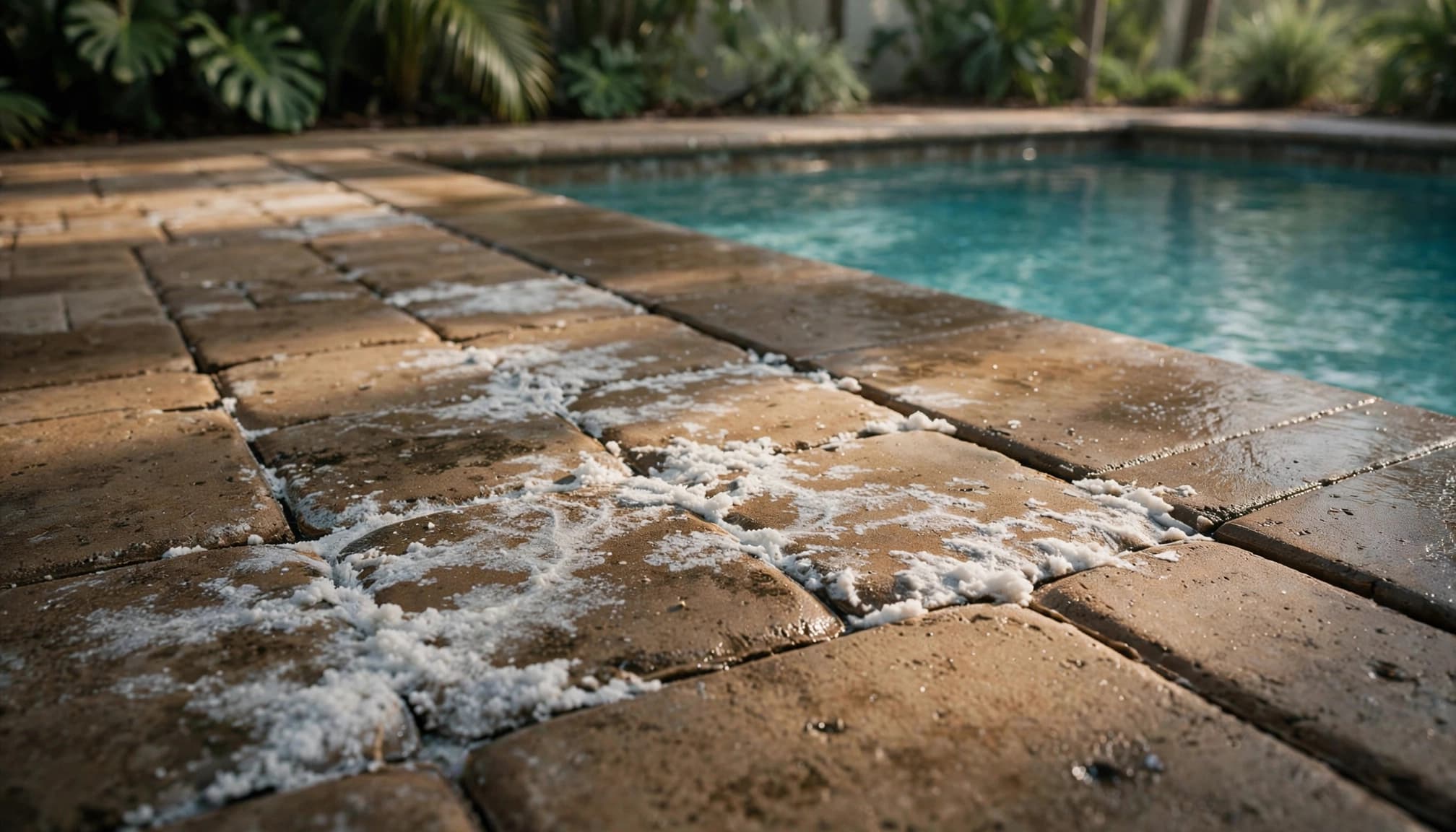
A light deposit may come away when you rub it with a dry fingertip or brush. Heavier deposits can cling more firmly, so a quick touch test alone won't settle every question.
Look at the paver color and texture underneath the white area. If the surface appears intact and the residue brushes away as a fine powder, efflorescence is a reasonable possibility. If the paver itself looks rough, scratched, or pale after the residue comes off, there may also be a surface issue.
White residue can affect the appearance of an otherwise sound deck. It doesn't automatically mean the pavers need replacement.
How to Tell Efflorescence From Other White Residue
Location and texture provide useful clues. Before choosing a treatment, look at the deck, coping, and pool tile as separate surfaces. A product or tool that suits one may damage another.
Powder on pavers versus hard scale
Efflorescence on pavers often has a dusty or chalky appearance. Calcium scale tends to feel harder and more crust-like, especially where it builds up on pool tile or around a spillway.
Neither appearance proves the deposit's identity on its own. If the white material is concentrated at the waterline or has bonded tightly to tile, our guide to removing calcium scale from pool tile covers that surface in more detail.
Avoid scraping a stubborn deposit to find out what lies beneath it. A scratch in tile, stone, or a coated paver can be more noticeable than the original mark.
Cloudy coatings and worn surfaces
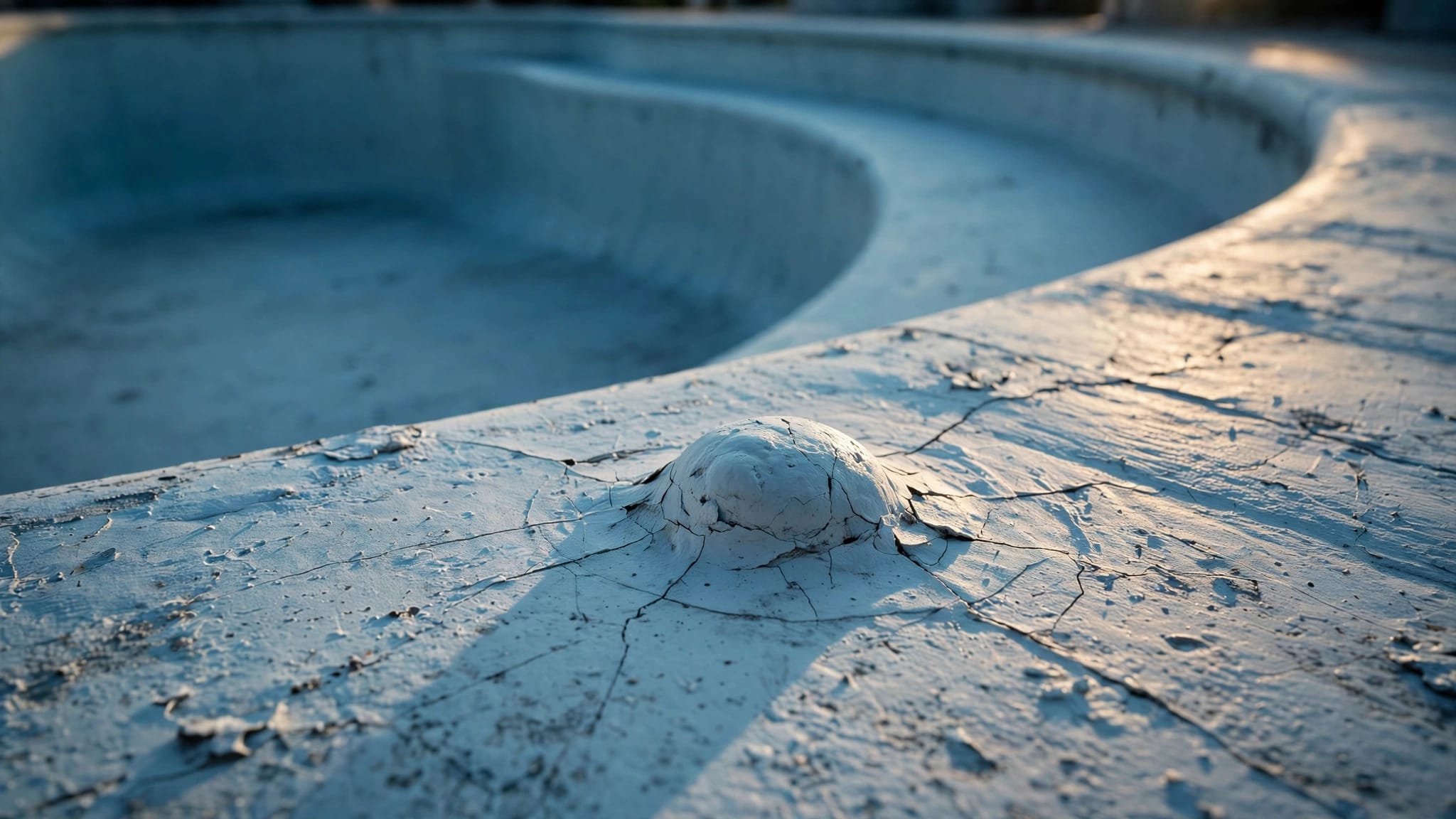
A white or hazy appearance can also be associated with a coating on the paver rather than loose material sitting on top. In that case, brushing may leave little powder on the brush, and the pale appearance may remain across the surface.
Some pavers also have worn areas where their color or texture has changed. Compare the affected spot with a protected area under furniture, while allowing for normal variation between pavers. If the white appearance seems to be part of the finish, stop before using a more aggressive cleaning method.
Natural stone deserves separate attention. Travertine is a type of limestone, while concrete pavers are manufactured products. They don't necessarily respond to the same cleaning products or tools.
Prepare the Deck Before You Brush
A few minutes spent looking over the deck can help you choose a gentle starting point and avoid spreading loose material around the pool area.
Identify the surface and nearby materials
Find out whether the affected area is concrete pavers, travertine, another natural stone, or a coated surface. Pool decks often combine more than one material, especially at the coping and around steps.
Note the joints as well. Sand-filled paver joints, decorative borders, grout, and flexible movement joints need different care from the paver face. If an area has loose pavers, damaged edges, or crumbling joint material, treat it carefully rather than scrubbing across it.
Move lightweight furniture and loose items out of the work area. That gives you a clear view of the affected pavers and makes it easier to compare cleaned and untouched spots.
Choose a small test area
Pick an inconspicuous section with the same material and white residue as the rest of the deck. A spot near a wall or beneath furniture can work, as long as it has a comparable finish.
Use a clean nylon-bristle brush that suits the surface. Wear eye protection when brushing loose material, and keep children and pets away from the work area. A brush should be firm enough to move powder without scratching or shedding bristles onto the deck.
How to Remove Pool Paver Efflorescence
Start with the least aggressive physical cleaning method. The aim is to lift loose residue while protecting the paver face and joints.
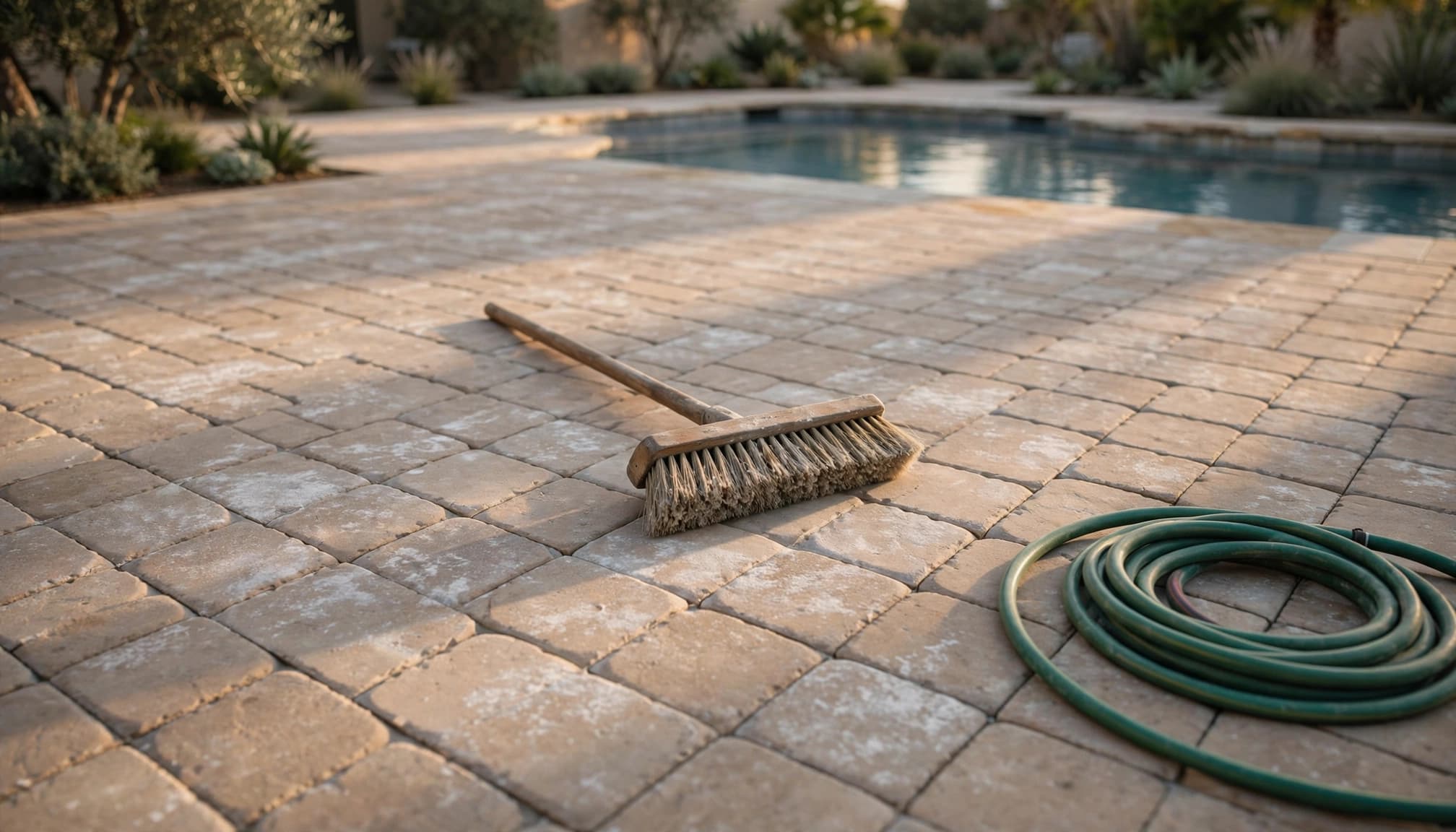
Dry-brush the white deposit
Work on the test area while the pavers are dry. Brush across the affected surface with moderate, even strokes, then sweep up the loosened powder. Keep the bristles on the paver faces as much as possible rather than digging into the joints.
Look at the surface as you work. Stop if the color changes, the finish scratches, or the brush lifts material that appears to be part of the paver.
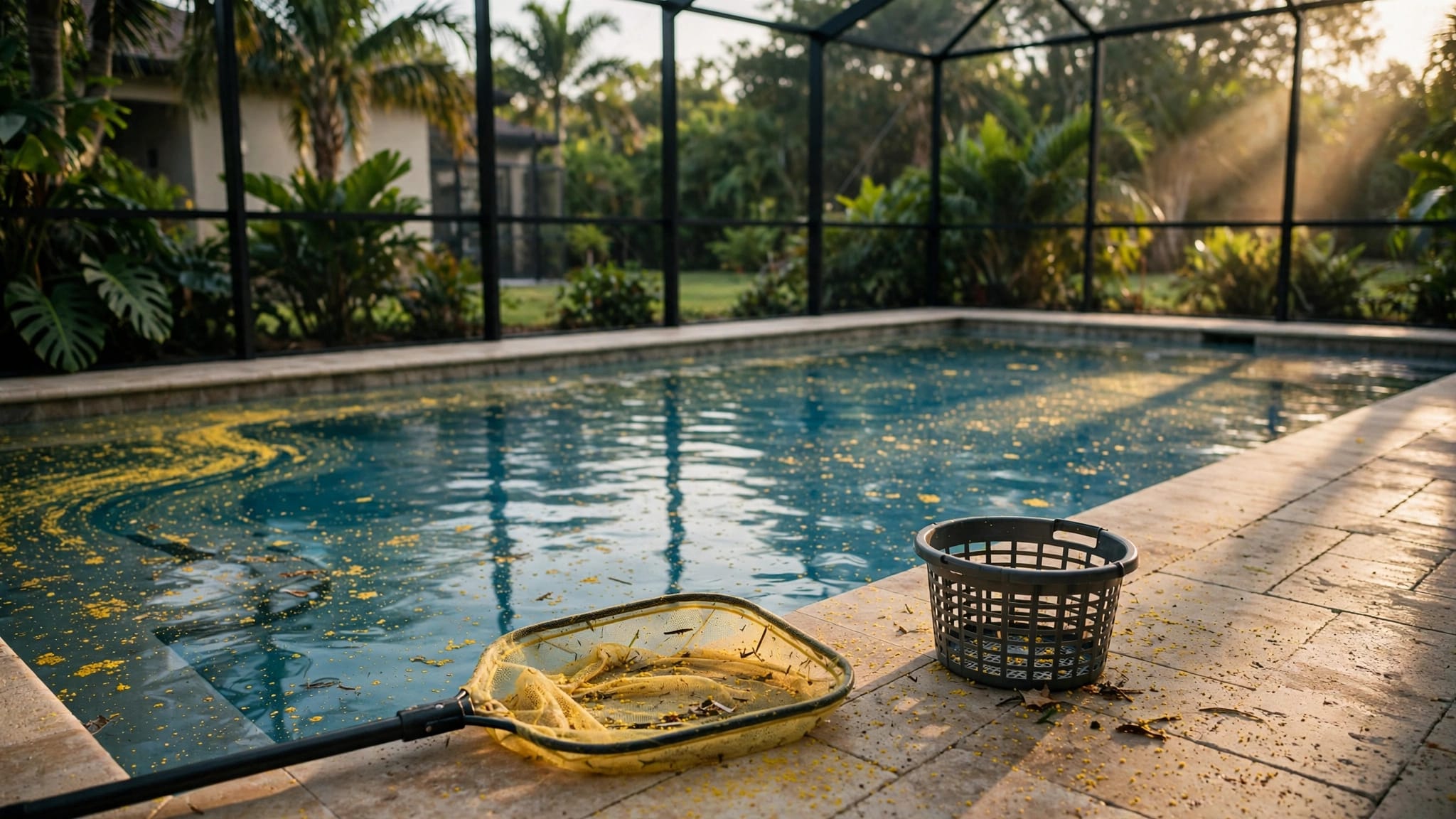
If the test area responds well, brush the remaining affected pavers in manageable sections. Collect the residue instead of sweeping it into the pool. A dustpan and outdoor broom make it easier to remove loose material without carrying it across clean areas.
Rinse and assess the result
After removing the loose powder, rinse the cleaned pavers with plain water. Use a gentle flow that won't displace joint sand, and keep the rinse water and debris out of the pool.
Let the surface dry before judging the color. A wet paver can look different from a dry one, and a pale film may be harder to see while the surface is damp.
Compare the cleaned test area with the surrounding deck. If brushing and rinsing improved the appearance without changing the finish, you've established a gentler option for loose deposits. If a hard crust or cloudy patch remains, more force isn't the next step.
When a Paver Cleaner May Be Appropriate
A paver-compatible efflorescence cleaner is an option for deposits that don't respond to dry brushing and rinsing. These products aren't interchangeable with general household cleaners or products intended for pool waterline tile.
The surface matters when considering any cleaner. Concrete pavers, travertine, colored finishes, joint materials, and coated surfaces can respond differently to the same product. A white mark that sits within a cloudy coating also needs a different assessment from loose powder on an uncoated paver.
Protect the pool as well as the deck. Household detergents and other cleaning products can affect pool water, and nearby coping, grout, metal fittings, or landscaping may be sensitive to cleaning chemicals.
If you're uncertain what the white material is, or the deck contains several finishes close together, a professional assessment is a safer choice than experimenting across the whole surface.
Look Beyond the White Mark
A clean-looking paver is only one part of a comfortable pool deck. The surface should also feel stable underfoot, and transitions around the pool should be in good condition.
Notice loose pavers and damaged joints
As you look at the affected area, pay attention to pavers that rock, raised edges, and missing joint material. Individual concrete pavers can often be removed and replaced, which makes a localized repair possible without replacing the entire deck.
Pool deck movement joints are separate from the sand-filled joints between individual pavers. If a flexible joint is damaged or pulling away at the edge, our article on pool deck expansion joint repair explains its role in the larger deck.
Consider the deck as part of the pool area
Look at the coping, steps, and areas around enclosure posts as well as the open walking surface. A loose transition or uneven edge deserves attention even when the white residue is only cosmetic.
If you're planning a larger update, consider the deck material alongside the appearance and use of the pool. Our comparison of pool pavers and travertine covers differences in repairability, appearance, and maintenance.
When to Include the Deck in a Pool Renovation
Cleaning may be enough when the pavers are sound and the concern is limited to a surface deposit. A wider project makes sense when you're also dealing with loose coping, uneven deck areas, or a pool interior that needs attention.
Keep those issues distinct when considering the work. Resurfacing addresses the pool's interior finish, while deck repairs involve the walking surface and its surrounding transitions. Our guide to pool remodeling versus resurfacing explains the difference.
At Back Bay Pools, we offer pool renovations and resurfacing, along with new pool construction and enclosure services. If the white deck is one concern in a larger pool project, Get a Free Estimate to arrange an on-site consultation.
Start Gently With White Pool Pavers
White pool pavers don't always need extensive work. Identify the surface, look closely at the deposit, and begin with dry brushing and a gentle rinse when the pavers are sound.
If the mark feels hard, the coating looks cloudy, or the paver surface changes during cleaning, stop and reassess. The right response depends on what's white and which material sits underneath it.