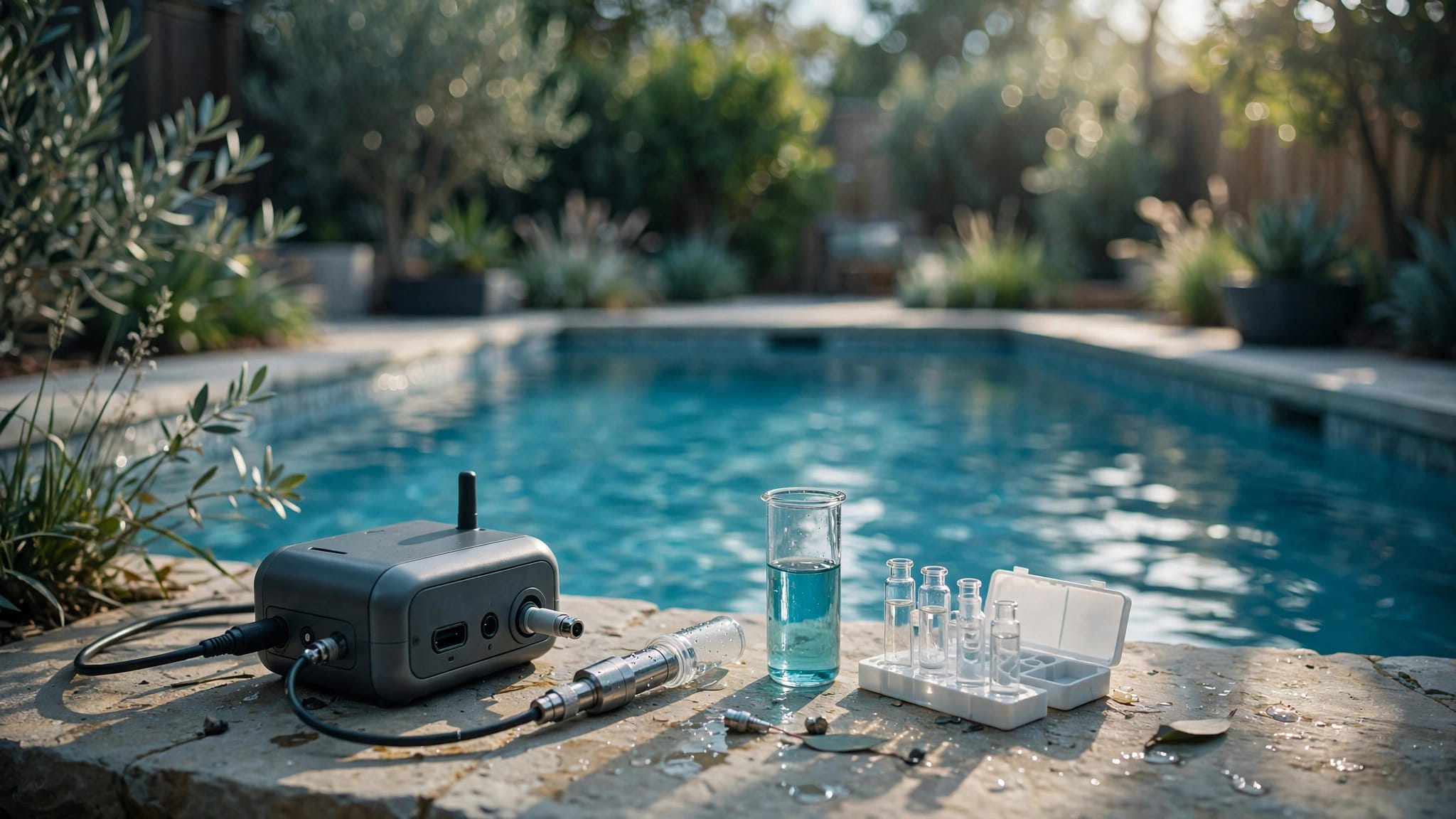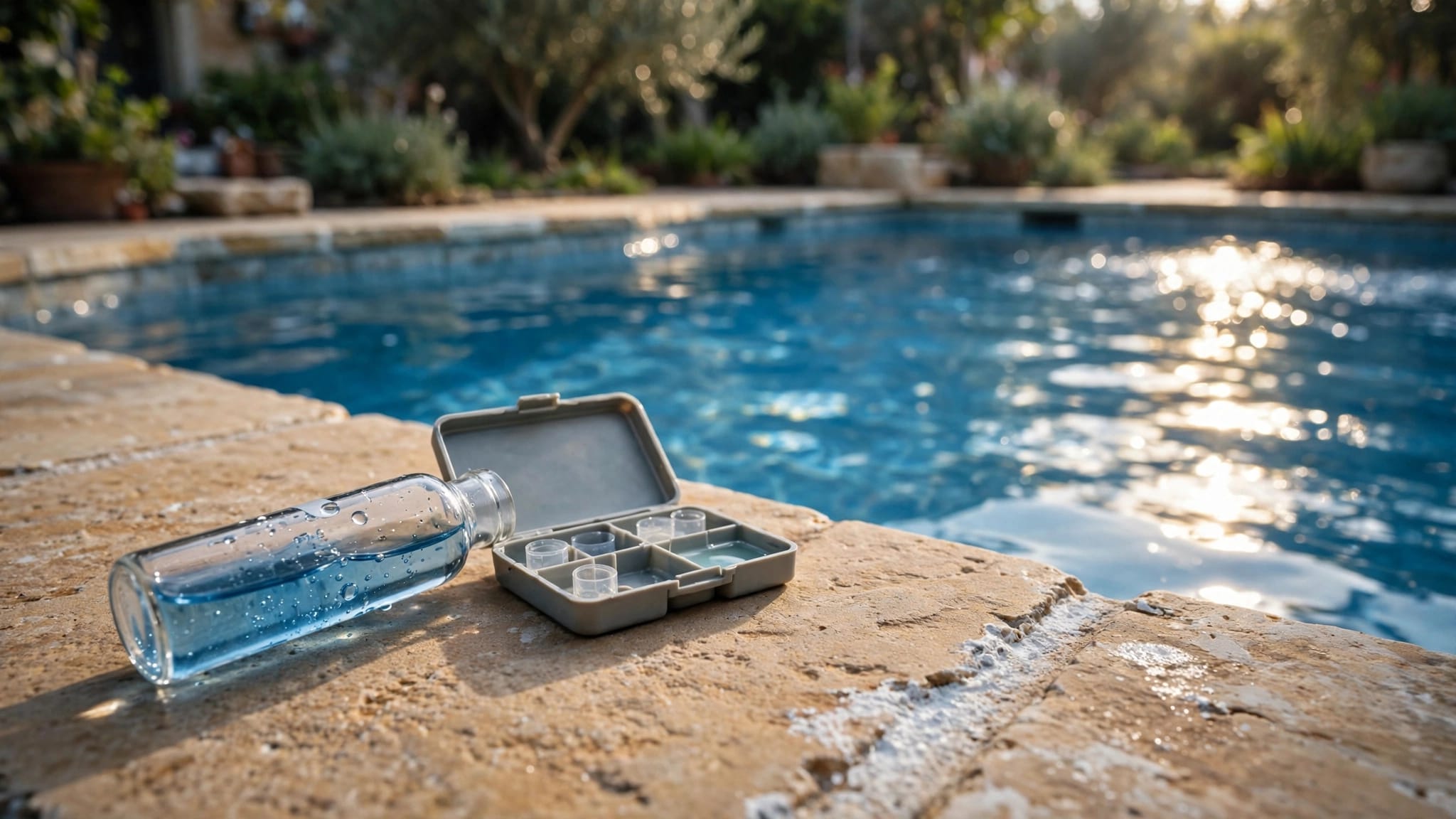
Pool test strips and liquid tests can give different results because they use different reactions and depend on careful handling. Differences in the water sample, test timing, storage, and the precision of each scale can all affect what you see.
A mismatch doesn't mean your pool needs an immediate chemical adjustment. Retest under consistent conditions before deciding which reading to use. A few changes to your routine can make the comparison more useful.
Why the Two Tests Measure Water Differently
Test strips and liquid kits both use chemical reactions to measure pool water, but they don't perform those reactions in the same way.
Pads and liquid reagents
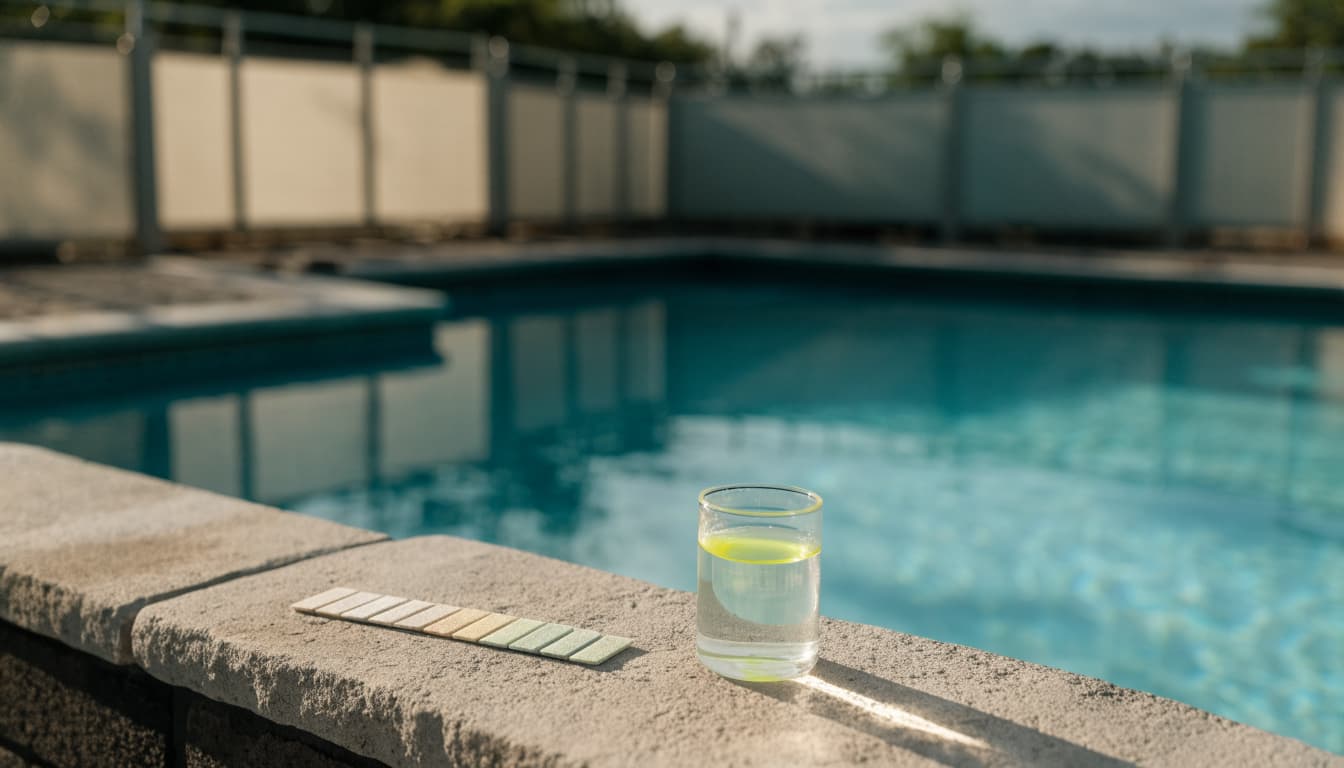
A test strip has treated pads that react when they contact water. A liquid kit uses reagents added to a measured water sample. Each product has its own directions and scale for reporting results.
Some liquid kits offer more detailed measurements than the broad ranges on a strip chart. However, that doesn't mean every liquid result is correct or every strip result is wrong. Both methods depend on the condition of the test supplies and how you use them.
Free chlorine and total chlorine
Before comparing numbers, make sure both tests measure the same thing. Free chlorine is the chlorine available to sanitize the water. Total chlorine includes free chlorine and chlorine that has combined with contaminants.
A strip's total chlorine result can differ from a liquid kit's free chlorine result even when both tests work properly. Look for the matching measurement on each product before treating the difference as a testing error.
How Timing and Handling Affect Results
Even good supplies can produce an unreliable result when the testing process changes. Each product has its own instructions, so a routine that works for one kit may not work for another.
Follow each product's directions
Use the directions for the strip and liquid kit separately, including their instructions for timing. Don't assume the two methods use the same procedure because they test the same pool.
For liquid tests, use the designated tube and fill it to the indicated level. Handle the reagents as directed and use the instructions that came with that kit. Small changes in the procedure can affect the result.
Keep the test supplies clean
Take strips out with dry hands and avoid touching their reactive pads. For a liquid kit, rinse the test tubes with pool water before filling them. Dirt, soap, sunscreen, or leftover chemicals in a container can interfere with a sample.
Keep each kit's supplies together rather than swapping parts between products. Our at-home pool water testing guide covers the basics if you're setting up a regular testing routine.
Why Storage Matters for Both Methods
Pool test supplies can sit unused for months, especially when homeowners rely on a pool service for routine care. Before you trust an unexpected result, consider how the supplies have been stored.
Protect unused strips from moisture
Keep the strip container closed between uses. Moisture can affect the pads before they reach the pool water, so avoid leaving the bottle open beside the pool or handling unused strips with wet fingers.
Check the expiration date before using a strip. Faded or damaged pads are another reason to replace the container. A fresh strip is a better starting point than one that has been exposed to water or humidity.
Keep liquid reagents in good condition
Liquid reagents also have a usable life. Replace expired reagents and store them according to the kit's directions. Keep bottles closed when you aren't using them, and don't transfer liquids into unmarked containers.
A kit with clean tubes and fresh reagents is easier to use confidently. If a replacement kit gives a different result from an older one, the condition of the original supplies may have contributed to the mismatch.
How Precise Are Strips and Liquid Tests?
The number on a test result is an estimate based on the method's scale. Two estimates can be close enough to guide routine care without matching exactly.
Some strip charts show a limited set of color blocks. If the water falls between two blocks, choosing a result may take judgment. A liquid kit may provide a more detailed scale or another way to measure the same property, depending on the kit.
Compare the results in consistent, indirect natural light. Also look at the increments each product reports. If one gives a broad range and the other gives a narrower value, a small difference may reflect the scales rather than a sudden change in the water.
Compare the same measurement on both tests before comparing the numbers. Free chlorine and total chlorine are separate results.
Our pool alkalinity and pH balancing guide explains how those two readings work together when it's time to adjust the water.
How to Retest Pool Water Side by Side
A side-by-side comparison gives you a better starting point than tests taken at different times or in different areas of the pool. Let the water circulate after adding chemicals, then collect a fresh sample away from return jets, skimmers, and chemical feeders.
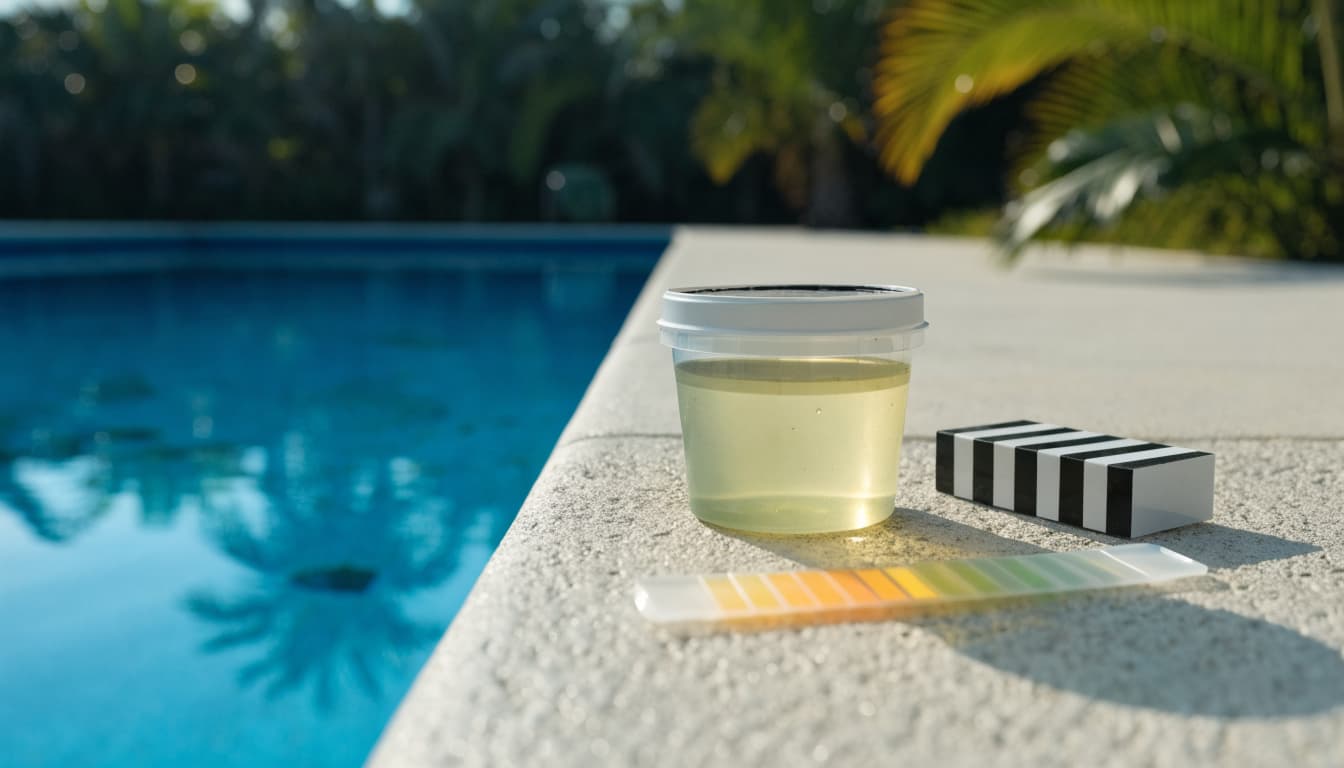
- Gather usable supplies. Choose an unexpired strip and a liquid kit with unexpired reagents. Keep both sets of instructions nearby.
- Prepare a clean container. Rinse it with pool water to remove residue that could affect the sample.
- Collect one fresh sample. Choose a spot away from equipment and chemical dispensers. Test the water soon after collection.
- Run each test separately. Use the sample for both methods without letting test supplies or reagents contaminate the remaining water.
- Follow each method's directions. Use the stated procedure and timing for the particular strip or liquid kit.
- Compare matching measurements. For example, compare free chlorine with free chlorine and pH with pH. Use consistent, indirect natural light.
- Record both results. Note the measurement, the test method, and any recent water additions or treatments. Keep the record for your next test.
If the results still disagree, repeat the comparison with a fresh sample rather than averaging the two numbers. A third reading can help you decide whether the difference persists.
When to Confirm a Pool Test Result
A second method is useful when a result is far outside its normal range, changes suddenly without an obvious cause, or doesn't fit what you know about recent pool care.
For example, confirm a reading before making a large chemical adjustment. Retesting is also sensible when pH continues to drift after treatment, or when a strip and liquid kit give results that would lead you to take different actions.
A fresh liquid kit can help when a strip falls between chart values. If the liquid result is unclear too, or the two methods continue to disagree, take a fresh sample to a pool professional for another test. Keep a record of your home readings so you can explain what prompted the visit.
Don't assume clear water proves the sanitizer reading is safe. If you can't establish a reliable sanitizer result, keep swimmers out until the water has been tested and meets the applicable requirements.
What to Do Once You Have a Reliable Reading
Use the confirmed result with your pool's requirements and the directions for your sanitizer and other products. A typical home pool pH target is 7.2 to 7.6 , although equipment and product guidance may call for particular limits.
If both alkalinity and pH need correction, adjusting alkalinity first can make the next pH adjustment easier to judge. Use a measured amount based on your pool's water volume and the product label. Then circulate the water and retest before deciding whether another treatment is needed.
Add chemicals separately and follow their handling instructions. Never mix pool chemicals in a container. Keep swimmers out for the period stated on the product label and until the water meets the appropriate conditions for swimming.
Rain, heavy use, and fresh fill water can change pool chemistry, so an earlier result may no longer describe the water after those events. Our guide to preventing pool stains in Southwest Florida explains why regular testing also matters for the pool surface.
If you notice persistent stains, a rough finish, or visible wear alongside recurring water-balance problems, the pool may need more than a chemistry adjustment. For an onsite consultation about a renovation or resurfacing project, you can Get a Free Estimate.
Make Each Reading More Useful
Test strips and liquid kits can both help you care for your pool. The most useful result comes from fresh supplies, a clean sample, and a consistent procedure.
When readings disagree, confirm the measurement before adding chemicals . That extra test gives you a better basis for protecting the water and the pool finish.