Clear pool water can still damage a finish, irritate skin, or leave scale on tile when its chemistry is off. Pool alkalinity pH readings work together, so changing one without checking the other often creates a frustrating cycle of corrections.
For most residential pools, total alkalinity should fall between 80 and 120 ppm, while pH should stay between 7.2 and 7.8. Your pool type, sanitizer system, surface, and chemical label may call for a different target. Start with accurate testing, make one measured adjustment, and give the water time to respond.
How Pool Alkalinity pH Work Together
Total alkalinity and pH are related, but they measure different conditions in your water. Treating them as separate numbers makes balancing much easier.
Total alkalinity keeps pH from swinging
Total alkalinity measures the water's ability to resist sudden pH changes. You can think of it as a buffer. When alkalinity is in range, pH is less likely to jump after rain, heavy pool use, or a chemical treatment.
Low alkalinity leaves pH unstable. A reading may look fine one morning, then fall or rise outside the ideal range the next day. High alkalinity often makes pH stubbornly high and can contribute to scale, cloudy water, and rough deposits.
pH measures how acidic or basic the water is
The pH scale tells you whether the water is too acidic or too basic. A pH below 7.2 can irritate swimmers' eyes and skin. It can also corrode metal components, damage heaters, and etch some pool finishes.
A pH above 7.8 can make water look dull or cloudy. It may also reduce chlorine's effectiveness and encourage calcium scale along tile, fixtures, and the waterline.
pH corrections rarely hold when total alkalinity is far outside its target range. Balance alkalinity first, then fine-tune pH.
Test the Water Before You Add Anything
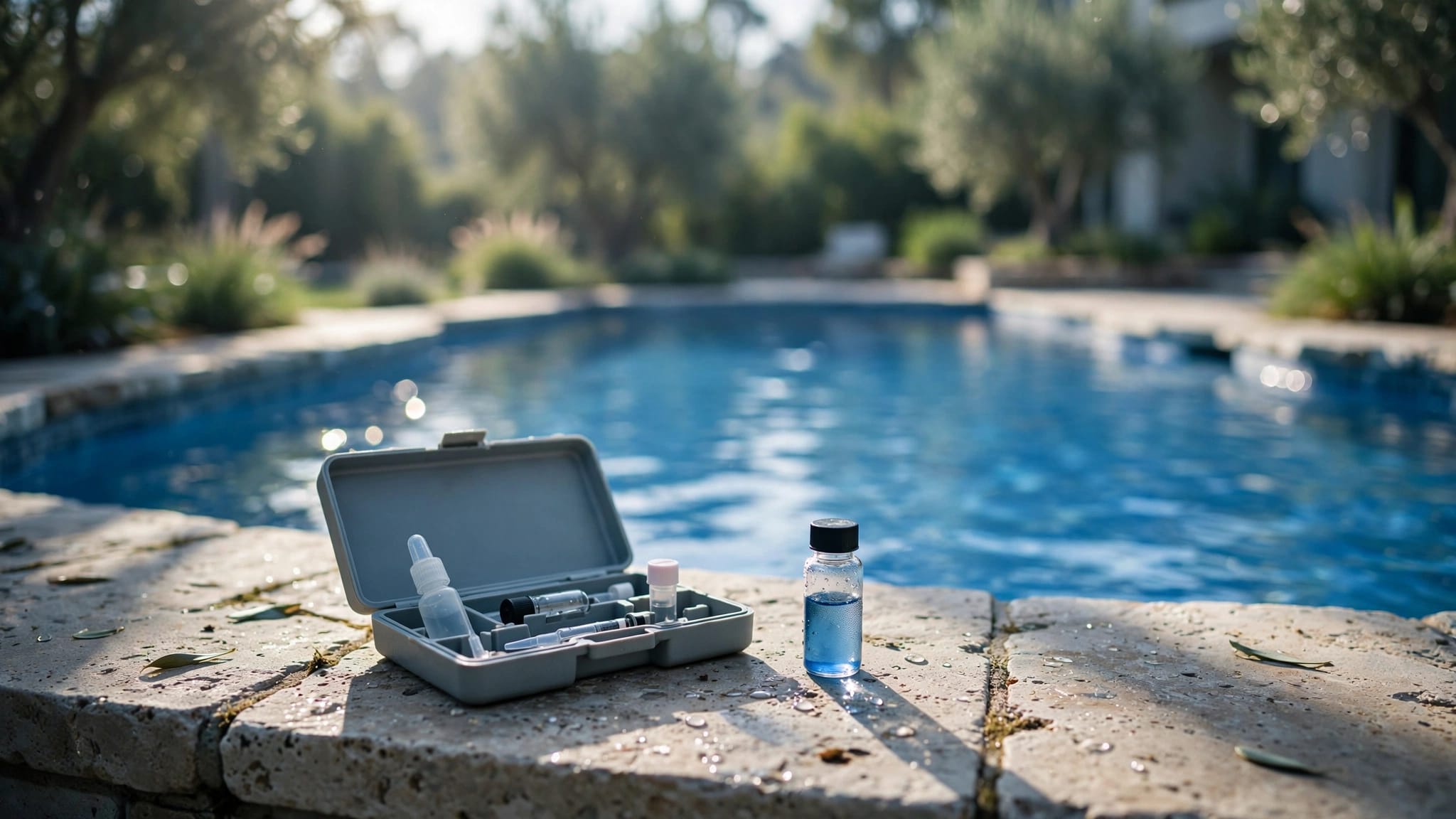
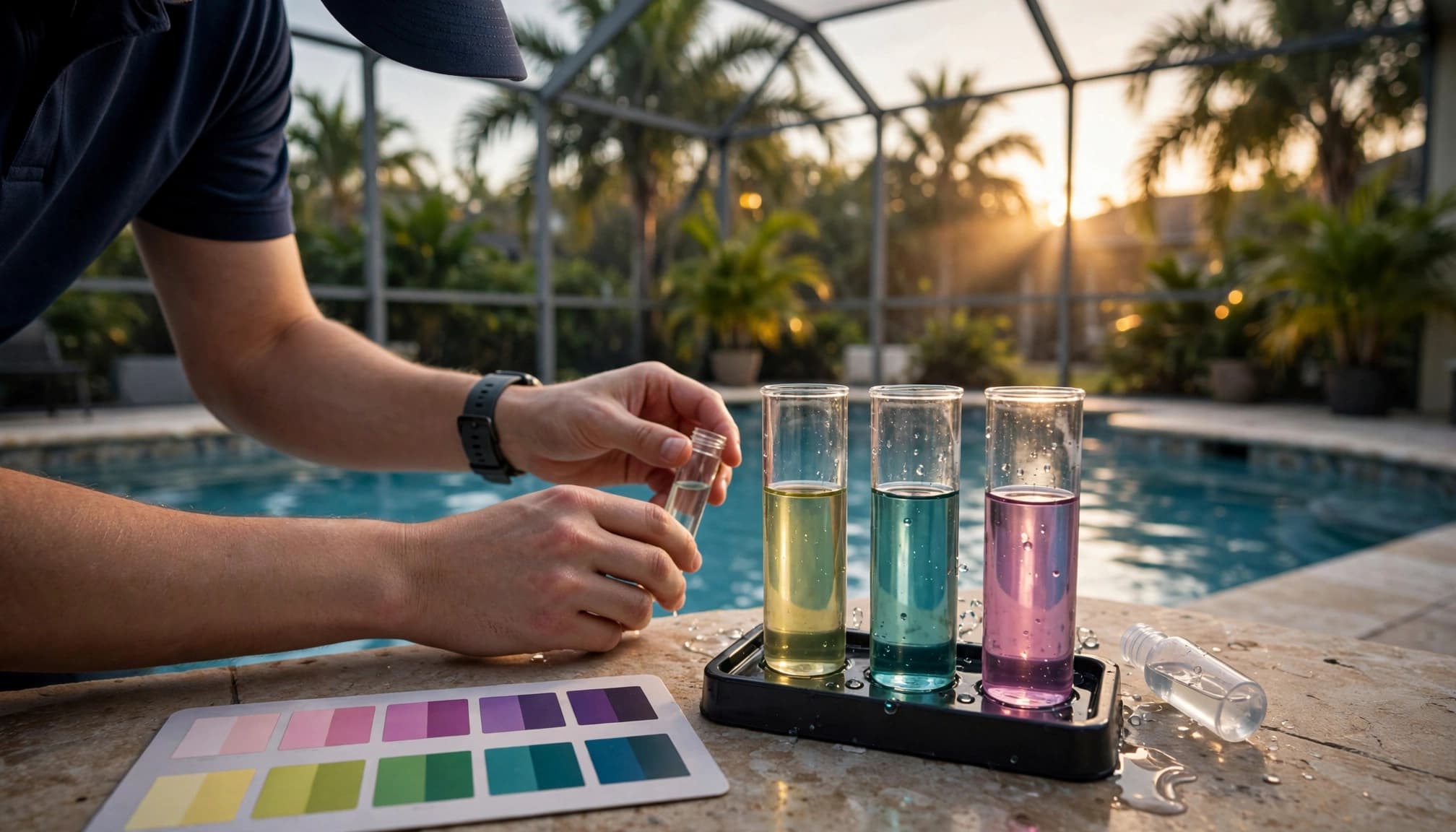
Guessed doses cause most pool chemistry problems. Use a fresh test strip, reliable liquid kit, or a professional water test before adding any chemical.
Test water at least once a week during normal use. In Cape Coral, intense sun, afternoon storms, frequent swimming, and evaporation can shift readings faster. Check more often after a major storm, an algae treatment, a large pool party, or fresh fill water.
Take a useful water sample
Collect the sample away from skimmers and return jets. Reach about elbow-deep, then fill a clean test container. Water taken from the surface or directly beside a chemical feeder may give a misleading result.
Record total alkalinity, pH, sanitizer level, and calcium hardness when your test method provides it. A log helps you spot patterns, such as pH drifting upward every few days or alkalinity dropping after repeated acid additions.
If test strips and a liquid kit disagree sharply, use a fresh liquid reagent kit or have a pool professional test the sample. Expired strips, wet hands, and faded color pads can distort a reading.
Adjust Total Alkalinity Before pH
Most homeowners get steadier results by correcting total alkalinity first. Once it is close to the right range, pH adjustments become smaller and more predictable.
When total alkalinity is too low
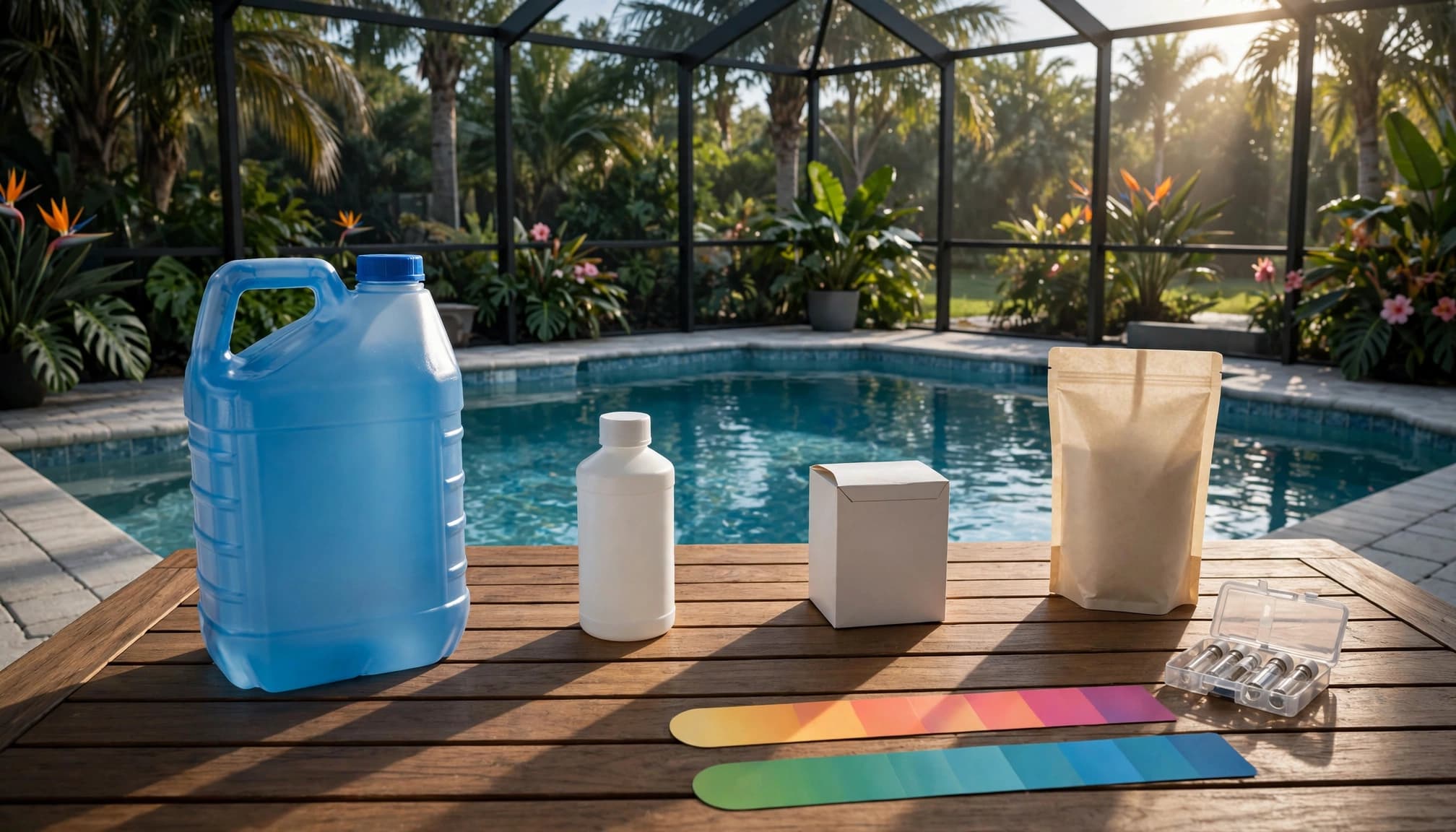
A total alkalinity reading below 80 ppm often causes pH bounce. Sodium bicarbonate, commonly sold as alkalinity increaser, raises total alkalinity with a smaller effect on pH than soda ash.
Calculate the amount from your pool's actual water volume, current test result, and product label. A 10,000-gallon pool and a 20,000-gallon pool need very different amounts. Add the product as directed, allow the pump to circulate, then retest before deciding whether another treatment is needed.
Because pH may rise slightly after sodium bicarbonate, wait for the new reading before reaching for a pH reducer.
When total alkalinity is too high
High alkalinity often appears with a persistently high pH, cloudy water, scale, or white crust around the waterline. Muriatic acid or sodium bisulfate can lower both alkalinity and pH.
Muriatic acid is a liquid acid. Sodium bisulfate is a dry acid, often labeled pH decreaser or dry acid. Follow the exact product directions and use the dose calculated for your pool volume. Do not use a one-size-fits-all amount from a neighbor or online comment.
Add acid in separate, controlled treatments. Circulate the water, retest, and repeat only when the label and new test results support it. Lowering alkalinity too quickly can push pH below its safe range.
Choose the Right Chemical for the Reading
The same product can affect more than one number. That is why a test result should guide every adjustment.
| Water issue | Typical adjustment | What else may change |
|---|---|---|
| Low total alkalinity | Sodium bicarbonate | pH may rise a little |
| Low pH with acceptable alkalinity | Soda ash | Total alkalinity may rise |
| High pH and high alkalinity | Muriatic acid or sodium bisulfate | Both readings usually fall |
| High pH with alkalinity in range | Small acid treatment | Alkalinity may decline |
The target is a stable reading, not a dramatic chemical correction.
Sodium bicarbonate and soda ash are not interchangeable
Sodium bicarbonate is the usual choice when total alkalinity is low. Although it can raise pH somewhat, its main job is building the water's buffer.
Soda ash, also called sodium carbonate, raises pH more strongly. It can raise total alkalinity too, so use it carefully when alkalinity already sits near the upper end of the recommended range.
Add each product separately according to its label. Never combine dry chemicals in a bucket, never mix acid with any other pool chemical, and never pour chemicals into the same container.
Use acids with care
Muriatic acid and sodium bisulfate lower pH. They also lower total alkalinity, which is helpful when both readings are high. However, repeated acid treatments can make alkalinity too low.
Keep the circulation system running unless the product label instructs otherwise. Wear the protective gear listed on the container, keep products dry and closed, and store them apart. Keep swimmers out of the pool during treatment, then wait for circulation and retesting before reopening the water for use.
Troubleshoot Common High and Low Readings
Water chemistry issues often come from a repeatable cause. Identifying it helps you stop correcting the same imbalance every week.
Low pH or low alkalinity
Heavy rain can dilute pool water and lower readings. Fresh water, splash-out, acidic debris, and regular acid use can also pull alkalinity down. Saltwater pools may still develop low alkalinity, even though their pH often trends upward over time.
If both total alkalinity and pH are low, raise alkalinity first with sodium bicarbonate. After the water circulates, test again. You may need a separate pH adjustment with soda ash, but only if the pH remains below the target range.
Don't add both products at once. A measured sequence gives you useful feedback and protects the pool from overshooting its targets.
High pH or high alkalinity
Aeration raises pH. Spillover spas, waterfalls, bubblers, and return jets pointed toward the surface can all add air to the water. That doesn't make these features a problem, but it does mean you may test and adjust more often.
High alkalinity can also come from fill water or repeated use of products that raise alkalinity. When both readings are high, use muriatic acid or sodium bisulfate in label-directed amounts. Retest after full circulation instead of assuming one treatment fixed everything.
For pool alkalinity pH balance, avoid chasing a pH number every day. Correcting high pH without checking alkalinity can gradually strip away the buffer that keeps water stable.
Protect Your Finish, Equipment, and New Pool Surface
Balanced water protects much more than swimmers' comfort. Acidic water can etch plaster, dull grout, and corrode heaters or rails. High pH and alkalinity can leave calcium scale that catches dirt and makes a surface feel rough.
This care matters after a renovation or new finish. Fresh surfaces often need closer monitoring, and their startup instructions may have more specific chemistry targets than a mature pool. Follow your contractor's care plan and the finish manufacturer's guidance.
For a newly updated backyard, review this pool startup after renovation guidance before making routine adjustments. Consistent testing also helps with preventing pool stains in Southwest Florida, especially when mineral deposits or recurring discoloration appear.
Know when chemistry is not the only issue
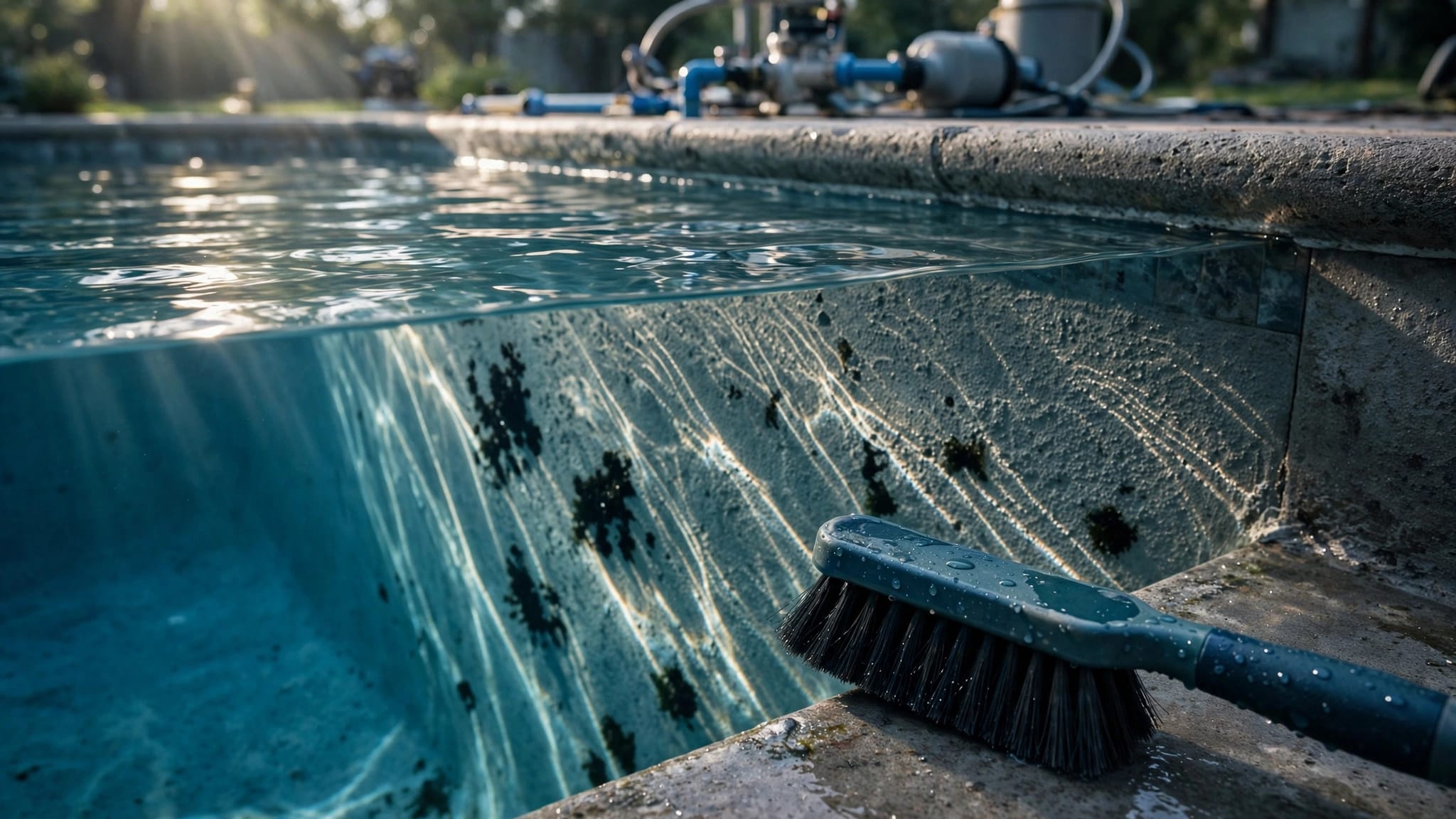
A chemical adjustment cannot repair a failing pool surface. Persistent stains, peeling plaster, rough spots, cracks, or water that will not hold a stable balance may point to a worn interior finish or an equipment issue.
Review the signs your Cape Coral pool needs resurfacing if those problems keep returning. An onsite evaluation can separate a normal chemistry concern from a repair that needs attention.
Keep a Simple Weekly Balancing Routine
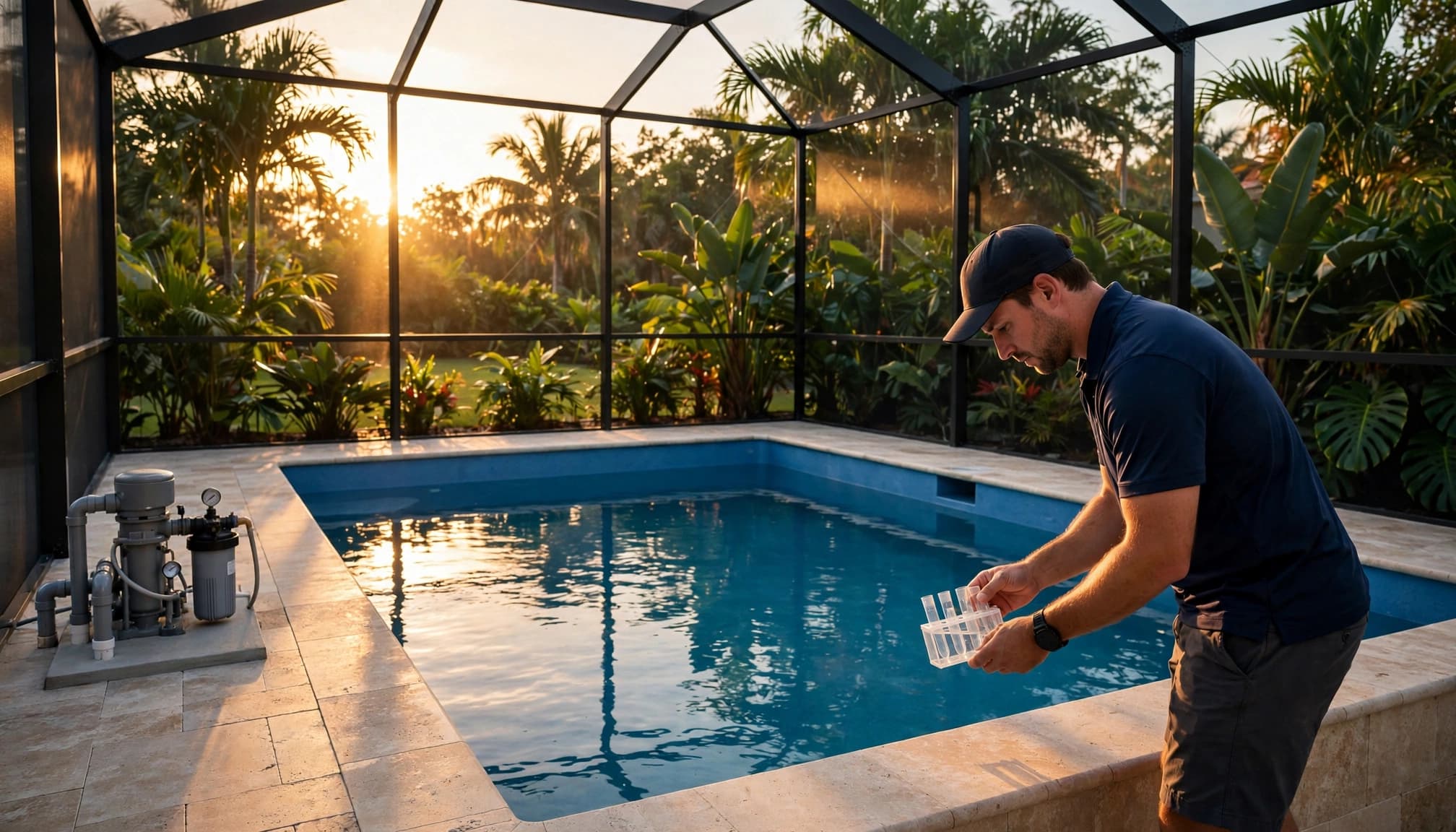
A steady routine prevents sudden swings and cuts down on unnecessary chemicals. Test first, correct total alkalinity when needed, circulate, and then recheck pH.
Use this order for a typical adjustment:
- Test total alkalinity, pH, and sanitizer with a fresh sample.
- Compare results with your product label, pool surface guidance, and system requirements.
- Adjust total alkalinity before pH when both readings need correction.
- Add only one chemical at a time, following the label and calculated dose for your pool volume.
- Allow the pump to circulate, then retest before adding anything else.
Keep a record of what you added and when. Within a few weeks, you will see how rain, bather load, water features, and fill water affect your pool.
If the water remains difficult to balance or the finish has visible wear, Get a Free Estimate for an onsite look at your pool's condition and upgrade options.
Final Thoughts
Healthy water starts with the right order: test first, bring total alkalinity into range, then adjust pH with small, label-directed treatments. That approach keeps pool alkalinity pH readings steadier and protects the surfaces and equipment you paid for.
A few careful minutes each week can prevent cloudy water, scale, corrosion, and unnecessary chemical corrections.