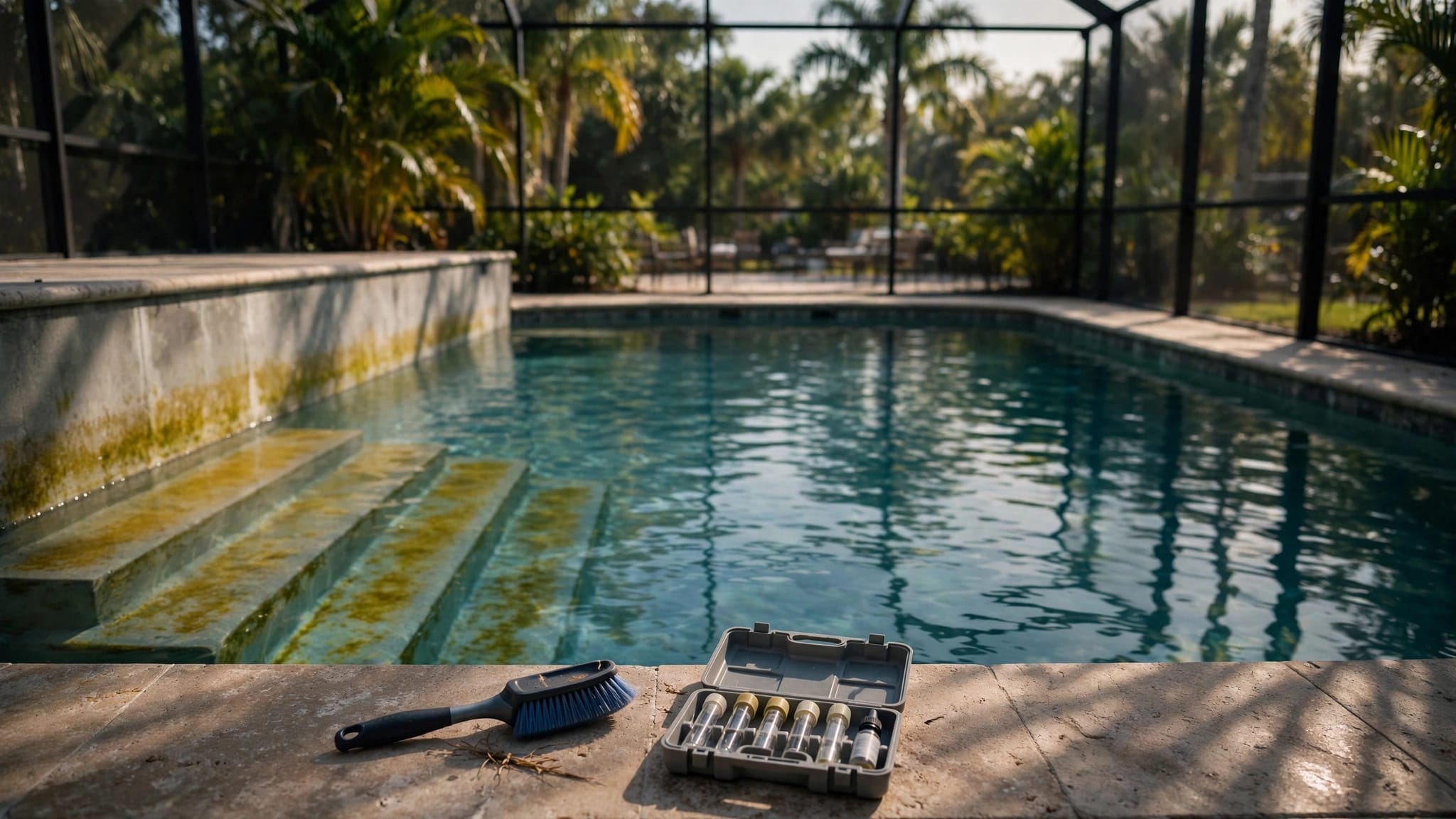
A borate test answers a narrow question: how much borate is in your pool water. It doesn't tell you whether the water is sanitized or whether pH and total alkalinity are balanced. Understanding that distinction helps you read pool borate levels without reacting to the wrong number.
Most pool owners need a borate test when they add a borate product, investigate a chemistry issue, or replace a significant amount of water. A consistent sample and the right test method make the result easier to interpret.
Key Takeaways
- Borate is a pool-water additive that can help slow pH changes and discourage algae growth. It doesn't replace chlorine or another sanitizer.
- A borate-specific test measures borate concentration. A pH or total alkalinity test can't provide the same reading.
- Test when you plan to add borate, after it has circulated, or after a major water replacement that may have diluted it.
- Read the kit's scale and compare the result with the target for the product or system you use. Don't guess at a dose based on a single number.
What Pool Borate Levels Tell You
Borate is one part of water chemistry, alongside sanitizer, pH, alkalinity, and calcium hardness. Testing it is useful when you intentionally maintain borate in the pool or need to check whether its concentration has changed.

Borate and pH have different readings
Borate can help buffer pH, which means it can slow some changes in pH. It doesn't lock pH in place, and it doesn't replace regular pH testing. Rain, swimmers, aeration, and chemical additions can still affect the reading.
Total alkalinity is another measure. It reflects the water's ability to resist changes in pH and isn't a substitute for a borate-specific test. A total alkalinity result below 80 ppm often contributes to pH swings, but that number describes alkalinity, not the borate concentration.
For more on those separate measurements, see our pool pH and total alkalinity guide.
Borate doesn't sanitize pool water
Borate may help limit algae growth, but it doesn't kill germs or replace the sanitizer your pool system requires. Keep testing chlorine or the sanitizer used by your system, even when a borate result falls within the intended range.
If you haven't added a borate-containing product and your equipment doesn't call for it, a separate borate test may not be part of your regular routine. Focus first on the readings that govern sanitation and water balance.
When to Test Pool Borate Levels
Test borate when the result can guide a decision. That may be before adding a borate product, after a recent addition has circulated, or after a substantial water change.
Before and after an addition
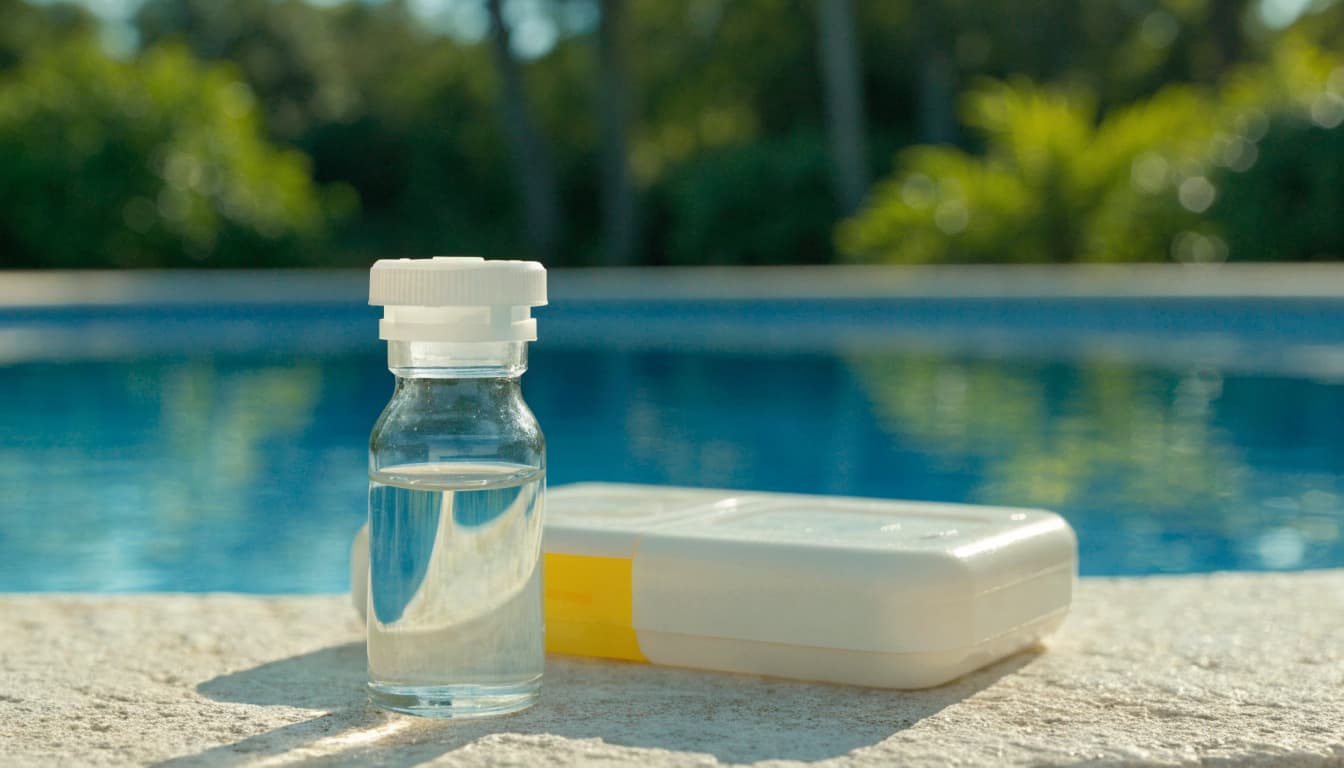
A reading taken before treatment gives you a starting point. After the product has mixed through the pool, another test can show whether the concentration changed as expected. Follow the test kit's timing and the product's directions, since different products and test methods can have different procedures.
Testing before adding anything also helps prevent unnecessary treatment. If you aren't sure whether a product contains borate, look at its stated active ingredients rather than assuming it does.
After a major water change
Fresh fill water can dilute borate already in the pool. The same may happen after draining, significant overflow, or another large replacement of pool water. In those cases, retesting can show whether the concentration remains within the range selected for your product or system.
A routine test schedule for borate isn't the same as the schedule for pH or sanitizer. Use event-based testing when you add borate or change the water. For general sample collection and home testing tips, read our beginner's guide to pool water testing.
What a Borate Test Result Means
A result reports the concentration measured by the specific kit or service. Many pool tests express that concentration in parts per million, but use the units and scale shown by your test method. The number only makes sense when you know what the test measures and what target you're using.
Compare the result with the right target
There isn't one number that automatically fits every pool and product. Compare the reading with the recommended range for the borate product or system you use. A result below that target means the measured concentration is lower than intended. A result above it means the reading exceeds that target.
Don't treat either result as a reason to add a guessed amount. Pool volume, existing concentration, and product strength all affect how an adjustment should be calculated. If your test falls between color blocks or seems inconsistent with previous results, repeat it using a fresh sample and the kit's stated reading time.
Keep the other chemistry readings in view
A borate result doesn't reveal whether chlorine is adequate, whether pH is comfortable, or whether calcium hardness suits your pool surface. Read it alongside those measurements rather than using it as a general score for water quality.
For example, a pool can have the intended borate concentration and still have high pH or low sanitizer. Likewise, a pH swing doesn't prove the borate reading is low. Test each parameter with the method designed for it before deciding what to adjust.
How to Get a Dependable Borate Reading
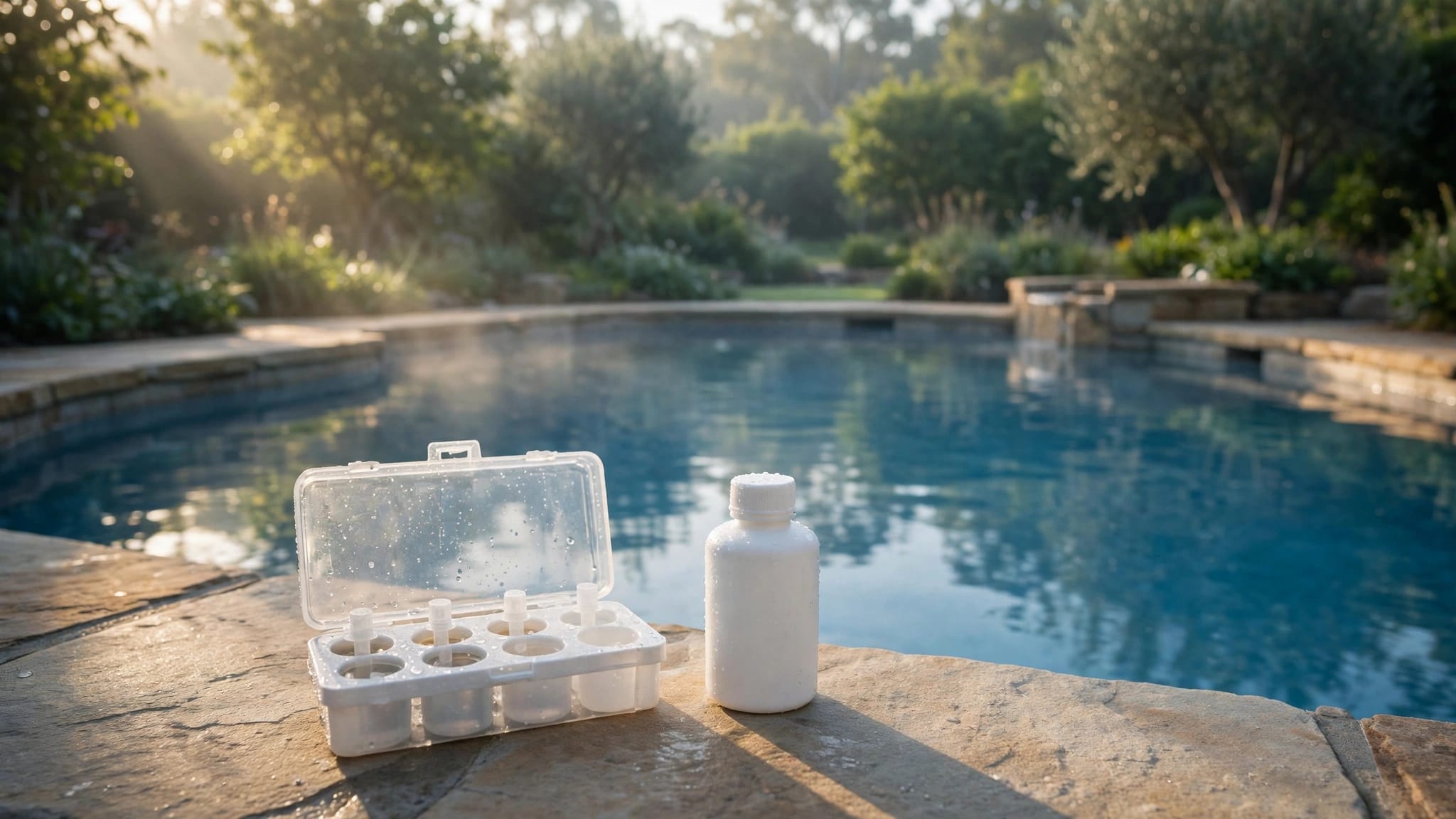
The test is only useful if the sample and method are sound. Use a clean container, collect water away from the pool's circulation points, and follow the kit directions closely.
Collect a representative sample
Take water from the pool rather than from the surface, skimmer, or return jet. A sample from roughly a foot below the surface, away from recently added chemicals, is less likely to reflect a local pocket of water. Rinse the sample container with pool water first if the kit instructions allow it.
If you've recently added a chemical, let the pump circulate the water before collecting a sample. Fill the vial to its marked line, then test soon after collection. Keep it out of direct sunlight while you compare colors.
Follow the method's timing
Borate-specific strips and liquid tests can use different steps, so follow the exact directions for the kit in hand. With a strip, use the specified dip and wait time, then compare the pad during the stated reading window. Leaving it longer can change the colors.
For a liquid test, use a clean tube and the correct fill line. Add the specified number of drops, mix as directed, and compare the color in indirect natural light. Record the result with the date and any recent water changes or chemical additions. If you're comparing results over time, consistent sampling and timing make real changes easier to spot.
How to Respond to a Borate Result
Use the result to decide whether further testing or a measured adjustment is needed. Don't add borate simply because you have a test kit or because another pool uses it.
If the result is below the intended range
First, repeat an unexpected reading to rule out a sampling or color-matching error. If the result remains low and your pool uses borate, calculate any adjustment using the pool's actual water volume and the product's directions. Add only the intended product, and allow circulation before retesting.
Avoid combining multiple chemical treatments at once. A single adjustment followed by a new reading gives you a clearer picture of what changed. Never use a dose from a different pool as a shortcut, since volume and current chemistry may differ.
If the result is above the intended range
Don't add more borate. Confirm the result with a fresh sample, then consider recent additions and water changes when reviewing the reading. Reducing an excessive concentration may require replacing some pool water rather than adding another chemical.
If readings stay confusing or water balance remains difficult after careful testing, a pool professional can help interpret the results. When chemistry concerns occur alongside a worn finish, staining, or equipment issues, our team can discuss the pool's broader condition. Get a Free Estimate for an on-site consultation.
Frequently Asked Questions
Do I need to test borate every week?
Borate testing isn't a replacement for routine checks of sanitizer, pH, and alkalinity. Test when you're considering an addition, after a borate treatment has circulated, or after a substantial water change that may have diluted it.
Can a pH test tell me whether borate is low?
No. A pH test reports how acidic or basic the water is at that moment. It doesn't measure borate concentration. Use a borate-specific test to assess borate.
Can borate replace chlorine?
No. Borate isn't a sanitizer. Maintain the sanitizer required by your pool system and test it separately, even if the borate result meets your selected target.
Why did the borate result change after adding water?
Replacing or losing a large volume of pool water can dilute dissolved borate. The concentration may shift depending on how much water changed and the borate level in the replacement water. Retest after the pool has circulated.
Use Borate Results Alongside the Full Water Test
Pool borate levels are most useful when you know why you're testing and what range your product or system calls for. Take a consistent sample, use a borate-specific method, and compare the result with your other water readings before making an adjustment.
Borate can support water balance, but it can't stand in for sanitizer, pH, or total alkalinity. Keeping those measurements distinct helps you make smaller, more informed changes and maintain a pool that's easier to care for.