Wait until the product's required interval has passed, the chemicals have circulated, and testing shows the water meets swimming conditions. Your pool chemical wait time depends on the product, dose, and starting water chemistry.
A routine chlorine addition may require a shorter pause than a shock treatment, but test results matter more than the clock alone. Start by identifying exactly what you added, then use the guidance below to plan a safe return to swimming.
Key Takeaways
- Follow the product's swimming restrictions, even when the water looks clear.
- Treat routine chlorine additions and shock treatments differently. Shock can require an overnight wait or longer.
- Test free chlorine and pH before reopening the pool, and keep swimmers out if water remains cloudy.
- Never mix pool chemicals or add several products together to shorten treatment time.
Pool Chemical Wait Time: A Practical Guide
Published waiting periods help you plan, but they aren't permission to swim. The product label controls its application and re-entry requirements.
These estimates distinguish common treatments.
| Treatment | Published waiting guidance | Before swimming |
|---|---|---|
| Routine chlorine addition | HTH suggests 15 to 30 minutes, then testing | Meet the product's free-chlorine range |
| Chlorine shock | HTH describes 8 to 24 hours as typical | Chlorine must return to the specified range |
| pH increaser, alkalinity increaser, or clarifier | Generally 20 minutes to 1 hour | Allow circulation and meet label requirements |
| Muriatic acid | Generally 30 minutes | Retest pH after circulation |
| Calcium-hardness increaser | Generally 2 to 4 hours or one full filtration cycle | Follow the formulation's directions |
| Algaecide | Generally 15 minutes for many products | Follow its label and resolve active algae |
The balancing-chemical estimates come from In The Swim's chemical waiting guide. They're general recommendations, not instructions for every formulation.
A larger dose, weak circulation, or another treatment can extend the closure. Also, an algaecide's short waiting period doesn't make a green pool ready for swimmers.
Routine Chlorine and Shock Need Different Rules
Small maintenance doses still require testing
Routine chlorination replaces sanitizer lost through sunlight, swimming, and contamination. It doesn't necessarily raise chlorine as high as a shock treatment.
HTH's sanitizer guidance recommends waiting 15 to 30 minutes, then testing for free chlorine between 1 and 4 parts per million (ppm). Those numbers apply to that guidance, not every chlorine product.
Liquid chlorine timing also depends on the concentration, amount added, and pool volume. Don't assume a small maintenance dose and a large corrective dose need the same wait.
Likewise, adding tablets to a feeder doesn't create a separate universal countdown. Use the feeder and sanitizer instructions, and measure the water's chlorine level.
Shock can require an overnight closure
Shock treatments address a heavier contamination load or other problems that require corrective treatment. Plan them when nobody needs the pool immediately.
HTH's shock guidance describes 8 to 24 hours as typical, with swimming allowed once free chlorine returns to 1 to 4 ppm. Your specific treatment may have different directions.
A shock treatment can keep swimmers out beyond 24 hours if chlorine remains above the product's re-entry limit.
Keep the circulation system operating as directed. Undissolved material also needs attention according to the label, rather than an assumption that it will disappear while people swim.
pH Adjustments and Other Treatments Need Their Own Timing
Balance pH and alkalinity with measured adjustments
Acid and pH-adjusting products can create concentrated areas before circulation distributes them. Keep everyone out during application and the required waiting period.
Afterward, test rather than assuming the dose produced the intended result. Pool volume, starting readings, and product strength all affect the outcome.
When alkalinity and pH both need correction, address alkalinity first as appropriate, then fine-tune pH after circulation. Our pH and alkalinity balancing guide explains how those readings work together.
Dry acid and liquid muriatic acid have different instructions. Don't transfer one product's waiting period or application method to another.
Hardness increasers, clarifiers, and algaecides differ
Calcium-hardness increaser may require a longer circulation period than a modest alkalinity adjustment. Follow its dissolution and application instructions carefully, particularly around steps and shallow areas.
Clarifiers help filtration collect fine particles, but they don't sanitize water. Similarly, an algaecide's stated re-entry interval doesn't establish that an algae problem has cleared.
If you apply multiple treatments separately, each product's restrictions still matter. Swimming must wait until all applicable requirements are satisfied and the pool is clear, balanced, and properly sanitized.
Test Before Treatment and Before Swimming
Testing first prevents unnecessary chemicals and helps you choose the correct dose. Testing afterward shows whether the treatment worked.
Collect a representative sample
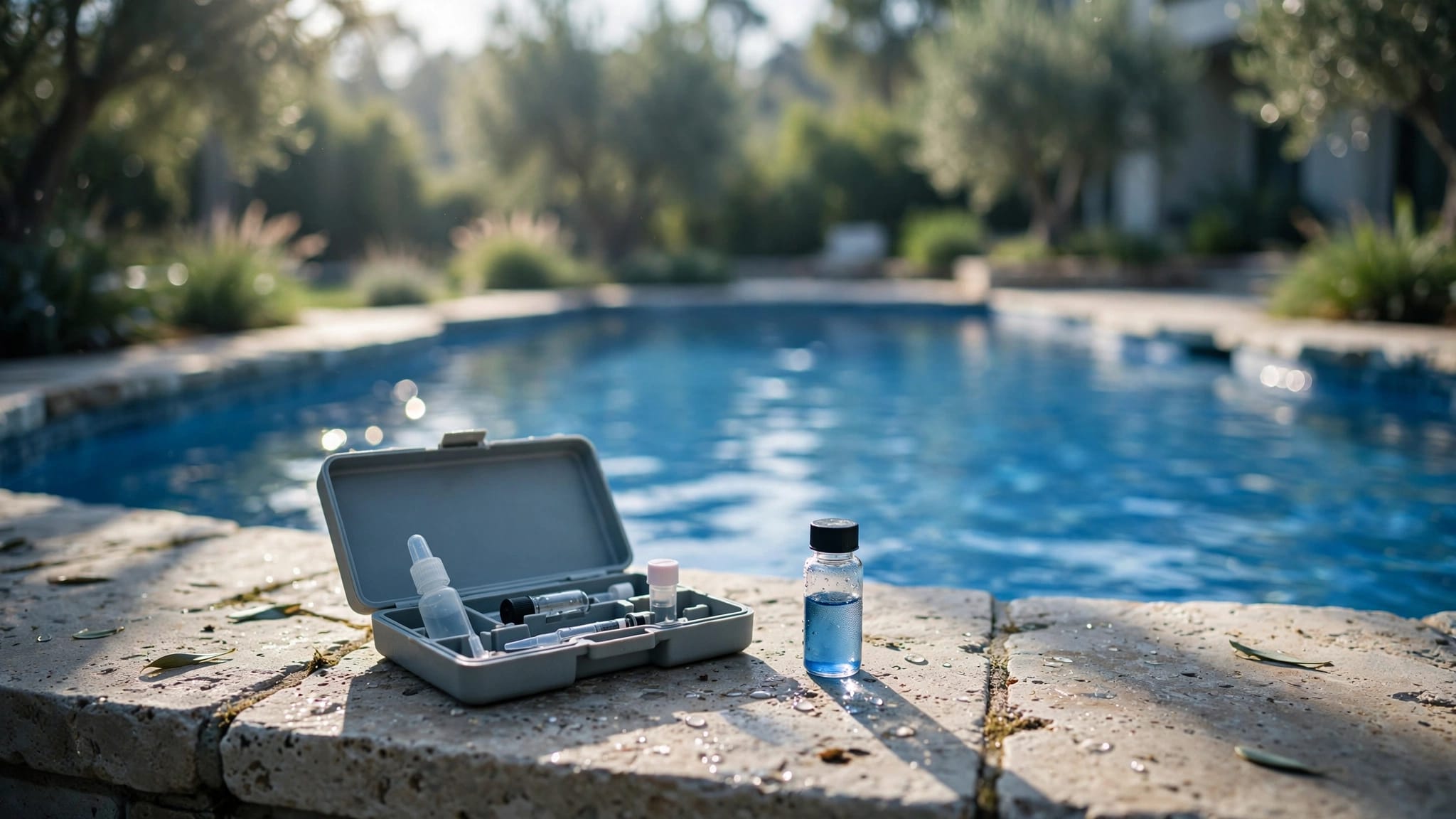
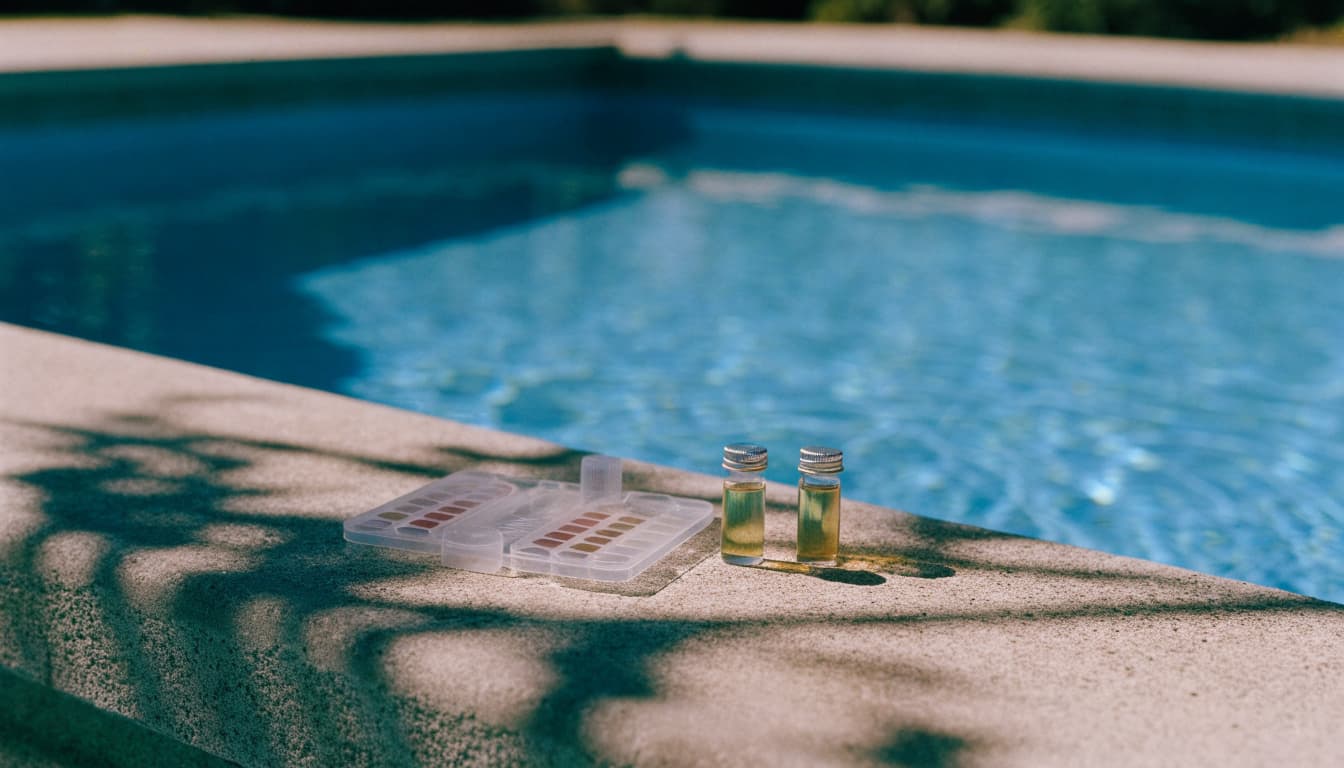
After the required circulation period, collect water about elbow-deep, away from return jets, skimmers, and chemical dispensers. Surface water or water beside a feeder may give misleading readings.
Use a clean container and follow the kit's timing exactly. Read colors in natural, indirect light. Our guide to testing pool water at home covers sampling and test-kit technique.
Test strips are convenient, while a reliable liquid kit helps when results are unclear. Very high chlorine can interfere with some tests, so repeat an implausible reading rather than treating it as permission to swim.
Interpret chlorine and pH together
The CDC's home-pool guidance recommends pH between 7.0 and 7.8. It also recommends at least 1 ppm free chlorine, or at least 2 ppm when using cyanuric acid or stabilized chlorine.
Those are minimum sanitizer levels, not universal upper limits for reopening after treatment. Follow your sanitizer's operating range and re-entry restrictions.
Measure free chlorine , rather than relying on total chlorine alone. Total chlorine also includes chlorine combined with contaminants.
For treatment decisions, include alkalinity, calcium hardness, and cyanuric acid when relevant. These supporting readings help explain recurring imbalance, rapid chlorine loss, or scaling.
Circulation and Water Clarity Can Extend the Wait
Chemicals need moving water to distribute throughout the pool. If the pump stops or return flow becomes weak, a normal waiting estimate loses its usefulness.
Check accessible signs of circulation, including return flow, basket condition, and filter pressure. However, don't open pressurized equipment or attempt electrical repairs to get swimmers back in sooner.
Water clarity matters independently of chlorine readings. You should see the entire floor, main drain, and every step clearly. Cloudiness can conceal a person, debris, or damaged fittings.
During algae recovery, filtration and brushing must continue after the water changes color. Our green pool recovery plan explains why blue-gray water can still need cleanup.
In Cape Coral, strong sunlight, storms, and heavy swimming can change readings quickly. Record treatment times and doses so later results have context.
If rough, worn surfaces keep collecting discoloration, more chemicals won't repair the finish. We offer pool renovations and resurfacing. Get a Free Estimate for an onsite consultation about those improvements.
Handle Pool Chemicals Without Dangerous Mixtures
Never mix pool chemicals. Combining incompatible products can generate heat, cause fires, or release toxic gas. Chlorine and acid are especially dangerous together.
Add one product at a time using its specified method. Never combine products in a bucket, share contaminated scoops, or put an incompatible chlorine type into a feeder.
Some products permit pre-dissolving; others require a different application method. Don't improvise. When a label directs dilution, add the chemical to water, never water to concentrated chemical.
Wear the protective equipment listed on the container. Keep children and pets away throughout handling and application.
Store chemicals closed in their original containers, separated by type, in a cool, dry, ventilated space. Never return spilled material to its container.
If an unexpected reaction produces fumes, leave the area immediately and keep others away. Don't attempt to neutralize the mixture yourself. Call 911 for breathing difficulty or an active chemical emergency.
Frequently Asked Questions
Is 30 minutes enough after adding chlorine?
Sometimes, for a routine addition whose directions allow it and whose test results meet the required range. Thirty minutes isn't a reliable rule for shock, a large corrective dose, or poor circulation. Clear-looking water doesn't replace testing.
Do saltwater pools have the same waiting requirements?
Saltwater pools still use chlorine, so sanitizer and pH readings matter. If you add liquid chlorine, shock, acid, or another treatment, follow that product's restrictions. A salt chlorine generator doesn't remove the need to circulate and retest after additions.
Can you swim once a newly resurfaced pool has balanced water?
Balanced readings alone don't establish that a new finish is ready. Fresh surfaces have startup requirements that can differ from routine maintenance. Follow the finish manufacturer's startup instructions and your contractor's care plan, including any swimming restrictions.
Let the Label and Water Test Set the Return Time
A safe return to swimming requires more than waiting a set number of minutes. The product's restrictions, circulation, water clarity, and measured chemistry all need to agree.
Plan treatments around swimming whenever possible, and keep a record of what you add. When the waiting period ends, test before anyone enters . If the water hasn't met the requirements, keep the pool closed.