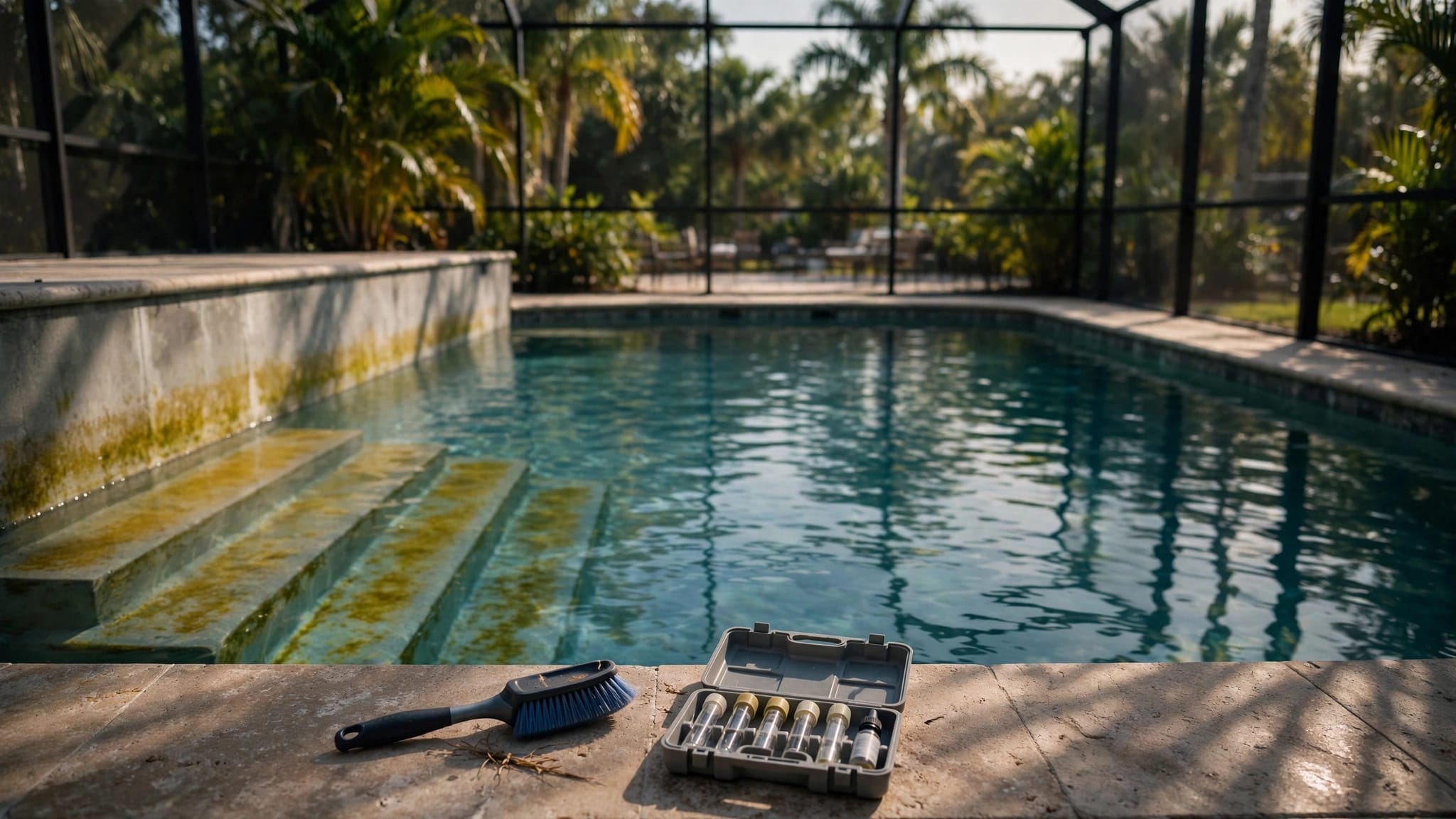
A thin, rainbow-colored sheen on the water or a greasy band along the tile often comes from sunscreen, body oils, and heavy pool use. To remove sunscreen oil in pool water, skim the surface, use a pool-rated oil-absorbing product as directed, and keep circulation and filtration working.
Tile needs separate attention because oily residue can cling at the waterline. Use pool-appropriate cleaning tools, avoid household detergents and improvised chemical treatments, and test the water before making any chemical adjustment.
Key Takeaways
- Skim floating residue and remove debris from accessible baskets so water can flow through the system.
- Use an oil-absorbing product made for pools, following its label for placement, use, and disposal.
- Clean tile with a soft brush or cloth and a surface-compatible pool cleaner, if needed.
- Keep the pump and filter in good working order, but don't expect filtration alone to remove every oil film.
- Test water before adding chemicals, and never mix products or use household detergent in the pool.
Why Sunscreen Oil Collects at the Waterline
Sunscreen washes off swimmers and floats on the water, where wind and circulation move it across the surface. Body oils and other organic material can join it, forming a visible sheen or leaving residue where the water meets the tile.
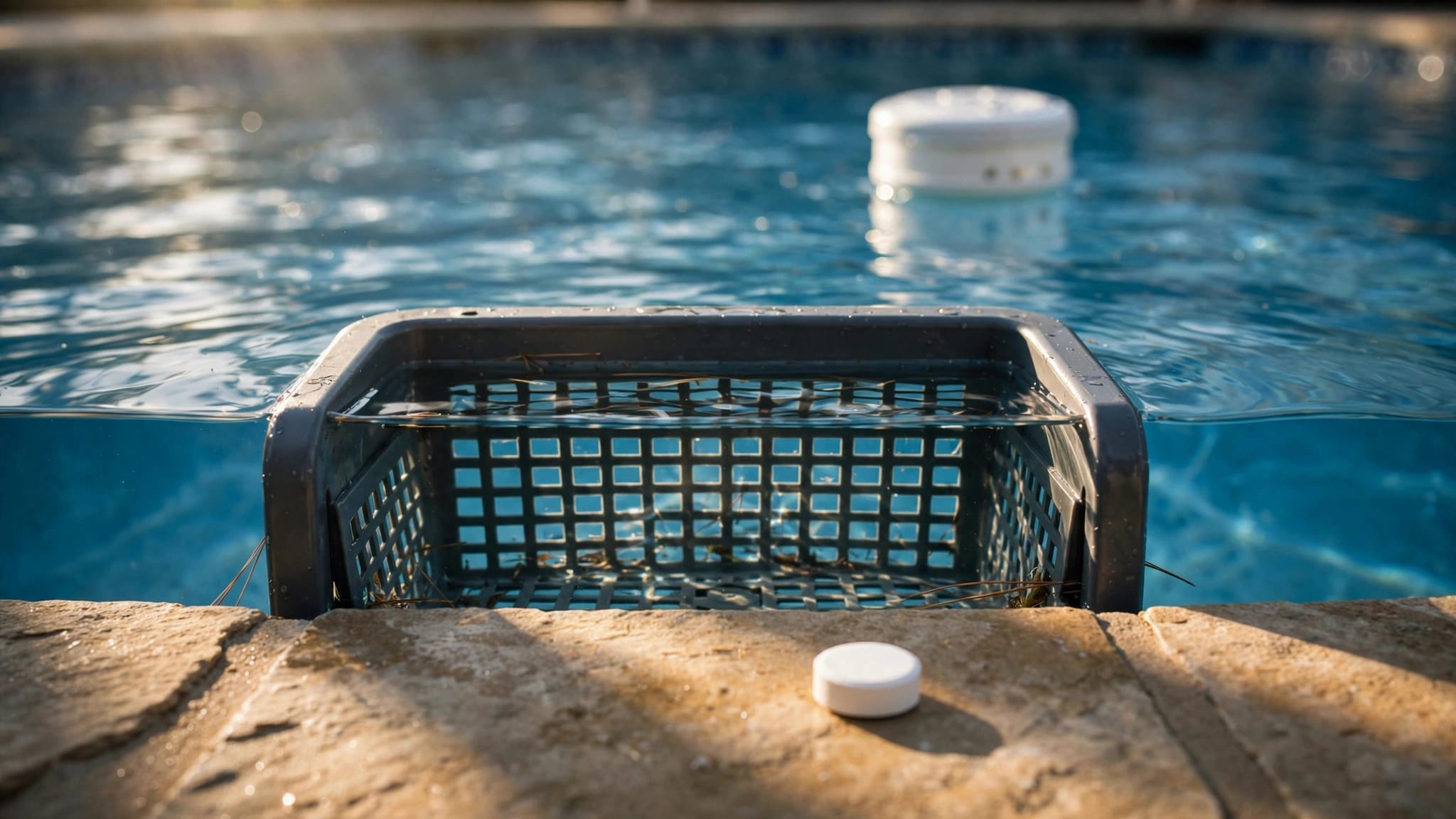
The pool skimmer draws water from this upper layer, so it can catch floating material before it spreads or sinks. However, a skimmer basket full of leaves and debris can restrict flow. Learn how skimmers remove surface debris and oils and why keeping the basket clear supports circulation.
A screen enclosure can reduce leaves and insects, but swimmers still introduce oils. After a busy swim day, check the waterline and surface rather than assuming clear water means no residue.
How to Remove Sunscreen Oil From Pool Water
Start with physical removal. A thin sheen often responds to skimming and a pool-rated absorbent product, while circulation helps move surface water toward the skimmer.
Skim the surface and clear the baskets
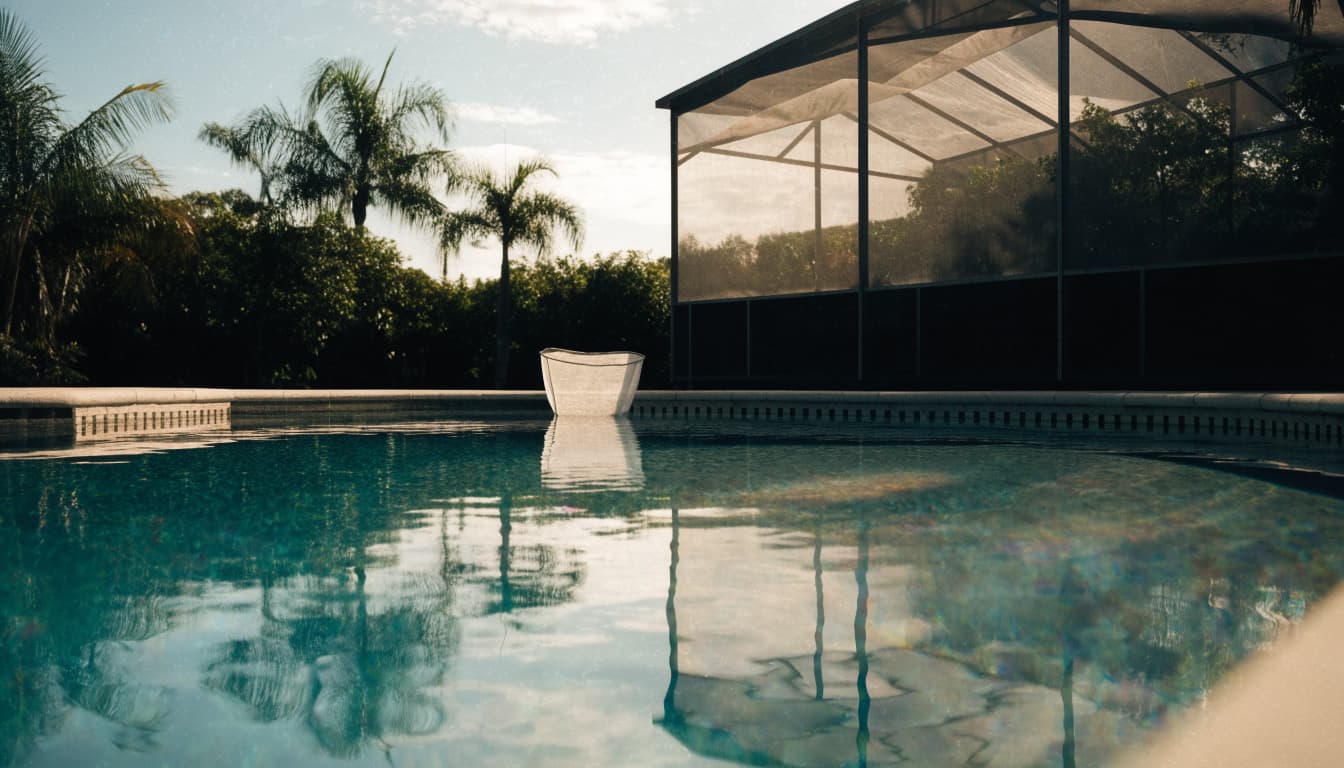
Use a fine-mesh pool skimmer to collect floating debris and visible surface residue. Work along the edges and near the skimmer opening, where surface material often gathers. Empty the skimmer basket when needed. Turn off the pump before opening an accessible basket, then follow the equipment instructions.
If the pump basket is accessible, check it for debris as well. Clear baskets help water move through the system, but avoid opening equipment while it's running or under pressure.
Use an oil-absorbing product made for pools
A pool-specific oil-absorbing sponge or similar product can help collect residue at the surface. Follow its label for how to use it, when to remove it, and whether it can be cleaned or must be replaced. Don't substitute a household sponge or add detergent to the water.
If the sheen remains, repeat skimming and use the absorbent product as directed. Avoid adding a chemical treatment just because the water looks oily. The right response depends on the product, the pool, and the water test results.
How to Clean Sunscreen Residue From Pool Tile
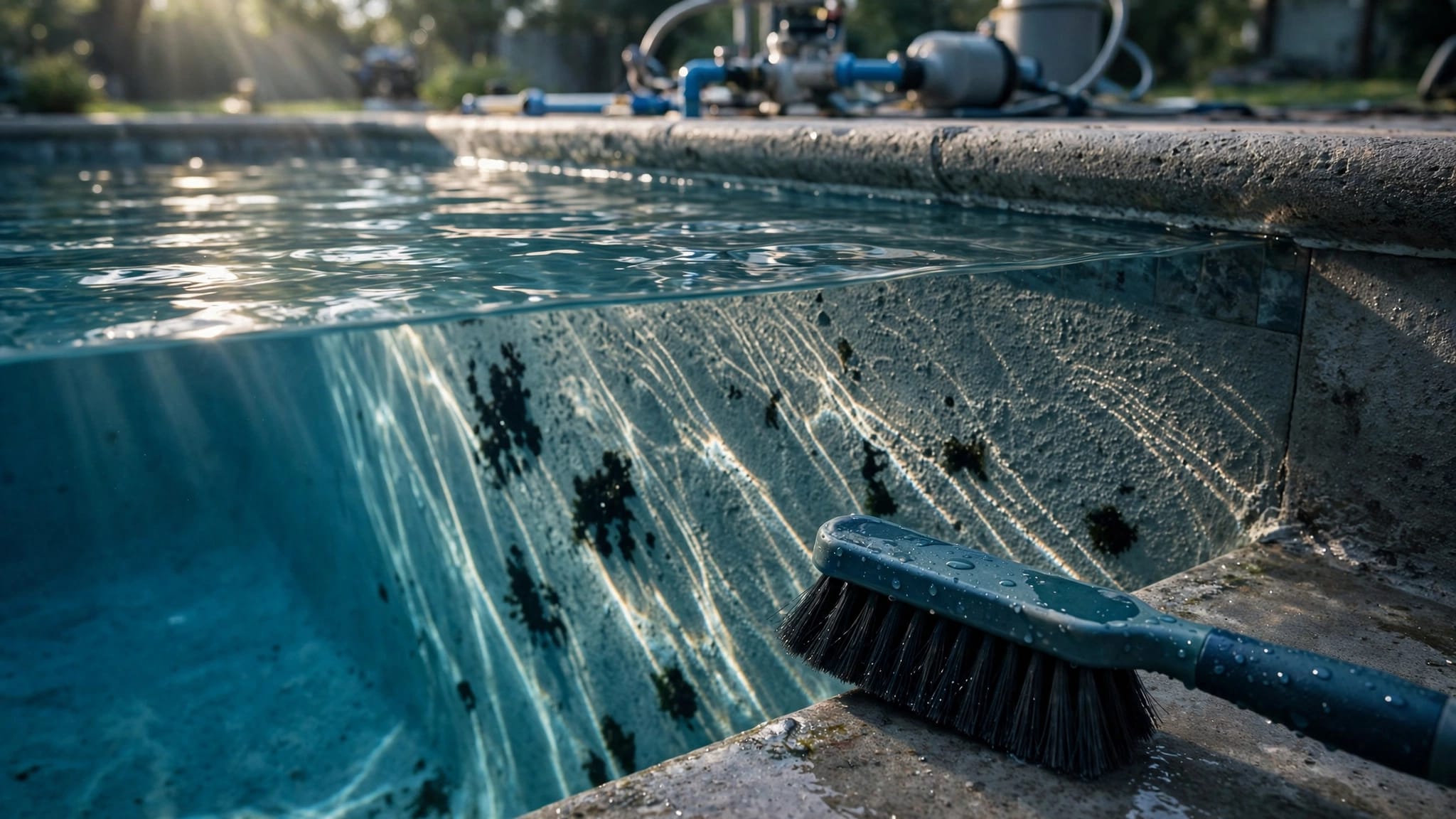
Waterline tile can hold a greasy film after the surface oil is gone. Clean the tile separately, using gentle tools and products suited to the specific finish.
Brush the waterline without scratching it
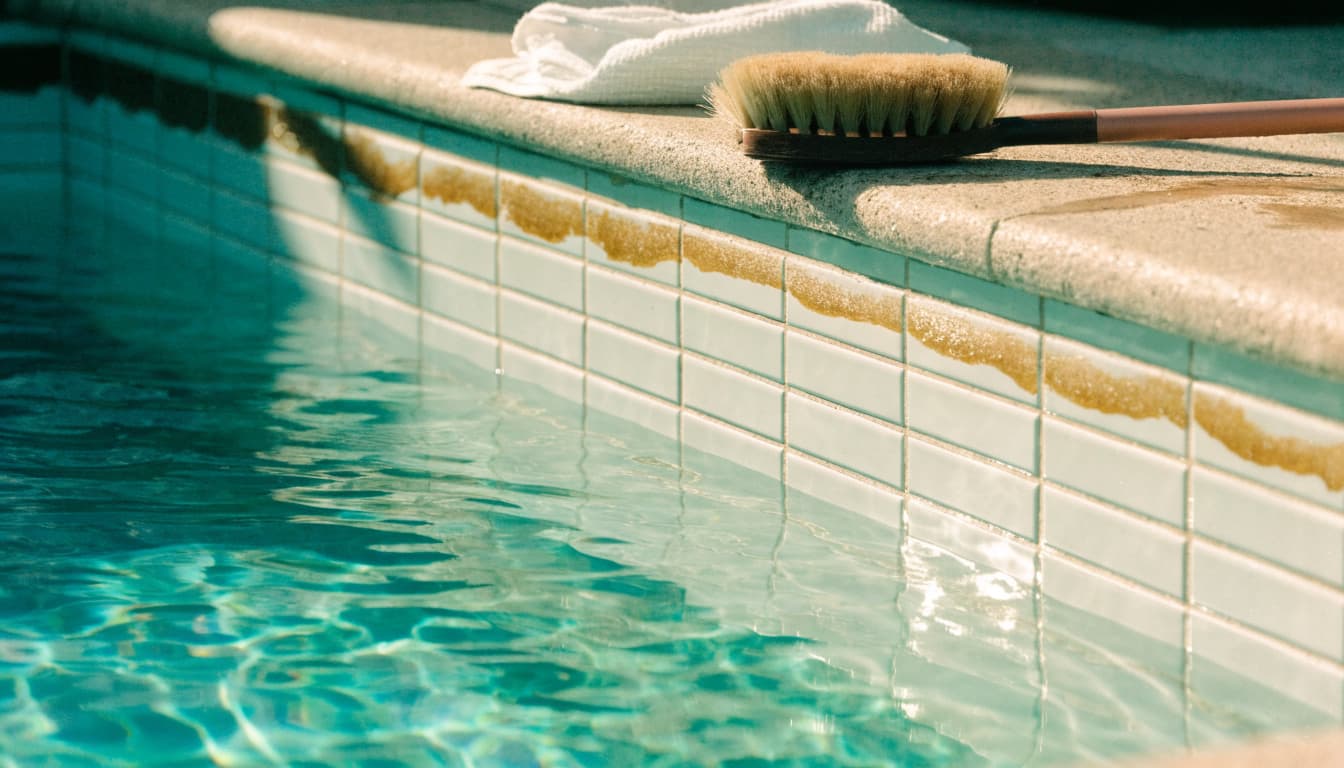
Use a soft pool brush or a non-scratch cloth to loosen the oily band. Work in a small area and rinse the loosened residue away. Avoid stiff or abrasive pads that could scratch tile, grout, or nearby pool surfaces.
If plain brushing doesn't lift the film, choose a cleaner labeled for pool use and compatible with the tile and finish. Follow the directions for application and rinsing. Test a small, inconspicuous area first if the product instructions call for it.
Keep household cleaners out of the pool
Dish detergent, degreasers, and other household cleaners can create foam or interfere with water chemistry. They may also damage grout, coping, or pool finishes. Don't pour them into the water or use them on tile unless the product is specifically approved for that pool surface.
Oily residue differs from mineral scale, so an acid or descaler isn't a routine sunscreen treatment. If residue returns repeatedly and the tile is rough, chipped, or loose, the surface may need attention beyond cleaning. We offer pool renovations and resurfacing for homeowners planning a larger update. Get a Free Estimate to arrange an on-site consultation.
Maintain Filtration While the Water Clears
Skimming and absorption remove surface material; filtration supports the overall cleaning process by circulating pool water. Keep the system operating according to its schedule and watch for changes in flow or filter pressure.
Check circulation and accessible baskets
Confirm that the pump is running and that return jets are moving water through the pool. Clear skimmer and pump baskets when needed, following the equipment manual and turning off the pump before opening an accessible basket. If return flow weakens or the filter pressure changes sharply, investigate the cause instead of running the system blindly.
For general pool upkeep in Florida, use a year-round maintenance calendar as a guide, while adjusting care to pool use and conditions.
Clean the filter according to its type
A filter that needs service can limit circulation. For cartridge systems, rinse or clean the cartridge according to its manual and the manufacturer's instructions. An approved cartridge cleaner may be appropriate for oil deposits, but only when the product label and filter guidance allow it. See safe steps for cleaning a cartridge pool filter.
Sand and DE filters require different care. Follow the filter manufacturer's directions for cleaning or backwashing. Don't use a pressure washer on a cartridge, and don't improvise with bleach, acids, or degreasers. If weak flow or cloudy water persists, diagnose the filtration issue before adding chemicals.
Test the Water Before Adjusting Chemistry
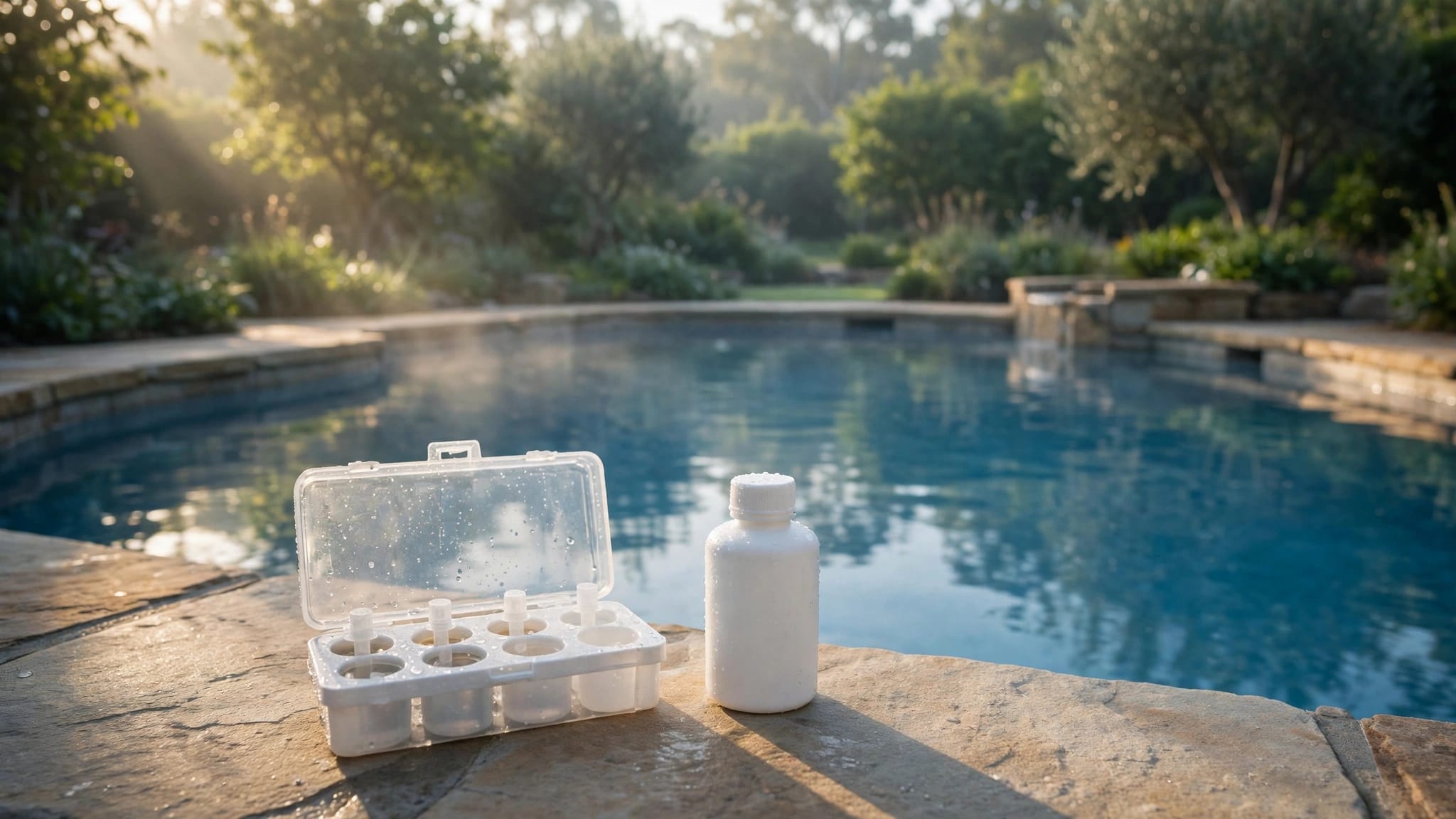
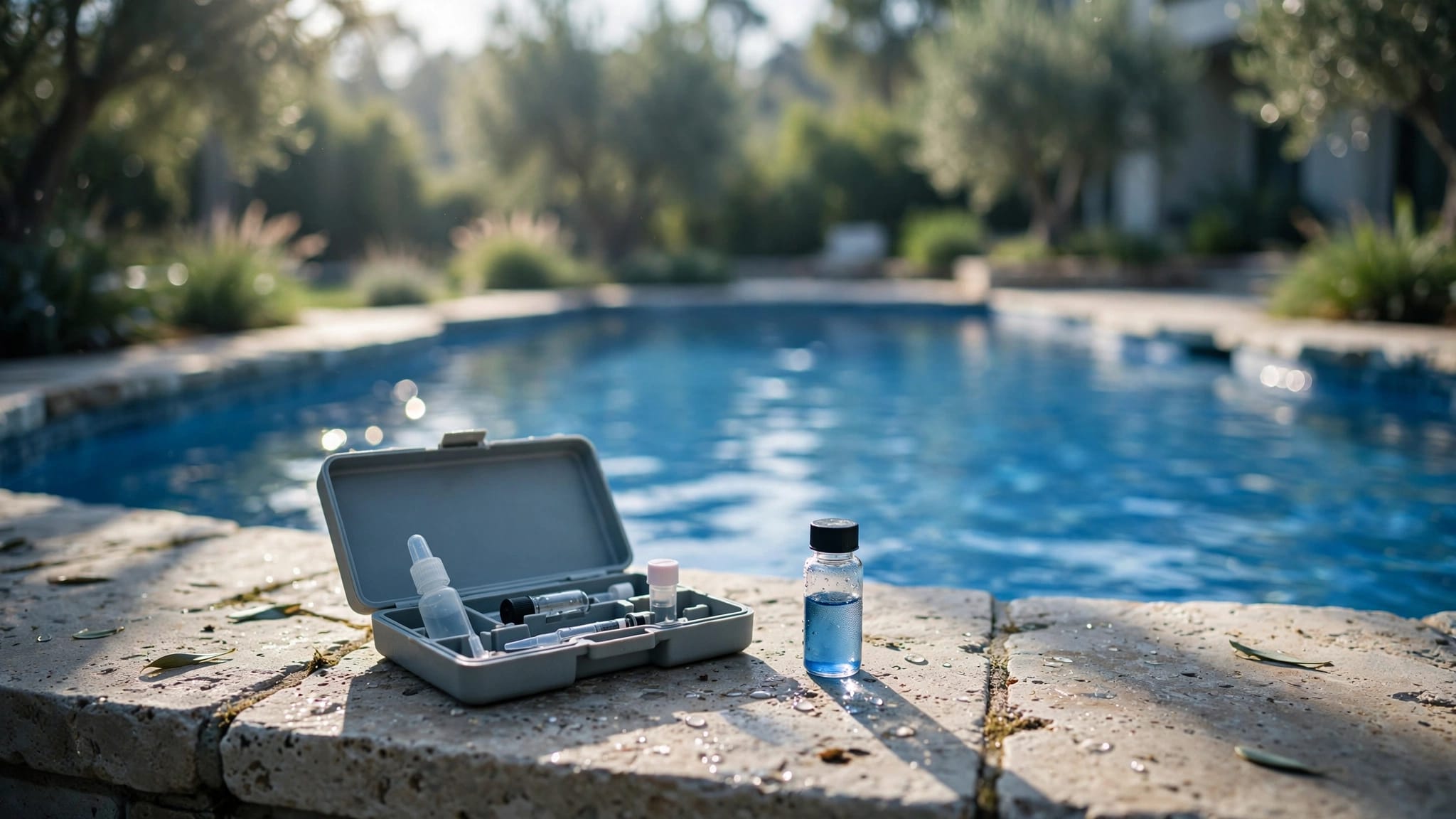
Sunscreen oil doesn't tell you whether the pool needs more chlorine or a pH adjustment. Test the water before adding any product, then make changes only when readings and product directions support them.
For residential pools, the CDC recommends a pH between 7.0 and 7.8, with at least 1 ppm free chlorine, or at least 2 ppm when cyanuric acid or stabilized chlorine products are used. Follow the pool system and chemical labels, since product directions may specify operating ranges and waiting periods.
Test pH and free chlorine regularly, and more often after heavy swimming, rain, extreme heat, or a major chemical adjustment. A beginner's guide to pool water testing covers sample collection and routine checks.
Never mix pool chemicals, including in a bucket or feeder, unless a product label explicitly directs a specific method. Add one product at a time as directed, keep swimmers out for the stated treatment period, and don't add extra chemicals to speed up the cleanup.
Reduce Oil Buildup After Busy Swim Days
Regular light maintenance is easier than addressing a heavy film after it has spread. After a day with many swimmers, skim the surface, check the waterline, and clear baskets if they're full. This helps keep material from lingering around the edges.
Keep routine circulation and cleaning on track
Run the pump according to the pool's operating schedule, and keep return flow unobstructed. Brush the waterline as needed with a pool-safe tool. Check filter pressure and clean the filter when its condition or manufacturer's guidance calls for it, not because a fixed schedule automatically suits every pool.
Make waterline checks part of pool care
Inspect tile after heavy use and after storms, when debris and water conditions can change. If a patch of residue keeps returning, clean a small area gently and note whether the tile feels rough or shows damage. A repeated problem can point to poor circulation, a filter issue, or a surface that needs repair.
FAQ
Will running the filter remove sunscreen oil by itself?
Not always. Filtration supports water circulation and captures material the system can process, but it may not remove a visible oil film on its own. Skim the surface and use a pool-rated absorber according to its label.
Can I use dish soap to clean pool tile?
No. Household detergent can foam, affect water chemistry, and harm pool surfaces. Use a soft brush or cloth, and choose a cleaner only when it is labeled for pool use and compatible with the tile.
Should I add extra chlorine after heavy swimming?
Test first. Heavy use can affect sanitizer levels, but an oily appearance alone doesn't show how much chlorine the water needs. Follow test results, product directions, and the pool system's requirements.
What if the film returns after cleaning?
Check basket condition, circulation, filter performance, and waterline residue. If the water becomes cloudy or the equipment flow remains poor, address the cause rather than repeatedly adding chemicals. A pool professional can help when the issue persists or surfaces show damage.
Keep the Cleanup Simple and Pool-Safe
Remove sunscreen oil with skimming, a pool-rated absorbent product, gentle tile cleaning, and steady filtration. Then test the water before making any chemical change.
Household detergents and unverified treatments can create new problems while the oil remains. A careful, label-led routine protects the water, tile, and equipment.