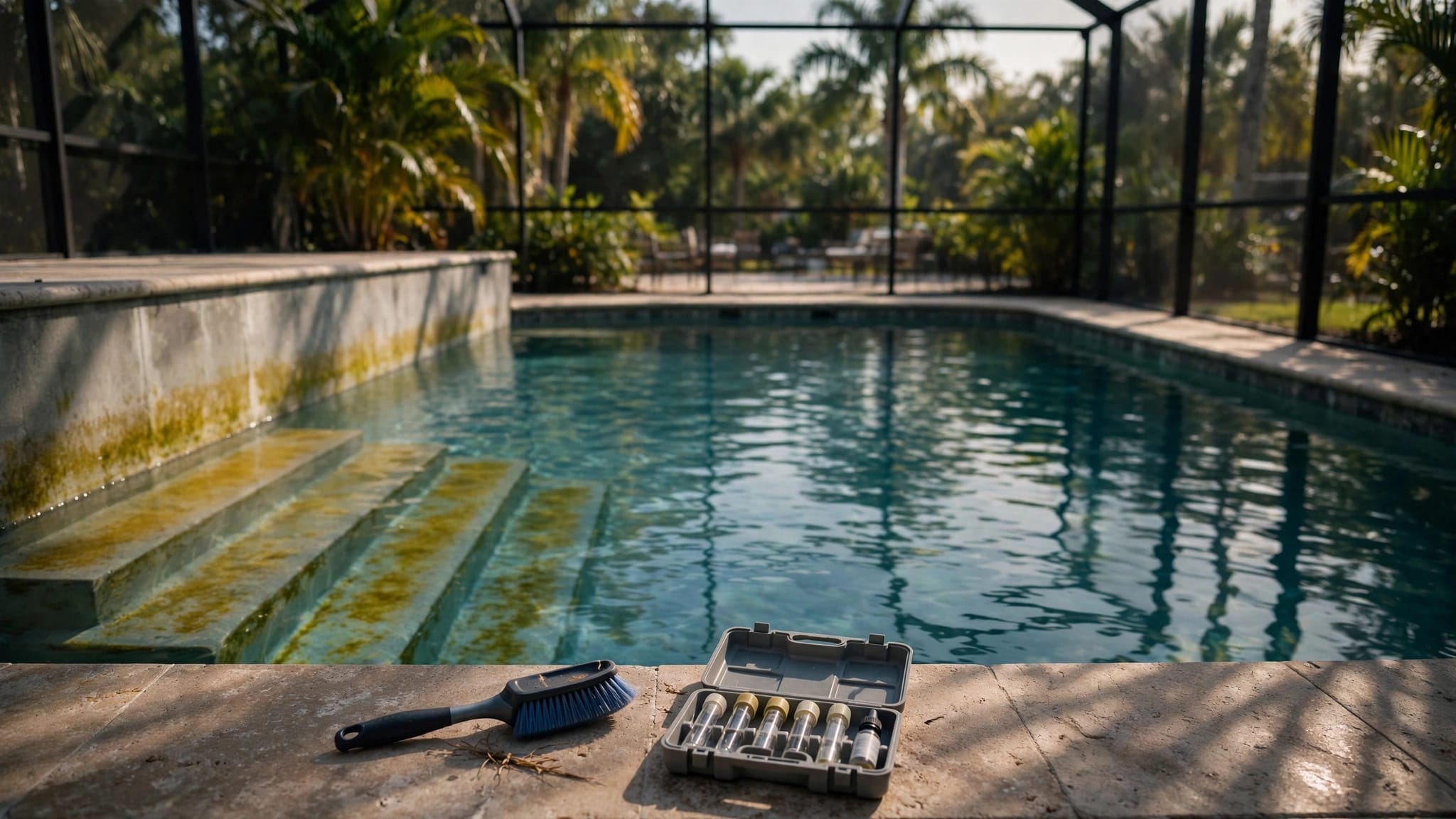
Black algae can cling stubbornly to a gunite pool because its roots may reach into small pores and rough spots in the finish. Removing it takes more than adding sanitizer: you need to distinguish growth from a stain, brush without harming the surface, balance the water, and keep filtration working.
Start with a careful inspection and water test. Then treat only when the evidence points to algae, following the product label and your pool finish's care instructions.
Key Takeaways
- Black algae often appears as dark, defined spots that resist brushing. A dark stain stays fixed, but appearance alone can't confirm the cause.
- Brush with a tool approved for your pool's finish, then test the water before adjusting chemistry or adding sanitizer.
- Keep circulation and filtration running during cleanup, and clean the filter when its pressure or flow indicates it needs attention.
- Never mix pool chemicals or use blades, wire brushes, or harsh acids on gunite.
- If spots persist, return, or sit on damaged plaster, get a professional assessment.
How to Tell Black Algae From a Dark Stain
Look at the shape and texture
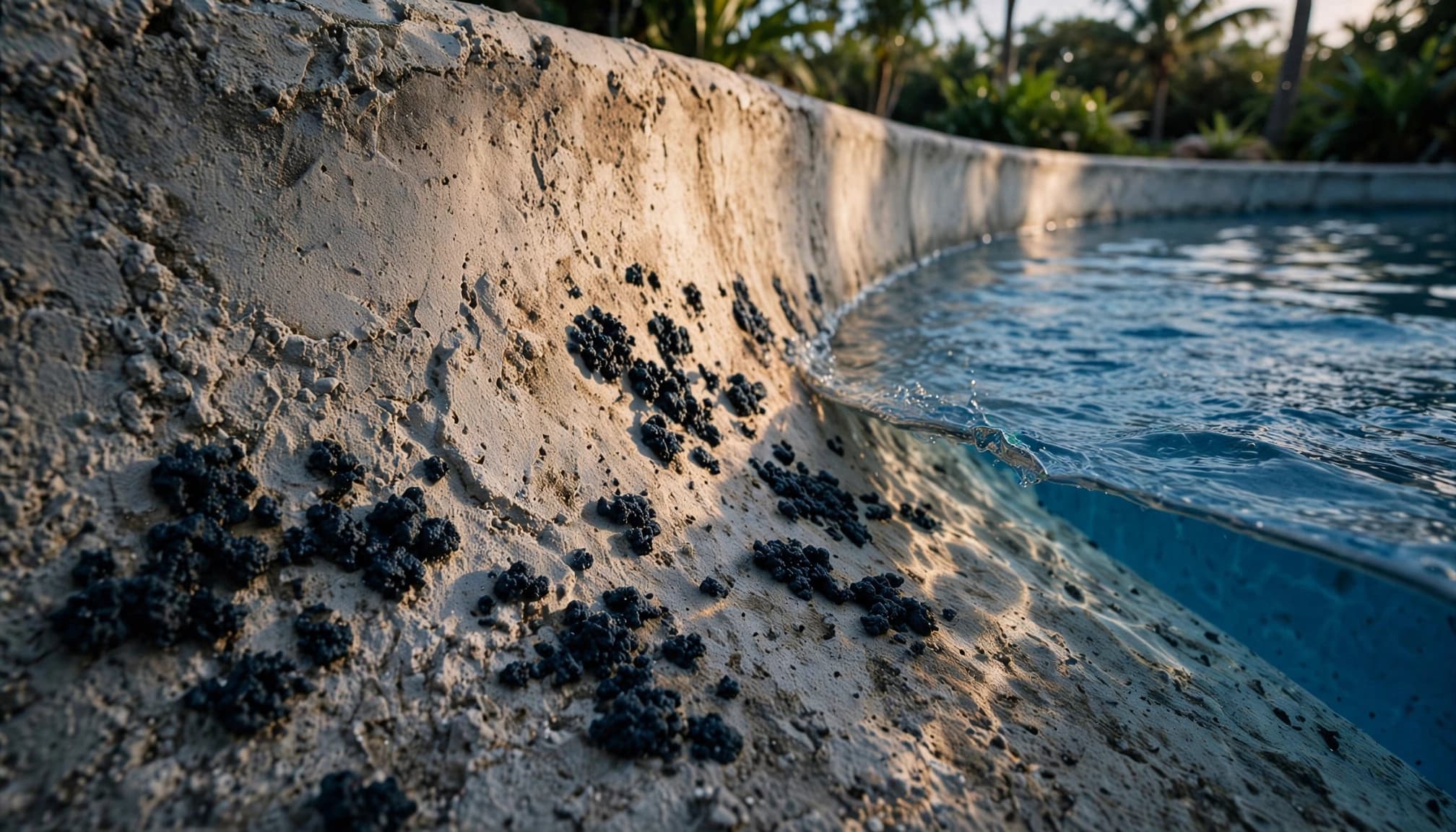
Black algae commonly appears as small, dark blue-black or gray spots, often with a darker center. Growth can feel slightly raised or rough because it attaches to the pool finish. It may show up in shaded areas, corners, steps, or spots with weaker circulation.
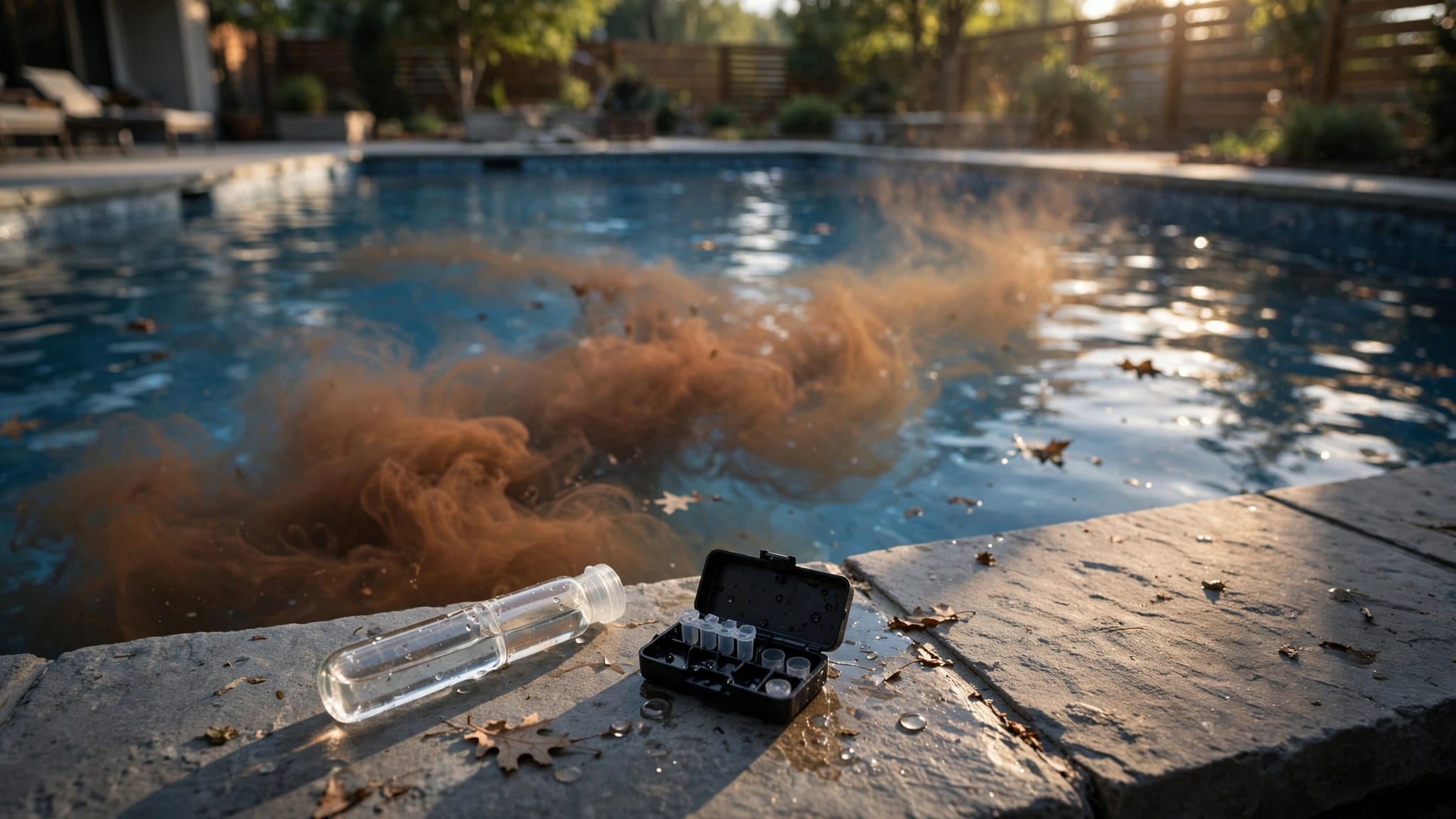
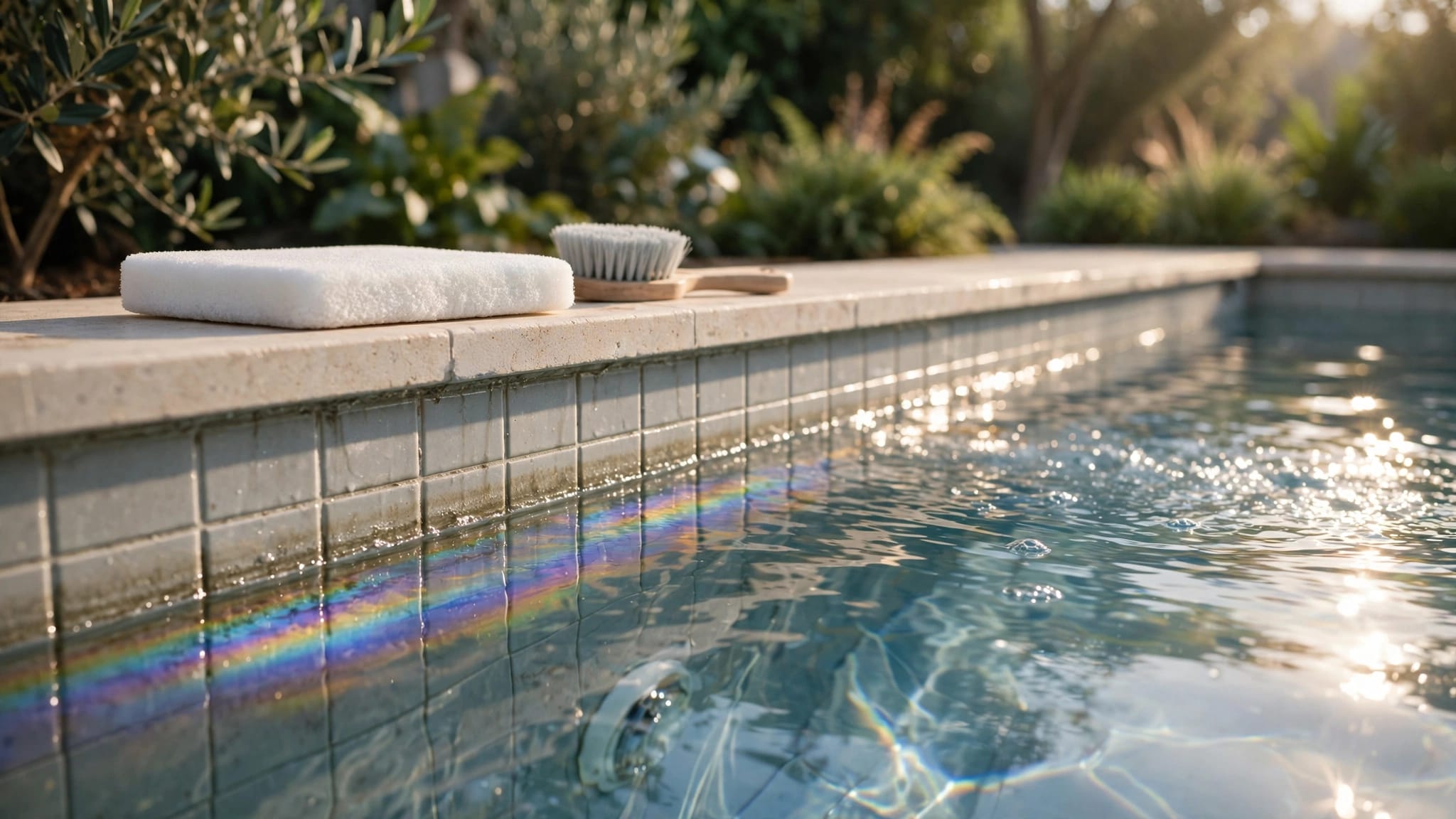
Use a pool brush suited to the surface and gently test one small area. Algae may loosen or smear, while a stain often remains in place. This test is a clue, not a diagnosis: brushing can fail to remove established growth, and some stains can also change with scrubbing.
Consider whether the discoloration is fixed
Dark marks can come from metals, organic debris, or mineral deposits, not just algae. A mark that stays embedded in the finish despite careful brushing may be a stain or a surface defect. Note where it appears and whether the plaster feels rough, pitted, or cracked.
Avoid adding algaecide simply because a spot is black. The wrong treatment may not solve the problem and can complicate water chemistry. If you can't tell whether the mark is growth or staining, pause before using stronger chemicals.
Prepare the Pool Before Treatment
Test first and inspect circulation
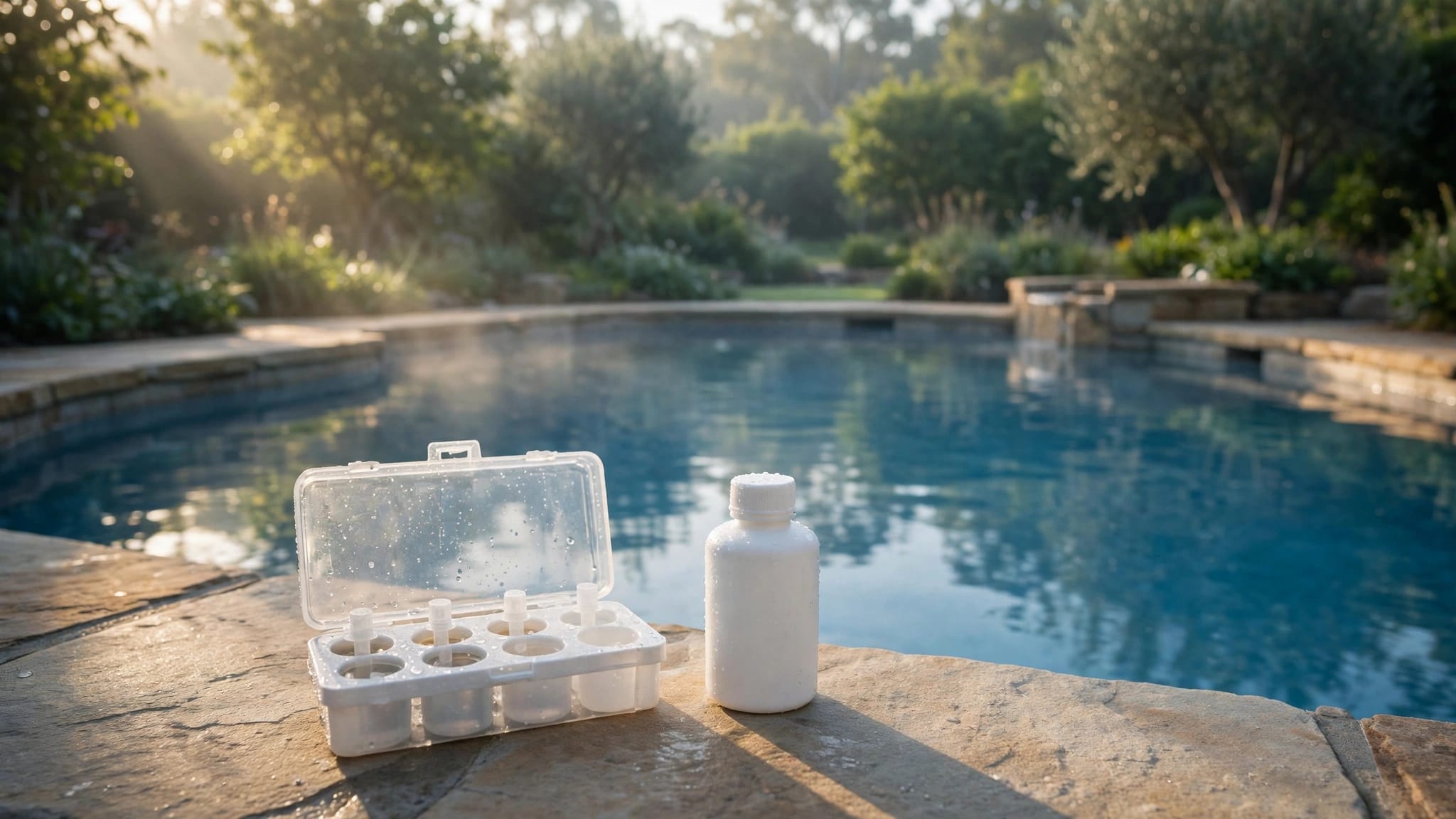
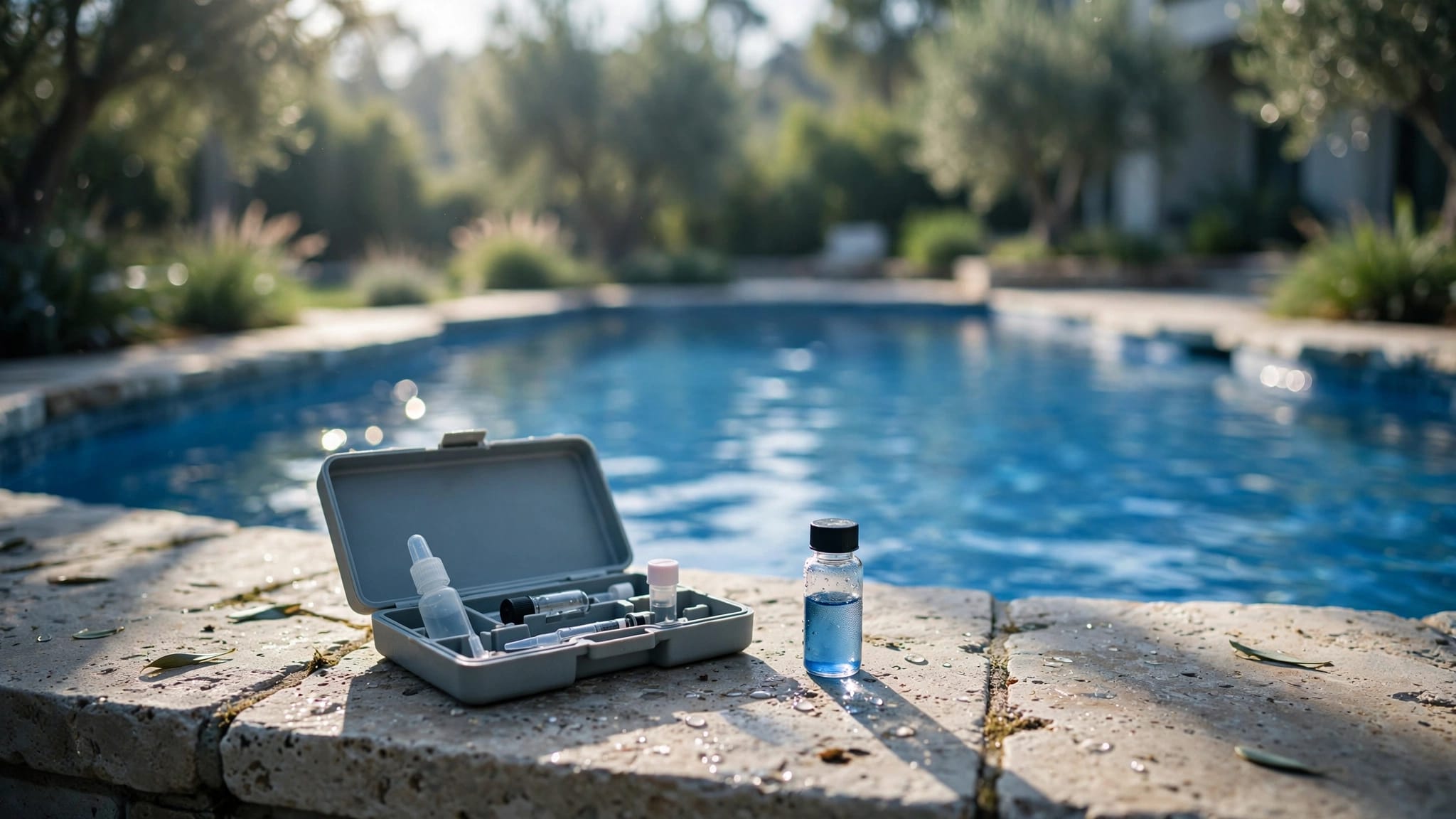
Test the pool water before adding products. Check sanitizer, pH, and total alkalinity, along with other readings your test method provides. Write down the results so you can compare them after treatment. Follow the test kit instructions, and use a reliable test or professional water analysis if readings are unclear.
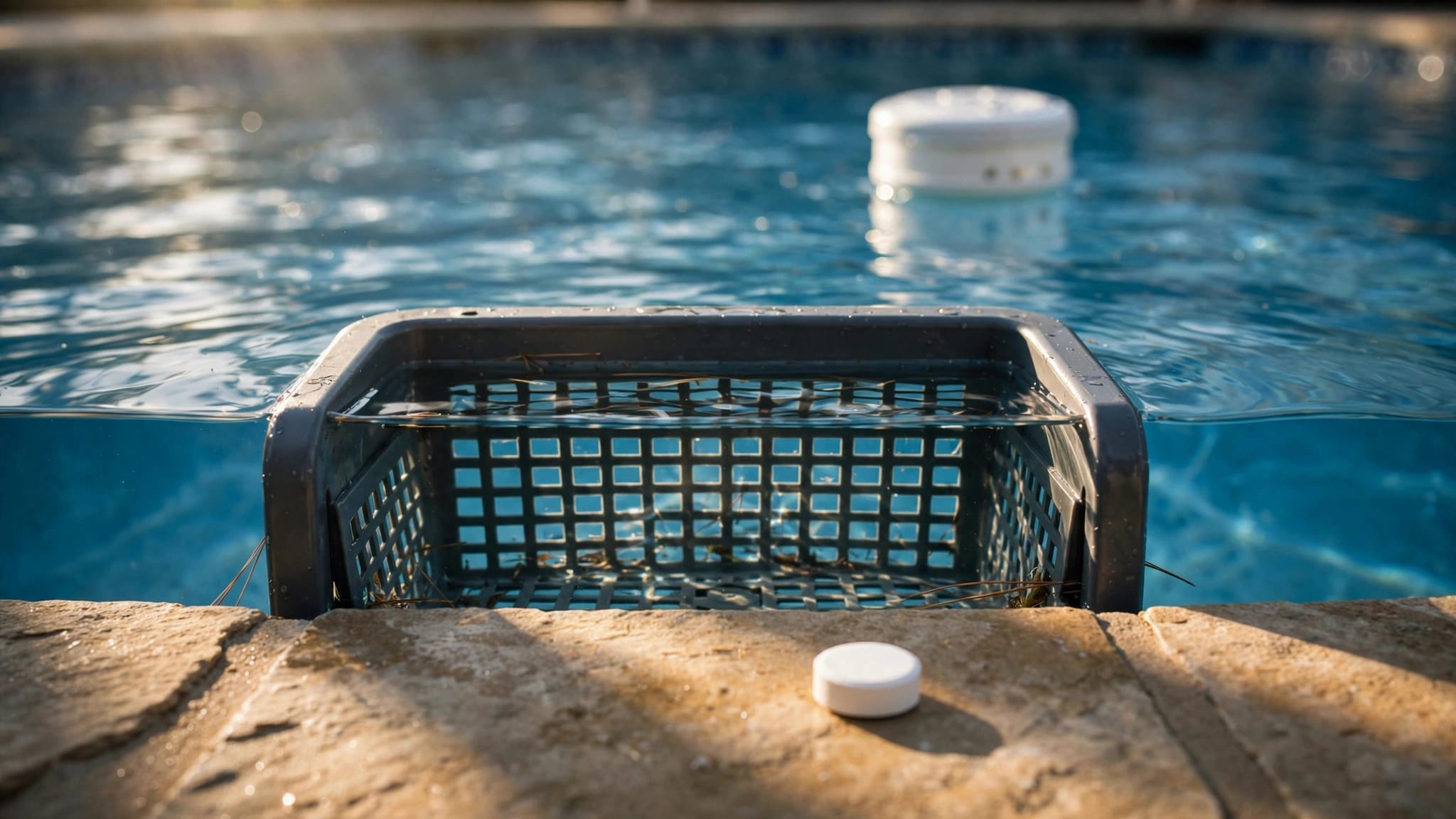
Next, inspect circulation. Empty the skimmer and pump baskets, check that the pump is running, and look at the filter pressure and return flow. Weak circulation can leave algae in place and slow the cleanup, even when you add sanitizer.
For help interpreting the chemistry readings, use our pool alkalinity and pH balancing guide.
Protect yourself and the finish
Keep children and pets away from the pool chemicals and treatment area. Wear chemical-resistant gloves and eye protection, and follow every safety instruction on the product label. Store chemicals separately in their original containers, away from heat and moisture.
Never mix chemicals, including different types of chlorine or chlorine and acid. Add products separately as directed, and don't pour one chemical into another container that held a different product. Before brushing, identify the exposed finish and select a brush approved for it. Our guide to brushing a gunite pool without damaging the finish covers how brush choice and pressure affect the surface.
Brush and Sanitize in a Careful Sequence
Brush before adding treatment
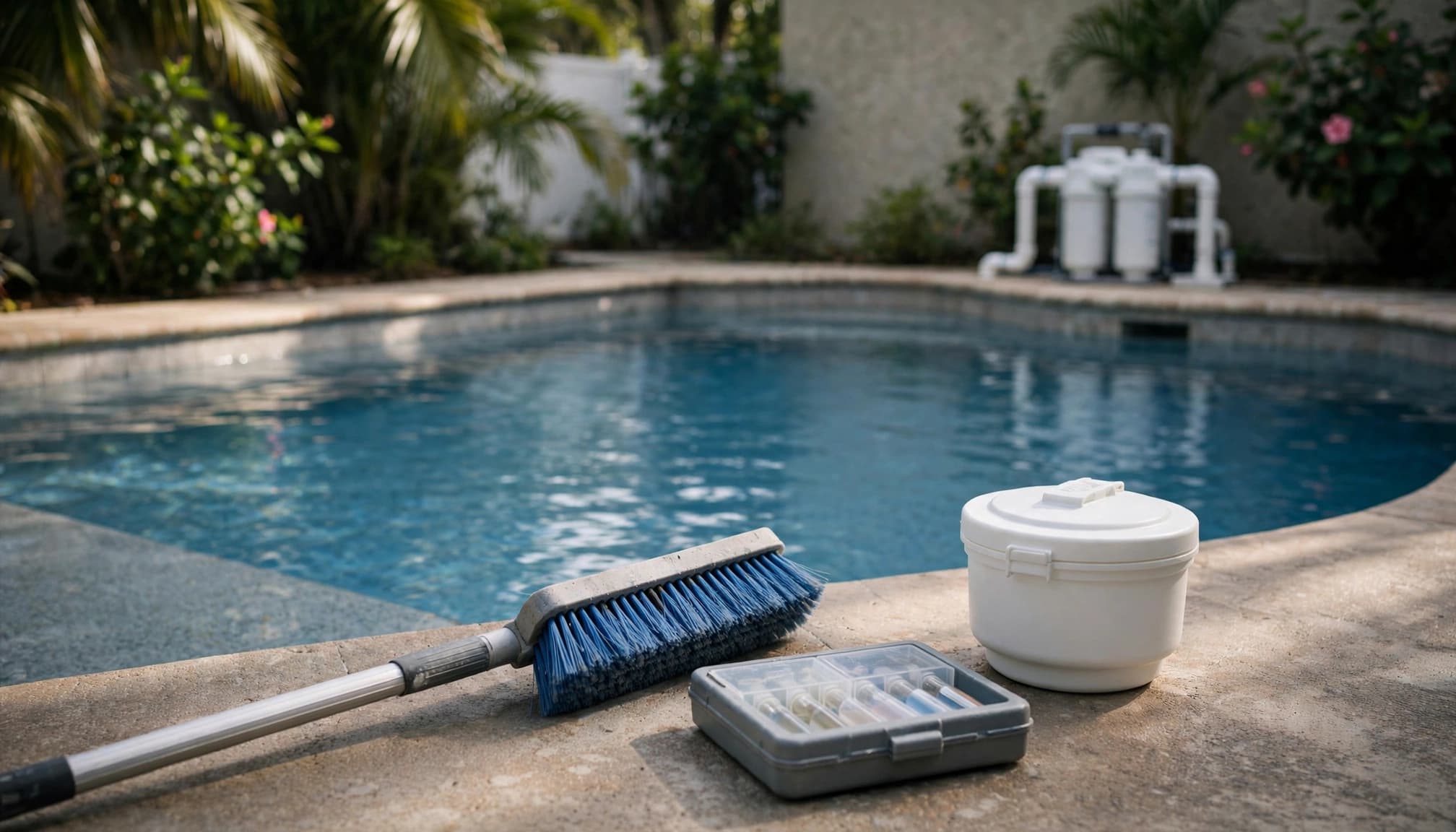
Remove leaves and other loose debris, then brush the affected spots and surrounding areas. Work in manageable sections and use steady pressure rather than scraping. Brush walls, steps, corners, and other places where circulation may be weaker, while taking care around any area with loose plaster or exposed aggregate.
The goal is to disturb the growth so sanitizer can reach it, not to grind away the finish. Don't use a wire brush, razor, hard plastic scraper, or abrasive household cleaner. If the surface changes texture or color as you brush, stop and reassess.
Use sanitizer only as its label directs
After brushing, apply the pool sanitizer treatment specified for the product and your pool volume. Use the current test results and follow the label for dosage, application, and compatibility. Don't guess at quantities, and don't combine sanitizer with algaecide in the same container.
Some products are intended for different stages of treatment, so avoid adding extra chemicals at once. Keep the pump running as the product label and equipment instructions allow. If you're uncertain about chemical compatibility or dosage, stop and ask a pool professional before adding anything else.
Keep Filtration Running and Follow Up
Circulation and filtration remove dead algae and fine particles from the water. Run the system according to the treatment instructions and your equipment guidance. Watch the filter pressure and return flow; clean a cartridge filter when flow drops or pressure rises, and backwash sand or DE filters as their manufacturers direct.
Vacuum settled debris when appropriate for your system. If your equipment supports vacuuming to waste, follow its instructions and account for the water loss. Don't assume a shift in water color means the pool is ready to use. Cloudiness can remain after algae dies while the filter captures suspended material.
Retest the water before adding more treatment. Compare the readings with your starting record, and make adjustments only as the product label and water results indicate. Keep swimmers out until the water is clear enough to see the pool floor and the chemistry is within the safe range for swimming.
Protect the Gunite Finish During Cleanup
Gunite describes the pool shell, but the exposed interior may be plaster, quartz, pebble, or another finish. A method that's safe for one surface may scratch or wear another. Use a brush and any cleaning product that the finish manufacturer approves, and test a small, inconspicuous area before treating a larger one.
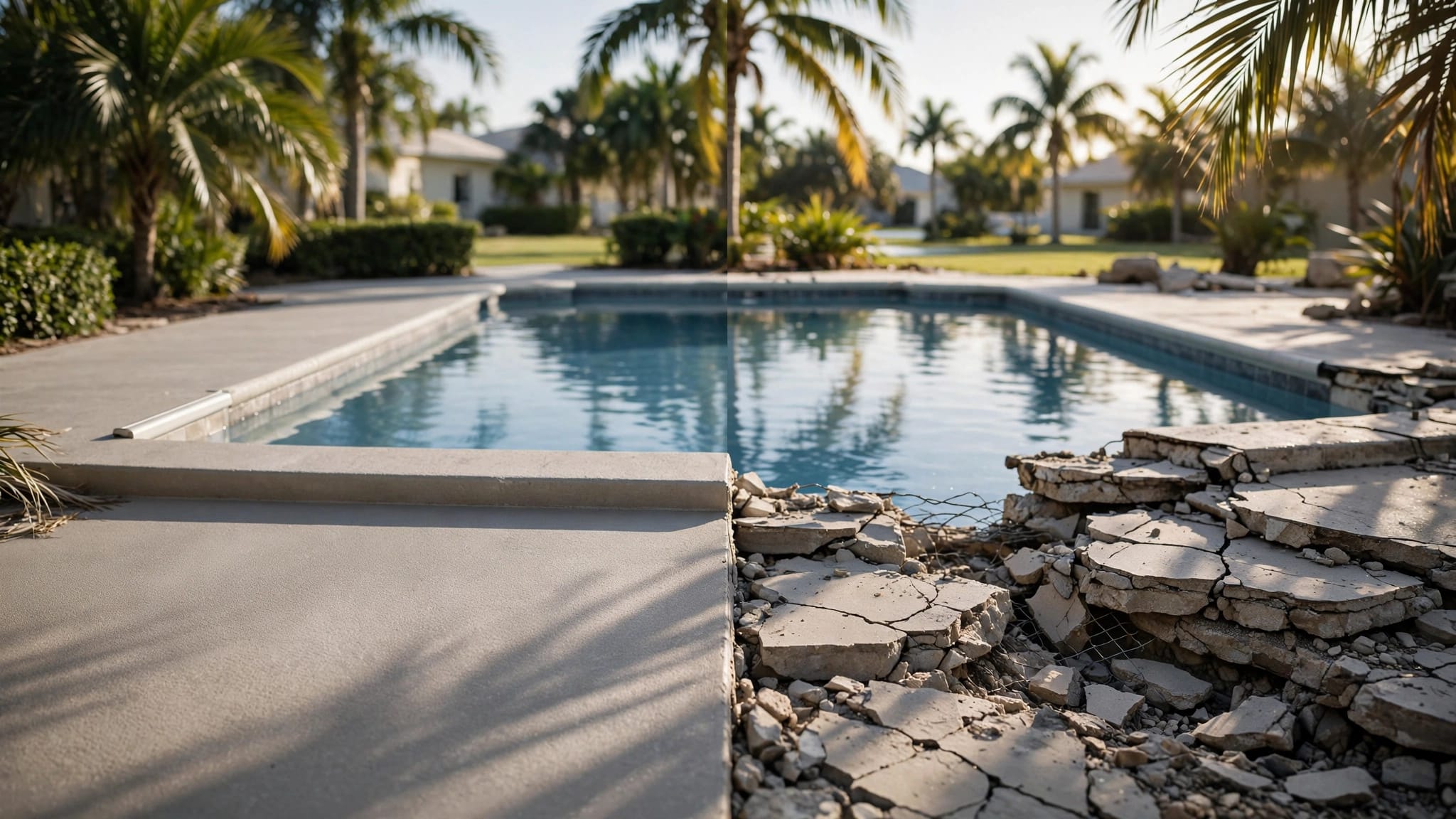
Avoid scraping spots with a blade or pressing a pumice stone against plaster. Don't use acid or an aggressive stain remover as a shortcut. Acid washing removes material from the pool interior and may harm a finish that's already thin or damaged. Read about pool resurfacing vs. acid washing before considering surface work.
High pH and alkalinity can contribute to calcium scale that traps dirt and leaves a rough feel. However, adjusting the water can't repair cracked, pitted, or failing plaster. Chemical treatment won't replace a repair when the finish itself is the problem.
When to Call a Pool Professional
Get professional help if dark spots remain after careful brushing and label-directed treatment, return repeatedly, or spread across the pool. A professional can assess the water, circulation, filter, and finish instead of treating an uncertain mark with stronger chemicals.
Persistent discoloration on a rough or damaged surface may call for repair rather than more cleaning. Thin, chalky, cracked, or pitted plaster can show only temporary improvement after washing. Review the signs your pool needs resurfacing if the finish is worn or algae repeatedly returns in the same places.
For homeowners in Cape Coral, Back Bay Pools provides pool renovation and resurfacing services. Get a Free Estimate for an on-site assessment when cleaning doesn't address the underlying surface concern.
Frequently Asked Questions
Can I remove black algae by brushing alone?
Brushing helps loosen growth, but established black algae may persist because it can attach within small pores in the finish. Pair careful brushing with tested water chemistry, appropriate sanitizer, and working filtration. Follow product labels rather than relying on a single cleaning method.
Should I use a wire brush on gunite?
Avoid a wire brush unless the pool finish manufacturer specifically approves it. Wire bristles can scratch or wear plaster and other interior finishes. Choose a brush made for the actual surface, and stop if it changes the finish.
Can a dark spot be a stain instead of algae?
Yes. Metals, organic material, and mineral deposits can leave dark marks. If a small test area doesn't change with gentle brushing, or if the mark sits on a rough or damaged area, don't keep scrubbing or add chemicals at random.
Conclusion
Black algae and dark stains can look similar, so start by checking the spot, the finish, and the water rather than reaching for a stronger chemical. Careful brushing, label-directed treatment, steady filtration, and retesting give you a safer path to a clean pool.
If the marks persist or the plaster feels damaged, the finish may need attention beyond routine cleaning.