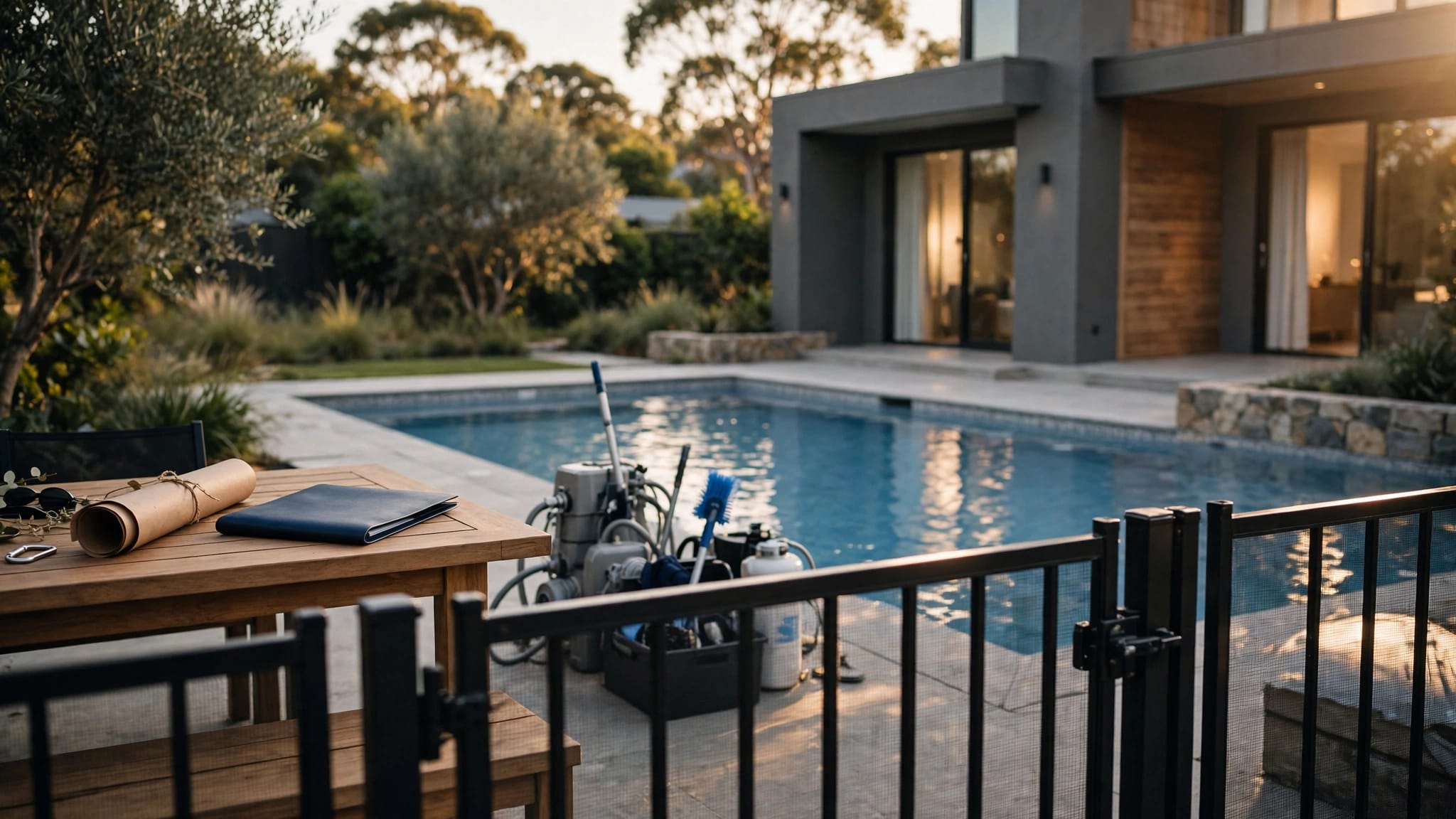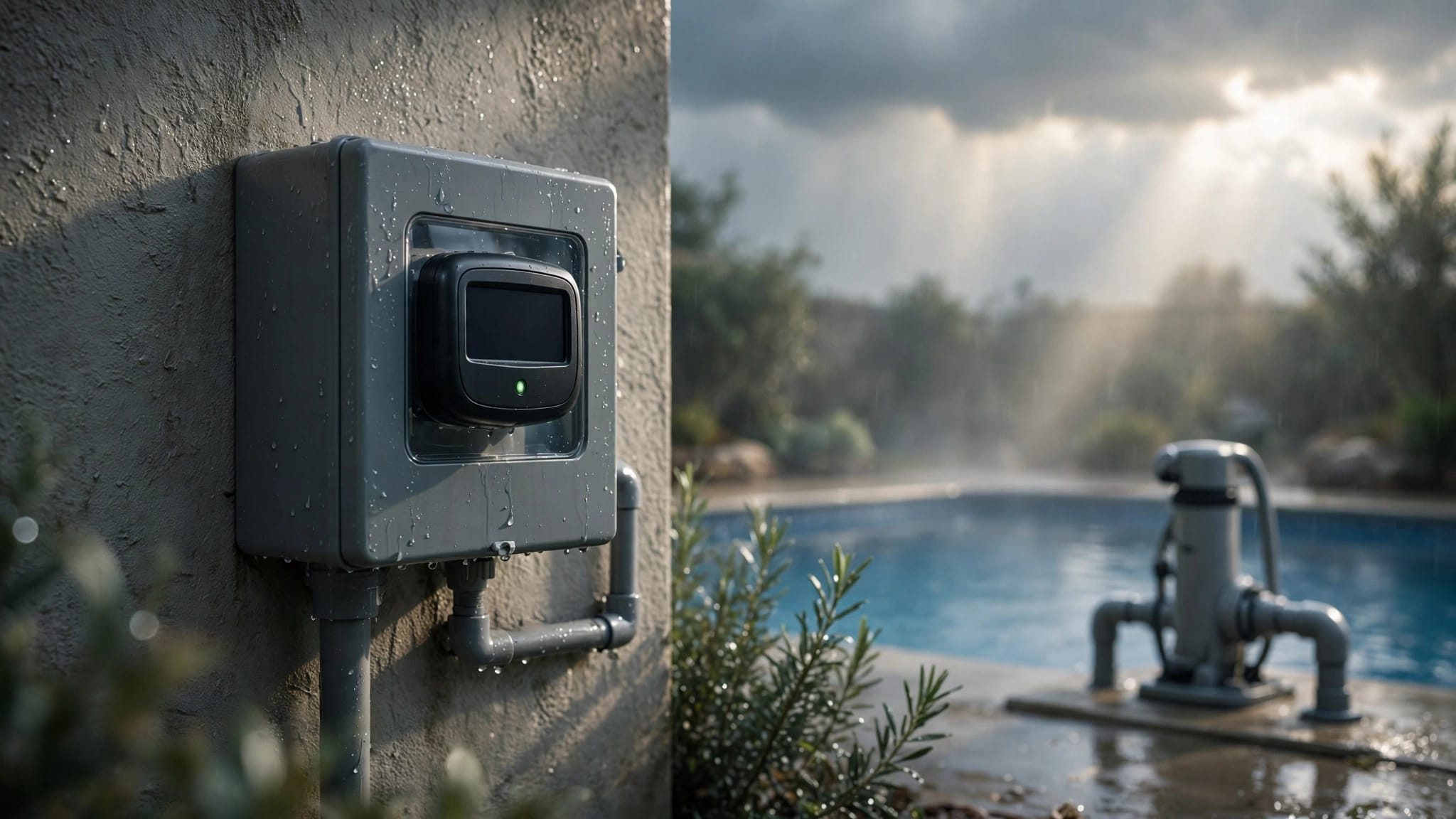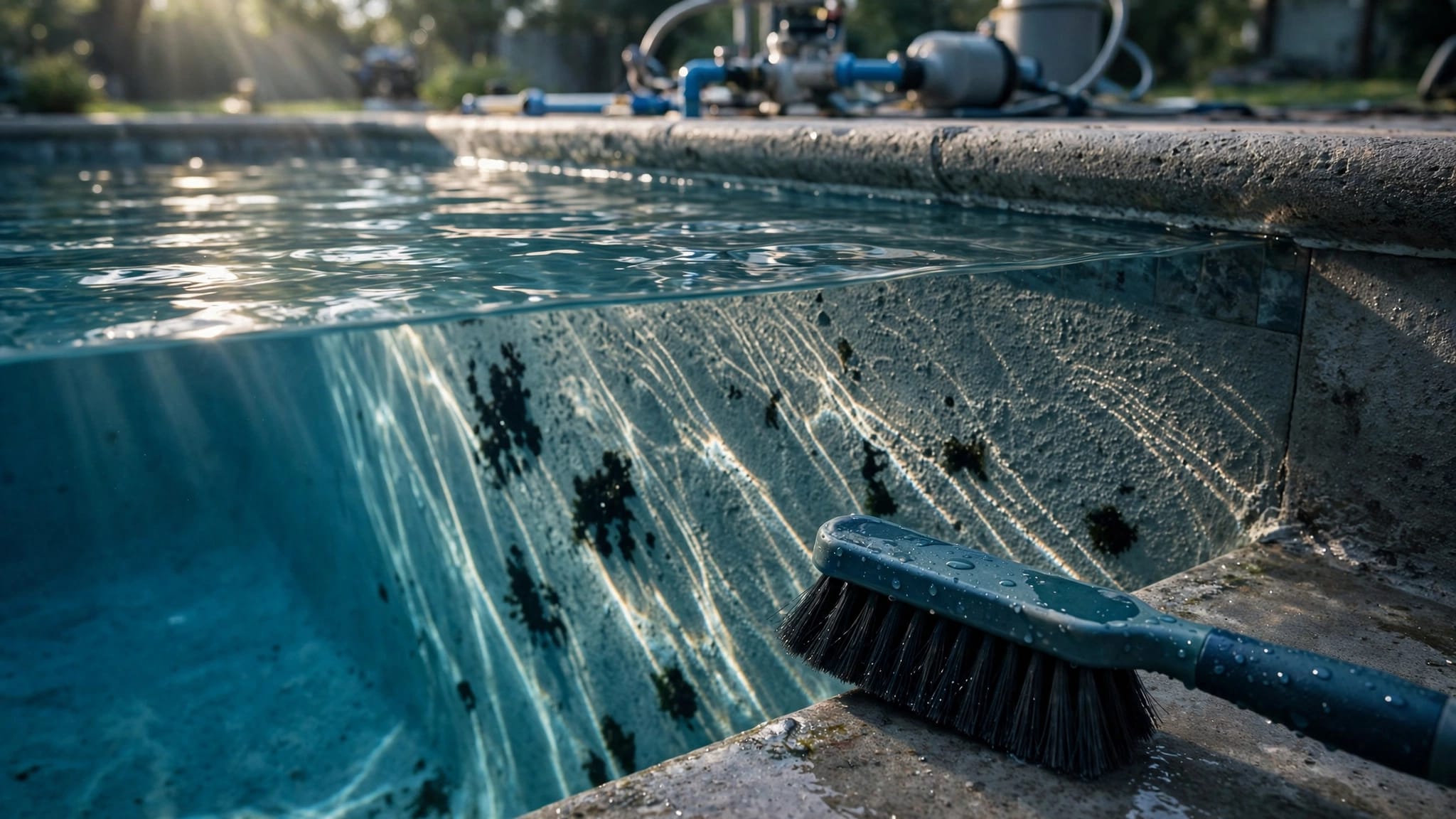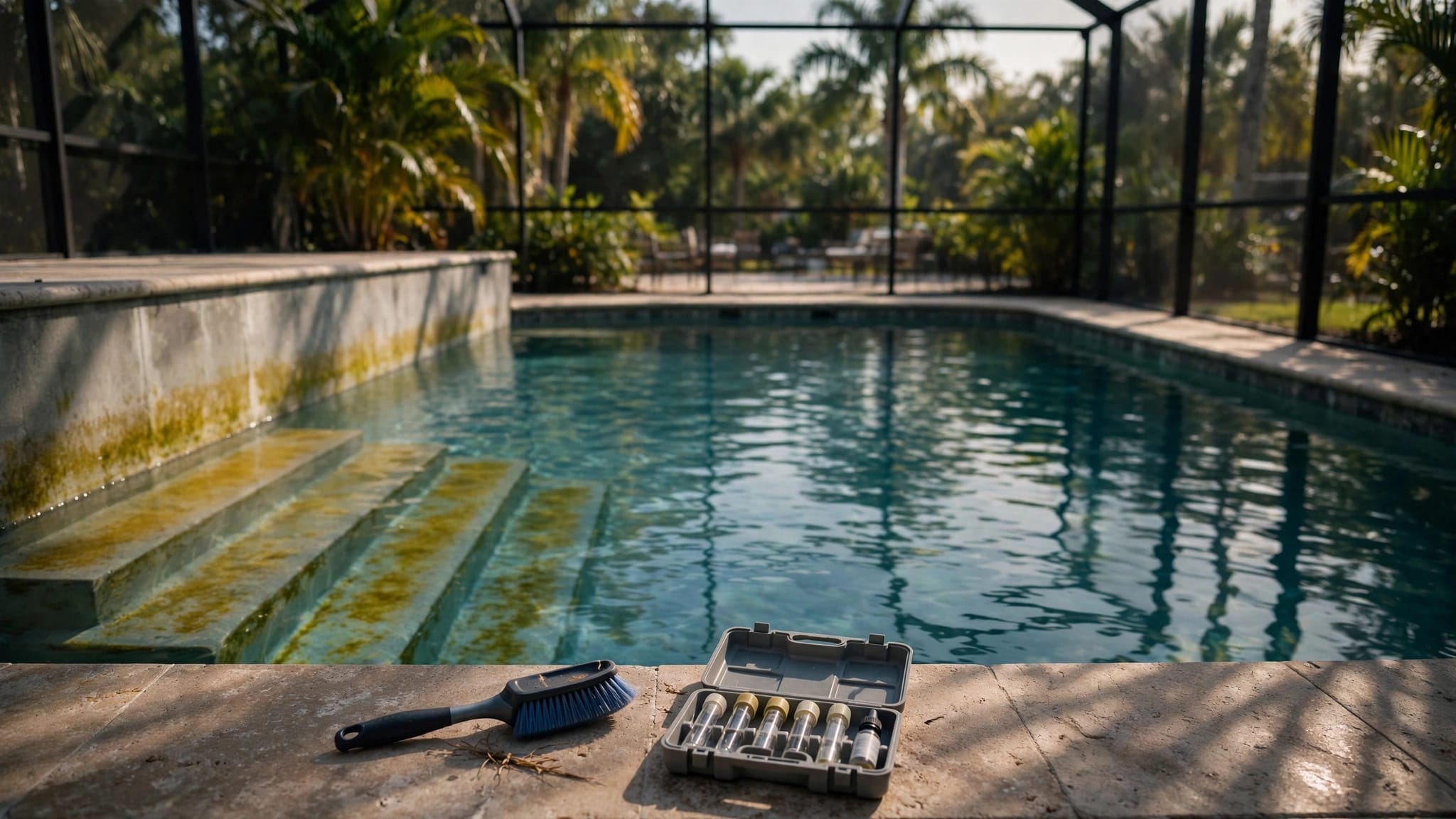
Keep chlorine tablets out of your pool skimmer unless both the sanitizer label and equipment instructions expressly allow that use. A skimmer collects surface debris; it doesn't automatically provide a suitable way to dispense sanitizer.
Dropping tablets into the basket can make sanitizer delivery harder to manage , especially when circulation or water chemistry already needs attention. Recommendations vary by product and equipment, so the right starting point is an approved feeding method that fits your pool.
Key Takeaways
- Use the sanitizer label and pool equipment instructions together when choosing where chlorine tablets belong.
- A skimmer basket's convenient location doesn't establish that it's compatible with a particular chlorine product.
- Testing, circulation, and filter care remain necessary regardless of how you add sanitizer.
- Dedicated feeders, compatible floating dispensers, liquid chlorine, and salt chlorine generators offer alternatives with different maintenance requirements.
Why the Skimmer Isn't a Default Tablet Feeder
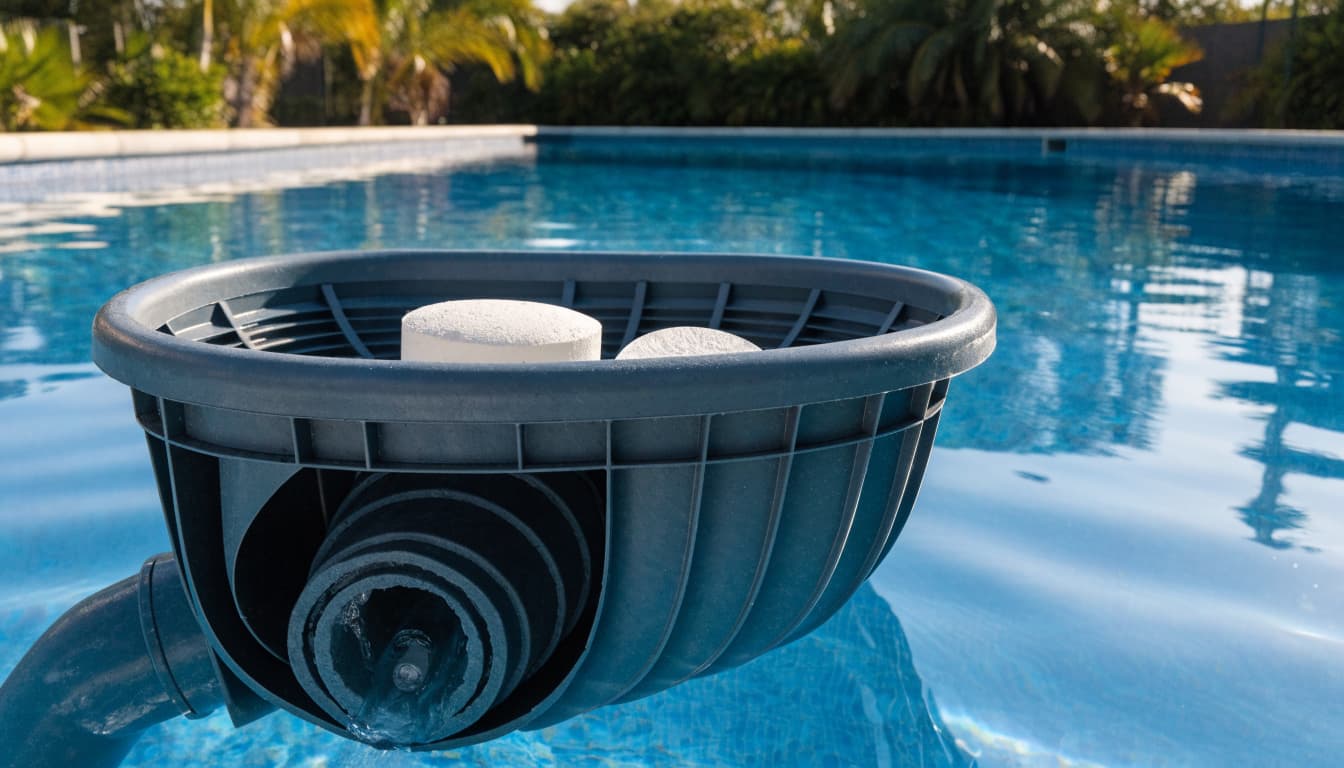
Its main job is collecting debris
The pump draws surface water through the skimmer, where a basket catches leaves and other floating material. Return jets then send filtered water back into the pool.
That makes the basket an easy place to reach, but accessibility doesn't make it a chemical feeder. Using it for tablets adds another task to a component designed primarily for debris collection.
Our explanation of pool water circulation and flow describes how skimmers and returns work together. That relationship matters because sanitizer needs effective circulation throughout the pool.
Equipment compatibility comes first
Protecting pool equipment starts with using chemicals through an approved delivery method. The sanitizer, feeding device, plumbing arrangement, and circulation equipment need to work together.
A practice that suits one installation may be inappropriate for another. Tablet appearance alone also doesn't establish that two products have the same handling requirements.
Follow both sets of instructions rather than relying on a neighbor's routine. If the sanitizer label allows an application that your equipment instructions prohibit, choose another compatible method.
Running the pump longer doesn't replace those requirements. Neither does using fewer tablets or placing them in a different part of the basket.
Tablets Don't Replace Water-Chemistry Testing
Chlorine readings need context
The number of tablets in a basket can't tell you whether the pool has enough available sanitizer. Sunlight, swimmers, rain, and organic debris all affect chlorine demand.
Cape Coral pools can experience several of those conditions in one afternoon. After a storm or busy swimming day, test the water before deciding that another tablet is the answer.
Measure free chlorine alongside pH, total alkalinity, calcium hardness, and cyanuric acid. Record the results so you can distinguish a continuing problem from one unusual reading.
Clear water alone doesn't establish adequate sanitation. Likewise, adding more chlorine won't correct every cause of cloudy water.
pH and stabilizer still need attention
Poor alkalinity can make pH difficult to hold steady. Meanwhile, cyanuric acid protects chlorine against sunlight, but excessive stabilizer makes sanitation harder to manage.
These readings belong in the same maintenance plan. For stabilized chlorine products, keeping track of cyanuric acid is especially important.
Allow chemicals to circulate as their labels direct before taking another sample. Testing immediately beside a return or shortly after an addition can produce readings that don't represent the whole pool.
Make one measured adjustment at a time. Several large changes together make it harder to understand which treatment helped and whether another adjustment is necessary.
Safer Alternatives for Adding Pool Chlorine
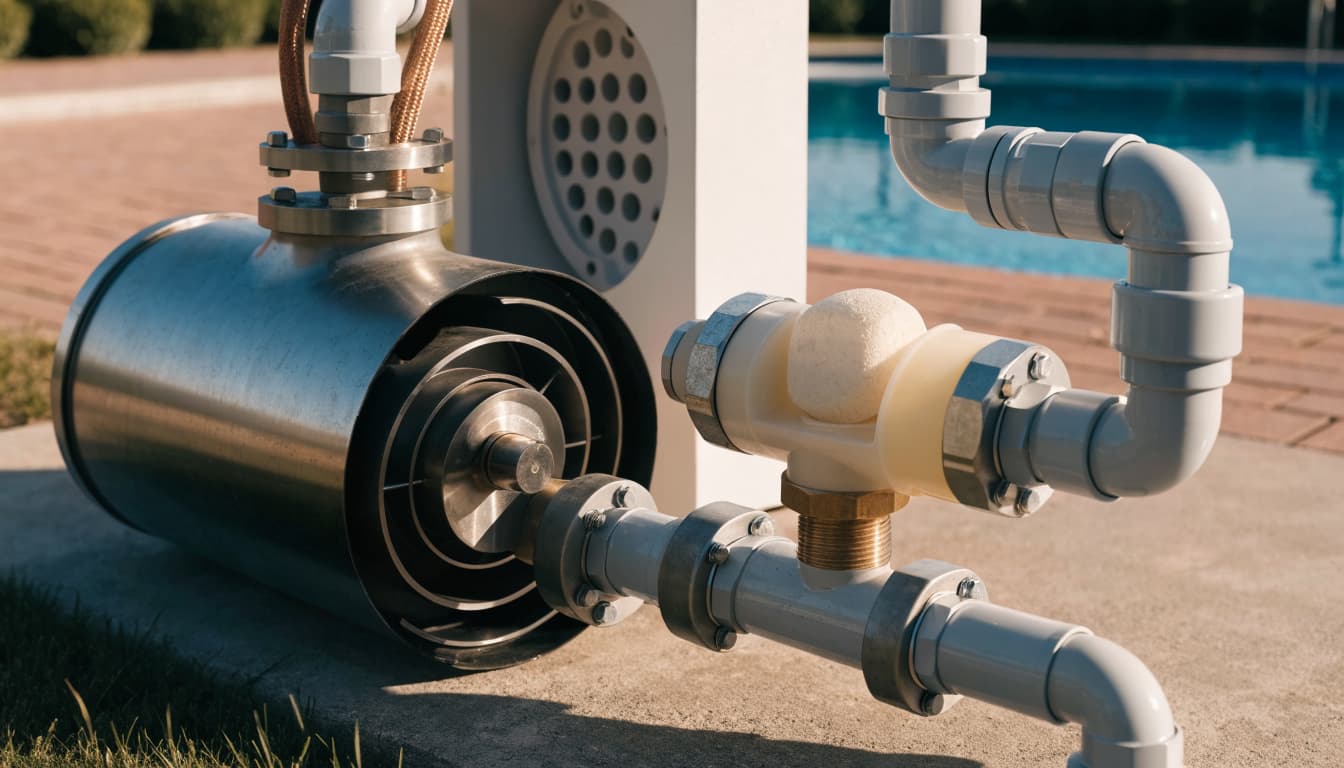
A dedicated tablet feeder
A feeder designed for your sanitizer offers a purpose-built alternative to putting chlorine tablets in the skimmer. However, its chemical compatibility and installation requirements still matter.
Choose equipment intended for the exact sanitizer you're using. Have a qualified pool professional handle installation or changes to the plumbing arrangement.
A tablet feeder is only an appropriate alternative when it's designed for the sanitizer inside it.
A feeder also needs an operating routine suited to the pool. It doesn't replace testing or compensate for poor circulation.
A compatible floating dispenser
A floating dispenser may be suitable when both the product label and pool instructions allow it. It's a separate dispensing device rather than part of the skimmer basket.
However, a floater still requires attention. Follow its directions for loading, adjustment, placement, and use around swimmers.
Don't assume every dispenser works with every tablet. Compatibility matters just as much for a simple floating device as for equipment installed at the pool pad.
Liquid chlorine or a salt system
Liquid chlorine provides another way to maintain sanitizer without relying on tablets. Dose it from the product label, actual pool volume, and current test results.
A salt chlorine generator produces chlorine on-site while the system operates under the required conditions. It still needs adequate flow, balanced water, and cell maintenance.
Neither option eliminates routine care. The better choice is the one that suits your equipment and the maintenance you can consistently provide.
What to Do if Tablets Are Already in the Skimmer
Finding tablets in the basket doesn't establish that equipment has failed. Start by changing the feeding practice safely rather than assuming the pool needs major repairs.
- Stop adding more tablets while you move to a method allowed by the sanitizer and equipment instructions.
- Follow the product's handling and disposal directions for remaining material. If removal is unfamiliar or unsafe, have a qualified pool professional handle it.
- Test the water and record the readings before adding replacement sanitizer.
- Review circulation and filtration so the new feeding method isn't working against an existing flow problem.
Don't add another chemical to the basket to dissolve, neutralize, or treat the remaining tablets. Never combine chlorine products with acid or mix different sanitizers together.
Keep children and pets away during chemical handling. Use the protective clothing, gloves, and eye protection required for the product.
If you encounter strong fumes, a spill, or an unexpected reaction, move away and seek emergency assistance. Don't lean over the skimmer or equipment to investigate.
Continue testing after the feeding method changes. A different dispenser doesn't automatically establish that the water has reached an appropriate sanitizer level.
Circulation and Chemical Safety Still Matter
Correct weak flow before adding more treatment
A clogged basket, dirty filter, low water level, or valve problem can reduce circulation. Adding sanitizer won't remove the obstruction.
Watch return flow and filter pressure as part of routine care. Clean or service the filter according to its manufacturer's instructions when pressure or flow indicates a problem.
Uneven readings can also result from sampling in different locations. Use a consistent testing routine before blaming the feeding method alone.
Keep incompatible chemicals separate
The EPA warns that incompatible pool chemicals can produce heat, fire, or toxic chlorine gas. That warning applies to mixing chemicals, not simply to finding a tablet in a skimmer.
Keep chlorine products separate from acids and other incompatible materials. Store chemicals in their original labeled containers, away from fuel, fertilizers, and household products.
Our guidance on safe algae treatment for swimming pools covers chemical separation and treatment precautions. Adding several products faster doesn't speed recovery and can create additional hazards.
Plan Sanitizer Delivery During an Equipment Upgrade
A renovation or equipment replacement is a useful time to review how the pool receives chlorine. The feeding method should fit the circulation system rather than become an improvised addition.
Consider maintenance access as well as equipment compatibility. You need room to service baskets, filters, and sanitizing equipment without awkward handling or blocked access.
A salt system also deserves a complete review. It won't correct poor filtration, excessive stabilizer, or an unsuitable pump schedule by itself.
We include equipment replacement and automation among our pool upgrade services. When planning a new pool or renovation, discuss sanitizer delivery alongside the pump, filter, and other equipment.
If your project includes outdated equipment or a change in sanitation method, Get a Free Estimate for an on-site consultation. Planning these choices together can help avoid another plumbing modification after the larger project is complete.
Frequently Asked Questions
Can chlorine tablets ever go in a skimmer?
That depends on the exact sanitizer and equipment instructions. Don't treat skimmer feeding as universally acceptable or universally approved for every pool.
Use it only when the relevant instructions expressly permit it. Otherwise, choose a compatible dispensing method rather than adapting the skimmer basket to a job it wasn't selected to perform.
Does keeping the pump running make skimmer tablets acceptable?
Pump operation supports circulation, but it doesn't establish chemical or equipment compatibility. A longer schedule can't override a product restriction or an equipment instruction.
Also, weak flow may continue even while the pump runs. Basket blockages, filter condition, water level, and valve positions all affect how effectively water moves through the system.
Is a saltwater pool chlorine-free?
No. A salt chlorine generator makes chlorine using saltwater and electricity. The pool still needs a measurable sanitizer residual and regular water testing.
The generator also relies on suitable operating conditions. Poor flow, cell deposits, or water-balance problems can interfere with performance. Switching to salt changes the chlorine source, not the need for maintenance.
Keep the Skimmer Focused on Its Job
Chlorine tablets belong in a feeding method approved for both the product and your pool equipment. A convenient basket isn't enough to establish safe, compatible sanitizer delivery .
Choose the right method, maintain circulation, and use water tests to guide treatment. Those habits protect the pool more reliably than adding tablets whenever the water looks like it needs attention.