A pool can turn green after one stormy week, a failed pump, or a stretch of missed chlorine checks. The good news is that most green pool water can be recovered safely when you slow down, test first, and give the filter time to work.
Florida heat, rain, and year-round pool use make algae growth more likely. Resist the urge to dump in several products at once. A measured recovery plan protects your pool finish, equipment, and family.
Identify Why the Water Turned Green
Green water often points to algae, but algae is a symptom of a pool chemistry or circulation problem. Low sanitizer, poor filtration, heavy debris, warm water, and rain dilution can all create the conditions algae needs.
Florida's swimming-pool sanitation rules require pool water to remain free of visible algae, floating debris, and sediment. If you can see green growth, cloudy water, or a murky floor, close the pool until the water is clear and balanced.
Mild algae versus a severe outbreak
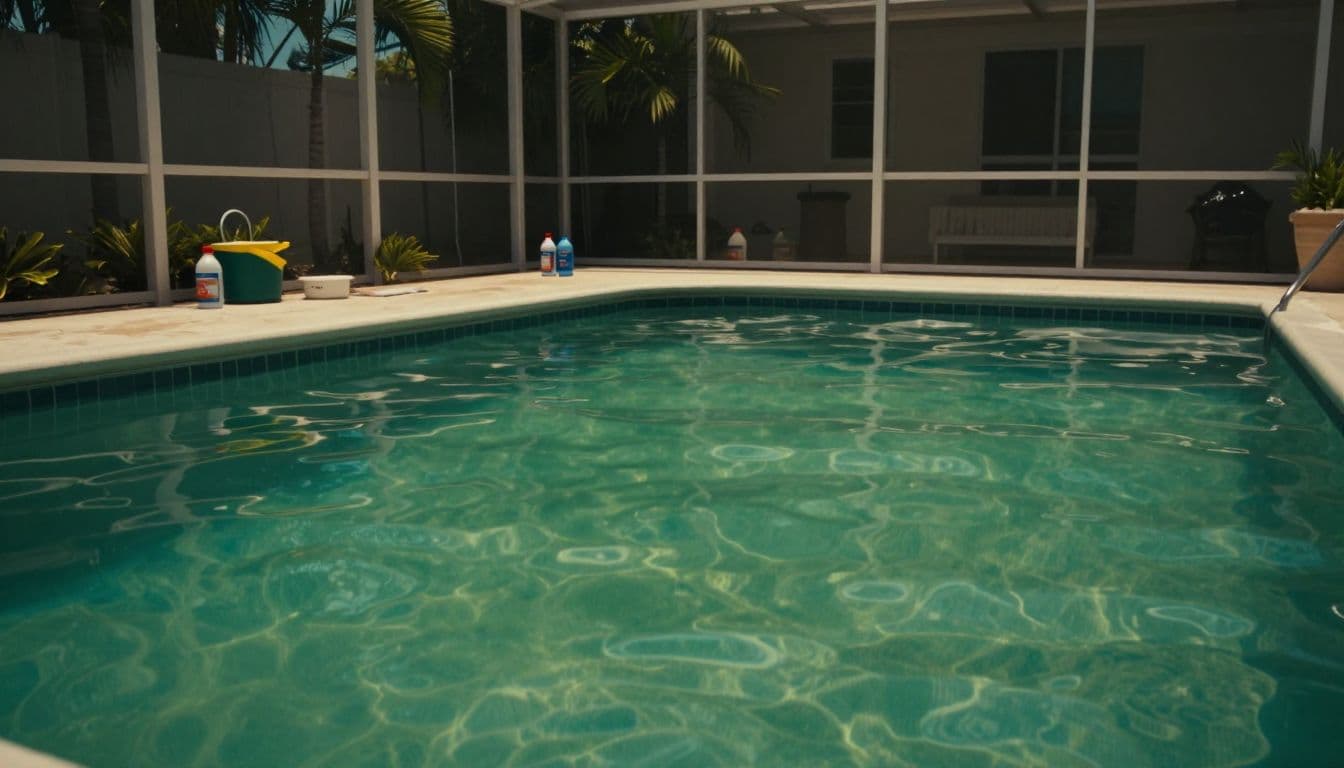
A light green tint with visible steps and floor is usually an early algae problem. You may also notice slick walls, small patches near returns, or green dust collecting in corners.
Dark green, pea-soup water needs more patience. So does a pool with black spots, yellow or mustard-colored growth, a strong odor, or water that stays cloudy after treatment. These conditions can involve heavy algae, poor circulation, clogged filtration, or a damaged surface.
Rule out stains and pollen
Not every green-looking pool contains active algae. Metals, especially copper, can tint water green while it remains clear. Pollen may also leave a greenish film at the surface.
Brush a small area with a pool brush. Algae usually lifts or smears, while staining remains fixed. Still, test the water before choosing a treatment, because appearance alone can't tell you what the chemistry needs.
Test the Water Before Adding Chemicals
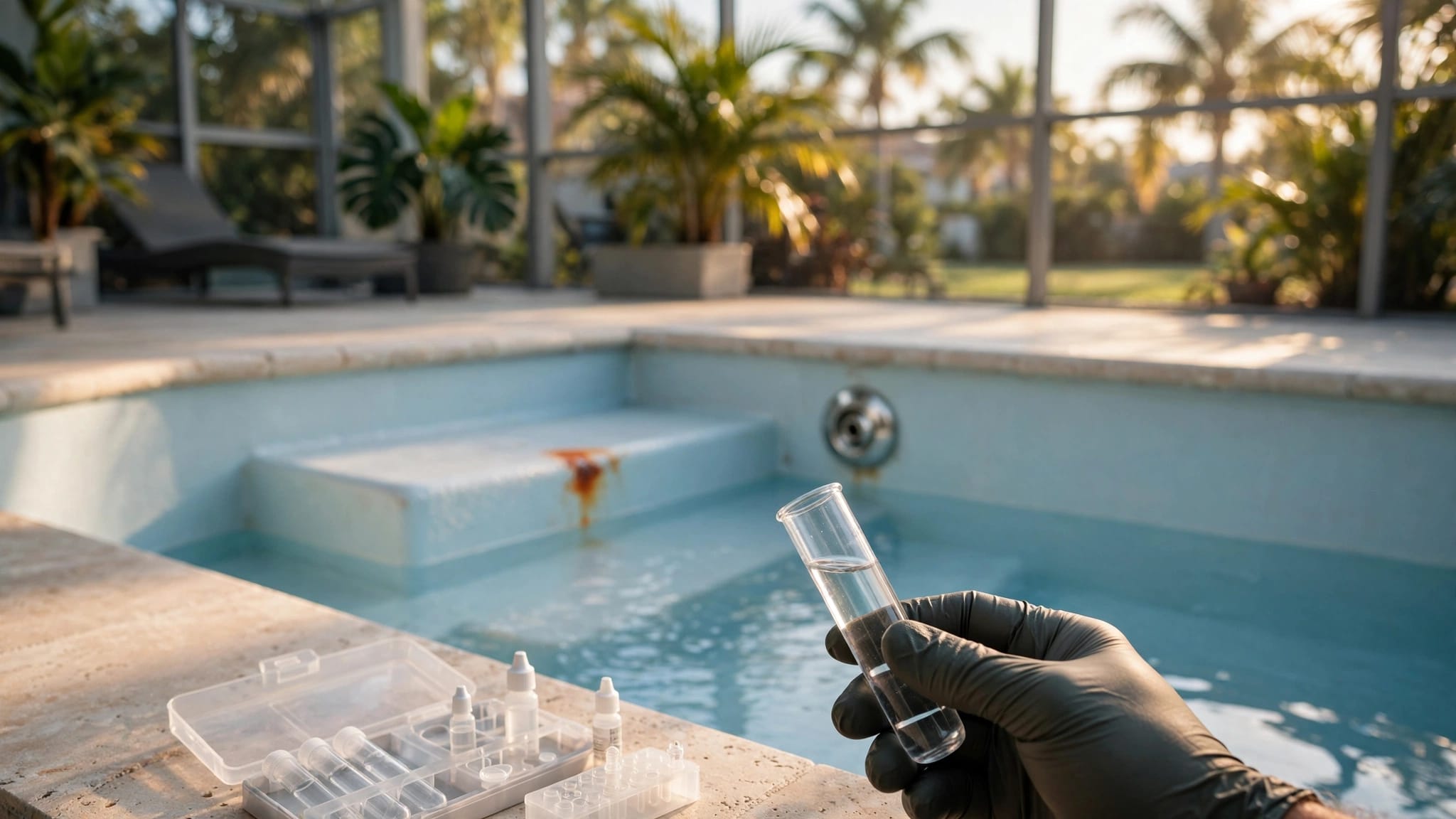
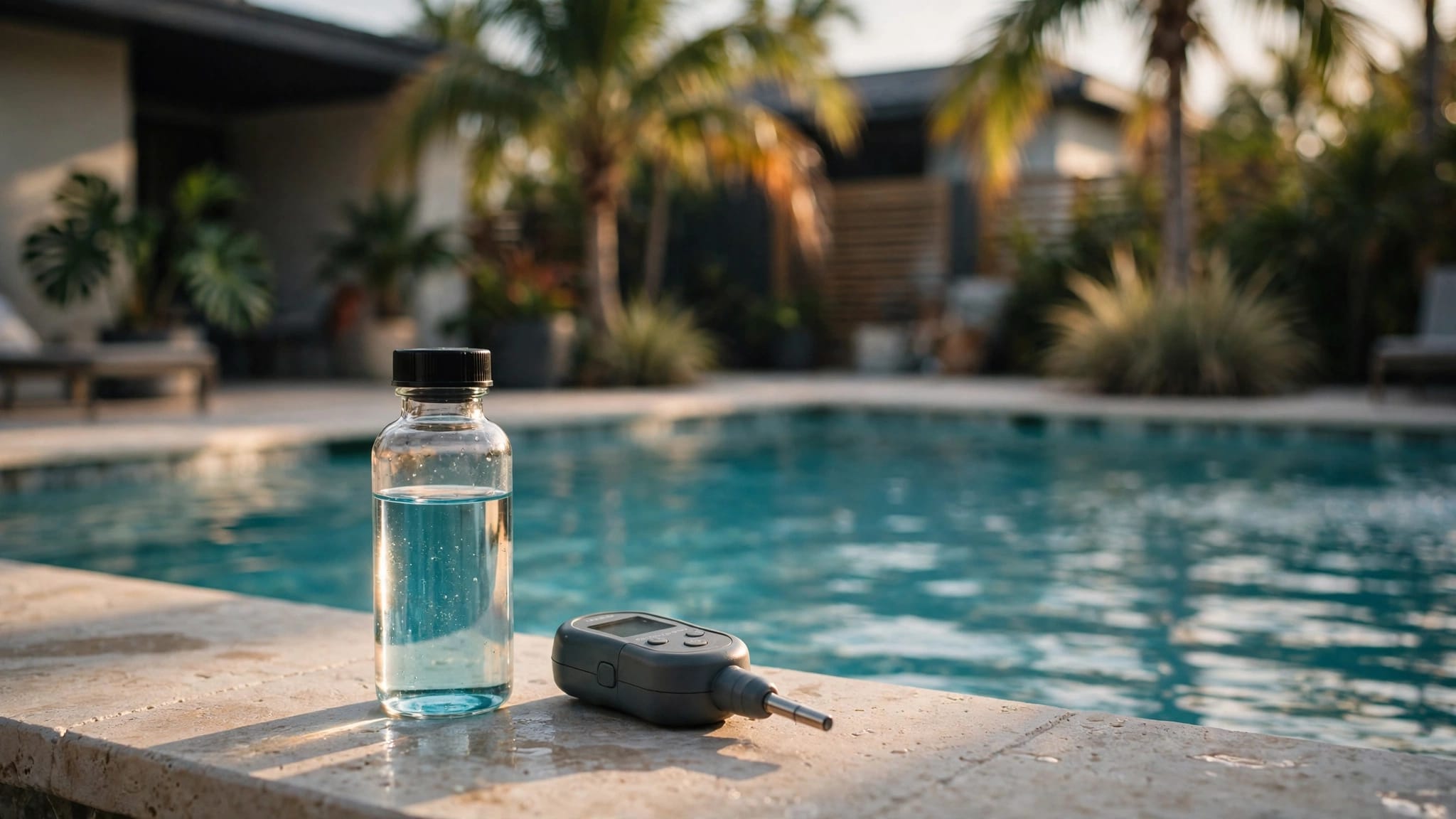
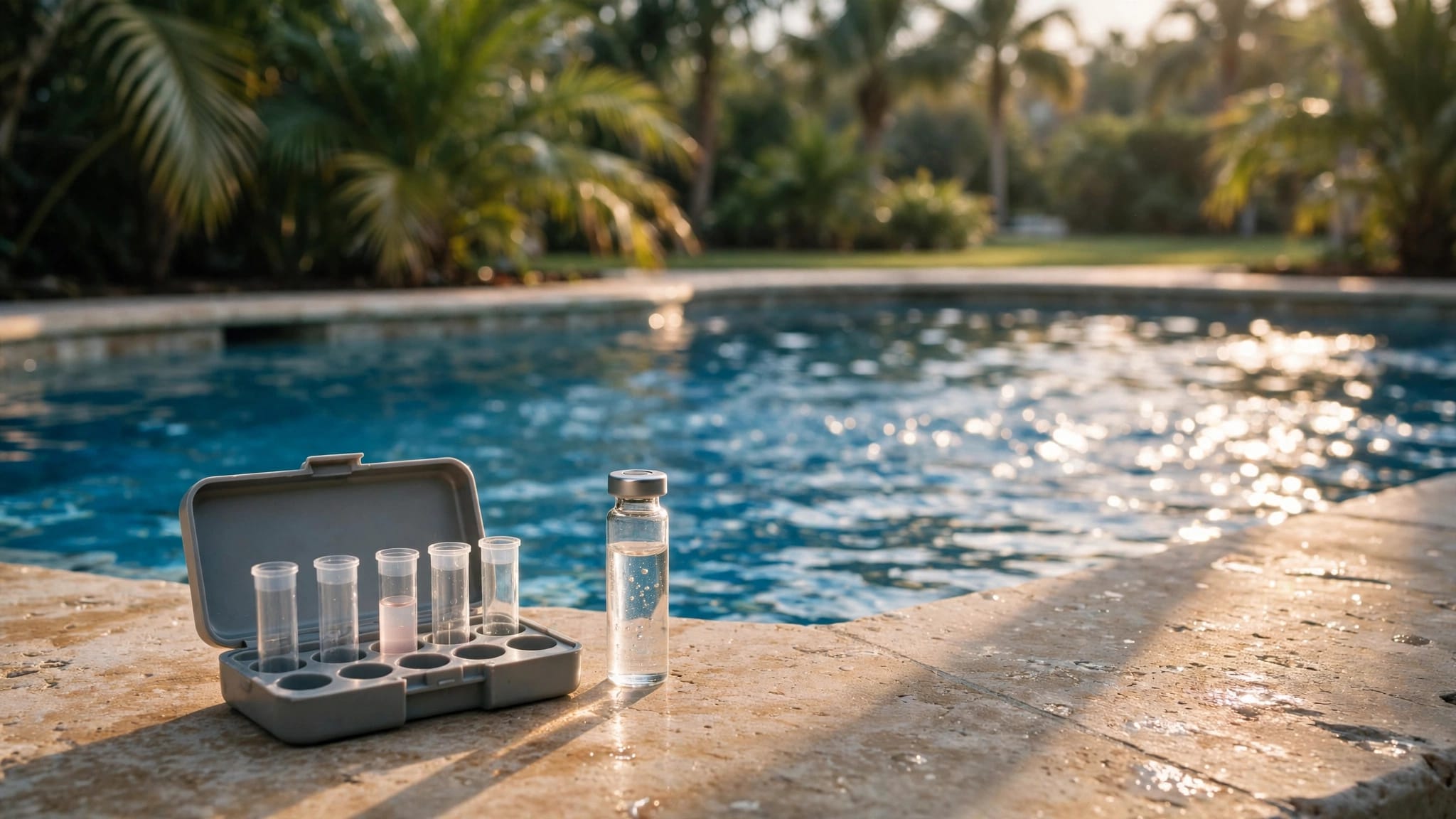
Testing first prevents wasted products and unsafe combinations. Use a reliable liquid test kit or take a fresh sample to a pool professional. Test free chlorine, total chlorine, pH, total alkalinity, calcium hardness, and cyanuric acid, also called stabilizer.
The CDC recommends keeping residential pool pH between 7.0 and 7.8. It also recommends at least 1 ppm free chlorine, or at least 2 ppm when using cyanuric acid or stabilized chlorine products. Check the label for the product's limits and directions.
Read the results as a group
Free chlorine tells you how much active sanitizer is available. Total chlorine includes used-up chlorine compounds, so a large gap between the two can point to chloramines and a need for corrective treatment.
pH matters because high pH weakens chlorine's ability to do its job. Low pH can irritate skin and eyes and may damage equipment. Meanwhile, poor alkalinity can make pH hard to hold steady.
Write down your starting readings. That simple record helps you see whether treatment is working or whether the pool keeps losing chlorine overnight.
Look at the equipment, too
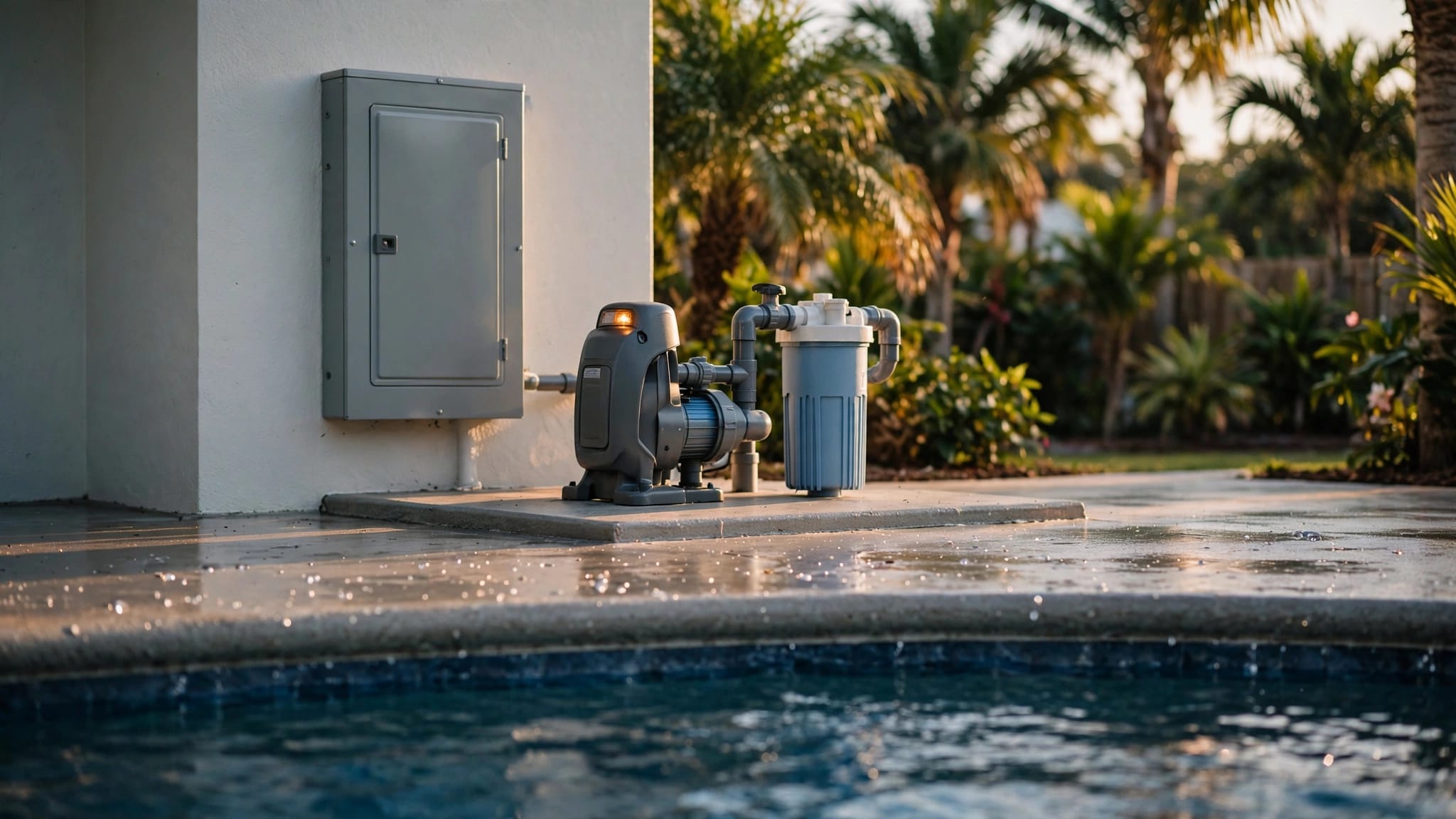
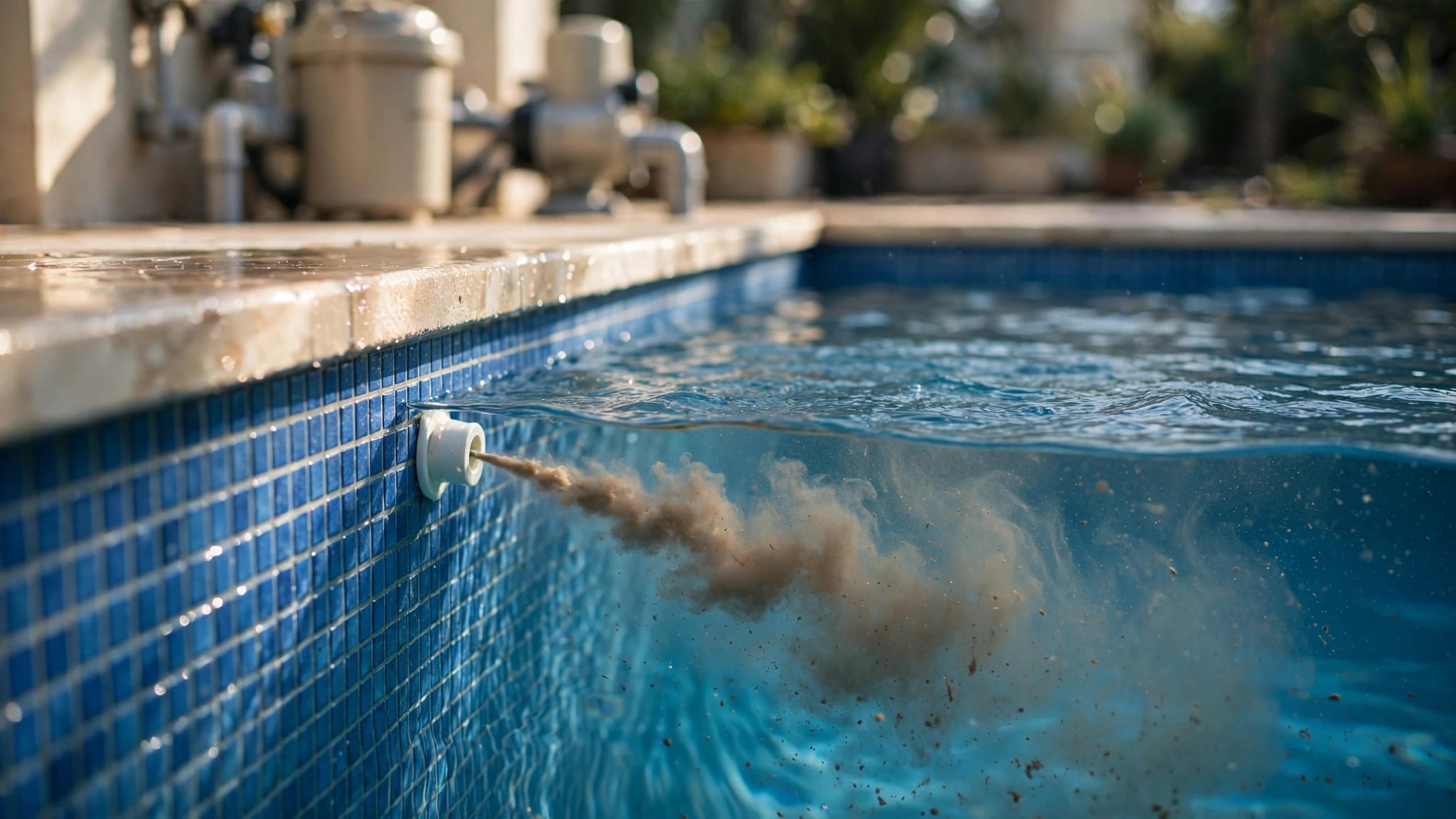
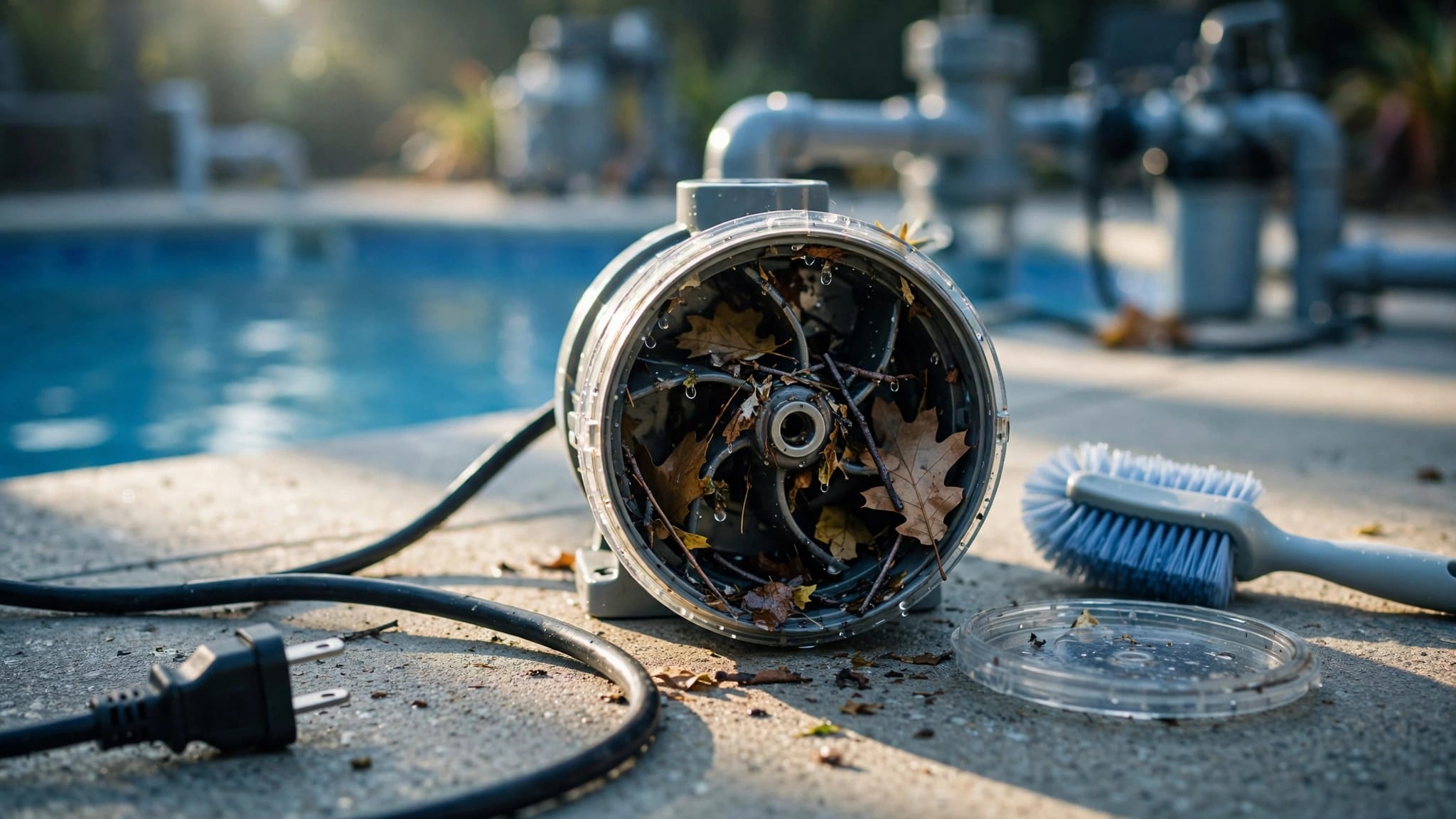
Run the pump and check the pressure gauge, return flow, timer, skimmer basket, pump basket, and filter condition. A filter can't clear algae if water barely moves through it.
Cartridge filters need cleaning when pressure rises or flow drops. Sand and DE filters may need backwashing according to the manufacturer's instructions. If filtration has been weak for days, correct that issue before expecting clear water.
Prepare the Area for Safe Treatment
Pool chemicals are useful when handled correctly, but they can react violently when mixed. Wear chemical-resistant gloves, eye protection, closed-toe shoes, and clothing that covers your skin. Keep children and pets away from the work area.
Choose a dry, ventilated storage space away from direct sun, fuel, fertilizers, and other household chemicals. Never use an old scoop for a different product unless it has been fully cleaned and dried.
Never mix pool chemicals
The EPA warns that incompatible pool chemicals can create heat, start fires, or release toxic chlorine gas. Don't combine products in a bucket, in a feeder, or on the pool deck.
Add one product at a time, following its label. Never mix old chemicals with fresh chemicals, even when the containers appear to hold the same type. Use only clean, dry tools.
Adding extra chemicals faster does not speed up recovery. It can create unsafe water and make the pool harder to balance.
Keep swimmers and pets out
No one should swim during algae treatment. Green water hides the depth, steps, drains, and objects on the pool floor. It also shows that sanitation has failed.
Wait until the water is fully clear, chemistry is back in the safe operating range, and every treatment label allows swimming. Don't treat cloudy water as "close enough," especially when children use the pool.
How to Recover Green Pool Water Safely
A successful recovery depends on circulation, brushing, filtration, and retesting. The order matters because chlorine works better after you remove debris and expose algae on the surfaces.
First, remove leaves, twigs, and large debris with a leaf net. Empty the skimmer and pump baskets. Then set the pump to run continuously during active cleanup, unless your equipment manufacturer gives different instructions.
Brush every reachable surface
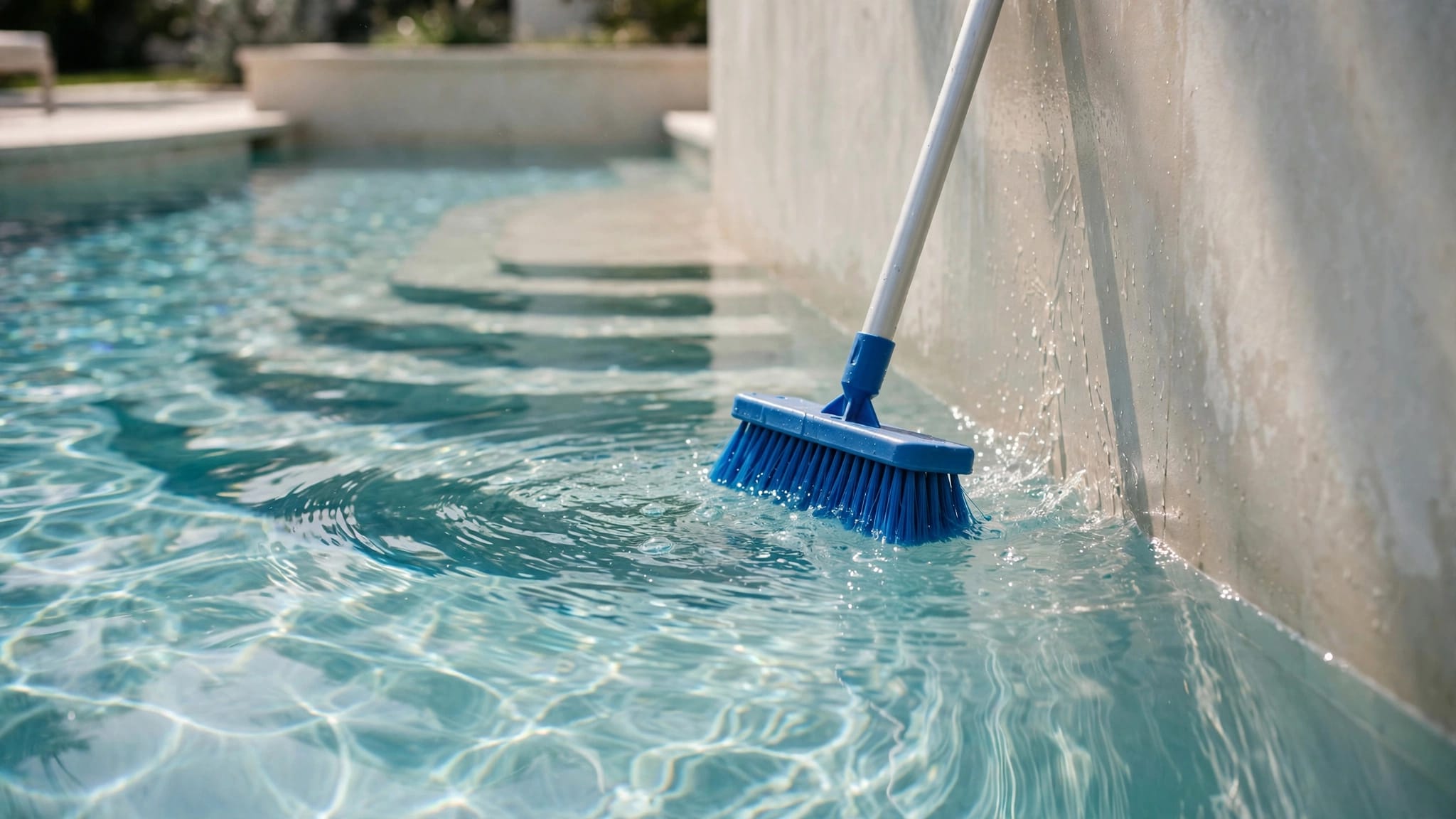
Brush the walls, steps, floor, tile line, ladders, and tight corners. Use a brush suited to your finish. Nylon is generally appropriate for vinyl and fiberglass, while plaster or concrete may need a stiffer brush.
Brushing breaks up the algae layer so sanitizer can reach it. Do it before treatment, then brush again after the sanitizer has circulated. Pay close attention to shaded areas and spots with weak return flow.
Treat based on your test results
Adjust pH only as directed by the products you use. Then apply the correct chlorine treatment for algae recovery, following the package label for your pool volume and current chemistry.
Don't guess at dosage or combine chlorine with algaecide in the same container. Some algaecides are better used after chlorine has done its work, and copper-based products can stain certain finishes if misused.
Use this recovery sequence:
- Remove debris, clean baskets, and confirm the pump and filter are operating.
- Brush the pool thoroughly, then add the label-directed sanitizer treatment.
- Circulate continuously and clean or backwash the filter when pressure and flow indicate it is needed.
- Vacuum settled debris to waste if your system supports it, then retest before adding more treatment.
Water may shift from green to blue-gray or cloudy after algae dies. That is progress, but it isn't the finish line. The filter still needs time to capture the fine particles.
Retest Before You Reopen the Pool
Test chlorine and pH at least twice daily during recovery. Florida's hot afternoons and summer rain can change readings quickly, especially when the pool is fighting a heavy algae bloom.
Keep brushing, circulating, and cleaning the filter until you can clearly see the entire floor. If the pool is clear but chlorine falls rapidly, algae or organic debris may still be consuming it.
Signs the pool is ready for swimming
The water should be transparent enough to see the main drain and every step. There should be no visible algae, cloudiness, foam, or debris.
Confirm that pH is within the recommended range and free chlorine meets your product guidance and the CDC minimums. If you used a treatment with a stated wait time, follow that label even if the water looks inviting.
Clean up after treatment
Rinse brushes, nets, and vac heads away from the pool area. Store products in their original closed containers, separated by type. Never return spilled material to a container.
Also inspect the skimmer weir, filter O-rings, pump lid, and return fittings. Small air leaks and clogged lines can reduce circulation enough to invite another algae problem.
Prevent Green Water During Florida's Wet Season
Once the pool clears, regular checks are easier than another full recovery. Test more often after heavy rain, a crowded weekend, nearby landscaping work, or a power outage that stopped circulation.
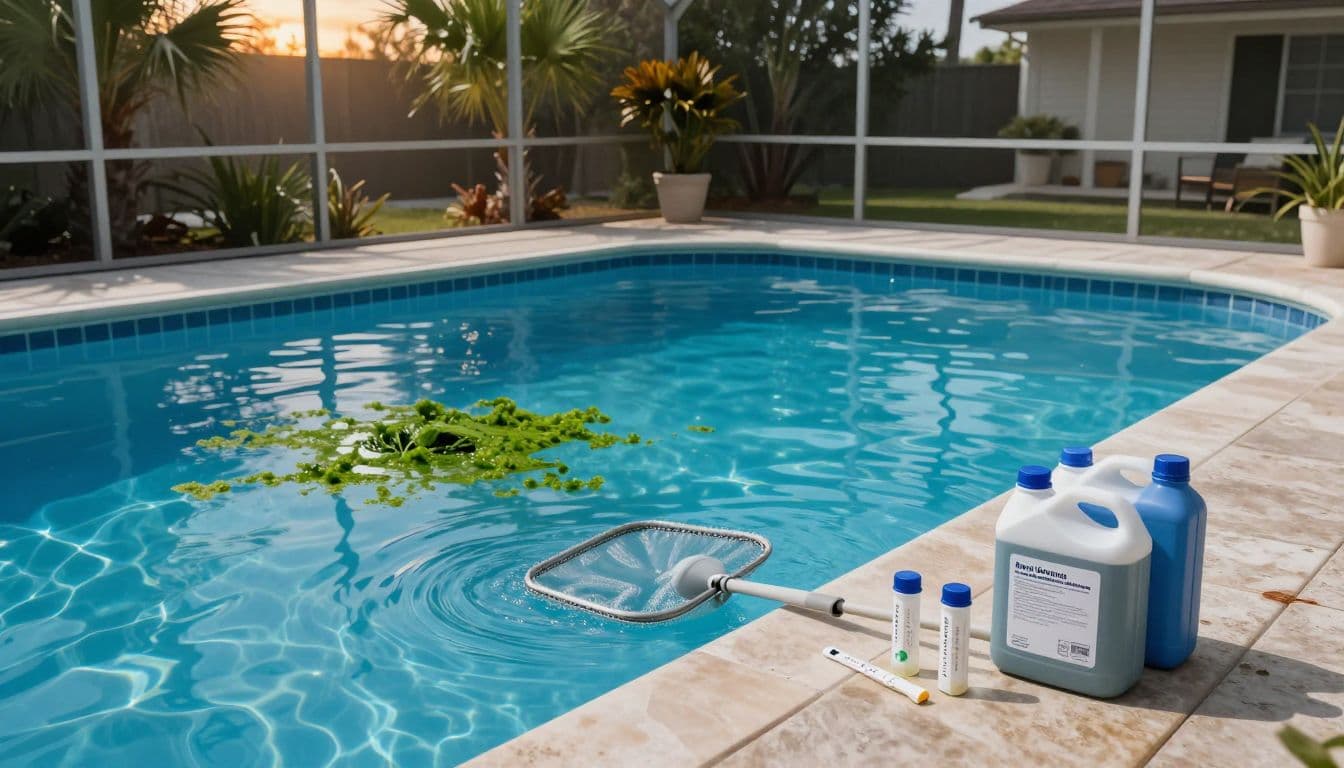
A screened enclosure reduces leaves and larger debris, but it doesn't block fine pollen, dust, or all organic material. Keep skimmer baskets clear and brush dead spots where water tends to sit.
Maintain a simple weekly routine
Set a consistent day for testing, brushing, and inspecting equipment. Run the pump long enough to circulate the full pool volume, based on your pool's size and pump flow rate.
Watch filter pressure rather than waiting for cloudy water. Homeowners comparing DE pool filters for Cape Coral homes should consider water clarity along with cleaning frequency and maintenance preferences.
Address rough surfaces and recurring algae
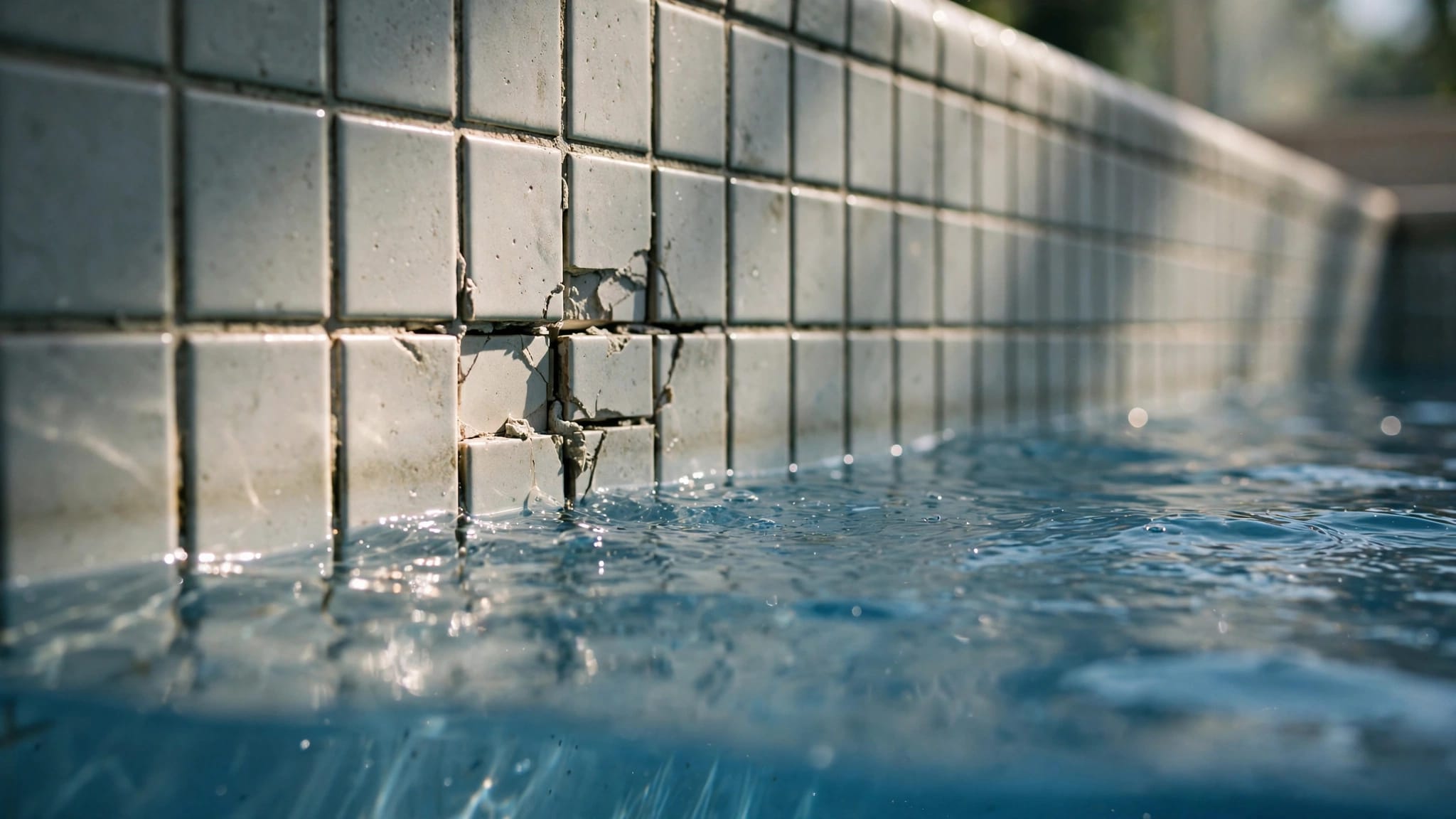
Algae clings more easily to cracked plaster, pits, exposed aggregate, and rough steps. Repeated green pool water problems in the same areas can signal a surface issue, not just missed maintenance.
If the interior feels rough, stains won't brush away, or algae returns despite stable chemistry and good circulation, review the signs your Cape Coral pool needs resurfacing. A sound, smooth finish makes cleaning more manageable.
When Professional Help Makes Sense
Call a pool professional when water remains green after proper testing, brushing, label-directed treatment, and continuous filtration. Persistent chlorine loss, recurring black algae, failing equipment, leaks, or a damaged pool interior also need a closer look.
Professional help is a smart choice when you don't know the pool's volume, can't read the test results with confidence, or suspect a filter, pump, or plumbing problem. Avoid adding more products until someone can assess the water and equipment.
For recurring water issues tied to an aging finish, circulation upgrades, or a larger backyard refresh, Get a Free Estimate for an on-site consultation.
Clear Water Starts With Measured Steps
A green pool doesn't call for panic or a cabinet full of chemicals. Test first , clean and brush the pool, treat one product at a time, and let steady filtration finish the work.
Clear water is the standard for swimming, not merely water that looks less green. With safe handling and consistent maintenance, your Florida pool can return to being the easy place your family wants to spend time.