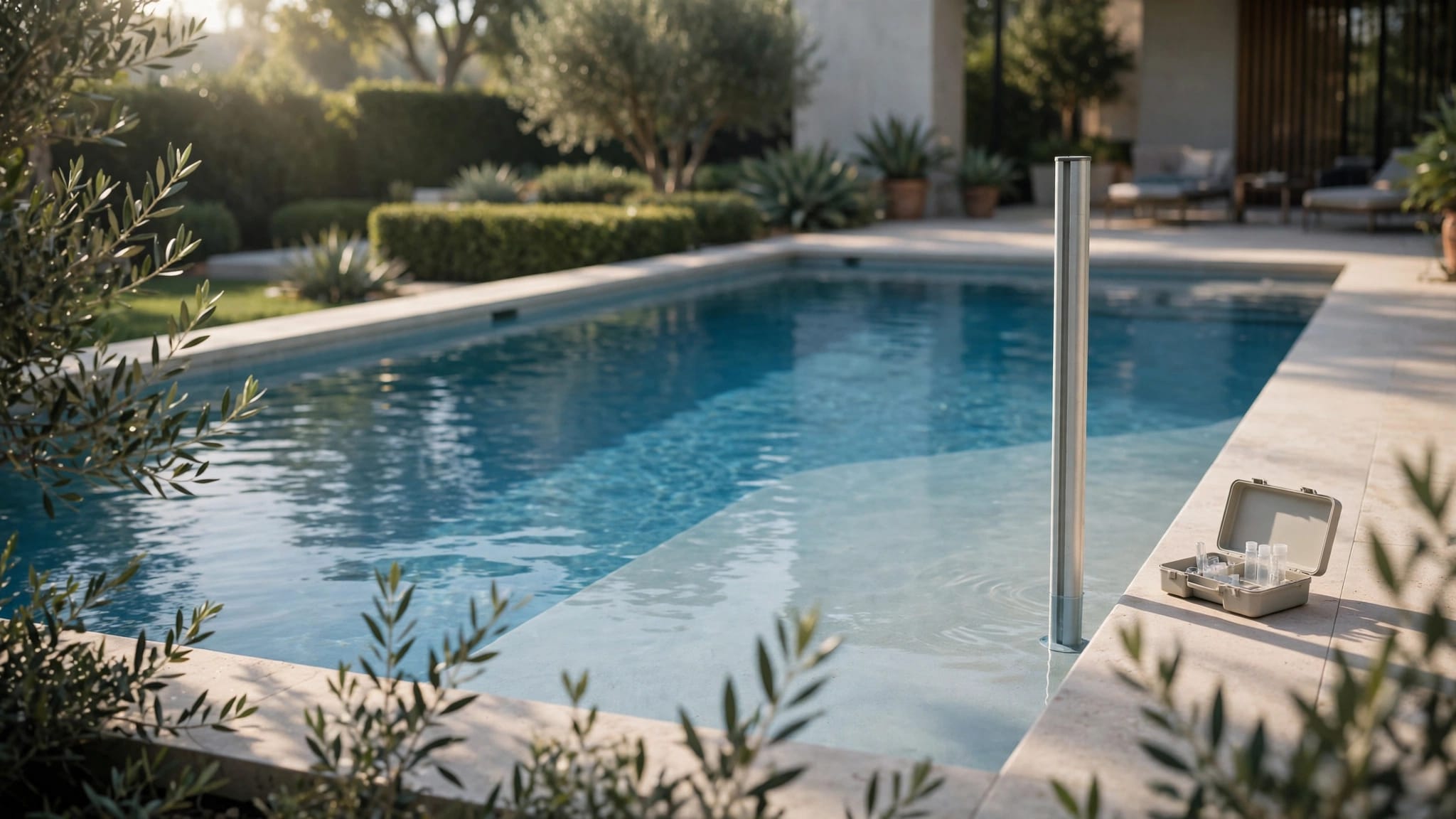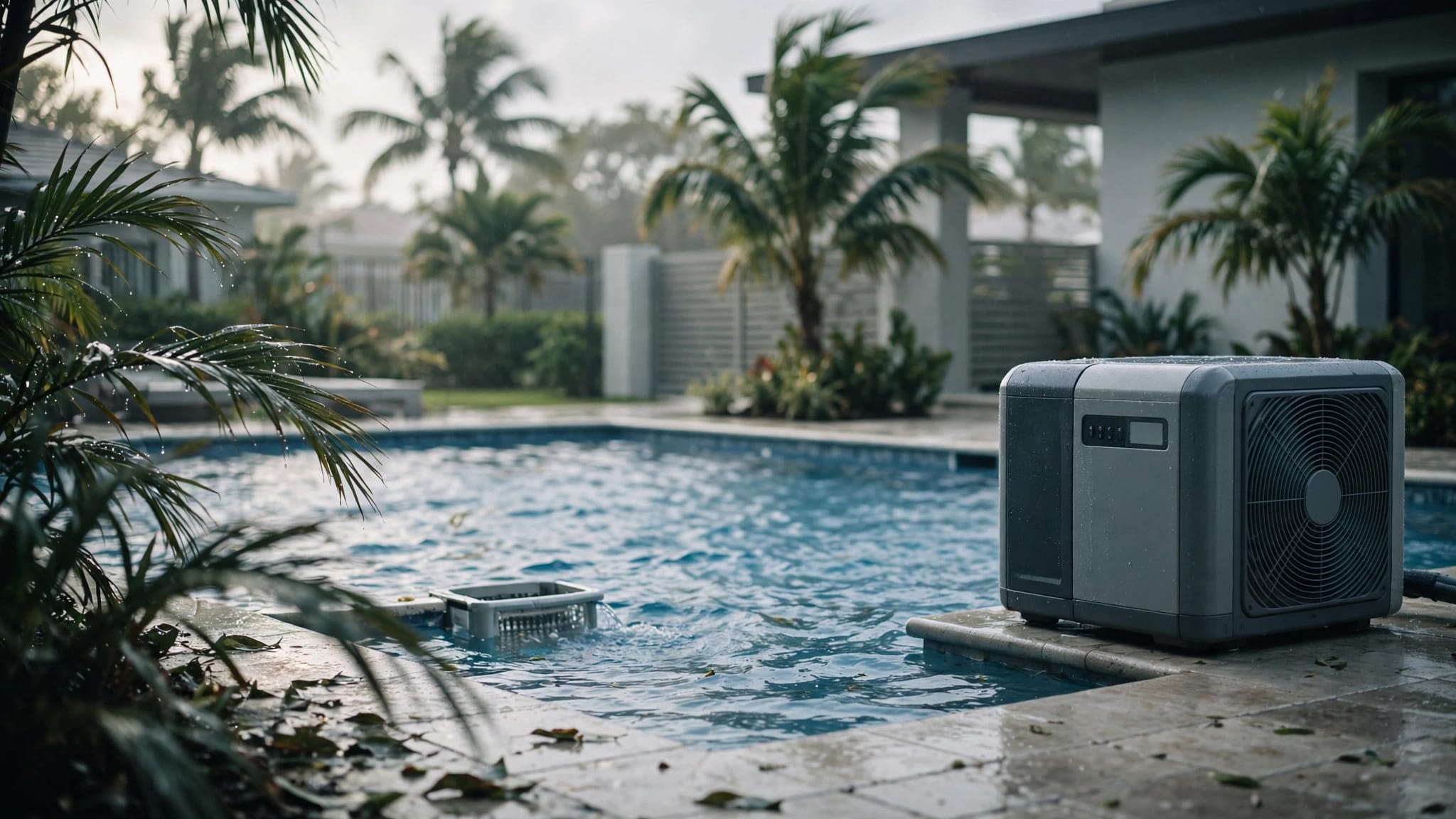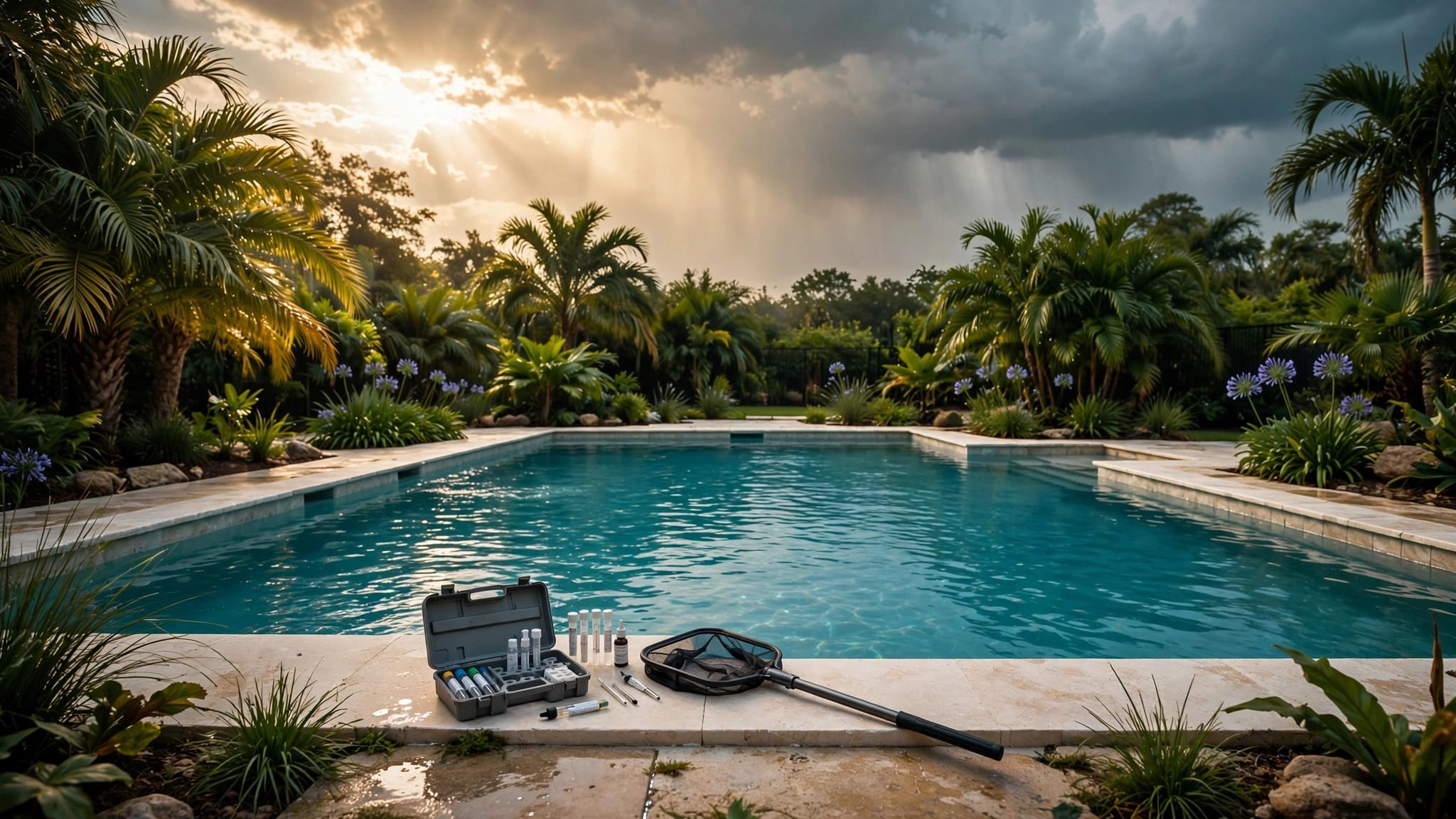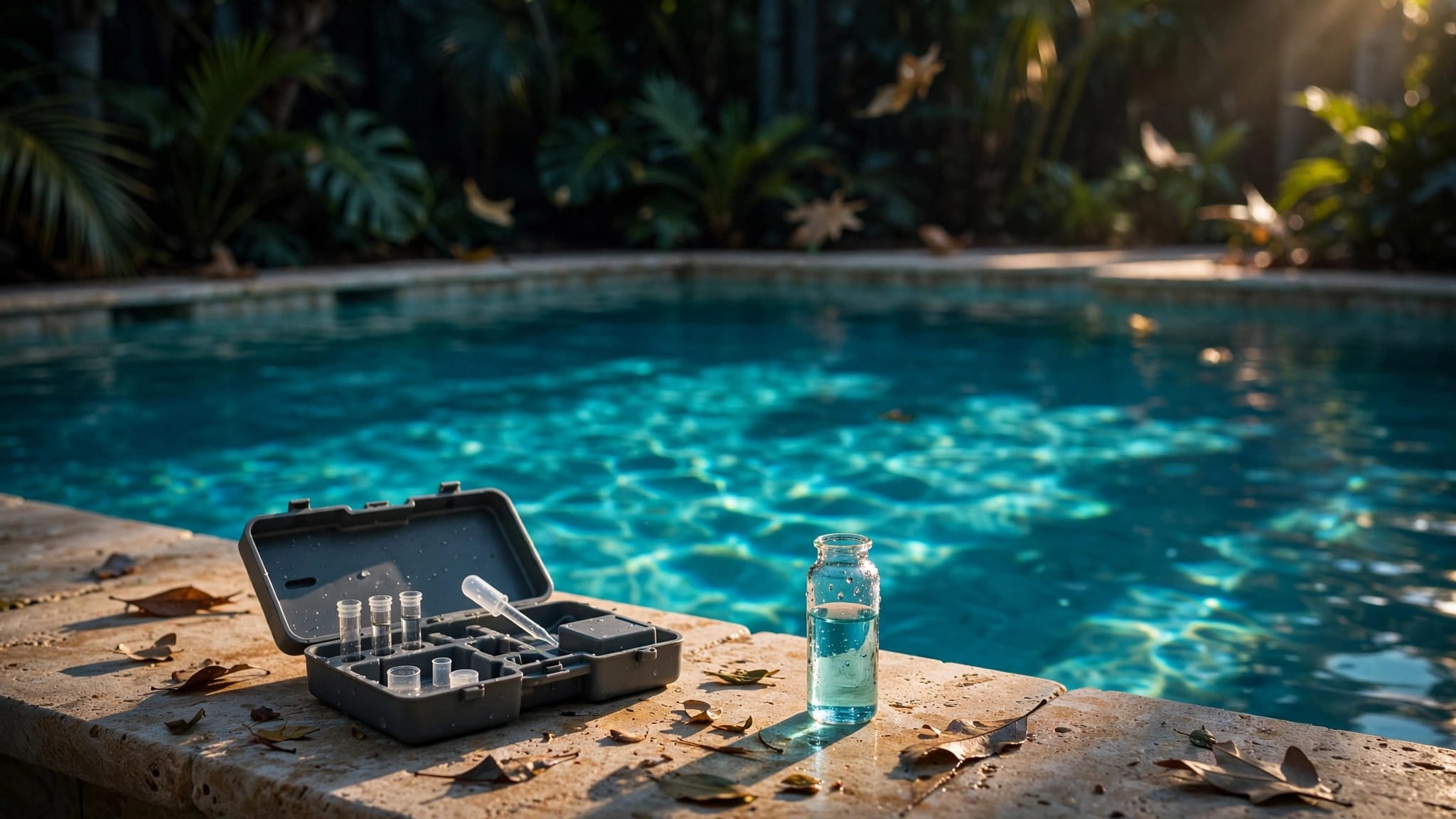
A brown cloud near a return jet doesn't automatically mean your filter needs replacing. A pool filter blowing dirt back into the water needs a different fix than sediment stirred up by circulation.
The first step is confirming the source before changing valve settings, buying filter media, or adding chemicals. Your filter type also matters because sand, cartridge, and diatomaceous earth (DE) systems require different maintenance.
Start by watching where the particles appear and what happens when the pump runs.
Confirm That Dirt Is Coming Through a Return
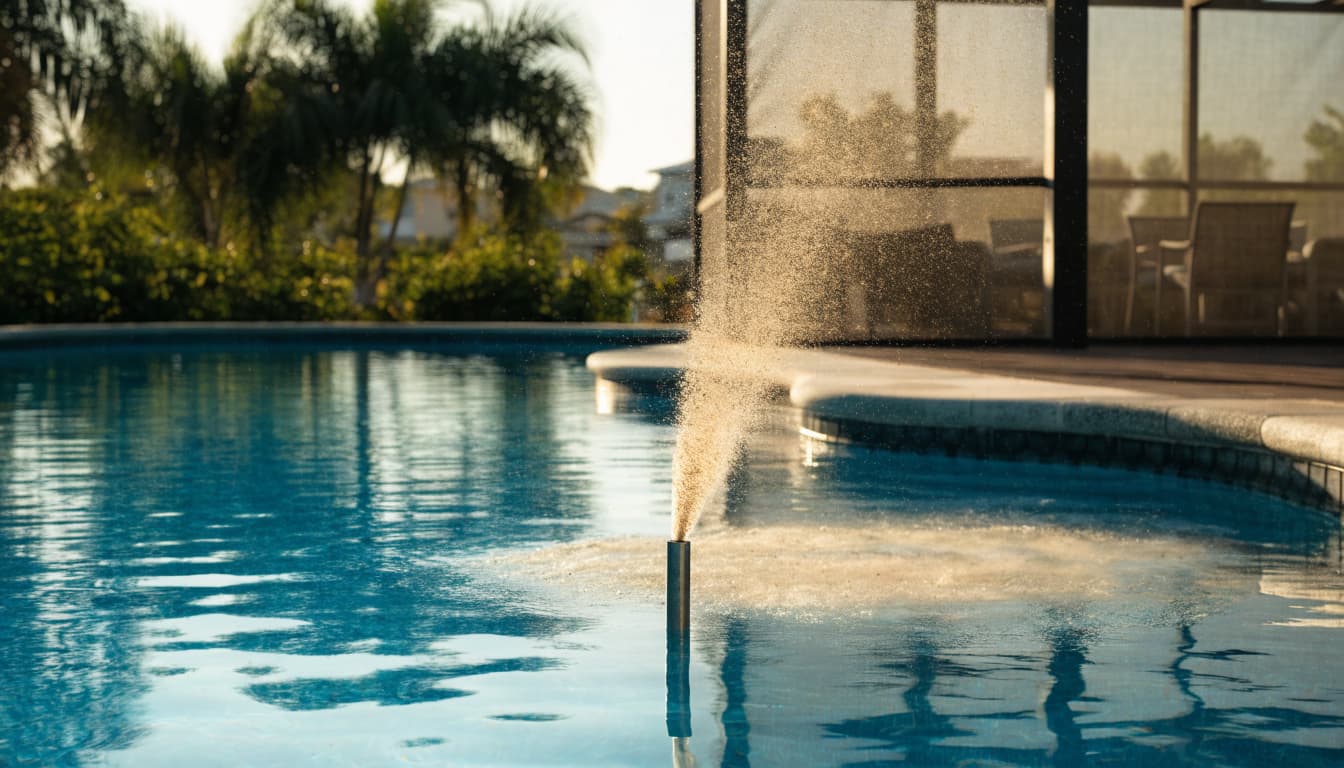
Watch the water leaving the jet
From the deck, observe the return fitting during normal operation. Look for particles emerging directly from its opening, rather than a cloud forming farther away.
First, note whether the discharge happens continuously, only at startup, or immediately after filter cleaning. Also check whether it happens at several returns. Photograph or record the discharge so a technician can review it.
Check the equipment label to identify your filter type. Powder from a DE system and gritty material from a sand filter require different inspections. Color alone can't identify what you're seeing.
Rule out debris already in the pool
Return flow can lift settled sediment from steps or the floor. That movement can resemble dirt coming through the plumbing.
Clean a small area near the return using equipment appropriate for your pool finish. Then observe whether new particles emerge from the fitting or drift across the cleaned area.
Meanwhile, inspect the deck, planting beds, and enclosure. Dirt that appears after rain, landscaping work, or windy weather may enter directly. Piles below damaged screens or along a runoff path support an outside source.
Keep clear of suction fittings throughout the inspection.
Check Water, Flow, and Pressure Before Cleaning
Test the water and inspect the baskets
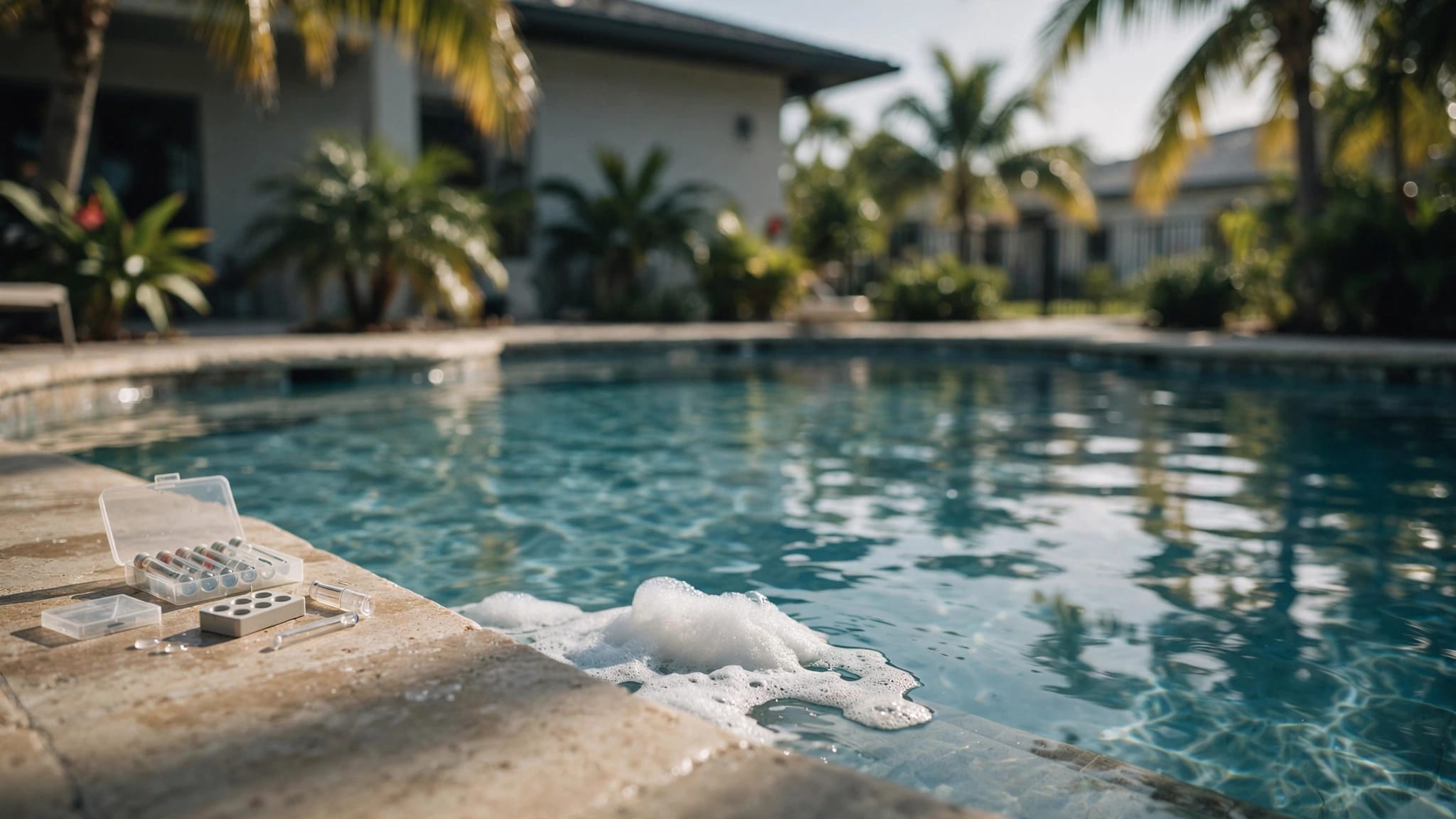
Cloudiness can accompany debris, but it doesn't establish a filter problem. Test sanitizer and pH before assuming every suspended particle is dirt. Poor water conditions can allow algae to develop, adding another load for the filter.
Next, check the pool's water level and skimmer basket. Inspect the pump basket only after shutting off power and following its opening procedure.
Remove leaves and other obstructions before evaluating circulation. Record any air bubbles, unusual pump noise, or loss of prime. Those observations help separate filtration concerns from broader circulation problems.
Compare pressure at the same pump speed
A pressure reading means more when you compare it with the system's clean-filter baseline . Take that baseline after proper cleaning, with the pump running at its normal operating speed.
Because variable-speed pumps change operating conditions, compare readings at the same speed and valve positions.
Use your manufacturer's cleaning guidance rather than a universal pressure number or weekly schedule. A single reading can't establish whether particles are passing through the filter.
Also note return strength. Weak flow, recurring cloudiness, and changing pressure together provide a more useful picture than the gauge alone.
Make the Equipment Safe Before Any Service
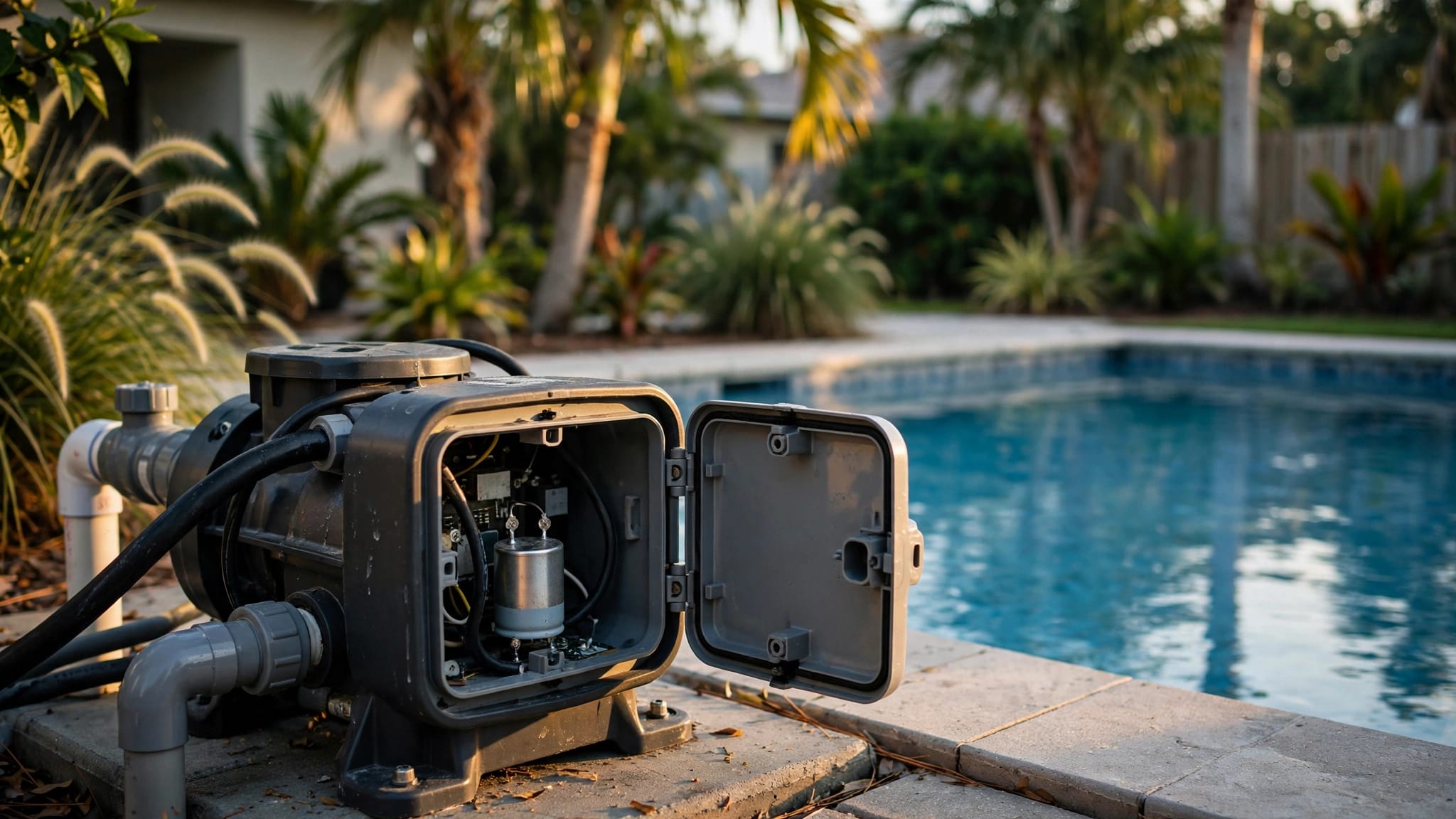
Pool filters hold pressurized water and can contain trapped air. Opening equipment while it operates or retains pressure can cause serious injury.
Use this sequence before opening or servicing the system:
- Shut off the pump and disconnect power as directed by the equipment manual.
- Disable timers, automation, or remote controls that could restart the pump.
- Follow the manufacturer's pressure-relief procedure using the designated air-relief assembly.
- Confirm the equipment is depressurized before touching a clamp, lid, valve assembly, or drain.
- Follow the model-specific instructions for opening, cleaning, reassembly, and startup.
Never loosen a tank clamp to release pressure. If you can't confirm safe depressurization, stop and arrange professional service.
Turning the pump off isn't enough when automation can restart it during maintenance.
Also shut off the pump before changing a multiport valve setting. Don't force a stiff handle or assume every valve has the same operating sequence.
Check heater shutdown requirements and keep electrical connections dry. If the tank, clamp, or plumbing leaks, postpone further troubleshooting until a professional assesses the equipment.
Sand Filters: Review Backwash and Rinse
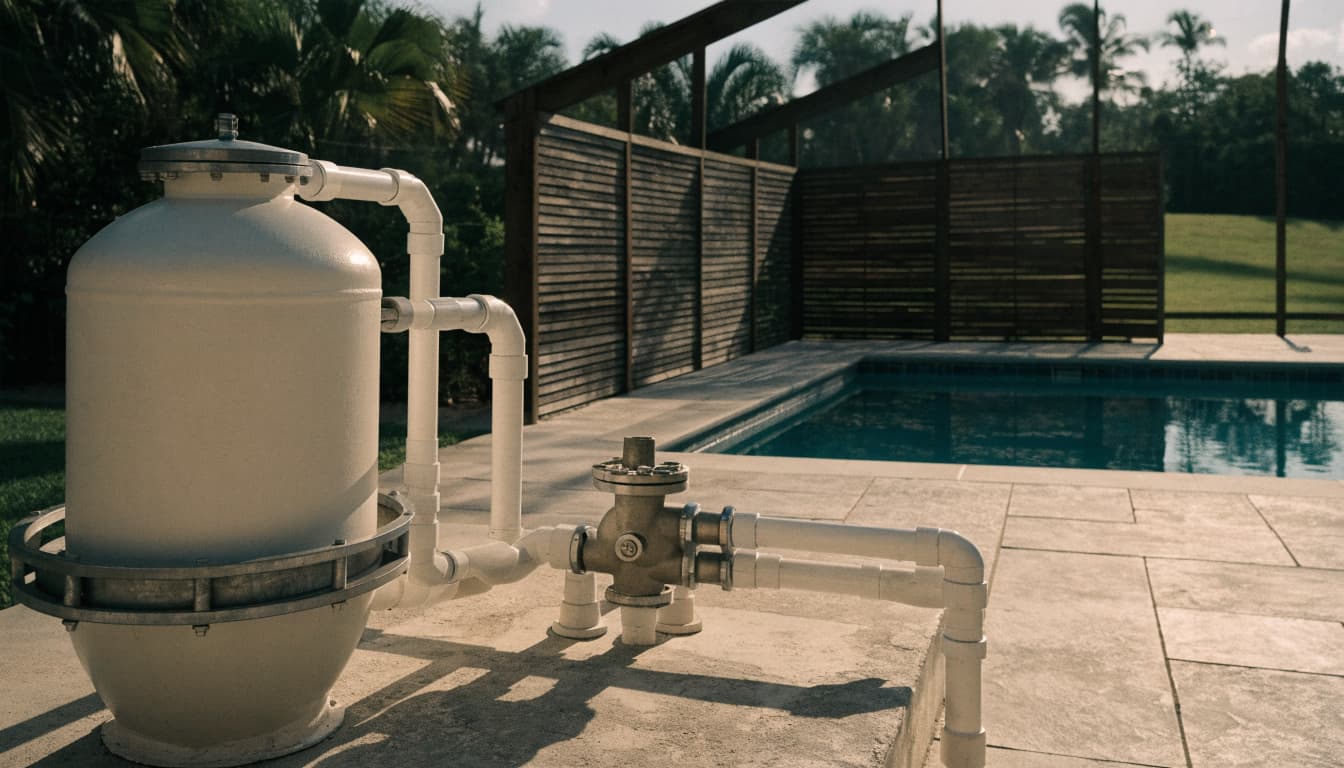
Check the cleaning sequence
Sand filters generally clean through backwashing. Many multiport systems then require a rinse cycle before returning to normal filtration.
Follow your valve's instructions, stopping the pump between setting changes. During backwashing, observe the sight glass or discharge where the equipment design permits. Use the manufacturer's endpoint and rinse instructions instead of guessing a duration.
If your valve has no rinse position, follow its specified procedure. Don't invent an equivalent setting.
Also confirm the normal operating position. A valve setting labeled RECIRCULATE bypasses filtration, so it isn't the setting for routine filtering.
Investigate persistent particles before replacing sand
Record whether material returns immediately after backwashing or throughout normal operation. That distinction helps a technician evaluate the cleaning process and filtration path.
If gritty particles continue emerging from the returns, request an inspection of the internal collection assembly and valve routing before approving a sand change.
Don't choose replacement media based on appearance alone. The tank label and manual determine the approved media and quantity.
Persistent problems after correct cleaning deserve an equipment assessment. Repeated backwashing wastes water and doesn't establish why particles are reaching the pool.
Cartridge Filters: Clean the Element, Not a Valve
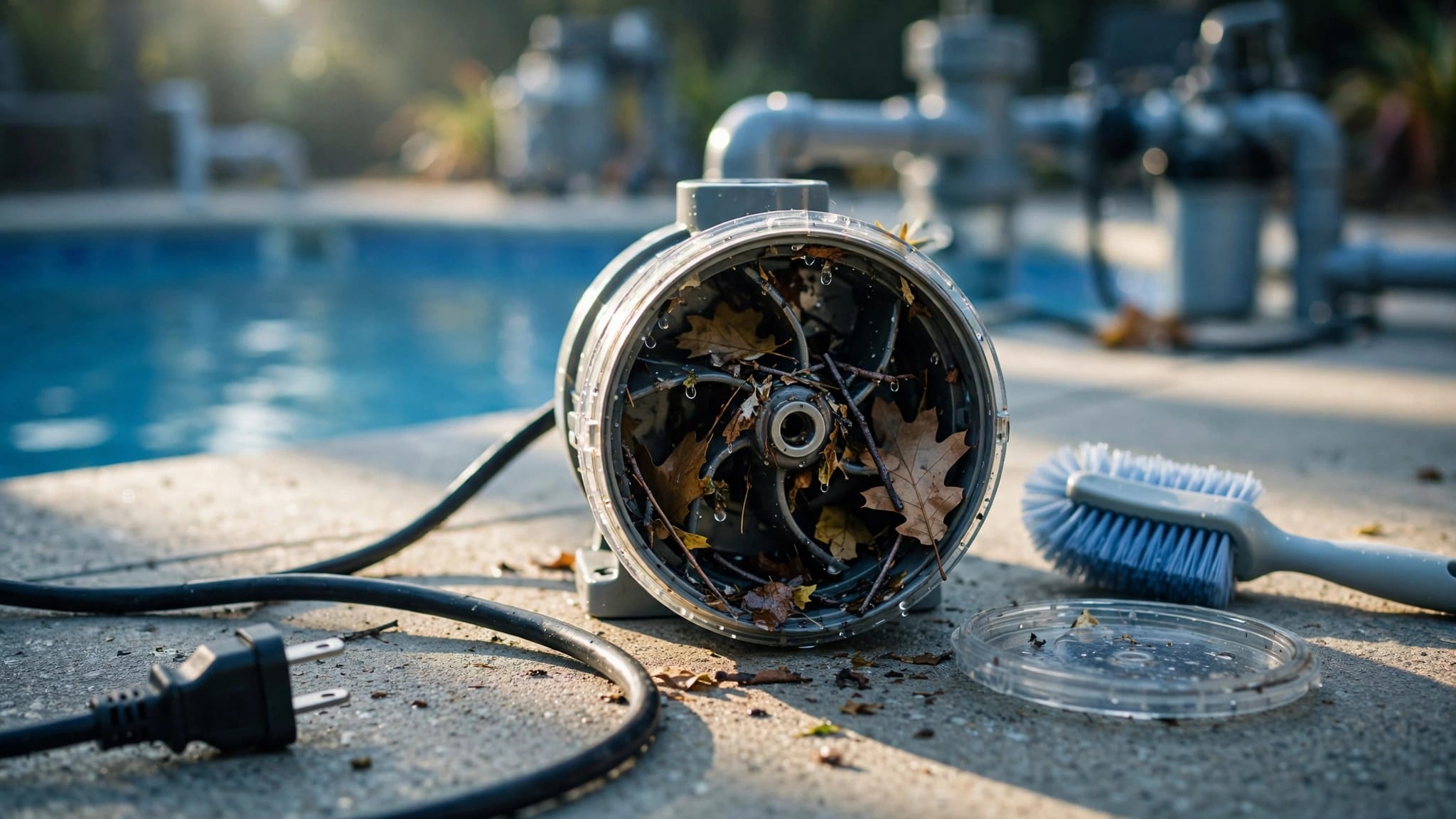
Cartridge filters aren't backwashed. Their routine cleaning usually involves removing the cartridge and rinsing it according to the manufacturer's instructions.
After shutting off power and relieving pressure, follow the manual's removal procedure. Rinse between the pleats with the recommended water pressure. Use only approved cleaning products when deeper cleaning is necessary.
Before reassembly, inspect the element and supporting components. Check that everything fits and seats as the manual shows. If you're unsure whether an element remains serviceable, have a professional assess it before ordering a replacement.
After safe reassembly, follow the startup and air-release procedure. Then observe the returns and record pressure at the normal pump speed.
If dirt still appears, return to the source test. A cleaned cartridge won't prevent yard runoff, windblown dust, or sediment already sitting on the floor.
When comparing equipment upgrades, discuss filtration needs alongside the effort required to remove and clean cartridges. Easier maintenance should suit your property and routine.
DE Filters: Follow the Cleaning and Recharge Instructions
Identify your system's cleaning method
DE filters use a powder coating over internal filtering elements. Their cleaning procedure depends on the filter and valve design.
Some systems use backwashing; others require a different cleaning process. Follow the exact model instructions rather than copying a sand-filter procedure.
After cleaning or backwashing, replenish DE as directed by the manufacturer. Use the specified product and amount, including any distinction between a backwash recharge and a full-cleaning charge.
Add powder through the skimmer only when the manual permits that method. Don't estimate the dose by eye.
Stop when powder comes through the returns
If you see suspected DE powder discharging into the pool, stop the pump and arrange an inspection. Describe when it started, whether the filter was recently serviced, and how it was recharged.
A technician should evaluate the internal assembly and confirm the service procedure before recommending repairs. Continued operation isn't a useful diagnostic test.
Also plan for waste handling. Check current disposal guidance with the City of Cape Coral, Lee County, your waste provider, or a qualified pool professional. Don't assume DE residue or backwash water can enter a storm drain.
Fix Recurring Debris at Its Source
Cape Coral's rain, wind, and landscaping debris can keep introducing particles even when filtration operates normally. A screened enclosure reduces larger debris, but fine dust and pollen can still enter.
Inspect screen panels after storms. Also look for soil washing toward the deck, roof debris collecting nearby, and drainage paths that lead toward the pool.
If debris appears after every heavy rain, address those entry points instead of repeatedly cleaning the filter. Keep deck sweeping and landscaping work from pushing material into the water.
The pool interior deserves attention, too. If loose material or deterioration appears on the finish, arrange an assessment rather than assuming it's ordinary dirt.
For an aging pool, pool renovations and resurfacing can include a broader review of the interior and equipment needs. Document recurring circulation concerns before planning the work.
After any cleaning or correction, recheck the same return and floor area under normal operating conditions. That comparison helps confirm whether the problem remains.
Key Takeaways
A useful diagnosis starts with observation, then moves to the equipment.
- Confirm that particles emerge from the return fitting rather than rise from the floor.
- Check water chemistry, baskets, operating settings, and pressure before choosing a cleaning method.
- Match maintenance to the filter type and manufacturer's instructions.
- Stop for unsafe pressure conditions, equipment leaks, or suspected DE discharge.
Keep a record of cleaning, weather, pressure, and visible debris patterns.
Frequently Asked Questions
Can dirt return even when filter pressure looks normal?
A normal-looking pressure reading doesn't prove the filter is retaining particles correctly. It also doesn't establish that the filter is the source.
Watch the discharge directly and compare conditions with your clean-filter baseline. If visible particles keep emerging from a return, document the pattern and arrange an inspection rather than relying on the gauge alone.
Should I vacuum the dirt to waste?
Vacuuming to waste may help remove settled debris when your system supports that operation. First, confirm the valve procedure and an approved discharge location.
Because this removes pool water, monitor the level and protect the pump from drawing air. Stop the pump before changing valve positions. Systems without a waste option require another removal method.
Will replacing the filter solve recurring dirt?
Replacement won't stop runoff, windblown debris, or sediment stirred up by circulation. Identify the source first.
If inspection shows that equipment work is necessary, compare the proposed repair with replacement based on the actual condition and system requirements. Ask what the work will correct and how the technician will verify clean return water afterward.
Get the Diagnosis Right Before Replacing Equipment
A pool filter blowing dirt needs a source-based diagnosis . Confirm the discharge, check basic operating conditions, and use the maintenance procedure written for your filter.
If particles persist after proper cleaning, review Back Bay Pools' service options and discuss the symptoms alongside any planned renovation or equipment update.
Clear water starts with finding how the debris enters. The right fix follows that finding, rather than another round of guesswork.