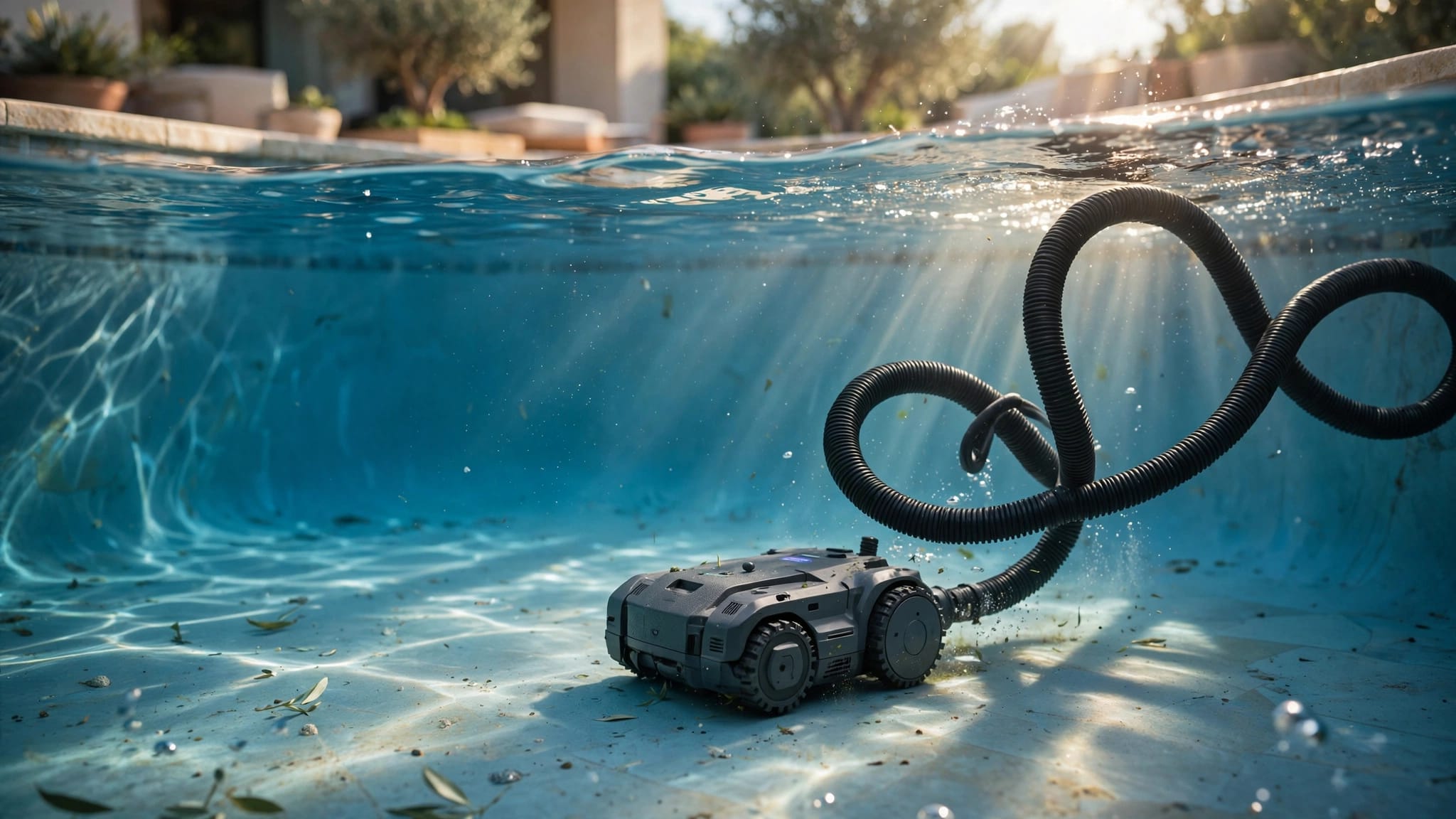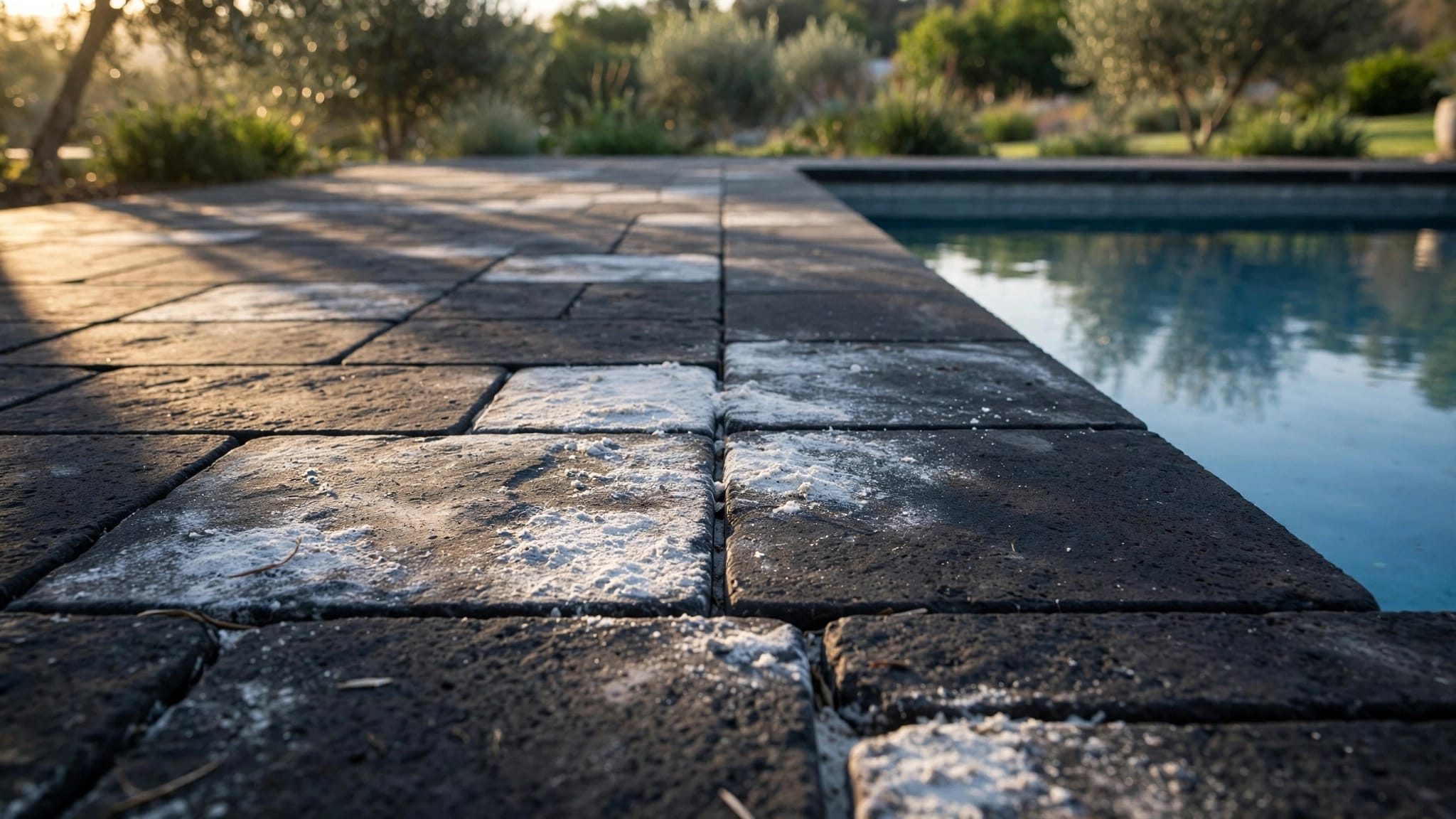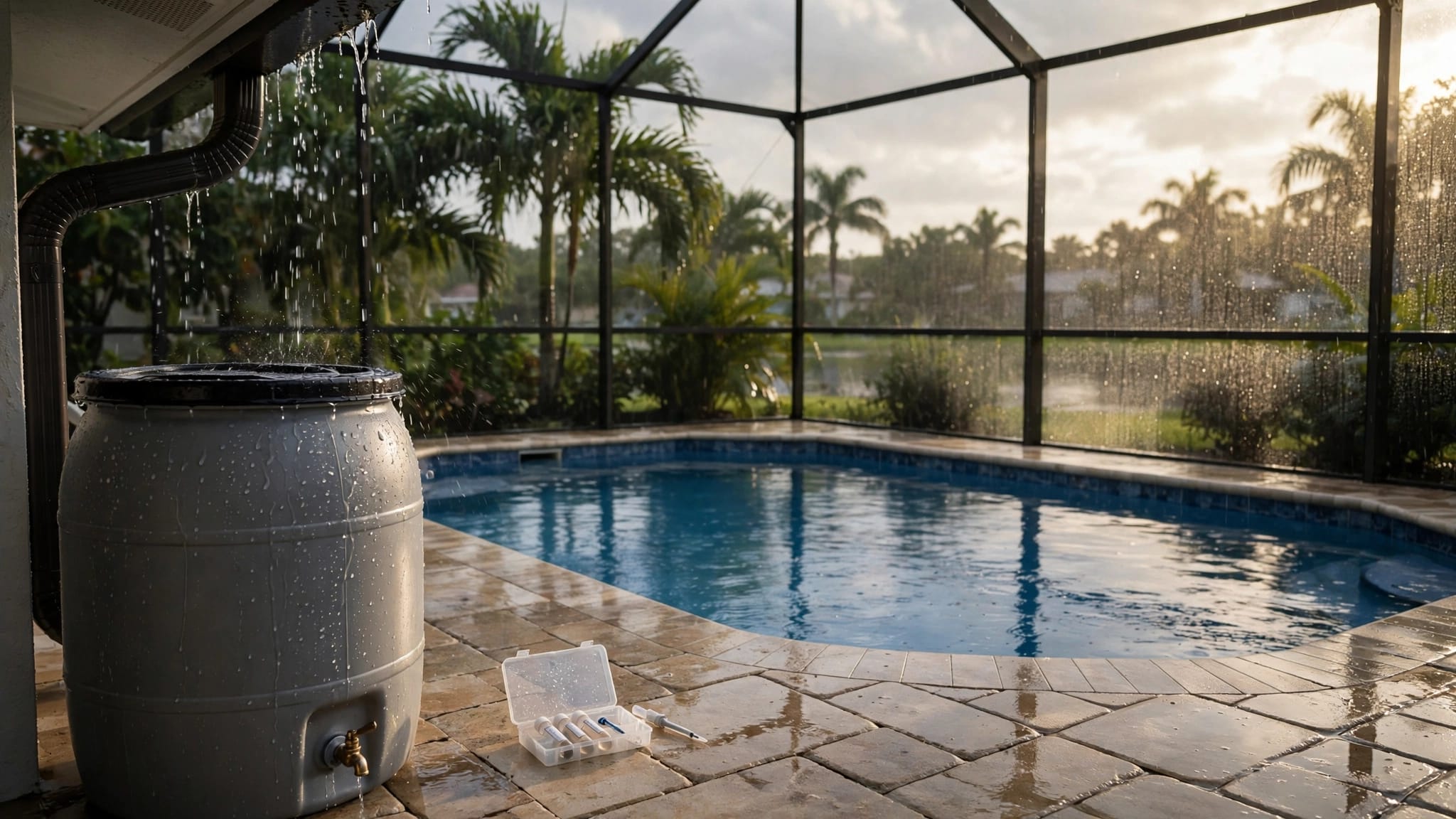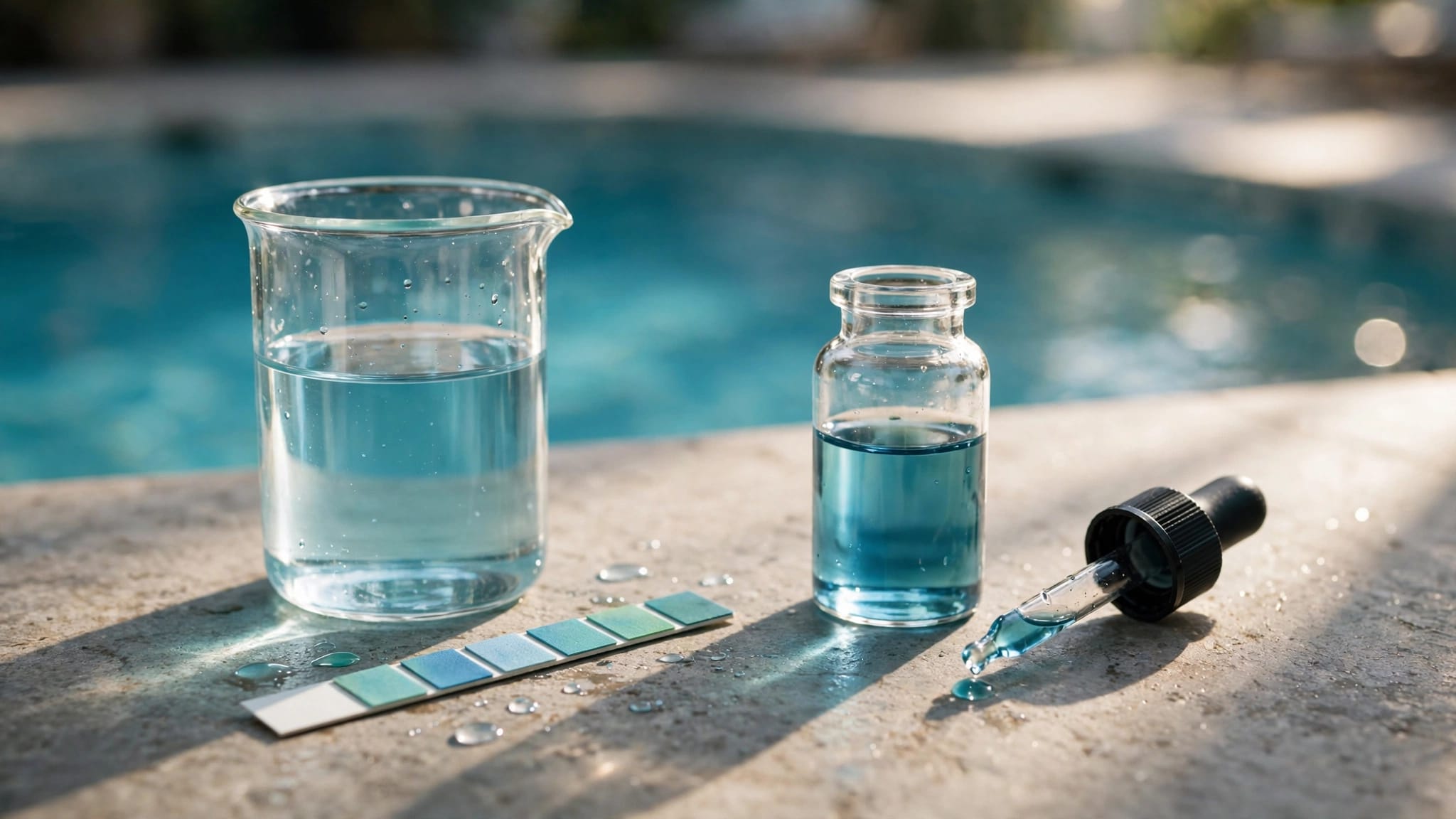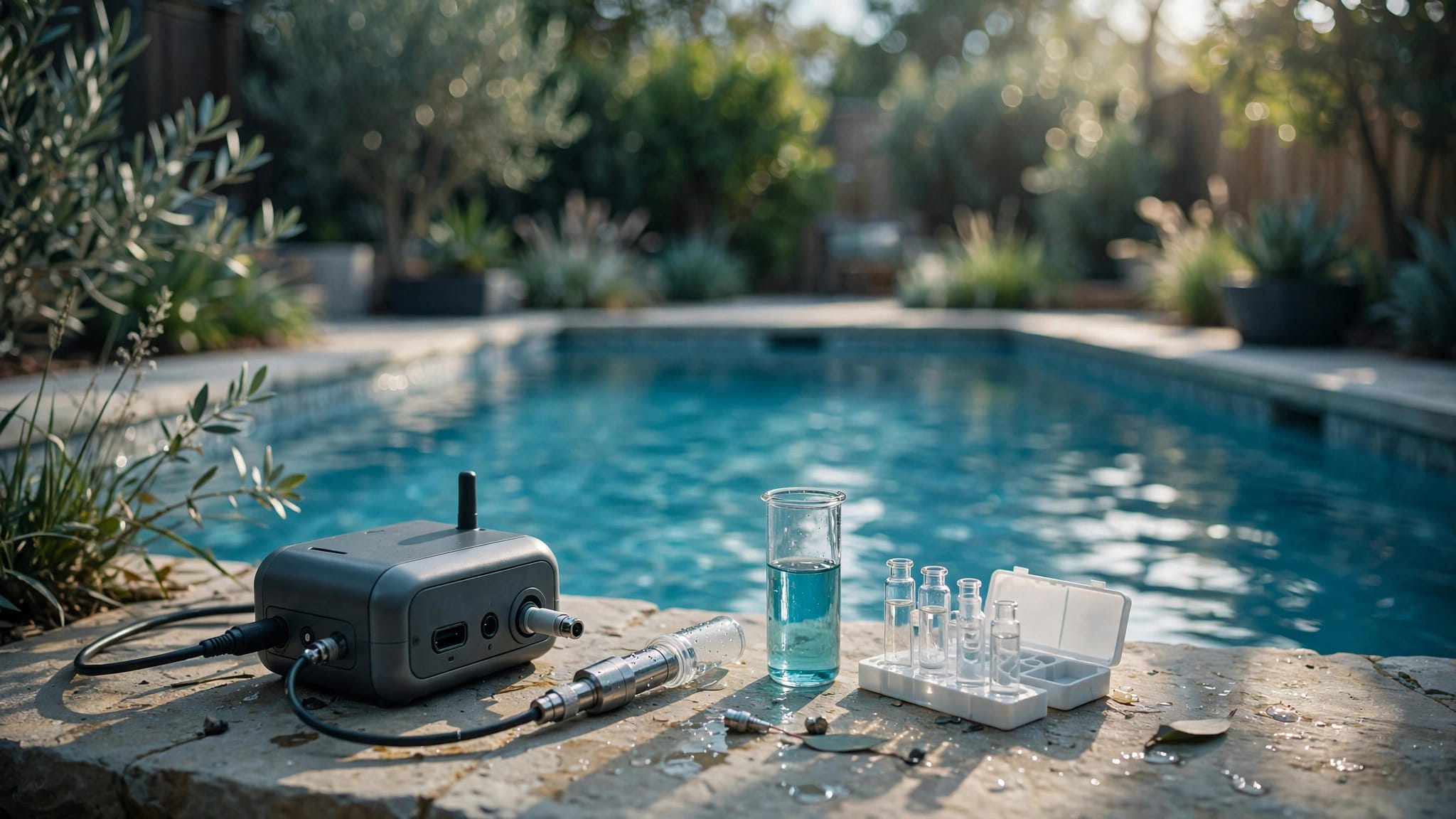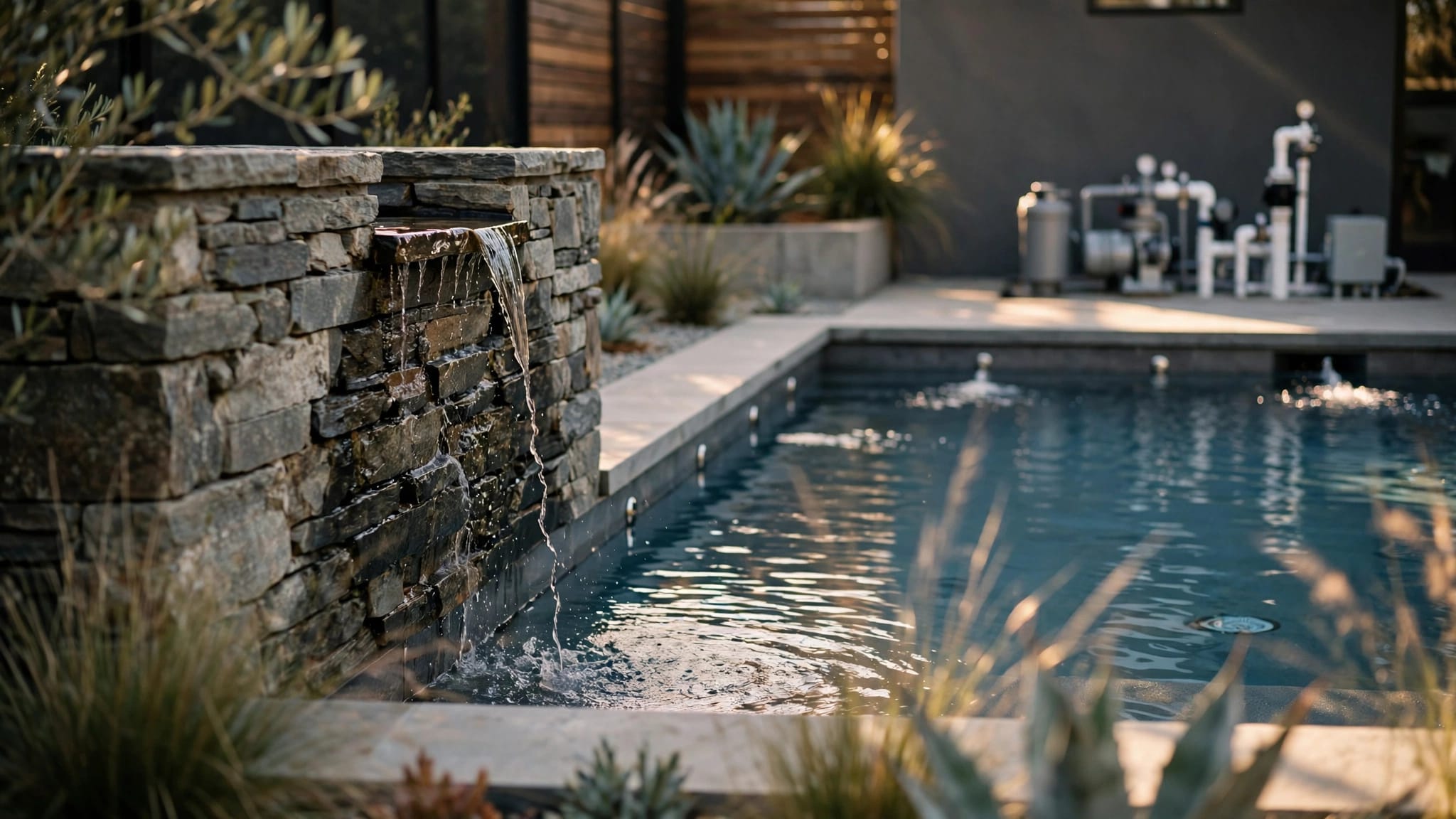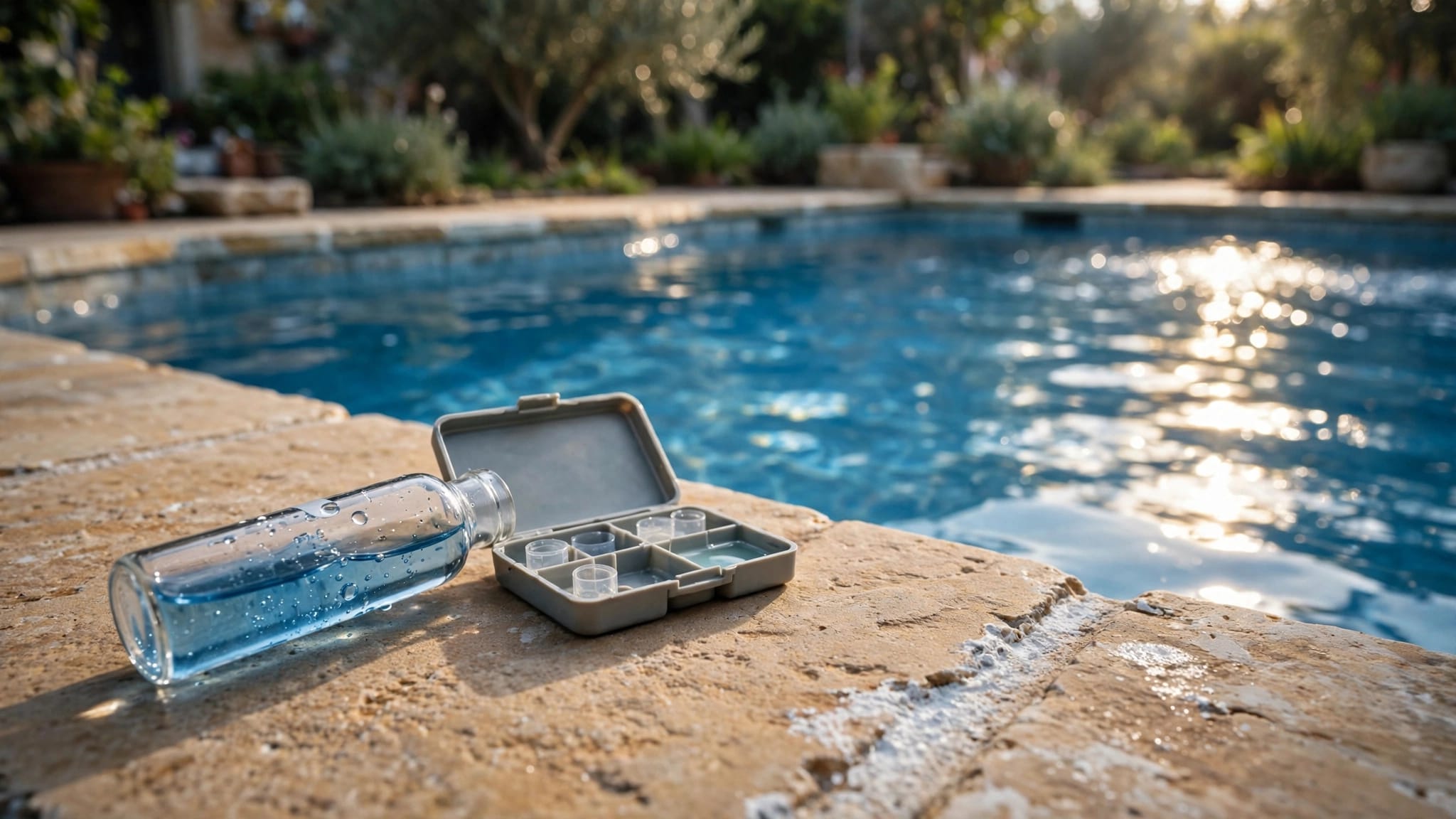
Effective pool pollen removal starts at the surface: skim floating material before brushing, clear the baskets, and watch filter pressure as the water circulates. For heavier deposits on the floor, vacuuming to waste may be an option if your plumbing allows it.
Cape Coral's wind and rain can bring fine debris into screened pools as well as open ones. A clean-filter pressure reading and a few changes to your routine can help you deal with pollen before it builds up.
Key Takeaways
- Skim floating pollen before brushing surfaces, and empty both the skimmer and pump baskets.
- Choose filtration for lighter debris or consider vacuuming to waste for heavier settled material when your system supports it.
- Compare filter pressure with your clean baseline, and clean or backwash the filter when its manufacturer recommends it.
- Keep up with surface cleaning after windy weather and storms, even if your pool has a screen enclosure.
Why Pollen Reaches a Screened Pool
A yellow film can appear along the waterline, gather in corners, or collect near the skimmer. Wind carries pollen and dust into the pool area, while rain can wash additional plant material into the water.
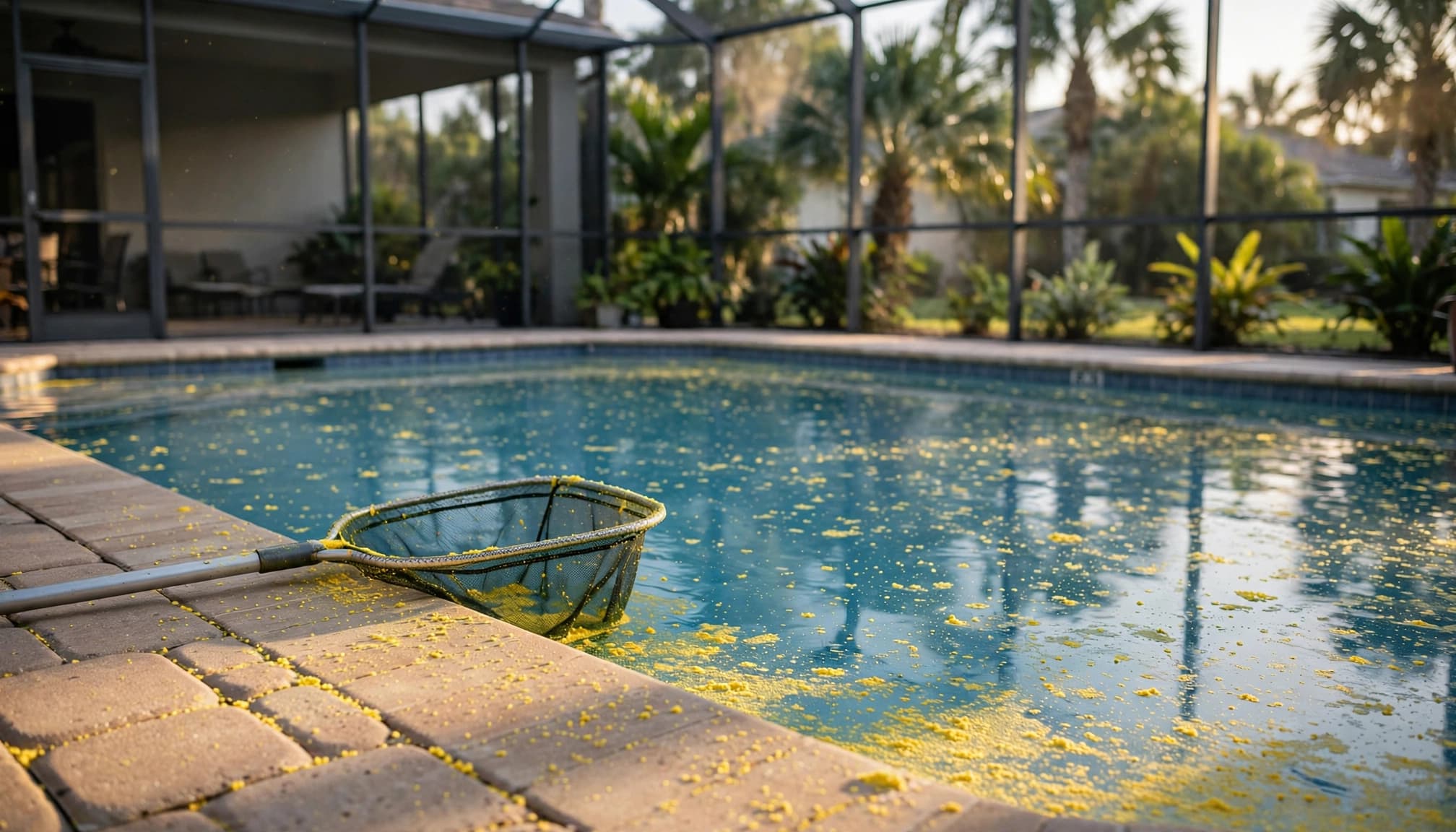
A screen enclosure helps keep out leaves and other large debris, but fine particles can pass through the mesh. Debris can also collect against the enclosure after windy weather.
That means a screened pool still needs regular attention at the waterline and in areas with weaker circulation. Pollen that settles on a bench or step may stay there until you brush or vacuum it.
If you're deciding whether an enclosure fits your yard, our guide to the benefits of pool screen enclosures in Cape Coral covers the options. A screen can reduce your larger debris load, though it won't make the water pollen-free.
Start Pool Pollen Removal at the Surface
Start with the material you can see floating on top. Removing it before brushing keeps you from stirring that surface layer into the water.
Skim before you brush
Use a fine-mesh pool skimmer to collect the yellow film and any larger debris. Give extra attention to the waterline and the areas where wind has gathered the pollen.
After a heavy deposit, you may need to empty the net as you work. Take a look at the surface again once the water has had time to circulate. Wind can move pollen out of corners and into a more accessible area.
Brush settled material afterward
Once you've skimmed, brush the steps, benches, walls, and floor where you see a deposit. Use a brush suited to your pool finish, and avoid aggressive scrubbing that could damage the surface.
Brushing loosens material that has settled out of reach of the surface net. It can also reveal yellow patches that cling to the finish rather than move freely in the water. Those patches may need a closer look, especially if they return after cleaning.
Empty the Skimmer and Pump Baskets
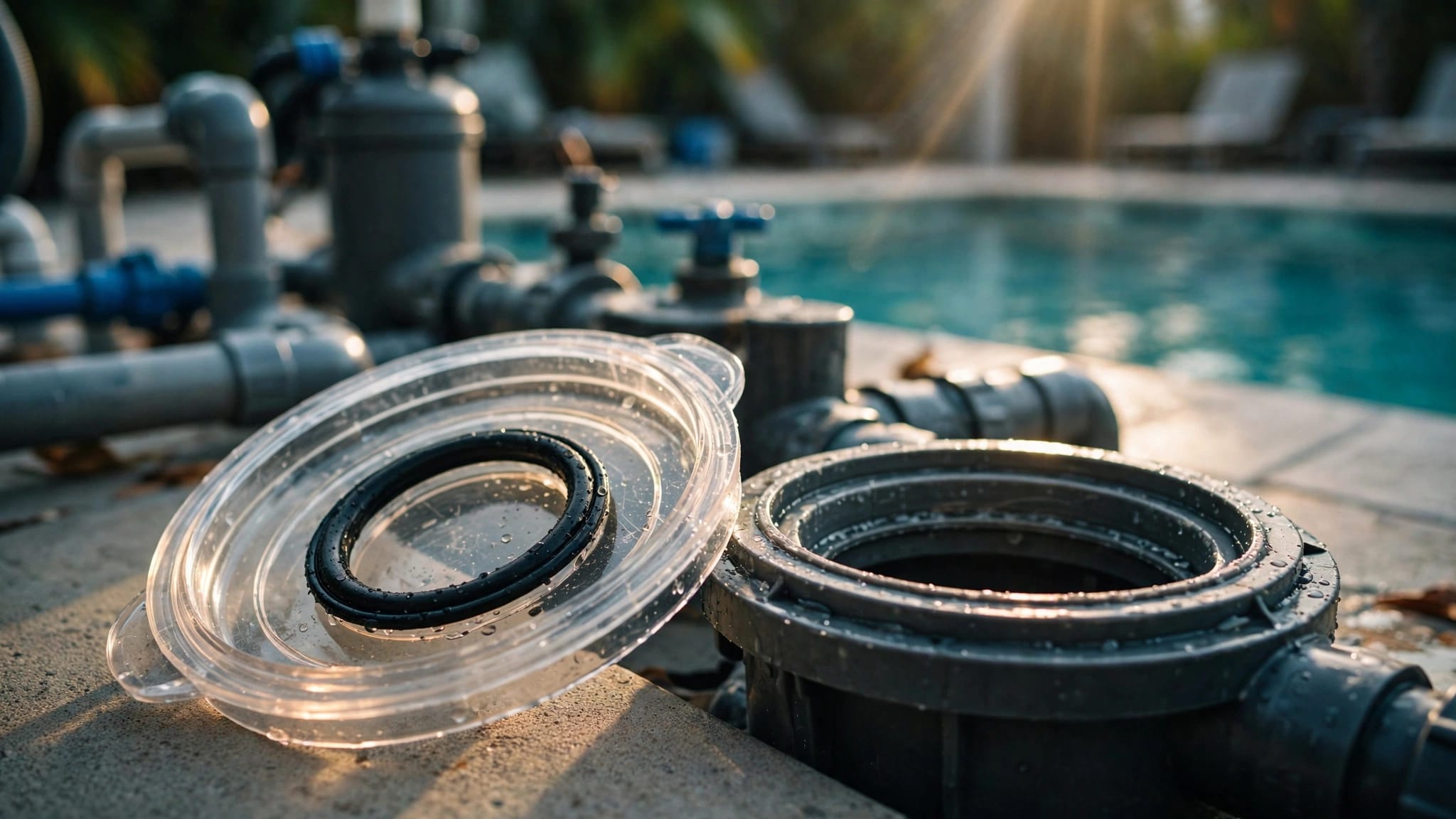
The baskets catch leaves and other larger debris before it reaches the filter. They won't catch every fine particle, but clearing them gives water a better path through the system.
Clear the skimmer basket
Turn off the pump before removing the skimmer basket. Empty the contents, remove any debris caught in the basket, and return it securely before restarting the system.
Keep the water at a level that allows the skimmer to draw water properly. If it falls too low, the pump can draw air instead. After heavy rain or windy weather, take another look at the basket because it may fill faster than usual.
Inspect the pump basket
The pump basket sits ahead of the pump and can collect debris that passes through the skimmer. Shut off power to the pump and follow the equipment instructions for releasing pressure before opening the pump lid.
Once the basket is clean and back in place, secure the lid according to the equipment instructions. If the pump struggles to prime, draws air, or continues to lose flow after the baskets are clean, stop troubleshooting and have a pool professional inspect the system.
Choose How to Remove Settled Pollen
A light dusting and a thick layer of debris don't place the same demand on your equipment. Your filter type and plumbing also affect which vacuuming option is available.
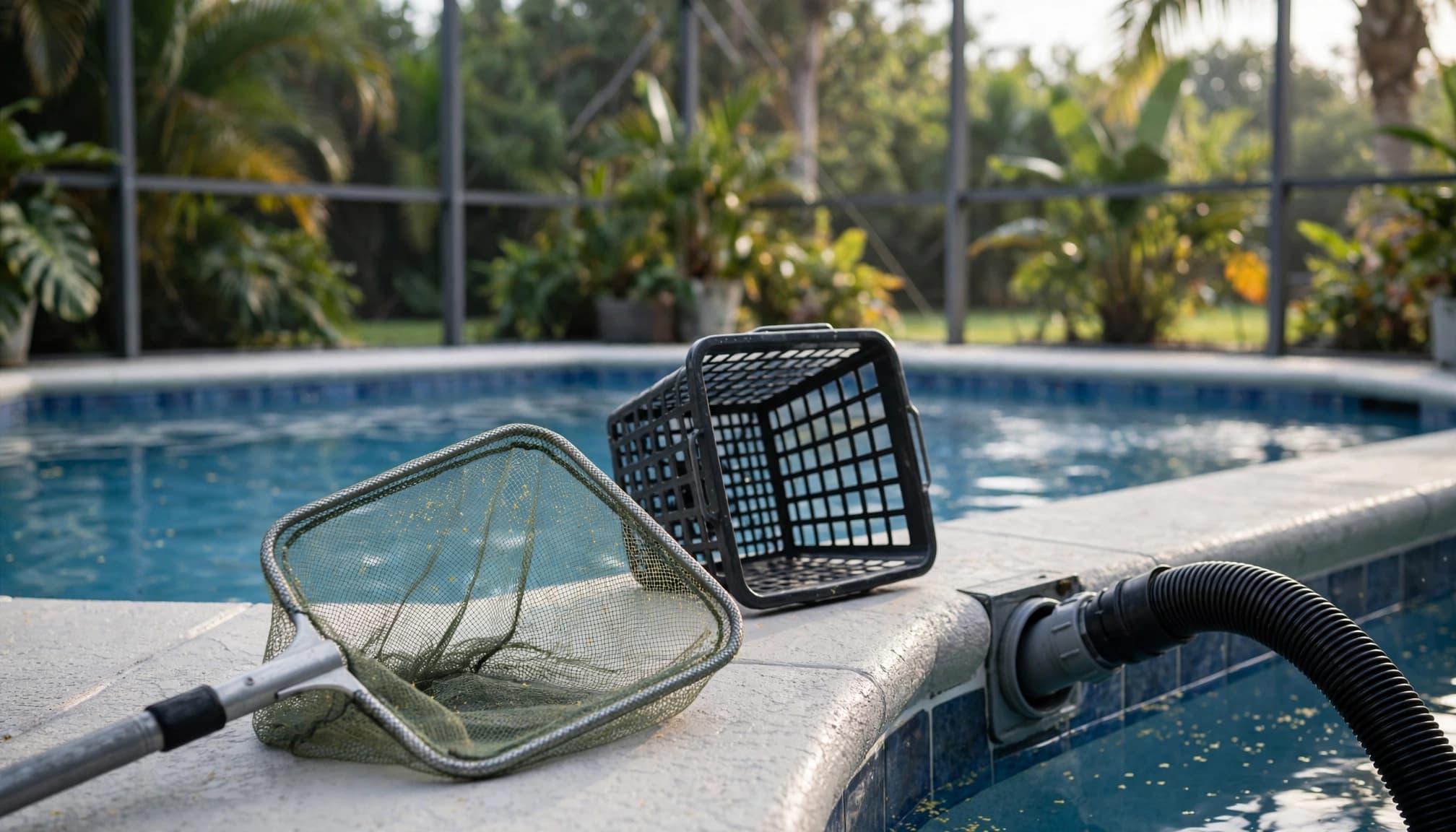
Filtering works for lighter debris
For a small amount of settled material, vacuuming through the normal filtration system is an option. The water returns to the pool after passing through the filter.
Watch the pressure gauge and return flow while the system runs. If pressure climbs or flow weakens, the filter may need attention sooner than it would during an ordinary cleaning. Clean the baskets again if they've collected substantial debris.
Vacuuming to waste sends water out
For a heavier settled deposit, vacuuming to waste sends the removed water and debris out of the pool rather than through the filter. This option requires plumbing that supports waste discharge. Many cartridge systems don't have a standard waste setting.
Vacuuming to waste lowers the pool's water level, so avoid letting it drop below the skimmer opening. Discharge water only to an appropriate, permitted location, not into a canal or storm drain. If your system doesn't have a waste option, use normal filtration and pay close attention to the filter as it collects debris.
Watch Filter Pressure and Return Flow
Your pressure gauge is more useful when you know what the system reads with a clean filter. Record that baseline after cleaning, with the pump running under its normal settings.
Compare pressure under the same conditions
A reading above the clean baseline can indicate that debris is collecting in the filter. Clean or backwash when the increase reaches the threshold in your filter manufacturer's instructions. There isn't one clean-pressure number that fits every pool.
Pump speed matters too. A variable-speed pump can show different pressures at different settings, so compare readings taken at the same speed. After an equipment change, record a new clean baseline for the updated system.
Notice changes in circulation
Weaker return flow, a filter that reaches its cleaning threshold quickly, and water that stays cloudy can all point to a system under strain. High pressure is one sign, but it doesn't identify every problem.
Low pressure and weak flow can point to a restriction before the pump, low water, or air entering the system. If cleaning the baskets and filter doesn't restore normal operation, a pool professional can look for the cause. Don't keep running a struggling pump in the hope that it will clear the water.
Clean the Filter for Its Type
Sand, cartridge, and diatomaceous earth (DE) filters collect debris differently. Each needs its own cleaning approach, so identify your filter before starting maintenance.
Cartridge filters
Cartridge filters contain removable elements that need cleaning rather than backwashing. When the filter reaches its cleaning threshold, shut down the system and release pressure before opening the tank. Follow the manufacturer's directions for cleaning and reinstalling the elements.
Inspect the cartridge while it's out. Torn material or damaged components may need replacement rather than another rinse. Our comparison of cartridge and sand pool filters explains more of the differences between the two.
Sand filters
A sand filter uses filter media inside the tank. When its pressure reaches the manufacturer's cleaning threshold, backwashing reverses water through the media and sends the dirty water out through the waste line.
Backwashing removes pool water, so pay attention to the water level and discharge location. Follow the instructions for your valve and equipment, and never move a multiport valve while the pump is running.
DE filters
DE filters use a coating of diatomaceous earth on internal filter elements. Many models can be backwashed, though they also need periodic internal cleaning. Follow your model's instructions for adding the correct amount of DE after cleaning.
DE handling requires care because the dry powder can irritate your lungs. Our guide to DE pool filtration in Cape Coral covers the maintenance tradeoffs in more detail.
Prevent Another Heavy Buildup
A short routine is easier than waiting for a thick yellow layer to settle. During periods of visible pollen, look at the surface and baskets more often. After a storm, remove leaves and other debris before they sit in corners or against the waterline.
Keep the pump on its normal circulation schedule and compare the gauge with your clean baseline. Check the steps and benches as well as the open water. Those areas can collect material even when the center of the pool looks clear.
The enclosure deserves attention, too. Clear accumulated debris around it, and address torn or loose screen panels when you notice them. Our tips for cleaning pool cage screens safely can help you remove surface dirt without damaging the mesh.
A rescreen can address damaged panels, although even intact mesh won't block all pollen. If you're considering an enclosure or rescreen for your Cape Coral pool, Get a Free Estimate for an on-site consultation with us.
Frequently Asked Questions
Is yellow material in the pool always pollen?
No. Yellow material can also be dust, dirt, or algae. Pollen often floats or collects at the waterline, while a patch that clings to a surface and returns after brushing deserves closer attention. A pool professional can help identify a persistent deposit.
Should I backwash every time I remove pollen?
Not necessarily. Use the pressure reading and your filter manufacturer's cleaning threshold to decide when the filter needs attention. Cartridge filters aren't backwashed, and a heavy debris load can require attention sooner than a light one.
Keep Pollen Removal Manageable
The best place to start is the surface. Skim before brushing, keep the baskets clear, and choose a vacuuming method that fits your equipment and the amount of settled debris.
Your clean-pressure baseline helps you recognize when the filter needs attention. With regular checks after windy weather and storms, you can address pollen before a light film becomes a larger cleanup.