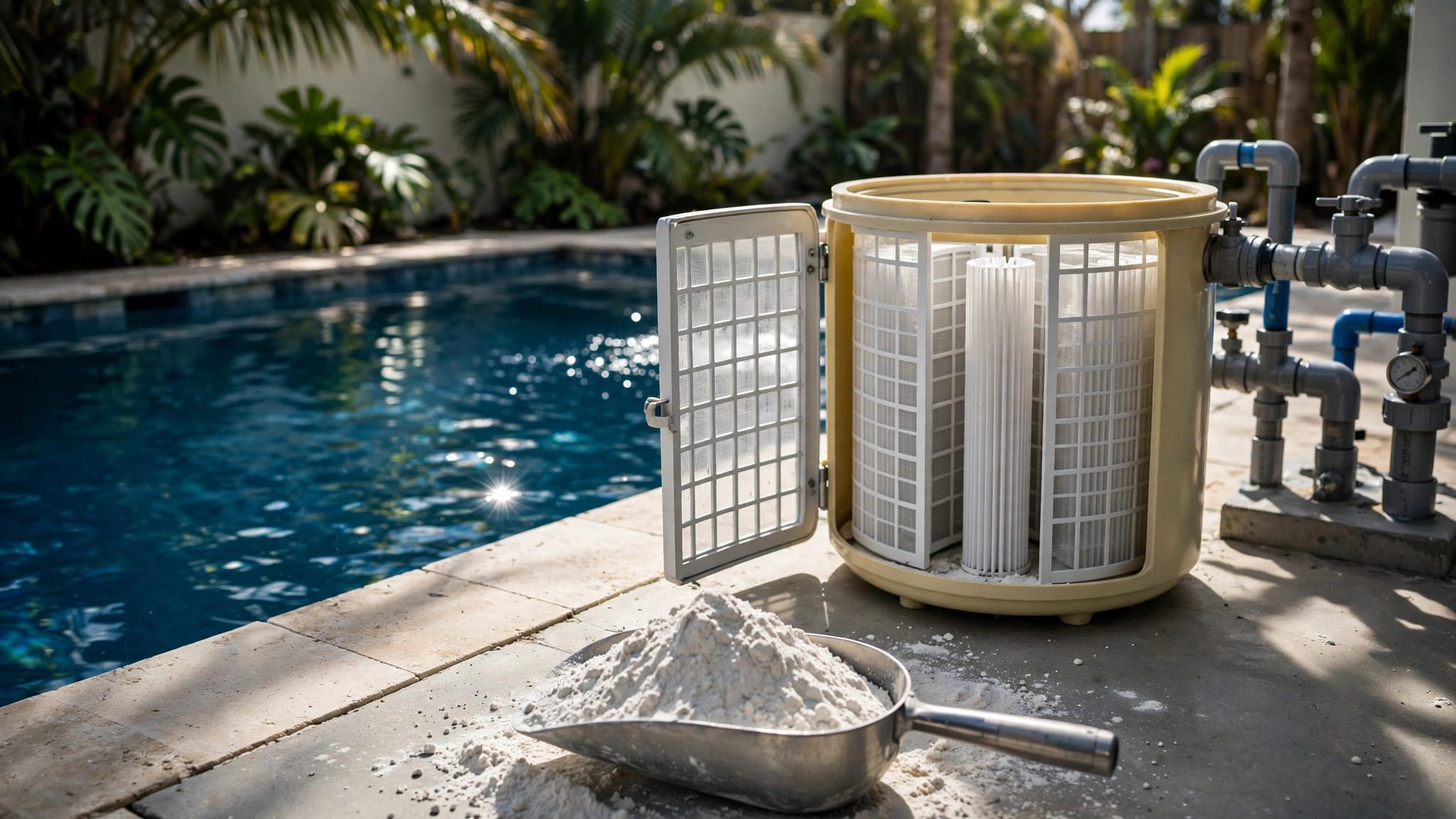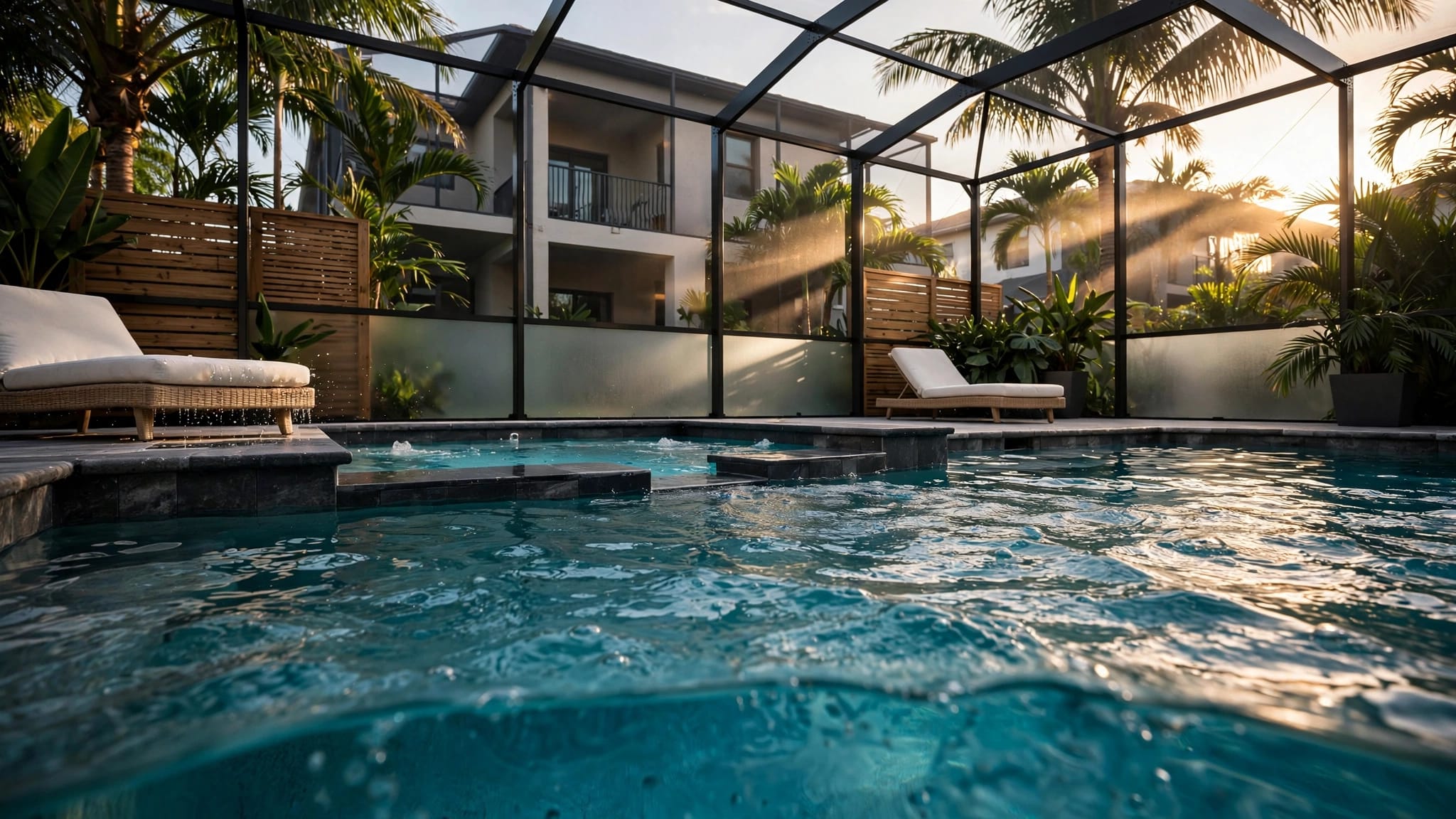
A dirty pool cage can make an otherwise beautiful backyard look neglected. Dust, pollen, salt, algae, and insect debris collect in the mesh, while Florida rain can leave mineral spots on the frame.
Learning how to clean pool cage screens safely helps protect the mesh and keeps your pool area brighter. The right method uses low water pressure, mild soap, and a soft brush rather than aggressive scrubbing or power washing. Start with the tools and conditions that make the job safer.
Why Pool Cage Screens Need Gentle Cleaning
Pool screen mesh is durable, but it can tear, stretch, or pull away from the frame when handled roughly. Older screens become more fragile after years of sun exposure. A stiff brush, strong spray, or ladder accident can turn a simple cleaning job into a repair.
The aluminum frame needs care, too. Harsh chemicals may discolor the finish, damage nearby plants, or leave residue on the deck. Salt carried by coastal air can also collect around joints and fasteners. Removing that buildup regularly helps you spot loose screws, corrosion, and damaged spline before the problem spreads.
Cleaning works best on a cloudy day or during the cooler part of the morning. Direct sunlight can dry soapy water before you rinse it away, leaving streaks on the mesh and frame. Turn off the pool pump if falling debris could enter the water, and cover delicate outdoor furniture nearby.
Before starting, inspect the enclosure from the ground. Look for:
- Torn panels, loose seams, and sections that sag.
- Bent frame members or sharp exposed edges.
- Loose spline around the screen perimeter.
- Stains that may need repair instead of stronger cleaning.
- Doors that stick or no longer close correctly.
A screen that already has a tear can enlarge during washing. Mark damaged areas before you begin and avoid brushing them.
Gather Safe Tools Before You Start
You don't need specialized equipment to wash most pool cages. A standard garden hose with an adjustable nozzle, a bucket, and a soft-bristled brush are enough for routine dirt. Choose a brush designed for vehicle washing, siding, or delicate outdoor surfaces. The bristles should flex easily when you press them against your palm.
A telescoping extension pole can help with high panels. Use one that holds the brush securely, and keep both feet on the deck whenever possible. Avoid climbing onto the pool cage, leaning an unsecured ladder against the frame, or reaching beyond your balance.
Use a small amount of mild dish soap in clean water. Avoid abrasive powders, strong degreasers, solvent-based products, and concentrated chlorine cleaners. Test any cleaner on a hidden corner first, then rinse the area completely. Even a product that appears safe on mesh may affect the aluminum finish or nearby painted surfaces.
Your basic supplies should include:
- A garden hose with a gentle spray setting.
- A bucket of warm water and a small amount of mild soap.
- A soft-bristled brush or microfiber mitt.
- A telescoping pole for high sections.
- A soft cloth for frame joints and door hardware.
- Protective eyewear and non-slip footwear.
Keep a second bucket of clean water nearby if the enclosure has heavy dirt. Rinsing the brush often prevents you from spreading grit across the screens. Remove watches, jewelry, or anything else that could catch the mesh while you work.
How to Clean Pool Cage Screens Step by Step
Work from the highest panels downward. That order allows dirty water to flow over areas you haven't washed yet, so you won't have to clean the same section twice.
1. Remove loose debris first
Start by clearing leaves, spider webs, and large insect nests from the frame. A soft duster or dry microfiber cloth works well around corners. Move slowly near the mesh, since a sweeping motion with a web tool can snag the screen.
Next, rinse the enclosure with the hose set to a gentle fan or shower pattern. Stand several feet away and spray at an angle instead of pointing directly into the mesh. Let the water loosen dust and pollen, but don't force the nozzle close to the screen.
Avoid using a pressure washer. Even a lower setting can push water and dirt through the mesh, stretch the fabric, or separate the screen from its spline. The frame may also flex under a concentrated spray.
2. Wash one manageable section
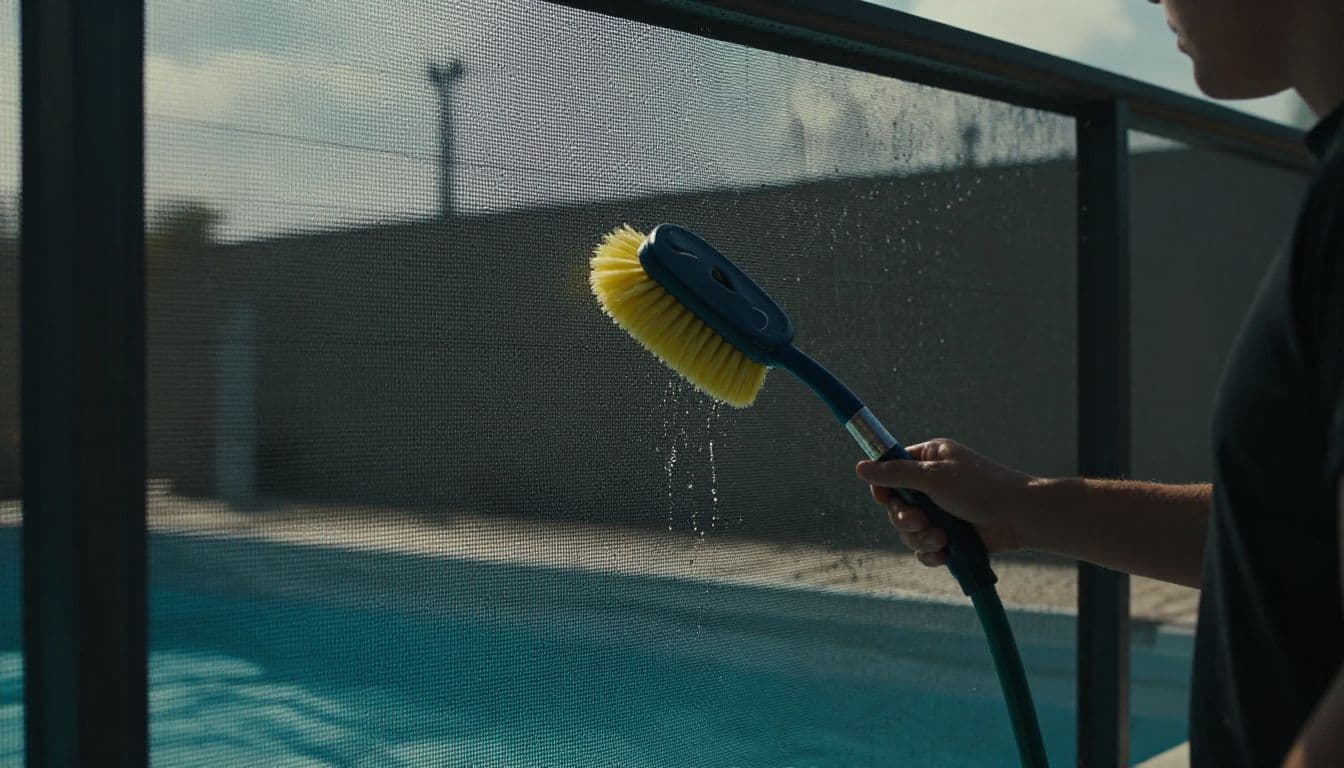
Dip the soft brush into the soapy water and begin with a small panel near the bottom. Work in light, overlapping strokes. Use enough pressure to lift dirt, but don't scrub back and forth aggressively.
For large enclosures, clean sections that are roughly several feet wide. This keeps the soap from drying and gives you a clear stopping point if the weather changes. Rinse the brush after each panel, especially when cleaning screens near landscaping or a dusty deck.
When using an extension pole, keep the brush head flat against the screen. A tilted brush can catch the mesh or press one edge into the fabric. Don't push hard to reach a stubborn spot. Move closer, adjust the pole, or leave the high section for a second pass.
3. Rinse from the top down
Rinse each washed section before moving on. Use a broad spray and keep the hose moving. Start at the top edge, then work downward so loosened grime leaves the enclosure instead of settling on a clean panel.
Pay attention to horizontal frame members. Dirt often collects where the mesh meets the aluminum. Rinse both sides of the frame when accessible, but don't spray directly into door locks, electrical fixtures, or pool equipment.
If you see soap bubbles collecting on the deck, continue rinsing until the water runs clear. Soap residue can make surfaces slippery and may leave a film on the frame.
4. Clean the frame and doors
After washing the mesh, wipe the aluminum frame with a soft cloth or sponge. Use the same mild soap solution and rinse it soon afterward. Focus on lower rails, corners, door thresholds, and areas near sprinklers.
Clean door hinges and tracks with a damp cloth rather than flooding them. Remove grit from the track, then check whether the door closes smoothly. A sticking door may need adjustment or hardware service, not more water.
Never force a screen door that drags. The pressure can bend the frame or loosen the mesh around the door opening.
5. Let the enclosure dry and inspect it
Allow the screens to air-dry, then walk around the pool cage again. Drying makes small tears and loose edges easier to see. Check corners, roof panels, and sections that receive strong afternoon sun.
If the mesh looks stretched, has open holes, or pulls away from the frame, stop cleaning that area. A small repair may solve the problem, but repeated washing won't restore weakened screen fabric.
Removing Algae, Mold, and Stubborn Spots
Green growth usually appears where moisture and shade remain for long periods. Begin with the mild soap method and give the solution a few minutes to loosen the film. Then brush lightly and rinse well.
Don't scrape algae with a blade or hard plastic tool. Those tools can cut the mesh even when the stain seems stuck. Avoid mixing cleaning products, especially products that contain chlorine, ammonia, or acids. The combination can create dangerous fumes and damage the enclosure.
White spots on aluminum may come from mineral deposits or sprinkler spray. A mild soap solution may remove fresh residue, but hardened deposits require caution. Don't apply acidic cleaners without checking the enclosure manufacturer's guidance. They can affect the finish and damage nearby concrete, stone, plants, or pool surfaces.
For heavy mold, persistent staining, or a large enclosure, a professional cleaning service may be safer than experimenting with stronger chemicals. The same applies when the cage sits over a deep pool or has roof panels that you can't reach from the deck.
When Cleaning Won't Fix the Problem
Cleaning removes surface dirt, but it can't repair torn mesh, brittle fabric, or damaged framing. If a panel has a small hole, a screen repair may be possible. Larger tears, repeated sagging, or loose spline often point to the need for panel replacement.
The frame's condition determines whether a rescreen or a new enclosure makes more sense. A straight, stable aluminum cage may only need replacement mesh. Corrosion, bent members, failing doors, or a layout that no longer works can call for more extensive work.
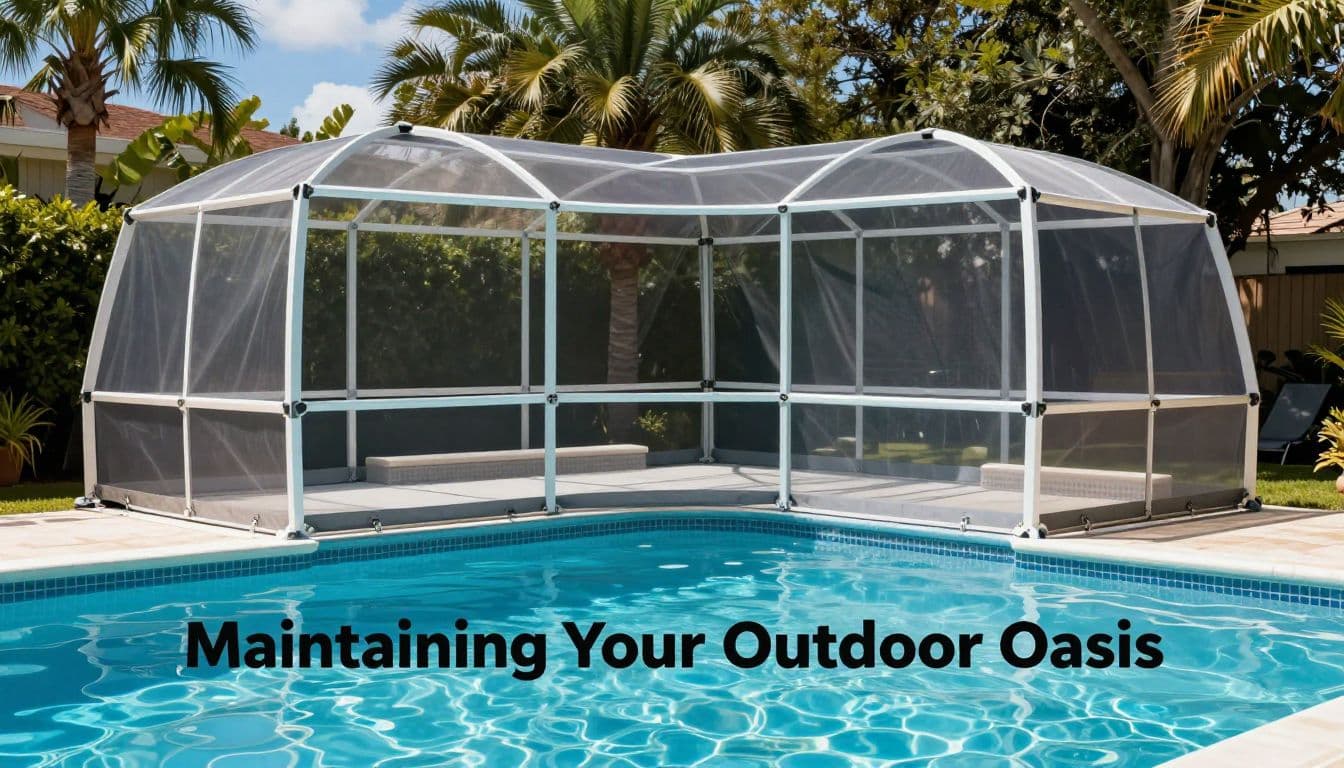
Back Bay Pools offers screen enclosures and rescreens in Cape Coral, including different mesh options for household needs. For example, stronger Super Screen can suit active homes, while No-See-Um mesh provides smaller openings for areas with tiny insects. Florida Glass is another option for lower sections where homeowners want more protection from splashes, grass clippings, and debris.
A full rescreen also makes sense when many panels fail at once. Cape Coral homeowners can review factors that affect pool rescreen cost in Cape Coral for 2026, including enclosure size, screen type, height, and frame repairs.
Schedule cleaning at least once or twice a year, then add a light rinse after dusty weather, storms, or heavy pollen. Homes near saltwater may need more frequent rinsing because salt residue can settle on both mesh and aluminum. Trim branches away from the enclosure, repair sprinkler overspray, and remove leaves before they stay wet against the screen.
Keep Your Pool Cage Clean Without Damage
The safest way to clean pool cage screens is simple: rinse gently, use mild soap, brush with light pressure, and work from the top down. Skip pressure washers, abrasive tools, and harsh chemicals that can weaken the mesh or mark the frame.
Regular washing helps your enclosure look better, but inspection matters just as much. When tears, sagging, corrosion, or sticking doors appear, professional repairs can prevent a small defect from becoming a full replacement. If your cage needs new mesh or a closer assessment, you can Get a Free Estimate for an on-site consultation.