Brown pool water after shocking can come from metals already in the water, including iron. However, dirt, organic debris, and algae-related contamination can also affect its appearance, so the color alone doesn't establish the cause.
A sudden change after adding shock is a reason to test before adding more chemicals . Extra sanitizer won't remove metals, and unnecessary products can complicate the cleanup.
Start by separating a water-quality problem from surface staining, then let the test results guide your next step.
Key Takeaways
- Metals are one possible cause of brown discoloration, but timing and color aren't enough to confirm them.
- Test sanitizer, water balance, and metals before choosing a chemical treatment.
- Remove debris and support filtration while investigating the cause.
- Keep swimmers out when visibility is poor or chemistry falls outside the sanitizer label's swimming requirements.
- Get professional help for persistent discoloration, spreading stains, or suspected equipment corrosion.
What Brown Pool Water After Shocking Can Mean
Metals may have been present beforehand
Iron is a possible source of rust-colored water and orange-brown stains. Metals can enter through fill water or corroding metal components, and their presence isn't always obvious before discoloration appears.
A recent top-off, well-water refill, or visible corrosion provides useful context. Still, none of those clues proves that iron caused the change.
Sanitizer controls algae and helps break down organic contamination, but it doesn't remove metals . That distinction matters when deciding whether another chemical addition would address the problem.
Debris and algae can create similar appearances
Leaves, soil, and other debris can make water look muddy or tea-colored. Meanwhile, algae and suspended particles can produce cloudy water that looks brown against the pool's finish.
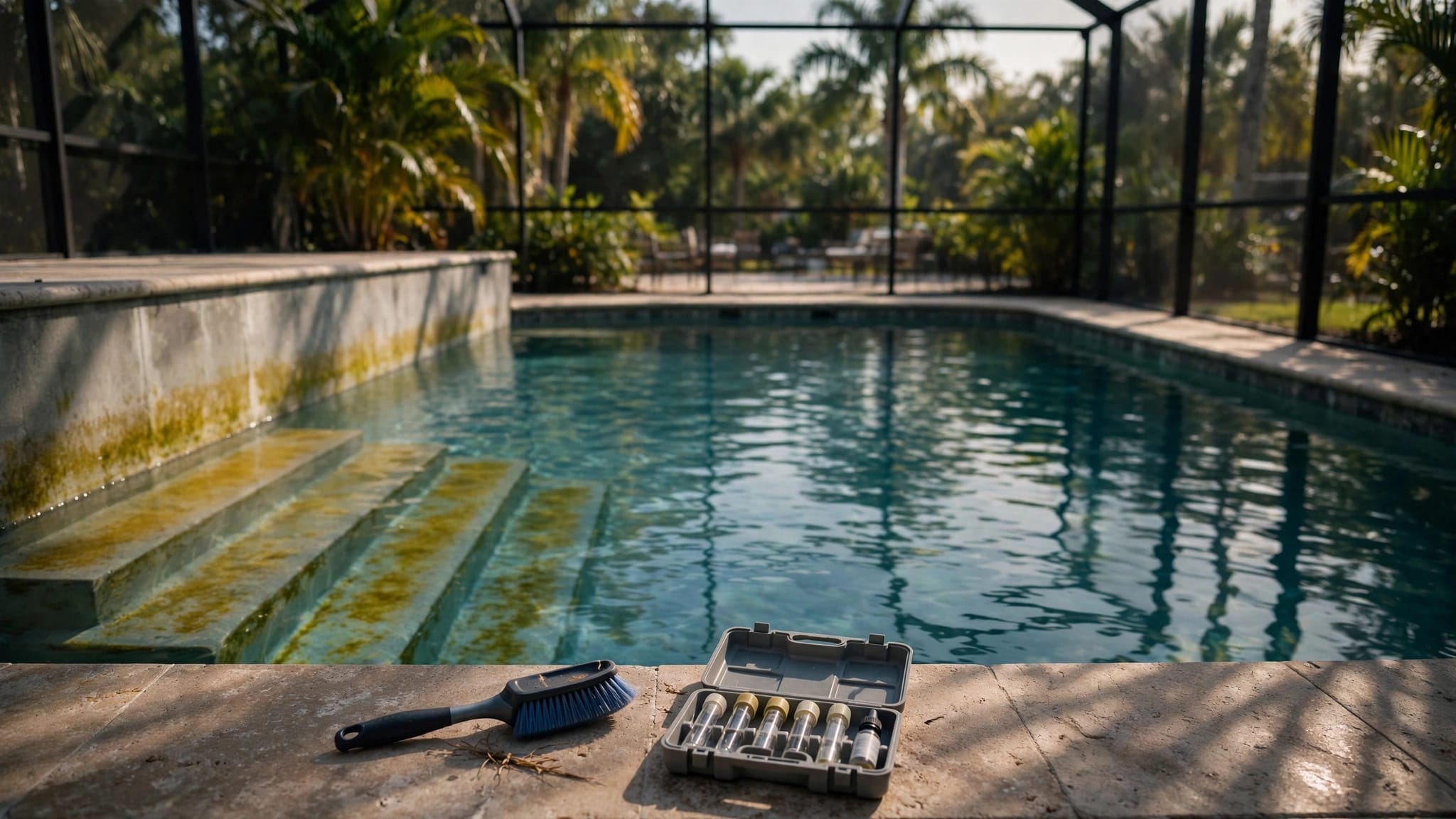
Mustard algae may resemble yellow dust on steps, walls, and shaded areas. Pollen and dirt can look similar, so a dusty coating doesn't justify an algae diagnosis by itself.
Consider what happened before shocking. Heavy rain, landscaping runoff, accumulated leaves, or poor circulation may point toward another explanation. If testing supports an algae problem, follow a targeted plan for recovering green pool water rather than treating color alone.
How to Test the Water and Identify the Cause
Get a complete chemistry picture
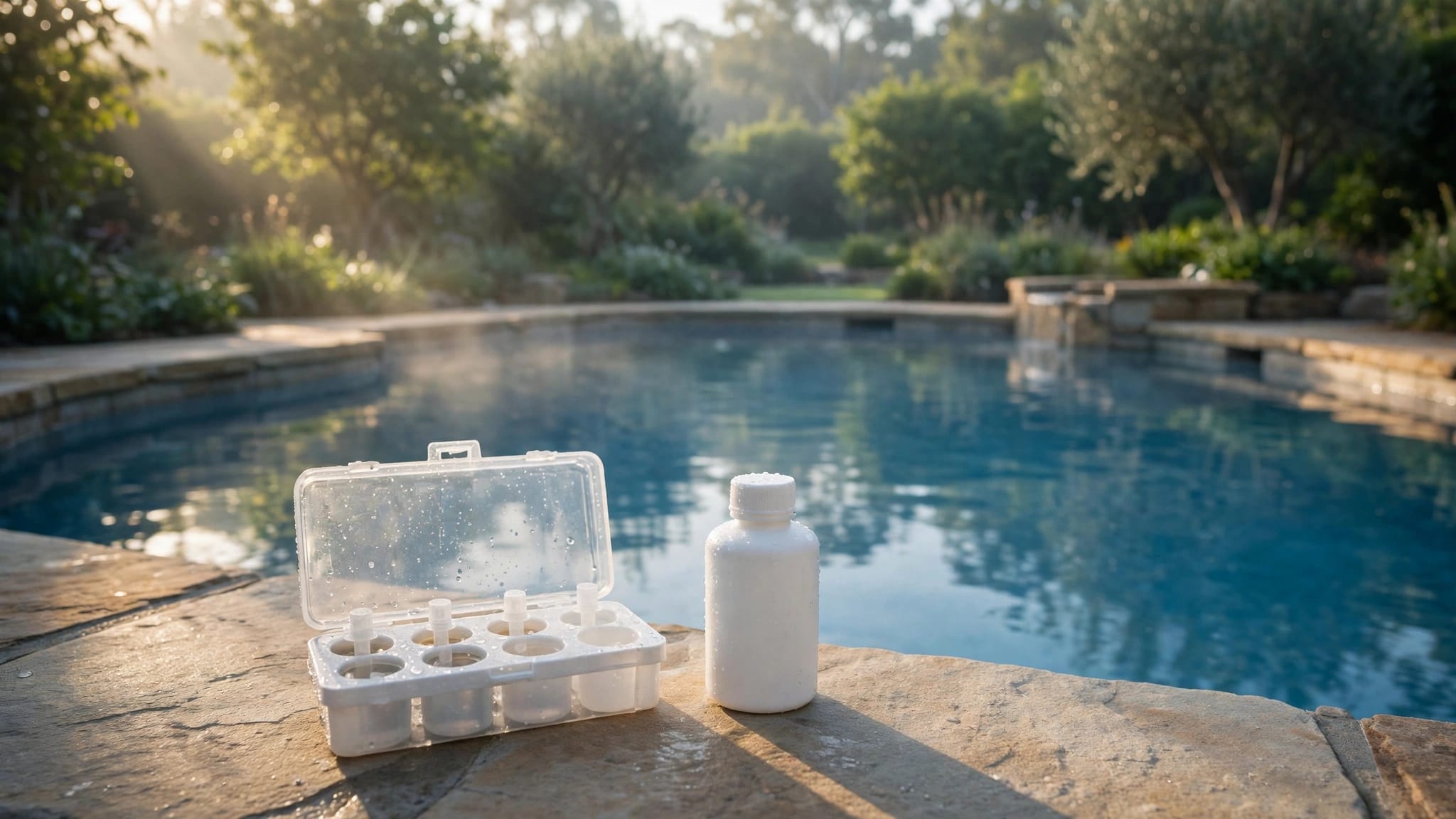
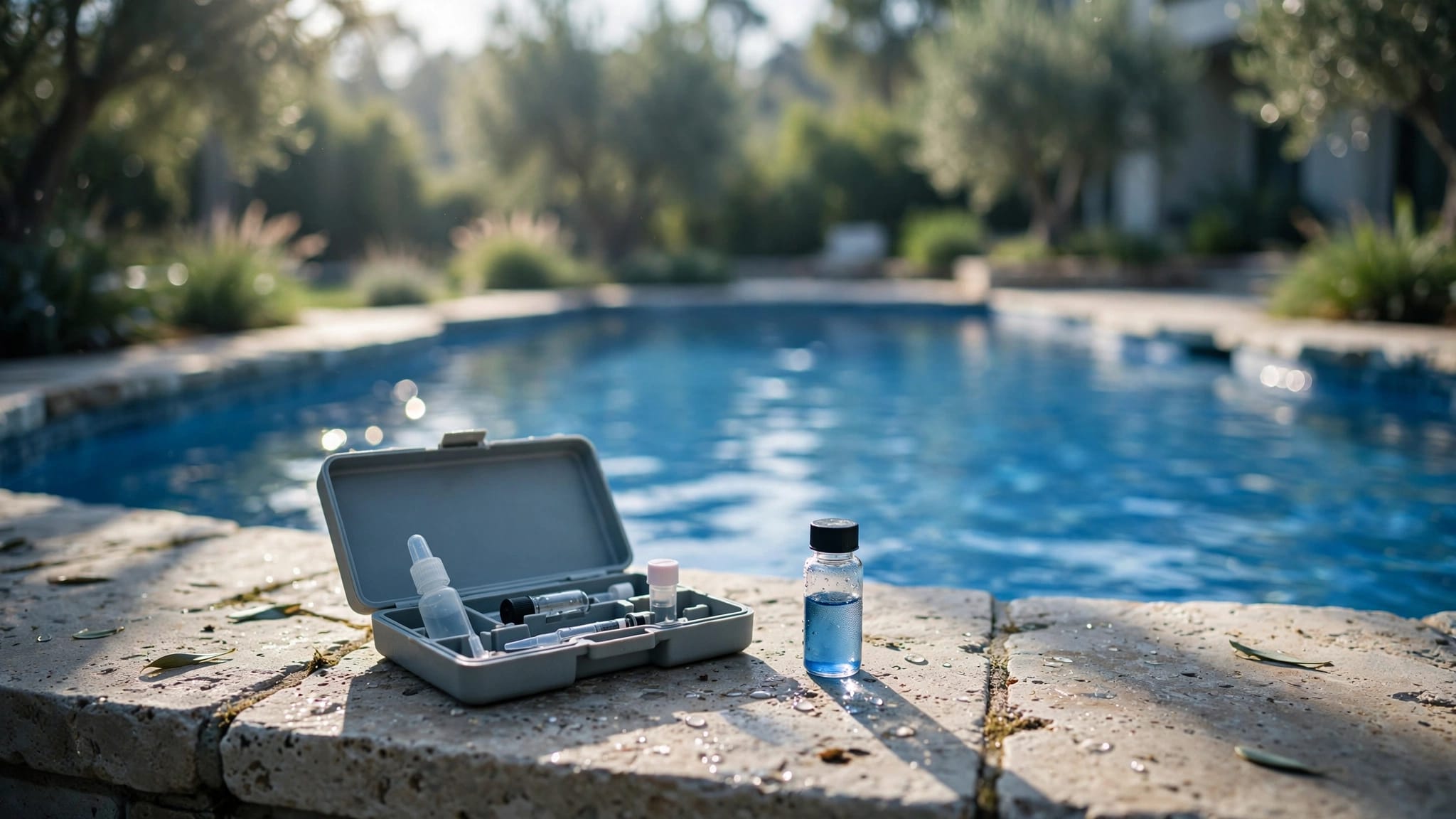
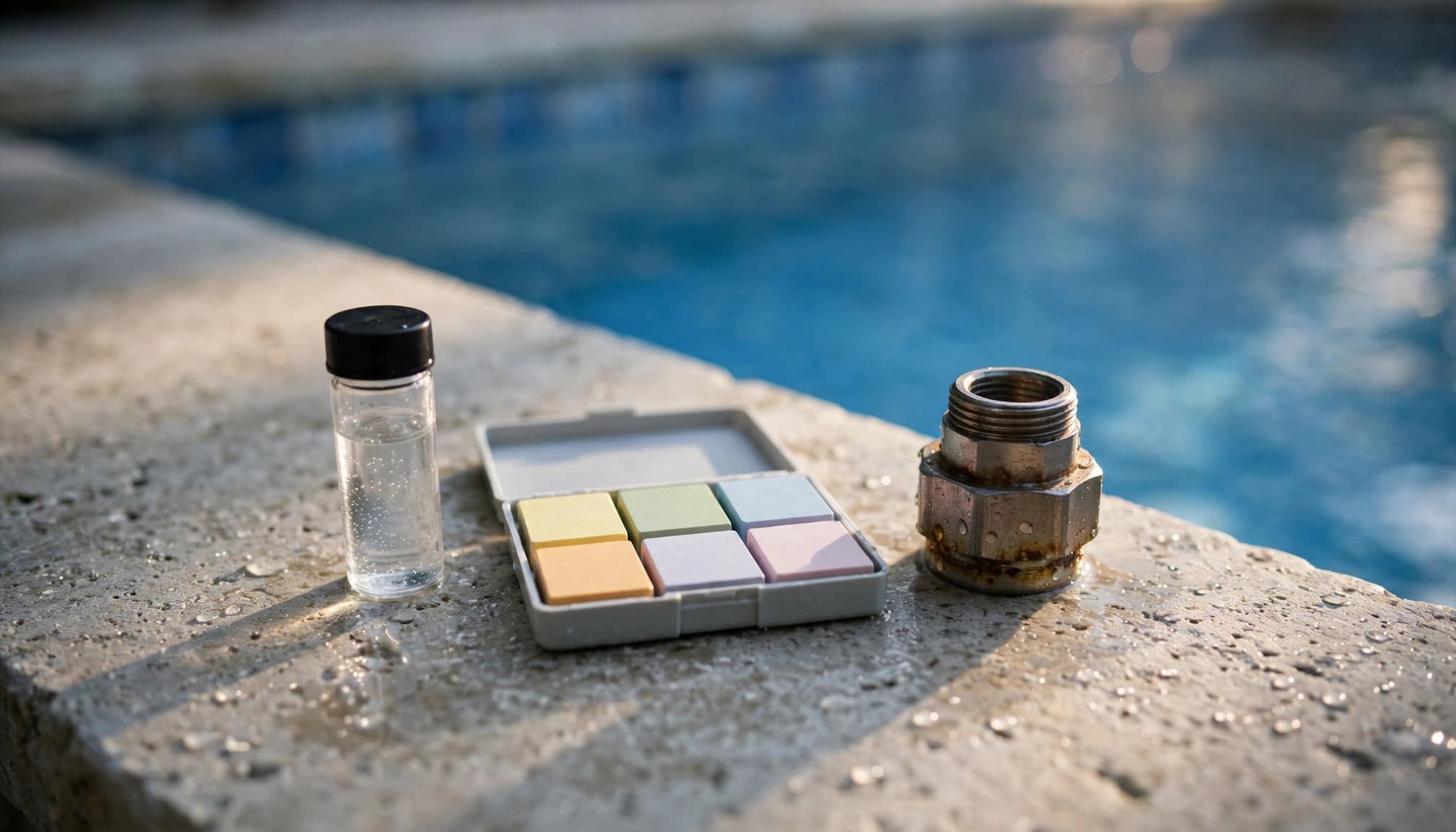
Test free chlorine, total chlorine, pH, total alkalinity, calcium hardness, and cyanuric acid, also called stabilizer. Request an iron and copper test when metals are a possibility; a routine sanitizer test won't answer that question.
Take the sample according to your kit's instructions, away from a return jet or chemical addition point. Record the shock product, amount added, pool volume, and time of treatment.
Our guide to testing pool water at home covers sampling and common testing problems.
High chlorine can interfere with some color tests. If a result looks implausible, use a fresh sample and an appropriate testing method instead of correcting the water based on a questionable reading.
Read the results alongside visible clues
The CDC recommends a residential pool pH of 7.0 to 7.8. It recommends at least 1 ppm free chlorine, or at least 2 ppm when cyanuric acid or stabilized chlorine products are used.
Those minimums don't establish the correct cleanup dose or swimming conditions after shocking. The sanitizer label also governs use and re-entry.
Look at the water and surfaces separately. Uniform discoloration, settled sediment, and fixed rust-colored marks are different findings.
Also test the fill water if discoloration followed a refill. Comparing the two samples can help identify an ongoing source instead of repeatedly addressing the same symptom.
How to Start Clearing Brown Water Safely
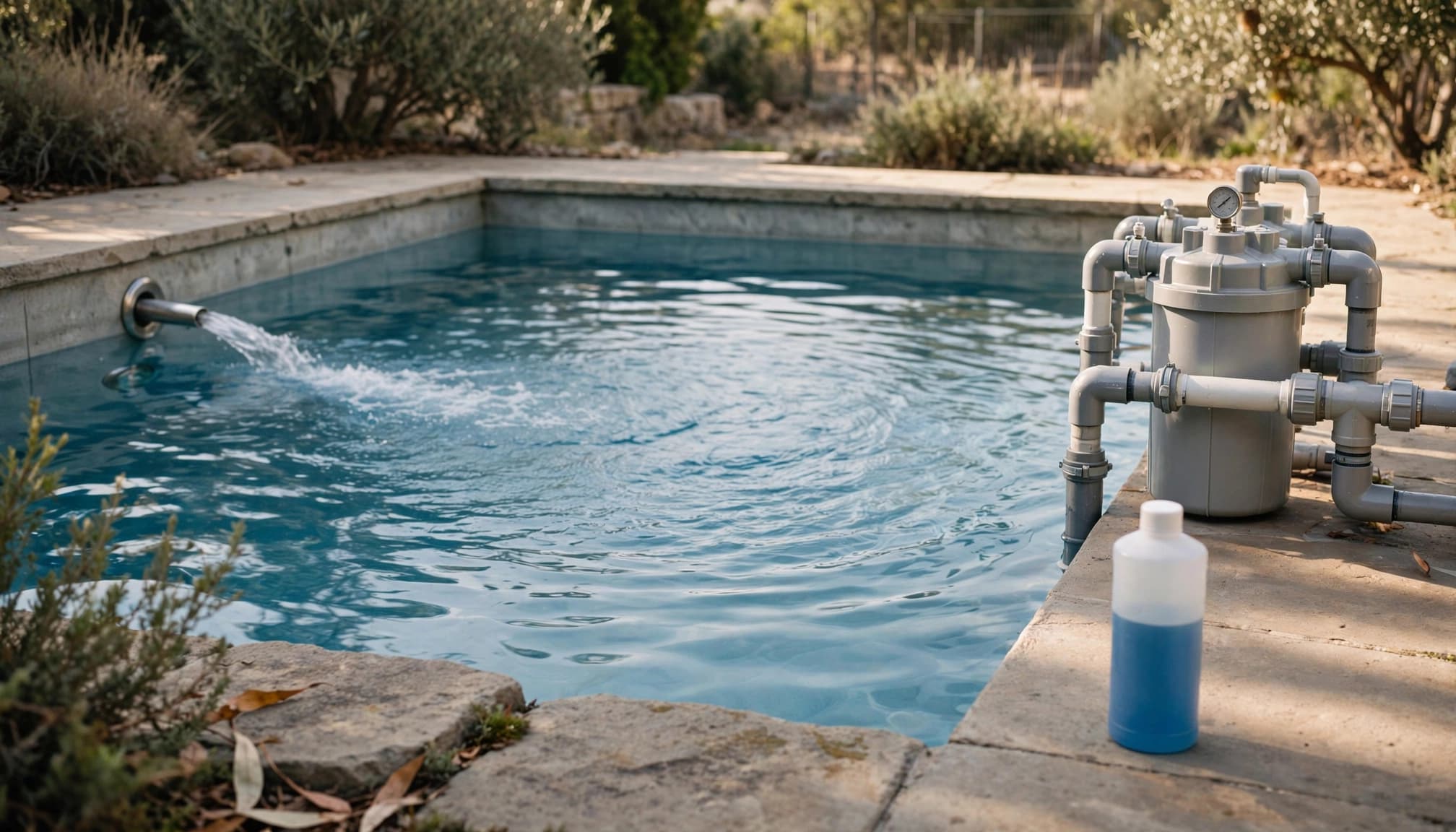
Begin with cleanup and observation while you establish the cause. Avoid adding several products in succession, because that makes changes harder to interpret.
- Keep the pool closed to swimmers. Poor visibility creates a safety risk, even when the discoloration appears cosmetic. Wait until you can clearly see the bottom and chemistry meets the sanitizer label's requirements.
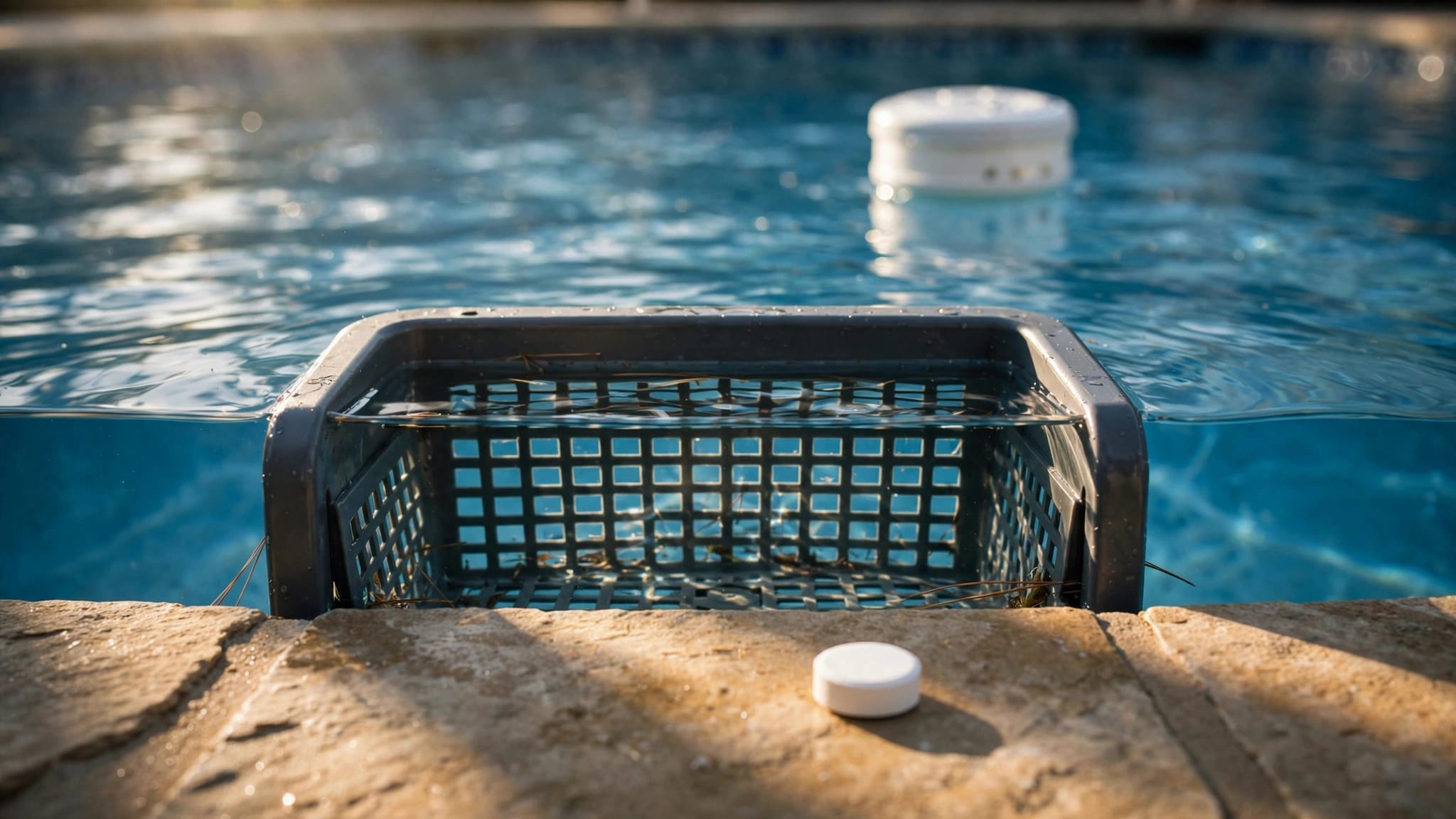
- Remove leaves and accessible debris. Empty skimmer baskets and remove floating material. This reduces the amount of contamination the circulation system must handle.
- Support normal circulation and filtration. Make sure water is moving through the system. Watch filter pressure and follow the equipment's cleaning instructions rather than opening a pressurized filter.
- Choose the next action from the results. A confirmed metal issue needs a different response than algae or suspended dirt. Use only pool products suited to the identified problem, finish, and equipment.
- Retest and track the response. Record chemistry, water appearance, filter pressure, and any material collected. Allow the circulation or waiting period specified by each product before judging the result.
Filtration can capture suitable suspended particles, but it won't necessarily remove dissolved metals. Likewise, clearer water doesn't prove that the pool has adequate sanitizer.
A color improvement and a safe swimming test are separate milestones. Both matter before anyone returns to the pool.
Never mix pool chemicals together. Add them separately and only as directed, including any required waiting time between products.
Separate Discolored Water From Surface Stains
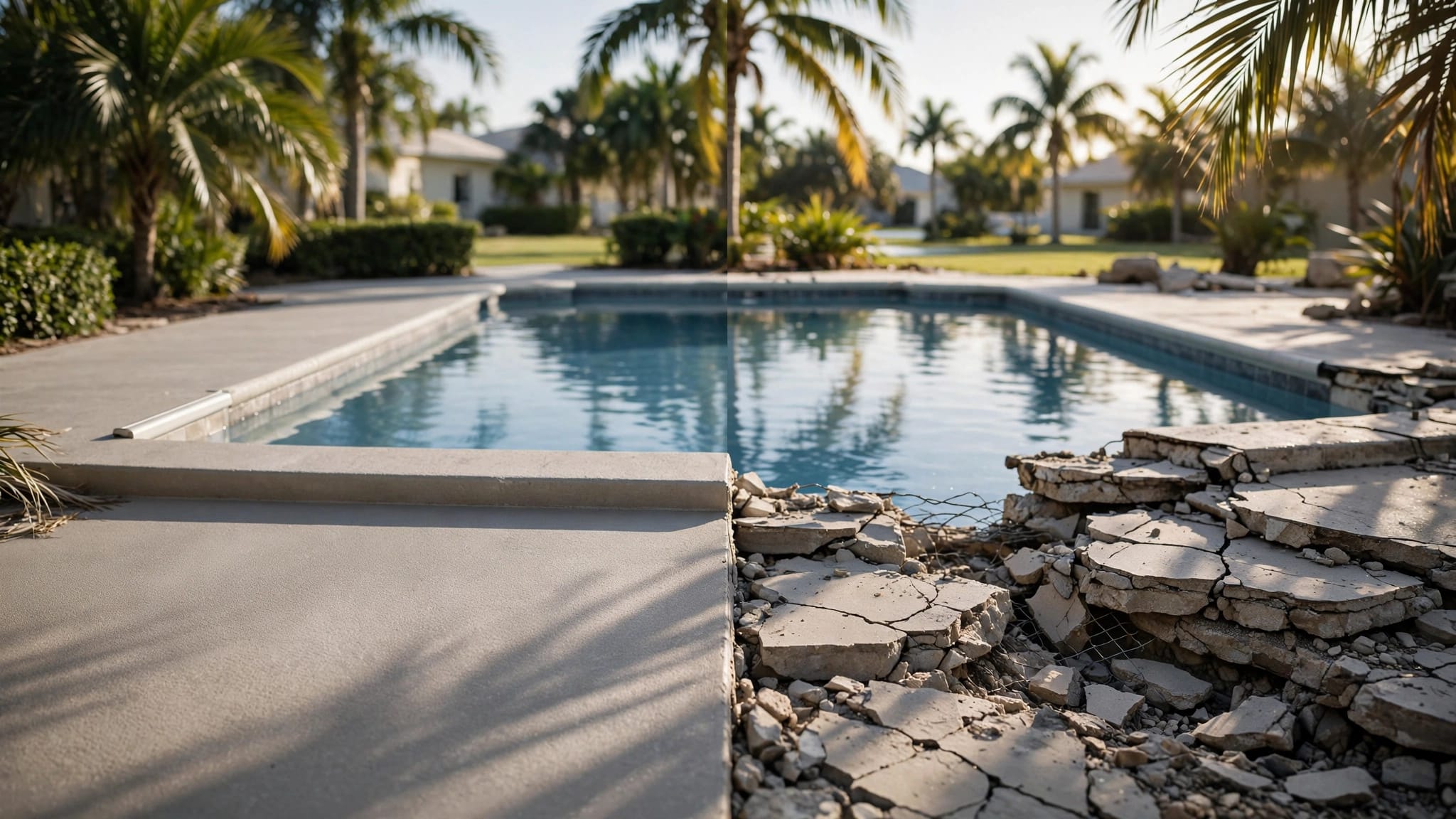
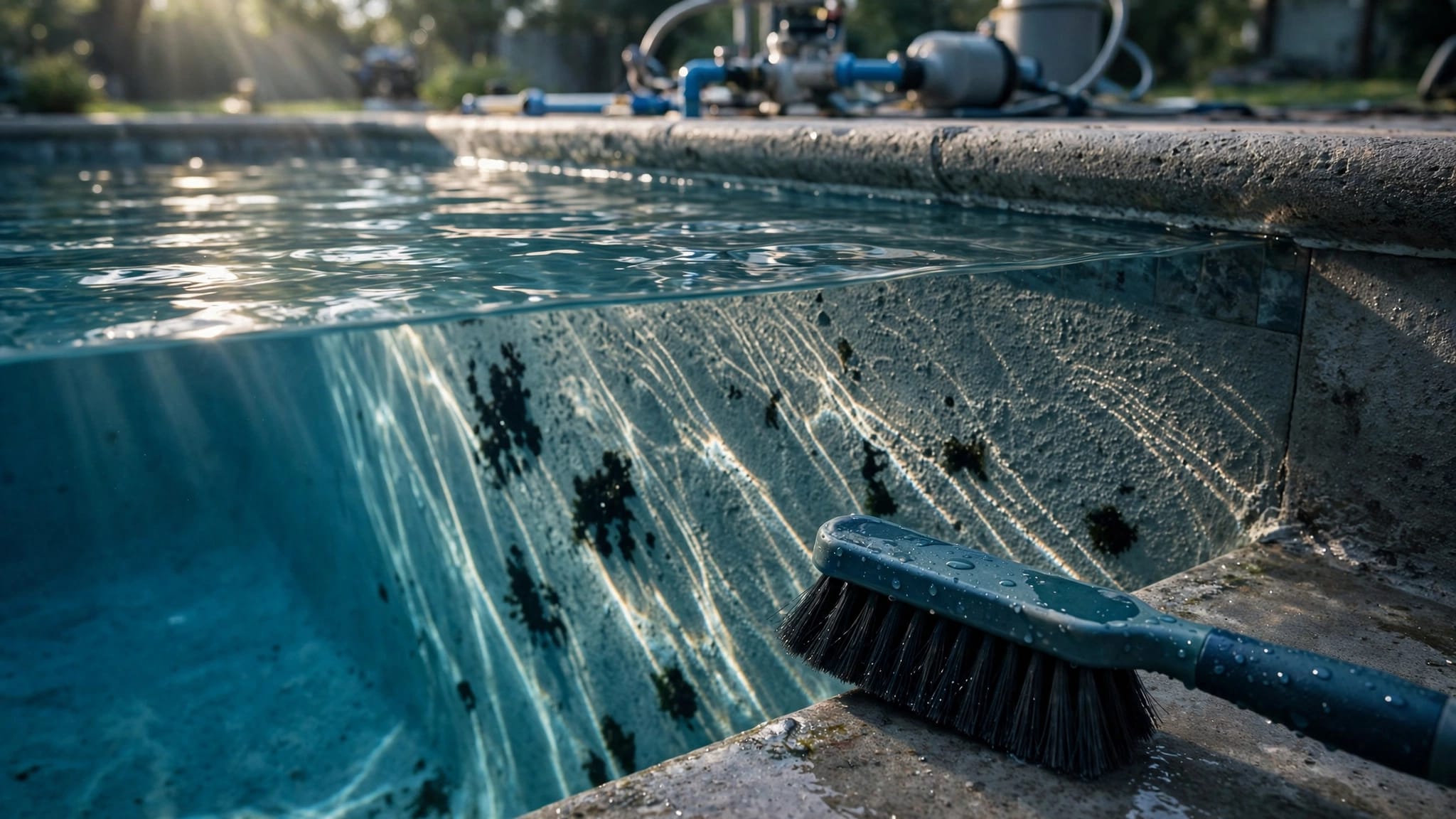
A pool can have brown water without a permanent stain. It can also have clear water with rust-colored marks on the finish.
From the deck, look for discoloration around steps, fittings, return openings, and the waterline. Note whether material moves with circulation or remains attached to one spot.
Fixed marks need a different assessment than material floating or settling in the water. Take photographs before cleanup so changes are easier to track.
Low calcium hardness can contribute to aggressive water conditions. High hardness can encourage scale and cloudy deposits, which may resemble staining.
Avoid abrasive scrubbing, concentrated chemical spot treatments, or acid application based only on appearance. Treatment must suit the finish, whether that's plaster, aggregate, fiberglass, or vinyl.
Our advice on pool stain prevention and metal control explains why sanitation and mineral management need separate attention. Persistent staining doesn't automatically mean the pool needs resurfacing.
Reduce the Chance of Brown Water Returning
Address incoming water and corrosion
When testing identifies metals in the fill supply, include that finding in the pool's ongoing care plan. Repeated top-offs can keep introducing the same issue.
Also pay attention to recurring discoloration near metal components. A deteriorating fitting or heater problem calls for an equipment assessment, not repeated cosmetic cleanup.
Keep records of refills, chemical additions, and test results. A pattern tied to filling or equipment operation is more useful than a single photograph of brown water.
Keep chemistry stable between treatments
Maintain sanitizer and water balance consistently rather than waiting for visible trouble. Stable chemistry also helps protect the pool's finish and equipment.
Our guide to balancing pool pH and alkalinity explains how those readings relate. When both need correction, the adjustment order matters.
In Florida, heat, rain, and debris can change pool conditions quickly. Test after heavy rainfall or unusual water loss, and keep baskets and circulation paths clear. If you recently resurfaced, follow the finish's startup instructions rather than applying an ordinary maintenance routine.
When a Pool Professional Should Step In
Get help when brown water persists despite appropriate testing and basic cleanup, or when stains spread across the finish.
A professional assessment is also appropriate when chlorine readings remain difficult to interpret, metal tests don't explain the appearance, or circulation is weak. Multiple problems can exist at once, including contamination and equipment trouble.
Leave suspected heater corrosion, leaking components, and electrical equipment concerns to qualified professionals. Don't dismantle equipment to search for the source of discoloration.
Bring your test results and treatment record to the assessment. Include recent refills, storms, and any products added before the change.
If an inspection identifies worn equipment or a damaged finish, we offer equipment replacement, renovations, and resurfacing. You can Get a Free Estimate for an onsite consultation about those improvements. A single episode of discolored water, however, isn't enough reason to renovate.
Frequently Asked Questions
Does brown pool water always mean iron?
No. Iron is one possibility, especially with rust-colored staining, but debris, organic material, and algae-related contamination can resemble it. A metal test and inspection help distinguish those causes. Water color should guide the investigation, not replace testing.
Should I add more shock if the water turns brown?
Avoid an automatic second dose. First, measure sanitizer and water balance, then investigate metals and debris. More sanitizer won't remove metals. If testing identifies inadequate sanitation, follow the product label and a treatment plan suited to the actual problem.
How long will the water take to clear?
There's no reliable timeline based on color alone. The cause, amount of contamination, filter condition, and circulation all affect progress. Track test results and visibility instead of relying on a promised number of hours. Seek help if the water fails to improve or stains develop.
Clear the Cause Before Chasing the Color
Brown pool water after shocking deserves testing before another chemical addition. Metals are a possible explanation, but debris, algae, and surface deposits require different responses.
The safest path is a confirmed cause , followed by compatible cleanup and balanced water. Keep swimmers out until visibility and chemistry are suitable, and involve a professional when discoloration persists or equipment damage is suspected.