Mustard algae can look like yellow dust or a thin coating on pool walls, steps, and shaded corners. It may be algae, but pollen, dirt, and stains can look similar, so test the water and inspect the pool before adding chemicals.
In Florida, heat, rain, debris, and weak circulation can make pool problems harder to manage. A safe cleanup depends on brushing thoroughly, restoring filtration, and treating the water according to its test results and product labels.
Key Takeaways
- Keep swimmers out while visible algae, cloudiness, or debris remains.
- Test the water before adding chemicals. The right treatment and dose depend on pool volume, test results, and product directions.
- Remove debris, brush pool surfaces, and clean accessible baskets before treating the water.
- Run the circulation system and maintain the filter throughout cleanup.
- Don't combine chemicals or guess at a dose. Retest before considering the pool ready for use.
Recognize mustard algae before treating
Look for a yellow, powdery coating
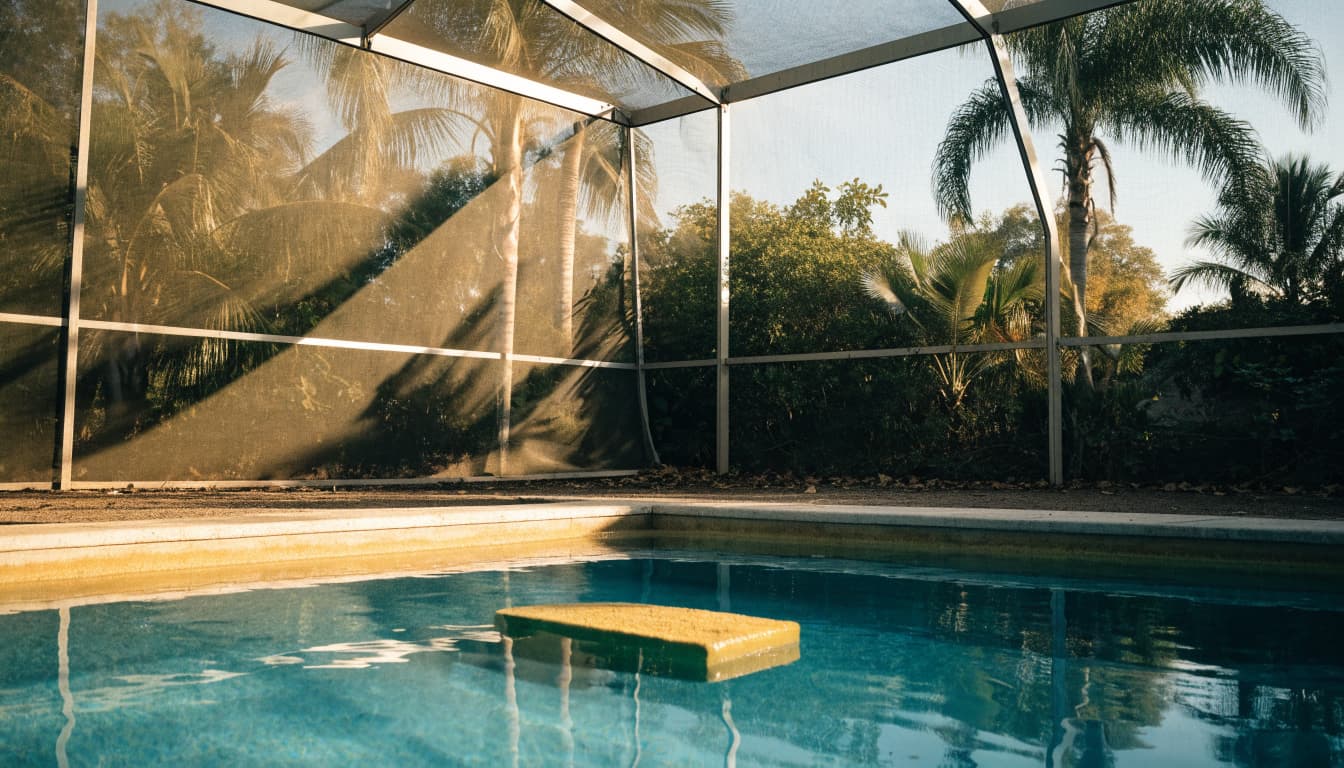
Mustard algae may appear as yellowish dust on walls, steps, ledges, and other areas with weak circulation. Brushing can lift or smear algae, while a stain often stays fixed to the surface. That test can help, but it doesn't confirm the cause by itself.
Rule out pollen and stains
Pollen can leave a film, and metals such as copper can tint water. Clear greenish water may point to a different problem than visible growth. If the yellow material returns after brushing, spreads, or appears alongside cloudy water, treat it as a sign that the pool needs closer attention. Don't rely on appearance alone to choose a chemical treatment.
Test the water before adding chemicals
Take readings that guide treatment
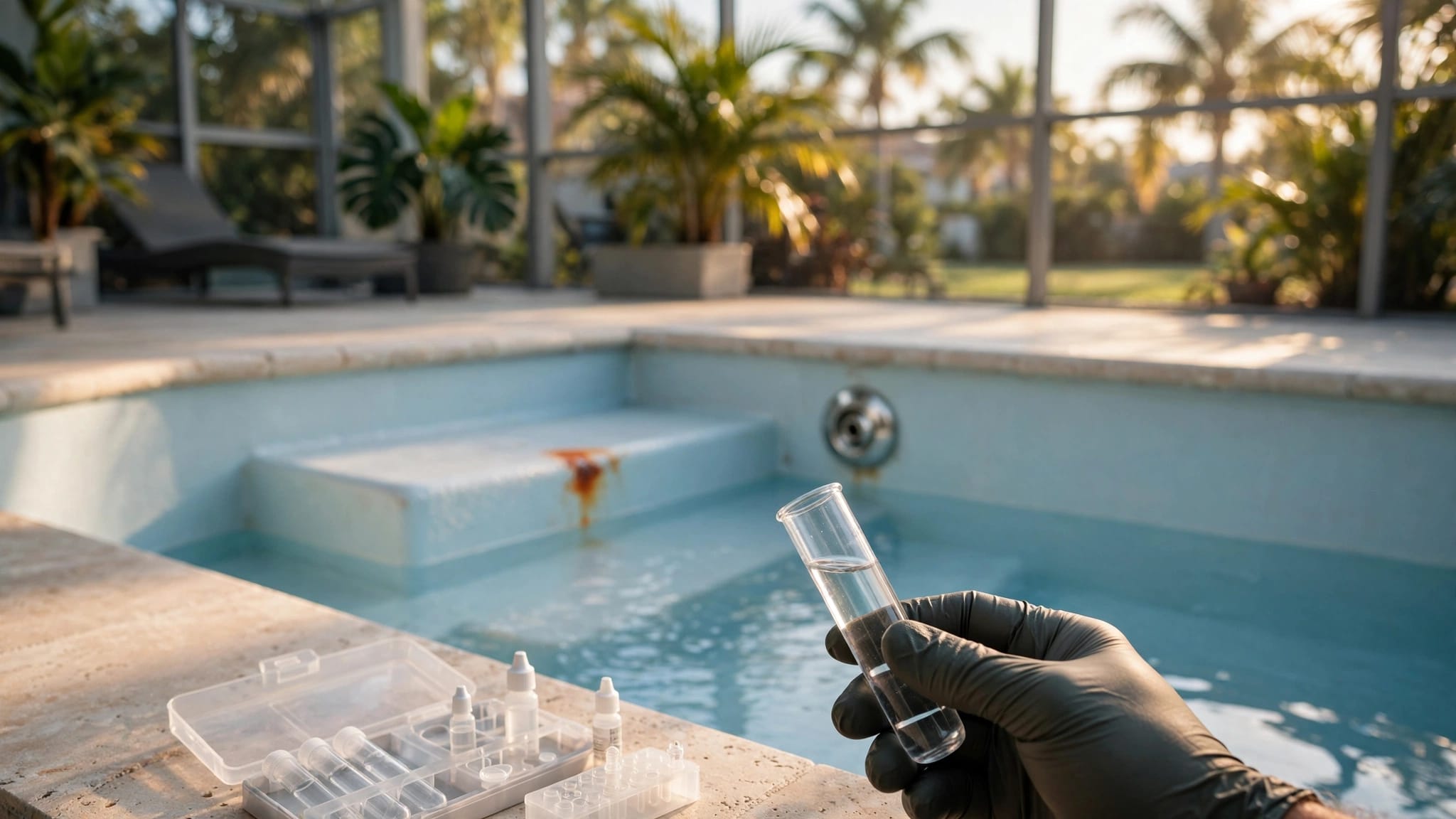
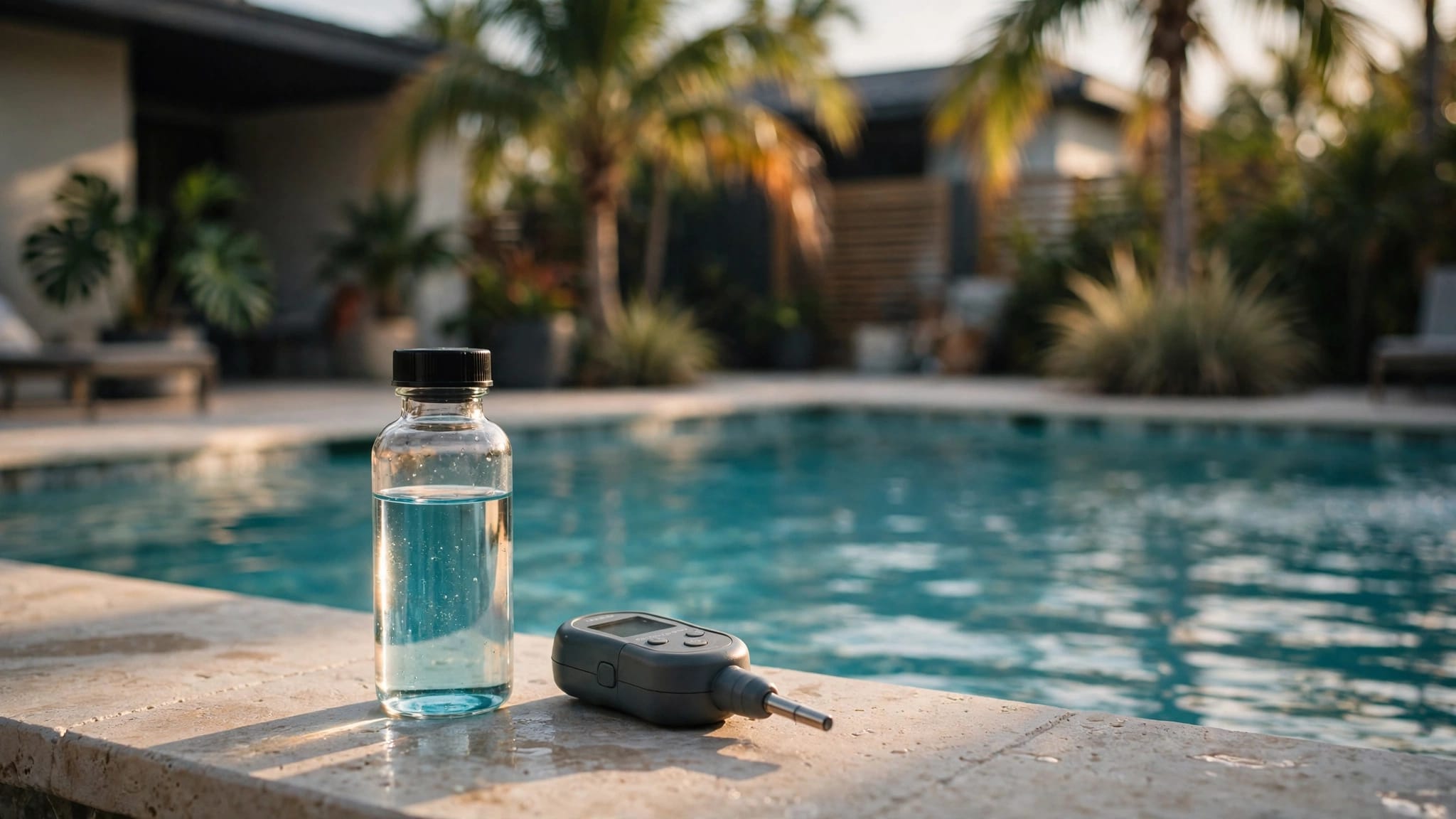
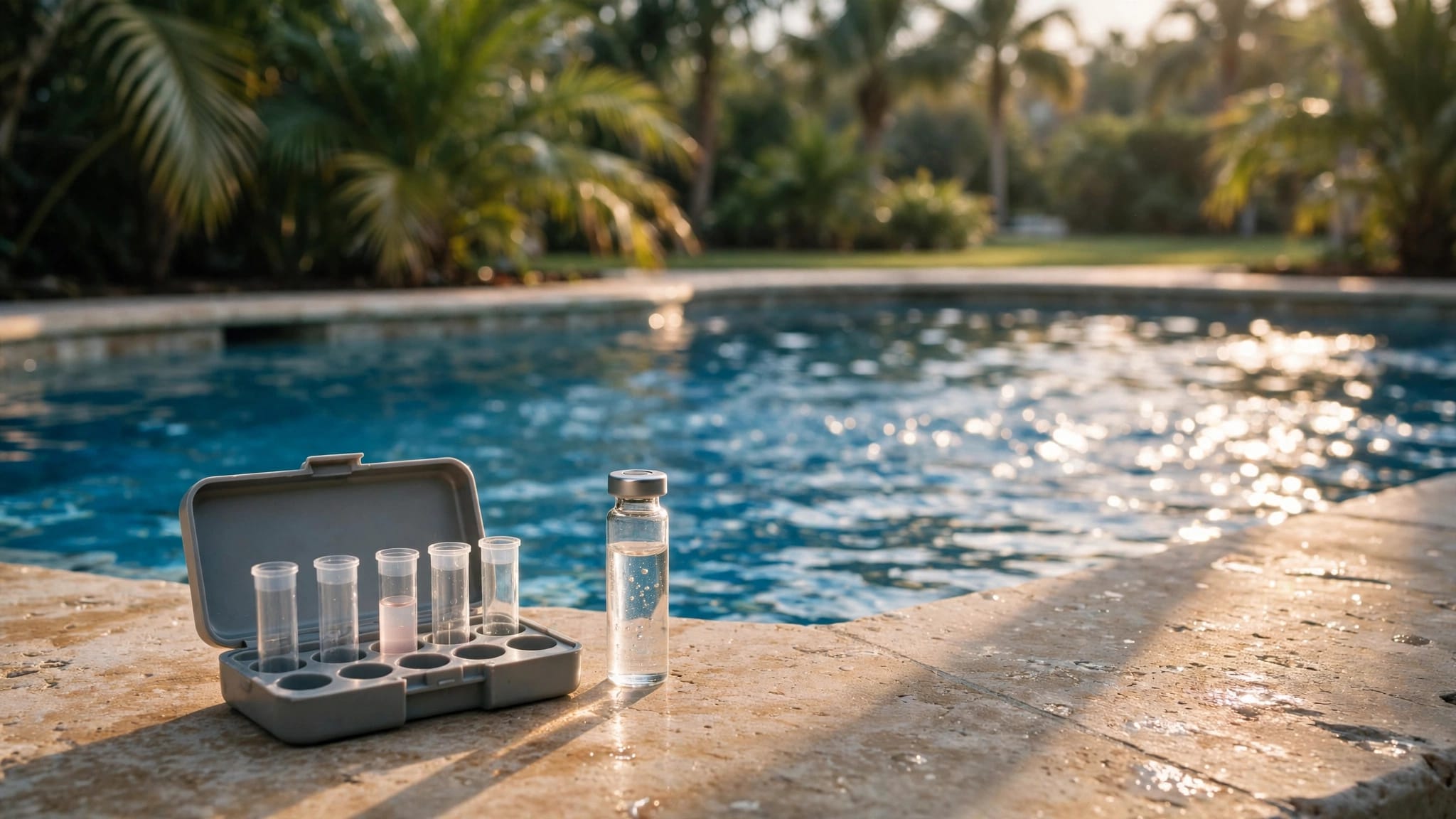
Use a reliable liquid test kit or take a fresh water sample to a pool professional. Check free and total chlorine, pH, total alkalinity, calcium hardness, and cyanuric acid, also called stabilizer. These readings help show whether sanitizer is available and whether the water is balanced enough for treatment.
Write down the results before making adjustments. After a major storm, algae treatment, heavy pool use, or fresh fill water, test again because conditions can shift. For tips on collecting and reading results, see our beginner's guide to pool water chemistry.
Correct imbalances carefully
Adjust pH and other readings only as directed by the products you use. Poor alkalinity can make pH difficult to keep steady, while high pH can reduce chlorine's effectiveness. Make one adjustment at a time, allow the water to circulate as directed, and retest before adding another chemical.
Never use a universal dose for algae treatment. Pool volume, current readings, sanitizer type, and label instructions determine the amount. If your test results are confusing or the water won't hold a sanitizer reading, ask a pool professional to assess it.
Brush surfaces and remove debris
Start with leaves and accessible debris
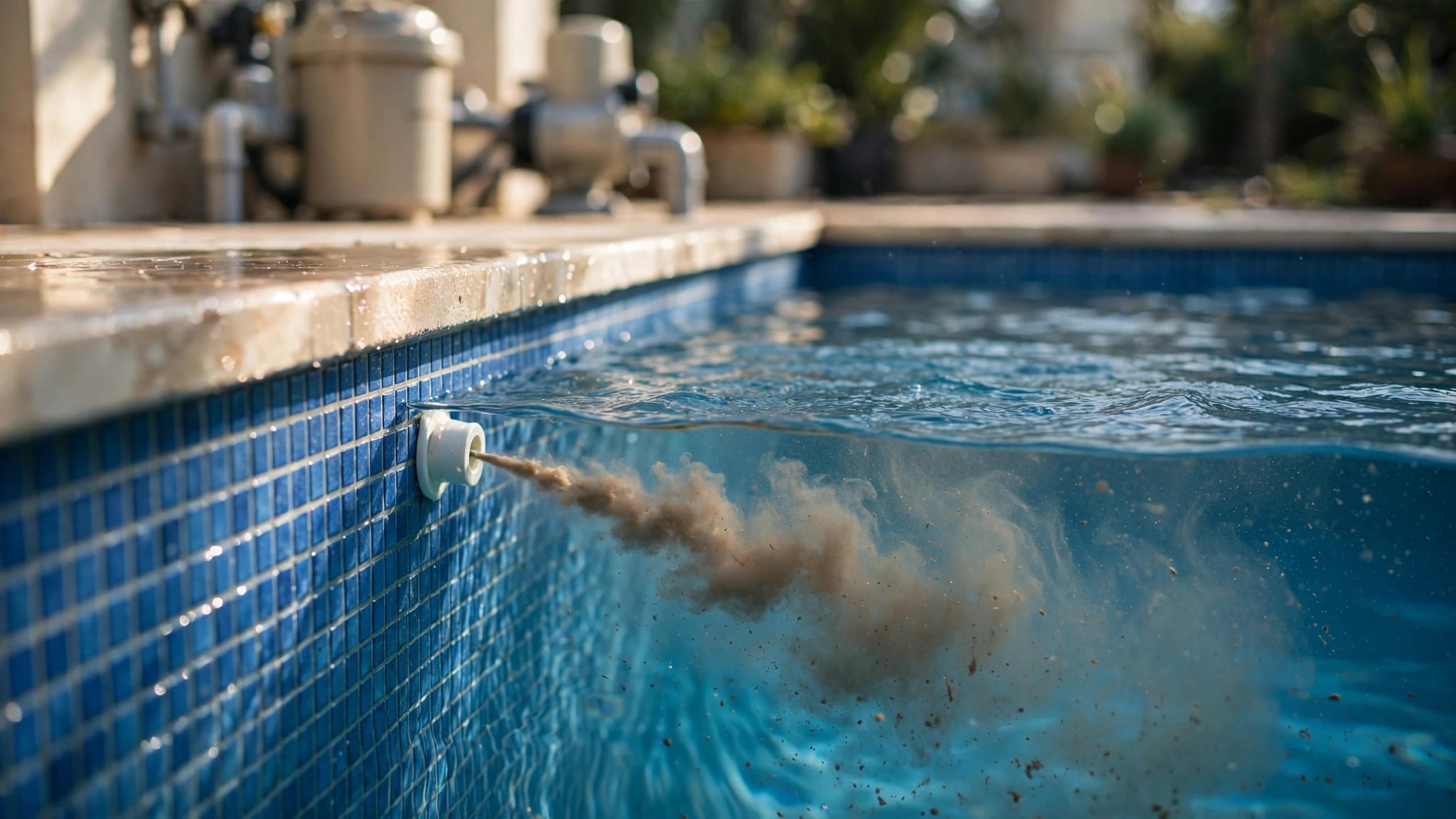
Use a leaf net to remove larger debris, then clear the skimmer basket and pump basket. This reduces the material the filter must handle and helps improve circulation. Brush before adding treatment so the sanitizer can reach material clinging to surfaces.
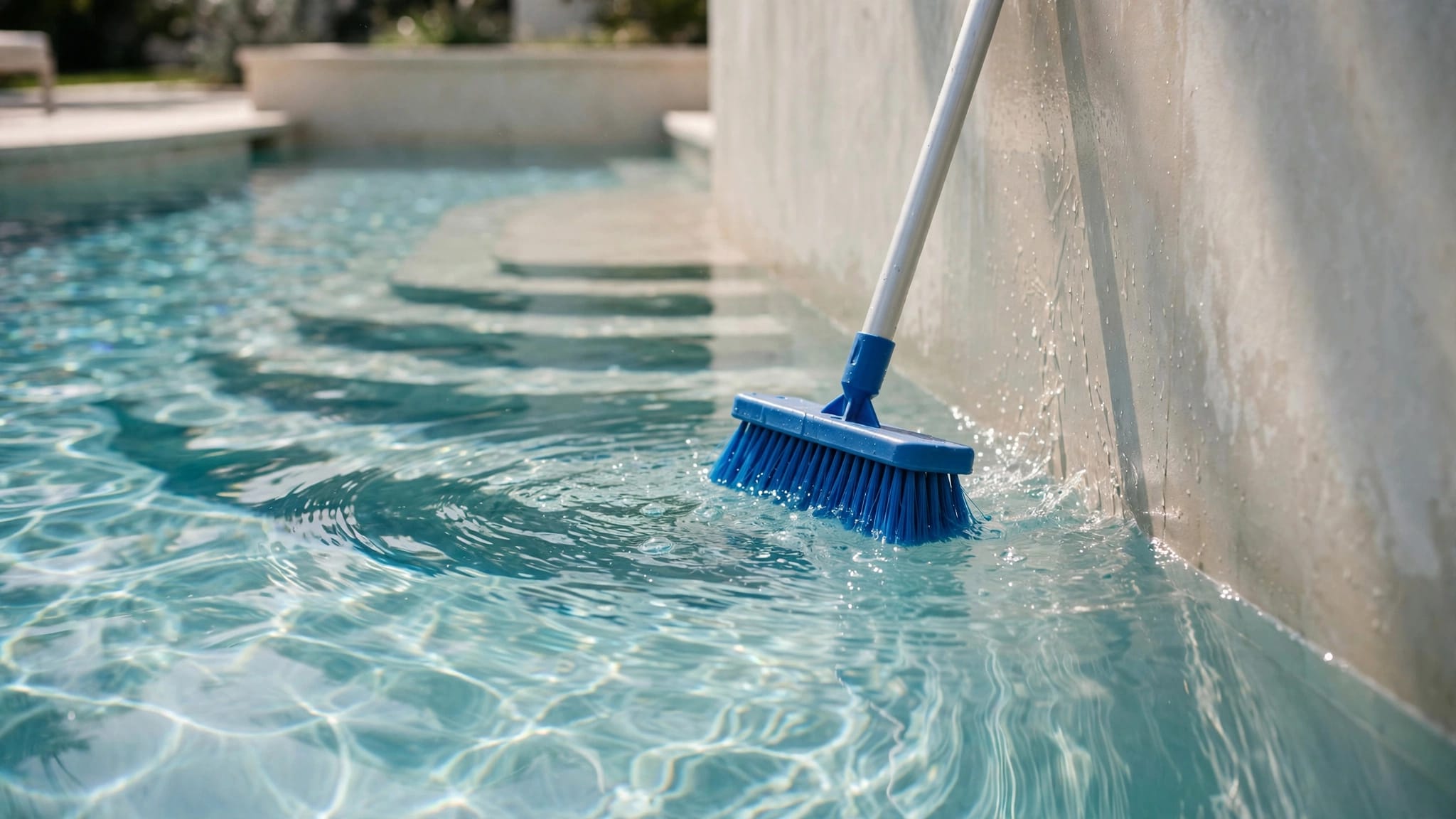
Brush the walls, steps, floor, tile line, ladders, corners, and shaded areas. Choose a brush suited to the pool finish. A brush that's too stiff can damage some surfaces, so follow the finish and brush manufacturer's guidance.
Reach low-flow areas
Pay particular attention to corners, steps, and areas near weak return flow. Brush the affected areas thoroughly, then work across the rest of the pool so loosened material can move into the filtration system. If the pool floor isn't clearly visible, don't enter the water to brush it. Poor visibility can hide steps and other hazards.
Clean equipment and restore circulation
Check flow, baskets, and filter condition
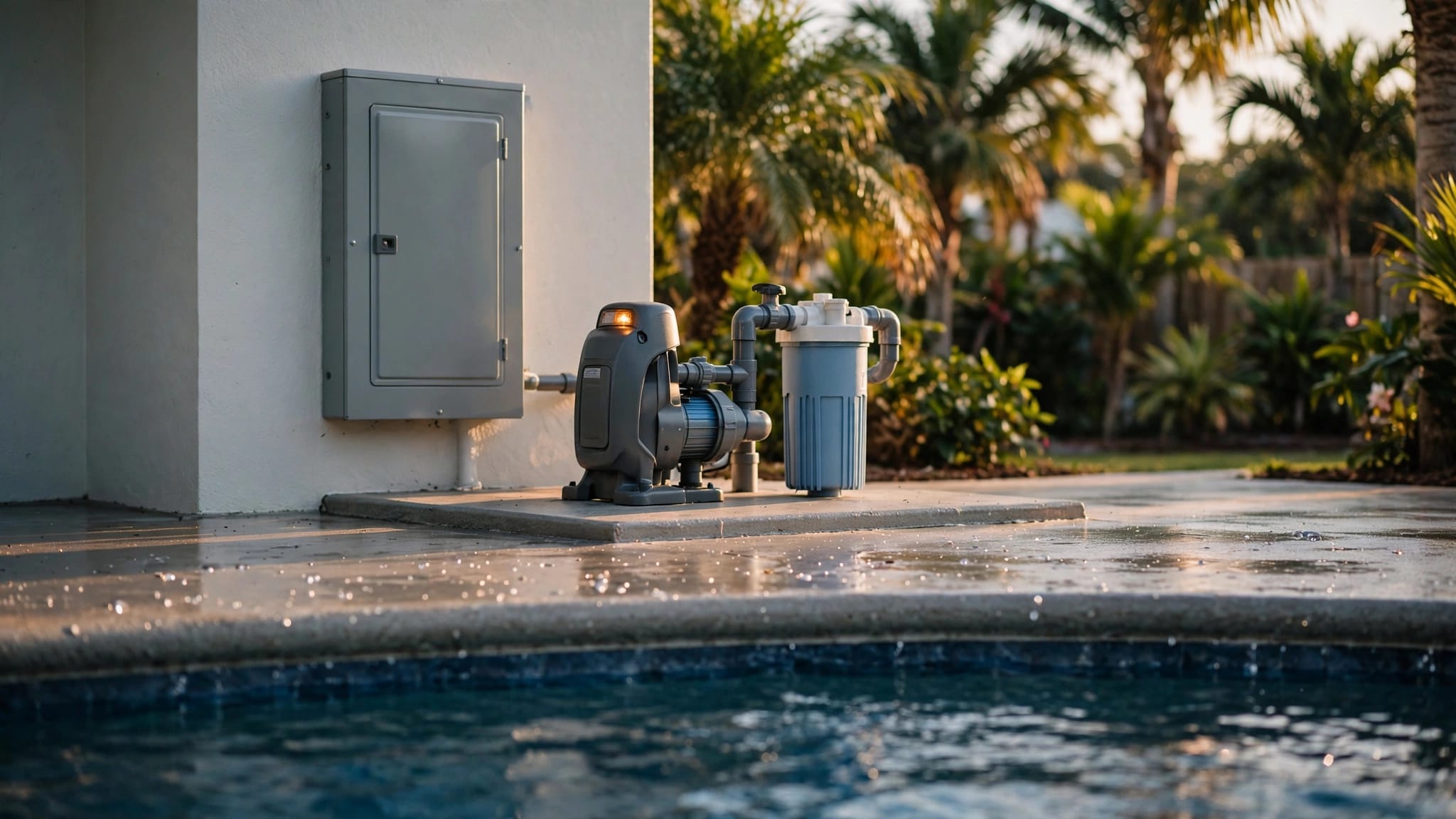
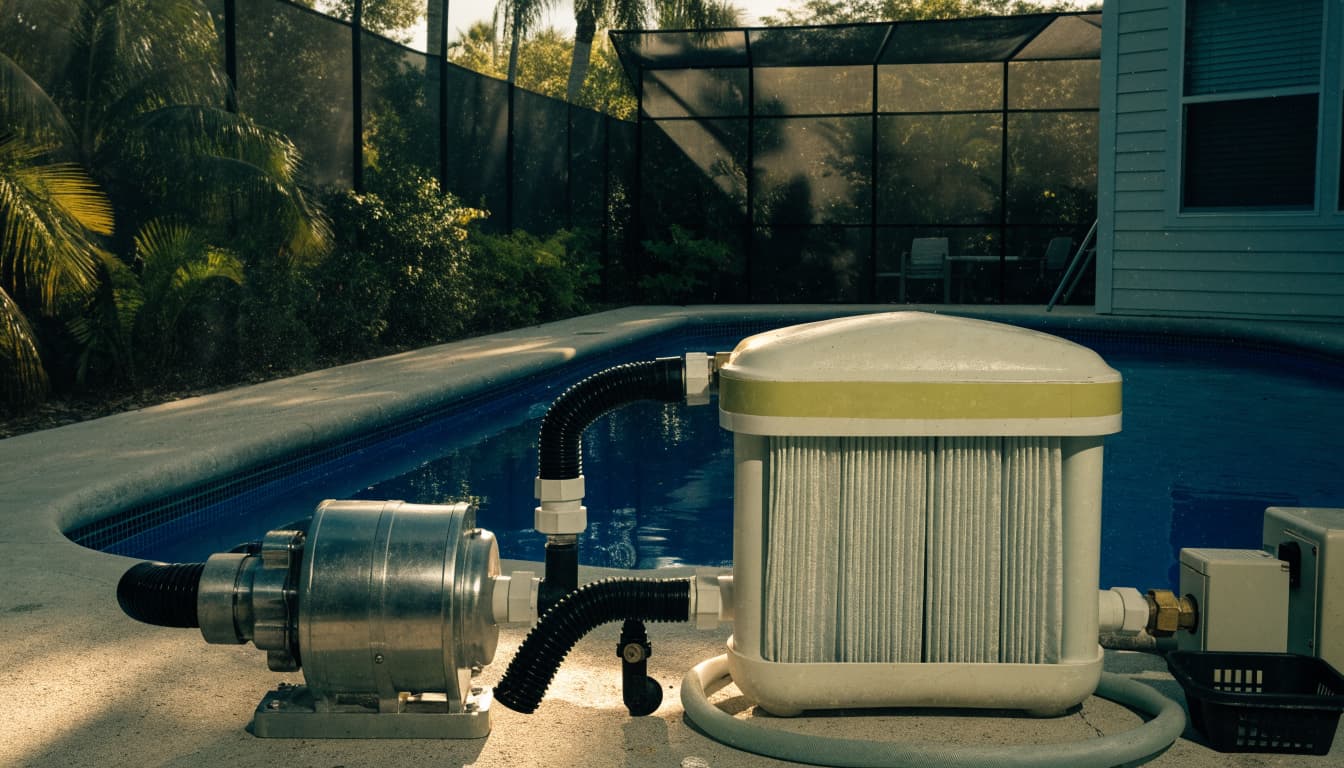
Run the pump and inspect return flow, the pressure gauge, timer, baskets, and filter. A filter can't clear algae effectively when water barely moves through it. Turn off the pump and follow the equipment instructions before opening an accessible pump basket. Our guide to cleaning a pool pump basket covers the basic precautions.
Clean the filter according to its type
Clean a cartridge filter when pressure rises or water flow drops, following the filter manual. Sand and DE filters should be backwashed according to their manufacturer's instructions. Don't open a filter under pressure or attempt unfamiliar equipment repairs. For cartridge-specific care, see our guide to cleaning a cartridge pool filter.
Treat the pool safely
Follow the product label
Once debris is removed, surfaces are brushed, and circulation is working, apply the label-directed sanitizer treatment for your pool volume and water chemistry. Read the entire label, including protective equipment, application instructions, circulation guidance, and any swimming restrictions.
Wear the protection listed on the package, such as chemical-resistant gloves and eye protection. Keep children and pets away from the treatment area. Add one product at a time. Never mix chlorine with algaecide in a bucket, feeder, or other container. Some products can react dangerously when combined, and copper-based algaecides may stain certain finishes if misused.
Keep circulation and filtration going
Run the pump during cleanup unless the treatment label or equipment manufacturer directs otherwise. Continue brushing and clean the filter when pressure or flow indicates it needs attention. If your system supports vacuuming to waste, use that method only according to its equipment instructions.
Water can remain cloudy after algae dies because the filter still has fine particles to capture. A change in color or appearance doesn't mean treatment is complete. For broader recovery steps, read our Florida pool algae cleanup guide.
Retest and keep the pool closed
Check the water throughout recovery
Retest after treatment and before adding more chemicals. If sanitizer drops quickly or algae returns, debris, poor circulation, or an underlying chemistry issue may still be affecting the pool. Keep notes on test results, rain, water additions, and treatment so you can spot a pattern.
Florida rain can dilute chemicals and carry organic material into the water. After significant rain, remove debris, check the water level, inspect circulation, and test again. Our Florida pool maintenance calendar offers a year-round routine for managing those changing conditions.
Reopen only when conditions are safe
Don't swim while algae treatment is underway or while water is cloudy or visibly contaminated. Wait until the pool is clear enough to see the entire floor and steps, there's no visible algae or debris, and test results meet the sanitizer and pH guidance for your pool and the treatment label. If the product specifies a waiting period, follow it.
Florida pool sanitation rules require water to remain free of visible algae, floating debris, and sediment. Clear-looking water alone isn't proof that its chemistry is safe.
Know when to call a pool professional
Get help with persistent algae or equipment problems
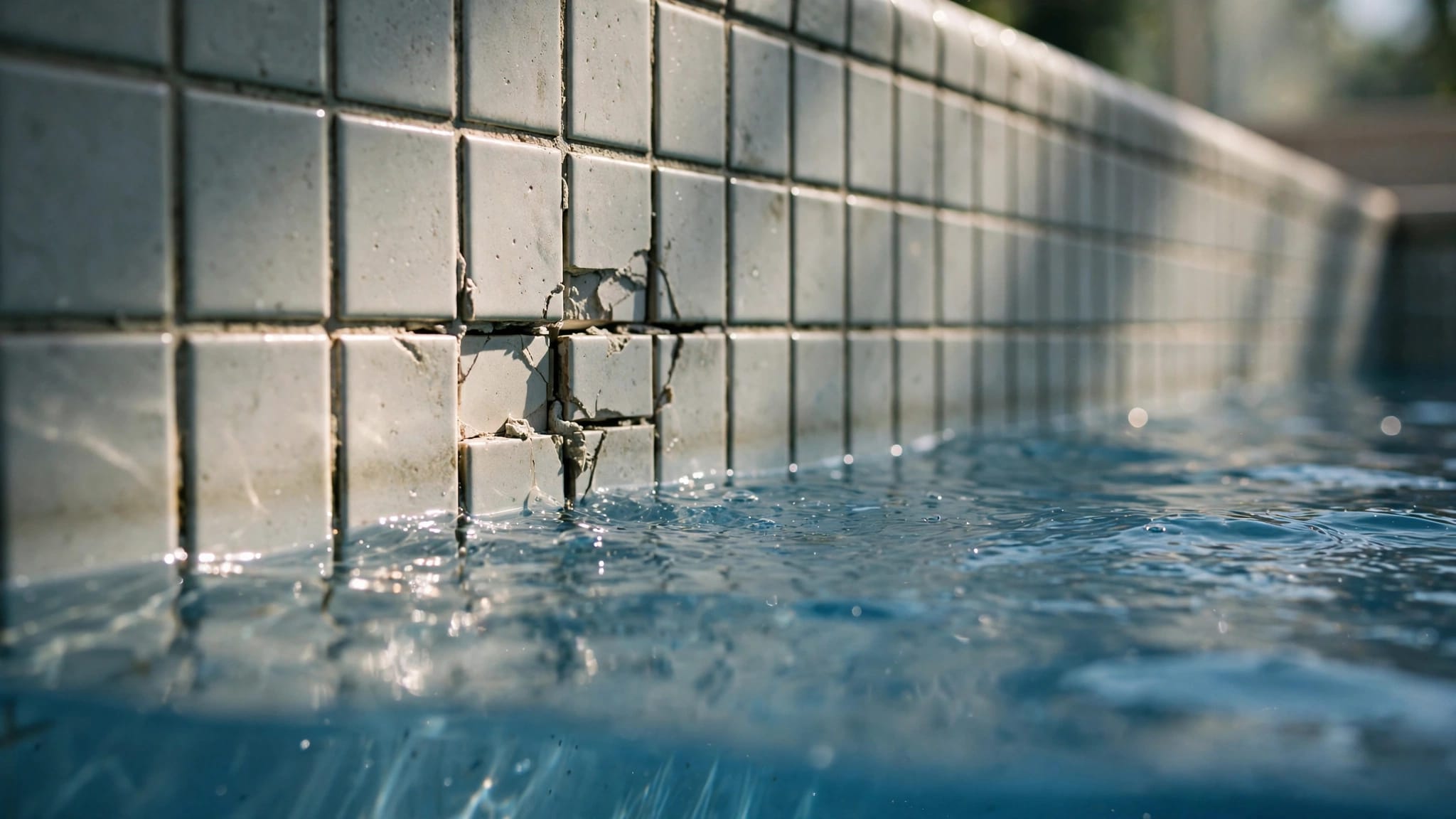
Contact a pool professional if the yellow growth returns after a correctly labeled treatment, the water stays cloudy, the pump loses prime, return flow remains weak, or filter pressure behaves unusually. A professional can assess whether the problem involves chemistry, filtration, circulation, or a damaged pool surface.
Repeated problems may also point to equipment or surface issues that need repair. For homeowners in Cape Coral, Get a Free Estimate to arrange an onsite consultation.
Stop if chemical handling feels unsafe
Don't continue if a chemical container is damaged, a product has spilled, or you're unsure how to handle it safely. Never combine products or return spilled material to its original container. Keep chemicals in their original, closed packaging and follow the label's storage and disposal directions. Seek professional help if you can't safely complete the treatment.
Frequently asked questions
Can I swim while mustard algae is being treated?
No. Keep swimmers out during treatment and while the water is cloudy or visibly contaminated. Reopen only after the water is clear, tests show safe conditions, and all product-label restrictions have been met.
Should I add a standard shock dose?
There's no single dose that fits every pool. The amount depends on pool volume, water-test results, and the specific product. Follow its label instead of estimating or combining treatments.
Why does the yellow material return after brushing?
Brushing may loosen visible material without resolving the underlying water or circulation problem. Retest the water, inspect return flow and filtration, and clean the filter when its pressure or flow indicates a need.
Could the yellow film be pollen or a stain?
Yes. Pollen and staining can resemble algae. Brush a small patch and observe whether it lifts or smears, but use water tests and professional assessment when the cause remains unclear.
Keep recovery focused on the whole pool
Removing mustard algae takes more than brushing away yellow patches. Test the water, clear debris, restore circulation, and follow treatment labels without guessing at chemical amounts. Keep swimmers out until the pool is clear and its water tests safe.