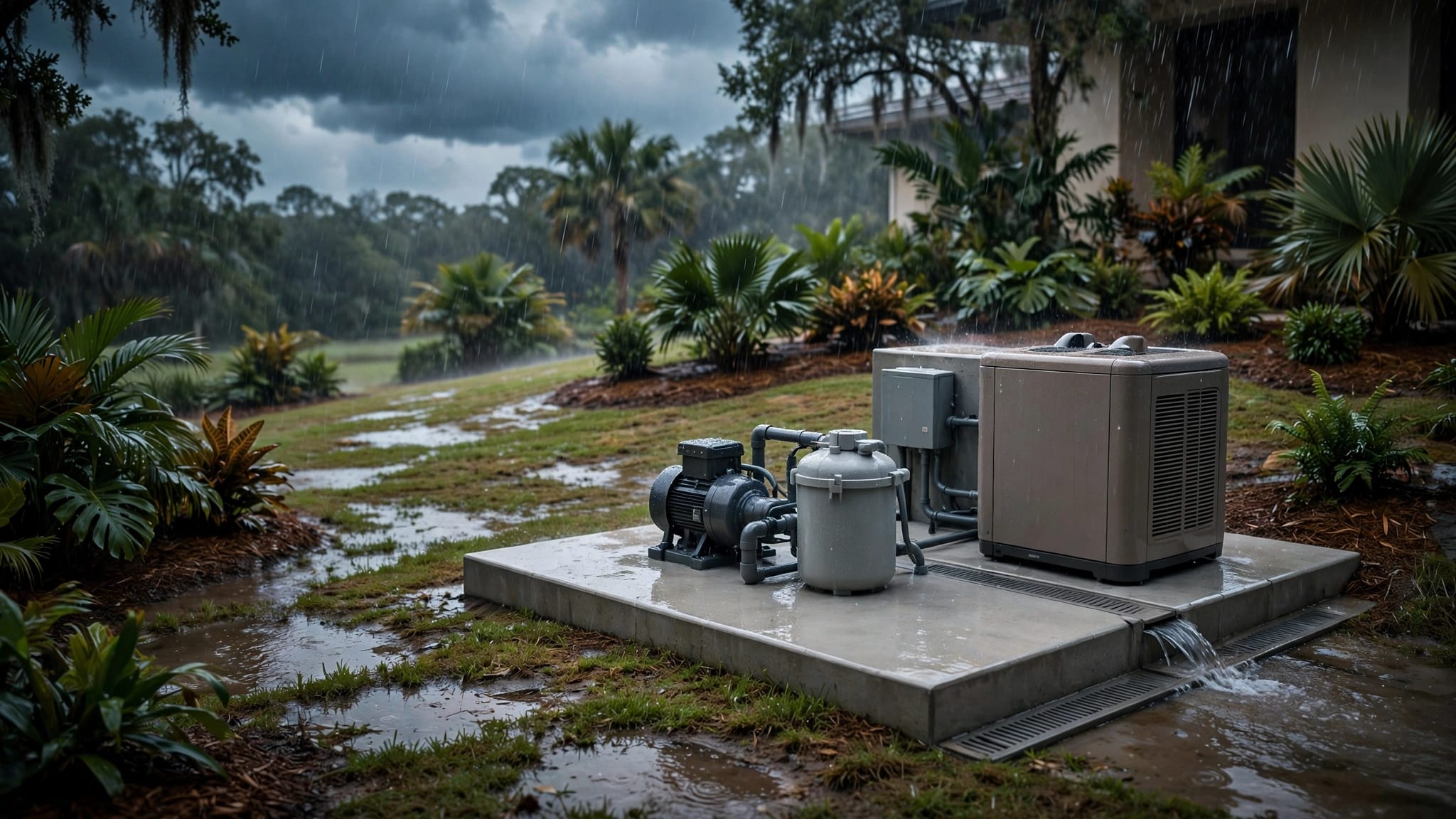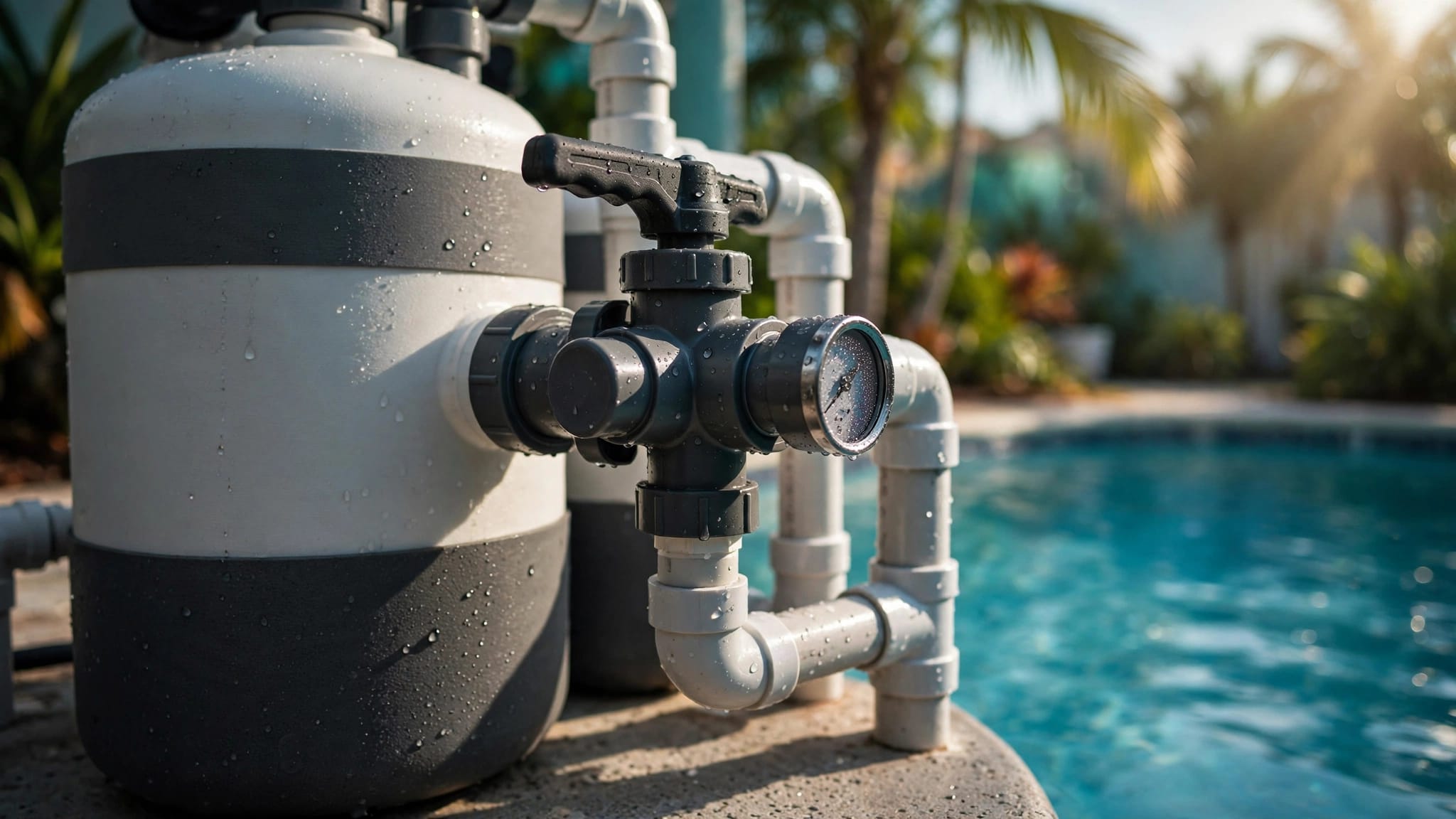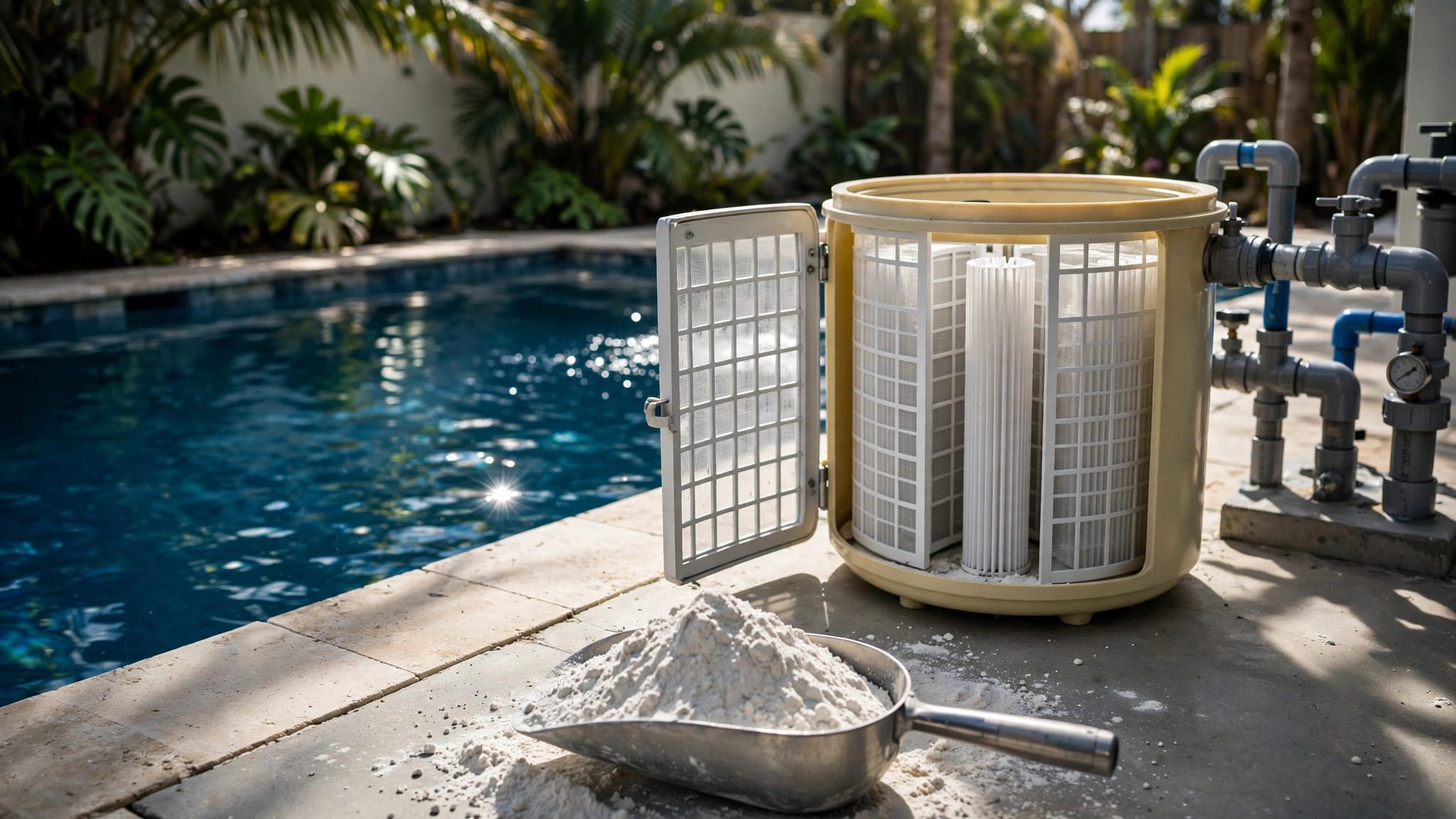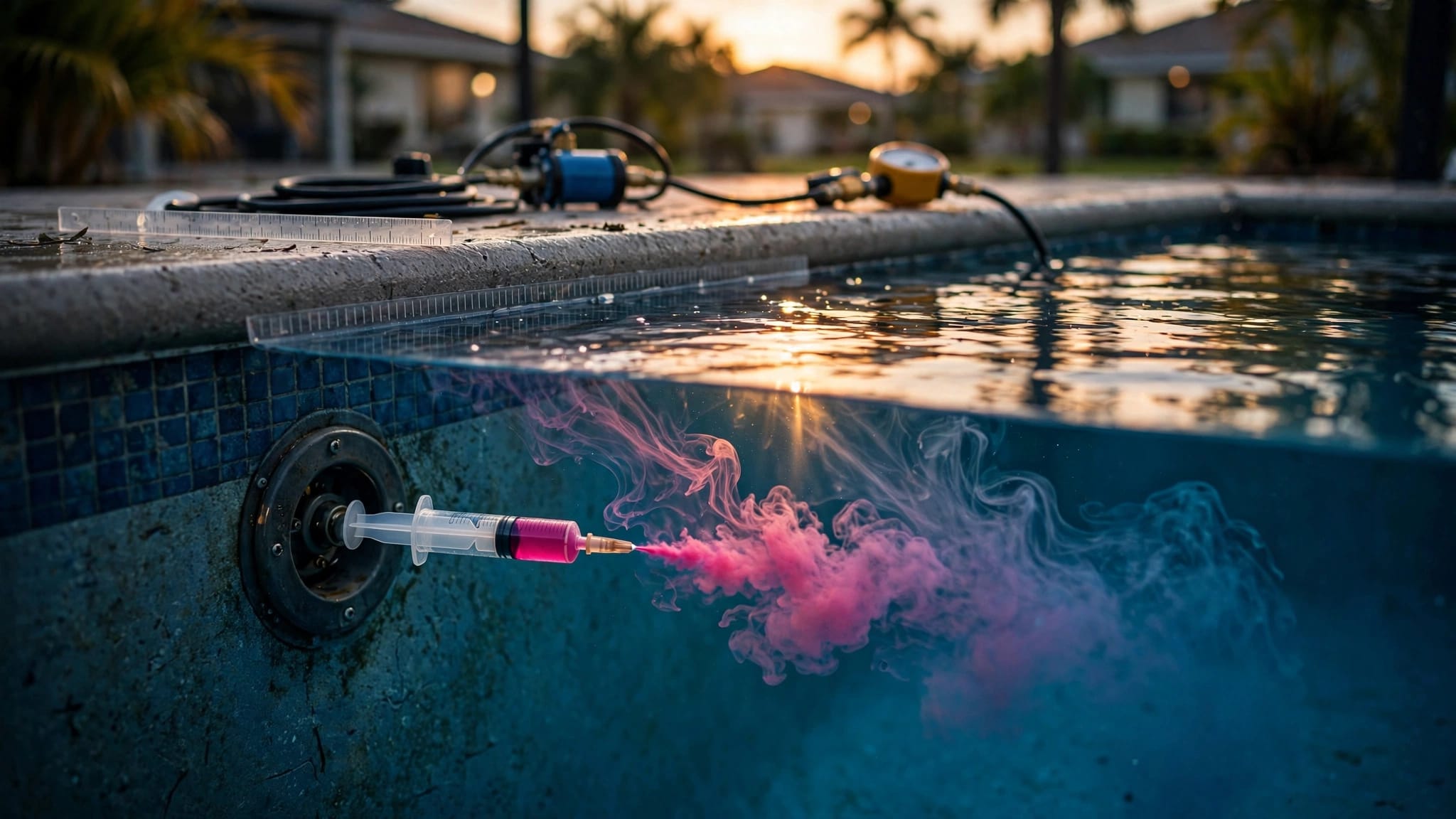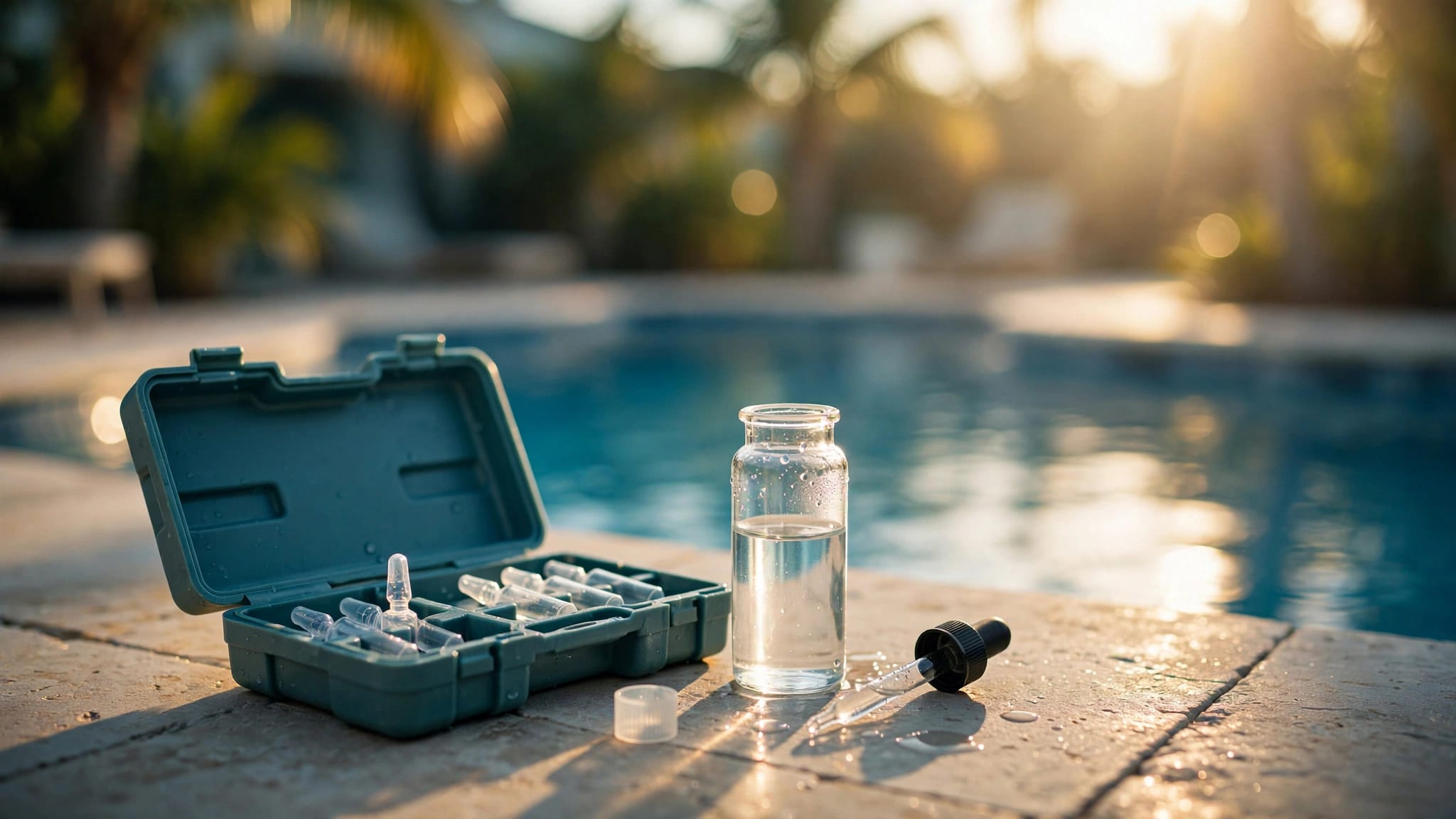
A clogged pump basket can reduce circulation quickly, especially after a Florida storm. Pool pump basket cleaning helps remove leaves, pollen, palm fibers, and other debris before they restrict water flow.
The job is manageable for many homeowners, but safety comes first. Turn off power at the breaker, release trapped pressure, protect the pump's seals, and watch the system carefully when it starts again. The routine below also shows when a dirty basket is only a symptom of a larger problem.
Key Takeaways
- Switch off the pump at the breaker before opening the lid or touching the basket.
- Check the pool water level, skimmer basket, pump lid, O-ring, and filter pressure before restarting.
- Close valves only when the equipment manual or system layout requires it. Never operate the pump with every suction valve closed.
- Refill the pump housing with clean water, reseal the lid, reopen the correct valves, and follow the manufacturer's priming instructions.
- Watch for air bubbles, weak return flow, unusual noise, leaks, or repeated loss of prime.
- Florida storms, heat, pollen, algae, and year-round pool use can shorten the time between inspections.
- Call a qualified pool professional for electrical faults, persistent leaks, repeated priming problems, or damaged equipment.
Why Florida Pools Need Frequent Basket Attention
Florida pools often operate throughout the year. Heat increases pool use, while afternoon rain, tropical weather, and wind bring leaves, dirt, pollen, and organic material into the water.
A screened enclosure reduces larger debris, but it doesn't block every palm strand, fine particle, or piece of windblown material. Homeowners can review the benefits of pool screen enclosures in Cape Coral when planning ways to reduce daily cleanup.
Storms and heavy pool use
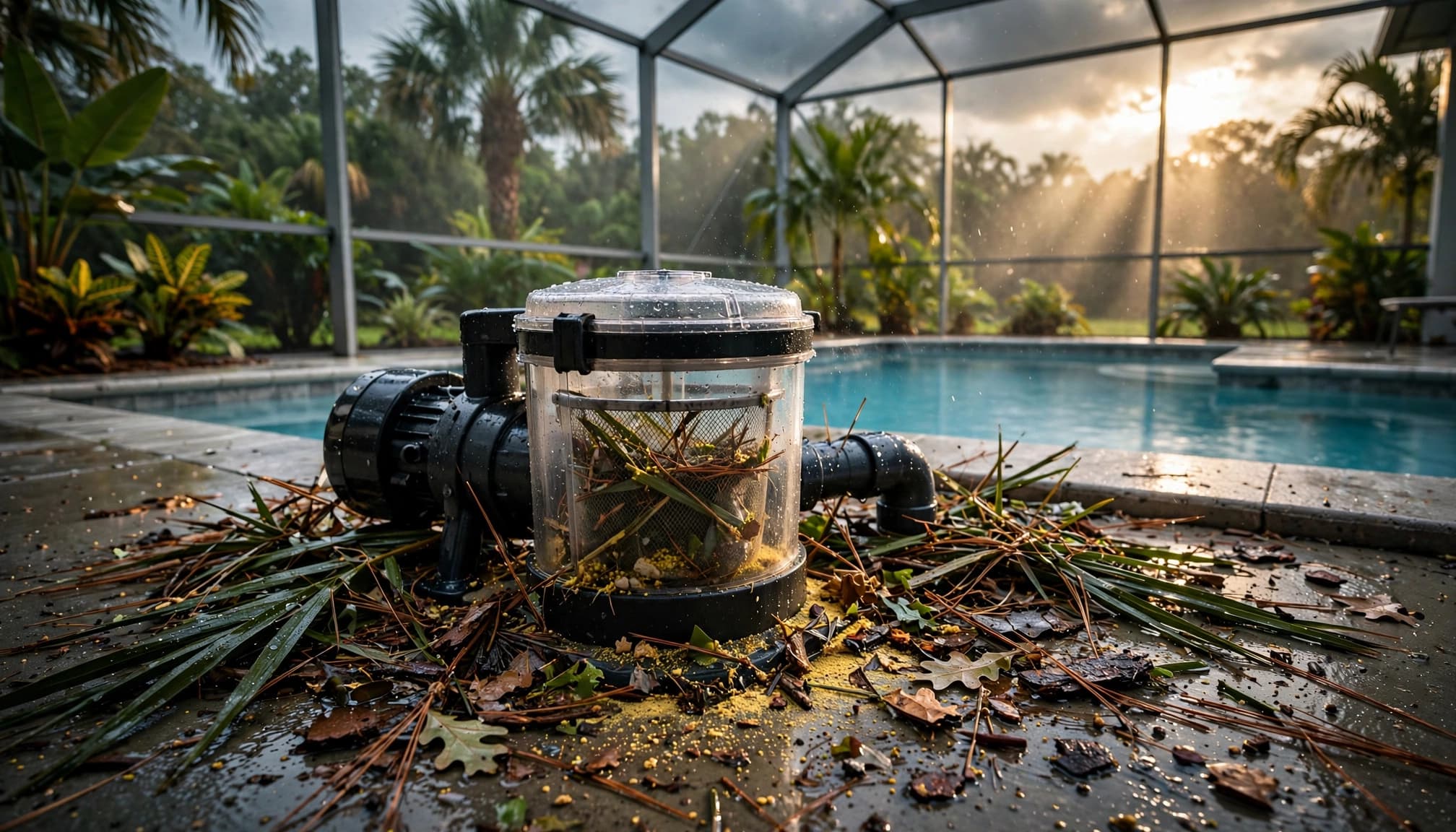
Inspect the pump basket after a major storm, strong winds, nearby landscaping work, or an unusually busy swimming weekend. Heavy rain can also raise the water level and dilute pool chemicals, while warm weather can support algae growth when circulation or sanitation falls behind.
A crowded basket restricts the water reaching the pump. Small palm fibers and fine leaves can also pass through a cracked basket and collect near the impeller.
Enclosure maintenance still matters
Walk around the screen enclosure after strong weather. Look for torn mesh, loose fasteners, bent sections, and debris collecting along the frame. Plants growing too close to the cage can push leaves into the pool and scratch the screen.
A damaged enclosure can increase the amount of work reaching the skimmer and pump basket. Pool screen enclosures and rescreening can help address recurring debris problems, but the enclosure still needs routine inspection and cleaning.
Pool Pump Basket Cleaning: A Safe Routine
Before starting, keep children and pets away from the equipment pad. Do not work around standing water, exposed wiring, or storm-damaged equipment.
Shut down power and relieve pressure
- Turn off the pump at the timer, automation control, and service breaker. Confirm that it cannot start while you work. Never place your hands near the impeller while the equipment has power.
- Check the pool water level. It should remain within the equipment manufacturer's recommended range, commonly around the middle of the skimmer opening.
- Empty the skimmer basket before opening the pump. A full skimmer basket can limit the water entering the suction line.
- If your system requires valve changes, close only the appropriate suction or return valves according to the pump manual. Never close every suction valve while the pump operates.
- Relieve trapped pressure according to the equipment instructions. If the filter has an air-relief valve, open it carefully and watch the gauge until pressure reaches zero. Stop if pressure remains or the gauge appears stuck.
The pump lid may still move suddenly if pressure remains in the system. Remove it only when the pressure is released and the manual permits access.
Remove and inspect the basket
Lift the clear lid carefully, then remove the basket by its handle. Empty the debris into a trash container instead of washing leaves into the equipment area.
Rinse the basket with a garden hose. Check the openings for palm fibers, hair, insects, sand, and compacted debris. Look for cracks, distortion, a damaged handle, or a basket that no longer sits correctly. Replace a damaged basket rather than reinstalling it.
Inspect the clear lid for clouding, hairline cracks, a loose fit, or signs that it has warped. Clean the lid and the lid-sealing surface with water. Examine the O-ring for flattening, dryness, cuts, or debris.
If the O-ring needs lubrication, use only a manufacturer-approved pool lubricant. Avoid petroleum products because they can damage pool equipment seals. Keep the sealing surfaces clean and free of grit.
Refill, Reseal, and Restart the Pump
Cleaning the basket is only half the job. The pump must have enough water to prime without running dry.
Restore the water path
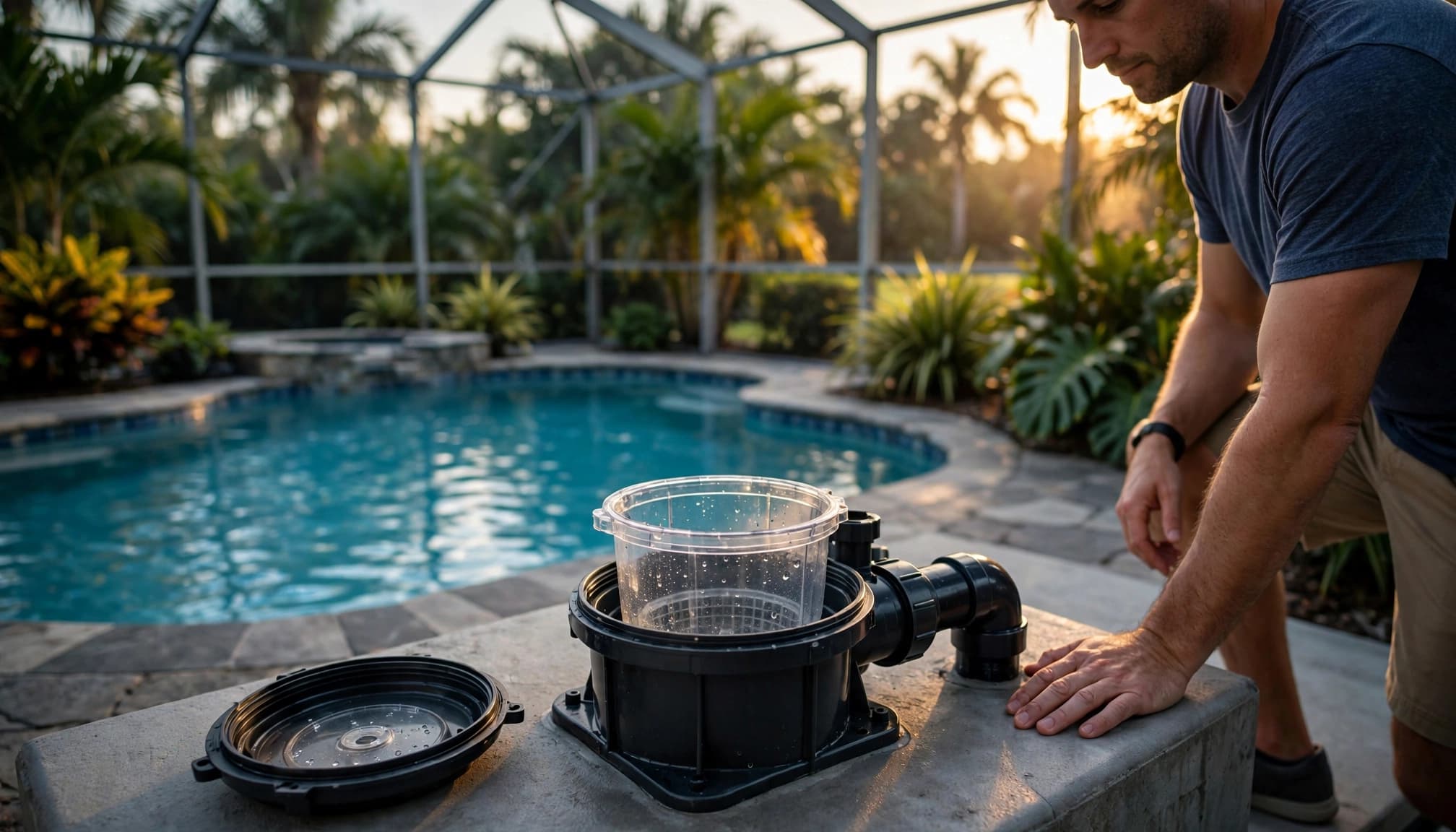
Place the clean basket back into the housing in the correct position. Fill the pump housing with clean water if the manufacturer's instructions call for it. Replace the lid firmly and evenly. Do not overtighten it or use tools unless the manual specifically directs you to do so.
Reopen any valves you closed during the service. Confirm that the required suction and return valves are open before restarting. The pump should never run with the water path blocked.
Follow the pump's normal priming procedure. A variable-speed pump may use different speeds during the day, so use the schedule that normally keeps the system full and circulating.
Watch the first several minutes
Turn the pump on and observe the clear lid, return jets, pressure gauge, and visible plumbing. The basket should fill with water and remain mostly full. A small amount of air may appear briefly during startup, but persistent bubbles need attention.
Check for:
- Strong, steady return flow
- A stable water level under the lid
- Drips around the lid, unions, drain plugs, valves, and filter
- Normal motor sound
- A pressure reading close to your clean-filter baseline
Grinding, screeching, rattling, weak returns, or repeated air under the lid are warning signs. Turn the pump off if it begins running dry or will not hold prime. Repeatedly restarting it can damage the motor and hide an air leak or blockage.
How to Read Flow and Pressure Clues
A clean basket doesn't guarantee that the whole circulation system is working correctly. Compare the pressure gauge with your usual clean-filter reading rather than judging one number by itself.
Low pressure and air under the lid
Low pressure combined with air in the pump basket often points toward the suction side. Check the water level, skimmer basket, pump lid, O-ring, visible suction valves, and drain plugs with the pump off.
A skimmer vortex can form when the water level is too low. A loose fitting, damaged seal, blocked suction line, or clogged impeller can create similar symptoms. If the basket empties after shutdown or the pump loses prime while sitting, the system may be drawing air or allowing water to drain back.
High pressure and weak return flow
High pressure with a full pump basket points more toward the filter or return side. Check the filter pressure against its clean reading and follow the filter manufacturer's cleaning instructions.
A sudden pressure increase can mean the filter needs service. A clogged heater, return fitting, or valve can also restrict flow. Don't dismantle unfamiliar equipment while troubleshooting. If pressure stays high after basic basket and filter checks, arrange professional service.
How Often Should Florida Homeowners Clean the Basket?
There isn't one schedule for every pool. A practical starting point is a weekly visual inspection, followed by cleaning whenever debris begins to cover a meaningful portion of the basket. Your pump manual, pool size, landscaping, enclosure, and swimmer load should guide the routine.
Inspect sooner after:
- Tropical storms, heavy rain, or windy weather
- Pollen-heavy days or nearby tree trimming
- A pool party or several days of heavy use
- Algae treatment or cloudy water
- A power outage that stopped circulation
Keep the water level within its normal range during hot weather and after frequent swimming. If the level drops unusually fast, have the pool checked for a leak instead of treating the pump symptoms.
A written clean-filter pressure reading also helps. Check the gauge after cleaning the basket and compare it with that baseline. Clear water alone doesn't prove that circulation is strong, and a normal pressure reading doesn't confirm balanced water chemistry.
When Basket Cleaning Is Not Enough
Routine pool pump basket cleaning cannot repair a cracked housing, failed valve, blocked underground line, damaged impeller, worn seal, or electrical fault.
Call a qualified pool professional if the pump will not prime, loses prime repeatedly, runs dry, leaks after the lid is secured, or produces unusual noise. Frequent breaker trips, warm receptacles, exposed wiring, damaged conduit, flickering lights, or equipment submerged by stormwater require electrical attention. Do not open electrical panels or touch bonding and grounding connections yourself.
A broader pool problem may involve equipment, plumbing, surfaces, or the enclosure. Resurfacing won't fix a failing pump, and a new pump won't repair a cracked pool shell. Homeowners comparing when to resurface or remodel a pool should have the circulation system reviewed separately.
For an aging system, a professional can evaluate pump selection, plumbing size, valve placement, filter condition, and equipment elevation. You can Get a Free Estimate for an on-site review when routine maintenance no longer solves the problem.
FAQ About Pool Pump Basket Cleaning
Can I open the pump lid while the pump is off?
Turn off the pump at the breaker, not only at the timer, and confirm that automation cannot restart it. Release trapped pressure according to the equipment instructions before removing the lid. If pressure remains or you aren't sure the system is safe, stop and call a professional.
Should I close the valves before removing the basket?
Some systems require specific valves to be closed during service, while others do not. Follow the pump manufacturer's instructions and the valve layout at your equipment pad. Reopen the required valves before restarting, and never run the pump with every suction valve closed.
Why won't my pump prime after I clean the basket?
Check the water level, skimmer basket, pump basket, lid, O-ring, and valve positions. Fill the housing and follow the normal priming procedure. If air keeps entering the basket, the pump runs dry, or the problem returns after each shutdown, turn it off and arrange professional testing.
Conclusion
A safe basket routine starts with power isolation and pressure control. Clean the basket, inspect the lid and O-ring, refill the housing, reopen the correct valves, and watch the system closely after restarting.
Florida weather makes these checks more important because heat, storms, pollen, algae, and year-round use keep pool equipment working hard. When cleaning no longer restores prime or flow, treat the warning as an equipment or plumbing issue and bring in a qualified professional.