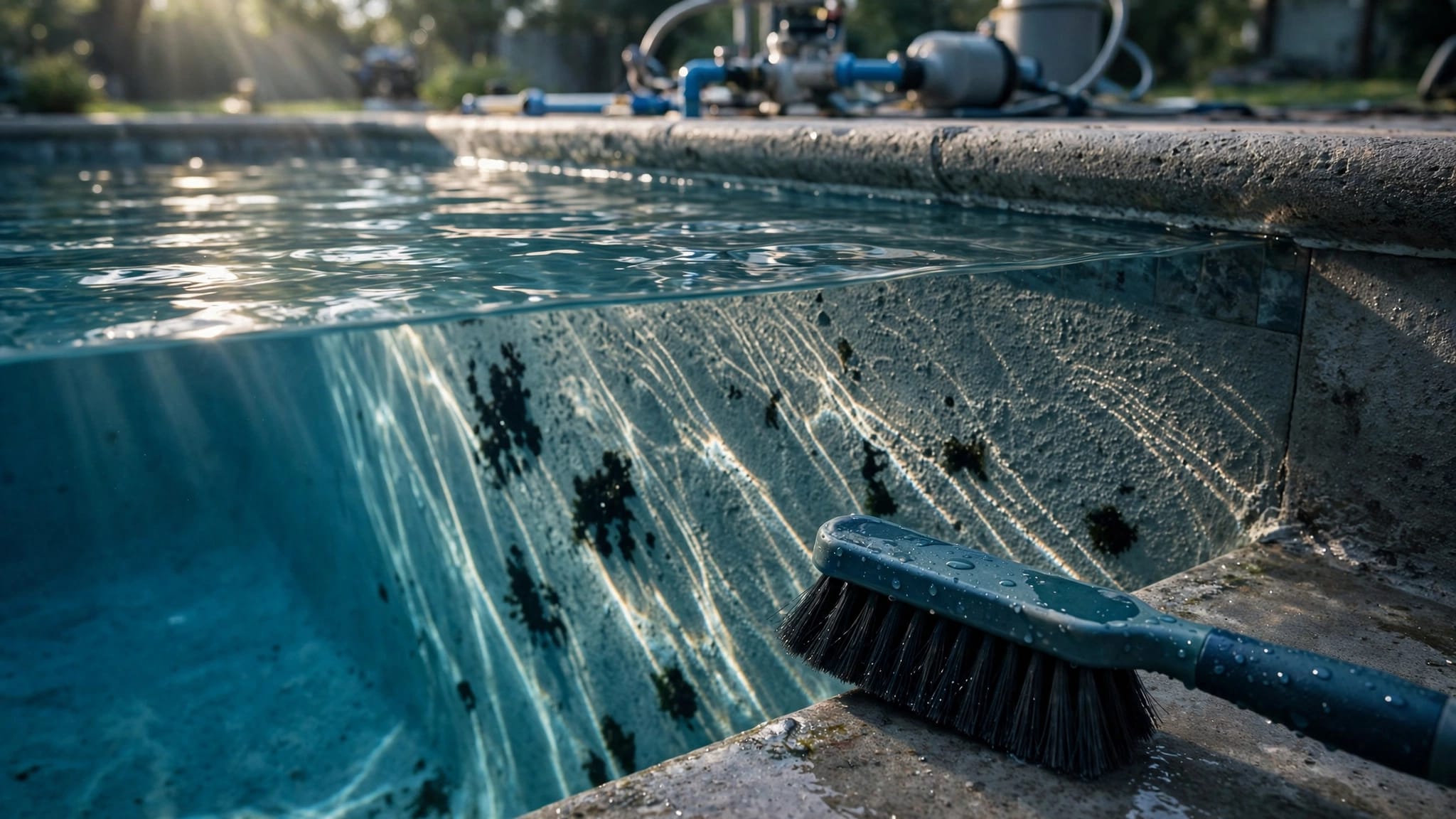
Removing copper pool stains starts with identifying the deposit, choosing treatment for your pool's finish, and controlling the conditions that let metals settle. Adding more chlorine won't remove dissolved metals, even when the water looks clear.
The hardest part is separating a stain from surface damage . Algae, mineral deposits, and worn plaster can look similar but need different care.
Start with the stain's texture, your water chemistry, and recent maintenance changes before choosing a treatment.
Key Takeaways
- Color is a clue, but it can't establish which metal or material caused a stain.
- Water testing, maintenance records, and inspection help narrow down the cause before treatment.
- Choose stain treatment for the exposed finish, whether that's plaster, quartz, pebble, fiberglass, or vinyl.
- Sequestrants help keep dissolved metals from depositing, but they don't permanently remove those metals.
- Recurring discoloration alongside roughness, pitting, or flaking deserves a surface evaluation.
Recognize Copper Pool Stains Without Guessing
A discolored patch doesn't identify its own cause. Start by noting where it appears, whether it's raised or smooth, and whether ordinary brushing changes it.
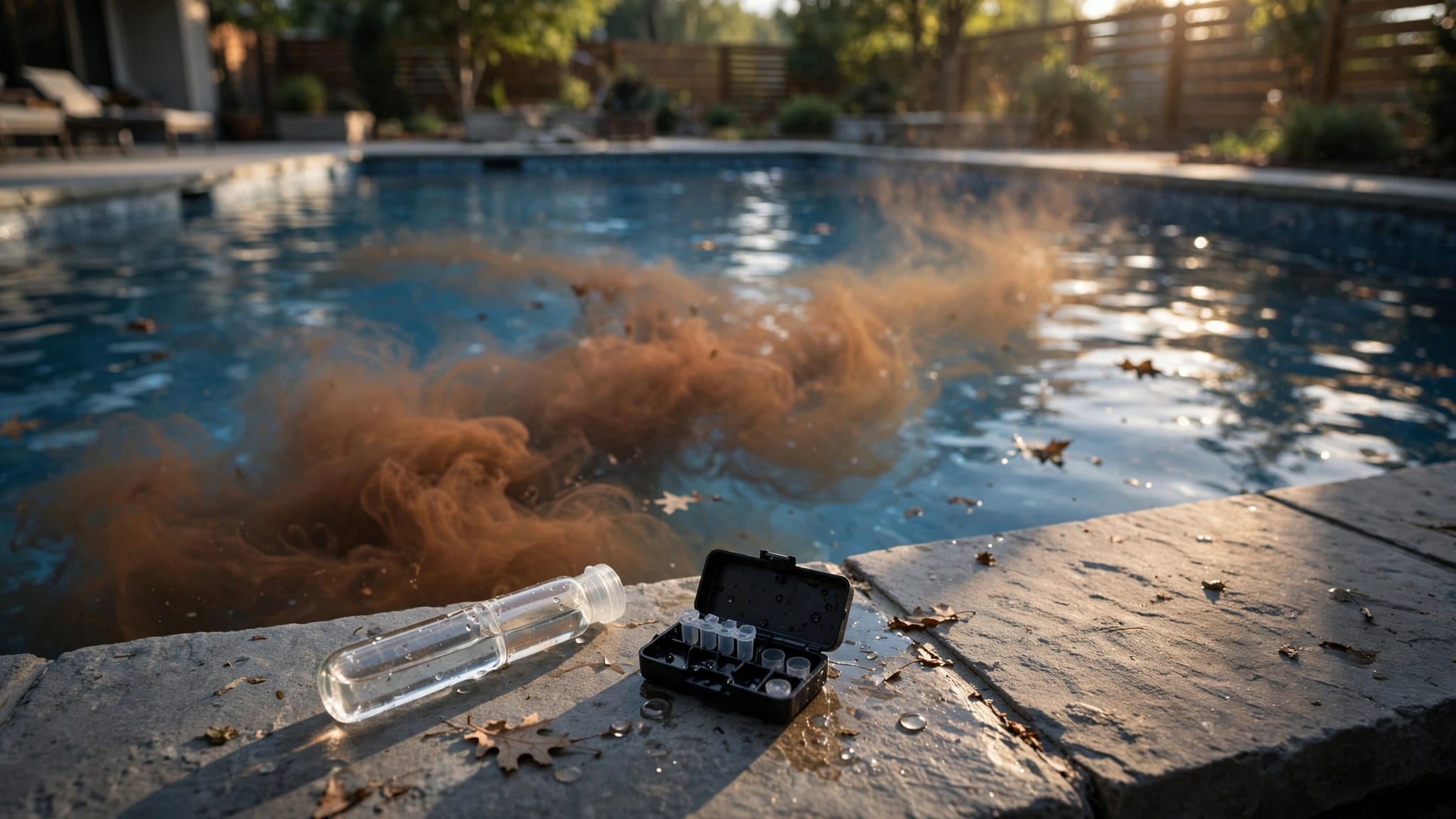
Also distinguish stained surfaces from colored water. Clear water over a marked wall is a different problem from discoloration throughout the pool.
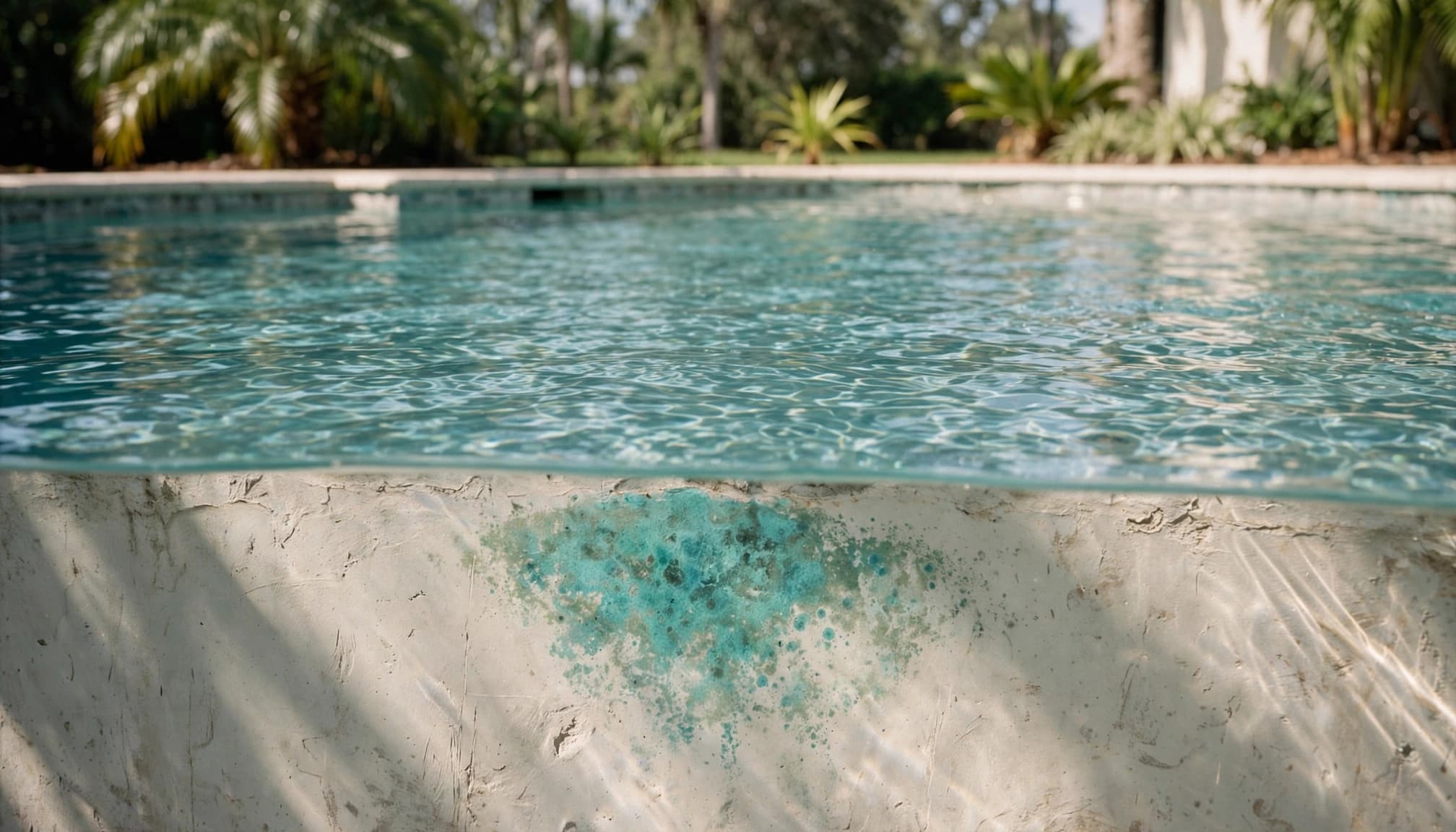
Surface color alone can't identify the substance responsible for discoloration.
Compare metal staining with algae and organic debris
Leaves, insects, and other organic material can discolor a finish after prolonged contact. Algae may appear as a coating or collect in poorly circulated areas.
Use a brush suited to your finish and observe what happens. Loose material that disperses needs a different response from a persistent mark within the surface.
However, brushing alone doesn't establish the cause. A stubborn stain can involve metals, organic contamination, or a damaged finish. Avoid treating every green-looking area as algae or every dark patch as copper.
Separate deposits from finish deterioration
Calcium deposits can create rough, cloudy-looking patches that resemble staining. High calcium hardness and unsuitable water balance can encourage scale.
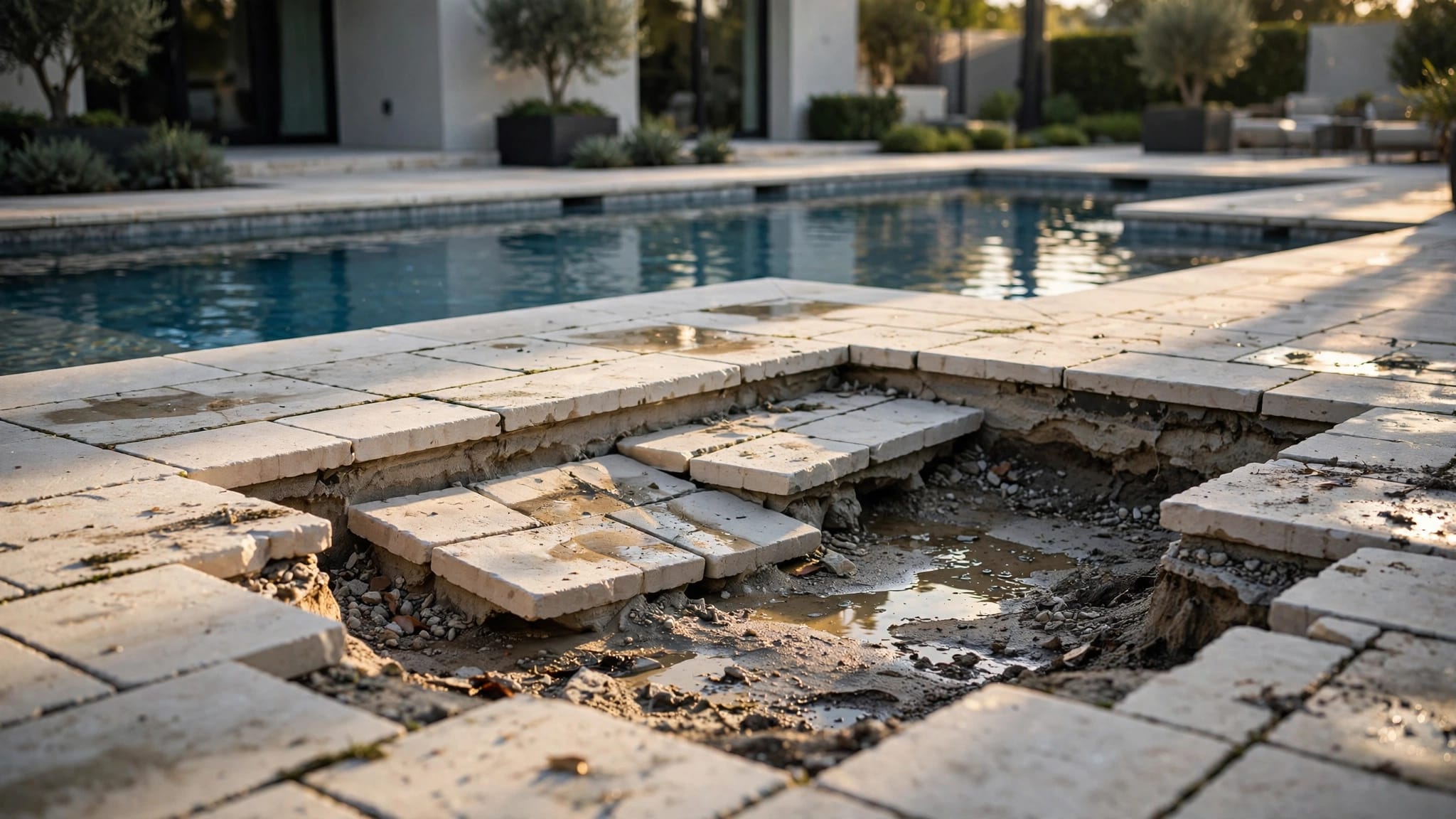
In contrast, pitting, chalkiness, or exposed aggregate may indicate that the finish itself is wearing away. On quartz and pebble finishes, deterioration can affect the cement surrounding the aggregate.
Look at texture as well as color. Cleaning may remove a deposit, but it can't replace missing surface material. That distinction matters before anyone recommends an aggressive treatment.
Confirm the Cause Before Adding Products
A useful diagnosis combines water results, the stain's location, and the pool's maintenance history. No single observation tells the whole story.
Record what changed before the discoloration appeared. That timeline often helps separate a recurring problem from a recent water or maintenance change.
Use water testing to guide the response
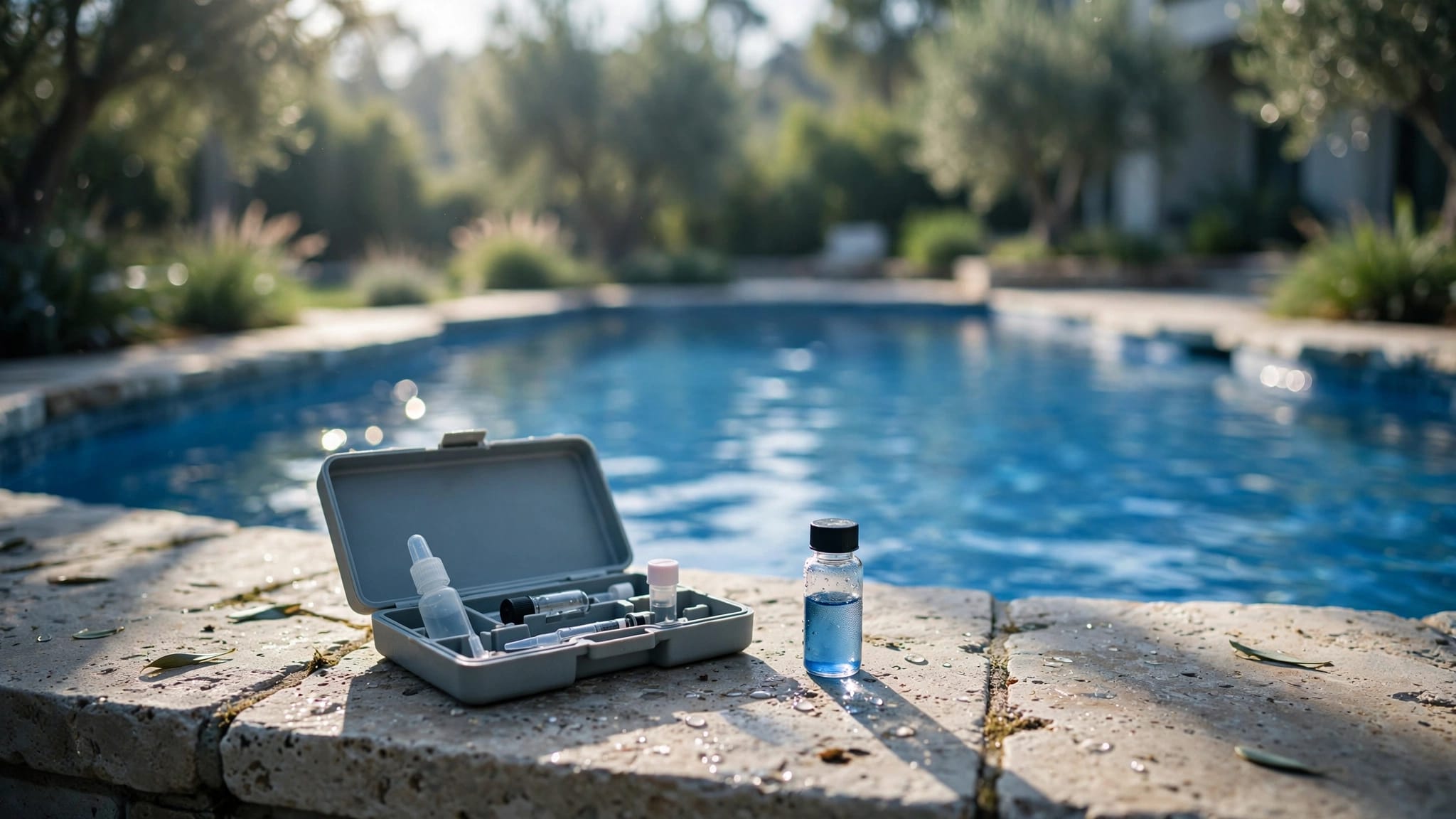
Test pH, alkalinity, calcium hardness, and sanitizer before making corrections. These readings show whether the water is encouraging deposits or becoming aggressive toward surfaces and equipment.
Metal testing adds information when metal staining is suspected. However, water chemistry results need context alongside the condition of the finish.
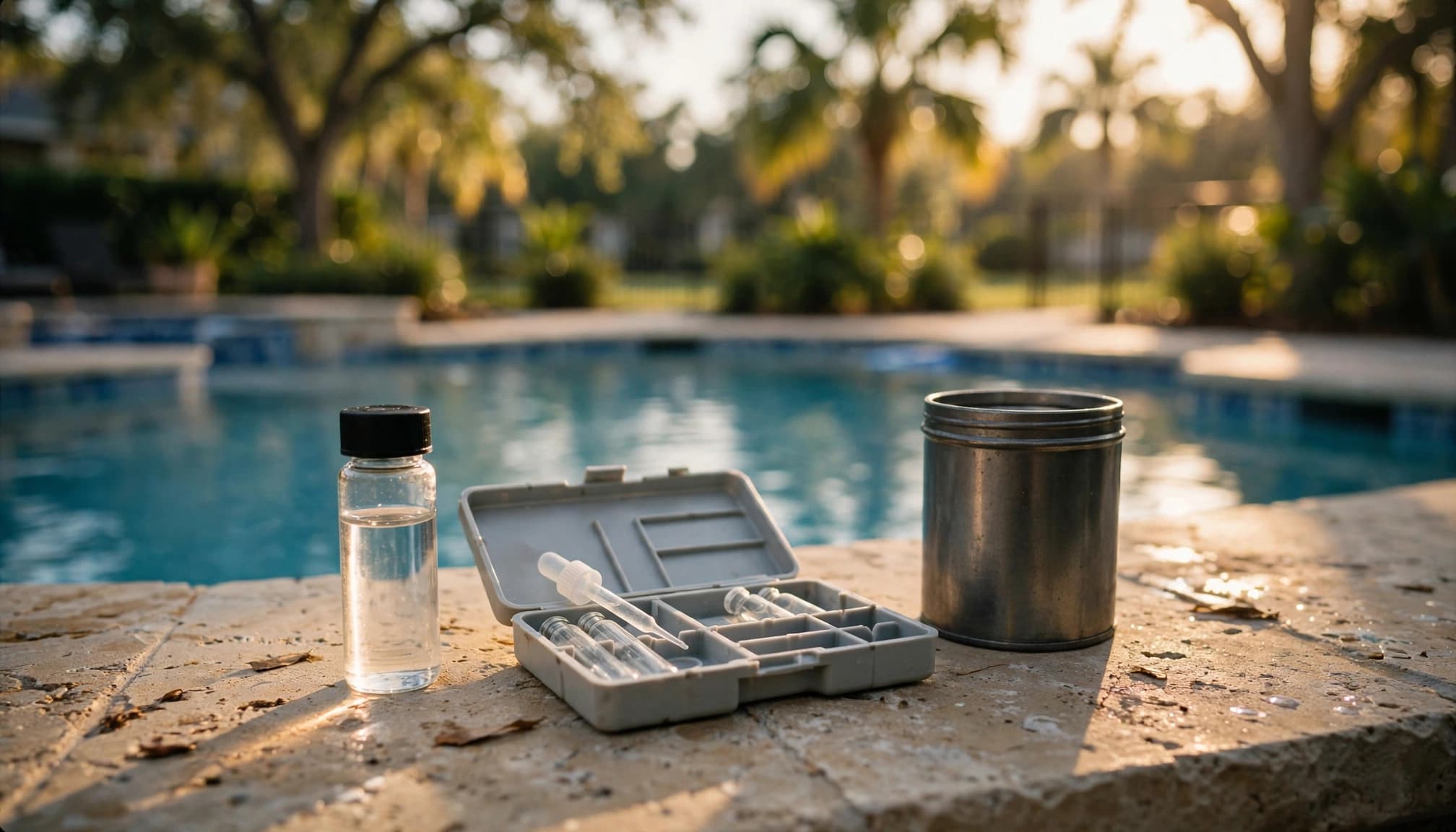
Take samples consistently and read tests within the manufacturer's stated timing. With liquid kits, compare colors in natural, indirect light. Bright surroundings and delayed readings can make interpretation harder.
Review products and recent pool changes
Gather the names of recently added treatments, dates of water additions, and any equipment or chemistry problems. Include specialty products rather than recording only chlorine and acid.
Read ingredient information before adding another treatment. Some pool products contain metals, so repeated additions can complicate an existing mineral problem.
Also note abrupt pH changes, maintenance interruptions, or discoloration that appeared after work on the pool. This history helps guide the next step without relying on color alone.
Match Removal Methods to Your Pool Surface
The exposed interior finish determines what it can tolerate. A gunite shell may have plaster, quartz, or pebble over it, and treatment must suit that finished surface.
Choose a treatment labeled for the identified stain and finish. A general-purpose cleaner isn't automatically suitable for submerged pool surfaces.
Plaster, quartz, and pebble finishes
For an otherwise sound cement-based finish, surface-compatible stain treatment may improve discoloration without replacing the interior. Start with the least aggressive suitable option.
An acid wash is a separate, more invasive cleaning approach. It removes a small amount of surface material and doesn't repair worn plaster or eliminate the reason staining occurred.
Our comparison of pool resurfacing vs. acid washing explains why surface condition matters when choosing between them.
Avoid repeated aggressive cleaning on thin, chalky, cracked, or pitted plaster. Even if it looks cleaner afterward, the underlying wear remains.
Fiberglass and vinyl interiors
Fiberglass gelcoat and vinyl liners require treatments and tools suited to those materials. Don't transfer a plaster-cleaning method to either surface without a compatible product specification.
Use finish-appropriate brushes, and avoid abrasive scrubbing that can leave permanent damage. A damaged surface can become a larger problem than the original discoloration.
For persistent marks, professional evaluation is safer than escalating through unrelated cleaners. Keep treatment focused on the identified deposit and surface, rather than adding several products because the first result was disappointing.
Remove the Stain Without Losing Control of the Water
A stain-removal plan has two jobs: improve the surface and manage the material responsible for the discoloration. Addressing only appearance leaves the underlying water problem unresolved.
Treatment choice and dosage depend on pool volume, current chemistry, the finish, and the product's concentration. There's no reliable universal dose for copper pool stains.
Follow one compatible treatment plan rather than combining cleaners, mineral products, and sanitizer adjustments. Never mix pool chemicals together in a container. Keep swimmers out for the interval stated on the treatment label.
After treatment, allow circulation and repeat the relevant water tests before making another adjustment. An immediate second dose can obscure whether the first treatment worked.
Understand what sequestrants can do
A metal sequestrant binds dissolved metals and helps keep them in solution rather than depositing on the finish. It doesn't permanently remove those metals.
That makes sequestration a management tool, not a complete metal-removal solution. Its maintenance schedule must suit the product and water conditions.
A clearer-looking finish doesn't necessarily mean the metals have left the pool.
Keep filtration expectations realistic
Circulation distributes treatment, while filtration removes suspended particles. However, a standard pool filter won't capture every dissolved metal.
Maintain the filter according to its instructions and watch pressure changes. If the water contains suspended debris, neglected filtration can leave that material circulating longer.
Keep records of treatment, readings, and visible changes so later adjustments have a clear basis.
Prevent Copper Stains From Returning
Prevention depends on steady chemistry and mineral control, not stronger sanitizer alone. Sanitizer manages algae and organic contamination; it doesn't remove metals or calcium deposits.
Keep pH and alkalinity stable. High pH can encourage metals to leave solution, while low pH can make water corrosive. For routine care, our water-testing guidance recommends keeping pH near 7.2 to 7.6.
Calcium hardness also matters. Too little can contribute to aggressive water, while excessive levels can encourage scale. Correct readings together rather than treating each number as an isolated problem.
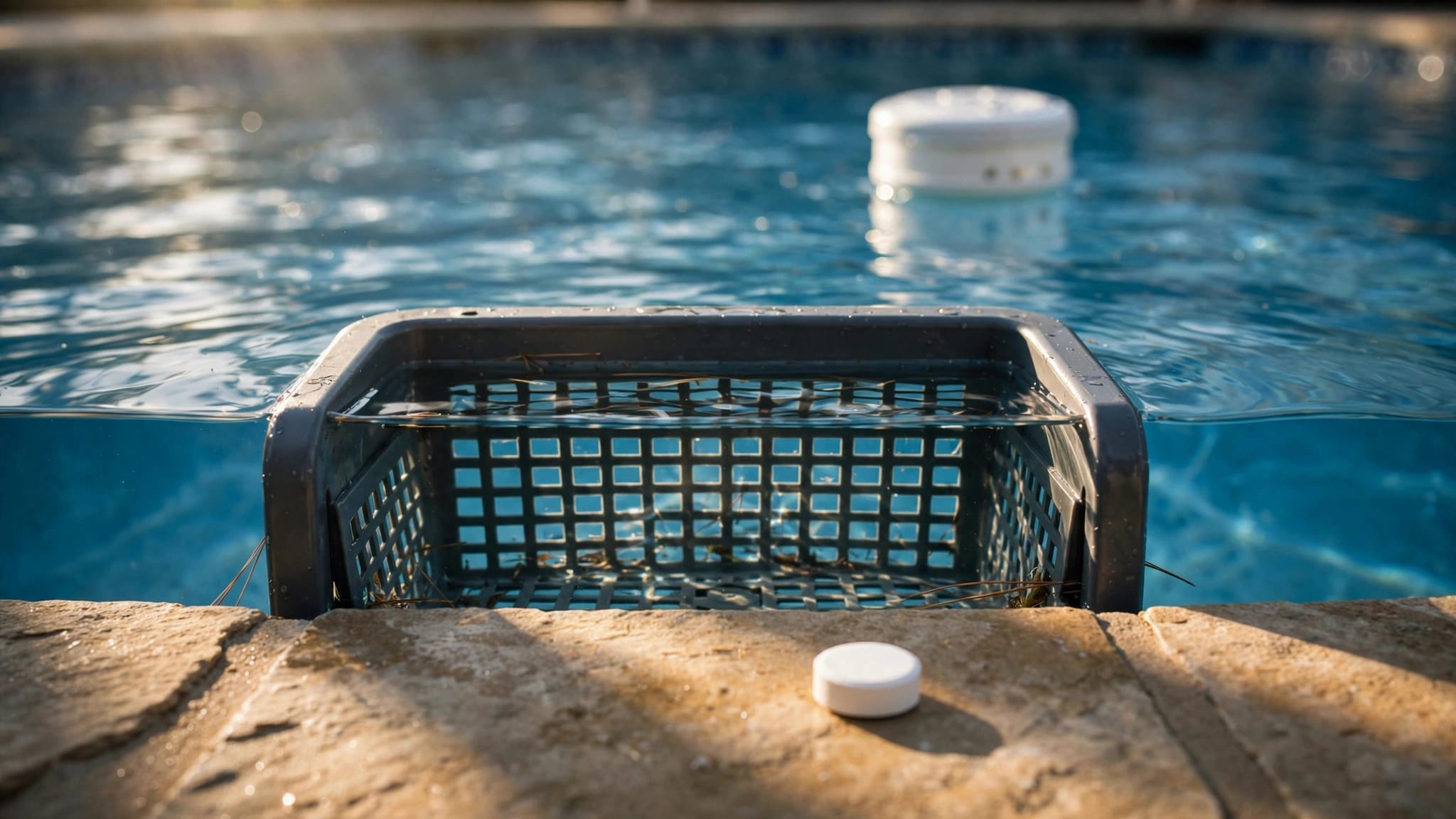
For replacement water with a history of mineral problems, a suitably rated prefilter can reduce some contaminants before they enter. Its capabilities depend on the filter, so mineral-specific ratings matter.
Also maintain broad circulation around steps, benches, and corners. Brush regularly, remove debris, and maintain the filter. Test more often during heavy use, hot weather, and after storms.
Our pool stain prevention tips cover these routines for Southwest Florida pools, where rain, debris, and frequent water additions can complicate maintenance.
Know When Cleaning Has Reached Its Limit
Persistent discoloration doesn't automatically mean a pool needs resurfacing. A sound finish may respond to suitable cleaning and better water management.
However, recurring marks alongside roughness, pitting, chalkiness, or flaking call for a closer surface assessment. Porous or deteriorated areas can hold discoloration more readily.
Our guide to pool resurfacing warning signs explains how visible wear differs from an isolated cosmetic stain.
Resurfacing replaces a worn interior finish after preparation and necessary repairs. It doesn't eliminate the need for balanced water or mineral control afterward.
At Back Bay Pools, our renovation and resurfacing services address worn pool interiors. If repeated staining comes with visible deterioration, Get a Free Estimate to schedule an onsite consultation and discuss the pool's condition.
The right scope follows the condition of the finish. Repeated chemical cleaning shouldn't substitute for repairing material that's already failing.
Frequently Asked Questions
Will shocking the pool remove copper stains?
Chlorine shock doesn't remove dissolved metals. It addresses sanitation and organic contamination, which are separate concerns.
Before adding more sanitizer for discoloration, identify whether the problem involves algae, a deposit, or the finish. More chlorine isn't a universal stain treatment.
Can a pool have metal stains when the water is clear?
Yes. Clear water doesn't rule out metal staining or mineral deposits on the walls and floor.
Water clarity, sanitizer performance, and mineral control measure different things. A pool can look clean while a deposit remains attached to its surface.
Should I drain the pool to remove a stain?
Draining isn't the starting point for every stain. Some treatments work with the pool filled, while other restoration methods require a professional draining plan.
Unplanned draining can create serious risks for the pool structure, particularly where groundwater is high. Have a qualified pool professional handle that decision.
Protect the Finish, Not Just Its Appearance
Copper pool stains need a diagnosis before treatment, followed by care that suits the exposed finish. Surface condition and water chemistry determine whether cleaning is enough.
Keep mineral management separate from sanitation, and judge success beyond the first improvement in color. A lasting result means controlling deposits without sacrificing healthy finish material.