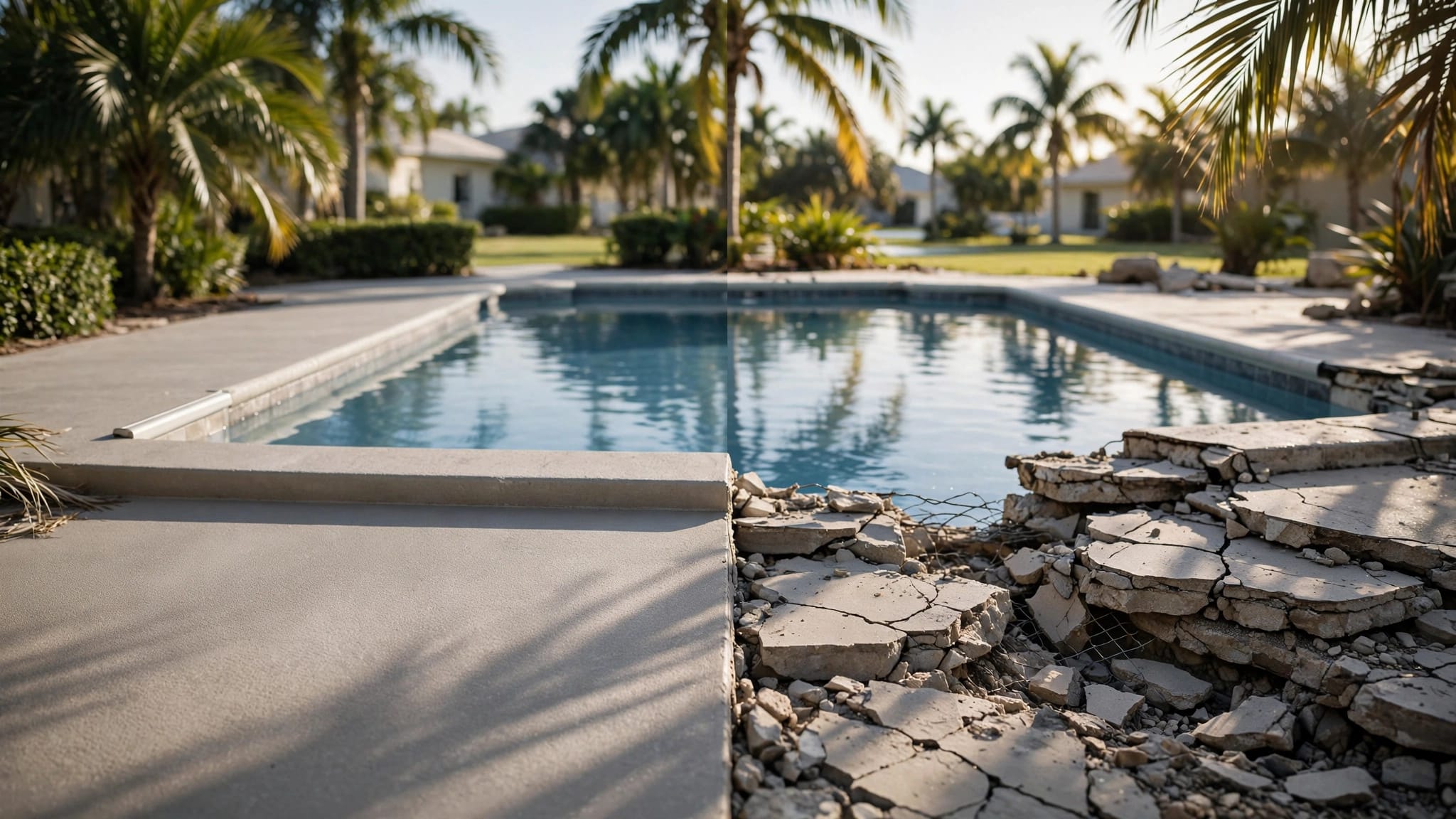
Pool pavers sink or shift when the material beneath them settles, water washes away support, or the installation fails to hold them in place. If you notice pool pavers sinking, a lasting repair starts with the underlying cause , rather than a fresh layer of joint sand.
Uneven edges create trip hazards, while low spots collect water and encourage further deterioration. The first step is distinguishing a localized deck problem from movement that involves the coping, drainage, or surrounding pool structure.
Key Takeaways
- Poor base preparation, water washout, and drainage problems can leave pavers without consistent support.
- The location and pattern of movement offer clues, but surface appearance alone doesn't establish the cause.
- Repairing a small area may be practical when the surrounding deck remains stable.
- Repeated settlement, persistent wet soil, or cracks connecting the pool and deck deserve professional assessment.
How to Spot Sinking or Shifting Pool Pavers
Sinking pavers create depressions, uneven walking surfaces, or puddles where the deck previously drained. Shifting often appears as widening joints, crooked rows, or separation along an outside edge. Both conditions can occur together.
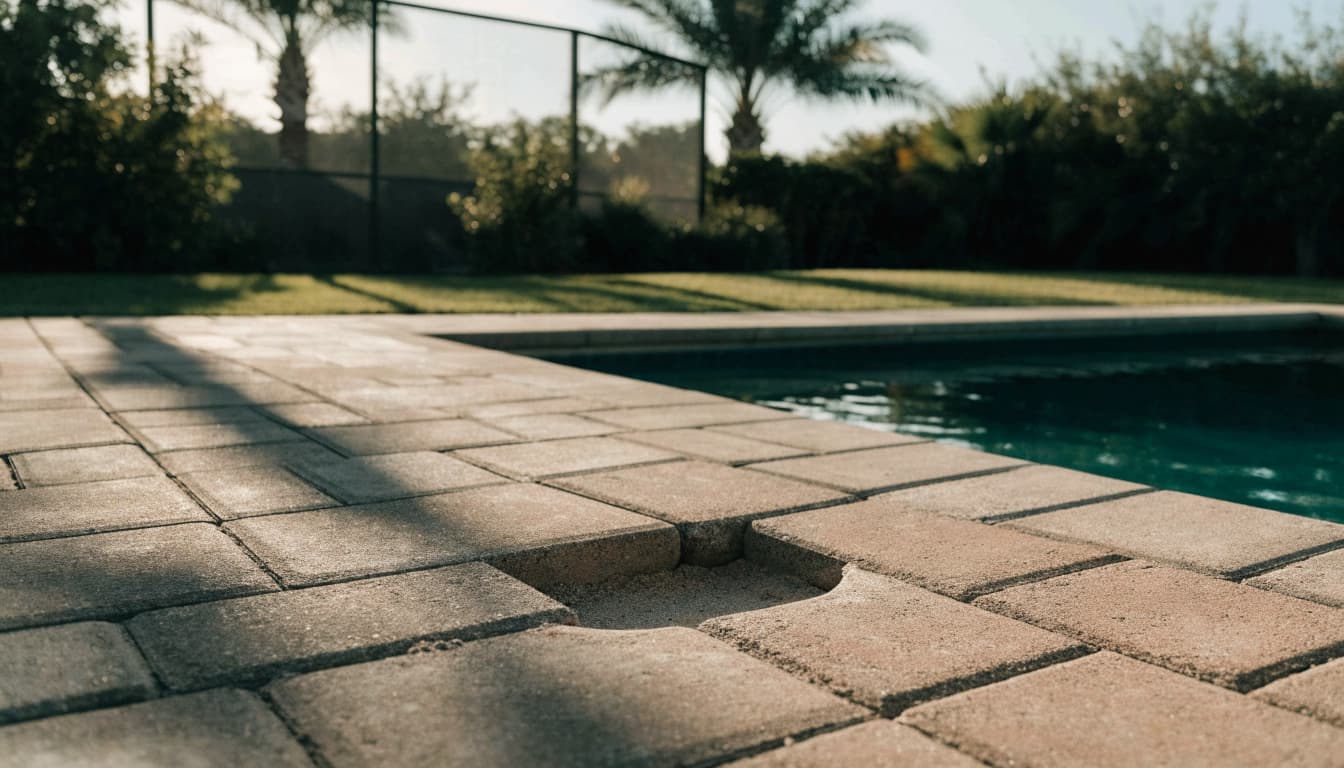
Look beyond the most obvious low spot. Nearby joints may have lost sand, and pavers beside a drain or enclosure post may sit differently than the surrounding surface.
Also distinguish the walking surface from the coping, which forms the pool's upper edge. A low paver beside stable coping presents a different repair question than coping that has separated or moved.
Photograph the affected area from the same position over time. Include a wider view showing its relationship to drains, the house, and the pool. Meanwhile, keep people away from loose units or edges that could catch a bare foot.
Common Causes of Pool Pavers Sinking
The paver surface depends on the support below it and the way water moves through the site. A durable paving material can still settle when those conditions aren't right.
Inadequate Base Preparation
Pavers need a properly prepared, compacted base. If that support is uneven or unstable, individual units can settle differently and create dips.
Joint installation also matters because the units need to remain aligned as a system. Missing joint material and loose perimeter support can accompany spreading or rotation.
Problems may appear after a new installation or become more noticeable as drainage conditions change. However, the age of the deck alone doesn't establish whether the base was built correctly.
Water Washout and Poor Drainage
Heavy rain, repeated runoff, and trapped water can carry supporting material away. Water that repeatedly enters the same gap or collects along an edge deserves attention.
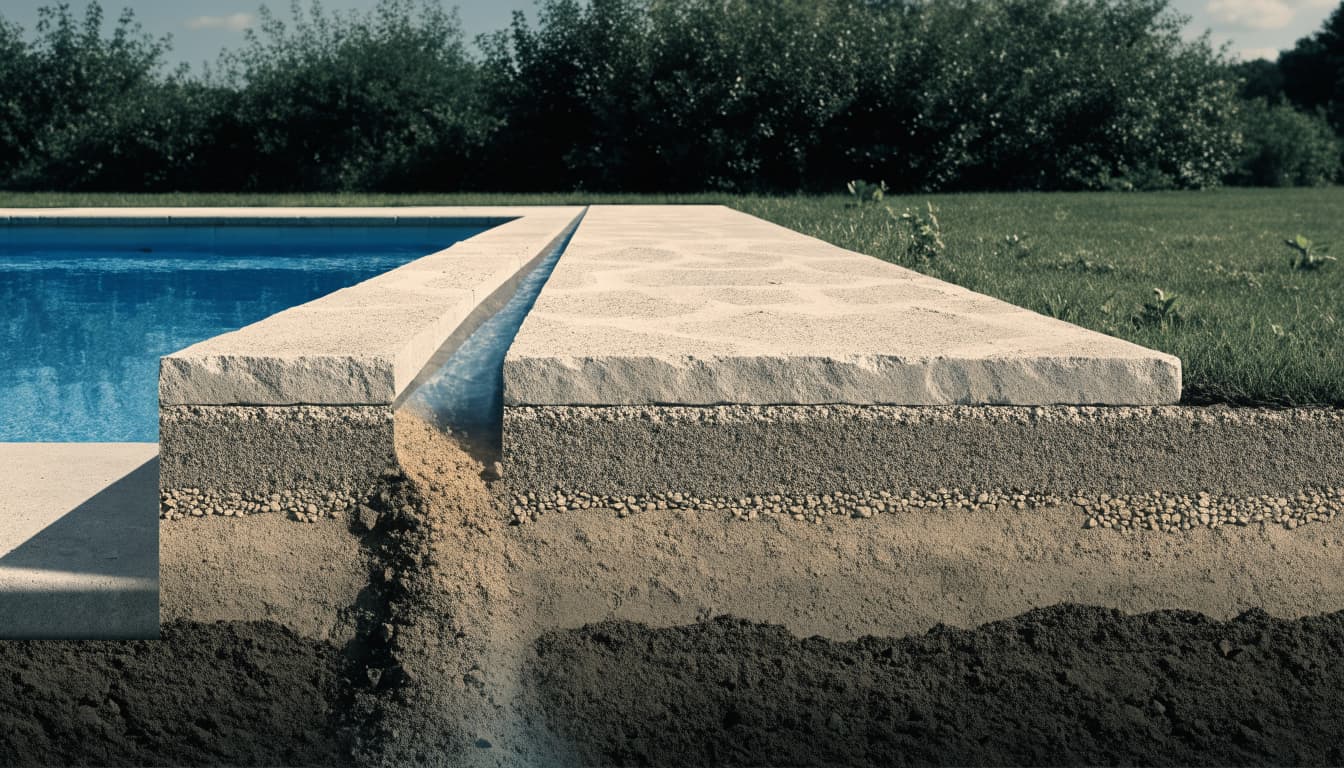
A pool leak can also wash soil from beneath a deck or shell, leaving unsupported areas. Still, sinking pavers alone don't prove a leak exists.
In Cape Coral, storm runoff makes drainage part of the diagnosis. Our guidance on pool deck drainage in Cape Coral explains why grading and a clear discharge path matter together.
How to Identify the Underlying Issue
The most useful observations connect the damage to water, nearby structures, and changes over time. They help narrow the problem without assuming every depression has the same cause.
Follow the Water During and After Rain
From a safe location, observe where runoff enters the deck and where it leaves. Notice whether a downspout sends water toward the pool, a drain overflows, or the same corner repeatedly stays wet.
After the weather clears, look for washed-out joints, deposits of sand, and damp soil beside the deck. Persistent wetness during dry weather deserves attention, particularly when it accompanies unusual pool water loss.
A single puddle doesn't establish widespread failure. However, recurring ponding beside settling pavers suggests that simply raising the surface may leave the water problem unresolved.
Compare Localized and Widespread Movement
One small depression surrounded by stable paving may allow a localized repair. Several low areas, separated rows, or recurring settlement suggest a broader support or drainage problem.
Also examine transitions around steps, skimmers, drains, coping, and enclosure posts. These locations connect different parts of the pool area, so movement there can affect more than appearance.
A repair that restores the deck's height but leaves runoff flowing into the same area can allow washout to continue.
Practical Repair Options for Uneven Pool Pavers
The repair should match both the cause and the extent of movement. Reusing sound pavers may be possible, but the work beneath them determines whether the correction lasts.
Restore Support and Reset a Localized Area
For an isolated area with stable surroundings, repair may involve lifting affected pavers, correcting the supporting base, and resetting the units at the proper elevation.
The finished surface should maintain the intended drainage slope and meet nearby coping or thresholds without creating a new trip edge. Appropriate joint material and perimeter restraint also need attention where they have failed.
Adding joint sand helps maintain joints, but it won't rebuild missing support underneath a sunken paver. Likewise, replacing a damaged unit won't correct an unstable base.
Rebuild More Broadly When Conditions Require It
Widespread settlement may require removing a larger area so the base and drainage can be corrected together. Repeated patching becomes less useful when several sections continue moving.
An existing concrete surface beneath an overlay needs its own assessment. Cracks, settlement, poor drainage, or unsuitable elevations may make removal necessary rather than another covering.
Deck repairs can also fit into our pool renovation and resurfacing services. Coordinating the work helps address coping, deck elevations, and drainage before new finishes cover surrounding areas.
Interior pool resurfacing alone won't stabilize a sinking deck.
How to Prevent Pavers From Settling Again
Prevention starts with the installation plan and continues with basic maintenance. Changing the surface material won't compensate for poor support or water that has nowhere to go.
Coordinate the Base, Drainage, and Pool Details
For new construction, the deck plan should account for excavation, plumbing, coping, steps, drains, screen enclosure footings, and final grading.
Those details affect where the deck can slope and how water leaves the area. Drain placement alone won't solve a problem if the surrounding surface directs water elsewhere or the discharge route is ineffective.
Material selection comes after those site conditions. Our comparison of pavers and travertine for pool decks explains why both depend on suitable installation and support.
Maintain Joints and Keep Drainage Routes Open
Sweep away debris and keep accessible drain openings clear. Address recurring joint-sand loss rather than repeatedly topping up the same opening without investigating it.
Also watch for new puddles after landscaping changes or nearby construction. Changes outside the deck can redirect runoff toward it.
During enclosure repairs or rescreening, exposed damage around posts may reveal a separate deck issue. Coordinate repairs when settlement or damaged concrete involves enclosure supports rather than treating each trade's work in isolation.
When a Professional Assessment Is Advisable
Arrange an assessment when settlement returns after repair, spreads across the deck, or accompanies wet soil that persists after rain has stopped.
Moved coping, significant deck cracks, or a crack that continues through the waterline tile and pool shell warrant a broader inspection. These signs of structural pool cracks help distinguish conditions that deserve more than a cosmetic patch.
Loose enclosure base plates, distorted doors, or movement beside footings also need professional attention. Pavers don't replace the structural support those components require.
Avoid digging or cutting around suspected voids, coping, or posts. Pool plumbing, electrical bonding, and other concealed components can be close to deck work.
For an on-site consultation about your pool renovation and deck concerns, Get a Free Estimate so we can discuss the affected area and the scope of work.
Frequently Asked Questions About Sinking Pool Pavers
Does Sinking Always Mean the Pool Is Leaking?
No. Base settlement and drainage problems can cause pavers to sink without a pool leak. However, unexplained water loss combined with persistent wet soil or continued settlement calls for professional investigation. Treat those observations as related clues rather than proof of one cause.
Can Joint Sand Fix a Sunken Paver?
Joint sand fills spaces between pavers and helps the paving system remain stable. It doesn't restore missing support beneath a low unit. When a paver has settled, the repair needs to address the supporting material and any water problem contributing to the movement.
Do All the Pavers Need Replacement?
Not necessarily. Sound units can often remain part of the repaired deck. The larger question is how much area needs to be lifted to restore support, correct drainage, and rebuild a consistent surface. Widespread movement may require broader work even when individual pavers remain undamaged.
A Lasting Repair Starts Below the Surface
Pool pavers sinking or shifting usually point to a problem with support, drainage, or installation. Restoring a level walking surface matters, but correcting the cause gives that repair a better chance of lasting.
Localized damage may allow a focused repair. Recurring settlement, moved coping, or persistent wet areas need a broader assessment before another layer of material hides the problem.