A pool deck in Southwest Florida has to handle intense sun, heavy rain, wet feet, salt air, and shifting ground. That makes pool pavers vs travertine more than a style decision. The material you choose affects comfort, repairs, drainage, and long-term maintenance.
Concrete pavers and natural travertine can both create an attractive pool area, but they perform differently. Understanding those differences will help you choose a deck that fits your yard, budget, and plans for the pool.
Key Takeaways
- Concrete pavers are manufactured units that offer easy repairs and many pattern choices.
- Travertine is natural stone with a cooler, textured surface and a higher typical starting cost.
- Installation quality, drainage, base preparation, and material grade affect results as much as the product itself.
- Light colors and proper shade can improve comfort around a sunny Southwest Florida pool.
- The best choice depends on your existing deck, screen enclosure, maintenance preferences, and overall design.
What You're Comparing: Concrete Pavers and Natural Travertine
Concrete pavers are manufactured from cement, aggregates, and color pigments. They come in many shapes, sizes, textures, and colors. Installers place them over a properly prepared base, then fill the joints with sand or another joint material.
This construction gives pavers one practical advantage: individual units can be removed and replaced. If a section cracks, settles, or becomes stained, you may be able to repair that area without removing the entire deck. Pavers also make it easier to create borders, bands, curves, and custom patterns around the pool.
Travertine is a natural limestone formed by mineral deposits in hot springs. Each piece has its own variation in color, veining, and small surface details. Many homeowners choose it because it gives a pool deck a softer, more natural appearance than uniform concrete.
The finish matters. A textured or tumbled travertine surface can provide traction when wet, while polished stone can become too slick for a pool surround. Travertine is also porous, so sealing and routine cleaning help protect it from stains and discoloration.
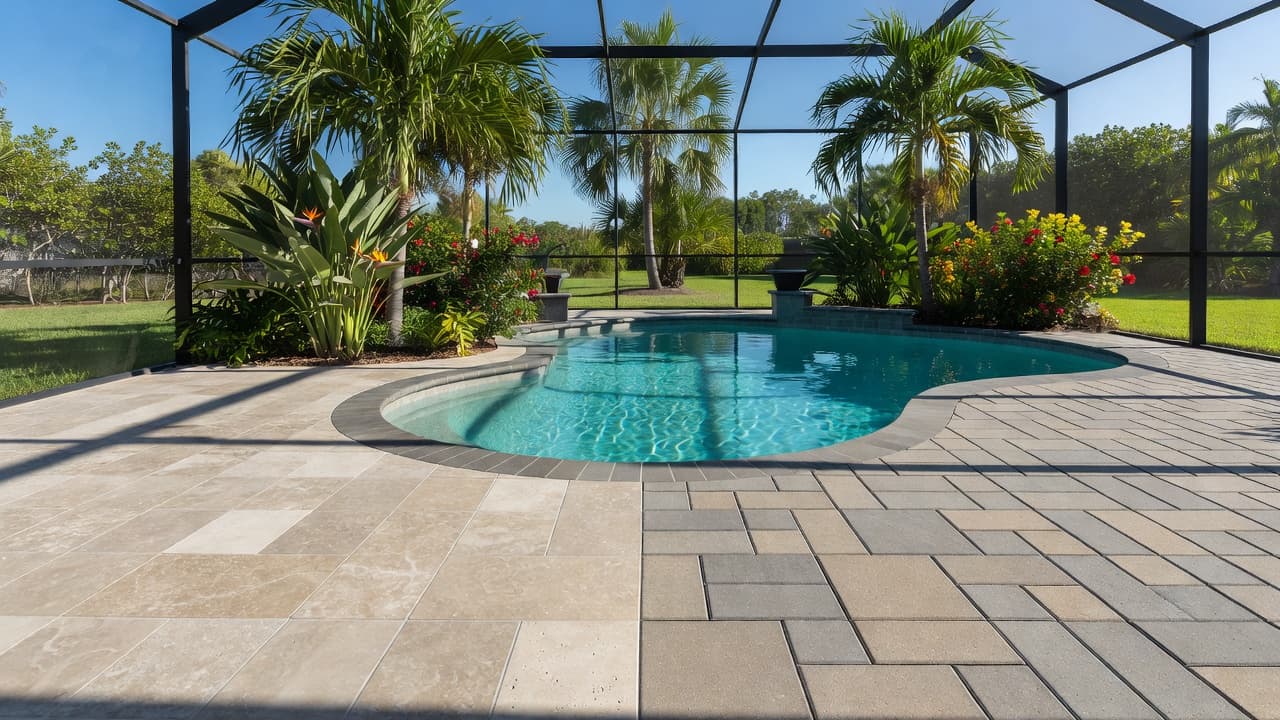
A deck contractor should evaluate the pool edge, drainage plan, existing slab, and screen enclosure before recommending either material. Browse these pool deck material options alongside your home's architecture and daily use.
Pool Pavers vs Travertine: Side-by-Side Comparison
The table below gives a practical starting point for comparing the two materials.
| Feature | Concrete Pavers | Natural Travertine |
|---|---|---|
| Appearance | Consistent colors and many patterns | Natural variation and stone character |
| Initial cost | Often lower, depending on design and base work | Usually higher, with published installed estimates around $15 to $25 per square foot |
| Repairs | Individual pavers can often be replaced | Matching stone can be harder, and damaged pieces may need careful replacement |
| Heat comfort | Depends heavily on color, texture, and shade | Light-colored stone often feels cooler than dark concrete |
| Wet traction | Good with a textured finish and proper drainage | Good with a suitable non-polished finish |
| Maintenance | Sweep, rinse, control weeds, and address joint movement | Clean, inspect, and reseal as needed |
| Color variation | More predictable from piece to piece | Natural variation is expected |
| Design flexibility | Strong choice for patterns, borders, and transitions | Strong choice for a natural stone look and coordinated coping |
The table shows why neither material wins every category. Pavers usually appeal to homeowners who value repair flexibility and design control. Travertine often suits people who prioritize natural appearance and barefoot comfort.
Pricing depends on deck size, demolition, excavation, base preparation, coping, drainage, access, and the number of cuts around the pool. A large deck with screen enclosure footings or complicated curves can cost more than a simple rectangle, regardless of the selected surface.
How Southwest Florida Weather Affects Your Choice
Cape Coral and nearby communities place unusual demands on outdoor surfaces. A pool deck may receive strong ultraviolet exposure for much of the year, then face intense rainfall during summer storms. Moisture can move through joints, collect near the pool, or expose problems in an improperly prepared base.
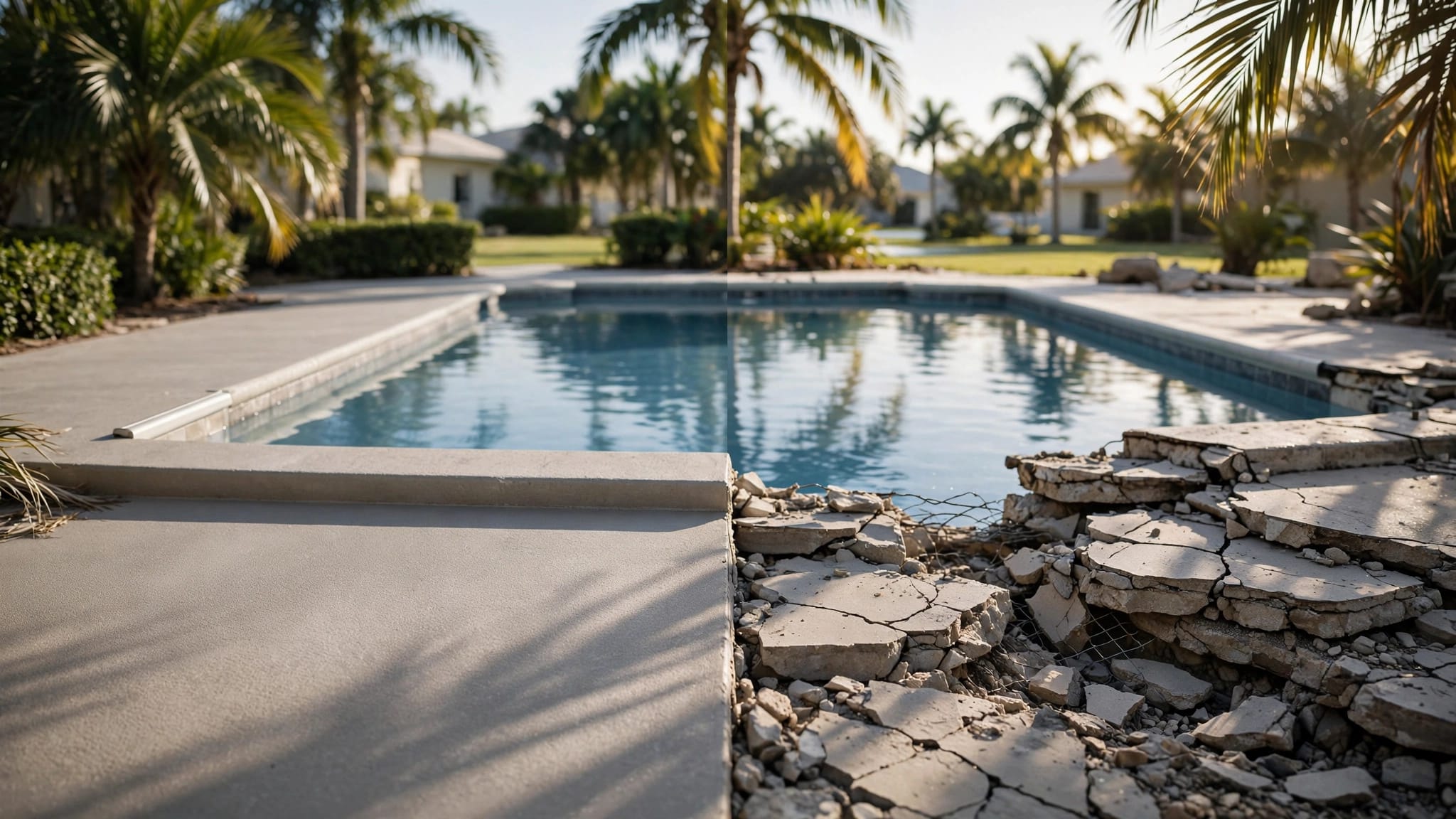
Concrete pavers handle movement differently from a single poured surface because the individual units and joints provide some flexibility. However, that doesn't make them immune to settlement. Poor compaction, weak drainage, or unstable soil can cause low spots, uneven edges, and joint separation.
Travertine also needs a stable foundation. Natural stone can crack or shift when installers place it over an unsuitable base or fail to manage water around the deck. The stone itself isn't a substitute for proper grading and drainage.
Heat is another everyday concern. Light-colored travertine often remains more comfortable under bare feet than dark materials, but no surface stays cool in direct Florida sun. A pale paver, shade from a screen enclosure, umbrellas, and nearby landscaping can also reduce surface temperature.
Salt air and pool chemicals deserve attention in coastal neighborhoods. Neither option should be treated as maintenance-free. Rinse off salt residue, clean spills promptly, and use cleaning products recommended for the specific material. Avoid harsh methods that can strip a sealer or damage the surface.
A cool-feeling deck depends on more than the material. Color, shade, airflow, irrigation, and direct sun exposure all affect barefoot comfort.
Water management is especially important around screened pools. The deck should direct water away from the house and prevent runoff from collecting at the pool beam or enclosure posts. A beautiful surface can still fail when water remains trapped below or beside it.
Installation Quality Matters More Than the Product Name
Homeowners often compare samples before asking how the deck will be built. That order can create problems. The same paver or travertine can perform well on one property and fail on another because of differences in soil, drainage, demolition, and base preparation.
For a new pool, the deck plan should coordinate with excavation, plumbing, coping, steps, screen enclosure footings, and final grading. Contractors also need to plan cuts around skimmers, drains, ladders, handrails, and the pool shape. These details affect both appearance and water flow.
For a renovation, the existing surface needs a close inspection. A stable concrete deck may support an overlay system in some situations, but cracks, settlement, drainage problems, or poor elevations may require removal and rebuilding. Covering an unstable surface only hides the problem for a short time.
Pavers need a properly compacted base and controlled joint installation. Travertine needs the correct setting method, adequate support, accurate slopes, and attention to expansion or movement areas. Pool coping also requires careful alignment because it forms the transition between the waterline and the deck.
If your project includes a new pool, deck replacement, or screen enclosure work, review the pool deck installation process before construction begins. You should know what happens to the existing surface, how drainage will be handled, and when the deck connects with other parts of the project.
Maintenance remains straightforward when the installation is sound. Sweep away leaves and sand, rinse the deck, and address stains before they spread. Paver joints may need attention if weeds grow or sand washes out. Travertine may need resealing based on exposure, use, and the sealer selected.
Pool coping deserves the same care as the walking surface. Travertine coping can coordinate well with a travertine deck or create a contrast against pavers. Learn more about travertine pool coping if you're updating the pool edge during a renovation.
Which Material Fits Your Pool Project?
Concrete pavers may be the better fit when you want a broad selection of patterns, a lower initial material cost, or simpler spot repairs. They're also useful when the design includes decorative borders or multiple colors. Keep in mind that darker pavers can become hot in full sun, and poorly maintained joints can affect the finished appearance.
Travertine may be the better fit when you want natural stone character and a lighter, more comfortable surface around the pool. Its color variation can make a large deck feel less uniform. The tradeoff is a higher upfront cost, careful handling, and a maintenance plan that includes cleaning and sealing.
Your existing conditions may decide the issue. A deck with drainage problems, settlement, or deteriorated concrete needs structural attention before you select a finish. A tight backyard may also require a material and pattern that simplify cuts around the pool and screen enclosure.
When you meet with a contractor, ask for a site-specific recommendation rather than a material-only quote. A proper estimate should account for demolition, base work, drainage, coping, access, enclosure coordination, and the finished deck size. For a local evaluation, you can Get a Free Estimate for your Southwest Florida pool project.
Choosing the Right Pool Deck Surface
The best answer in the pool pavers vs travertine comparison depends on how the deck will be used and how the property handles water. Pavers offer flexible design and practical repair options. Travertine offers natural variation and a light, textured surface that many homeowners prefer around a pool.
Neither material can correct poor grading or an unstable base. Ask for samples in direct sunlight, confirm the planned finish is suitable for wet feet, and review how the deck will meet the pool coping and screen enclosure.
A well-installed deck should feel comfortable, drain properly, and fit the way your family uses the backyard. When those conditions guide the decision, both concrete pavers and travertine can support a durable Southwest Florida pool environment.
Conclusion
Pool pavers and travertine can both work well in Southwest Florida, but they solve different homeowner priorities. Pavers make repairs and custom patterns easier, while travertine brings natural stone variation and a light, comfortable feel.
The strongest choice comes from the complete project plan, including soil conditions, drainage, deck base, coping, screen enclosure details, and maintenance expectations. Focus on sound installation and site conditions , then choose the surface that fits your home's design and your family's routine.