A new pool deck can change how your backyard feels, but the process gets messy before it gets beautiful. Expect noise, dust, deliveries, and a few days when the yard looks more like a work zone than a retreat.
The good news is that a pool deck installation in Cape Coral follows a clear sequence. When you know what happens at each step, the project feels easier to manage, especially if the deck is part of a larger pool update or a full backyard plan.
The first visit sets the pace
Most projects start with a site visit and a lot of measuring. The contractor checks the pool edge, yard access, drainage, door clearances, and any slope issues around the home.
That visit also helps shape the design. You may discuss deck width, finish texture, color, coping details, and whether the surface should stay cooler under the Florida sun. If you want a clear starting point, preparing for your Cape Coral pool estimate can help you gather measurements, notes, and ideas before the visit.
If the deck is part of a new build, the plan may also tie into custom swimming pool building and design. Layout and drainage matter early, because it is much easier to plan them than fix them later.
When you're ready to talk through the project, Get a Free Estimate and schedule an on-site visit. A good estimate should explain the scope, the material, and the likely timeline without leaving you guessing.
Demolition and site prep remove guesswork
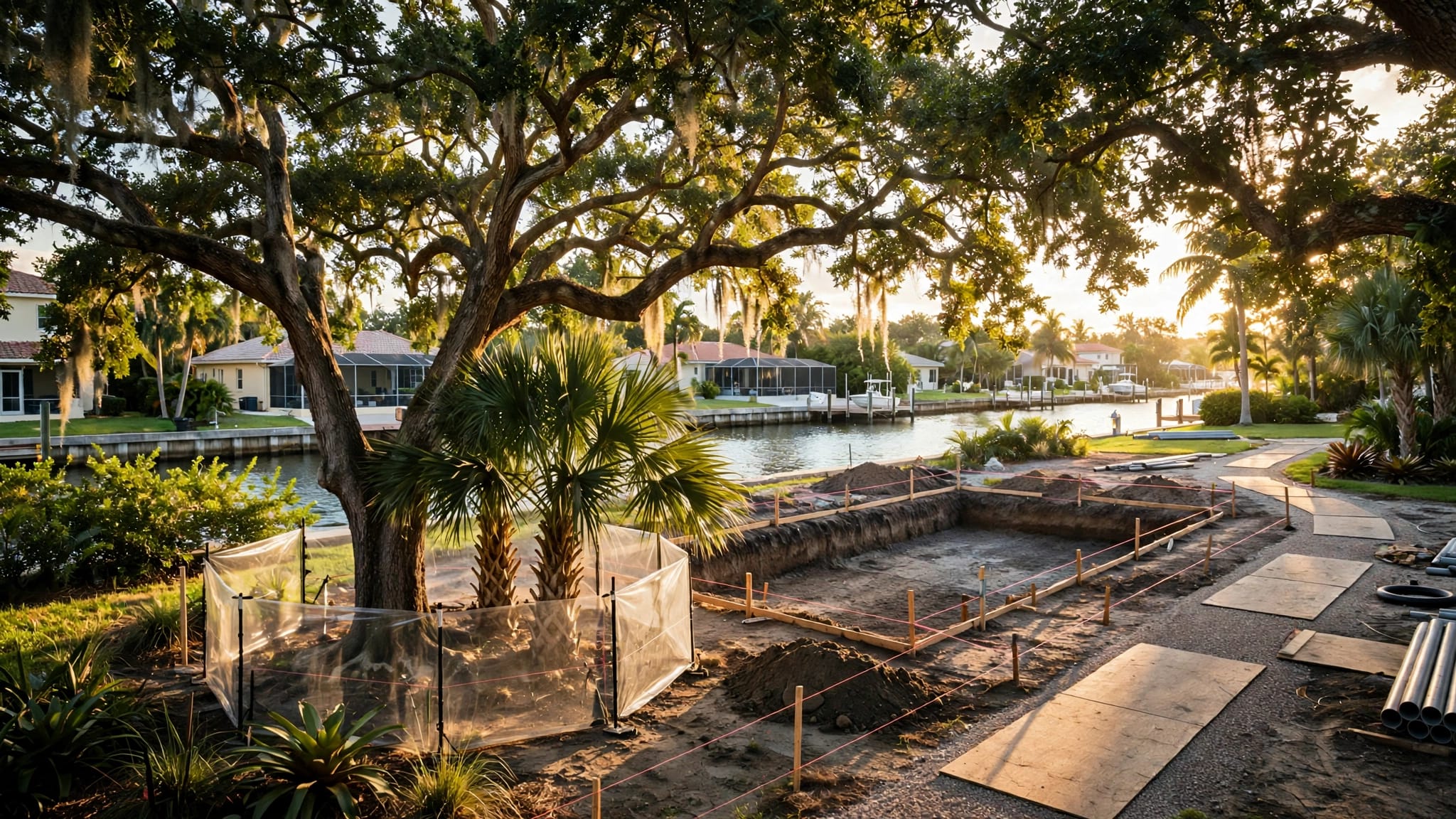
If an old deck is already in place, the next step is removal. Crews break out damaged concrete, pull up loose pavers, haul away debris, and clear the area around the pool.
This stage looks loud and a little rough, because it is. You may see saw cutting, jackhammer work, or compact equipment moving in and out of the yard. The goal is to remove weak material and expose the base underneath.
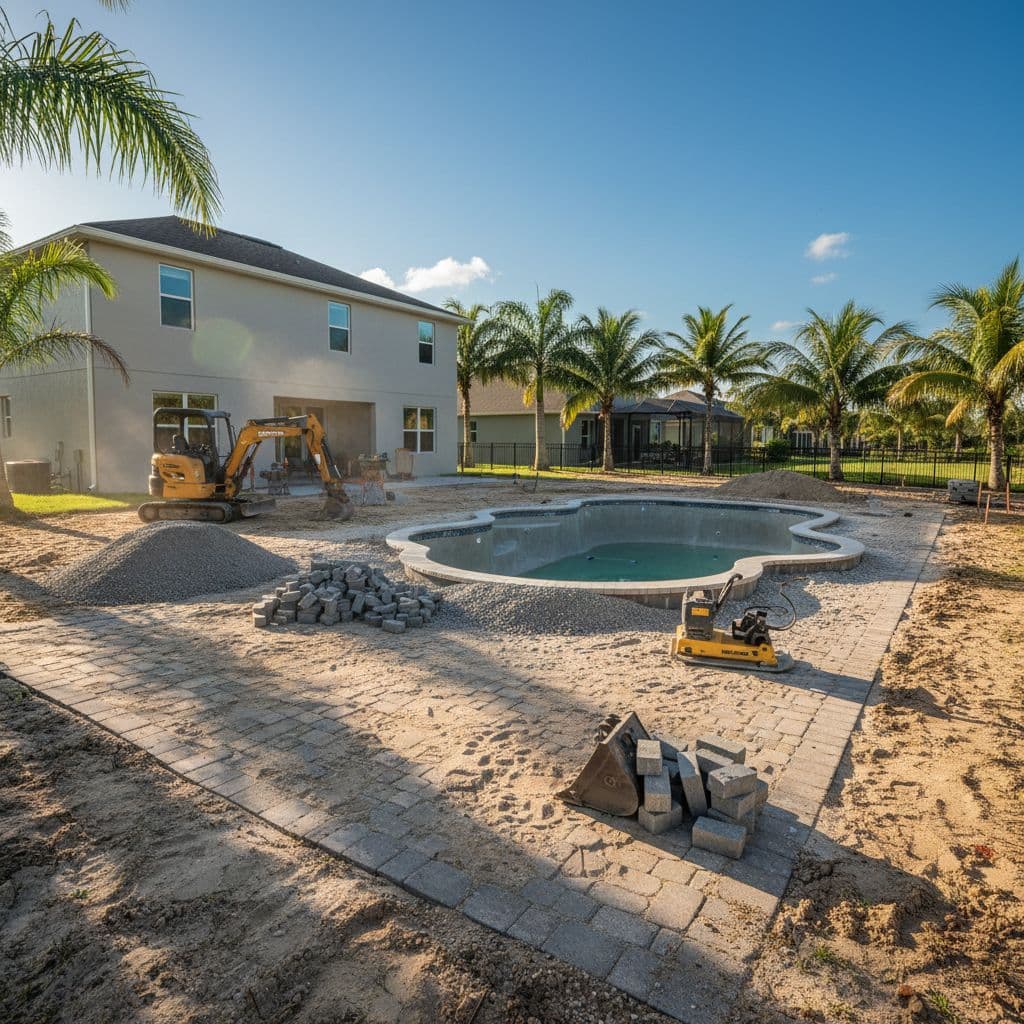
After demolition, the crew checks the sub-base. In Cape Coral, soil and drainage conditions can vary from one property to the next, so this part matters. If the old deck trapped water, shifted, or cracked, the new install may need more grading or base repair.
This phase often takes one to three days. Small projects move faster, while deeper repairs or tight access can slow things down. Rain can also shift the schedule, because wet ground makes base prep harder and less stable.
In Cape Coral, weather is part of the timeline, not an afterthought.
Picking the right material for Florida heat and moisture
Material choice affects how the deck looks, how hot it feels, and how much upkeep it needs. Florida sun is hard on surfaces, so the best choice is usually the one that balances comfort, traction, and long-term care.
Here is a quick comparison of common pool deck options:
| Material | Strengths | Best for | Watch-outs |
|---|---|---|---|
| Concrete pavers | Strong, flexible, easy to replace in sections | Most pool deck replacements | Needs a solid base and regular joint sand checks |
| Travertine | Stays cooler, looks refined, feels natural | Hot, sunny backyards | Higher cost and occasional sealing needs |
| Brushed or stamped concrete | Cost-friendly, clean appearance, easy to shape | Simple deck replacements | Can show cracks if the base moves |
| Cool-deck coatings | Softer underfoot and cooler than plain concrete | Resurfacing existing decks | Needs proper prep and periodic refresh work |
The right surface often depends on your priorities. If you want easy repairs, pavers are popular. If you care most about heat, travertine or a cool-deck finish may fit better. If the project includes shell repairs, coping updates, or a larger refresh, choosing between a pool remodel or resurface can help you see how far the work should go.
Finish also matters. A lightly textured surface gives better grip near the water. A sealed finish can help with staining, but too much gloss can make the deck slick. The best option is the one that looks good and still feels safe when wet.
Installation, curing, and the final walkthrough
Once the base is ready, the new deck starts to take shape. For concrete work, crews set forms, place reinforcement if needed, pour or finish the slab, and create the slope that moves water away from the pool and the house. For pavers, they spread the bedding layer, set each piece, compact the surface, and lock the joints in place.
This is the phase homeowners notice most. You may see levels, string lines, spacers, edge restraints, and constant checks for slope. That attention is not fussiness. It keeps puddles from forming and helps the deck last longer.
The timeline here varies. A straightforward paver deck can often move faster than a poured surface with extra detailing. Larger jobs may take one to three weeks, especially if the contractor is waiting on permits, inspections, or weather windows. If your project includes a screen enclosure or extra site work, that can add more coordination.
Concrete also needs cure time. The surface may look finished before it is ready for full use, so furniture and heavy traffic usually stay off the deck until the crew gives the green light. Pavers are often usable sooner, but the joints and edging still need to settle.
You will also get a final walkthrough. That is the time to check edges, drainage, transitions to doors or coping, and any spots that need touch-ups. A good walkthrough should feel calm and practical, not rushed.
Safety and maintenance that pay off later
A pool deck gets used hard. People walk on it with wet feet, kids run across it, and furniture gets dragged more than it should. Because of that, safety and maintenance should be part of the design, not an afterthought.
The biggest things to think about are simple:
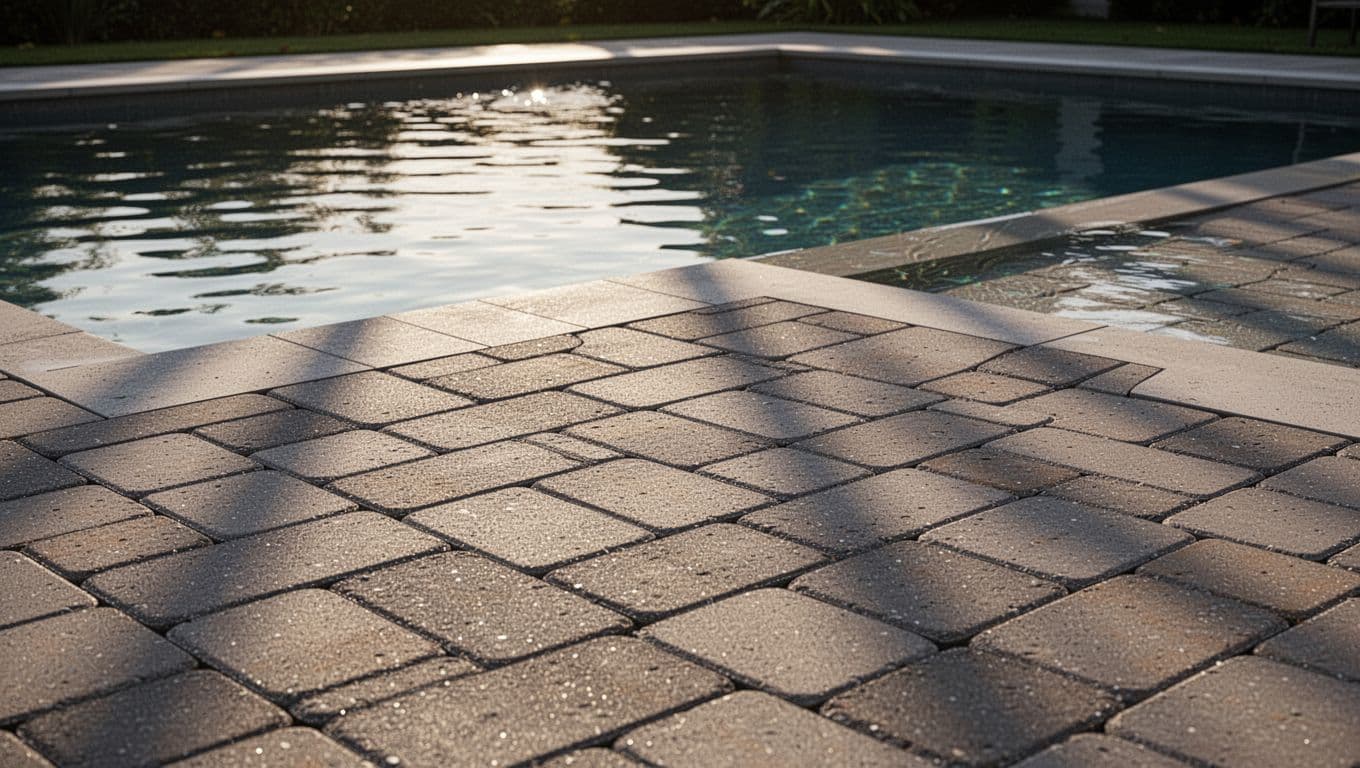
- Slip resistance matters because wet decks are part of daily pool life. A textured finish gives better grip than a smooth one.
- Drainage keeps water moving away from the pool and home. Even a slight slope helps stop puddles and standing water.
- Heat retention affects comfort in summer. Light-colored surfaces and cooler materials can make a big difference.
- Maintenance keeps the deck looking fresh. That usually means washing, checking joints, sealing when needed, and fixing small cracks early.
Pavers are often easier to maintain because one damaged section can be replaced without redoing the whole deck. Concrete and coatings need more attention to cracking, staining, and surface wear. Still, each option can last a long time if the base is sound and water drains the right way.
Homeowners should also think about furniture feet, grill placement, and where hoses or cleaning tools will live. Small habits help protect the deck. So does regular cleaning, especially in humid weather when mildew can build up in shaded spots.
Conclusion
A Cape Coral pool deck project has a few noisy stages, but each one has a clear purpose. First comes planning and measuring. Then demolition, base prep, material choice, installation, and final cleanup.
The best results come from good drainage, the right surface for Florida heat, and a crew that does not rush the base. When those pieces are handled well, the finished deck feels safer, looks better, and holds up longer around the pool.