A pool tile and coping installation changes how a pool looks, but it also affects how the edge holds up over time. In Cape Coral, that matters more than most homeowners expect, because sun, salt air, rain, and daily splash all work on the same spots.
If you're planning a new build, remodel, or renovation, knowing the process ahead of time makes the project easier to live through. You'll know what crews are doing, what the yard will look like, and why the schedule can shift a little when weather gets involved.
Why tile and coping matter more than most people think
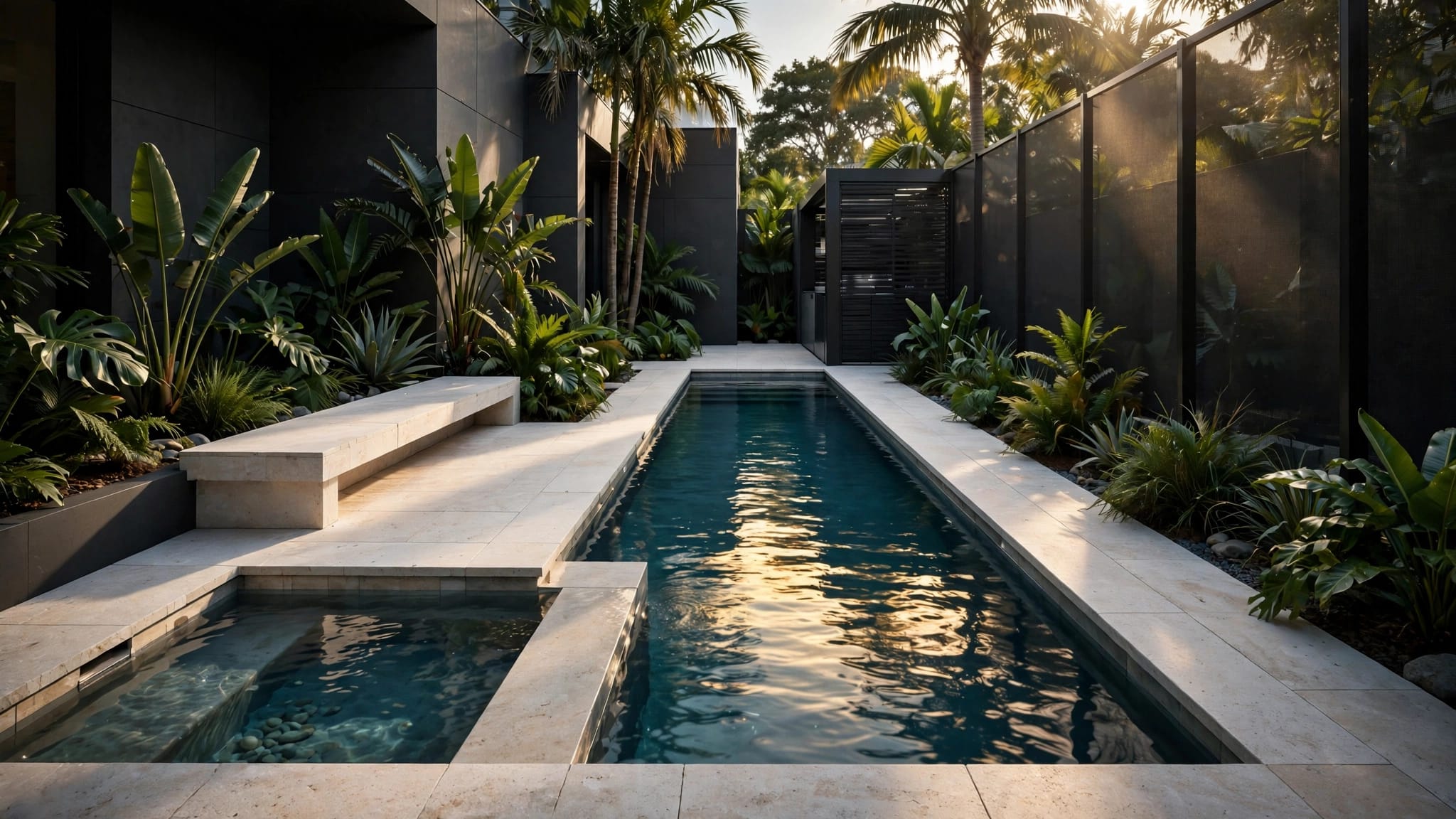
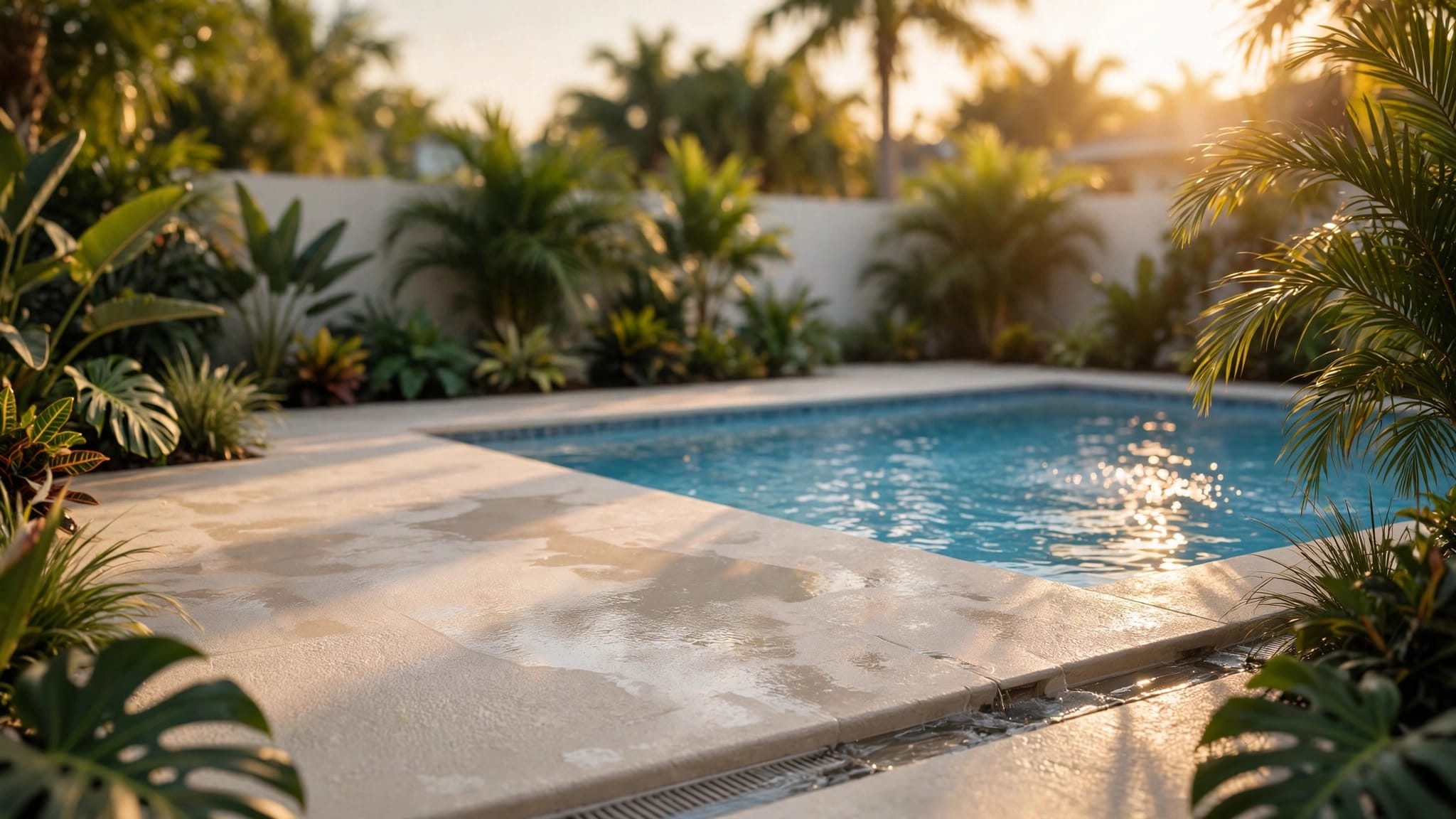
Tile and coping sit at the point where the pool gets the most use. Tile protects the waterline from staining and wear, while coping caps the edge and gives the pool a clean finish. Together, they shape the first thing people notice when they walk into the backyard.
That edge also does important work. It helps guide water away from the shell, creates a safer transition from deck to pool, and keeps the finish looking neat around curves, steps, and spas. If those pieces are installed well, the whole pool feels tighter and more finished.
When tile and coping are part of a larger update, professional pool renovation and resurfacing services can help the new edge line up with the rest of the pool finish. That matters because a fresh tile line looks best when it works with the deck, plaster, and any surrounding features.
Material choice matters too. Porcelain and glass are common for waterline tile because they clean easily and handle splash well. Travertine, marble, concrete, and pavers often show up at the coping line or around the deck, where strength and appearance both matter.
The installation process, day by day
Most projects start with prep. On a renovation, crews remove the old tile or coping first, then clean the bond area so the new material has a solid base. You may hear saws, grinders, and tapping during this stage. That sound is normal, and it usually means the crew is getting the surface ready the right way.
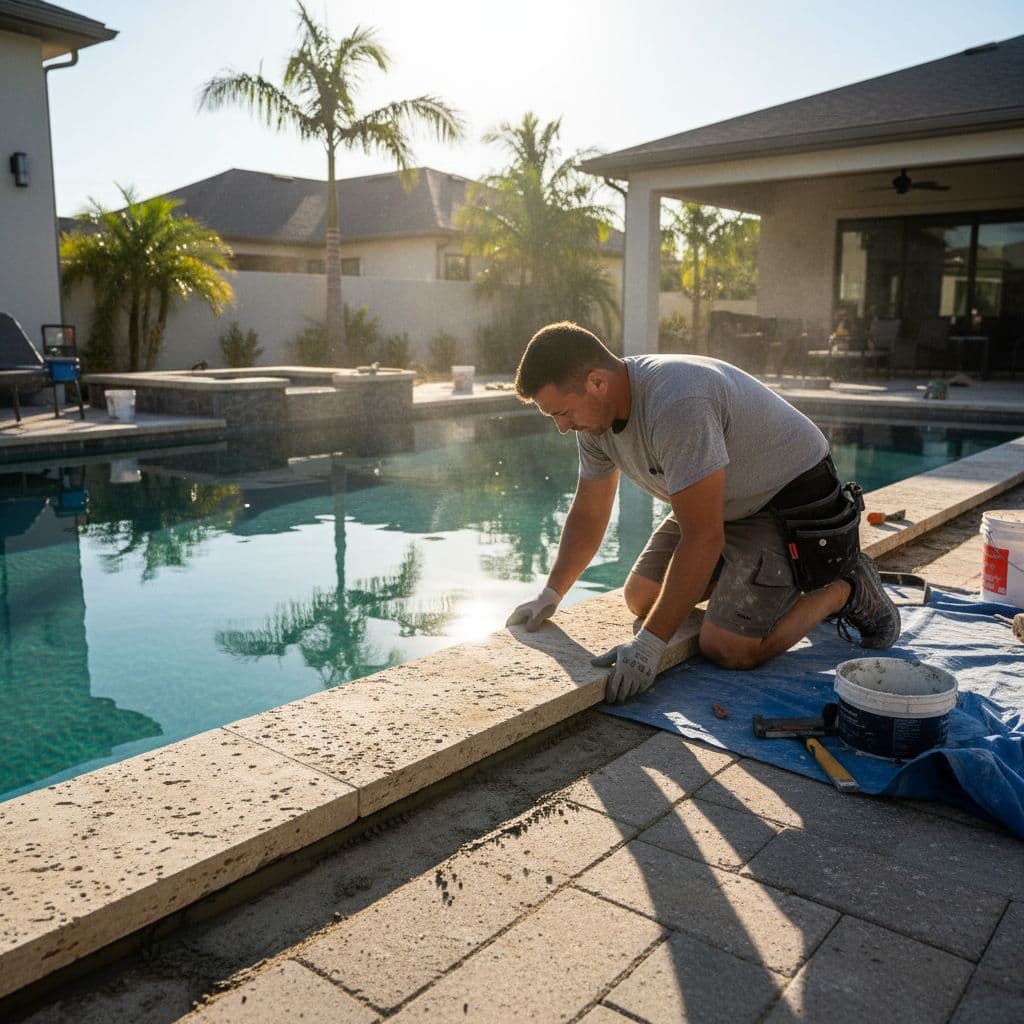
After prep, the tile goes in first along the waterline. Installers set each piece in mortar or adhesive, then check the spacing and level line as they move around the pool. Curves, spa edges, and corners take extra time because those areas need careful cuts for a smooth look.
Coping usually follows once the tile line is set. Each piece is dry-fit, adjusted, and leveled before it gets locked in place. This step affects more than appearance. The coping needs a slight slope in the right direction so water sheds properly, and the overhang should feel even from one section to the next.
The final day often includes grout, cleanup, and a close inspection. Crews remove residue, check for chips, and look at the lines from different angles. A good finish should look straight, clean, and natural, not like separate pieces forced together.
What the job site feels like while work is underway
Expect some disruption around the pool area. Tools, buckets, tile boxes, and coping pieces usually take up space nearby, so access may be limited while the crew works. Furniture may need to be moved, and a section of the deck may stay off-limits for part of the project.
Noise is part of the job, especially during demo and cutting. Wet cutting helps keep dust down, but it does not remove it completely. If you work from home or have pets, it helps to know which days will be the loudest so you can plan around them.
Most crews try to keep the site organized, but the project still feels active. Hoses may run across the yard, coverings may protect nearby surfaces, and workers may come and go with materials. Good communication helps a lot here. When you know the next step, the project feels easier to follow.
Weather and curing time can change the schedule
Cape Coral weather has a way of shaping outdoor work. Afternoon storms, strong sun, and high humidity can slow parts of the job or push the schedule back a day. That does not mean anything is wrong. It usually means the crew is waiting for the right conditions so the bond holds up.
Curing time matters just as much as the install itself. Mortar, grout, and sealers need time before they can handle water, foot traffic, or cleaning. If the crew says the pool needs to sit longer, that step protects the finish later.
Fresh tile can look finished fast, but the materials still need time to set before the pool goes back to normal use.
Rain can also create small pauses, especially if it hits before materials have cured. Good crews protect the work area and adjust instead of rushing. A short delay is easier to live with than a loose edge or weak grout line.
Choosing materials for Florida heat, salt air, and daily use
Cape Coral homes need finishes that can handle heat and moisture without constant upkeep. That is why tile and coping choices matter so much. Smooth porcelain is a strong choice for the waterline because it resists staining and cleans easily. Glass tile can create a bright, polished look, but it needs careful installation to keep the finish even.
Natural stone changes the feel of the pool edge. Travertine is common for coping because it has a classic look and works well with many home styles. Marble can look elegant, but it needs proper care and the right setting. Both materials need good drainage and skilled installation if they are going to hold up in a coastal climate.
Concrete and pavers are also common around pool decks and coping transitions. They offer flexible design options, but joints and movement need attention. If those pieces are not set correctly, small shifts can show up later as gaps, uneven edges, or cracked sections.
If you're comparing tile styles, choosing the right swimming pool tile helps narrow the field. The best option is the one that fits your pool use, your upkeep level, and the look you want over the long run.
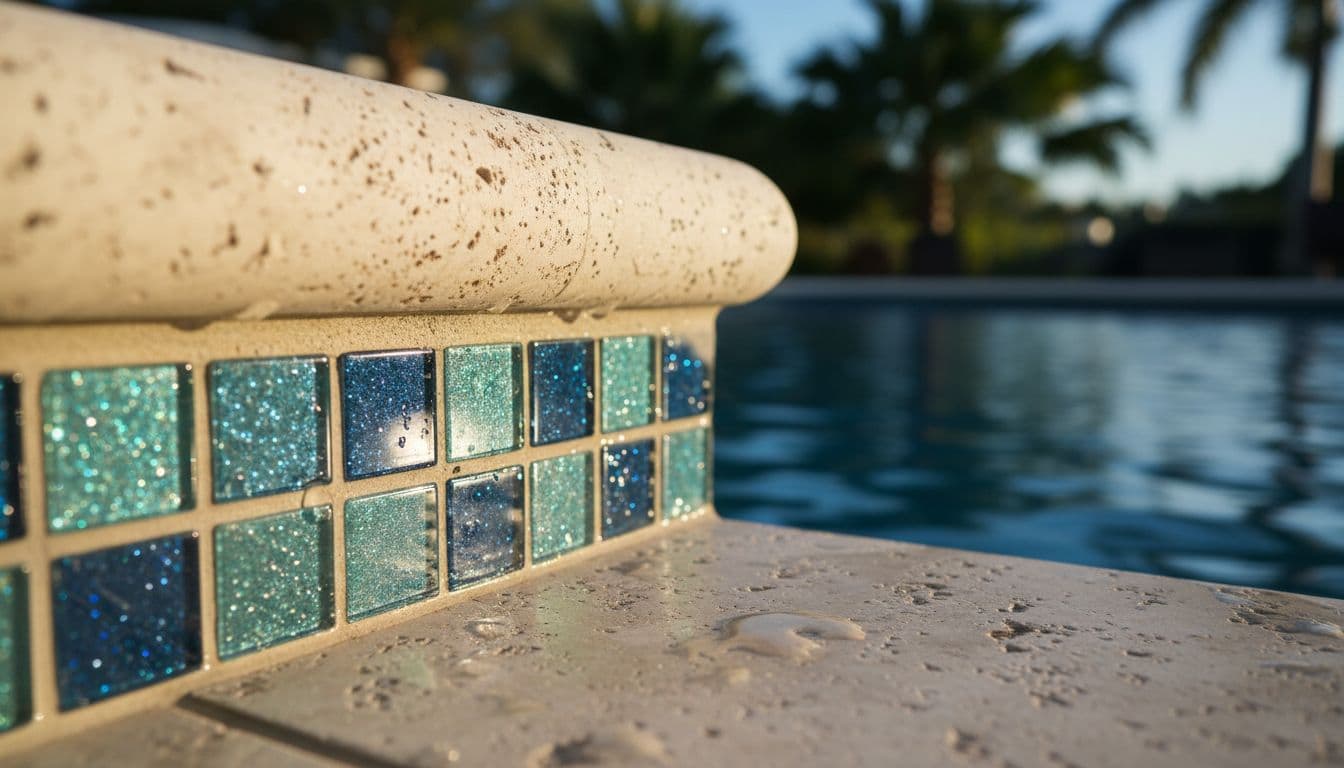
A smart material choice can save work later. Porcelain usually means easier cleanup at the waterline. Natural stone can bring warmth and texture. Pavers can be practical near the deck. The right mix depends on how your pool gets used and how much maintenance you want to manage.
Signs the work is done well
Good tile and coping work is easy to spot once you know what to look for. The lines should be even, the joints should stay consistent, and the coping should sit level from piece to piece. Around curves, the finish should still feel smooth and deliberate.
Drainage matters too. Water should move away from the edge instead of collecting where it can stain or weaken the finish. The coping should also feel solid underfoot, with no wobble or hollow spots. That stability helps with safety, and it protects the surface from early wear.
The best jobs also look calm. Nothing feels forced or patched. The waterline follows the pool cleanly, the corners line up, and the color looks intentional in the sun. That kind of finish comes from planning, careful cutting, and proper cure time, not from rushing the work.
Conclusion
A pool tile and coping project can feel messy for a few days, but the process is easier when you know what to expect. Crews should protect the site, work in stages, and give the materials time to cure before the pool goes back to normal use.
In Cape Coral, the right finish does more than look good. It helps protect the waterline, supports drainage, and holds up better against heat, rain, and salt air. If you want help planning the materials and timeline for your pool, Get a Free Estimate.