A pool that once felt like the center of the yard can become the biggest obstacle in a remodel. If you're planning pool demolition in Cape Coral , the work may look messy at first, but it follows a clear path when it's planned well. The real challenge is not just taking out concrete, it's managing permits, drainage, fill, and the next phase of your project.
That's why it helps to know what happens before the first machine arrives and what the yard will look like after the shell is gone. With the right prep, the process is easier to live with and easier to build around.
Why a pool gets removed during a remodel
Homeowners usually remove a pool for one of a few practical reasons. The shell may be cracked, the deck may be worn out, or the layout may no longer fit how the family uses the yard. In other cases, the pool still works, but the space around it doesn't.
A remodel can also change the whole plan. Maybe you want a bigger patio, more lawn, a safer play area, or a better spot for outdoor seating. If the pool is going away before a new outdoor setup goes in, it helps to look at our pool services early so you can compare removal, renovation, and replacement options before you commit.
That choice matters because demolition affects the rest of the property. Once the old structure is out, the yard needs new grading, compacted fill, and a clear plan for what comes next. If the old pool no longer supports your remodel, keeping it can create more work than removing it.
Permits and planning before work starts
Most Cape Coral pool removals need planning before any digging begins. A contractor should check the permit requirements, confirm the work scope, and arrange inspections if the city asks for them. The paperwork may feel slow, but it keeps the job from stalling later.
Utility marking is another step you do not want to skip. Water, electric, and gas lines need to be located before heavy equipment moves in. Access matters too, because the crew has to bring in machines, haul out debris, and sometimes work through a side yard or gate opening. Tight access can change the equipment choice and the schedule.
Local experience helps here. A contractor who knows the area understands how Cape Coral projects move, how drainage can change from lot to lot, and how to keep the job moving without cutting corners. If you want a better sense of that background, our company background explains the experience behind the work.
A clean permit file and a clear site plan can save days of delay once demolition starts.
The best time to ask questions is before the first truck arrives. Ask who pulls the permit, who handles inspections, and how the crew protects nearby landscaping, fencing, and pavers.
What demolition day looks like
The first part of demolition is setup. Crews usually mark the work zone, protect access points, and clear the area around the pool. Furniture, planters, grills, and loose items need to move out of the way. If the yard has pets or children, the work zone should stay closed off from the start.
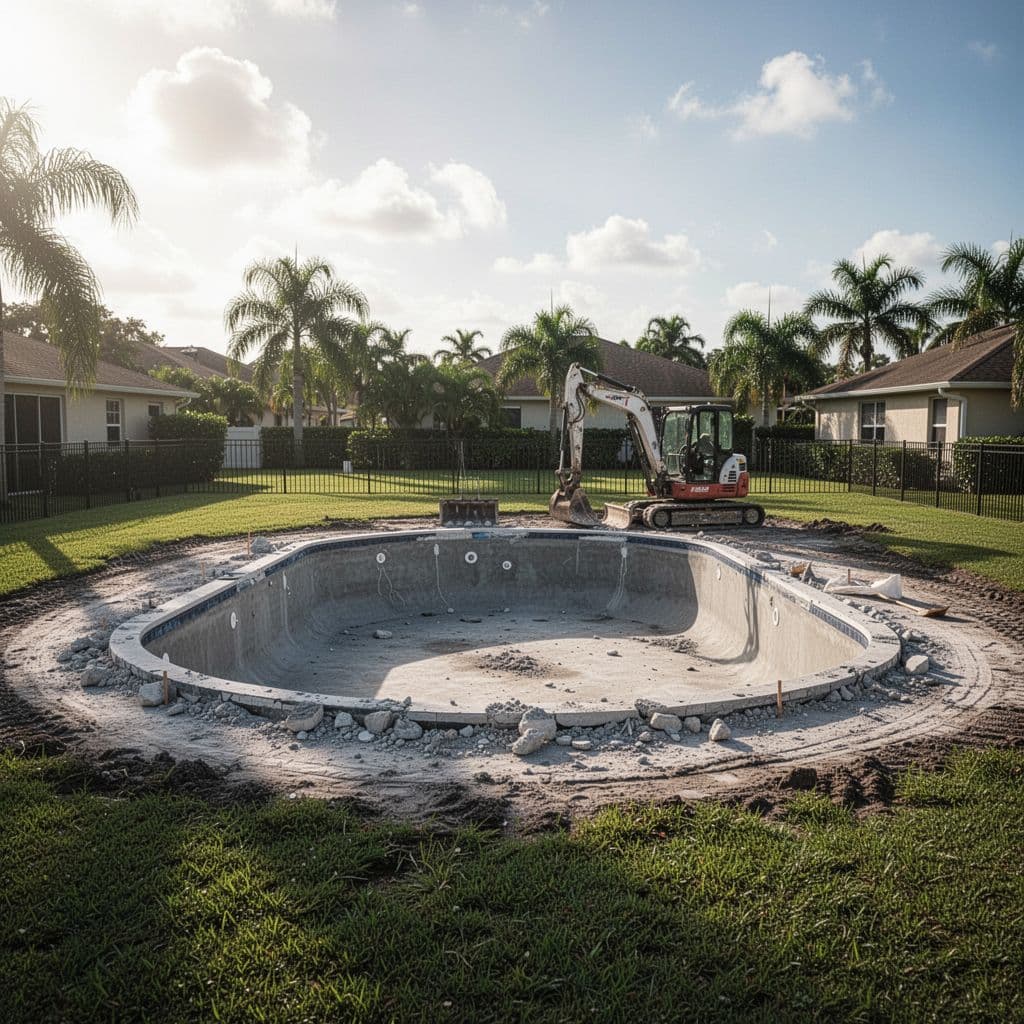
Next comes the physical removal. A crew may use an excavator, a jackhammer, or both, depending on access and the pool type. The shell gets broken into manageable pieces, then loaded out in trucks. Expect dust, noise, and a fair amount of vibration. That part is normal, even when the crew works carefully.
Here's a simple look at the two common approaches:
| Removal type | What crews do | Best fit |
|---|---|---|
| Partial removal | Break up part of the shell, remove the top section, and fill the void with compacted soil | Smaller remodels, lawn space, or a simpler yard plan |
| Full removal | Remove most or all of the shell, haul away debris, and rebuild the area with clean fill | Larger remodels, new outdoor layouts, or future construction |
The table shows the basic tradeoff. Partial removal may cost less up front, but full removal gives you a cleaner slate when the yard has to support new work.
Weather can affect this stage too. Heavy rain slows hauling and makes it harder to place fill correctly. In Cape Coral, that matters because a soggy jobsite can create a new problem under the surface.
Drainage, fill, and inspections after the shell is gone
Once the pool is out, the site is not finished. The open area has to be filled in layers, compacted, and shaped so water moves away from the house. That part sounds simple, but it decides how the yard holds up later.
Cape Coral lots can be picky about drainage. If the fill is dumped too fast, or compacted poorly, the ground may settle unevenly. Sandy soil can shift, and low spots can collect water after a storm. Good crews watch for that and adjust the grade before the job closes.
The inspector may also want to see the site before final backfill or closeout, depending on the permit. That is one reason the schedule should stay flexible. A rushed backfill can cause delays if the city wants a look first.
If the fill and grading are rushed, the next phase of the remodel can stall on a soft or uneven yard.
The goal is a stable base. That base supports lawn, pavers, a patio extension, or whatever comes next in the remodel.
How pool removal affects the rest of the remodel
Pool demolition changes more than the yard itself. It changes the order of the whole project. If you plan new pavers, a larger lanai, or a screen enclosure, the demolition should usually happen first so later work lands on stable ground. Otherwise, crews may have to work around a settling surface or a tight access path.
It also helps to think about timing. The demolition crew may need room for trucks and machines, while landscapers or patio installers need a clean, graded site. When those jobs overlap too soon, one trade can slow the other down. A little patience early can save rework later.
For homeowners who want a single plan for the whole remodel, the best next step is to talk through the scope before the demolition starts. Get a Free Estimate if you want the work reviewed onsite and lined up with the rest of the project.
Before the crew arrives, move fragile items, trim back plants that block access, and make a clear path to the work zone. That small prep helps keep the job moving and lowers the chance of damage.
Conclusion
Pool removal in a remodel is not just about breaking concrete. It's about making room for the next version of your yard while keeping the site safe, legal, and ready for what comes after. The best results come from careful planning, solid drainage work, and a fill job that's compacted the right way.
If a pool no longer fits your Cape Coral home, the demolition process can be straightforward when the steps are handled in order. The yard may look rough for a short time, but the end result is a cleaner start for the rest of the remodel.