Once the hole is dug, the project stops looking like a big patch of dirt and starts looking like a real pool job. That's where steel and plumbing come in, and this stage tells you a lot about how the finished pool will hold up.
If you're building in Cape Coral, the pace can shift from week to week. Builder schedules, site access, inspections, and Florida weather all affect the timeline, so a short delay does not always mean a problem.
Where steel and plumbing fit in the pool build
This stage happens after excavation and before the concrete shell goes in. The crew is building the pool's structure and laying out the lines that will move water later.
Steel is the skeleton. Plumbing is the path the water will follow. Together, they set up the shell, circulation, and equipment that come next.
If you want a quick look at the step before this one, see what happens during pool excavation. It helps to know what the crew is responding to when they start shaping the space for steel and pipe.
If the site looks rough at this point, that's normal. The pool is still in its structural stage.
At this point, the yard may stay open and uneven for a bit. You may see stacks of steel, pipe, and forms, along with a crew measuring, tying, and checking slopes. Nothing here is finished yet, but every piece matters.
What the steel reinforcement actually looks like
Steel in a pool build usually means rebar, which is short for reinforcing bar. These are thick steel rods tied together into a grid. That grid gives the concrete shell strength once it is sprayed over the frame.
In plain terms, the steel helps the pool hold its shape. It supports the walls, floor, steps, and benches before the concrete locks everything in place. In Florida, that matters because heavy rain, shifting ground, and long-term water pressure can all put stress on a pool shell.
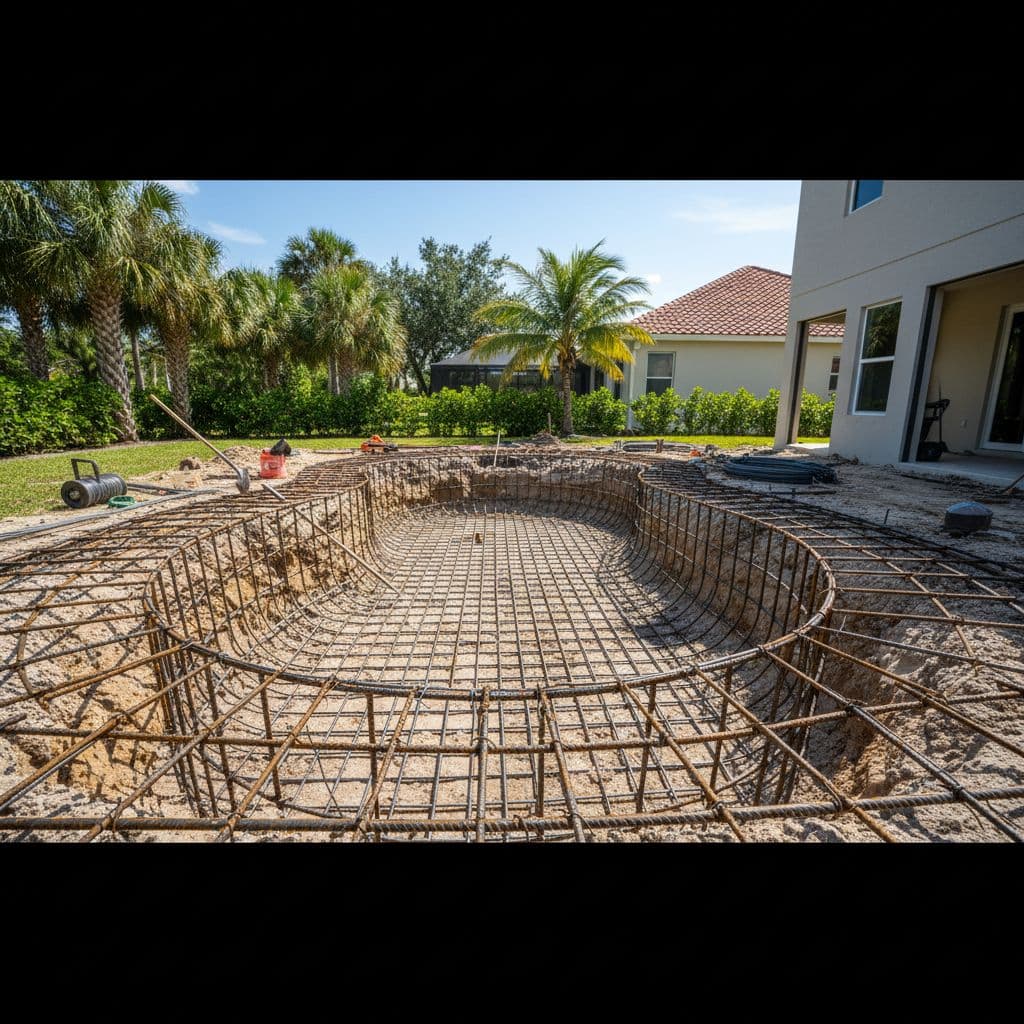
You may notice a few things while the steel crew is working:
- Rebar tied into a clear grid
- Upright steel around walls and raised features
- Extra reinforcement near steps, benches, and curves
- Small supports that hold the steel in place
The steel does not look polished, and that's fine. It is meant to stay hidden under the concrete shell.
Your builder also has to get this part right before the next inspection. In most cases, the city inspector checks the steel layout before anyone pours concrete. If the spacing, placement, or supports need an adjustment, the crew fixes it before moving forward.
For homeowners, this is one of the most important checkpoints in the whole build. Once the shell is covered, the steel is no longer visible. A careful crew will measure twice, tie the bars securely, and make sure the frame matches the design.
How the plumbing rough-in works
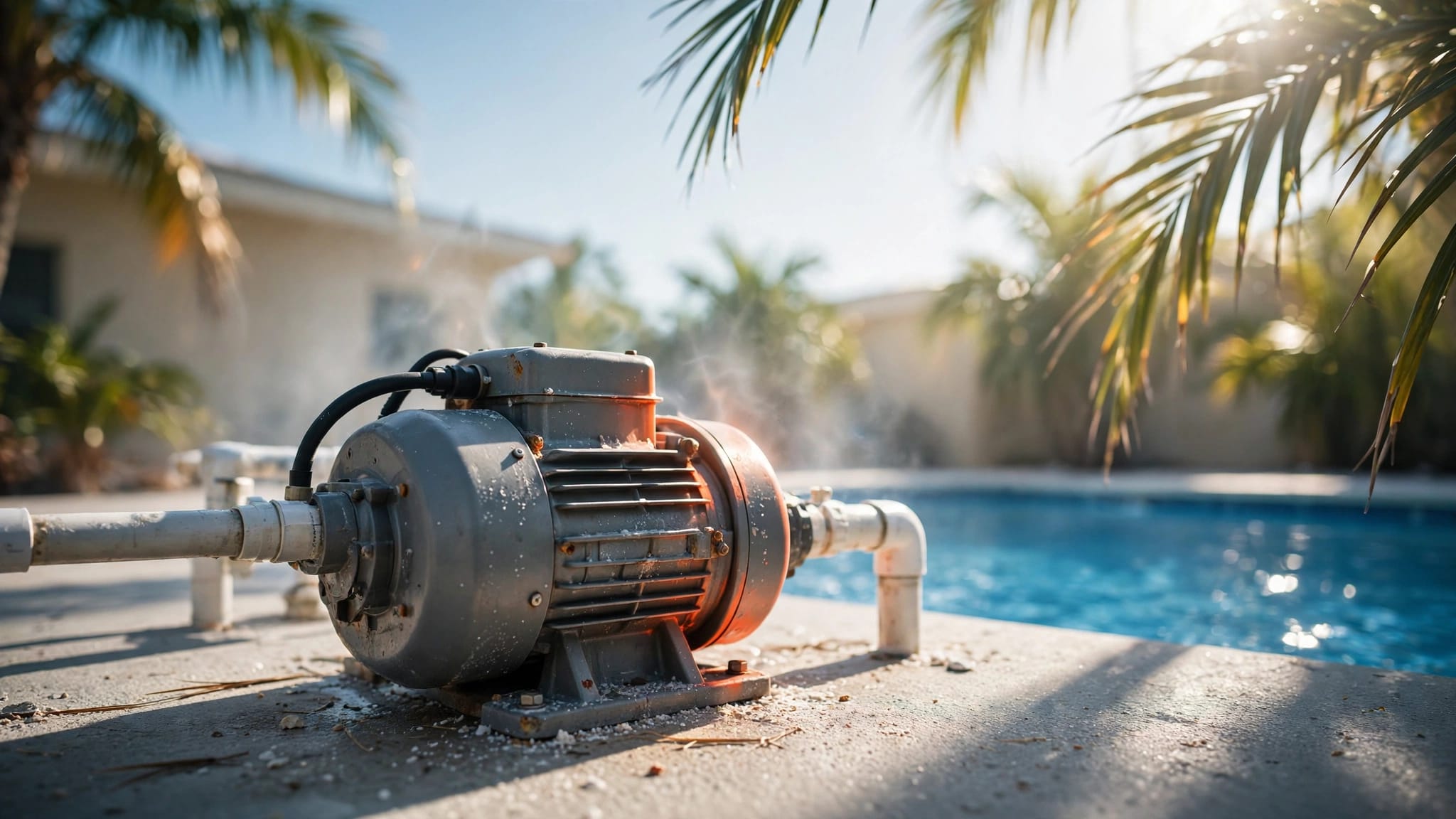
Plumbing rough-in means the first install of the pool's water lines before the concrete goes in. These pipes are usually white PVC, and they carry water to and from the pool system.
The crew runs lines for things like skimmers, main drains, returns, spa jets, and water features. They also place conduit for pool lights and connect the pipes toward the future equipment pad. In simple terms, this is the pool's plumbing map.
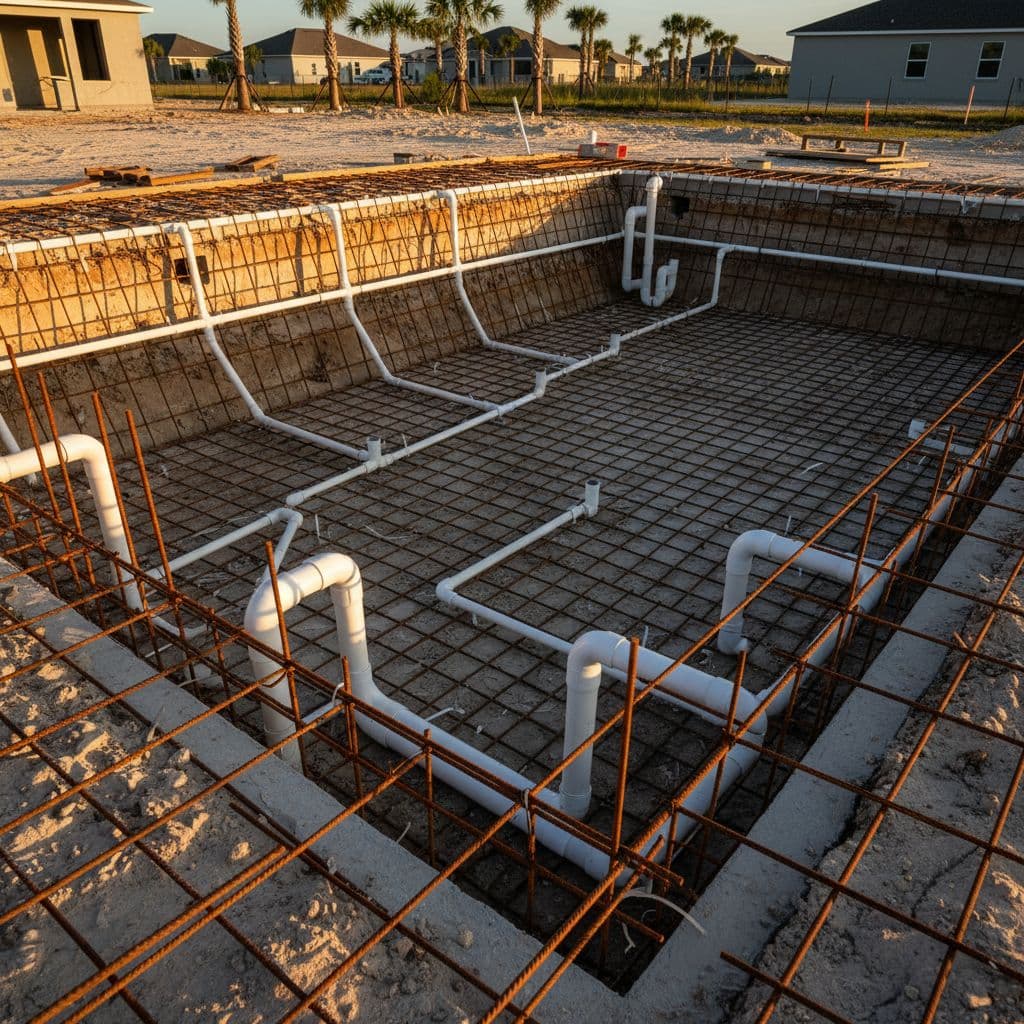
The plumbing stage often overlaps with steel. One trade may be laying pipe while another is tying rebar. That overlap is normal, and it helps the job move along without wasting time.
A few things are worth watching for:
- Pipes are set where the design calls for them
- Lines are spaced and angled before backfill or concrete
- Open pipe ends are capped or protected
- The layout stays clear so the inspector can review it
Homeowners sometimes worry when the yard looks busy and unfinished. That is part of the process. The pipes may look temporary, because they are. After the inspection and concrete pour, most of what you see here disappears under the shell.
Pressure testing usually happens before everything gets buried. That test checks for leaks in the plumbing lines. If a line fails, the crew can fix it while it is still easy to reach.
For Cape Coral builds, weather can slow this step more than people expect. Heavy rain can fill trenches, soften the soil, or make access harder for the crew. Strong afternoon storms often change the day's plan, especially during rainy season. Builders may shift to another task and come back when conditions improve.
Inspections, permits, and weather delays in Cape Coral
This is the part many homeowners do not see, but it matters just as much as the work in the yard. Before concrete goes in, the builder usually needs the steel and plumbing inspected by the local building department.
That inspection is there to confirm that the work matches the permit and the approved plan. If the inspector asks for a correction, the crew makes it and schedules a recheck. That can add time, but it protects the build.
A short delay usually means the builder is waiting on approval, not ignoring the schedule.
| Common delay | What you may notice | What it usually means |
|---|---|---|
| Afternoon rain | The crew leaves early or covers open areas | Work pauses until the yard dries |
| Inspection timing | No pour yet | The city still needs to sign off |
| Access issues | Fewer trucks or slower progress | The builder is adjusting the order of work |
The takeaway is simple, the timeline is not fixed. It depends on the builder, the yard, the inspection calendar, and the weather. In Cape Coral, that flexibility is part of building outdoors.
Heat can also affect the pace. Crews may start earlier in the day, break work into shorter blocks, or pause during storms. None of that is unusual. It just means the job is being handled with the weather in mind.
If you want a clearer read on your own project before it starts, Get a Free Estimate and ask how the schedule may look for your lot and design.
What happens after steel and plumbing pass
Once the inspection clears, the crew can move on to the concrete shell. That is the point where the pool starts to feel permanent. The frame gets covered, the plumbing lines disappear, and the shape of the pool becomes much easier to picture.
After that, the project still has more steps ahead, including curing, equipment setup, decking, and finish work. However, the heavy lifting of the structure is already in place. The next stages move faster to the eye, even though each one still needs care.
This is also a good time to keep records. Many builders take photos before the concrete goes in, and that gives you a useful reference later. If you ever need to know where a line or fitting is located, those photos can help.
You can also ask your builder a few simple questions:
- Has the steel inspection passed?
- Was the plumbing pressure-tested?
- When is the concrete shell scheduled?
- How long do you expect the next phase to take?
Clear answers at this stage can calm a lot of uncertainty. The work may still look messy, but the project is moving in the right order.
Conclusion
The steel and plumbing stage is one of the most important parts of a new pool build, even though much of it ends up hidden. It sets the shape, strength, and water flow that the rest of the project depends on.
If you know what the crew is doing, the job feels less mysterious. You can watch for the steel grid, the PVC lines, the inspection step, and the weather pauses that are common in Florida. That makes the whole process easier to follow, even when the yard looks far from finished.
For Cape Coral homeowners, the best sign is steady progress with clear communication. That usually means the build is moving the right way.