Gunite day is when a pool project starts to look real. The shell gets formed, the crew works fast, and your backyard turns into an active job site for a few hours.
That can feel exciting, but it can also feel a little overwhelming. If you know what's coming, the day makes more sense and feels much easier to handle. That's true whether you're planning new pool construction in Cape Coral or comparing it with other pool work.
Here's a clear look at what happens, what the crew needs from you, and what you should do once the gunite is in place.
The Yard Changes Fast on Gunite Day
Gunite day does not look like a quiet landscaping project. It feels more like a short burst of heavy work, because the crew has one main goal, get the shell in place before the material sets.
If you already lived through excavation, this day feels familiar in some ways. The difference is speed and precision. The pool shape is already there, so the team is focused on covering the steel structure with the gunite mix and forming the walls and floor.
A good crew keeps the pace steady and organized. Hoses, machines, and workers all move together. That's why clear access matters so much.
If you want a fuller picture of the steps leading up to this point, what to expect on pool excavation day in Cape Coral helps connect the dots. Excavation creates the space, and gunite gives the pool its shape and strength.
How the Crew Prepares Your Property
Before the truck arrives, the team checks access and makes room to work. That sounds simple, but it matters a lot. Narrow gates, parked cars, locked side yards, or loose patio items can slow everything down.
The crew usually needs a clear path from the street or driveway to the pool area. They may bring hoses, pumps, and a truck or mixer, so they need space to stage equipment without blocking the whole property. If your yard has a tight corner or a long carry to the backyard, the builder should already know that.
Homeowners can help by taking a few easy steps the day before:
- Move cars out of the driveway.
- Unlock side gates.
- Bring pets inside or arrange another safe spot.
- Clear patio furniture, planters, toys, and fragile décor.
- Keep children away from the work zone.
Safety matters here. Even if the project looks open and familiar, the site is still active construction. Wet material, tools, and moving equipment make it unsafe for casual traffic.
If the crew asks you to stay out of a certain area, keep that boundary in place until they say it's safe.
This is also the point where many homeowners realize why good preparation pays off. A clean, open site helps the day move smoothly and lowers the chance of avoidable delays.
What Happens During the Gunite Application
This is the part most people picture when they hear about gunite day in Cape Coral. The crew sprays the mix onto the steel-reinforced shell, then shapes and smooths it as they go. The process is fast, but it still takes skill.
The material comes out under pressure, so it does more than sit on the frame. It bonds to the shell and creates the hard surface that becomes the pool structure. Workers watch the thickness, adjust edges, and make sure the surface follows the design.
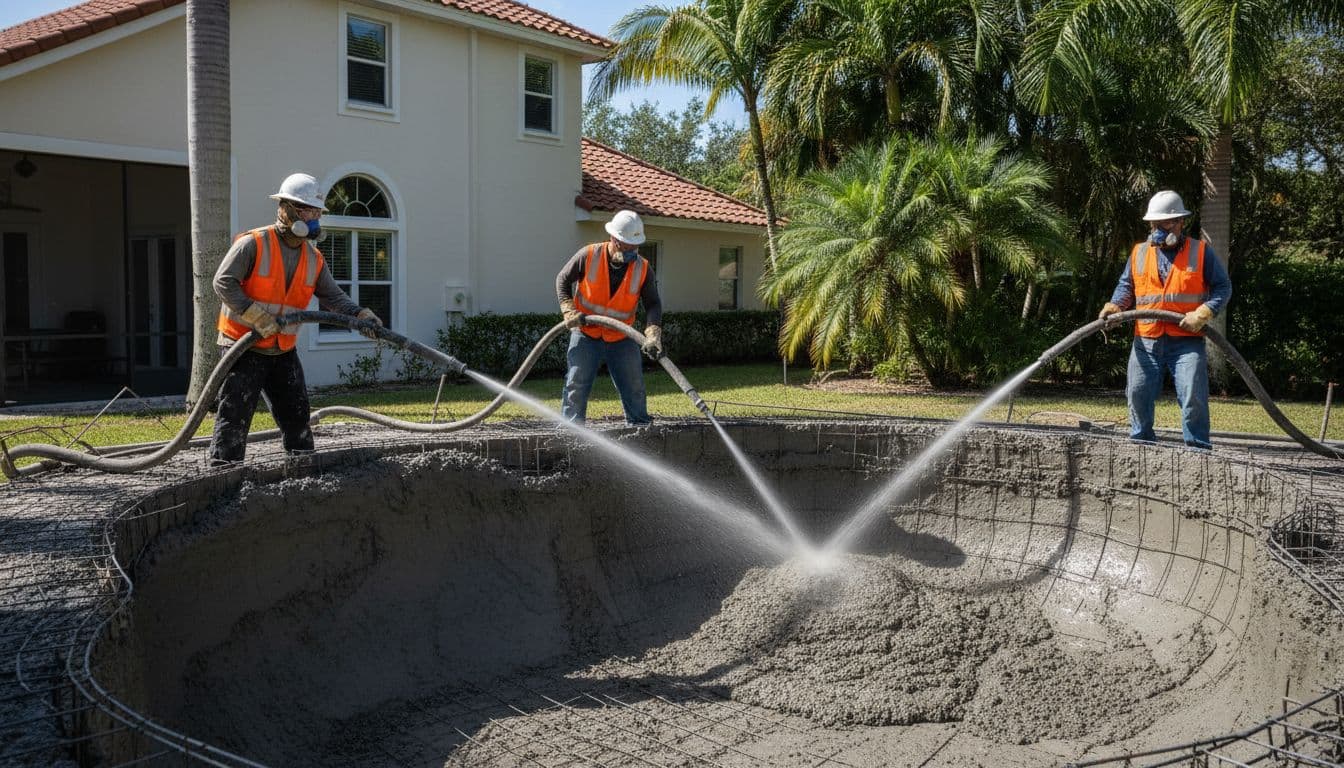
You may see the crew move quickly around the pool, stopping to shape corners and trim surfaces. That's normal. It's part spraying, part sculpting. The shell has to be even and sturdy before curing starts.
The job can look messy while it's happening, and that's okay. Gunite is supposed to be placed under pressure. The final surface is rough at this stage, not finished. A smooth, polished look comes much later.
If you're trying to understand where this fits in the bigger schedule, gunite pool construction timeline in Cape Coral gives helpful context. The day itself may feel quick, but the curing and finishing steps still need time.
Noise, Dust, Weather, and Timing in Cape Coral
Gunite day is loud. That's the honest version. Trucks, hoses, compressors, and crews create steady noise for part of the day, so it's not the best time for a quiet work-from-home call or a nap near the backyard.
Dust can also show up, even when the crew works carefully. Cape Coral yards often have dry patches, and construction always stirs things up. The best move is to keep windows closed near the work zone and store outdoor items that might collect dust.
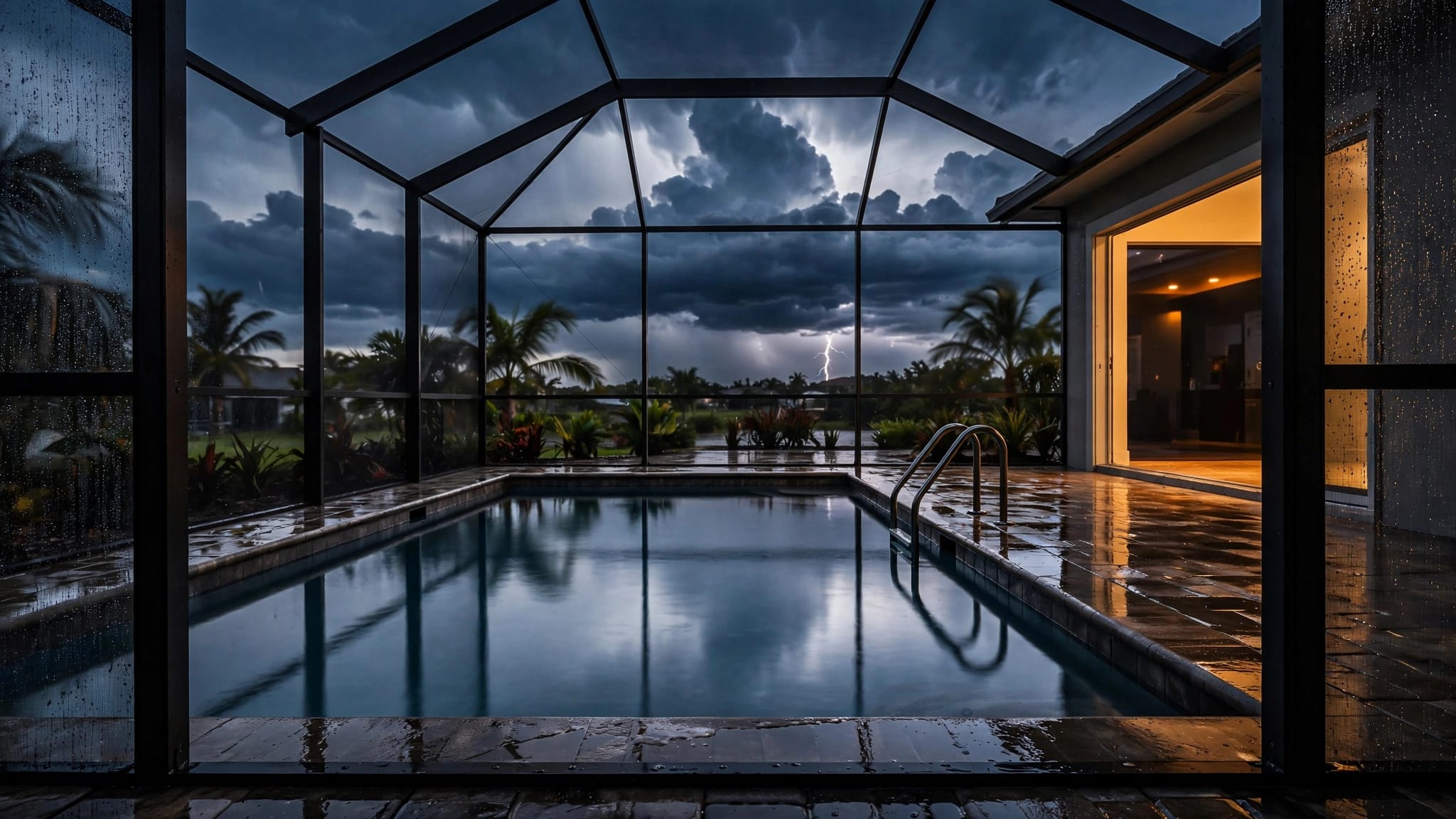
Weather matters too. Rain, wind, or soft ground can change the schedule. In Cape Coral, that's a real factor, because conditions can shift fast. A plan that looks perfect in the morning may need a small adjustment by afternoon.
The good news is that gunite itself is usually a same-day event. The setup, the spray work, and the cleanup happen in a focused window. Still, the full build schedule depends on more than one day. Weather, curing time, inspections, and finishing work all play a part.
If you're planning your project, keep your expectations loose and your questions specific. Ask what time the crew plans to arrive, how long they expect to stay, and whether they need you home for access.
What to Do Right After Gunite Day
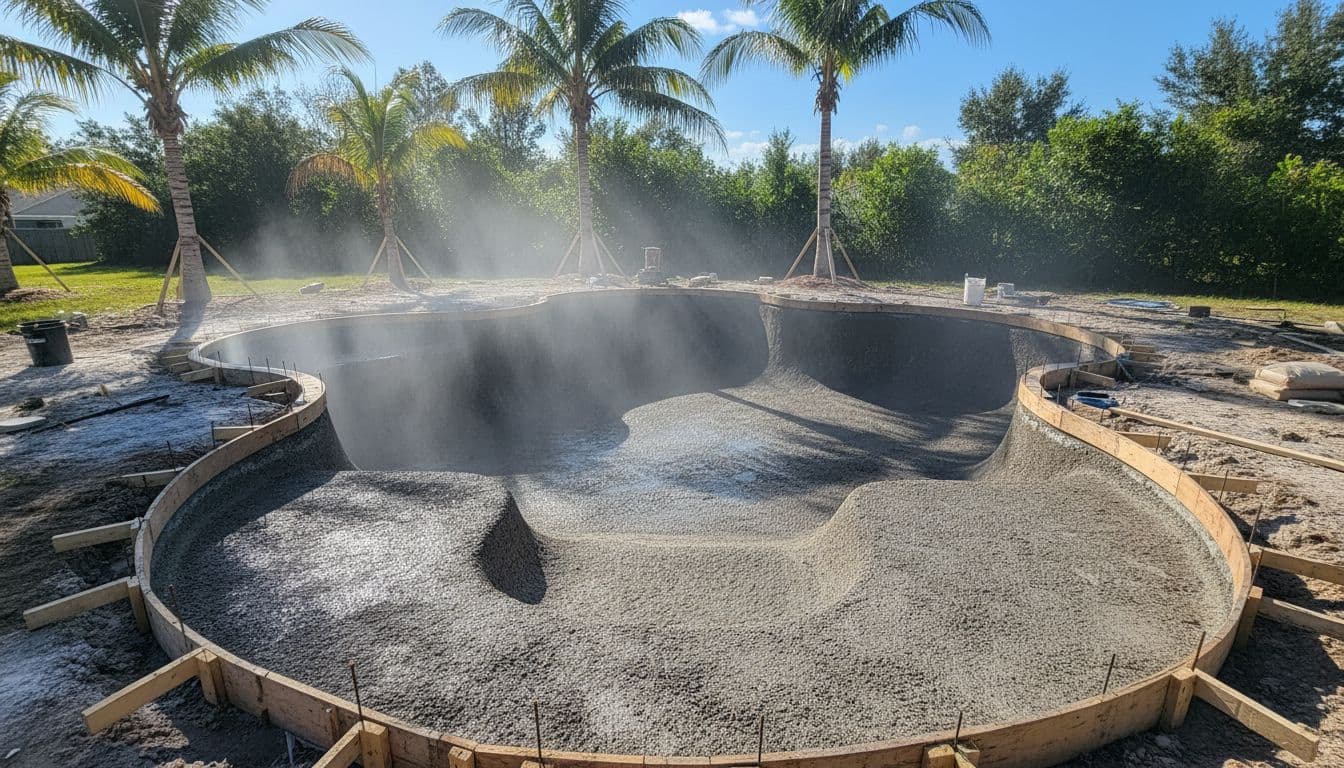
Once the crew finishes, the pool shell starts its curing stage. That means the structure needs calm, steady care. The surface is hardening, and it should not be treated like a finished pool yet.
Your job after gunite day is simple, protect the shell and follow the builder's directions closely.
- Stay off the shell. Don't walk into the pool unless the crew tells you it's safe.
- Keep kids and pets away. The area is still a construction zone.
- Watch for curing instructions. Some crews want the shell sprayed or moistened on a set schedule.
- Leave forms and access points alone. The builder may need them in place for the next phase.
- Check the site from a distance. If something looks off, call the builder instead of adjusting it yourself.
The shell is strongest when it cures without extra traffic. Small mistakes, like letting someone climb inside or moving support materials too early, can create avoidable problems.
After the crew leaves, the backyard may look unfinished. That's normal. Gunite day is the foundation of the pool, not the final picture. The next stages, such as curing, plumbing checks, tile, decking, and finish work, build on what happened that day.
If you want to talk through the rest of the project before gunite day arrives, Get a Free Estimate and schedule an onsite consultation.
Conclusion
Gunite day in Cape Coral is a big step, but it doesn't have to feel chaotic. Once you know about access, noise, dust, and curing, the day makes sense. You're watching the pool take its first real shape.
The best approach is simple, clear the site, keep the area safe, and follow the builder's guidance after the crew leaves. That keeps the project moving and protects the shell while it cures.
A little preparation goes a long way on gunite day . When the work starts, you'll know exactly what you're seeing and what comes next.