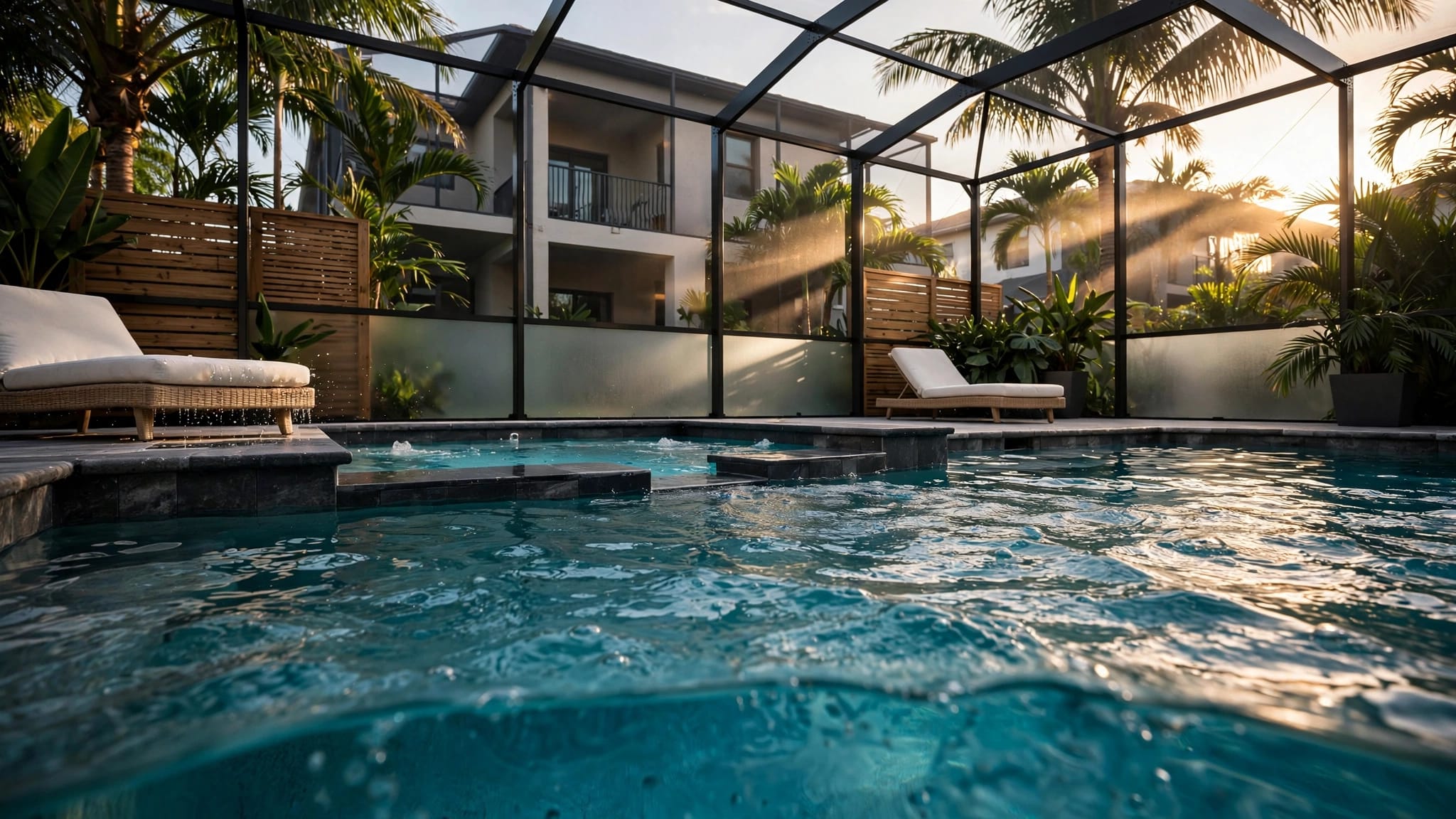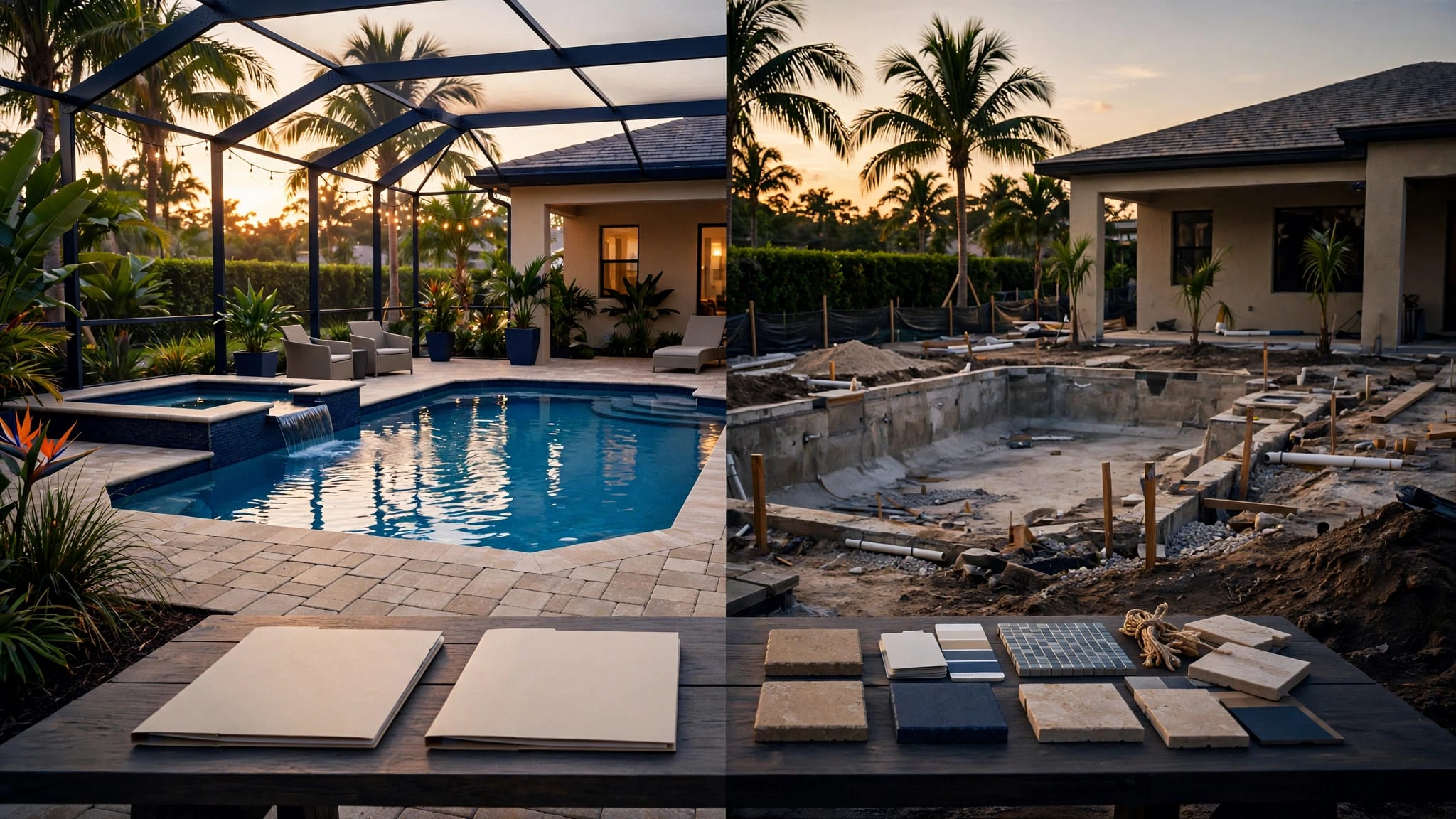
A Cape Coral seawall pool project looks simple from the street, but the site can change every choice behind the scenes. The wall, canal, and property lines all affect where the pool can sit and how it will hold up over time.
That means the plan has to cover more than shape and finish. You need a current survey, permit review, drainage details, and a builder who understands waterfront work. With the right setup, the pool can fit the lot cleanly and avoid headaches later.
Start with the survey, not the pool sketch
On a waterfront lot, the survey is the real starting point. Cape Coral reviews pool plans by property lines, easements, and site details, so the waterline alone does not tell you enough. A pool that looks fine on a rough sketch can run into trouble once the actual lot data comes in.
The seawall is part of the site, but it is not the setback line.
That matters because small shifts on paper can change the whole layout. A wall that sits close to the build area can limit excavation room, deck width, and where the enclosure goes. It can also affect how easy it is to get equipment into the yard.
The wall itself needs a close look too. If it shows signs of movement, cracking, or washout, repair may need to come before pool work. Cape Coral's permit documents also make it clear that pool and seawall paperwork are separate, so waterfront jobs often need more than one review. If you're comparing contractors, choosing a reliable pool builder in Cape Coral is one of the smartest first steps.
Why seawall proximity changes the design
The closer the pool sits to a seawall, the more the design acts like a puzzle. Excavation depth has to respect the wall and the soil beside it. Decking needs room for walking, furniture, and drainage without sending water toward the wall. Equipment placement matters too, because pumps and heaters need access, dry footing, and enough service space.
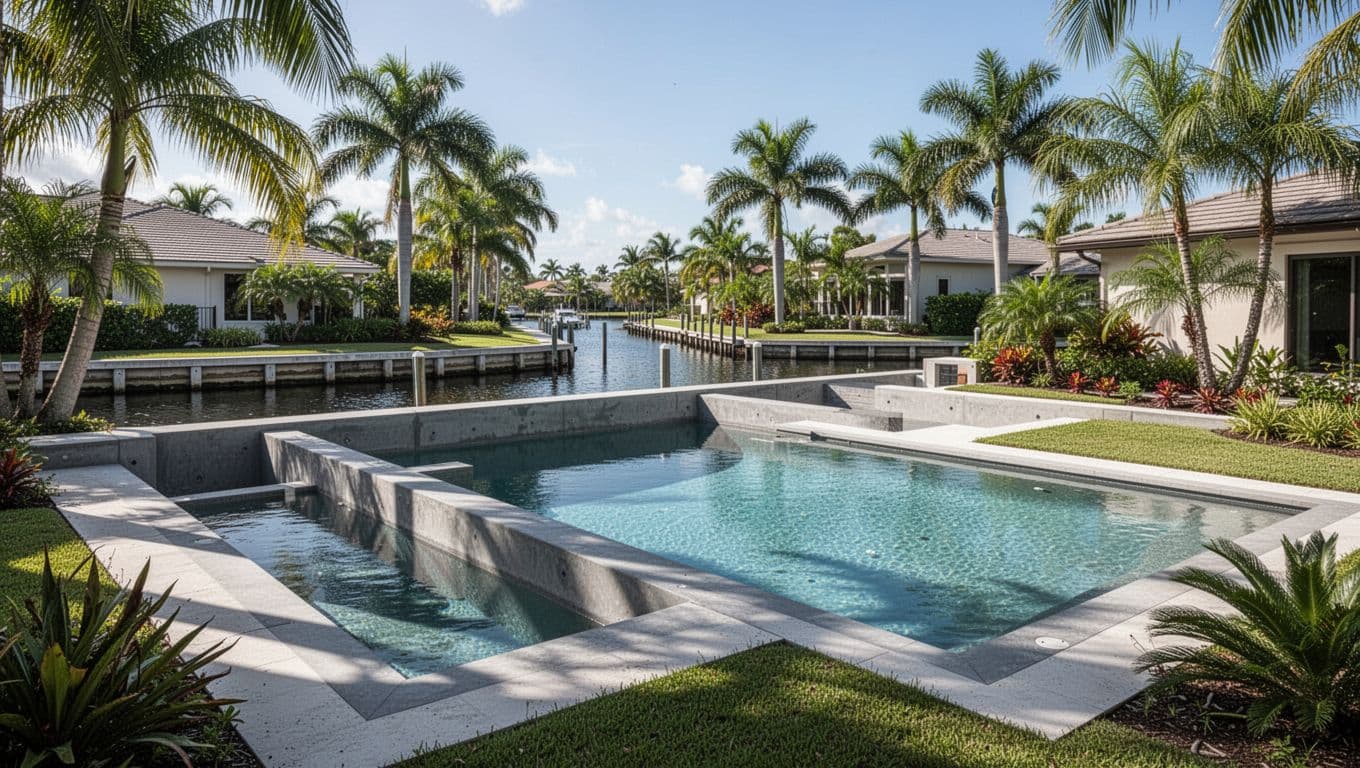
For waterfront homes, a custom shape often fits better than a forced rectangle. Narrow side yards, angled corners, and view lines all play a part. If you want ideas that fit a waterfront lot, custom gunite pool designs for Cape Coral backyards can help you think through layout before the first shovel hits the ground.
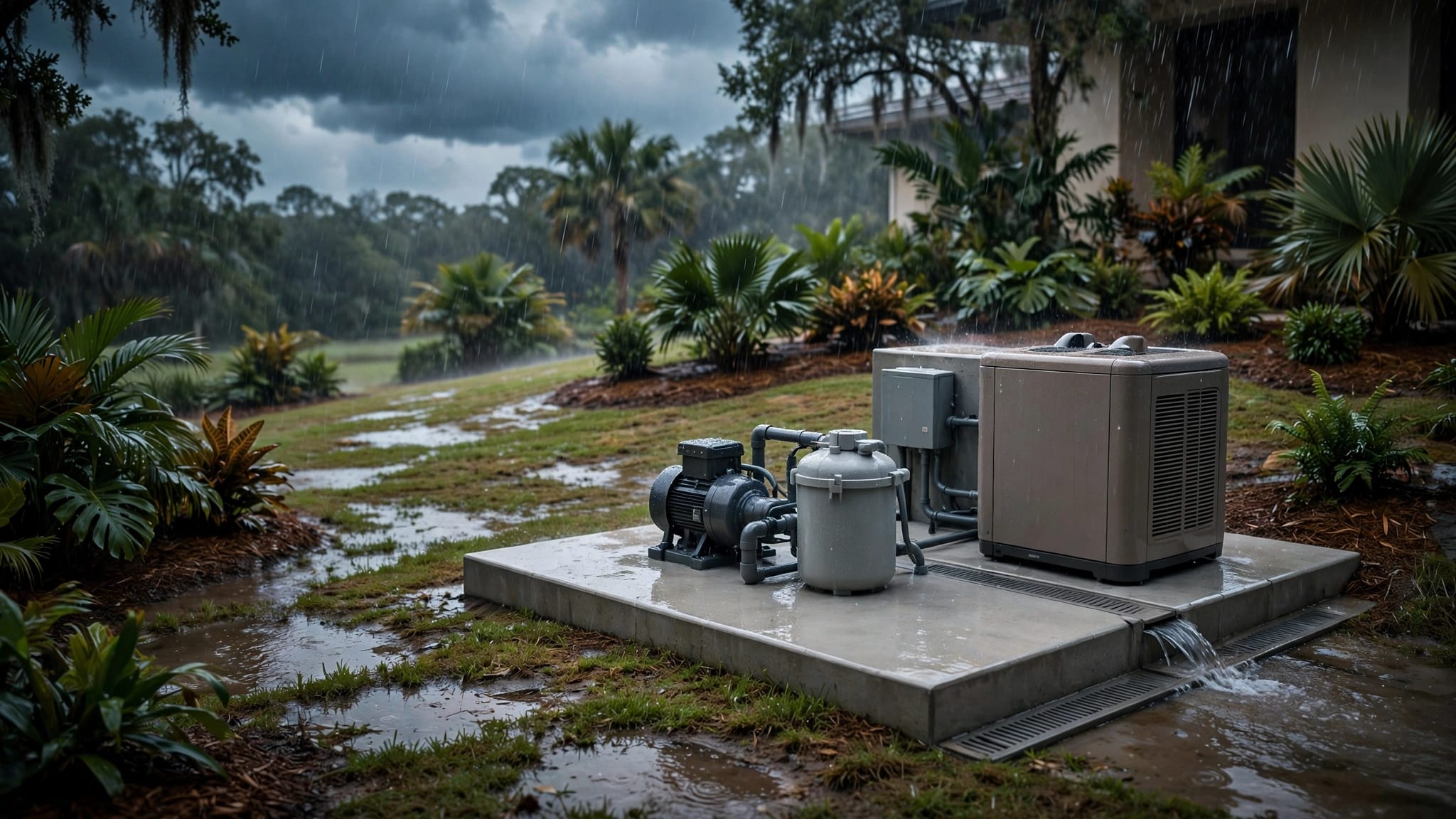
Drainage deserves extra care. Water should move away from the pool and away from the wall, not collect in the same low spot. Poor grading can leave wet decking, stress the surrounding soil, and shorten the life of the finish. On a waterfront lot, the final site plan should show where runoff goes after a hard rain.
Construction details that protect the wall and the pool
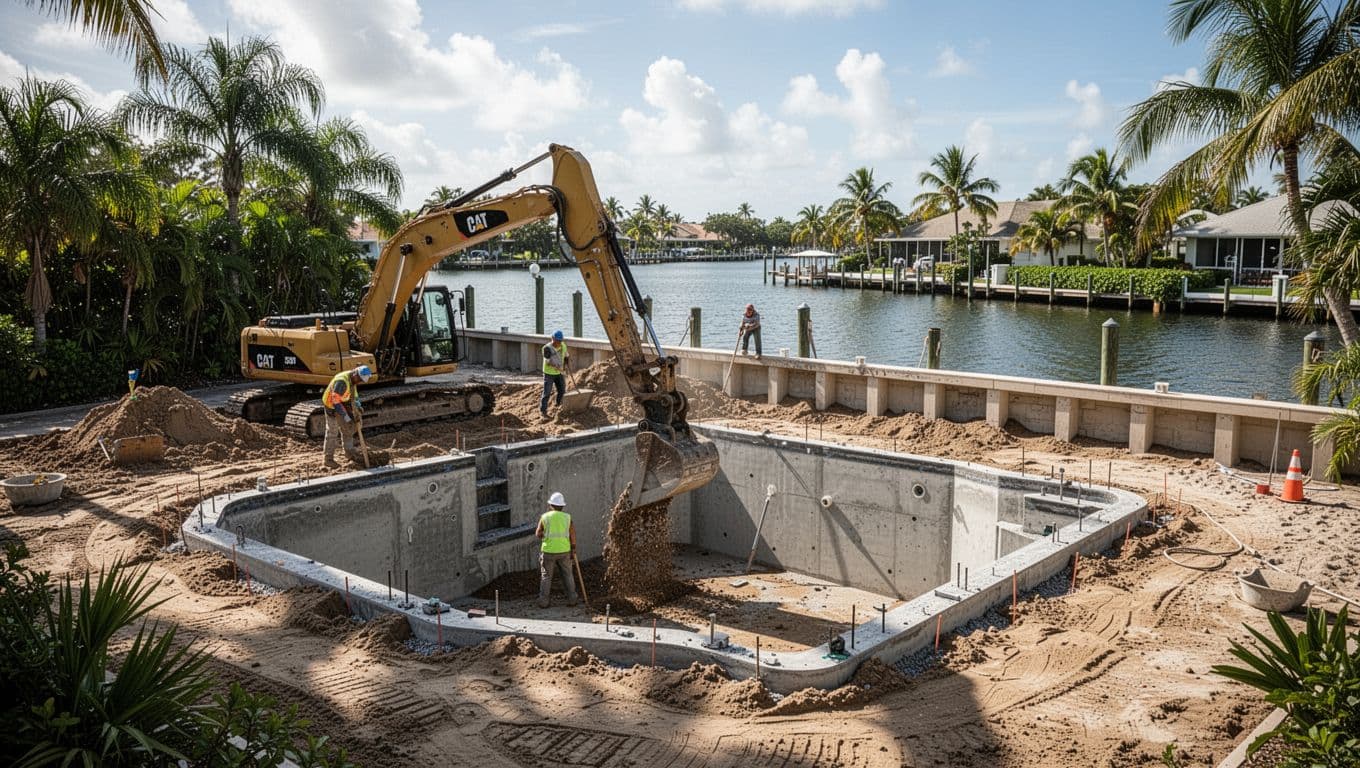
Excavation near a seawall should be slow and deliberate. The crew has less room for spoil piles, and the wrong dig path can strain the yard. A good plan stages the work so the wall, shell, and access routes stay clear.
The build should also account for the rest of the outdoor space. If you want a screen enclosure, the frame footprint and door locations need to be in the layout early. If you plan a future rescreen, it helps to leave enough access around the pool and deck so the work stays simple later.
Long-term performance depends on those early calls. Good grading, proper shell thickness, clean drainage, and the right deck joints help the pool hold up through wet seasons and heavy use. A pool built too tight to the wall can be harder to service and more likely to crack or settle. Careful work now saves repairs later.
A practical Cape Coral checklist before you apply
Before you submit anything, confirm the current rules with Cape Coral, Lee County, and Florida sources. Setbacks, barrier rules, floodplain review, and seawall-related restrictions can change, and your survey should guide the plan.
- Verify the current survey and mark property lines, easements, and the seawall location.
- Check whether the wall needs repair before pool construction begins.
- Review the city permit packet for pools, decks, fencing, and any seawall forms.
- Decide where the equipment pad will go, with service access and drainage in mind.
- Confirm enclosure or screen layout before the pool outline gets locked in.
- Ask a licensed professional how the site will handle runoff, elevation, and soil conditions.
The safest move is to treat the seawall, pool, deck, and drainage as one system. If one part is off, the rest can feel it. If you want a site visit and a plan that fits your lot, Get a Free Estimate.
Conclusion
A waterfront pool can look effortless when it is done right, but the planning behind it is detailed. The survey, wall condition, drainage, and layout all shape the final result.
That is why a Cape Coral seawall pool should be designed with the whole site in mind, not just the shell. When the work starts with current rules and a solid plan, the pool has a better chance of lasting.