You're eyeing a backyard pool in Cape Coral. The sun beats down, and you picture lazy afternoons by the water. But before you call for that Cape Coral pool estimate , a few smart steps make the process smoother.
Rushing in without prep leads to surprises. You might overlook yard limits or budget pitfalls. Good news: simple actions now save headaches later. Let's walk through what to do first.
Measure Your Backyard Accurately
Start with your yard. Pools need space, and Cape Coral lots vary. Grab a tape measure and notepad. Walk the area. Note length, width, and slopes.
Focus on the build zone. Pools typically need 10 to 15 feet from property lines for setbacks. Check that first. Mark spots for equipment like pumps too. They often require extra room.
A pro tip: measure twice. Slopes affect digging costs. Flat yards cost less to level.
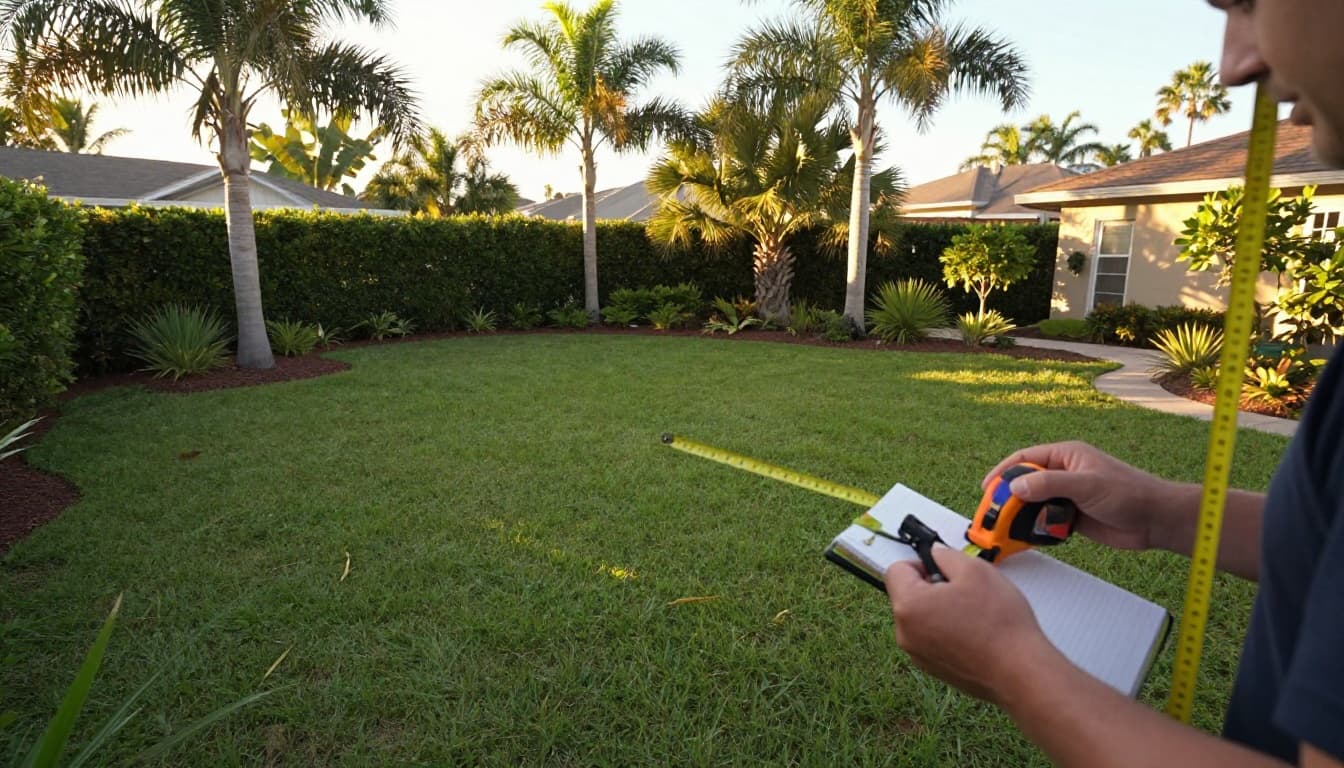
Sunshine highlights the task in this Cape Coral yard.
Use this checklist:
- Overall yard dimensions.
- Distance to fences, house, and trees.
- Any low spots or hills.
- Room for a deck or screen enclosure.
These notes help the estimator spot issues fast. For example, a palm tree too close might need removal. That adds dollars quick.
Gather Property Documents
Dig out old papers. A recent property survey is gold. It shows exact boundaries and easements. Cape Coral homes often have them from purchase.
No survey? Order one. It costs $300 to $600 but prevents fights with neighbors. Builders love them too.
Note utility lines. Call 811 before digging talk. They mark gas, water, and electric for free.
Also, jot access points. Gates must fit equipment. Narrow side yards slow installs and raise prices.
Define Your Preferred Pool Features
Picture your pool. Freeform or rectangle? Add a spa? Water features?
Cape Coral sun calls for shade. Think pool screen enclosures in Cape Coral. They block bugs and leaves year-round.
List must-haves:
- Size (12x24 feet common).
- Depth (shallow end for kids).
- Finish (tile or plaster).
- Heater for cooler months.
Saltwater or chlorine? Both work here. Match to your use.
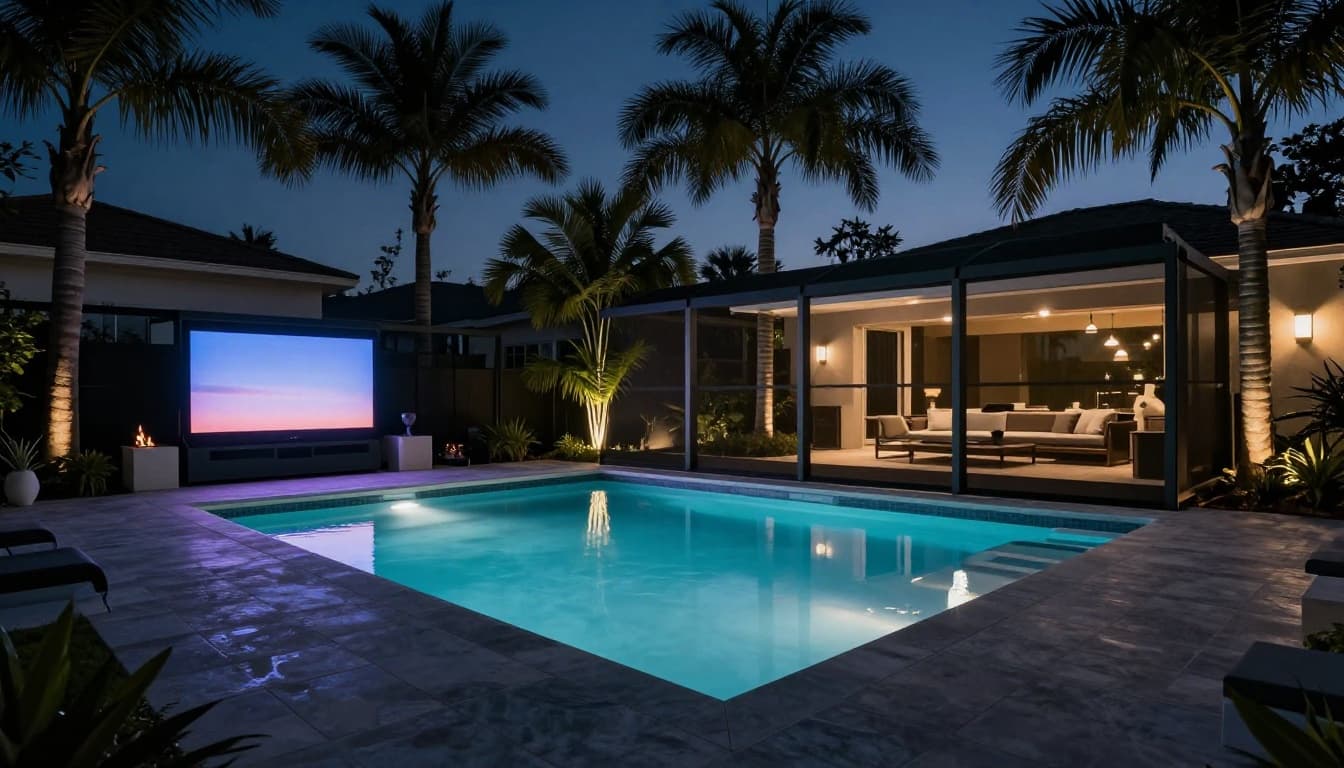
This setup shows popular local features like a spa and enclosure.
Share sketches or photos. Estimators tailor quotes better. For full builds, see new pool construction in Cape Coral.
Set a Realistic Budget Range
Costs run $50,000 to $120,000 for inground pools here. Factors include size, features, and yard work.
Research averages. Add 20% buffer for surprises like soil tests.
Financing helps. Many builders offer plans. Check rates now.
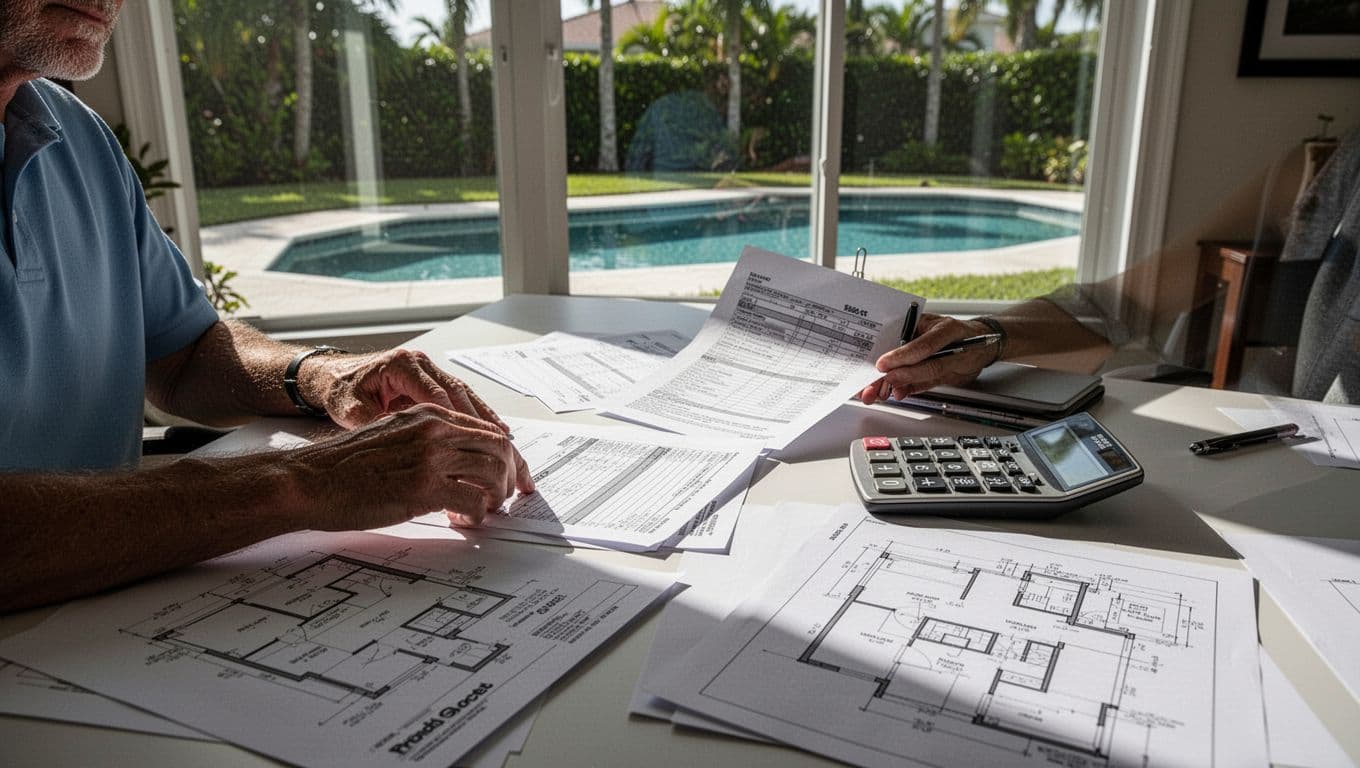
Budget planning keeps projects on track.
Steps to nail it:
- List priorities (pool first, enclosure later).
- Get pre-approvals.
- Compare three quotes.
This prep avoids sticker shock.
Review HOA Rules and Local Rules
Cape Coral has rules. Pools over 24 inches deep need permits. Setbacks start at 5-10 feet typically.
HOA? Read covenants. Some limit sizes or require approvals.
Florida humidity means enclosures boost value. But check noise for pumps.
Don't guess. Ask your builder. They handle permits often.
For vetted pros, check choosing a pool builder in Cape Coral.
Prep questions:
- Permit process timeline?
- Setback confirmation?
- HOA compliance?
Prepare Questions for the Builder
Write a list. Cover timeline, warranties, and changes.
Key ones:
- How long until swim-ready?
- What's included?
- Cleanup after?
This shows you're serious. It leads to better service.
Ready to start? Get a Free Estimate today.
Conclusion
Prep turns a Cape Coral pool estimate into a clear path forward. Measure your yard, gather docs, and define features. Set budget and check rules.
You'll spot issues early and get accurate quotes. That means less stress and a pool you love sooner.
Your backyard oasis waits. Take these steps now.