Pool excavation day is exciting, but it can also look rough before it looks beautiful. If you're planning pool excavation in Cape Coral, expect noise, dirt, heavy equipment, and a crew that needs room to work.
The good news is that a well-run site feels orderly even when the backyard looks torn up. Cape Coral properties vary a lot, so lot size, canal access, fence lines, and weather can all change the pace.
Once you know what happens first, you can prepare the yard, protect the driveway, and stop worrying about every pile of soil. This guide walks through the day step by step so you know what is normal and what needs attention.
What happens before the excavator arrives
Excavation rarely starts the second a machine pulls up. The crew usually checks the marked layout, the access path, and the ground conditions first.
That prep matters because every yard is different. A standard lot may be easy to reach, while a tighter property can slow the work. On waterfront homes, building pools near seawalls in Cape Coral can also affect where equipment parks and how dirt leaves the yard. In other words, the schedule depends on the property, not just the plan.
Excavation is one step in new pool construction in Cape Coral, so the team should already know where the pool sits, where utilities run, and which areas need care. White paint, stakes, and string lines act like a map for the dig.
The crew may also check for sprinkler heads, buried lines, soft spots, or tree roots near the work zone. If something looks risky, it is better to pause and adjust than force the dig.
A simple timeline for excavation day
If you want a broader view of the build, how long to build a pool in Cape Coral shows why excavation is only one part of the schedule. The day itself may be quick, but the full project takes longer.
- The crew arrives and walks the site, checking the marks and the route in.
- They confirm the layout, access, and any fragile areas, including fences, irrigation, and utility callouts.
- The excavator starts cutting the outline and removing soil, usually in passes rather than one giant scoop.
- Workers shape the depth, measure again, and clean the edges so the next phase starts right.
- The site gets checked, and the crew decides whether more grading or hauling is needed.
Some projects finish in a few hours. Others take most of the day. Soil type, yard access, and weather all change the pace. A hole may also look larger than expected, because it needs room for the shell, plumbing, and finish work.
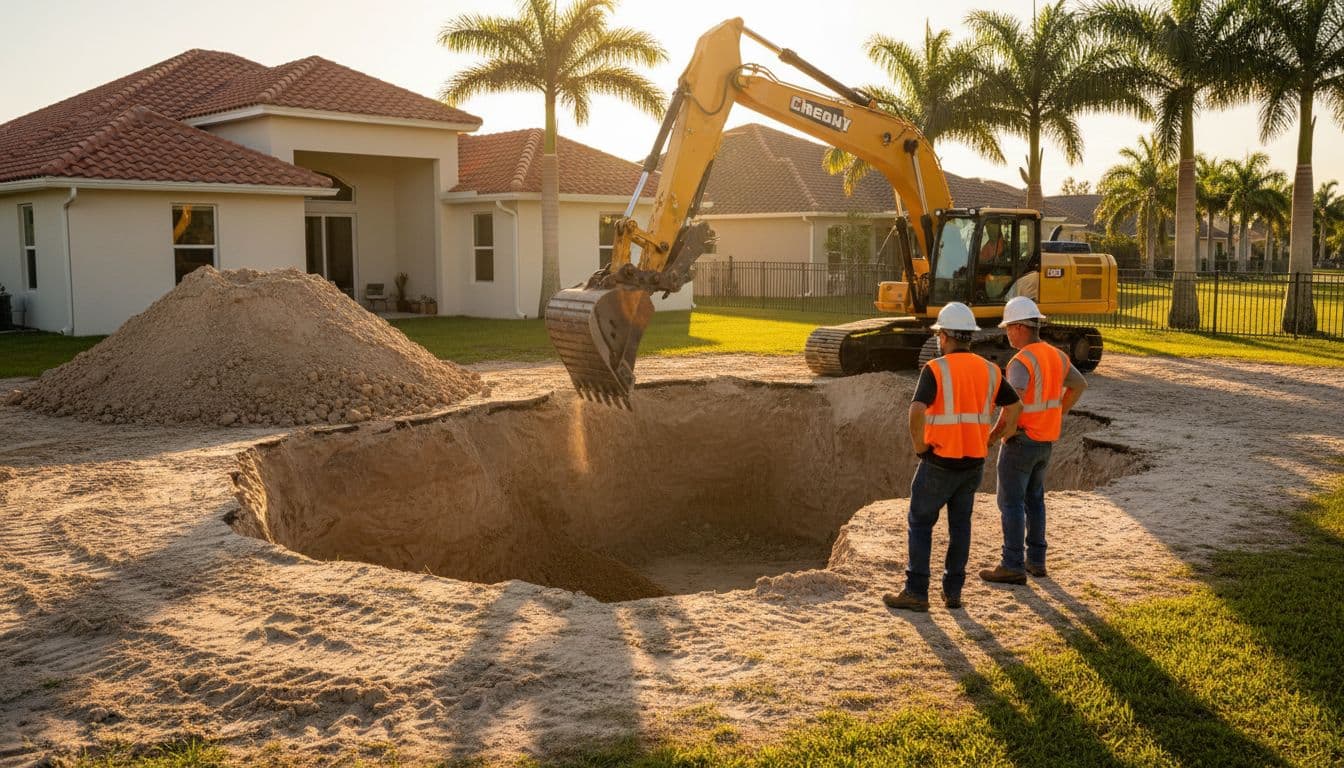
That extra space is normal. It gives the rest of the build a clean start.
How to prepare the day before
The best prep is simple. Give the crew room, protect breakable items, and clear anything that could slow a machine down.
- Move cars, trailers, and trash bins out of the driveway.
- Take up potted plants, patio furniture, and yard decor near the work zone.
- Open gates and unlock access points.
- Keep pets indoors and tell kids to stay clear.
- Trim back anything that hangs into the driveway or work path.
- Ask about sprinkler heads, pool cages, or utility markers if they sit near the dig area.
- Put away anything stored against the fence or side yard.
- Clear grills, hoses, and toys from the route the crew will use.
If a truck needs to back in, the driver needs width and a clean path. A few extra minutes of prep can save an hour of delay.
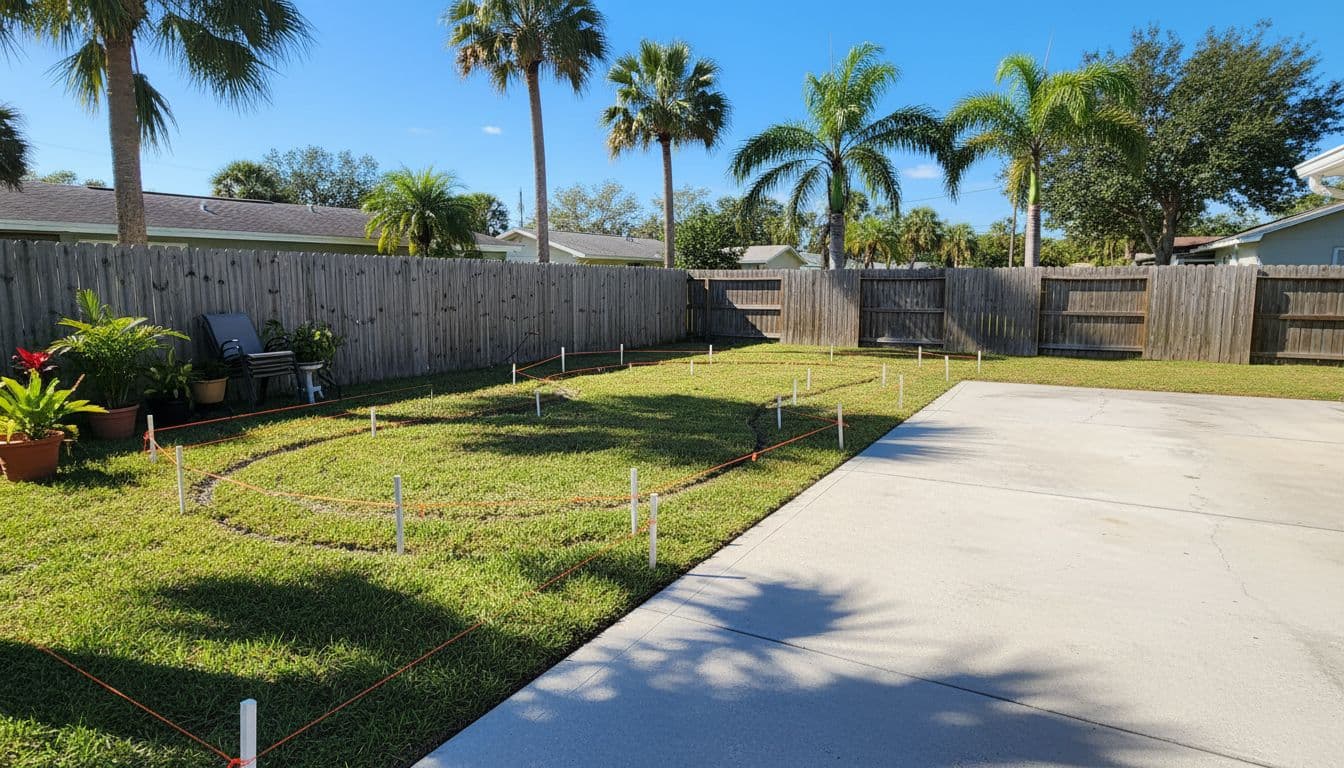
If you already have a screen enclosure, tell the contractor ahead of time. The access route may need extra clearance, and nobody wants to make that call while machinery is in motion.
Protecting landscaping, fences, and hard surfaces
Backyard work always leaves some marks, but a careful crew limits the spread. Plywood can help shield the driveway, temporary barriers can protect the fence line, and netting can keep people away from delicate plants.

Still, some impact is normal. Sod near the dig area may be disturbed. Mulch can scatter. A few small plants may need to be moved or replaced later. That does not mean something went wrong. It means a big machine worked close to a small space.
Driveways and paver areas need care too. If the crew has to turn equipment on a hard surface, it may use mats or plywood to reduce track marks. That helps protect the finish and keeps the path stable.
If your pool will sit near a fence, ask whether that side needs extra room. A small gap can make a big difference when an excavator swings its bucket. Tight spaces are normal, but they need a plan.
What you should not worry about
Noise is part of the day. So is dust, dirt piles, and the sound of tracks on the ground. The machine sounds big because it is big.
You also do not need to panic if the hole looks too wide at first. Excavation leaves room for the shell, plumbing, and shaping. A pool hole is rarely the final shape you see in the end.
You may also hear workers stop and re-measure more than once. That is normal. Good crews check depth, slope, and alignment before they move on.
Weather can shift the plan. Afternoon storms and soft ground can slow the work in Cape Coral. Tight access, street parking, or a long carry through the yard can do the same.
A clean, safe site matters more than a rushed dig.
If the crew slows down to protect the yard or wait out the weather, that is a good sign. It usually means they are keeping the rest of the build on solid ground.
Conclusion
Excavation day is the moment your backyard starts turning into a real pool project. It can look messy for a while, but a good crew keeps the job organized and safe.
If you clear the driveway, protect landscaping, and plan for normal delays, the day usually feels much easier. When you want a site review before work starts, Get a Free Estimate and talk through the yard, access, and schedule in advance.
FAQ
How much weather delay should I expect?
Summer rain can pause excavation, and soft ground can push the work back. A short delay is common when a storm passes through, but the exact timing depends on soil, drainage, and how much rain the site took.
Is excavation day very messy and loud?
Yes, it is both. Expect dust, equipment noise, and some dirt tracking near the work path. A careful crew will try to keep the mess contained, but some cleanup around the yard is normal.
What if my yard has narrow access?
Tell the builder before excavation day. Tight gates, side yards, overhead lines, and nearby fences can change the equipment plan, so access should be checked early. That helps avoid last-minute surprises.
What happens after excavation?
The crew usually confirms the depth and shape, then the project moves to the next phase. That may include steel, plumbing, inspections, or shell work, depending on the pool design and schedule.