Pool layout day can feel small compared with excavation or plaster, but it matters a lot. This is the point where a pool plan becomes a real footprint in your yard.
In Cape Coral, that footprint has to work with property lines, drainage, utilities, sun, and often a canal view. A few inches in the wrong place can affect the whole build, so this step deserves attention.
If you're still early in the process, it helps to understand how the site gets checked and marked. If you want a broader look at the front-end planning stage, preparing for your Cape Coral pool estimate is a useful starting point.
What pool layout day actually means
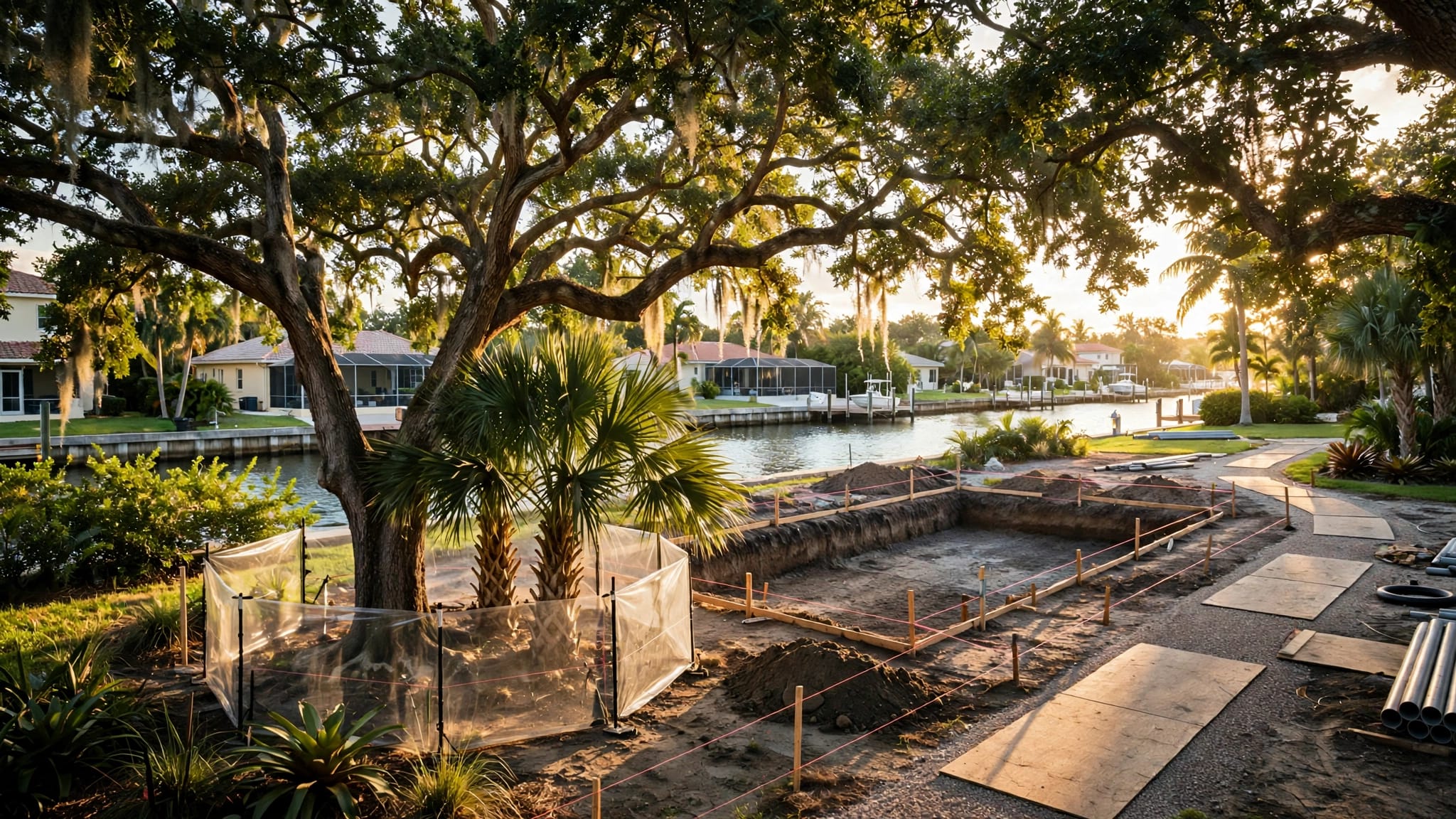
Pool layout day is when the crew marks the pool shape on the ground before digging starts. You may see wooden stakes, string, spray paint, or a mix of all three.
The marks show more than the pool shell. They can also help define the deck area, equipment location, and the space needed for access around the build. In other words, the layout is the first time you can see how the project will sit in the yard, not just on paper.
This is also the stage where small changes still matter. If the pool sits too close to a fence, blocks a walkway, or feels off-center from the patio, this is the time to speak up. Once excavation begins, adjustments become harder and more expensive.

In Cape Coral, waterfront lots add another layer. A pool may be laid out to protect a canal view, keep the deck open toward the water, or preserve privacy from neighbors. A good layout balances what looks best with what works best.
If the layout feels off, say so before the ground is cut. That is the easiest time to correct it.
The site checks that happen before the crew marks anything
Before the first stake goes in, the crew needs to understand the yard. They will usually check the survey, lot lines, easements, slope, access path, and nearby features that could affect the build.
Property lines matter first. The pool must fit inside the approved build area, and setbacks can affect everything from the pool shell to the deck edge. If you have a recent survey, keep it handy. If there is any mismatch between the survey and the yard, the survey wins.
Drainage comes next. Cape Coral storms can dump a lot of water fast, so the crew looks at how water moves across the lot. A pool should not send runoff toward the house, the neighbor's yard, or a low spot that already collects water.
Utility access is another big part of the check. The crew needs to know where buried lines, irrigation heads, and service paths sit before layout gets locked in. Hitting a utility line is a headache nobody wants.
If your lot backs to a canal, the view often matters too. The team may place the pool to keep sightlines open from the home or lanai while still giving you enough deck space for seating and movement.
A layout that respects those details helps the rest of the project run smoother. It also reduces the chance of late changes during excavation or framing.
What to have ready before the crew arrives
The best pool layout days go faster because the homeowner is prepared. You do not need to know every technical detail, but you should have the right basics ready.
Before the visit, try to gather these items:
- A copy of your property survey or lot sketch.
- Notes about where you want the pool, patio, or screen enclosure to sit.
- Clear ideas about sun exposure, shade, and privacy.
- Any concerns about drainage, soft ground, roots, or existing irrigation.
- A clear path for crew access, plus a yard that is easy to walk.
It also helps to remove furniture, toys, pet items, and anything else that blocks the work area. If the crew cannot move easily around the yard, the layout takes longer and becomes harder to read.
If you are planning a future screen enclosure, mention that early. The pool footprint and deck shape should support the enclosure later, not make it awkward.
A quick site walk before the appointment can save time. Stand where you usually sit in the evening. Look at the sun. Check the view toward the canal, the fence, or the side yard. You will notice things that do not show up on a sketch.
If you are at the point where you want someone to look at the yard with you, Get a Free Estimate and schedule an onsite consultation.
How layout choices shape the rest of the build
Layout day affects nearly every phase that follows. Once the pool shape is set, the excavation crew knows what to remove. After that, the steel, plumbing, decking, and equipment all follow the same footprint.
That is why shape and placement matter so much. A long, narrow pool may fit one yard better than a wide one. A shifted tanning ledge may leave more room for a table or loungers. Even the equipment pad location affects day-to-day use, because nobody wants pump noise next to the main seating area if it can be avoided.
Sun exposure also plays a bigger role than many homeowners expect. In Cape Coral, direct sun can make a shallow shelf feel warmer and a patio space feel more exposed. Sometimes a small shift in the layout improves comfort without changing the overall design.
If you are choosing between different pool styles or features, it helps to see how shape changes the space. Custom backyard pool planning can give you a clearer picture of how a design fits a real yard.
Deck flow matters too. You want enough room to move from the house to the pool without squeezing past corners. You also want enough space for chairs, grills, planters, and possibly a future enclosure. A layout that feels open on paper can feel tight once the deck is poured, so this is the time to check those distances carefully.
What happens after the lines are set
Once the layout is approved, the project moves into the next phase. The crew may still need final utility marks, permit checks, or small field adjustments before digging begins. That timing can vary, but the layout usually sets the pace for everything after it.
This is also the point where you should speak up if something still feels wrong. A move of a few feet can change how the pool relates to your home, your view, or your fence line. After excavation starts, that same change becomes much harder.
The next stage is usually excavation, where the crew removes soil based on the marked outline. If you want to know what that looks like in real life, what happens during pool excavation explains the next step clearly.
A good layout day leaves you with confidence. You should be able to stand in the yard and understand where the pool will sit, how the deck will flow, and why the placement makes sense. If you can picture yourself using the space, the layout is doing its job.
Conclusion
Pool layout day is the moment your future backyard starts to feel real. It is also the best time to catch problems with property lines, drainage, access, or views before they become expensive changes.
If the marks in the yard do not match what you expected, speak up right away. The goal is not just to place a pool, it is to place it in the right spot for the way you live.
A careful pool layout day sets up the rest of the build with fewer surprises and a better final result.