Imagine stepping out to your pool on a scorching Cape Coral afternoon. Your feet hit a deck so hot it sends you jumping back inside. Pool deck materials make or break your backyard oasis here in Southwest Florida.
High humidity, pounding rain, and relentless sun demand smart choices. Salt air from nearby coasts adds wear too. You need surfaces that stay cool, grip well when wet, and last through year-round swims.
This guide covers top options tailored to local conditions. You'll see pros, cons, and tips to pick what fits your budget and style.
Why Your Pool Deck Must Handle Cape Coral Weather
Cape Coral backyards face intense challenges. Sun bakes surfaces above 120 degrees Fahrenheit. Sudden downpours make slips a real risk. Pools run 365 days a year, so decks see constant traffic.
Choose light colors first. They reflect heat better than dark tones. Textured finishes boost safety around wet pools. Good drainage prevents puddling, which harms stone or concrete over time.
Sealing matters too. It fights salt, chlorine stains, and UV fade. Apply fresh sealant every one to two years. These steps extend life and keep feet comfy.
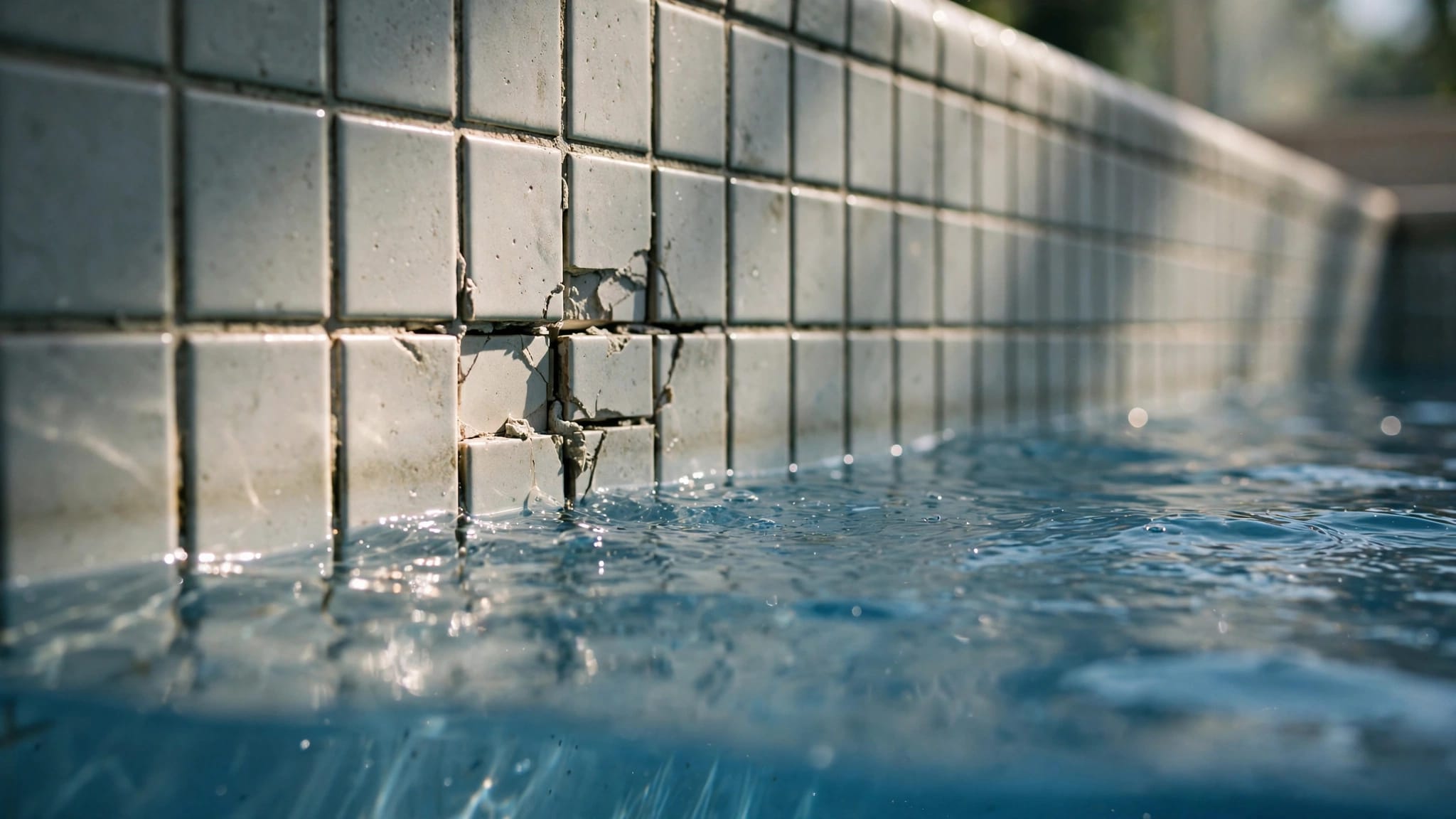
Poor choices lead to cracks from soil shifts or heat expansion. That's why locals turn to proven pool deck materials like travertine or pavers. They balance looks, safety, and upkeep.
Travertine Tile Shines in the Heat
Travertine offers natural elegance. This limestone forms in hot springs, so it suits Florida's climate. Light beige tones stay cooler than concrete.
Pros include barefoot comfort. Its slight texture grips wet feet without scraping. Durability holds up to salt and rain. Expect 20-plus years with sealing.
Cons? Higher upfront cost, around $15 to $25 per square foot installed. Porous nature needs annual sealing to block stains. Avoid filled versions; unfilled chips less in humid shifts.
In Cape Coral, opt for tumbled edges. They fit tropical vibes and hide pool curves. Pair with pool renovations and resurfacing for a full refresh.
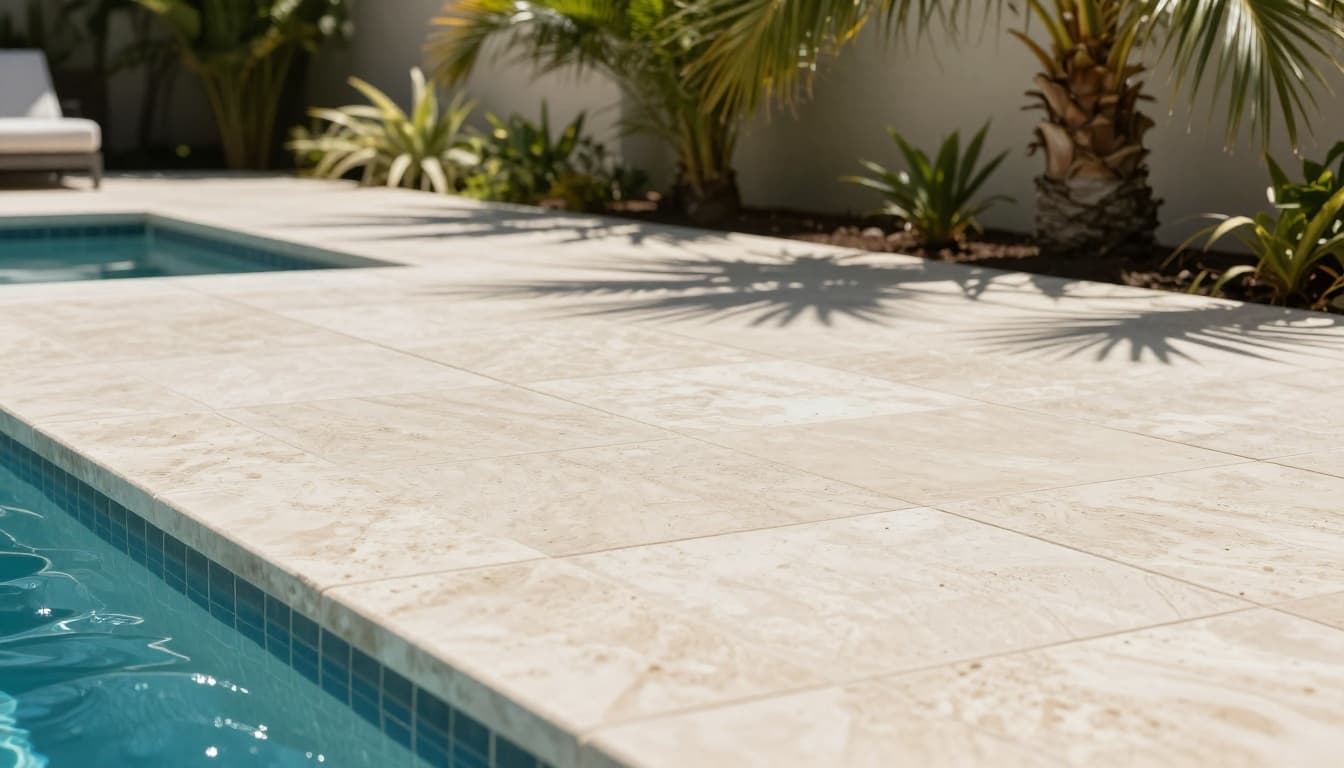
Tropical plants frame travertine decks perfectly. Maintenance stays simple: sweep debris and reseal yearly.
Concrete Pavers Offer Versatility and Value
Concrete pavers win for affordability and customization. At $10 to $20 per square foot, they fit tighter budgets. Modular design allows easy repairs if one cracks.
They drain fast, key after heavy rains. Textured tops prevent slips. Light grays or sands reflect sun, keeping toes happier.
Drawbacks include fading over time without sealant. Joint sand washes out, needing top-ups. Heavy, so pros handle install to avoid settling.
Cape Coral yards love them for even surfaces. Slopes aid water runoff. Choose permeable styles for eco-drainage.
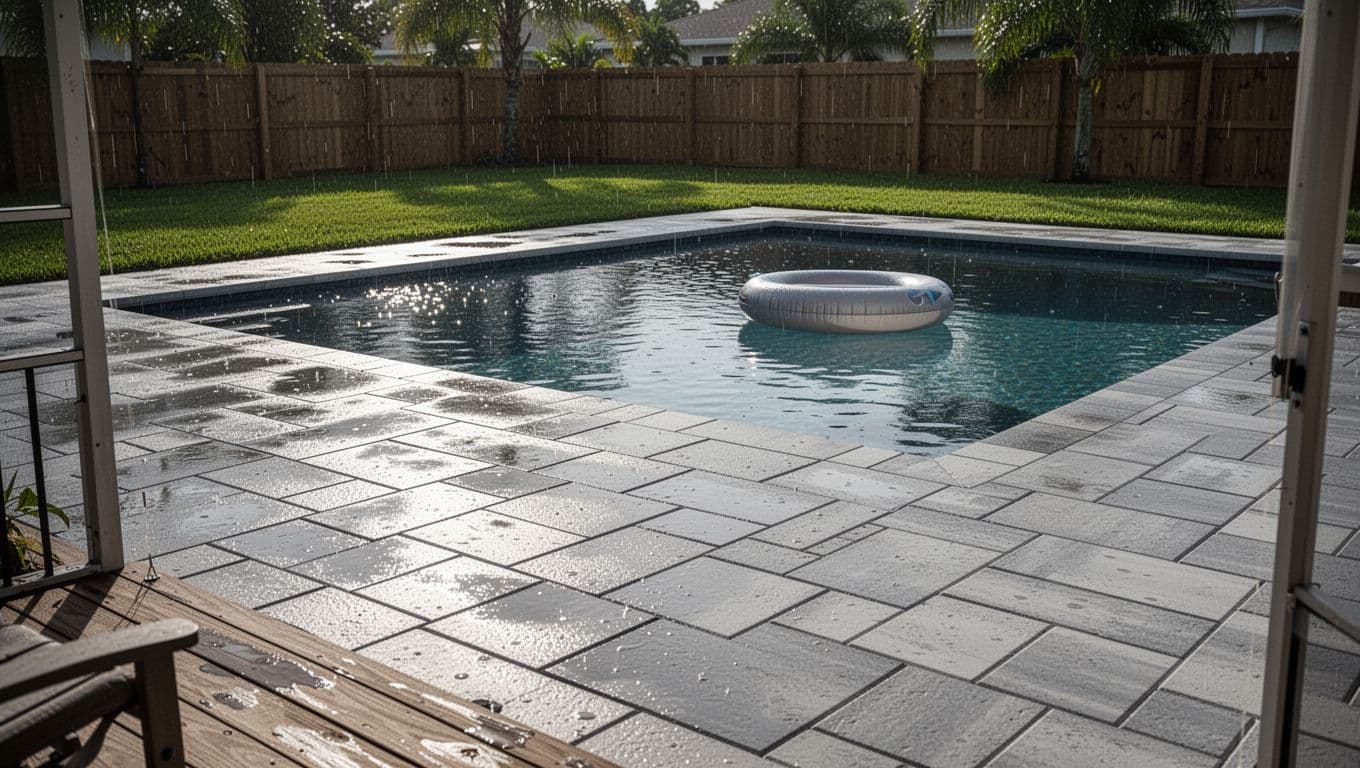
Wet pavers prove their grip. Refresh every five years for longevity.
Explore Concrete Choices: Stamped and Brushed
Stamped concrete mimics stone at lower cost, $12 to $22 per square foot. Patterns look like travertine or brick. Seal it thick against UV.
Brushed finishes add texture for safety. Soft sand colors blend with stucco homes. Both endure foot traffic and chemicals.
Yet, cracks form from ground movement. Repairs mean matching colors, a hassle. Heat retention beats pavers unless light-tinted.
For Cape Coral, brush for everyday use. Stamp for upscale looks. Signs it's time to resurface your Cape Coral pool often tie to deck wear.
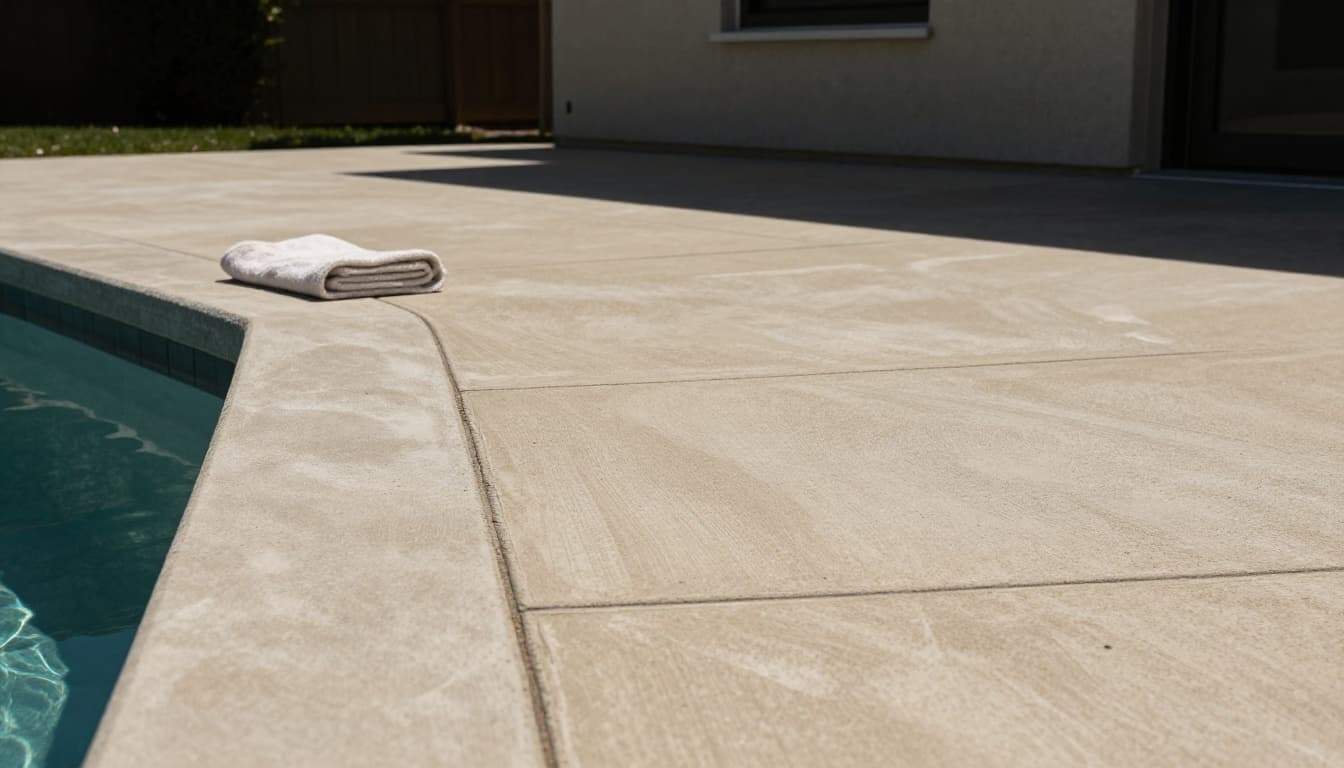
Brushed texture shows daily durability up close.
Porcelain Pavers for Modern Cool Comfort
Porcelain pavers top charts for low maintenance. Non-porous, they resist stains and mold in humid air. Prices run $15 to $30 per square foot.
Cool underfoot, even in peak sun. Anti-slip ratings meet wet-area codes. Thin profiles overlay old decks easily.
Downsides? Glazed surfaces scratch if dragged furniture sits long. Install needs level base to prevent rocking.
Ideal for infinity edges in Cape Coral. White tones simulate stone without heat. Dappled palm shade enhances them.
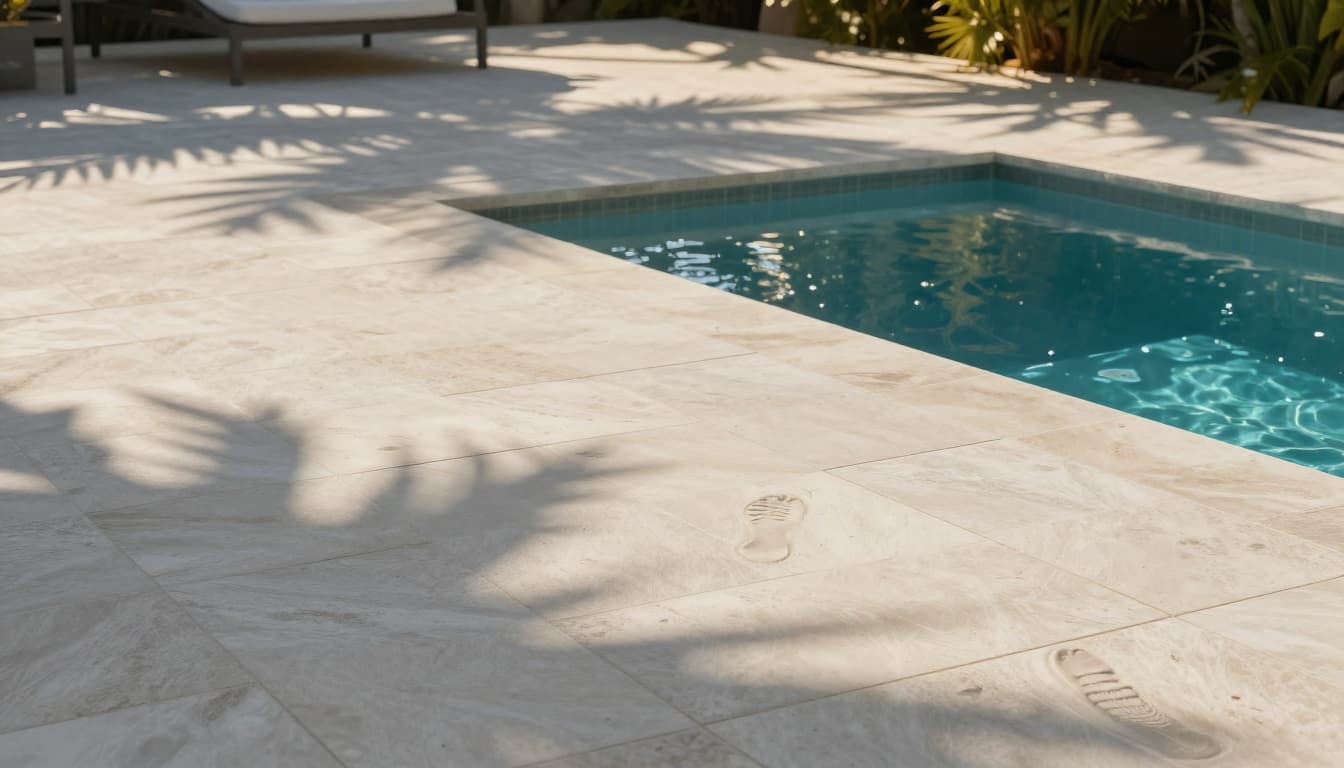
Footprints highlight barefoot ease.
Shell Stone and Composite: Niche Picks
Shell stone crushes local shells into rustic decks. Budget-friendly at $8 to $15 per square foot. Porous but seals well against salt.
It grips bare feet and drains superbly. Fades softly over years, fitting beachy styles.
Composite decking avoids wood rot. UV-protected boards cost $20 to $40 per square foot. No splinters, low warp in humidity.
Yet, composites heat up more. Shell erodes without care. Both suit smaller areas.
Screen them with screen enclosures and rescreens for bug-free lounging.
Match Materials to Your Needs and Budget
Compare costs: concrete pavers cheapest upfront. Travertine and porcelain last longer, saving repairs.
Prioritize slip ratings above 0.6 wet. Test barefoot heat on samples. Budget $10,000 to $30,000 for average decks.
Drainage slopes matter; aim for 1/4 inch per foot. Light seals reflect rays. Consult for new pool construction ties.
Get a Free Estimate today. Pros assess your yard best.
Travertine suits luxury seekers. Pavers fit families. All thrive with local know-how.
Pick pool deck materials that match your swims and wallet. Cape Coral decks turn backyards into retreats. Yours can too, built to beat the heat and storms.