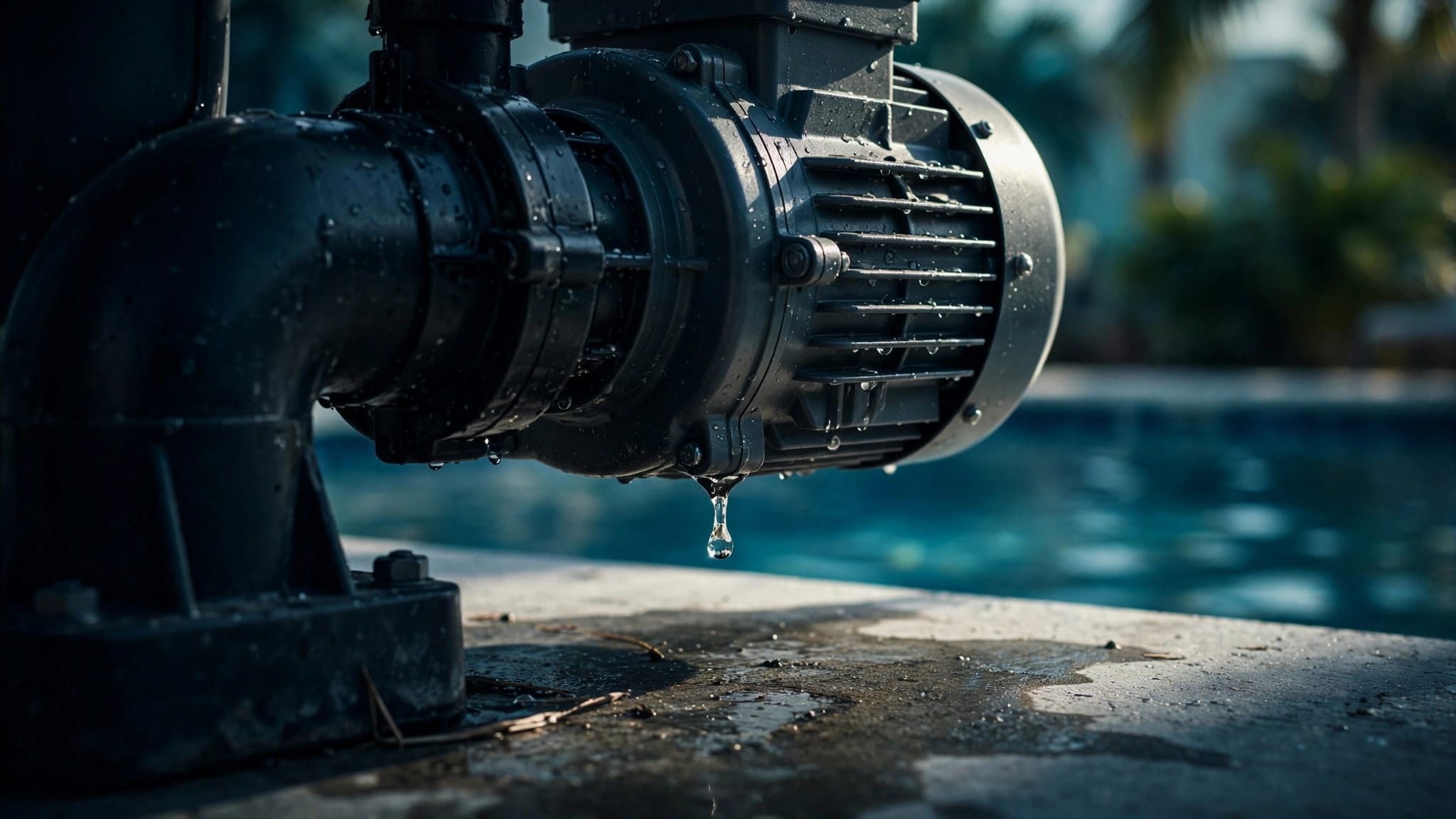
A pool pump that hums without circulating water needs attention before another restart makes the problem worse. A failing pool pump capacitor may be involved, but the sound alone doesn't establish the cause.
For Cape Coral homeowners, the decision comes down to accurate diagnosis and the condition of the remaining equipment. Start with what you can safely observe, then let a qualified technician confirm whether a small repair will restore reliable operation.
Key Takeaways
- Startup trouble warrants inspection, but a hum or delayed start doesn't confirm capacitor failure.
- Disconnect power before inspection, and remember that a capacitor can retain a dangerous charge afterward.
- An isolated component failure may justify repair when the motor, housing, and plumbing remain sound.
- Repeated breakdowns, corrosion, leaks, and high operating costs strengthen the case for replacement.
- Ask a qualified technician to verify the diagnosis, replacement specifications, and repair procedure before authorizing work.
What a Pool Pump Capacitor Does
On a motor designed to use one, a capacitor supports the electrical conditions needed for starting or running. The motor design determines its purpose and the correct replacement.
Some motors use a start capacitor, some use a run capacitor, and others use both. These components aren't interchangeable simply because they fit inside the same cover. A technician should confirm the arrangement through the motor documentation.
Also, don't assume every pool pump has a homeowner-replaceable capacitor. Variable-speed equipment may use electronic controls that require a different diagnostic process.
The motor model matters as much as the pump name. If someone previously replaced the motor, the label on the wet-end housing may not identify the electrical components now installed.
Before your appointment, photograph accessible model labels without removing electrical covers. Those details help the technician locate the appropriate service information and avoid ordering parts for the wrong motor.
Pool Pump Capacitor Symptoms: Useful Clues, Not Proof
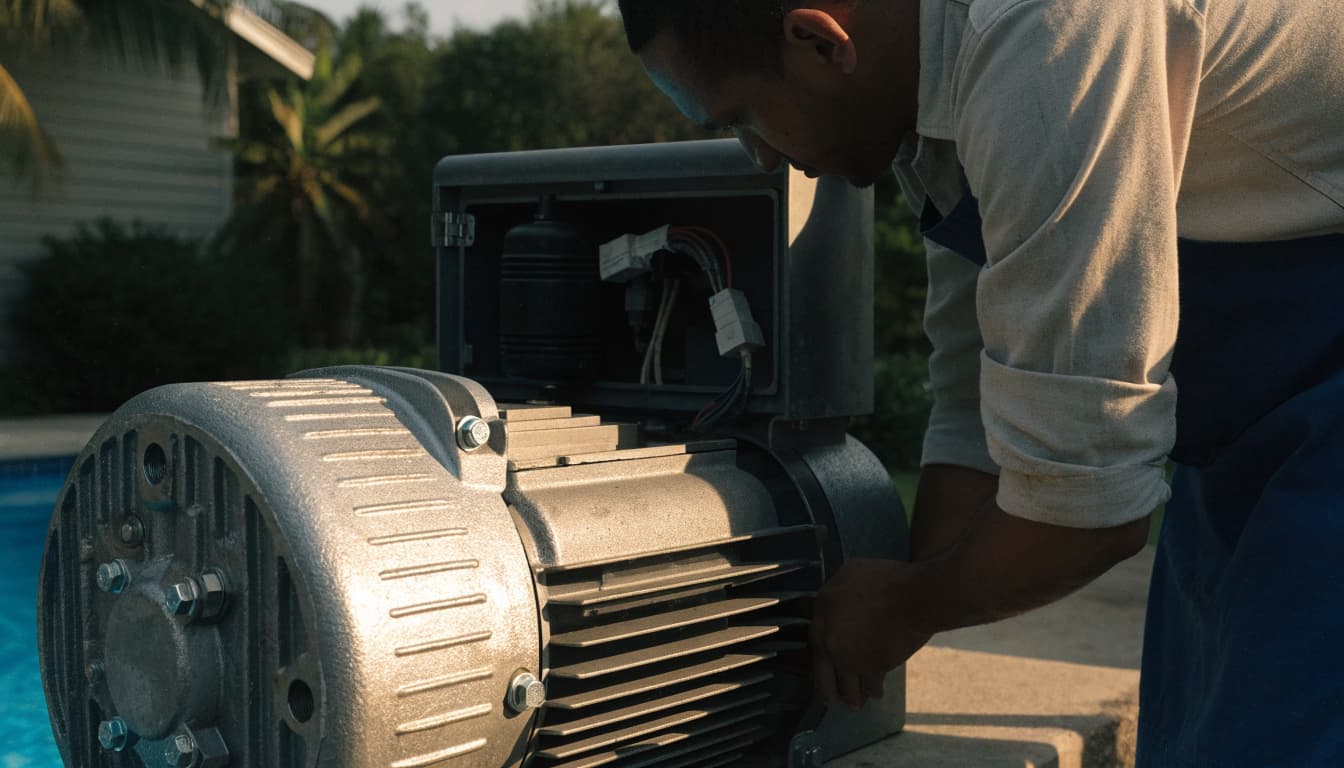
Humming, delayed starts, or inconsistent operation
Report whether the pump hums without starting, takes longer than usual to start, or works intermittently. Also note whether the problem happens at the first scheduled start or after the equipment has been running.
These observations help guide an inspection, but a qualified technician must confirm their meaning. Electrical supply problems, mechanical resistance, and other motor faults can overlap with a suspected capacitor problem.
Don't try to help the motor start by turning its shaft while power is connected. Likewise, avoid repeatedly cycling the timer or breaker to see whether the pump eventually starts.
Heat, odors, and shutdowns deserve prompt attention
If you notice a burning smell, smoke, a tripped breaker, or severe metallic noise, stop using the equipment and arrange professional service. Don't touch the motor to judge its temperature.
Describe what happened immediately before the shutdown. Recent electrical work, a leak, storm damage, or a change in pump operation may be useful context.
However, none of those observations identifies a capacitor as the failed component. The technician needs to assess the motor and circuit before deciding whether repair is appropriate.
Disconnect Power Before Any Inspection
Turning the pump off through its timer, app, or control panel doesn't provide the same protection as disconnecting its electrical supply. Before inspection, disconnect power at the appropriate breaker or disconnect according to the manufacturer's instructions.
Prevent an automatic schedule or another person from restarting the equipment. If you aren't sure which circuit supplies the pump, stop and call a qualified technician.
A capacitor can retain a dangerous electrical charge even after power is disconnected. Removing power doesn't make its terminals safe to touch.
A powered-off motor can still contain a charged capacitor. Leave electrical covers and capacitor handling to someone trained and equipped for the work.
Don't short the terminals with a screwdriver or attempt live testing. A qualified technician should follow the manufacturer's procedures and verify safe conditions before handling electrical components.
Keep children and pets away from damaged equipment. Standing water near connections, melted insulation, or visible wiring damage calls for professional assessment, not closer homeowner inspection.
Separate Motor Trouble From Circulation Trouble
A motor that won't start needs electrical and mechanical diagnosis
First, distinguish between a motor that never reaches operating speed and a pump that runs but moves little water. Tell the technician which situation you observed.
If the motor won't start, capacitor condition is only one part of the assessment. The technician may also need to evaluate the electrical supply, starting components, bearings, and freedom of movement.
Share recent service history, including capacitor or motor replacements. A recurring failure deserves investigation into its cause rather than another automatic parts swap.
You don't need to open the motor to provide this information. A clear description of the sequence often helps more than a guess about the failed part.
Poor flow may require a separate plumbing inspection
When the motor runs but the basket won't stay full, include water level, air bubbles, and loss of prime in your report. Suction leaks, blocked baskets, restrictions, and drain-back can require separate attention.
Similarly, weak return flow with unusually high filter pressure warrants a filtration or plumbing assessment. Compare pressure with the system's normal clean-filter baseline rather than one isolated reading.
Don't keep operating a pump that lacks adequate water flow. A capacitor replacement won't correct an air leak or clogged line.
Before opening any water-side equipment, follow its shutdown and pressure-release instructions. Ask a professional if you're unfamiliar with the procedure.
How a Technician Confirms the Right Repair
Ask for a diagnosis that identifies the failed component and explains whether the rest of the motor remains serviceable. "It probably needs a capacitor" isn't enough to authorize repeated repairs.
Any test results, acceptable readings, and replacement specifications need confirmation against the motor manufacturer's technical information. The correct diagnostic method depends on the motor and capacitor type.
If replacement is appropriate, the technician should verify the component's function, capacitance specification, voltage rating, connections, and physical fit. Don't select a part based only on appearance.
The assessment should also address damaged wiring, compromised seals, corrosion, or evidence of overheating. Otherwise, replacing one component could leave the underlying problem unresolved.
After the repair, ask the technician to confirm normal startup, circulation, and operation through the relevant control settings. If the original symptom remains, the job needs further diagnosis rather than another unconfirmed replacement.
When Repair Makes Sense and When Replacement Wins
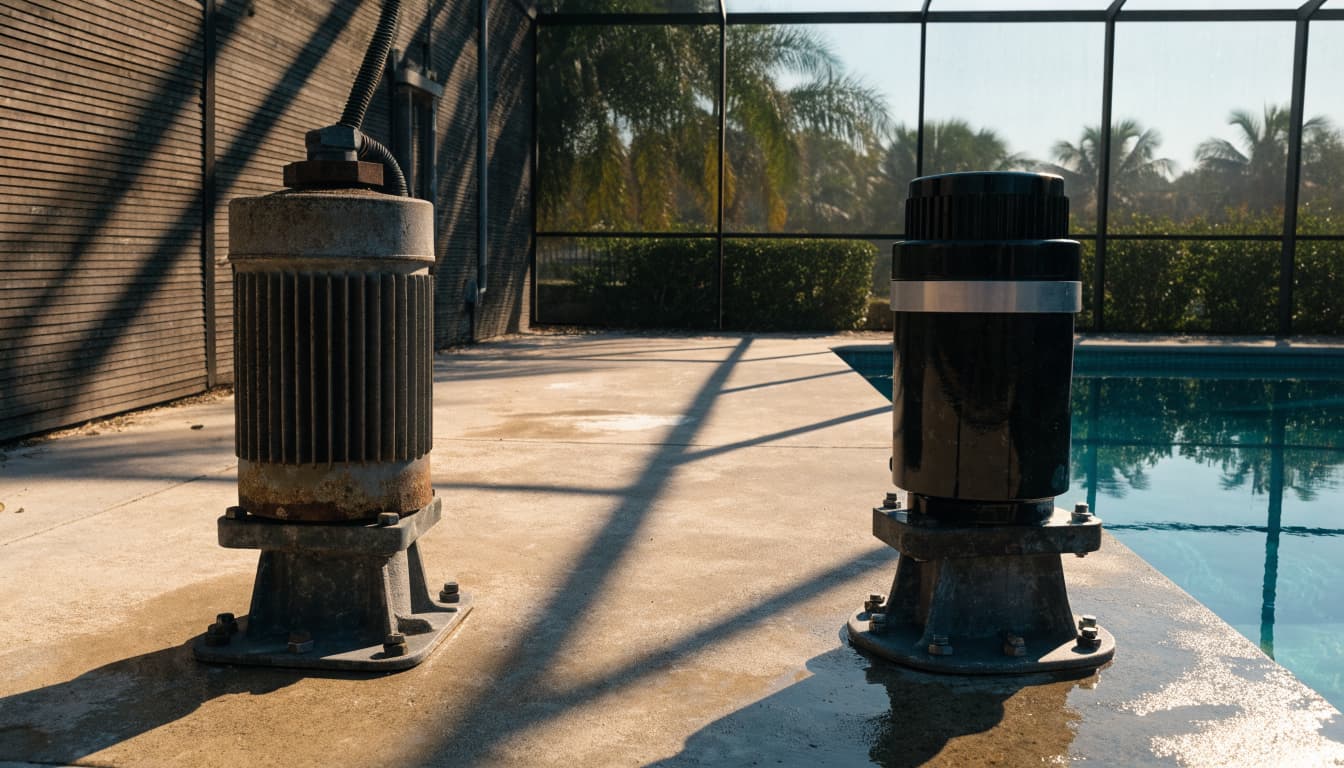
Repair an isolated fault in otherwise healthy equipment
A confirmed capacitor failure may justify repair when the housing is intact and the motor has no significant additional damage. Service history and performance matter more than age alone.
Other localized problems, such as a worn seal or damaged lid O-ring, may also be repairable. However, each needs its own diagnosis.
These conditions help frame the discussion:
| Condition after professional inspection | Decision to discuss |
|---|---|
| One failed component, otherwise sound equipment | Targeted repair |
| Recurring faults or several damaged components | Compare motor and complete-pump replacement |
| Cracked housing or extensive corrosion | Assess complete replacement |
| Older equipment with high operating costs | Compare an appropriately sized upgrade |
The strongest repair candidate has a clear cause and a fix expected to restore dependable operation.
Replace when the problems extend beyond one component
Grinding bearings, recurring shaft leaks, or suspected winding damage require a broader evaluation. Ask whether water intrusion or overheating has affected other parts.
Also compare reliability. Several service visits can outweigh the appeal of another small repair.
When a major repair quote approaches half the installed replacement price, review both options closely, especially for older equipment. Treat that as a budgeting guideline, not an automatic cutoff.
A variable-speed replacement may reduce electricity use compared with an older single-speed pump. However, savings depend on sizing, programming, and system requirements. A larger pump won't correct undersized plumbing or suction leaks.
Compare Complete Quotes, Not Just Part Prices
A capacitor's purchase price doesn't describe the entire repair bill. Diagnosis, labor, travel, associated damage, and warranty terms can change the total. Request a written scope before approving work.
For a replacement, ask whether the quote includes the motor only or the complete pump. Also clarify plumbing changes, electrical connections, controls, startup, and removal of old equipment.
Back Bay Pools' guidance on comparing pool equipment quotes recommends checking actual model numbers rather than broad equipment descriptions. That distinction matters when proposals include different pump types or installation responsibilities.
Compare the repair warranty with the replacement warranty, and ask what each excludes. Request an explanation of any efficiency savings rather than accepting a payback estimate without assumptions.
If replacement overlaps with a renovation, review the entire circulation system. Pipe sizes, filter capacity, heater flow requirements, and water features affect pump selection.
For a planned pool renovation, Get a Free Estimate to schedule an on-site consultation with Back Bay Pools and discuss equipment evaluation alongside the project.
Frequently Asked Questions
Can I replace the capacitor myself?
Only consider electrical work if you're qualified and have the proper tools and manufacturer-specific procedures. Disconnecting power doesn't eliminate stored charge. If you lack training, aren't sure how to verify safe conditions, or can't identify the correct component, use a qualified technician.
Does a humming pump prove the capacitor is bad?
No. Humming is an observation, not a confirmed diagnosis. Report whether the motor starts, shuts down, or produces other unusual sounds. A technician must determine whether the issue involves the capacitor, electrical supply, mechanical resistance, or another component.
Should I replace the whole pump after one failure?
One confirmed, isolated failure doesn't automatically justify complete replacement. Compare the motor's condition, repair history, warranty, and operating costs. However, multiple faults or recurring failures warrant a complete-pump quote as well as a repair option.
Choose the Repair That Solves the Cause
A suspected pool pump capacitor failure deserves a careful diagnosis before you buy parts or replace the pump. A targeted repair can make sense when the remaining equipment is healthy.
Keep electrical safety first, and compare complete costs when damage or repeated failures complicate the decision. The right choice restores reliable circulation without leaving the original cause unresolved.