A pool quote can look complete while leaving out the work that makes the project usable, permitted, and ready for family weekends. The lowest number may cover less work, use different materials, or push important decisions into later change orders.
When you compare pool builder quotes , focus on the full scope behind each total. A fair comparison starts when every builder prices the same pool, site conditions, finishes, equipment, and outdoor features.
Use the process below to identify what each proposal includes, what it leaves open, and which builder gives your Cape Coral backyard the strongest long-term value.
Start by Comparing the Same Project Scope
A quote only helps when the builders priced the same job. If one proposal includes a spa, enclosure, heater, and pavers while another lists only the pool shell, the totals don't tell you much.
Before requesting revised estimates, write a short project brief. Include the pool shape and approximate size, desired depth, deck material, finish level, equipment preferences, screen enclosure plans, and features you want to keep or skip.
Compare line items, not only the bottom line
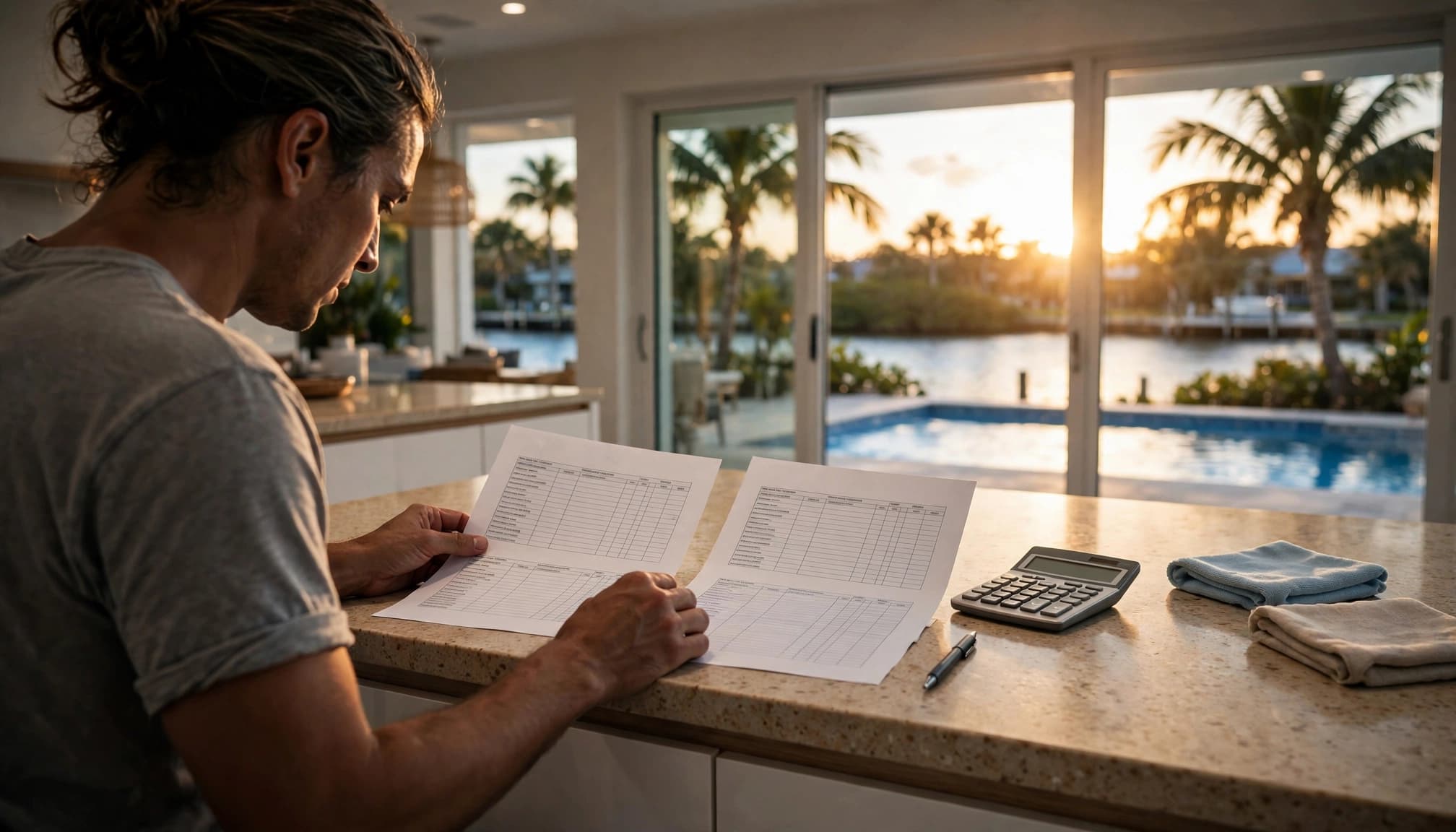
Set the quotes side by side and highlight every included item. Then mark entries that are vague, such as "allowance," "standard equipment," or "as needed." Those phrases aren't always a problem, but they need a dollar amount, product description, or written limit.
A lower total can come from a smaller deck allowance, basic interior finish, less electrical work, or no allowance for access challenges. Meanwhile, a higher proposal may include work that protects your yard and avoids surprises later.
Ask each builder to separate base construction from optional upgrades. That gives you room to adjust the design without losing track of the core project cost.
Match the plans before judging the price
Compare drawings as carefully as the numbers. Check pool dimensions, depth profile, spa size, tanning ledge, deck square footage, enclosure footprint, equipment location, and drainage approach.
For example, a quote for a rectangular pool with a basic concrete deck isn't equal to a quote that includes pavers, a raised spa, additional lighting, and a large covered patio area. Both may describe a "custom pool," yet they are different projects.
If you are starting fresh, reviewing examples of new pool construction in Cape Coral can help you define the features each quote should address.
What Complete Pool Builder Quotes Should Include
A detailed estimate should show where the money goes. It doesn't need to predict every hidden condition before work begins, but it should clearly identify known work, materials, allowances, exclusions, and the process for changes.
Use this table to compare the main sections of pool builder quotes.
| Quote category | Details to compare | What to confirm in writing |
|---|---|---|
| Design and plans | Pool dimensions, elevations, features, engineering | Who handles revisions and what revisions cost |
| Site preparation | Access, excavation, haul-away, grading, soil work | How unforeseen site conditions are priced |
| Pool structure | Shell, steel, plumbing, coping, tile, interior finish | Exact materials, brands, colors, and finish type |
| Equipment | Pump, filter, heater, automation, sanitation | Model numbers, warranty terms, and electrical needs |
| Deck and exterior work | Deck size, surface material, drainage, restoration | Square footage, edges, demolition, and repair limits |
| Permits and inspections | Applications, plans, fees, inspections, surveys | Who pulls permits and handles corrections |
| Enclosure and safety items | Cage, gates, hardware, barriers, lighting | Whether these are included or separate contracts |
A quote should also state who removes excess dirt, protects existing landscaping, repairs disturbed areas, and handles final cleanup. Those details affect daily life during construction and the final appearance of the yard.
A proposal that lists an allowance without a defined material or quantity leaves part of the project price unresolved.
Cape Coral Site Conditions Can Change the Cost
Every yard has its own constraints. In Cape Coral, access, drainage, waterfront features, existing cages, and lot layout can change labor and material needs long before the first excavation begins.
Permit responsibilities and final survey requirements
The City of Cape Coral manages pool permitting within city limits. Its permit materials include a pool category for in-ground pools, spas, renovations, equipment changes, deck additions, and related work.
Ask which company or qualifying individual will pull the permit. The name on the contract should match the party responsible for the permit work. Also ask whether permit fees, drawings, inspections, revisions, and surveys are included.
Cape Coral's Notices to Industry include a final-survey requirement for pool and spa permits, amended in February 2026. Confirm that your proposal accounts for the current final-survey requirement rather than leaving it as an unpriced owner expense.
Access, canals, and drainage deserve a site visit
A narrow side yard can require smaller equipment, extra hand labor, temporary fence removal, or more protection for pavers and landscaping. A screen enclosure or lanai can also limit how crews reach the work area.
Canal-front homes need another level of planning. A builder should account for the seawall, property lines, dock access, wind exposure, and staging space. Ask whether the site plan shows these conditions clearly.
Flood zones may also affect layout and documentation. Confirm your property's FEMA flood zone and ask whether the pool, deck, enclosure, or equipment pad requires extra elevation or floodplain review.
Compare Materials and Equipment by Name
"Upgraded" is not a material specification. Strong pool builder quotes name the finish, coping, tile, plumbing, equipment, screen type, and deck material that the price covers.
Pool finishes, decks, and water features
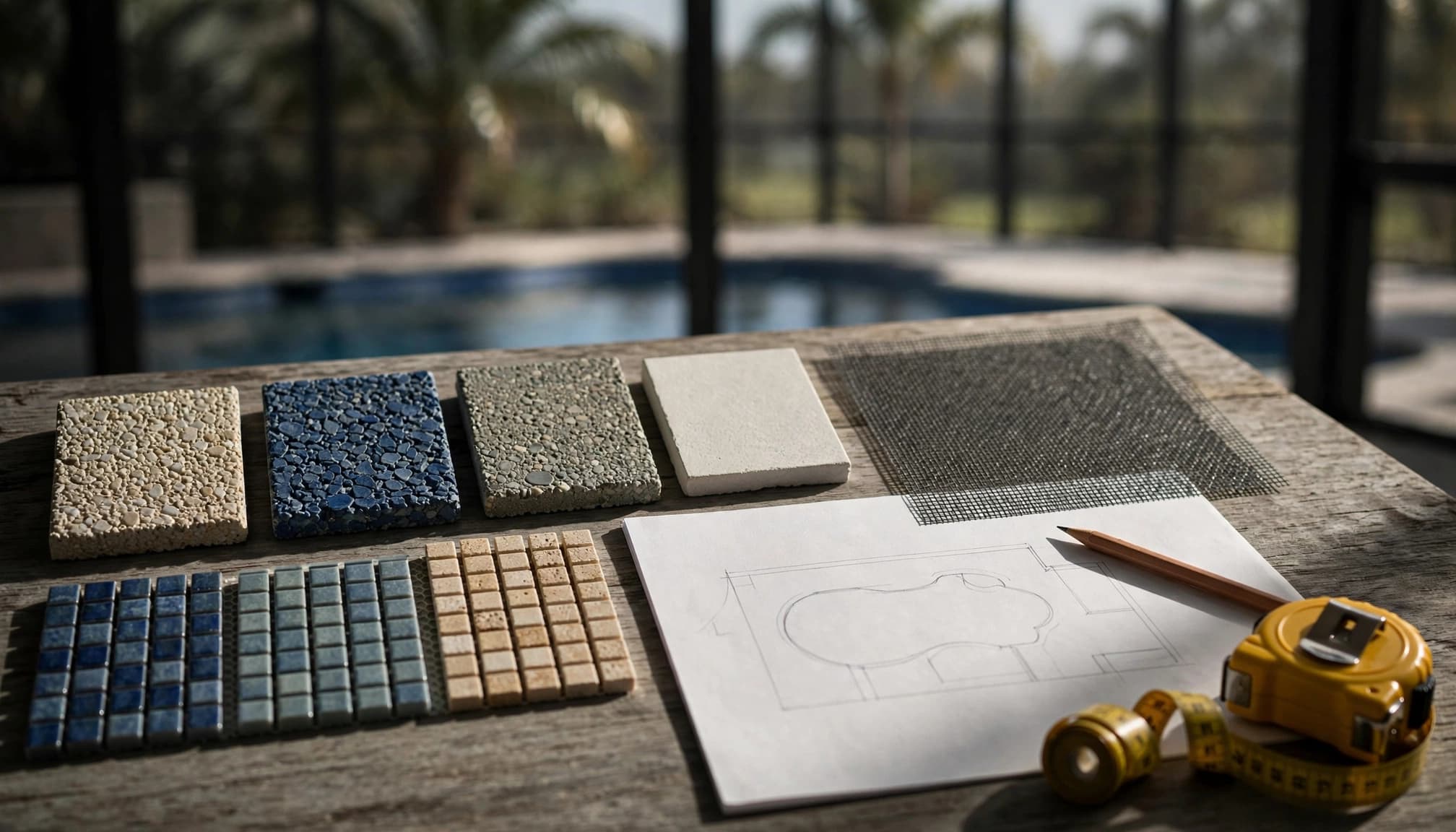
Interior finishes can vary in texture, color range, maintenance needs, and cost. Tile, coping, and deck materials also differ in appearance, traction, heat retention, and repair needs. Ask to see samples before you sign.
Water features deserve their own line item. Bubblers, spillways, sheers, and raised walls can affect plumbing, electrical work, finish materials, and future maintenance. A quote should identify the number and type of features, not simply say "water feature included."
If you are updating an older pool, compare whether the scope is a cosmetic refresh or a larger structural change. Pool renovations and resurfacing can involve finish work, deck updates, tile replacement, plumbing repairs, or a redesigned pool area. Each option needs a different quote.
Equipment affects ownership after construction
Compare equipment model numbers, not broad labels. A pump, filter, heater, salt system, automation package, and lights all carry different capacities and warranty terms.
Confirm whether the quote includes startup, homeowner orientation, plumbing pressure tests, electrical connections, and equipment-pad work. Also ask where the equipment will sit. A pad that is easy to reach, drains well, and stays away from main seating areas makes future service easier.
For a renovation, ask whether existing equipment will remain, be relocated, or be replaced. That decision can shift the project scope quickly.
Give Screen Enclosures Their Own Comparison
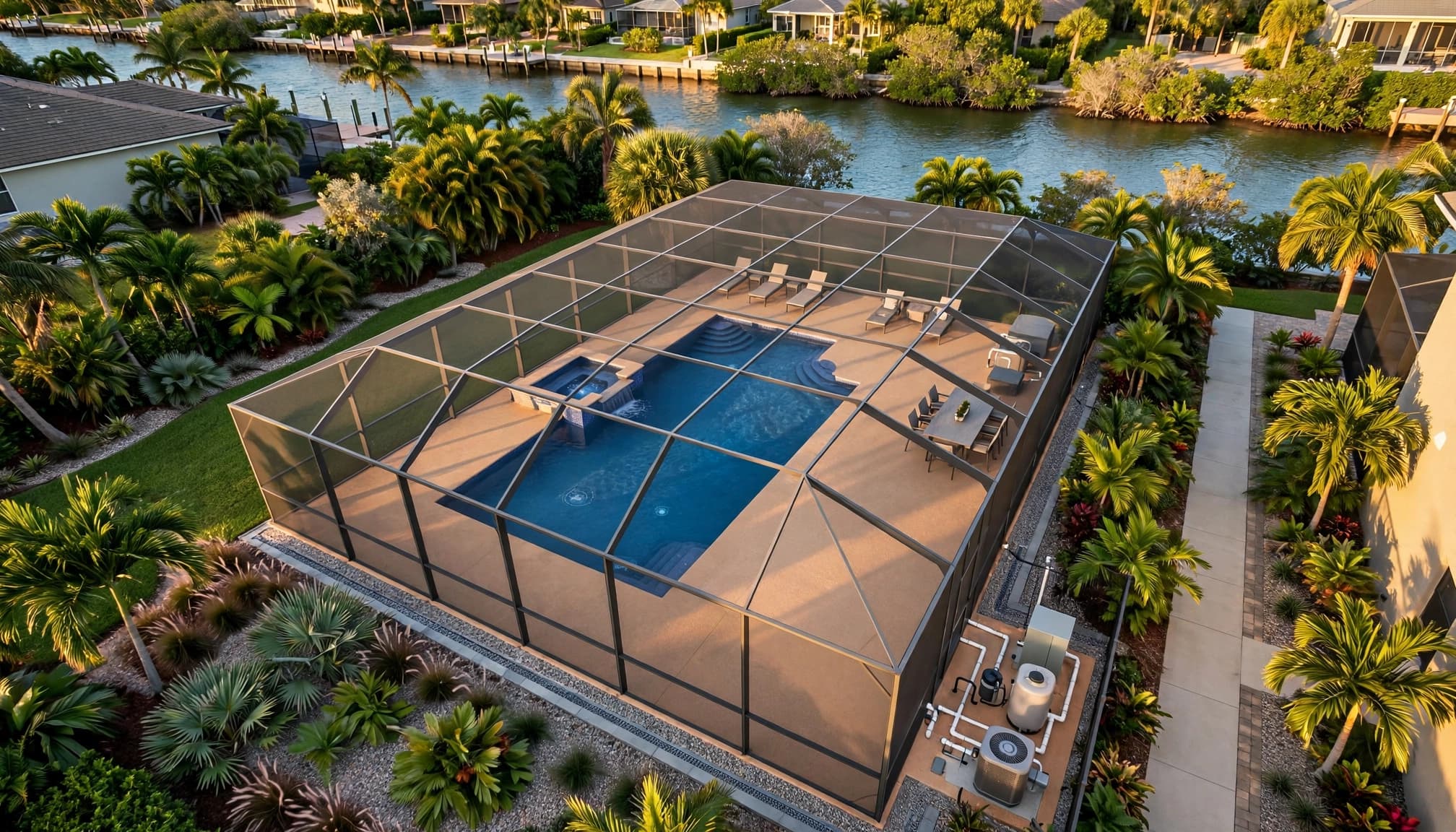
A pool enclosure isn't a minor add-on. It can involve structural framing, mesh selection, gates, hardware, drainage considerations, and separate permits or inspections.
For a new build, ask whether the cage is included in the pool contract or quoted separately. Confirm the enclosure dimensions, roof style, frame specifications, doors, kick plates, gutters, and mesh type.
For an existing cage, look past torn panels. Sun, humidity, salt air, storms, and pool splash can wear down mesh and corrode fasteners. A straight, stable frame may only need a repair or rescreen. Bent framing, loose anchors, damaged doors, or widespread corrosion may call for larger repairs or replacement.
Ask what mesh and repairs the price covers
Standard fiberglass mesh, pet-resistant screen, tighter insect screen, and privacy materials each have different purposes. For instance, No-See-Um mesh uses smaller openings for tiny insects, while stronger screen can suit homes with active children or pets.
A rescreen quote should identify panel replacement, spline, door hardware, fasteners, frame repairs, cleanup, and haul-away. Review pool enclosure and rescreen services when you need to separate a simple mesh issue from broader cage work.
Questions to Ask Every Pool Builder
Ask the same questions of each company, then compare the answers with the written estimate. Direct questions prevent assumptions from becoming expensive disagreements.
- Can you provide an itemized scope that separates the base project, allowances, and optional upgrades?
- Who will pull the City of Cape Coral permit, arrange inspections, and address plan-review comments?
- Does the estimate include surveys, engineering, permit fees, and the current final-survey requirement?
- Which materials and equipment models are included, and what changes if those items are unavailable?
- How will you handle tight access, existing pavers, landscaping, fences, a pool cage, or a canal-side yard?
- What conditions can trigger a change order, and must I approve the price in writing before work begins?
- What workmanship and manufacturer warranties apply, and who handles warranty service after completion?
- Can you provide a current certificate of insurance and the exact Florida Certified Pool/Spa Contractor license information?
Verify the contractor through the Florida Department of Business and Professional Regulation's "Verify a License" search. Check that the license is active and that the qualifying individual's name aligns with the contract and permit responsibility.
Common Quote Comparison Mistakes to Avoid
Many homeowners make a decision before they have a complete comparison. Slow down when a quote looks unusually low or lacks details.
Don't assume a permit, enclosure, barrier work, electrical upgrades, drainage changes, or landscaping repair is included because it appears on a rendering. If it matters to the finished yard, request it in writing.
Avoid choosing materials from a showroom without updating the quote. A small finish or deck upgrade can change several connected items, including labor, coping, plumbing, or electrical work.
Also, don't treat a verbal promise as part of the contract. Put schedule expectations, payment milestones, cleanup terms, warranty coverage, and change-order approval rules into the signed agreement.
A final checklist before you sign
- Confirm every quote prices the same design, dimensions, materials, and features.
- Review line items for permits, surveys, inspections, enclosure work, electrical work, access, and cleanup.
- Verify the contractor's active Florida CPC license and current insurance documentation.
- Confirm how site conditions, storm damage, hidden repairs, or material changes will affect the price.
- Get all exclusions, allowances, warranties, and change-order procedures in writing.
- Schedule an on-site review before making a final decision.
When you want a site-specific scope for your yard, Get a Free Estimate and bring your competing proposals to the consultation.
Choose Value That Holds Up
The strongest pool builder quotes make the project easy to understand before construction begins. They identify the pool, the site work, the permit path, the materials, and the responsibilities that turn a drawing into a finished backyard.
A low bid can be attractive, yet clear scope and lasting workmanship are worth more than a number that grows after the contract is signed. Compare every detail, ask for written answers, and choose the proposal that fits both your property and the way you plan to use it.