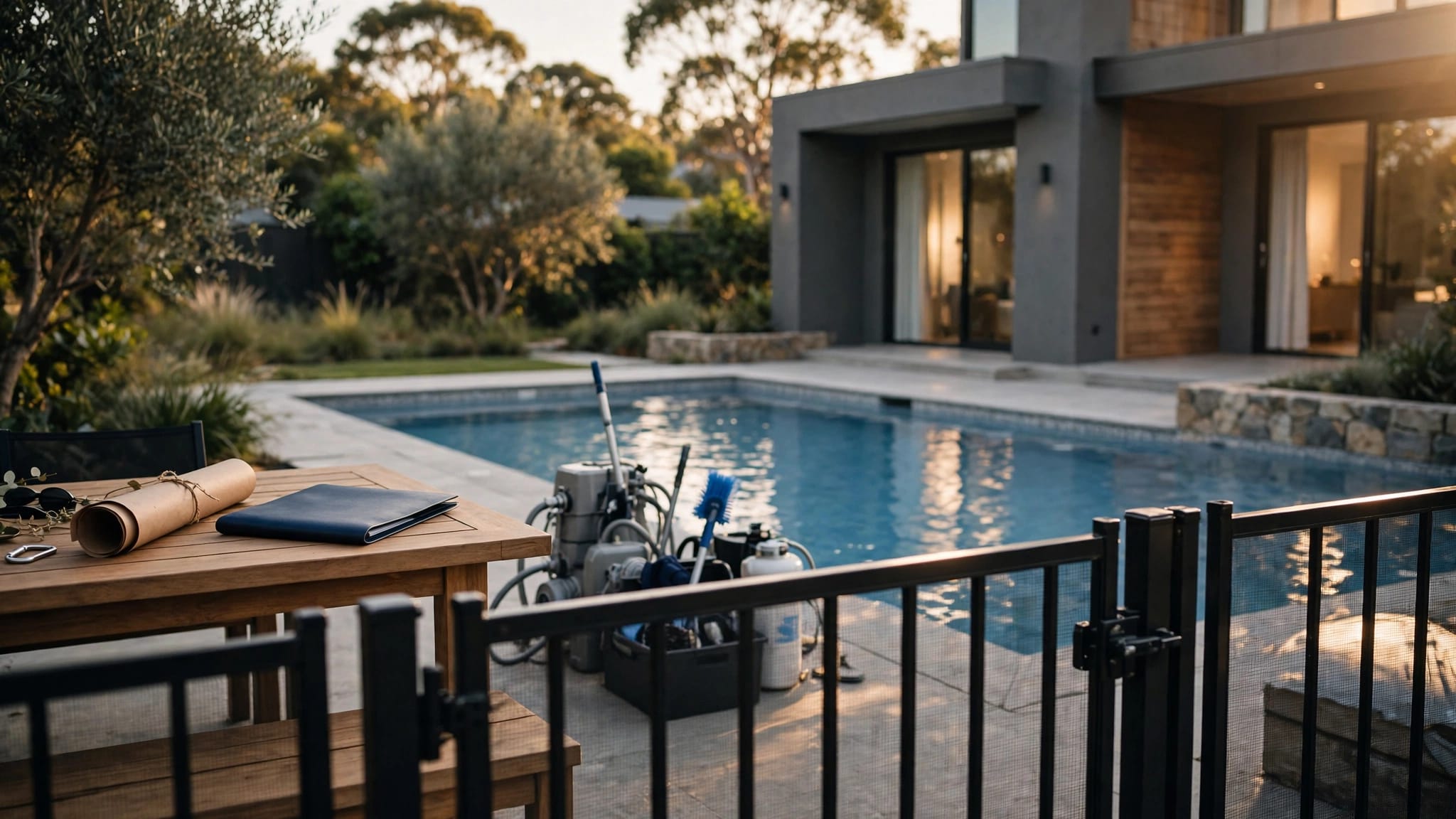
A screen enclosure keeps out insects and leaves, but it doesn't always keep neighboring windows from overlooking your pool deck. In many Cape Coral neighborhoods, close lot lines and two-story homes make pool privacy options part of the original enclosure plan or a smart upgrade later.
The right solution should protect the areas where you relax without turning the lanai dark, hot, or still. A few well-placed changes can create a more comfortable pool area while keeping the breeze and open Florida feel you enjoy.
Start With the Views You Want to Block
Privacy works best when it follows real sightlines, not when it covers every inch of the cage. Stand at the pool, lounge chairs, spa, and outdoor dining area. Then look toward nearby windows, side yards, docks, streets, and neighboring patios.
A view that feels exposed while you're in the spa may not matter at the far end of the pool. That distinction helps you spend money where it has the most effect.
Map the most exposed zones
Most homeowners don't need privacy on all four sides of an enclosure. The usual trouble spots are a narrow side yard, a rear neighbor's elevated window, or a patio that faces another patio.
Mark those areas before choosing materials. A privacy panel near the seating area may be enough, while the pool's waterfront side can remain open. This selective approach preserves light and a desirable canal or preserve view.
Keep airflow in the plan
Cape Coral heat and humidity make air movement valuable. A fully solid enclosure wall can block an uncomfortable view, yet it may also reduce the cross-breeze that makes the pool deck pleasant in summer.
Leave open screen where privacy isn't needed. If one side takes the strongest wind, use a partial treatment rather than building a tall, solid barrier across the entire enclosure. The goal is a backyard that feels sheltered, not boxed in.
Privacy is strongest when it protects the places you use most while leaving the best views and breezes available.
Pool Privacy Options With Screen Mesh and Florida Glass
Mesh is an important part of many pool privacy options, although it has limits. Standard screen provides insect and debris control, but neighbors can generally see through it. Tighter materials reduce visibility somewhat, especially in bright conditions, yet they don't create a fully private wall.
For an existing cage with sound framing, a rescreen can be a practical chance to improve comfort and appearance. Review screen enclosure installation and rescreening options before choosing a mesh for the entire structure.
Tighter mesh improves screening, not full privacy
No-see-um mesh has smaller openings than standard screen, so it is useful near water, mangroves, or areas with tiny biting insects. The denser weave also softens views through the enclosure. Still, it should not be selected solely to hide the pool from close neighbors.
Denser mesh can collect more dust and pollen than standard fiberglass. It also reduces airflow and light slightly. That tradeoff may be worthwhile on one exposed wall, but it can feel unnecessary across a whole panoramic enclosure.
For homes with active children or pets, heavier-duty materials may make more sense in lower panels. Super Screen in a 17x20 weave is marketed as 40% stronger than standard screen, which can help in high-contact areas. Strength and privacy are separate needs, so don't assume a tougher mesh will provide visual coverage.
Use Florida Glass in targeted lower sections
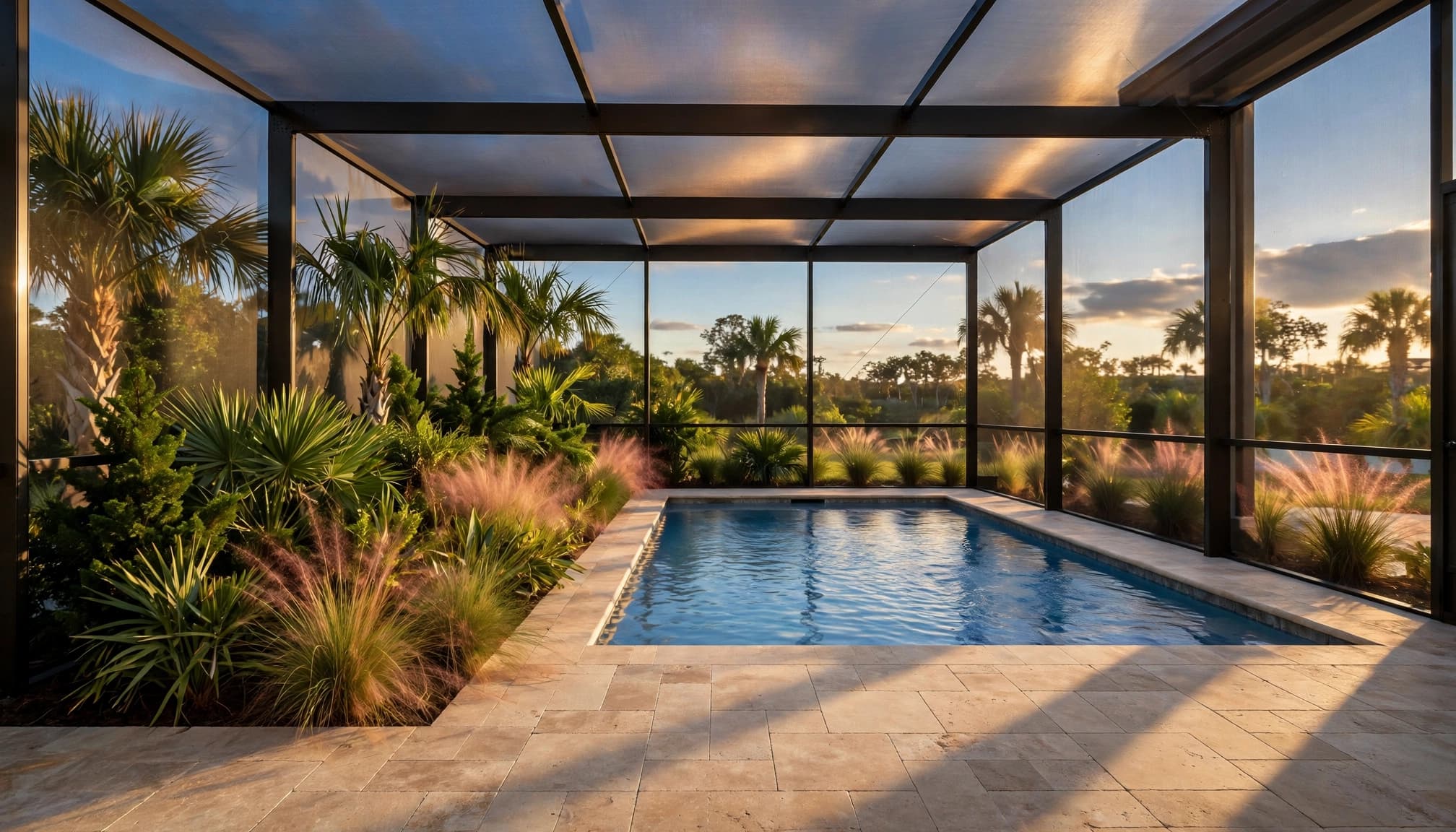
Florida Glass is a laminated privacy screen commonly installed along the lower wall panels of a pool cage. It blocks grass clippings, splash-out, and low-level views while allowing light through. It can work well beside a neighbor's lawn, a busy walkway, or a side yard where privacy matters most near the deck.
However, Florida Glass also limits breeze and can hold wind more than open mesh. It is usually better as a lower-panel treatment than a full wall-to-roof solution. Choose the placement carefully, especially on a waterfront lot or an exposed corner property.
Add Privacy Panels Where Exposure Is Highest
Solid or semi-solid privacy panels provide more visual separation than screen alone. They can attach to selected enclosure bays or become part of a purpose-built screened wall. Materials vary, so a local installer should match the panel system to the existing aluminum frame and the property's wind exposure.
Panels are often most effective when they are limited to the direct line of sight. A narrow vertical section by the spa can block a neighbor's second-story view without closing off the entire pool.
Fixed panels suit permanent problem areas
A fixed panel is a strong choice when one side of the yard will always face a close neighbor. It gives consistent coverage and doesn't require daily adjustment. Depending on the design, the panel may be opaque, lightly textured, or include an upper screened section for air movement.
A solid lower wall paired with screened upper panels often feels less heavy than a full-height barrier. It can also reduce wind-driven grass, mulch, and rain spray near the deck.
Before adding fixed material, check how it affects drainage, access doors, emergency egress, and the enclosure's structure. A panel should never interfere with a gate, latch, or required pool safety feature.
Use curtains and shades for flexible coverage
Outdoor curtains and roller shades work best in protected areas, such as a covered lanai, seating nook, or outdoor dining space. They offer privacy when you want it, then open when you want more daylight and ventilation.
Choose products rated for outdoor use, moisture, and sun exposure. Fabric that looks attractive indoors may fade, mildew, or fray quickly in a humid pool environment. In addition, loosely secured curtains can whip in strong wind and place stress on their mounting hardware.
Motorized or manual exterior shades need a secure mounting surface and a wind plan. Retract them before storms unless the manufacturer gives clear instructions that say otherwise. Temporary shade products are useful for comfort, but they aren't a universal replacement for a properly designed privacy wall.
Build a Living Privacy Screen With Landscaping
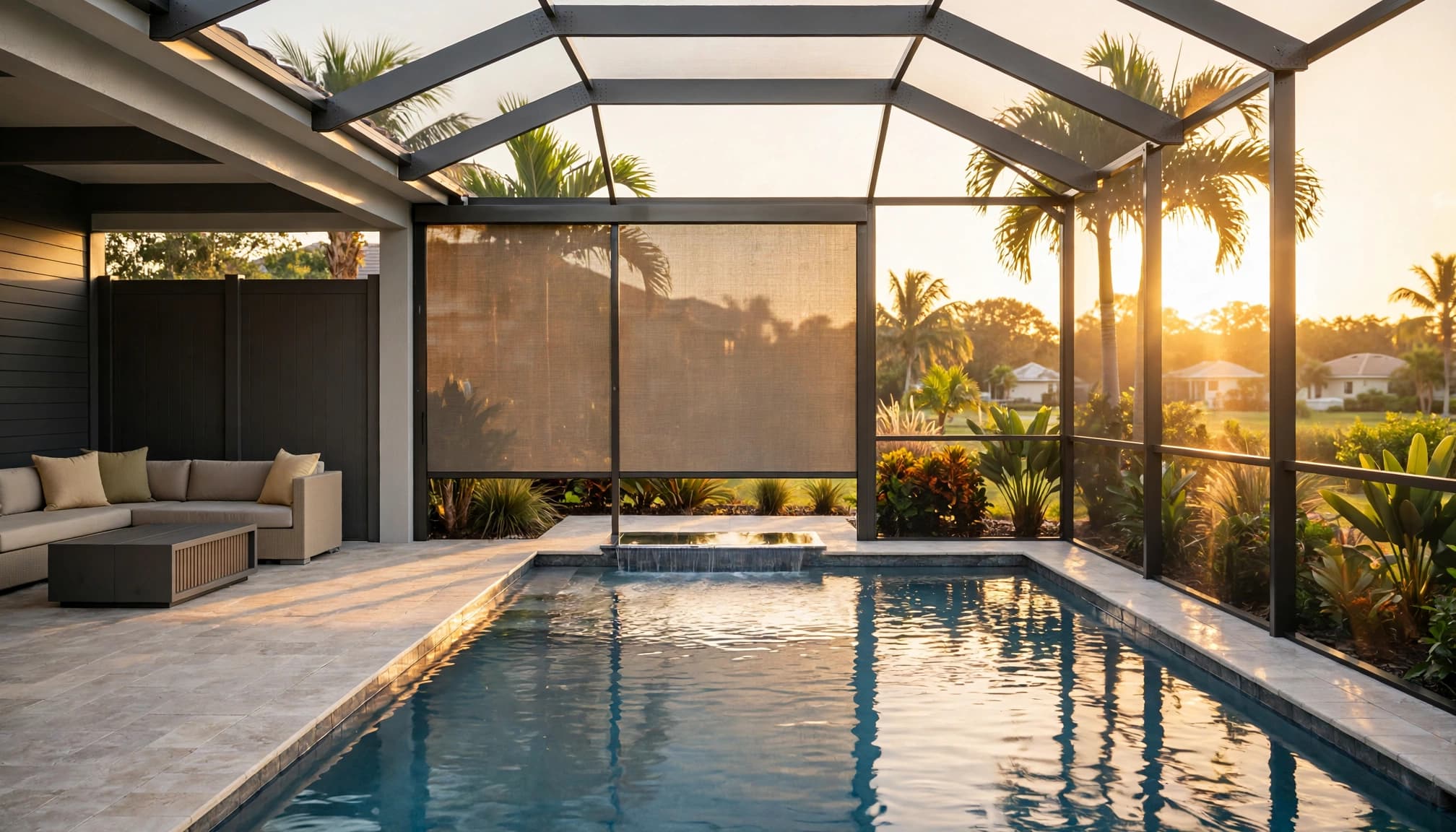
Landscaping can soften the hard lines of a cage and make a pool area feel more secluded. Unlike solid panels, plants move with the breeze and add color around the enclosure. They also need room, irrigation, trimming, and a plan for storm debris.
The best planting plan fits the available space. Crowding large shrubs against a screen cage often creates more maintenance than privacy.
Choose plants that fit the side yard
Clumping palms, podocarpus, areca palms, clusia, and some ornamental grasses are common choices for Florida privacy planting. Their suitability depends on the width of the bed, the amount of sun, and how tall you need the screen to become.
A narrow side yard calls for plants with a manageable mature spread. A dense hedge may block views quickly, but it can also press against the cage if planted too close. Leave enough clearance for trimming, rinsing the enclosure, and future screen repair.
For a pool deck that gets intense afternoon sun, staggered palms or layered planting can provide filtered privacy without casting the pool into constant shade.
Keep leaves and roots away from the cage
A lush planting bed can create a private setting, but it adds debris. Seed pods, fronds, flowers, and falling leaves can collect at the screen base or blow into the pool. Select plants based on maintenance habits, not only their appearance at the nursery.
Avoid allowing vines to climb the enclosure. Their weight can pull on mesh, trap moisture, and make repairs harder. Also direct irrigation away from the aluminum frame. Repeated sprinkler overspray leaves mineral buildup and keeps hardware damp.
Fresh-water rinsing helps remove salt, pollen, and dust. Use a gentle hose spray and mild soap when needed. Pressure washers, abrasive pads, and harsh cleaners can stretch mesh or damage the frame finish.
Design Privacy Into a New Pool Enclosure
A new enclosure gives you more freedom to place doors, walls, roof lines, and screened sections around how you use the backyard. This matters during a pool build, a major renovation, or a full cage replacement.
Privacy planning also works well when paired with pool deck and interior renovations. Moving furniture zones, updating deck layout, or adding a spa can change where privacy is needed.
Put the seating area in the quietest corner
The pool itself may need an open view, while the conversation area needs separation. Positioning chairs, a dining table, or a spa on the protected side of the lanai can reduce the need for extensive screening changes.
A pergola, covered patio extension, or solid wall near the house may create privacy for seating without changing the pool cage. Keep sightlines in mind when selecting furniture, too. Tall-backed loungers, planters, and outdoor cabinetry can provide modest screening at eye level.
Consider enclosure style and roof height
Panoramic designs preserve wide views with fewer vertical supports. That is appealing on waterfront and preserve lots, but it may expose more of the deck to neighboring homes. A mansard or custom enclosure can offer more practical locations for screened walls or privacy panels.
Taller cages bring an airy feel, yet upper-story neighbors may have a clearer view inside. In that situation, a partial roof-side screen or a taller landscaping plan can make more sense than solid material across the whole wall.
A qualified installer can assess the frame, wind loads, attachment points, drainage, and current local requirements before changes begin. Confirm HOA rules as well, since some communities limit fence heights, panel colors, planting types, or changes visible from neighboring properties.
Balance Weather, Maintenance, and Budget
Cape Coral's sun, rain, salt air, and storms affect every privacy material. What looks good during a calm walkthrough should also hold up through summer downpours and windy weather.
Basic fiberglass mesh costs less than specialty screens, while pet-resistant mesh, no-see-um screen, and privacy materials usually raise the price. Fixed panels, hardware, access challenges, and frame repairs can also change the final estimate.
Check the cage before adding upgrades
Privacy work should begin with the condition of the enclosure. Bent rails, corroded fasteners, loose spline, sticking doors, and damaged corners need attention before new mesh or panels go on.
A partial repair can make sense when one side has storm damage and the remaining screen is flexible. If panels are brittle, faded, or sagging throughout the cage, a full rescreen often gives a cleaner result. For planning purposes, Cape Coral pool rescreening costs depend on cage size, height, mesh type, access, and needed repairs.
Ask each contractor what the estimate includes. Door hardware, pressure washing, damaged fasteners, haul-away, and work in tight side yards can add labor. A lower quote may omit items that another proposal clearly lists.
Plan for wind and rain before installation
Wind can push against dense mesh, curtains, and solid panels. Therefore, product suitability and mounting details matter more in open lots, canal-front yards, and areas exposed to prevailing weather.
Rain needs a path off the roof and away from the pool deck. Don't add a panel or planting bed that traps runoff near the enclosure footers. A local review can identify drainage concerns before the work is underway.
When you are ready to compare materials and placement, Get a Free Estimate for an on-site consultation. A visit makes it easier to assess view lines, frame condition, access, wind exposure, and HOA considerations together.
A Private Pool Area Should Still Feel Like Florida
The best pool privacy options protect the moments that feel exposed without closing out sun, breezes, and the views that made you choose your home. Tighter mesh, Florida Glass, panels, shades, landscaping, and thoughtful placement each solve a different problem.
A well-planned combination usually feels better than one heavy barrier. Start with the sightlines that matter, match the materials to Cape Coral weather, and keep the enclosure safe, maintainable, and comfortable for everyday use.