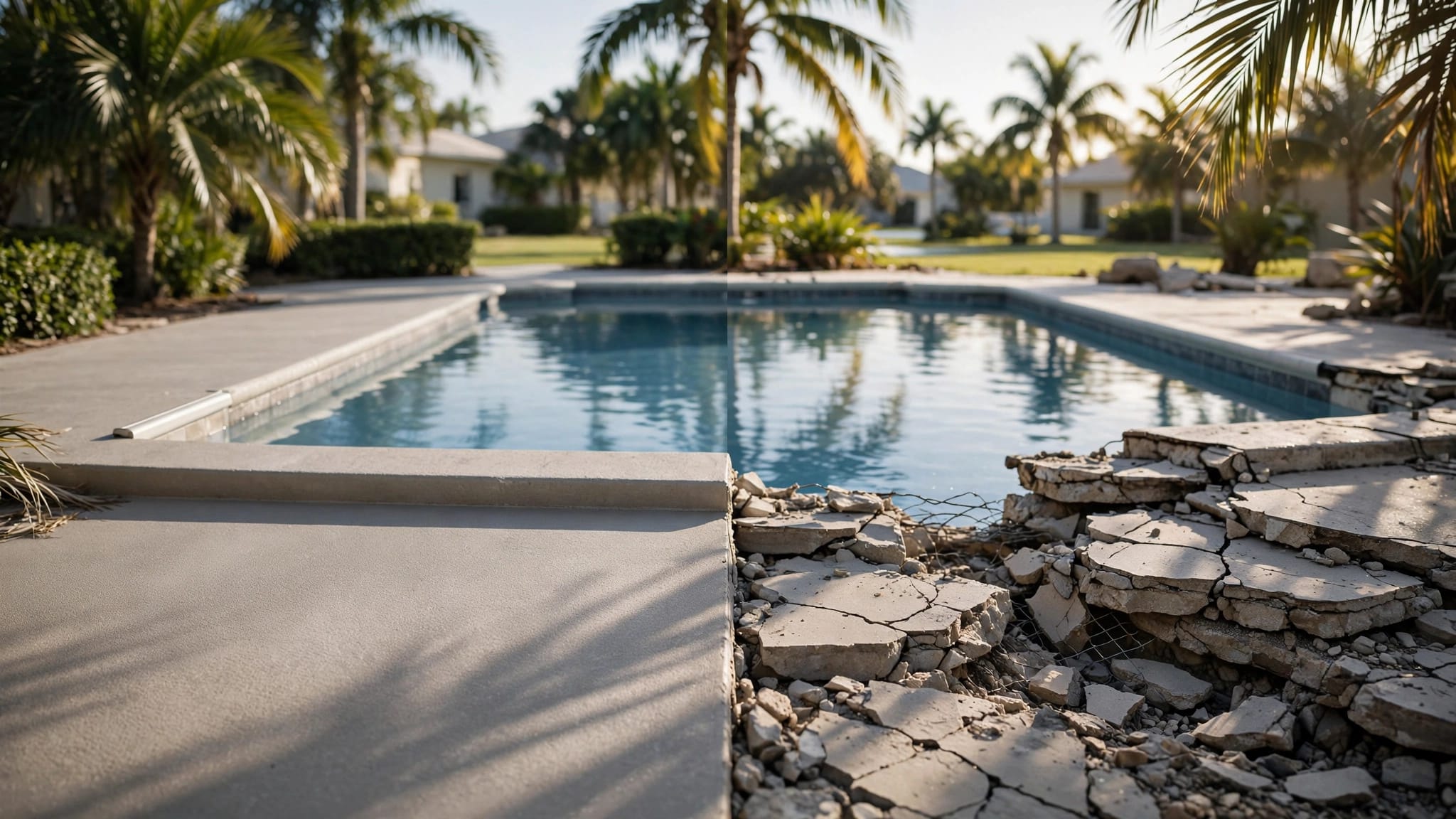
A pool project can feel exciting right up until the first payment request arrives. A clear pool construction payment schedule gives you a way to track where your money goes and what work must be complete before the next check is due.
The best schedules follow visible progress, not a contractor's calendar. They also spell out permits, materials, inspections, paperwork, and the final details that turn a construction site into a pool you can use.
Why a Pool Construction Payment Schedule Matters
A written payment plan keeps expectations clear for both you and the contractor. Each installment should connect to work you can inspect, such as a completed excavation, a finished pool shell, or installed equipment.
Payment percentages vary widely. Your project's size, soil conditions, region, materials, custom features, financing terms, and contractor all affect the breakdown. Use any sample schedule as a framework, then compare it against your signed scope of work.
For a custom project, review the design, equipment package, decking, water features, spa, screen enclosure, and landscaping boundaries before agreeing to payment amounts. A detailed plan for new pool construction reduces confusion when the work begins.
Deposits and progress payments are different
A deposit reserves your spot and may cover early administrative work, design, engineering, or ordered materials. It is paid before substantial construction occurs, so it should be reasonable and clearly described in the contract.
A progress payment comes later, after a defined stage is complete. For example, excavation and steel work may support one payment, while tile, coping, and equipment installation support another.
Never treat these labels as interchangeable. Ask what the deposit covers, whether it is refundable under any circumstances, and what proof accompanies each later payment request.
Dates should not control the payment trigger
A contractor may estimate that a stage will occur during a certain week. Weather, inspections, material delivery, and site conditions can change that timing.
Your agreement can include target dates, but payment should come due when the stated milestone is complete and verifiable. If a scheduled date arrives before the work does, the payment should wait.
A calendar can guide the project, but completed work should release the money.
Put the Full Scope in the Contract First
A payment schedule is only as reliable as the contract attached to it. Before you sign, confirm that the agreement describes the pool's dimensions, finish, depth, equipment, plumbing, electrical work, coping, deck material, and included safety features.
Custom details need equal attention. If the plan includes a spa, sun shelf, salt system, heater, automation, waterfall, lighting, or screen enclosure, list the product or finish level whenever possible. General phrases such as "owner's choice" can cause expensive disagreements later.
Confirm permits, plans, and inspections
The contract should state who obtains permits, pays related fees, schedules inspections, and corrects work that fails inspection. In Cape Coral and other Florida communities, requirements can differ by location and by the work involved.
Ask to see permit information once it is issued. Then keep copies of inspection approvals with your project records. A payment stage tied to plumbing, electrical, or structural work should account for the inspection that applies to that work.
If an existing pool is being changed, clarify whether the work requires a permit. Major equipment replacements, structural repairs, deck changes, and enclosure work can involve different rules.
Identify what is excluded
Exclusions are often where budgets drift. The agreement should say whether it includes demolition, soil removal, drainage changes, fencing, landscaping repair, utility upgrades, or repairing areas damaged by access equipment.
Also confirm responsibility for unexpected conditions, such as buried debris, unsuitable soil, a damaged underground line, or a required engineering change. You cannot predict every surprise, but the contract should explain how the parties will price and approve one.
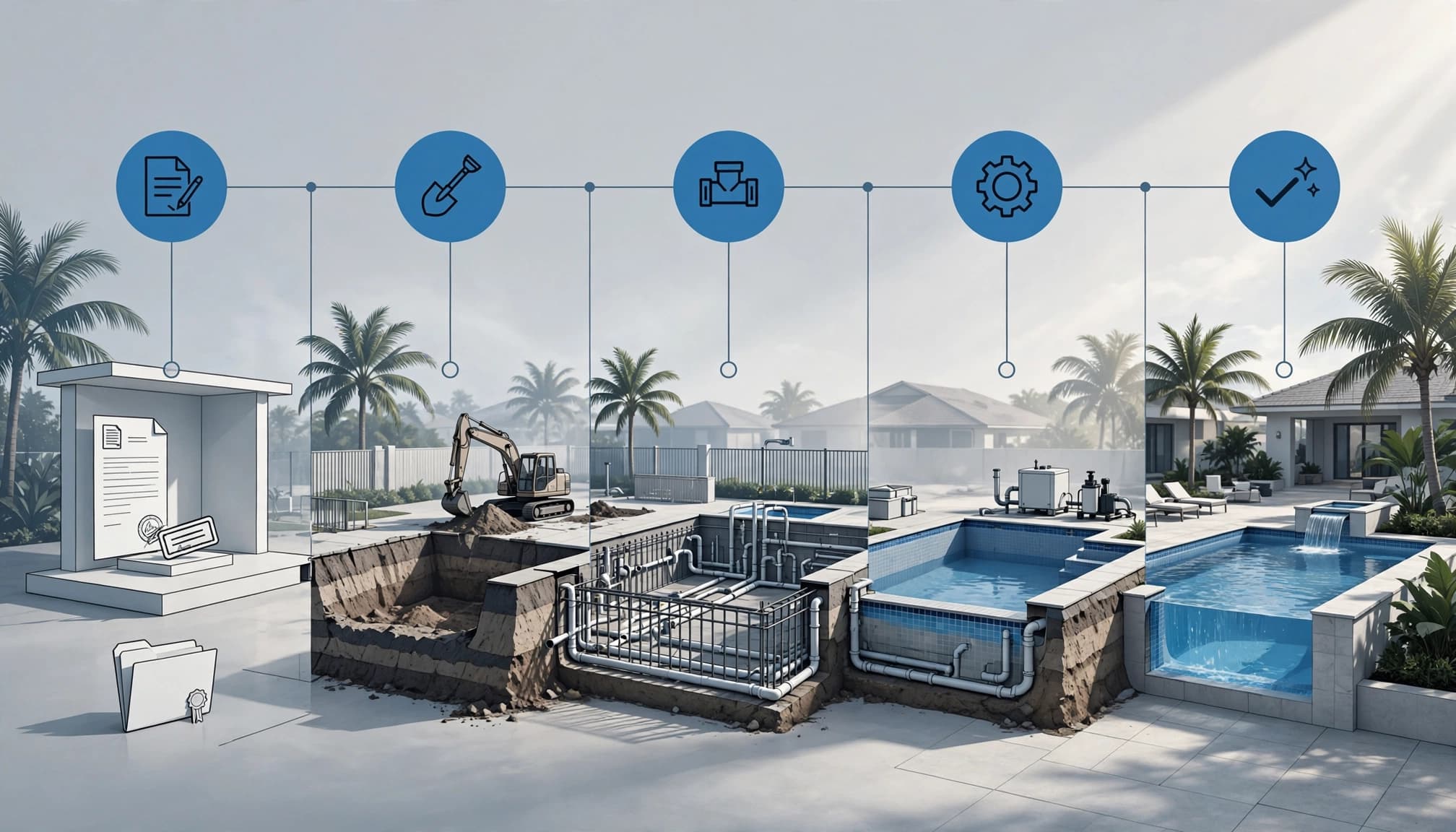
A Practical Framework for Payment Milestones
A fair pool construction payment schedule divides the contract amount into stages that reflect real value completed on your property. The contractor's numbers may look different, and that is normal. What matters is that no installment gets far ahead of the work.
This framework shows the kinds of milestones homeowners should expect to see.
| Project stage | Work that should be complete before payment | Records to request |
|---|---|---|
| Contract and initial deposit | Signed plans, defined scope, early design or administrative work listed in writing | Signed agreement and deposit receipt |
| Permits and site preparation | Required permits are issued, layout is marked, access plan is ready, and agreed preparation is complete | Permit copy and site plan |
| Excavation, steel, and plumbing | Dig is complete, reinforcing steel is in place, and underground plumbing is installed or tested as required | Invoice, photos, inspection record if applicable |
| Structural shell and rough work | Gunite or shotcrete shell is complete, with required curing time addressed in the plan | Work confirmation and relevant inspection approval |
| Tile, coping, deck, finish, and equipment | Listed finishes and equipment are installed, subject to the exact order of work | Itemized invoice and equipment documentation |
| Final completion and closeout | Startup, cleanup, final approvals, punch-list work, and owner orientation are complete | Final invoice, warranties, manuals, and lien documents |
The middle stages often overlap. For instance, decking may begin while equipment work continues. That is fine if the contract describes how the contractor will measure completion.
Avoid a schedule that simply says "50% halfway through the job." Halfway through the calendar and halfway through the scope are rarely the same thing.
Verify Each Stage Before You Pay
Walk the site with the contractor before releasing a progress payment. You don't need construction experience to compare the visible work with the milestone description. Bring the contract, plans, approved change orders, and the payment request.
Ask direct questions if something looks incomplete. Has the plumbing pressure test occurred? Is all listed equipment on site or installed? Did the required inspection pass? A reputable contractor should be able to explain the stage and point out what remains.
Request records that match the work
Each request should come with an invoice that identifies the project, the payment stage, the amount due, and any approved additions or credits. Keep receipts for every payment, including deposit payments.
Depending on the project and local practice, ask for a partial lien waiver from the contractor and applicable subcontractors or suppliers. A lien waiver confirms that the party giving it has been paid through the stated amount or stage. For larger payments, proof of subcontractor payment may also be appropriate.

Don't sign a final waiver until you understand its wording. When in doubt, have a qualified local attorney or construction professional review the documents before you release funds.
Keep a simple project file
Save the signed contract, plans, permits, inspection reports, invoices, receipts, product sheets, warranties, and all change orders. Take dated photos before construction starts and at major milestones.
This file helps if a finish color, equipment model, or deck detail needs clarification later. It also gives you useful records for maintenance, insurance, and a future home sale.
Change Orders Need Their Own Paper Trail
Pool plans often change after work begins. You may decide to add a spa, upgrade tile, change the paver selection, extend the deck, or include a cage around the pool area. Some changes also arise because site conditions require additional work.
No matter the reason, put every change order in writing before the work starts. The document should describe the added or removed work, the price change, the time impact, and when payment is due.
Do not bury additions in a regular draw
A contractor should not add an unapproved charge to a normal progress invoice. Likewise, you should not rely on a verbal promise about a credit or upgrade.
If a new feature adds cost, decide whether you will pay it upon approval, with the related construction stage, or at final completion. A signed change order keeps the original payment schedule accurate.
For homeowners comparing pool renovations and resurfacing, change orders matter even more. Once old finishes or decking come out, concealed repairs may become visible. Your contract should explain how the contractor will document and price those discoveries.
Financing can change the timing, not the proof required
A lender may have its own draw process, inspection requirements, and disbursement forms. Read those terms alongside your construction agreement, since the lender's payment timing may not match the contractor's proposed schedule.
Review pool financing options early if you plan to borrow. Ask whether funds go to you or directly to the contractor, how inspections work, and whether loan proceeds cover upgrades added after closing.
Financing does not remove the need to verify milestones. It adds another party whose paperwork and approval deadlines need attention.
Retain Funds for the Final Details
The final payment should not be due when the water first enters the pool. A pool may look finished while minor work, cleanup, equipment programming, barrier requirements, or inspection items remain open.
Retain a reasonable portion of the contract amount until the full punch list is complete. The retained amount should be clear in the original agreement, rather than debated after construction ends.
What final completion should include
Before you release the last payment, inspect the pool in daylight and review the contract line by line. Confirm that the deck and yard are cleaned, equipment operates properly, water chemistry startup has been explained, and debris has been removed.
You should also receive manuals, warranty information, equipment serial numbers when applicable, final approvals, and any promised orientation. If your project includes a pool cage, confirm the enclosure and screen work match the approved scope. Homeowners planning that upgrade can also review screen enclosure installation options.
A short punch list is normal. Put each item in writing, set a reasonable completion date, and pay the final retained amount after the items are resolved.
Red Flags That Deserve a Pause
A large upfront demand is one of the clearest warning signs. Be cautious if a contractor asks for a substantial share of the full contract before permits, materials, or meaningful site work support that request.
Other concerns include vague milestone descriptions, invoices for unfinished work, pressure to pay immediately, unexplained changes in price, and reluctance to provide receipts or permit details. A contractor who discourages written change orders creates avoidable risk.
You should also pause if the contract does not state licensing, insurance, warranties, or who handles subcontractors. Review the agreement with a qualified local professional if its payment terms or legal language feel unclear.
Final Thoughts on Paying for Pool Construction
A strong pool construction payment schedule ties every dollar to a visible, documented result. It gives your contractor a predictable path to payment while keeping your investment connected to completed work.
Review the scope carefully, approve changes in writing, and save records at every stage. When the final payment waits for closeout, your new pool is more likely to be finished the way you expected.
For a local conversation about scope, timing, and a backyard project, Get a Free Estimate.