A pool can look perfectly normal from the deck while groundwater pushes upward beneath the shell. That hidden pressure matters most when water levels drop or renovation work requires a pool to be drained.
For Cape Coral homeowners, pool hydrostatic relief valves are small components with a big structural job. Knowing when they need professional attention can help you plan repairs, resurfacing, or remodeling without taking unnecessary risks.
Why groundwater matters beneath a Cape Coral pool
Groundwater is water held in the soil below the surface. After heavy rain, seasonal changes, or changes in nearby drainage, that water can sit high enough to press against the bottom of an in-ground pool.
Hydrostatic pressure is the upward force that groundwater creates. A concrete pool shell is the thick, structural basin that holds pool water, tile, and interior finish. When the pool is full, the weight of its water helps counter pressure below.
However, a partially drained or empty pool has far less downward weight. If groundwater pushes harder than the water inside the pool, it can put stress on the shell.
The pool shell is not designed to float
Concrete and gunite pools are heavy, but an empty shell can still face upward pressure from saturated soil. In severe cases, that pressure can cause lifting, cracking, or movement.
The risk is not limited to old pools. A newer pool can also have concerns if groundwater conditions, drainage, or construction details need review. That is why a contractor should assess the site before any drain-down, structural work, or excavation begins.
A pool that needs to be drained for resurfacing or repair also needs a groundwater assessment. The water level below the shell is as important as the water level inside it.
A sump gives groundwater a controlled path
A sump is a small collection point below or near the pool floor where groundwater can be observed or managed as part of the pool's design. It is not a homeowner-accessible feature or a place for DIY work.
Some pool systems use a relief device in or near the main drain area. Others use a separate approved fitting at the lowest portion of the pool floor. The arrangement depends on the pool's plans and site conditions.
How pool hydrostatic relief valves protect the shell
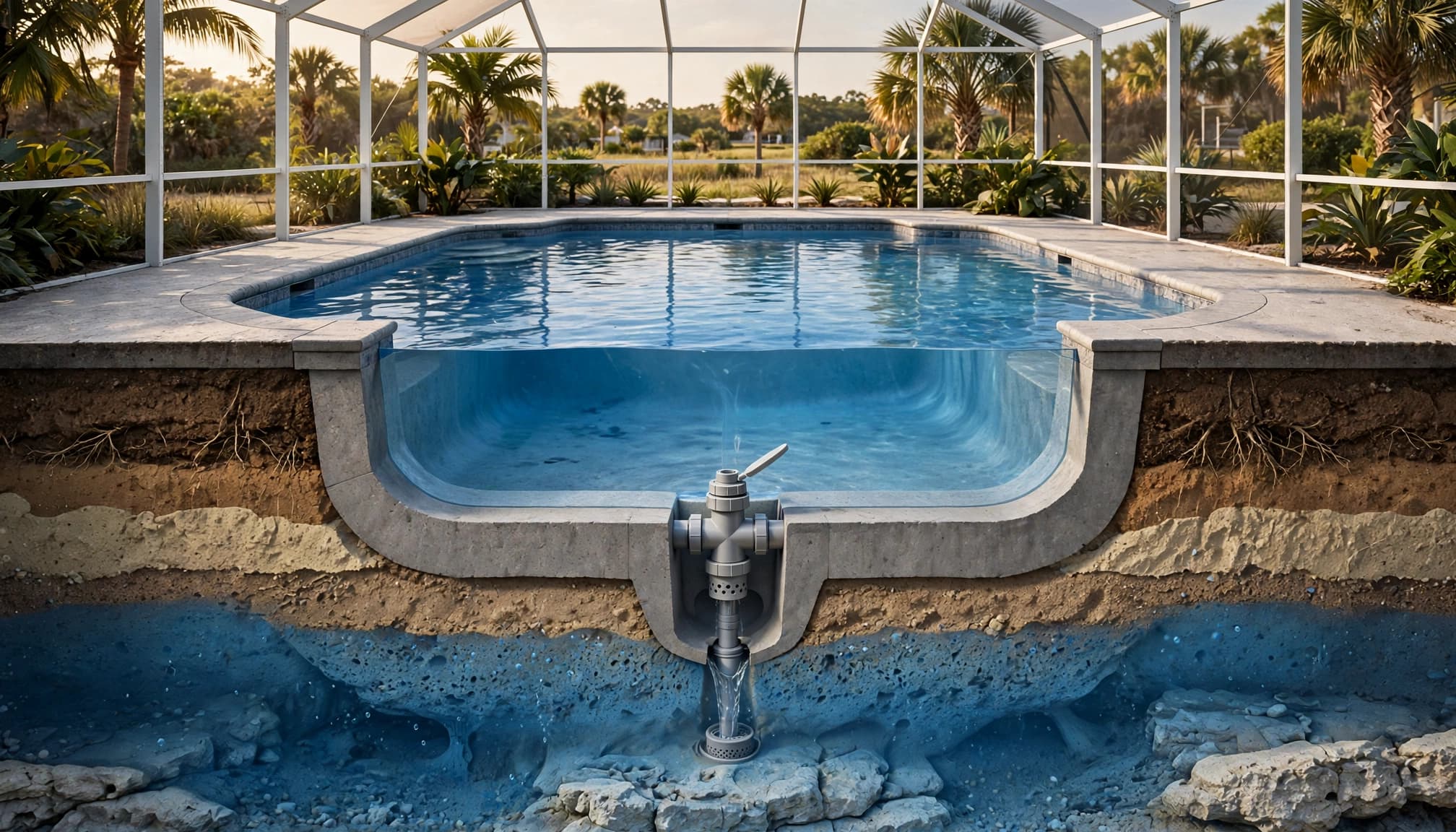
Pool hydrostatic relief valves are designed to respond when water pressure outside the pool exceeds pressure inside it. In plain terms, they create a controlled route for groundwater to enter the pool or move through an approved drainage path.
That release equalizes pressure beneath the shell. It can reduce the chance that outside water forces upward against an empty or low-water pool.
Where the valve is usually located
A relief valve is often at or near the pool's lowest point. In many concrete pools, that location is near the main drain in the deep end. Because it is submerged and tied to the pool's structure or plumbing, it is not a component homeowners should try to remove or test.
A qualified pool professional can identify the system type, check the pool's records when available, and determine whether the visible equipment matches the original design.
What a relief valve does not do
A hydrostatic valve does not fix every leak or every groundwater problem. It does not replace proper drainage, sound construction, or a careful plan for draining a pool.
It also may allow groundwater into the pool under certain pressure conditions. That can look alarming if you do not know why it happened, yet it may be the valve doing its intended job. A professional needs to distinguish normal pressure relief from a failed component, plumbing issue, or damaged shell.
When a Cape Coral pool needs an inspection
Most homeowners never need to think about a hydrostatic valve during regular swimming season. Inspection becomes more important when the pool's water level, finish, structure, or surrounding ground changes unexpectedly.
Do not wait for an obvious structural issue. A targeted evaluation is more useful before a planned renovation than after a drain-down exposes a problem.
Before draining, resurfacing, or major repairs
Resurfacing often requires draining the pool. So do some crack repairs, tile replacements, plumbing changes, and full remodels. Before that work begins, a contractor should consider the water table, pool-shell condition, and relief-valve status.
For older pools, plans may be unavailable or prior repairs may have changed the original configuration. That makes a site visit especially useful. If the work affects the shell, plumbing, electrical systems, or safety features, it may also fall within the scope of Cape Coral pool remodel permits.
After unusual rain, drainage, or water-level changes
Cape Coral's wet season can raise groundwater in some areas. A pool that suddenly gains water, develops cloudy water after a drain-down, or behaves differently following prolonged rain deserves a closer look.
Water loss matters, too. Evaporation can lower a pool's level, especially during hot, breezy weather. Yet persistent water loss, a waterline that drops below the skimmer, or a pump that pulls in air can point to a leak or another issue. The hydrostatic valve may not be the cause, but a professional should include it in the investigation.
When buying an older home with a pool
A pool inspection for a home purchase should look beyond the surface finish. Ask about prior resurfacing, crack repairs, drain work, flooding, and major equipment replacements.
A contractor can also look for clues that the pool has had structural movement or past groundwater concerns. Those details help a buyer budget for near-term work instead of discovering it after closing.
Warning signs around the shell and pool floor
A relief valve itself is usually out of sight. Still, the pool and deck can show signs that deserve prompt professional evaluation. One sign alone does not prove a hydrostatic problem, but several changes together warrant attention.
Cracks, bulges, or surface deposits
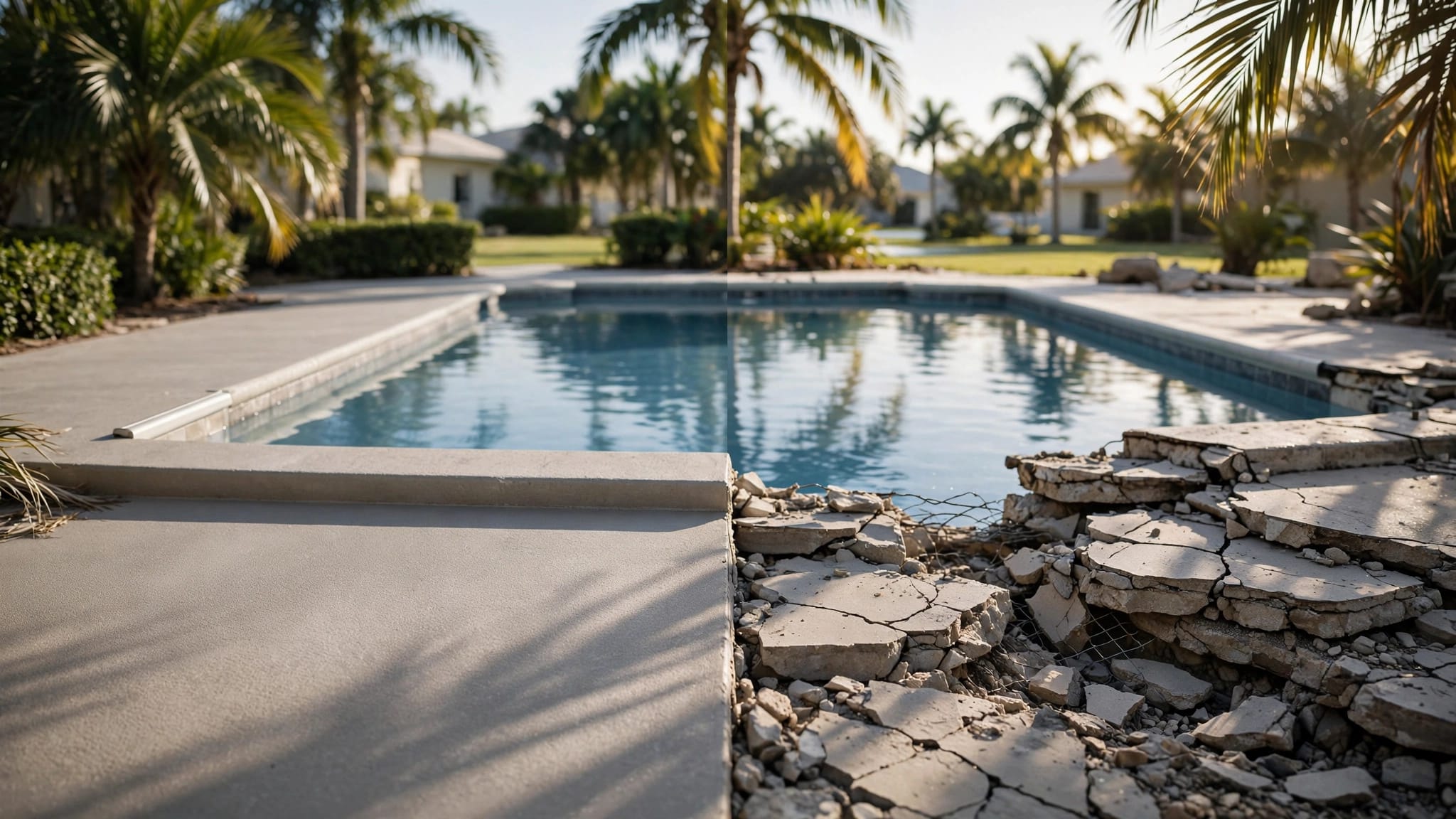
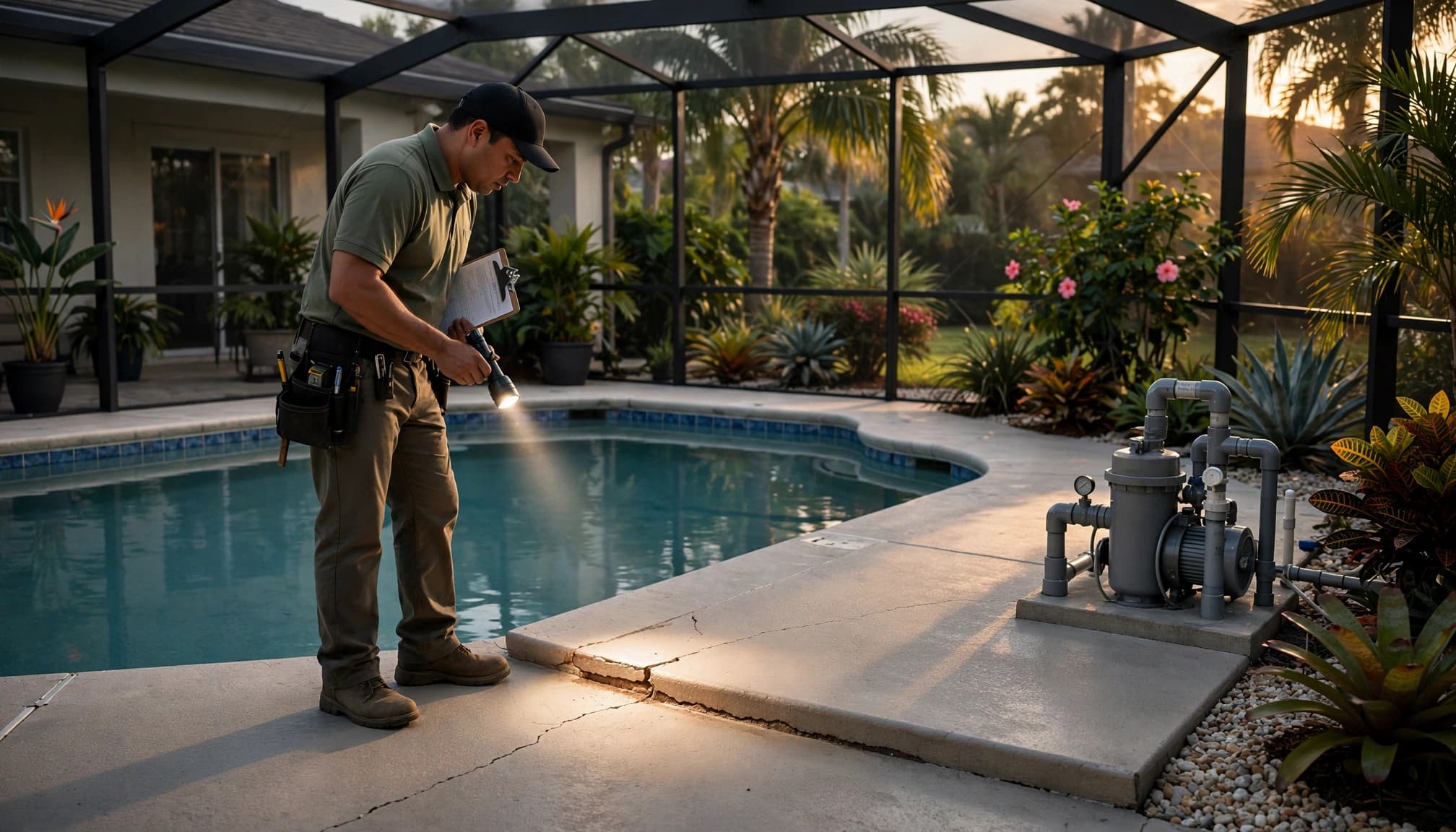
New cracks in the shell, tile line, or deck should never be ignored. Some fine surface cracks relate to an aging finish, while wider, shifting, or recurring cracks can call for a more thorough structural review.
Efflorescence is another clue. It appears as a white, chalky mineral deposit when water moves through concrete and leaves minerals behind. A professional can determine whether it relates to moisture migration, finish wear, a plumbing leak, or another cause.
Bulging areas, uneven surfaces, or signs that the floor has moved require timely attention. Do not drain the pool to inspect them more closely.
Water that behaves in an unusual way
Pay attention when the pool water level changes without a clear reason. Water entering the pool from below during a low-water event can be associated with groundwater pressure. On the other hand, steady unexplained water loss may involve a vessel leak, plumbing leak, skimmer issue, or equipment problem.
Other warning signs include:
- The pool level changes faster than normal after the pump is off.
- The deck settles, separates, or develops new gaps near the coping.
- Water appears in areas that are normally dry around pool equipment or the deck.
- A planned drain-down reveals water entering through the main drain area or floor.
These signs do not provide a diagnosis on their own. They do give a pool professional a useful starting point.
What a professional hydrostatic valve inspection includes
A safe inspection begins with the pool's condition above ground. The contractor may review the water level, interior finish, visible drain area, deck movement, equipment operation, and the property's drainage patterns.
They may also ask when the pool was last resurfaced, whether it has ever been drained, and if the home has experienced standing water after storms. Those answers help connect a current concern to the pool's history.
The valve needs more than a quick glance
Mineral scale, debris, damage, or spring problems can affect how a relief valve operates. A qualified professional can determine whether the assembly needs inspection, service, or replacement without putting the pool shell at risk.
Do not attempt to open a submerged main drain, remove a valve, excavate near the shell, or drain the pool to investigate. Those actions can create serious structural and safety issues.
Florida's Residential Code requires an approved hydrostatic relief device where an anticipated water table is part of the design conditions. Plastic liner pools are an exception because they do not have a structural bottom. For a Cape Coral project, the contractor should confirm the requirements that apply to the pool and permit scope.
Inspection should lead to a clear work plan
A good assessment separates cosmetic finish problems from structural concerns. If the shell is sound but the surface is worn, Cape Coral pool renovations and resurfacing may be the right path.
If the inspection finds shell movement, recurring cracks, or a groundwater concern, the work plan may need structural review before any finish is applied. A new surface should not cover a condition that needs repair first.
Planning a new pool with groundwater in mind
Hydrostatic protection starts during design, not after the pool is complete. For a new in-ground pool, ask the builder how they evaluate anticipated groundwater conditions, where the relief device will be located, and how it appears on the project plans.
A builder should also explain the relationship between the main drain, sump arrangement, pool shell, and any site drainage work. Clear answers early in the project can prevent confusion years later when maintenance or renovation is needed.
Ask practical questions before construction begins
When comparing proposals for new pool construction in Cape Coral, review more than the pool shape and finish selection. Ask how the contractor addresses groundwater at your property and who will coordinate any required inspections.
It also helps to keep copies of plans, permits, photos, and equipment information after construction. Future contractors can work more safely when they understand what sits below the pool floor.
Protect the investment during upgrades
Adding a spa, replacing plumbing, changing drains, or rebuilding a deck can affect the project's scope. Therefore, the contractor should assess existing conditions before work starts.
Pool hydrostatic relief valves may be small, but they belong in the conversation whenever work could change the water level or expose the shell. That is especially true for an older pool with limited records.
A measured response protects your pool
Groundwater pressure is a normal part of owning an in-ground pool in Florida. A working relief system and a sound shell help manage that pressure when conditions change.
Watch for unexplained water loss, cracking, lifting, unusual draining, or visible movement. Then have a qualified pool professional evaluate the pool before it is drained or repaired.
If you are planning a renovation or have noticed a change around your pool, Get a Free Estimate for an on-site assessment. Early evaluation gives you better information before a small concern becomes a larger project.