Your new pool shouldn't put decades of backyard shade at unnecessary risk. Protecting mature trees during pool construction starts before excavation, when you can still adjust the pool footprint, access route, and drainage plan.
In Cape Coral, tight side yards, established palms, and canal-front properties can complicate those decisions. A qualified arborist and your pool builder should assess the site together, because root damage isn't always visible right away .
Start with the trees' condition, then build their protection needs into the construction plan.
Key Takeaways
- Have a qualified arborist assess mature trees before finalizing the pool, deck, and enclosure layout.
- Document protected areas, equipment routes, and material storage locations before work begins.
- Treat root encounters and unexpected drainage changes as reasons to pause and review the plan.
- Verify applicable local requirements, then arrange irrigation checks and tree monitoring after construction.
These measures reduce avoidable damage, but they don't guarantee that every tree can remain.
Assess Mature Trees Before Finalizing the Pool Layout
A healthy-looking canopy doesn't tell you everything about a tree's condition. Before committing to a design, ask an ISA Certified Arborist with construction-preservation experience to evaluate trees near the proposed work.
Review health, structure, and preservation potential
The assessment should identify each tree's species, size, condition, and relationship to the excavation. Existing trunk injuries, dead branches, decay, and previous root disturbance can affect preservation decisions.
Live oaks and palms need species-appropriate evaluation. They have different growth habits, so a protection plan shouldn't treat every mature tree alike.
Ask the arborist to document existing concerns with photographs and written recommendations. If structural safety needs closer evaluation, an arborist with the ISA Tree Risk Assessment Qualification may be appropriate.
A tree with serious defects may require a different decision than a healthy tree with room for construction.
Map the entire construction footprint
The pool shell is only part of the disturbance. Include decking, plumbing trenches, equipment pads, enclosure footings, demolition areas, and machinery access on the site plan.
Also mark irrigation components and existing drainage features. A tree outside the pool footprint may still sit beside a trench or hauling route.
Back Bay Pools' guidance on planning and preparation for a new pool identifies access, drainage, utilities, and established landscaping as early site-review concerns. Resolve those conflicts before the design becomes difficult to change.
A Plan for Protecting Mature Trees During Pool Construction
A protected zone needs more than a verbal agreement to "be careful around the tree." Ask the arborist to define project-specific boundaries and have the builder incorporate them into the working site plan.
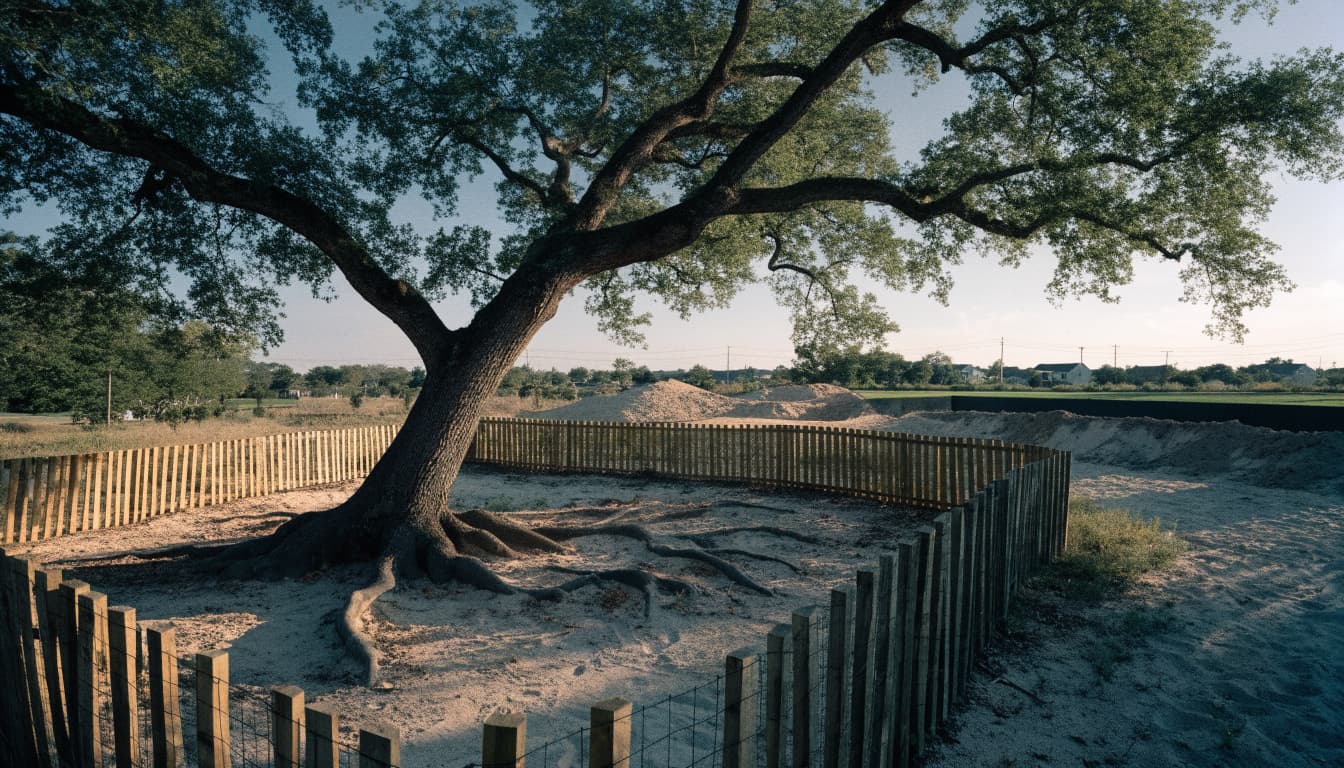
Don't assume the canopy edge or a standard distance provides adequate protection. Root distribution, tree condition, existing structures, and proposed excavation all affect the assessment.
The written plan should identify permitted activities, prohibited disturbance, and who can authorize changes. Install protection barriers according to that plan before clearing, demolition, or equipment delivery begins.
Make sure subcontractors receive the same instructions. Excavators, concrete crews, plumbers, and enclosure installers can affect different parts of the same root system.
During planning for new pool construction in Cape Coral, compare layouts that account for tree protection alongside swimming space and deck use. Moving a feature during design may be more practical than trying to resolve a root conflict during excavation.
Protection barriers should remain in place for the agreed construction period. A zone opened for "just one delivery" can quickly become a routine shortcut.
Handle Excavation Near Roots With a Stop-and-Review Plan
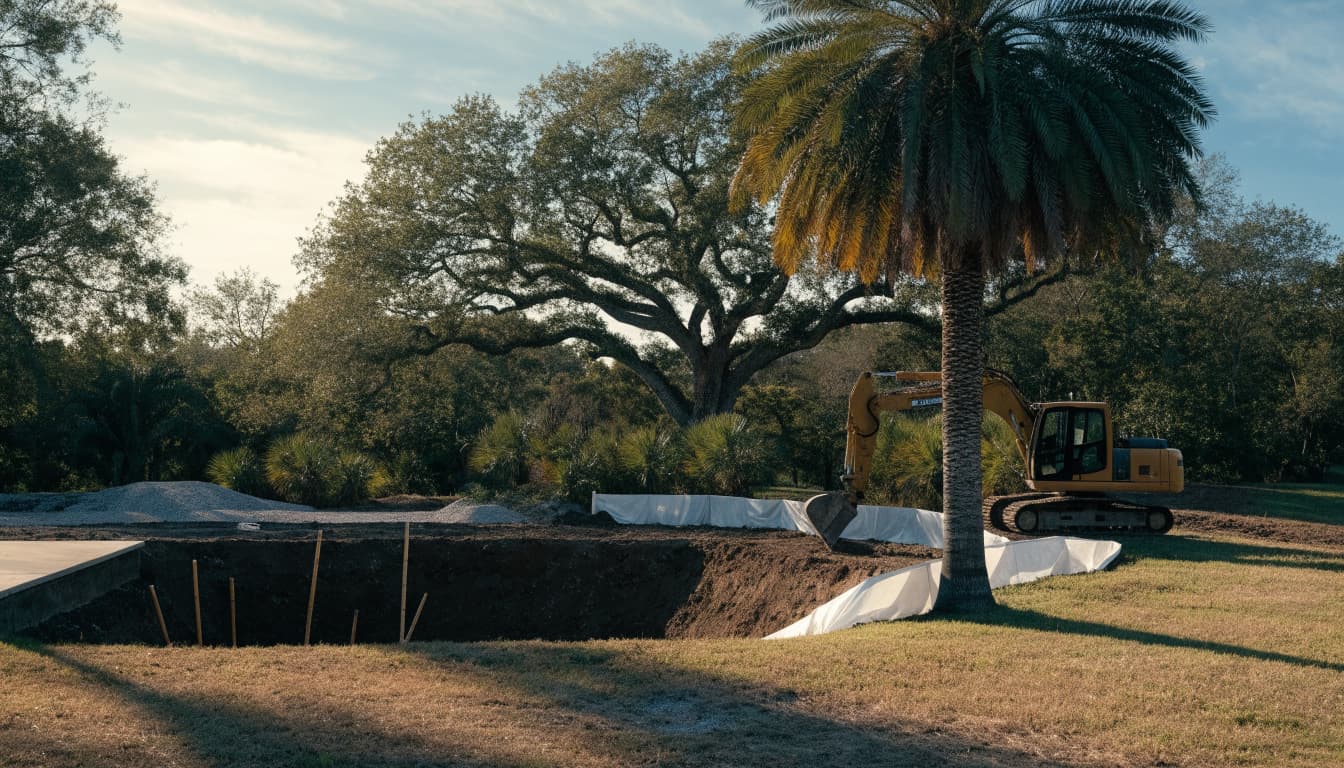
Excavation can remove roots that support a tree or supply water and nutrients. Protecting mature trees during pool construction requires decisions about underground conflicts before the crew encounters them.
Establish a response for unexpected roots
Ask the arborist and contractor to agree on what triggers a pause and who evaluates exposed roots. Workers shouldn't make independent decisions about cutting roots to keep excavation moving.
The response may involve arborist supervision, further investigation, a revised layout, or a reassessment of whether preservation remains reasonable. The appropriate choice depends on the actual tree and site.
If excavation exposes roots, contact the designated professional promptly. Delays can leave roots vulnerable while other work continues nearby.
Record discoveries and approved changes so the next crew doesn't repeat the same disturbance.
Include trenches and enclosure footings
A pool can avoid a tree while its plumbing route still crosses important rooting areas. Review pipes, electrical conduits, drainage lines, and enclosure foundations as part of the same design.
Screen enclosure work deserves particular attention when a new cage expands beyond the existing deck. Footings and post locations can introduce excavation where earlier plans showed open landscape.
Even renovation projects need this review. Deck replacement or equipment relocation can disturb soil despite leaving the pool shell untouched.
Have the builder and arborist resolve conflicts before crews start those separate phases.
Keep Heavy Equipment and Materials Out of Protected Areas
Repeated construction traffic can compact soil without leaving an obvious trunk injury. Compacted soil can restrict the movement of air and water around roots.
Agree on access and hauling routes before machinery arrives. Cape Coral properties may have narrow gates, seawalls, fences, and limited staging space, so the route deserves careful planning.
Also designate where crews will place excavated soil, pavers, reinforcing steel, and other materials. Stockpiles can cover rooting areas, while repeated loading creates additional traffic.
Keep concrete washout, fuel, and construction waste away from protected soil. These areas shouldn't become convenient cleanup locations.
Wet ground adds another concern. If machinery begins leaving deep ruts, have the contractor reassess access rather than extending the route into previously undisturbed areas.
Assign one person to check that crews follow the protection plan. Homeowners can photograph conditions, but technical decisions belong to the builder and arborist.
Make responsibility for damaged barriers and unauthorized access clear in the written scope.
Preserve Existing Grade and Plan Drainage Around Trees
A tree can suffer even when nobody cuts its roots. Adding soil over an established root area or removing soil can change the conditions those roots depend on.
Review existing and proposed grades with the arborist before approving fill placement. Don't treat leftover excavation material as free landscaping soil around mature trees.
Drainage needs the same attention. A new deck, raised planting bed, or enclosure edge can redirect water into a previously well-drained root area. Meanwhile, another section may become drier after runoff takes a new path.
Cape Coral's sandy soils can dry quickly, but groundwater and storm conditions vary by property. A dry lawn doesn't establish what the crew will encounter at pool depth.
The drainage review should address the deck, home, roof runoff, equipment area, and surrounding landscape together. It should also account for temporary pumping during excavation.
Confirm discharge arrangements with the contractor and verify applicable requirements. Don't assume pumped water can go toward neighboring property or existing drainage infrastructure.
After grading, inspect the yard during irrigation and after rain when possible. New puddles, erosion, and persistently dry planting areas need investigation before they become ongoing problems.
Verify Local Requirements and Put Responsibilities in Writing
Before construction, ask the City of Cape Coral which current requirements apply to your property and proposed work. Questions may involve tree removal, landscaping, permits, drainage, easements, and the approved site plan.
If the property has homeowners association restrictions, check those separately. Neither an HOA approval nor an arborist's recommendation replaces applicable government requirements.
Avoid relying on a neighbor's project as proof that your proposed work is acceptable. Site conditions and approval details can differ.
When reviewing what to know before building a pool, include tree-related responsibilities in your contractor discussions. Clarify who arranges arborist visits, maintains barriers, handles irrigation interruptions, and approves design changes.
Ask the estimate to identify agreed preservation work and any separately priced professional services. Written responsibilities help prevent gaps between the pool crew, landscape contractor, and homeowner.
Restore Irrigation and Monitor Trees After Construction
The final cleanup isn't the end of tree protection. Damaged irrigation, altered soil conditions, and root disturbance may affect trees after the pool is ready to use.
Test watering against the finished yard
If construction interrupts irrigation, arrange a temporary watering plan with the appropriate professionals. Established plants can develop stress during hot weather while disconnected lines remain out of service.
Once construction finishes, run each irrigation zone and inspect it. Check for leaks, buried heads, blocked spray patterns, and emitters that no longer reach the intended plants.
New pool walls, raised beds, and screen posts can interfere with coverage. Therefore, restoring the old controller schedule may not meet the finished landscape's needs.
Keep irrigation from repeatedly spraying the deck or enclosure. Also keep pool discharge and cleaning water within the approved drainage arrangement rather than sending them into tree beds.
Schedule follow-up care with the arborist
Arrange a post-construction inspection and a monitoring schedule suited to the tree's condition. Ask the arborist whether soil care, mulching, pruning, or other treatment is appropriate.
Don't assume fertilizer or extra watering will correct construction damage. Excess water can create another problem when drainage has changed.
Watch for canopy thinning, unusual leaf loss, branch dieback, or changes in the tree's lean. Palms need species-appropriate checks as well. Report concerns promptly, especially anything that suggests a safety issue.
A tree that stays green during construction can still develop delayed symptoms. Final project approval doesn't establish that its roots escaped damage.
Keep the original photographs and construction records available for follow-up assessments.
Build the Pool Around an Informed Tree Plan
Mature trees deserve attention before the pool layout is fixed. Early assessment, documented protection zones, and coordinated excavation give your team a clearer basis for preservation decisions.
However, preservation can't be guaranteed . Tree condition, underground conflicts, and drainage changes may require redesign or a different recommendation.
Before finalizing your project, Get a Free Estimate to schedule an onsite consultation with Back Bay Pools. Bring your tree concerns to that visit and arrange qualified arborist input before work begins.