A pool calcium saturation index tells you whether your water tends to dissolve calcium carbonate or leave it behind as a deposit. A negative result points toward dissolution, a positive result points toward precipitation, and a result near zero indicates the water is close to equilibrium.
That number is a water-balance clue , not a complete assessment of pool water quality. To decide what to adjust, you need to look at the readings behind it.
What a Pool Calcium Saturation Index Measures
The calcium saturation index, often called CSI, describes how water is balanced in relation to calcium carbonate. Some pool reports use the term Langelier Saturation Index, or LSI, for a closely related measurement.
CSI combines several water conditions into one result. Those conditions include pH, total alkalinity, calcium hardness, temperature, and total dissolved solids. Because these factors interact, two pools with the same calcium hardness can have different CSI results.
The index is useful because a single test reading doesn't tell the whole story. Calcium hardness may fall within a common range, for example, while high pH and warm water increase the water's tendency to form deposits.
A CSI result also describes conditions at the time of the test. If pH rises or the water temperature changes, the result can change too.
How to Interpret Negative, Near-Zero, and Positive Results
Start with the sign on the report, then look at the individual readings before choosing a treatment.
Negative and near-zero readings
A negative CSI means the water is undersaturated with calcium carbonate. In other words, the water has a tendency to dissolve calcium carbonate rather than deposit it.
A result near zero means the water is close to equilibrium with calcium carbonate. The closer it is to that point, the less tendency it has toward either dissolution or precipitation under the conditions measured.
Neither result tells you how much chlorine is available or whether your filter is working. Those require separate checks.
Positive readings
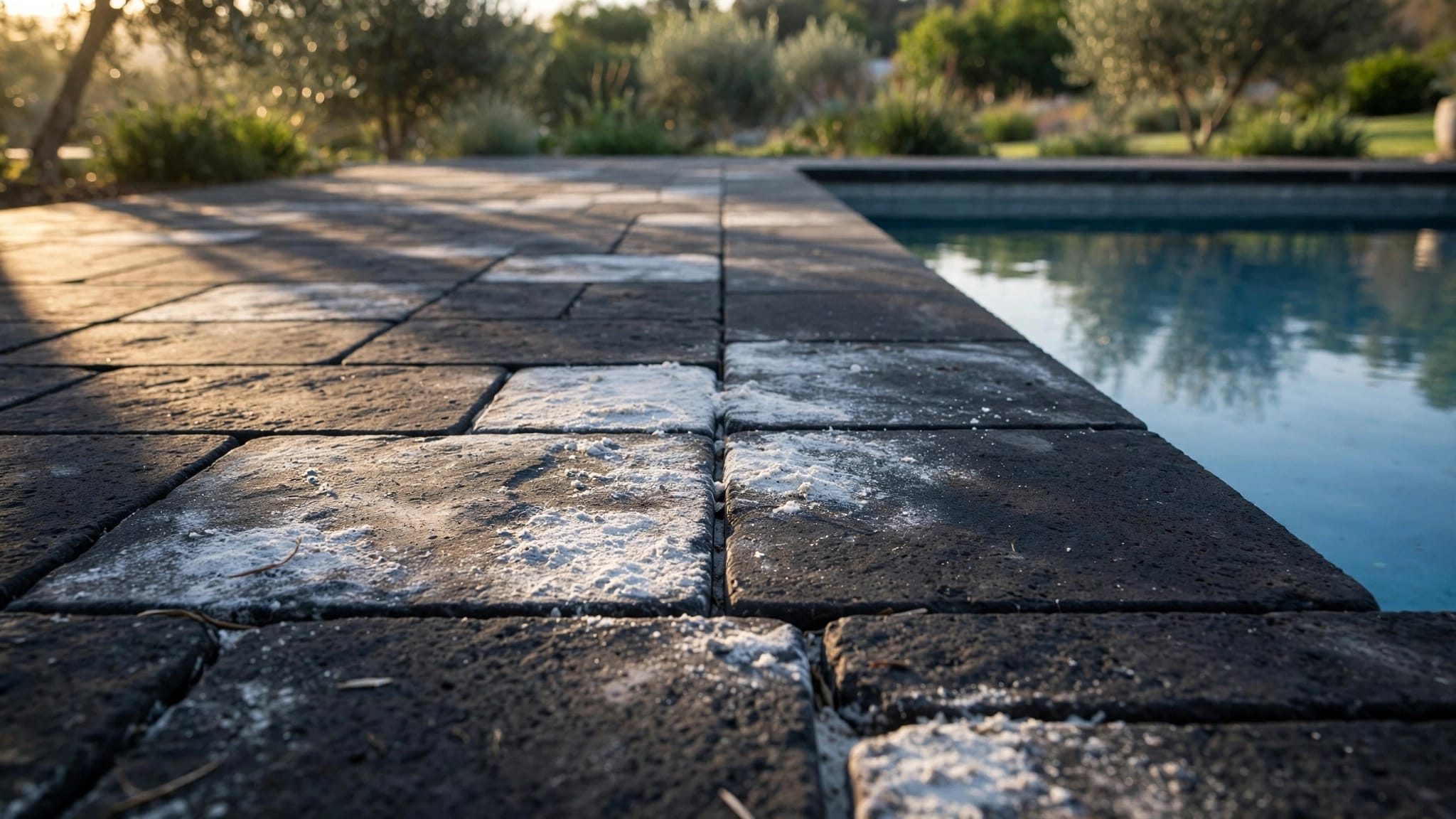
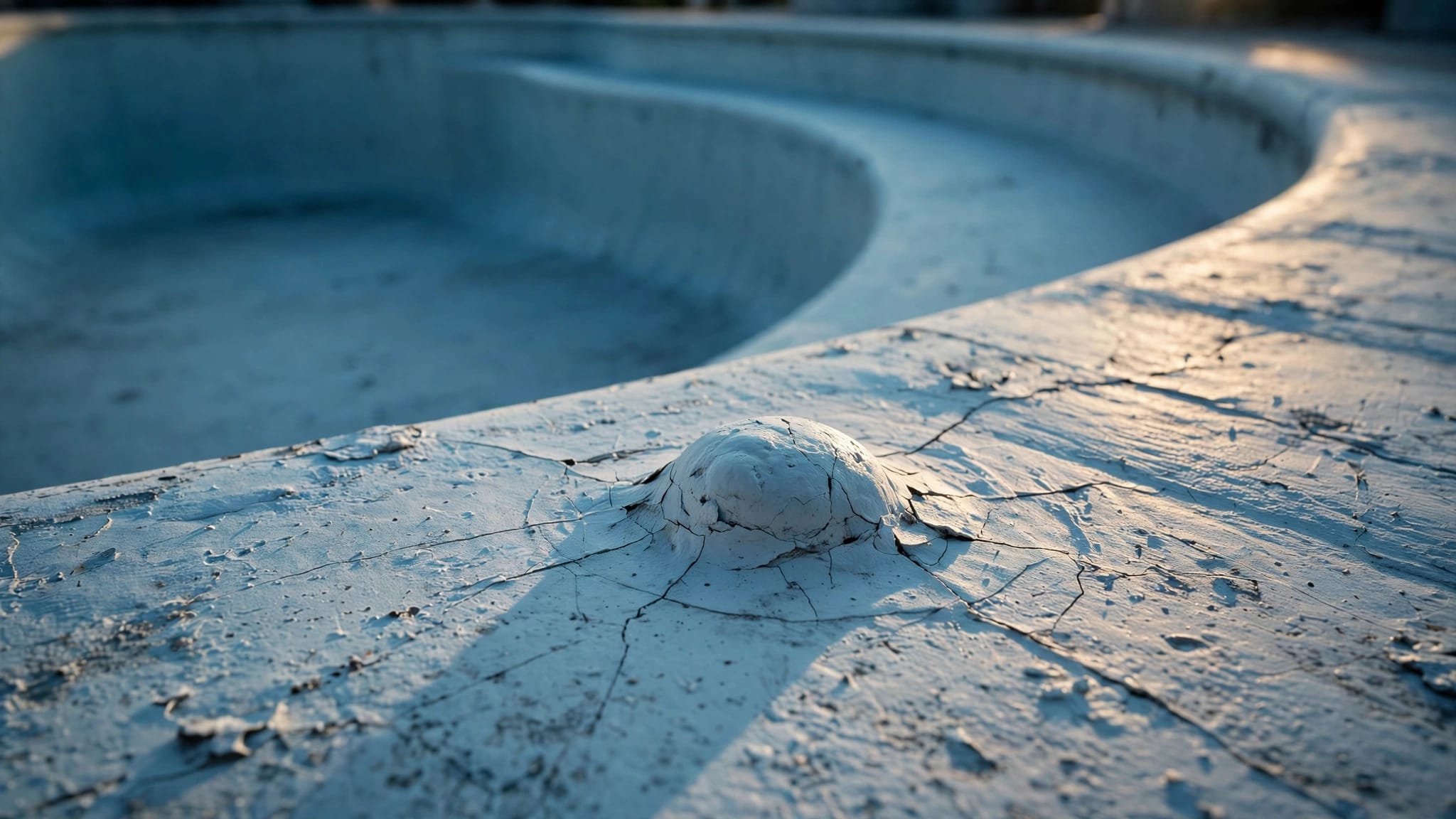
A positive CSI means the water is supersaturated with calcium carbonate. Under those conditions, calcium carbonate has a tendency to come out of solution and form deposits.
A positive number doesn't prove that every white mark is calcium carbonate, or that a deposit will form immediately. Existing buildup can also remain after the water has been balanced.
Our guide to removing calcium buildup from Florida pools explains why identifying the deposit and the affected surface matters before cleaning.
Which Pool Water Readings Affect CSI?
Each input changes how the water holds calcium carbonate. Review them together rather than assuming calcium hardness alone caused the result.
pH, alkalinity, and calcium hardness
pH measures how acidic or basic the water is. Higher pH increases the tendency for calcium carbonate to precipitate, while lower pH moves the result in the opposite direction. A common residential pH range is 7.2 to 7.8.
Total alkalinity helps buffer pH against rapid changes. A common starting range is 80 to 120 parts per million, or ppm. Because alkalinity and pH affect each other, a treatment for one can change the other.
Calcium hardness measures the calcium dissolved in the water. A common starting range is 200 to 400 ppm, although the appropriate level depends on the finish and equipment. Adding calcium when hardness is already adequate can make a balance problem harder to correct.
Temperature, dissolved solids, and stabilizer
Warmer water affects calcium carbonate balance. A report based on a cool morning sample may look different when the pool is warmer, even if the other readings haven't changed.
Total dissolved solids, or TDS, also affect the calculation. Saltwater pools have a higher dissolved-solids level because of the salt in the water.
Your report may also account for cyanuric acid, the stabilizer used in many outdoor chlorine pools. Different reporting methods can handle stabilizer and dissolved solids differently, so two reports using the same sample may not match exactly.
Get a Useful Test Before You Adjust Anything
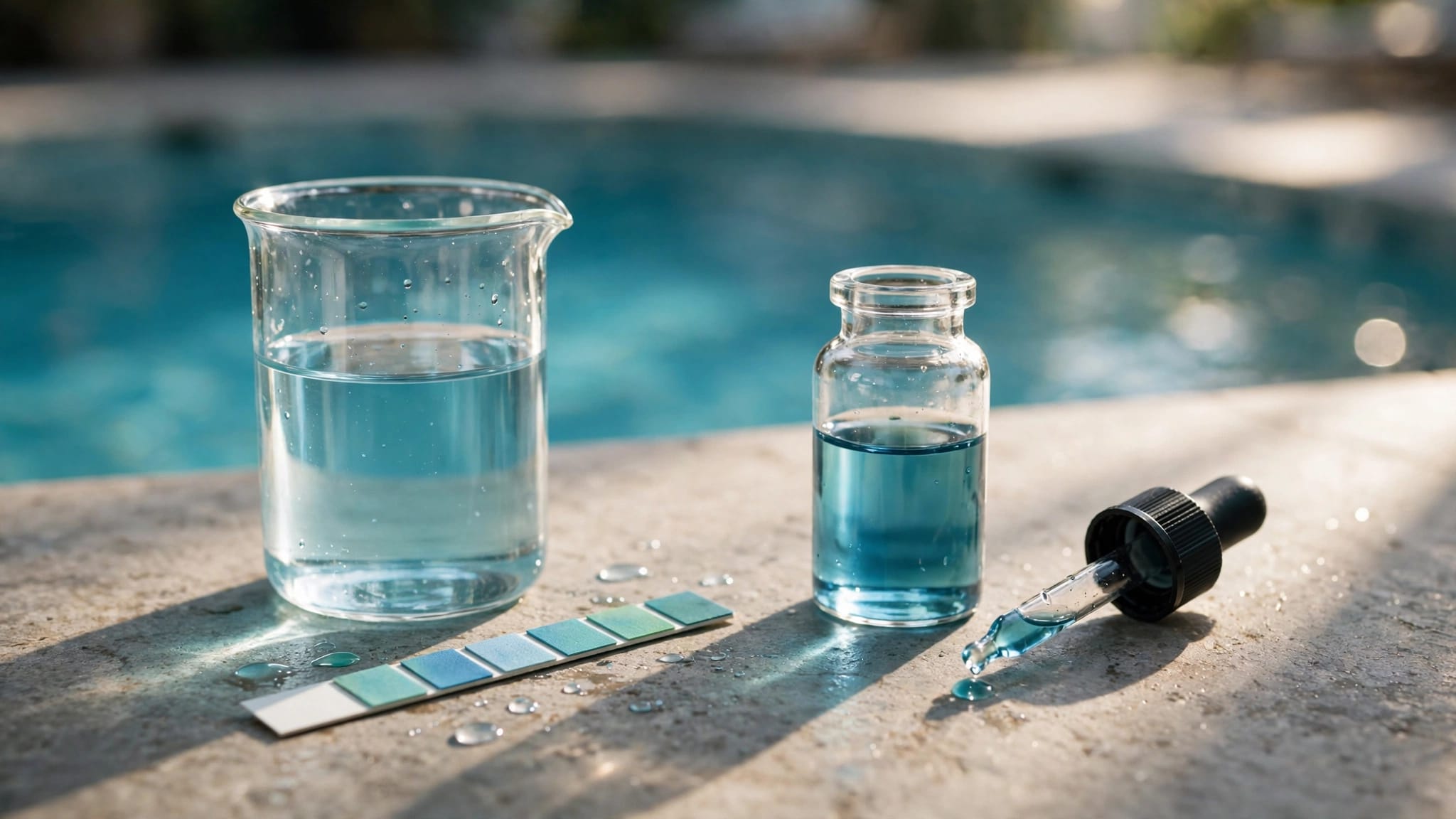
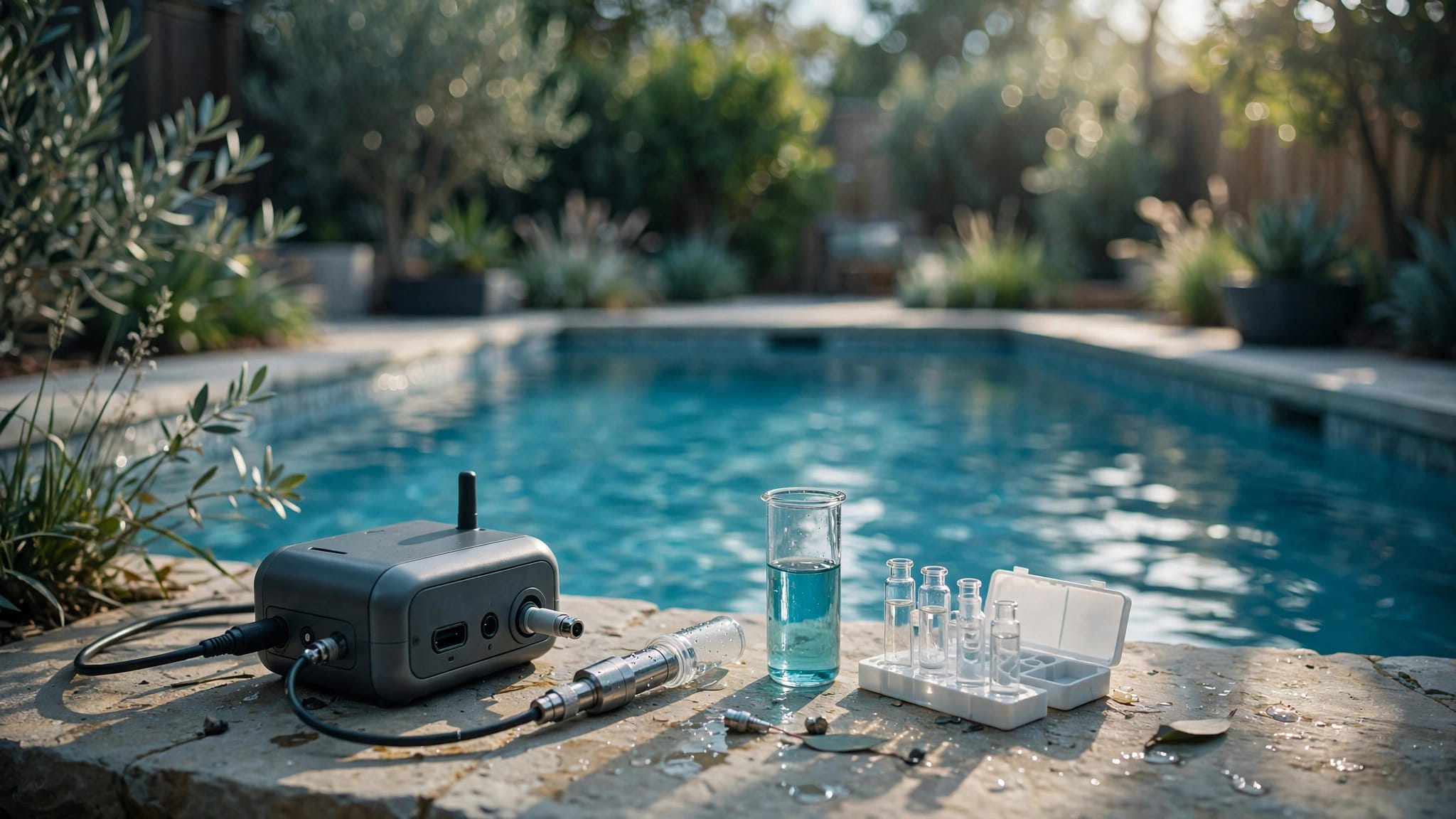
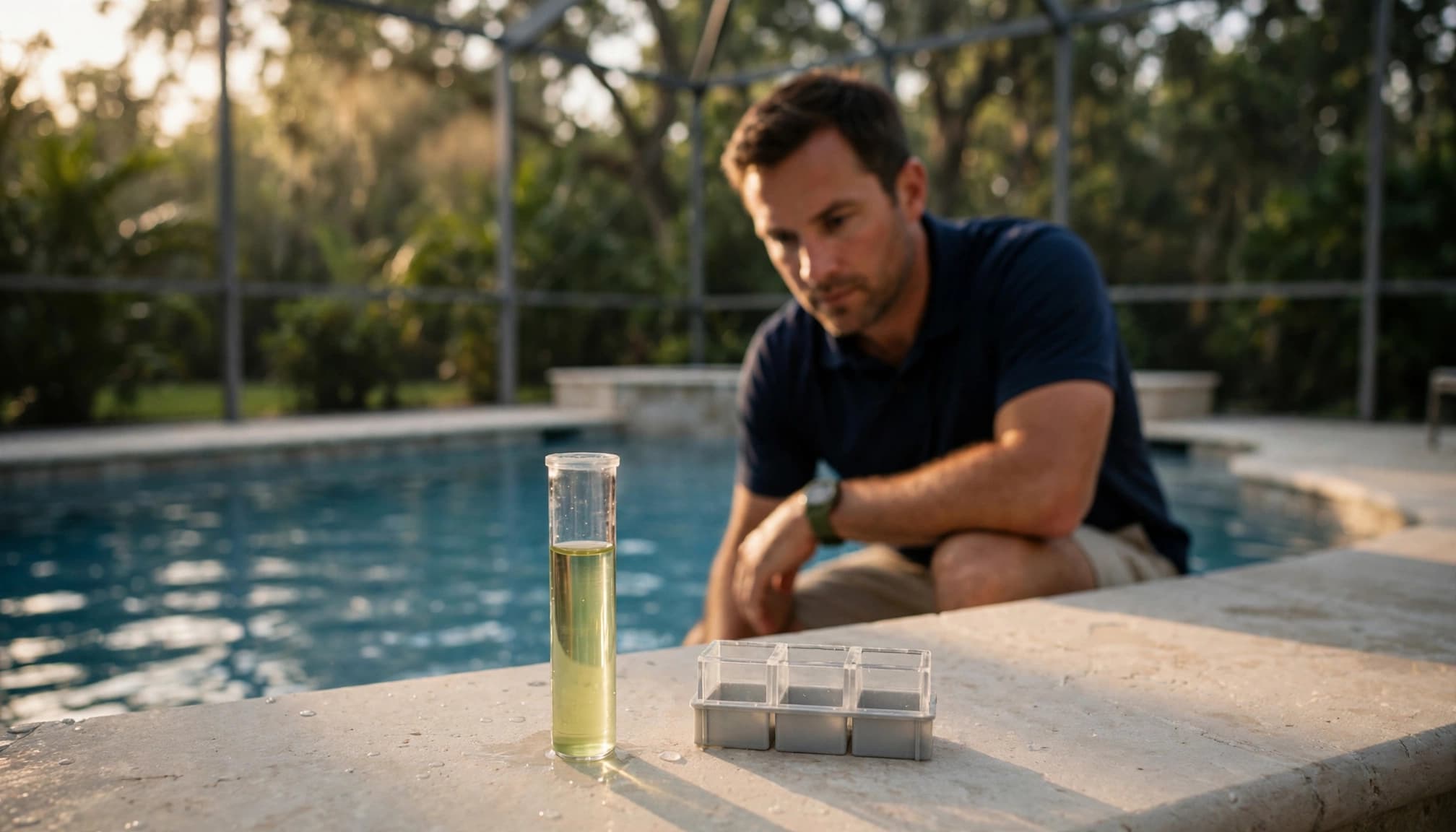
A CSI result is only as helpful as the readings used to produce it. Start with a fresh sample and a reliable liquid test kit, or have a pool professional test the water.
Run the pump long enough to mix the water before sampling. Collect the sample about elbow-deep, away from the skimmer, return jets, and chemical feeders. Water taken directly beside a return or just after a chemical addition may not represent the rest of the pool.
Record pH, total alkalinity, calcium hardness, water temperature, and any other readings included on your report. Test sanitizer and stabilizer separately as part of your routine.
If a result is far outside your usual pattern, repeat the test before making a major adjustment. Expired reagents and poorly stored test strips can make a reading unreliable. A written record also helps you see whether pH rises after water features run or calcium hardness changes after repeated top-offs.
Use a Sample CSI Result to Choose an Adjustment
Suppose a sample report shows a positive CSI, a pH of 8.0, total alkalinity of 100 ppm, and calcium hardness of 300 ppm. The pH is above the common residential range, while the other two readings fall within the starting ranges described above.
Find the reading that needs attention
In this sample, pH is the first reading to address. High pH increases the tendency for calcium to come out of solution, and lowering it can also change the CSI result.
The report doesn't point to a need for more calcium. Adding calcium hardness increaser simply because the report mentions calcium could move the water further toward precipitation.
Total alkalinity is also within the common range in this example. However, a pH reducer can lower alkalinity as well, so both readings deserve another test after treatment.
Make one measured change and retest
Use a pH reducer suitable for the pool, following its label and the dose for the pool's actual water volume. Let the water circulate for the period specified by the product, then retest pH and alkalinity.
Review the updated saturation result with the new readings. If pH remains high, another label-directed adjustment may be appropriate. Avoid adding several products together or trying to force every reading to the middle of a range in one treatment.
For more detail on how the two readings interact, see our pool pH and alkalinity balancing guide.
What to Do When Other Readings Are Out of Range
The right adjustment depends on which input is outside its recommended range. A negative or positive CSI alone doesn't identify the product your pool needs.
Low alkalinity or calcium hardness
When total alkalinity is low, sodium bicarbonate can raise it. Use the product directions and your pool volume to determine the dose, then circulate and retest. If pH is also low, it may need a separate adjustment after alkalinity is corrected.
If testing shows calcium hardness is low for the pool's finish, a calcium hardness increaser can raise it. Don't add one without a test result that supports the treatment. Follow the finish manufacturer's guidance, especially for a new surface.
High pH, alkalinity, or calcium hardness
A pool-approved pH reducer can lower high pH. Acid treatments also affect alkalinity, so avoid repeated doses without retesting.
High calcium hardness is different: acid doesn't remove calcium from the water. Depending on the source-water hardness and pool conditions, reducing calcium may require a partial water replacement or professional reverse osmosis treatment. Draining a pool carries risks, so get professional help before removing substantial amounts of water.
Keep chemicals separate, wear the protection listed on each label, and never mix products. Keep swimmers out during treatment and follow the product's directions for circulation and reentry.
Consider the Pool Finish and Existing Damage
Pool chemistry affects more than the appearance of the water. Poorly balanced water can contribute to deposits, while acidic conditions can damage some finishes and metal components over time.
Plaster, quartz, pebble, fiberglass, vinyl, and specialty finishes may have different care requirements. Newly resurfaced pools can also need closer monitoring and a separate startup plan. Follow the instructions for your finish rather than relying on one general calcium target.
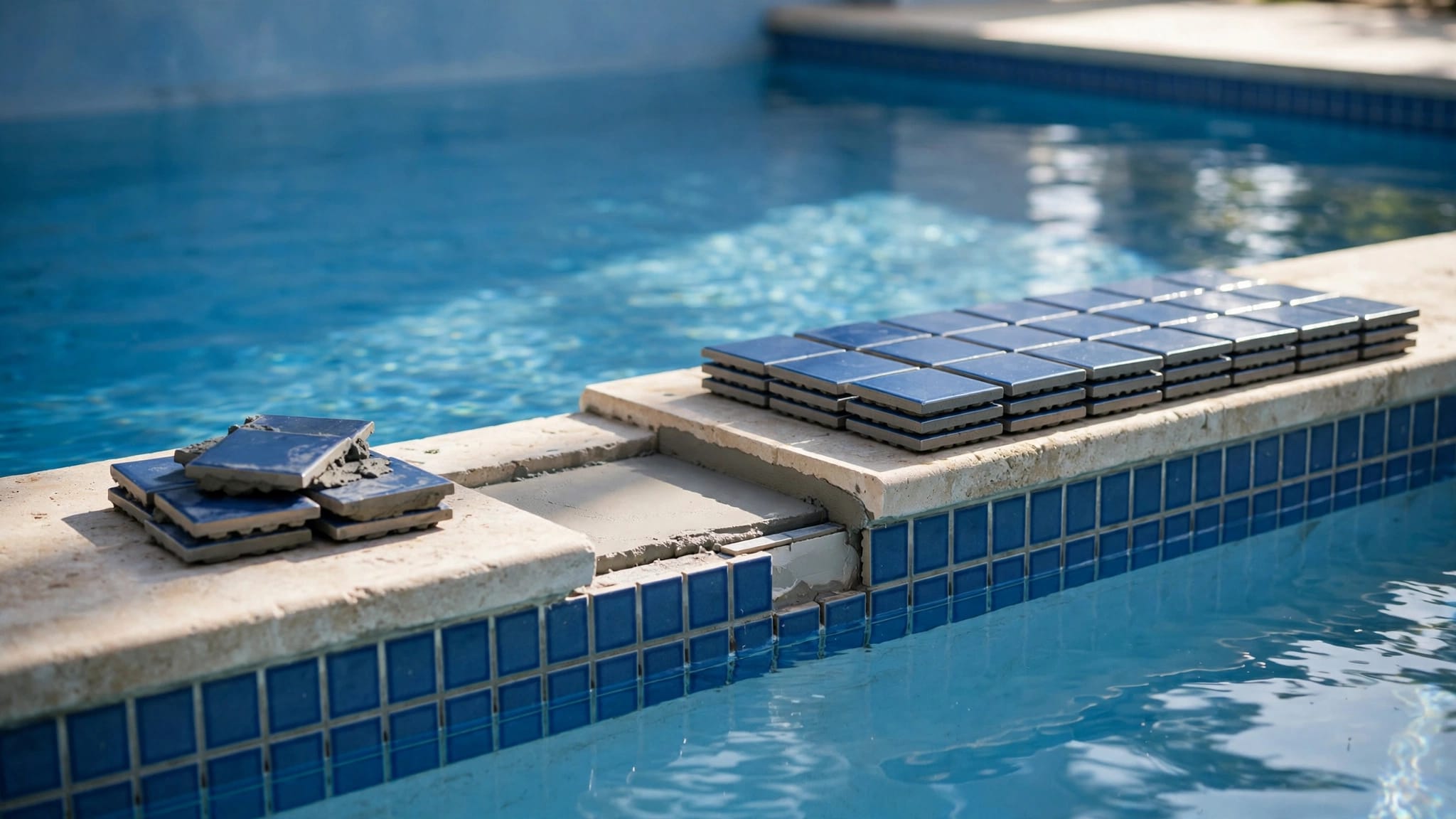
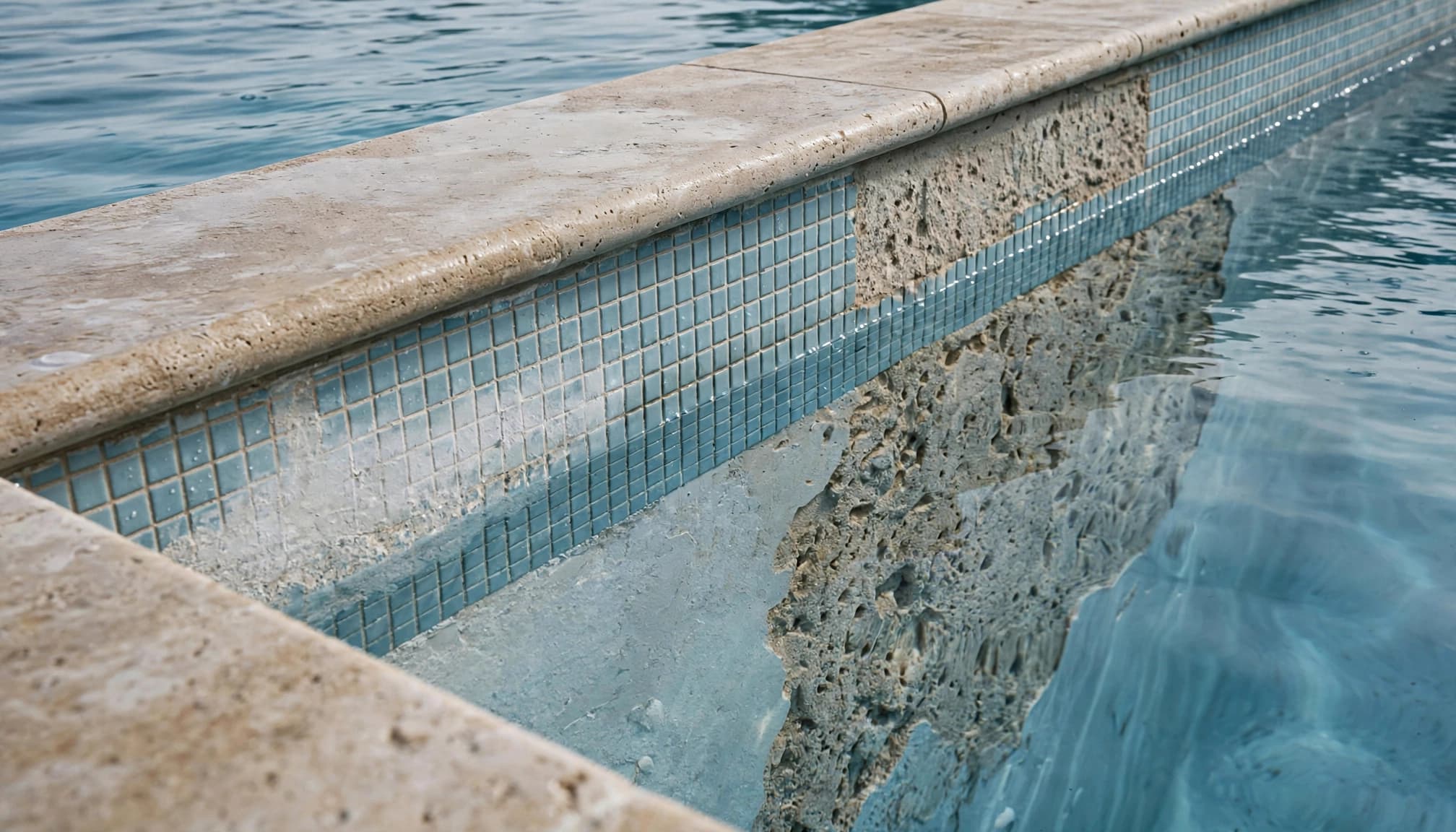
Balancing the water won't repair a worn surface or remove every existing deposit. Rough patches, cracks, exposed aggregate, loose tile, or recurring buildup deserve a closer look. Our guide to the signs your pool needs resurfacing can help you distinguish a finish concern from routine maintenance.
If your pool has visible wear and you're considering a renovation, Get a Free Estimate for an on-site consultation.
Keep CSI in Context With Regular Pool Testing
A balanced saturation result doesn't tell you whether the water is sanitized, clear of contaminants, or circulating properly. Continue to test free chlorine and pH regularly, and monitor alkalinity, calcium hardness, and stabilizer as part of your maintenance routine.
For normal residential use, check pH and chlorine at least twice a week. Test more often after heavy swimming, storms, a major water addition, or a chemical treatment.
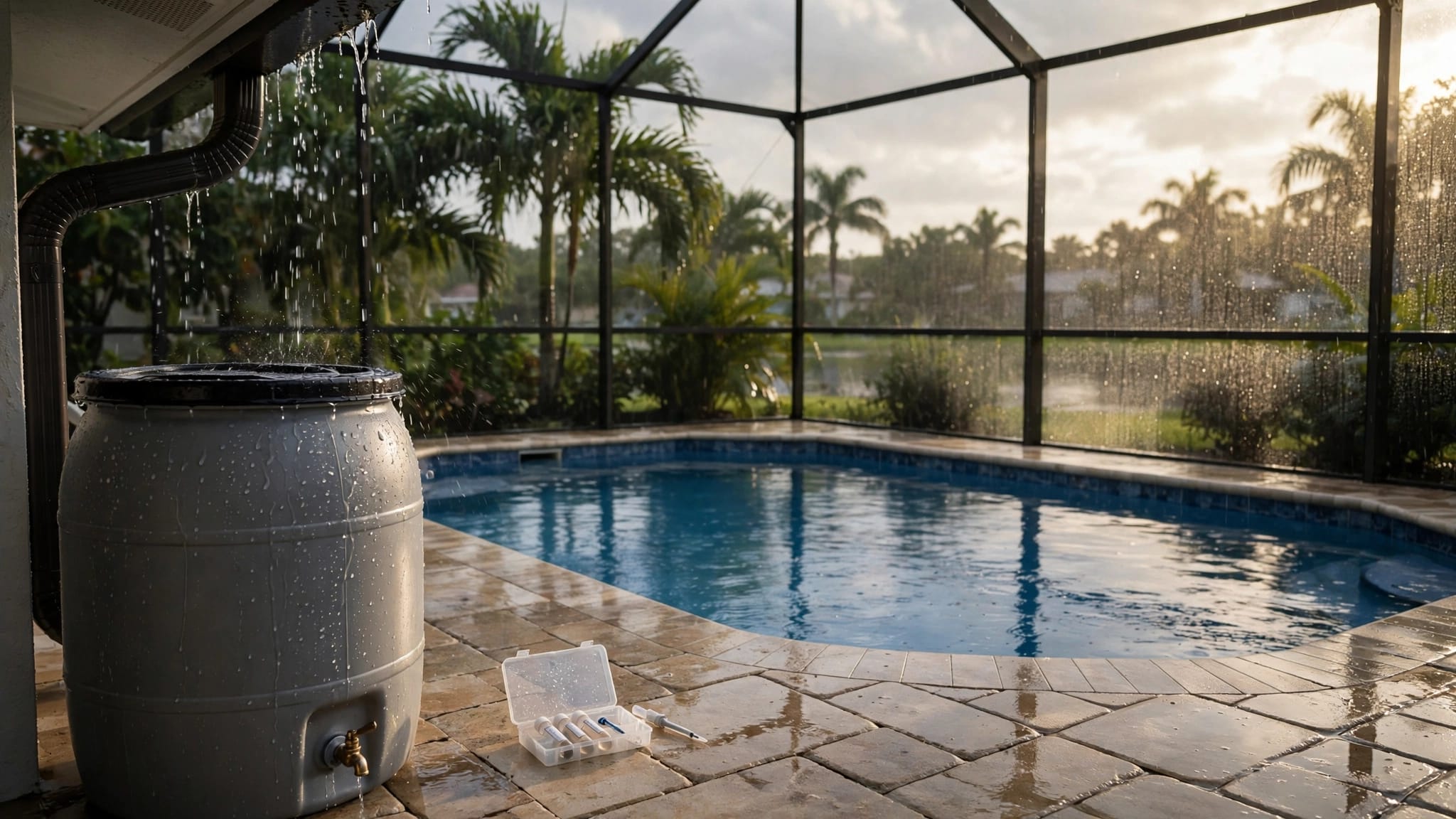
Florida weather can change the readings. Heavy rain may dilute pool water, while evaporation removes water and leaves minerals behind. Repeated top-offs can add more minerals, depending on the fill water.
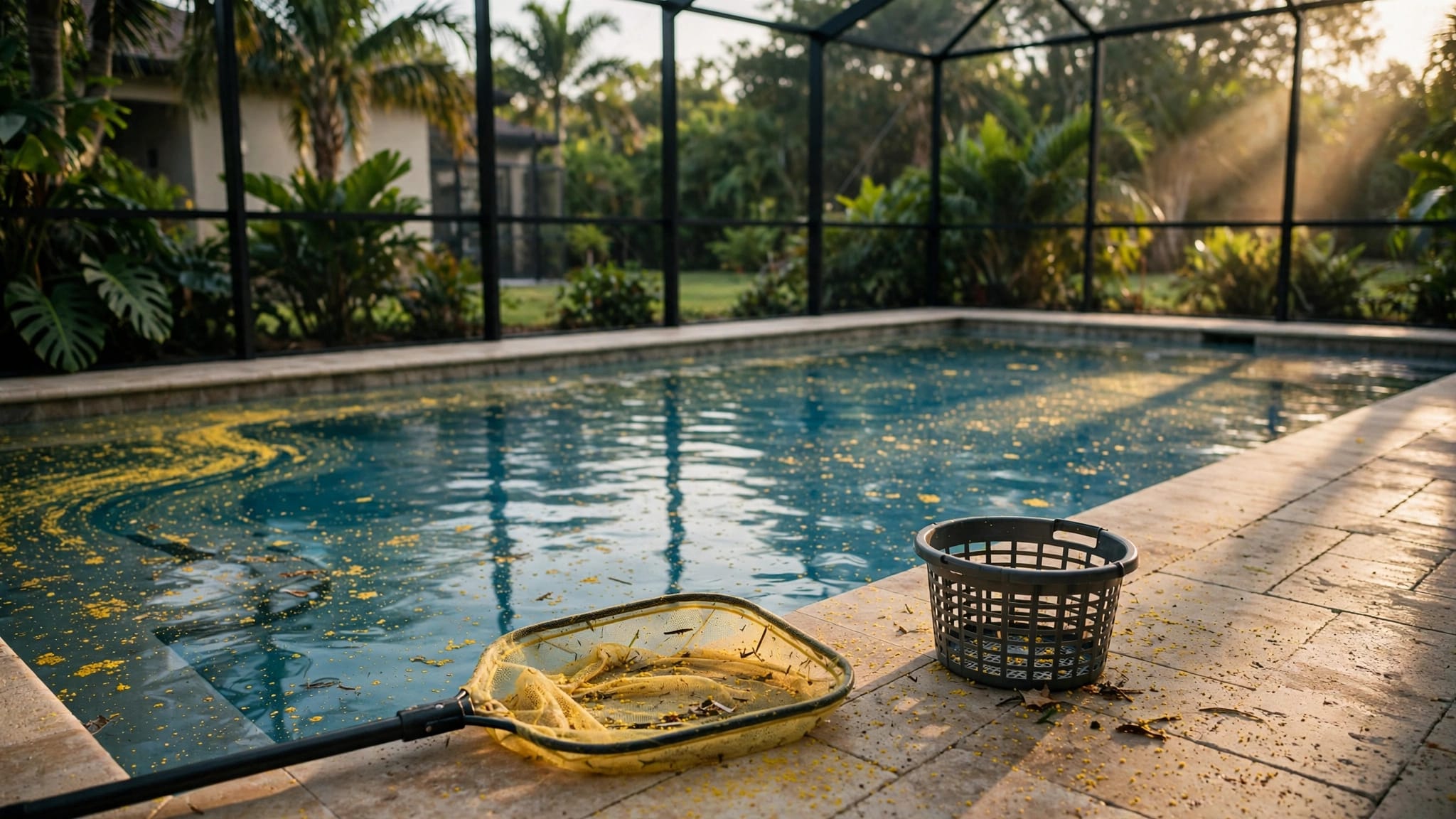
A screened enclosure can reduce leaves and insects, but it doesn't keep all rain or fine debris out. After a storm, remove debris, let the water circulate, and test before deciding what it needs.
Use the CSI Result as a Guide
Your pool calcium saturation index shows the water's tendency toward calcium carbonate dissolution or precipitation. The individual test readings explain which condition may need attention.
Make one measured adjustment at a time, then circulate and retest. Keeping the full water picture in view protects your pool better than chasing a single number.