White crust along a Florida pool's waterline is more than a cosmetic nuisance. To remove calcium scale pool buildup without scratching tile or damaging plaster, you need to identify the deposit first and match the cleaning method to the surface.
Warm weather, evaporation, hard fill water, and unbalanced chemistry give scale plenty of chances to return. Light calcium carbonate may respond to careful brushing and a pool-safe descaler, while hard calcium silicate often needs professional treatment. Start with the diagnosis, then choose the safest approach.
What Causes Calcium Scale in Florida Pools?
Calcium scale forms when dissolved minerals leave the water and harden on pool surfaces. Florida's heat speeds evaporation, so water disappears while calcium and other minerals remain behind.
When you add more water, the mineral concentration can rise again. Over time, that cycle creates a rough ring around the waterline, especially on tile grout, spillways, steps, and fittings.
Hard water and evaporation
Many Florida pools receive fill water with a high calcium content. A water test can reveal the exact level, but visible white deposits are often the first warning sign.
High calcium hardness alone doesn't always create scale. The greater risk comes from high calcium combined with elevated pH, high alkalinity, warm water, and evaporation. Saltwater pools can develop the same problem because salt chlorination doesn't remove calcium from the water.
Splash-out also adds to the issue. Water that lands on the deck or tile evaporates and leaves behind minerals at the edge of the pool.
Where scale usually appears
Waterline tile is the most common location because repeated wetting and drying leave a visible mineral band. You may also see buildup on:
- Pool steps and tanning ledges
- Tile grout and raised wall features
- Spillways, fountains, and water bowls
- Metal handrails and light niches
- Plaster or pebble surfaces near the waterline
Scale feels rough when you run a finger over it. If the surface is stained brown, green, or blue, the problem may involve metals, algae, or another type of residue instead of calcium.
Calcium Carbonate vs. Calcium Silicate Scale
Before you remove calcium scale pool deposits, determine whether you're dealing with calcium carbonate or calcium silicate. The two deposits can look similar, but they don't respond to the same cleaning process.
Calcium carbonate is usually easier to treat
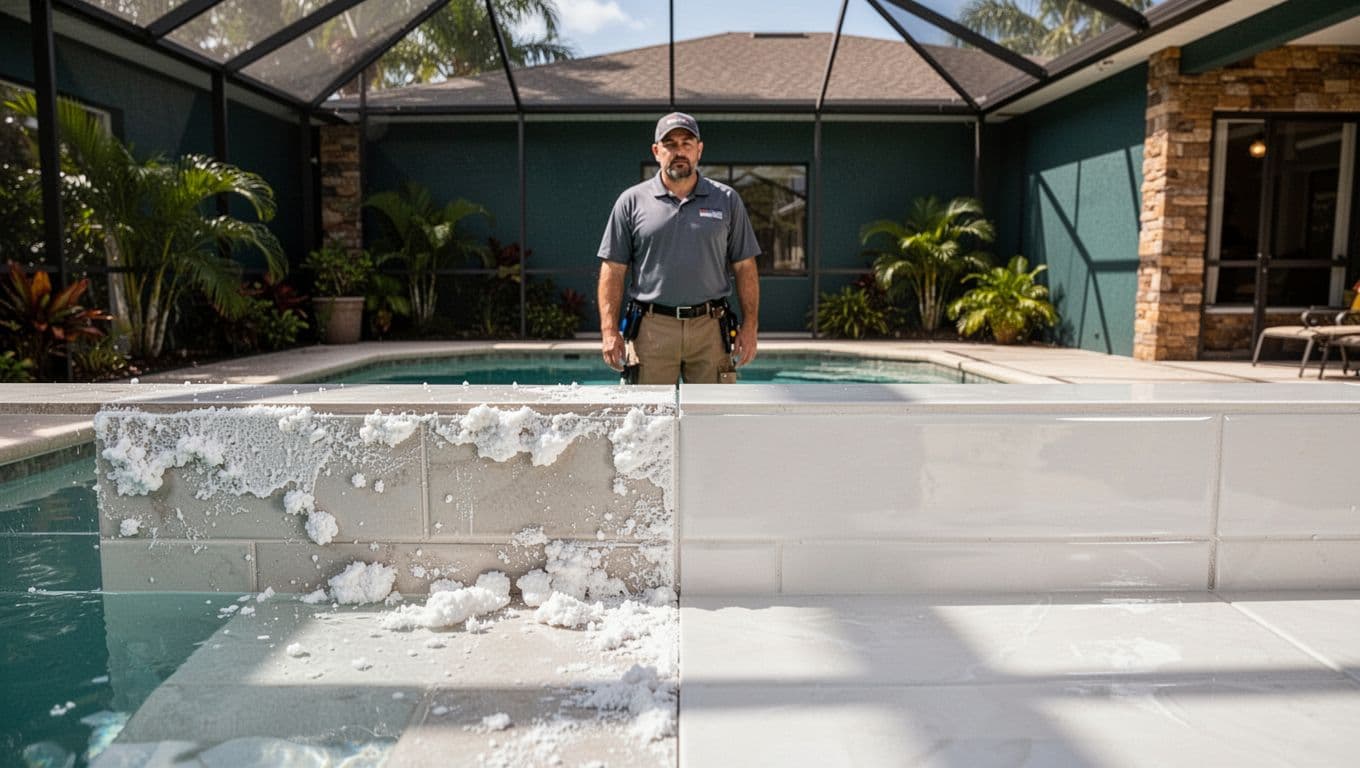
Calcium carbonate scale is often white, chalky, or light gray. It may feel rough but somewhat powdery, especially when the buildup is new.
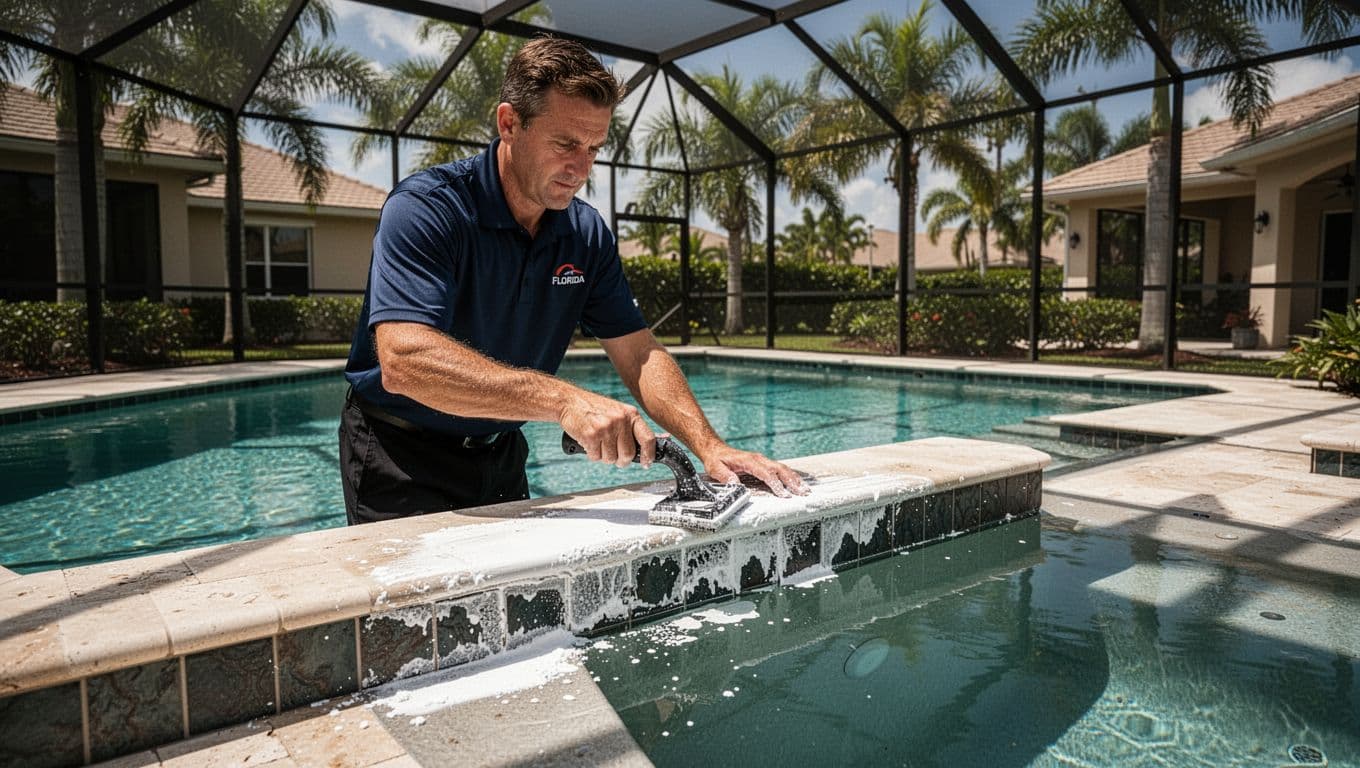
A nylon brush can remove light deposits from tile when you combine it with balanced water and a product made for pool scale. Some deposits also loosen with a wet pumice stone on compatible ceramic or porcelain tile.
Don't assume every white mark is carbonate. A pool professional can identify the material with a controlled test. Avoid applying acid to the pool surface yourself as a test because the chemical can etch plaster, discolor grout, and damage nearby materials.
Calcium silicate needs a different plan
Calcium silicate is harder and more stubborn. It often appears as a dense white or gray crust that resists a nylon brush and common descaling products.
A pumice stone may have little effect, and aggressive scrubbing can scratch the tile before the deposit releases. Professional pool companies may use specialized media blasting or other equipment for heavy silicate scale.
If the buildup covers a large section of tile, returns soon after cleaning, or has bonded to an aging surface, cleaning may not solve the underlying problem. The tile, grout, or interior finish may need repair or replacement.
How to Remove Calcium Scale Pool Buildup Safely
Light calcium carbonate on sound tile is often suitable for careful maintenance. Work slowly, test a small area first, and stop if the finish changes color or texture.
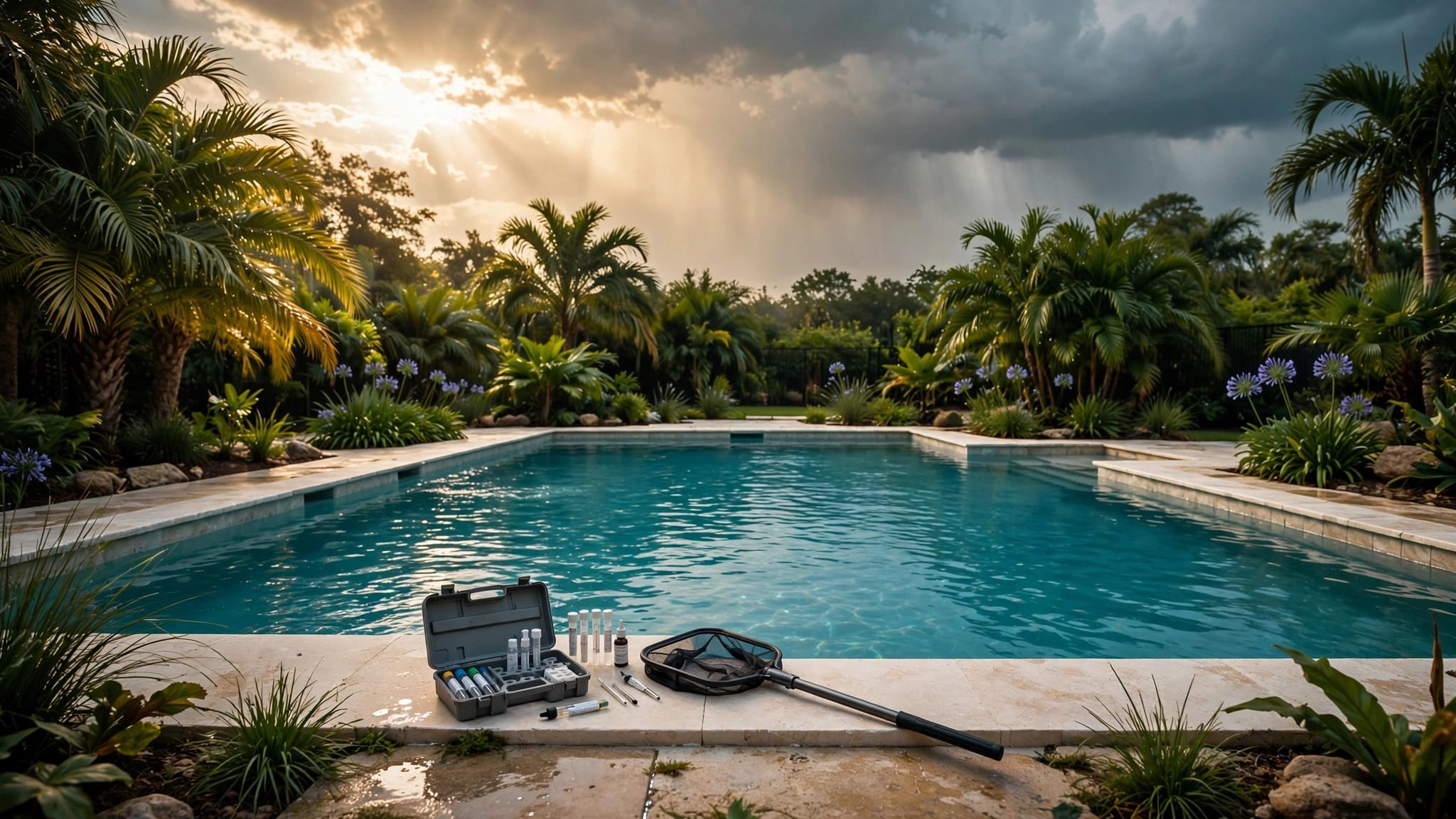
Gather the right tools
Use tools that match your pool finish. A basic setup includes:
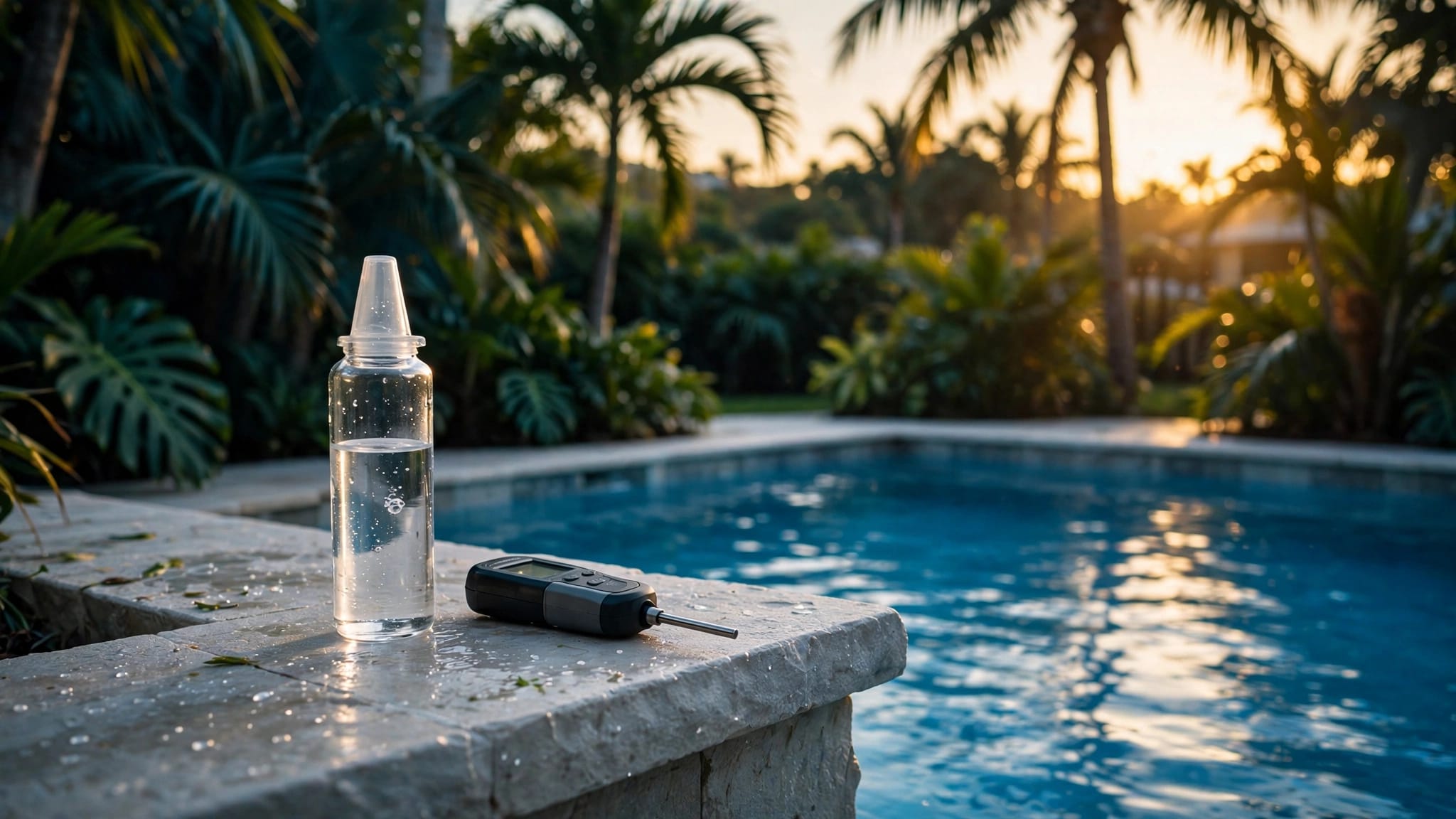
- A reliable liquid test kit or recent professional water test
- A nylon pool brush
- A non-scratch scrubbing pad
- A pool-specific calcium or tile descaler
- Chemical-resistant gloves and eye protection
- A wet pumice stone only when the tile manufacturer approves it
Don't use a wire brush, sandpaper, razor blade, or abrasive household cleaner. These tools can scratch tile glaze, remove plaster, damage fiberglass, and roughen the surface so future scale attaches more easily.
Follow these cleaning steps
- Check the surface and water chemistry. Identify whether the buildup sits on tile, grout, plaster, fiberglass, or vinyl. Test pH, alkalinity, sanitizer, and calcium hardness before cleaning.
- Clean a small hidden area. Wet the surface, apply the pool-safe descaler according to its label, and gently scrub with a nylon brush or non-scratch pad. Wait to see how the finish responds.
- Work in small sections. Keep the area wet while you clean. Apply only enough product for the section, and don't let a chemical dry on tile, grout, coping, or deck surfaces.
- Use a wet pumice stone with care. This approach can help with light carbonate scale on approved ceramic or porcelain tile. Keep the stone and surface wet, use light pressure, and avoid fiberglass, vinyl liners, painted surfaces, and delicate finishes.
- Rinse and remove loosened debris. Brush the residue into the water only if your filtration system can handle it, then clean the filter and vacuum the pool as needed. Follow the product label for disposal and rinsing instructions.
- Retest the water. Cleaning doesn't correct the chemistry that caused the scale. Restore pH and alkalinity to the appropriate range before regular swimming.
If a small test section doesn't improve, stop scrubbing. More pressure usually creates surface damage without removing hard deposits.
When Acid and Abrasive Cleaning Creates Damage
Muriatic acid can dissolve some calcium carbonate, but it is not a general-purpose pool cleaner. Acid washing also removes a thin layer of the pool's interior finish. That may expose fresh plaster temporarily, but it won't repair cracks, delamination, worn aggregate, damaged grout, or failing tile.
Acid can etch plaster, fade colored finishes, weaken grout, corrode metal, damage seals, and harm skin or lungs. Never mix muriatic acid with chlorine, bleach, or another cleaning chemical. Fumes can become dangerous even when the products are used near each other.
A residential pool owner should not drain an inground pool without professional guidance. Florida's high groundwater conditions can create hydrostatic pressure beneath an empty pool shell, which may lead to serious structural problems.
For a pool that needs more than spot cleaning, compare pool resurfacing versus acid washing before choosing a treatment. A professional can determine whether the scale is sitting on a sound finish or hiding a larger surface issue.
Signs that DIY cleaning should stop
Contact a pool contractor when:
- The deposit remains after a small, gentle test
- Scale covers most of the waterline
- Tile sounds loose or grout is missing
- Plaster feels soft, rough, or uneven
- Cracks, chips, or exposed aggregate are visible
- The buildup returns within weeks
- You can't identify the pool's finish
Replacing damaged waterline tile may produce a better result than repeated chemical cleaning. If the tile line, coping, or surrounding edge also looks worn, review pool tile and coping installation as part of a broader repair plan.
How to Prevent Calcium Scale From Returning
The best prevention plan controls both mineral concentration and water balance. Removing the existing crust matters, but the deposit will return if the water remains scale-forming.
These are common targets for many concrete and plaster pools:
| Water test | Common target | Why it matters |
|---|---|---|
| pH | 7.2 to 7.8 | Higher pH increases the chance of calcium precipitation |
| Total alkalinity | 80 to 120 ppm | Helps stabilize pH and reduce sharp swings |
| Calcium hardness | 200 to 400 ppm | Supports the finish without adding excessive mineral load |
Follow the finish and equipment manufacturer's recommendations, especially for fiberglass, vinyl, saltwater systems, and specialty finishes. A balanced saturation index also matters because pH, alkalinity, calcium hardness, temperature, and total dissolved solids affect each other.
Test more often during Florida weather
Check pH and chlorine at least twice a week during normal use. Test more often after heavy rain, a major water addition, a pool party, or a long period of extreme heat.
Rain can dilute some chemicals while adding organic material. Evaporation, on the other hand, removes water but leaves minerals behind. If calcium hardness rises too high, adding more acid won't remove the calcium. Partial drain and refill or professional reverse osmosis treatment may be needed.
Never add calcium increaser unless a test shows that the level is low. Keep written records if scale has been a recurring issue, so you can spot trends instead of reacting to a thick deposit months later.
Clean the waterline every week
Use a soft pool brush or approved non-scratch pad on the waterline during weekly service. Frequent light cleaning takes less effort than removing a thick mineral ring.
Keep the water level within the normal operating range, maintain circulation, empty baskets, and clean the filter on schedule. Check splash areas around spillways and fountains because they dry quickly and collect minerals.
If your pool has a screen enclosure, inspect the deck and waterline after storms. Leaves, pollen, and debris can affect water chemistry, while heavy rain may push water over the tile and leave residue behind.
Conclusion
To remove calcium scale pool buildup safely, identify the deposit, protect the finish, and start with the least aggressive method. Nylon brushing and a pool-specific descaler may handle light calcium carbonate, while calcium silicate, widespread scale, and damaged surfaces often need professional equipment or renovation.
Keep pH, alkalinity, and calcium hardness in the proper range, then clean the waterline regularly. If scale keeps returning or the finish shows cracks and wear, Get a Free Estimate for an on-site assessment before the problem spreads.